

Plot Summary
Prologue
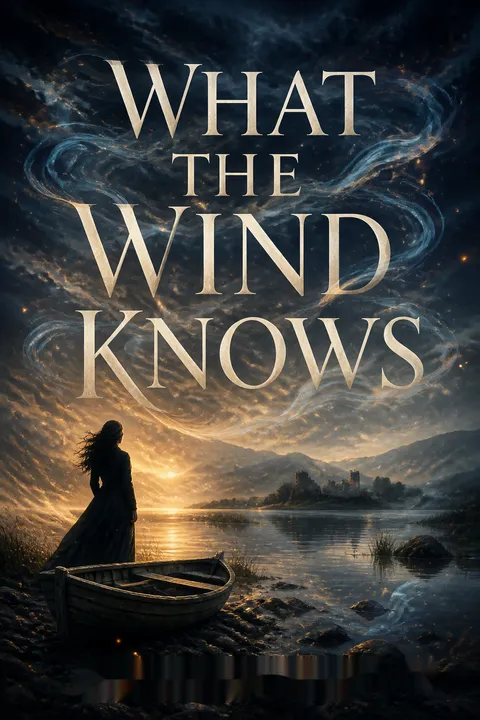
In 1976, six-year-old Annie grieves for her dead mother while her grandfather, Eoin Gallagher, holds her and teaches her to listen to the wind. He says wind and water carry the memories of everyone who has lived, and that their stories belong together.
Annie cannot hear a song in the storm, only a forceful howl, but Eoin believes it is trying to reach her. His comfort becomes the book’s first promise: the past may not be silent, and a story can bind lives separated by time.
The opening gives the novel its governing image before its mystery begins: the wind is both weather and an archive. Eoin’s reassurance does not erase Annie’s grief; it gives her a way to live beside it, by treating memory as a relationship rather than a possession. The child’s inability to hear the wind’s song also anticipates the difference between knowing a story intellectually and experiencing it. The prologue’s tenderness becomes a practical inheritance. Annie will later depend on stories to recognize her family, and the reader is invited to hear recurrence as a form of connection rather than mere repetition.
Eoin’s Locked Drawer
In 2001, novelist Annie Gallagher sits beside her dying grandfather, Eoin, the man who raised her after her parents died. He gives her a brass button once owned by Easter Rising leader Seán Mac Diarmada, photographs of his parents, a leather journal, and a ring, then asks her to bring his ashes to Lough Gill in Ireland.
Annie has been researching the Rising, but the history feels too tangled to turn into a story. Eoin urges her to write about the people who lived through it. Before he dies, he insists that she return to the country he left as a young man. Annie promises, though she has never been there and cannot yet imagine what the promise will demand.
Eoin’s bequest is both a practical errand and an attempt to restore a broken family archive. Annie has built a career turning history into stories, yet she feels overwhelmed by competing accounts and detached from the people inside them. Eoin redirects her attention from political verdicts to human lives, a distinction that shapes the novel’s ethical stance. His objects make that advice tangible: the button carries a political past, the photographs offer faces, and the journal preserves a private witness. Annie accepts the journey as an act of love, not knowing that her inheritance includes more than memories.
The Grave That Disagrees
Annie drives from Dublin to County Leitrim with Eoin’s ashes, fighting grief and unfamiliar roads. In Dromahair, librarian Deirdre directs her to Maeve O’Toole, an elderly local who recognizes Annie’s face and claims that her great-grandmother, Anne Gallagher, returned after the 1916 Rising. Maeve then points Annie to the Gallagher graves at Ballinagar, where Declan and Anne are both marked as having died in 1916.
The stone seems to settle the matter. Back at her hotel, Annie studies Eoin’s photographs and opens Thomas Smith’s journal, finding his account of the Rising and his search for Anne. Its final poem warns a beloved woman away from Lough Gill, making Annie’s planned farewell feel suddenly dangerous.
The contradiction between Maeve’s memory and the headstone establishes that evidence in this novel is never neutral. The grave gives Annie a legible answer, while Maeve’s uncertain but emphatic recollection keeps the past unsettled. Thomas’s journal complicates matters further by revealing how much of the family’s history Eoin kept private. Annie is accustomed to treating documents as material for research, but now each object implicates her emotionally. The warning poem also makes the lake more than a scenic destination. It becomes a boundary that may be listening, and Annie’s choice to proceed will turn inherited history into lived experience.
Ashes in the Fog
At Garvagh Glebe, the old manor beside Lough Gill, Annie rents a rowboat to scatter Eoin’s ashes. As she tips the urn into the lake, the ash mingles with a sudden wall of mist. A tune whistles through the fog, then a barge appears with three armed men aboard. One shoots Annie, and she falls into the freezing water, unable to find her boat or the shore.
Another rowboat reaches her. Its rescuer, Dr. Thomas Smith, recognizes her and pulls her aboard, wraps her in his clothes, and rushes her to the manor. There a local boy calls her Annie and a second man identifies her as his mother. Annie has been carried from 2001 into a past she knows only from books.
The crossing is triggered by an act of mourning, not by Annie’s deliberate search for adventure. Scattering Eoin’s ashes makes the lake a physical passage between generations, while the fog removes the ordinary landmarks by which she understands the world. The first consequence is bodily rather than mystical: a bullet wound, cold water, and dependence on strangers. Thomas’s recognition turns the impossible into a social crisis before Annie can interpret it. The scene also reverses the expected direction of inheritance. Annie came to return Eoin to his homeland, but instead she arrives where he began, in the world that formed him.
A Mother Reappears
Waking in Garvagh Glebe, Annie finds herself treated as Anne Gallagher, the wife of the dead Declan and mother of a six-year-old boy named Eoin. Thomas says she vanished during the Rising five years earlier and was presumed dead. Annie cannot tell him how she arrived or why she does not remember their shared life.
The boy’s blue eyes and red hair are unmistakably those of her grandfather as a child. Annie learns the date is July 1921, and the coincidence of Eoin’s birthday, July 11, gives her one fixed point in the strange new year. She is frightened by the people’s expectations, yet seeing Eoin alive makes the past feel less like research than a second chance.
Annie’s predicament is built from an intimate asymmetry: everyone around her remembers a woman she has never been, while she recognizes a child who will become the person she loved most. Her knowledge does not grant control. It makes her more conscious of how little she knows about the life she has entered. Thomas’s suspicion is reasonable because Anne’s disappearance left a child and a household in uncertainty. Annie’s attachment to Eoin, however, begins immediately, before she can explain it. The scene transforms time travel into a problem of care: she must decide how to love someone whose future she knows but whose present she cannot claim.
The Ring and the Watch
Brigid Gallagher, Eoin’s grandmother, distrusts the returned woman and warns her to keep away from the boy. Annie nevertheless accompanies Eoin to Sligo to sell her modern diamond earrings for money. At the pawnbroker’s, Eoin offers his brass Mac Diarmada button too, hoping the money will keep Annie from becoming destitute.
Annie stops him and explains that the button holds lives and memories no price can replace. The pawnbroker refuses to buy her cameo ring, revealing that Declan traded his watch to purchase it as a wedding gift. He also returns the watch to Eoin, identifying it as his father’s. Annie leaves with money, her ring, and a living link between her descendants and the people whose story she has entered.
The transaction dramatizes how objects change meaning as they pass between people. Annie sees the button as historical evidence, while Eoin sees it as an available sacrifice for someone he loves. Her refusal teaches him the very principle Eoin later taught her: remembrance is a form of keeping. The cameo ring and pocket watch make family history circular, but the scene does not yet explain how their ownership will travel across time. Brigid’s accusation of poverty also shows that suspicion can be expressed through material vulnerability. Annie has wealth in her own century, but in 1921 she has to accept help without surrendering her dignity.
Tans at the Window
As Annie recovers, she sees the danger that fills Thomas’s life as a country doctor and Irish nationalist. Black and Tans and Auxiliary officers intimidate Sligo residents, smash the windows of Lyons department store, and burn the newspaper Henry Lyons displayed to inform the town about Dublin. At home, young Eoin fears that the soldiers will attack Garvagh Glebe while everyone sleeps.
Annie comforts him with Irish legends, while Thomas keeps watch with a rifle. His medical work brings him to burned farms and wounded families, and his political loyalties place him between the Irish cause and the cost of violence. Annie’s stories help the boy sleep, but they also draw Thomas toward the woman he cannot quite identify.
The political setting reaches the reader through specific domestic consequences: a shop window broken, a child afraid of fire, and a doctor unable to separate treatment from conflict. Thomas’s role makes neutrality impossible. He heals bodies while supporting a movement that can produce more injuries, and his weariness reflects that contradiction rather than simple indecision. Annie’s storytelling is not an escape from politics; it gives Eoin a structure for fear and gives Thomas a glimpse of the woman he once knew. The section also clarifies why Brigid resists the nationalist struggle. For her, its promises are inseparable from the son it has already taken.
The Storybook Truce
For Eoin’s sixth birthday, Annie and Thomas make him a handmade book about a boy whose little boat carries him through different eras. They spend nights writing and drawing together, and their collaboration brings an intimacy neither quite names. At Mass, Annie predicts that a truce between Ireland and Britain will be signed on July 11, the date of Eoin’s birthday.
The announcement arrives the next day exactly as she expected. Thomas realizes her knowledge cannot be explained by Anne’s missing years, but he does not force an answer. Later, he admits that the way Annie looks at him unsettles him, and they share their first kiss. Their growing closeness now rests on a secret that could make Thomas trust her or fear her.
The birthday book quietly models the novel’s own structure: a child travels through history by means of a small boat, and stories make distant times imaginable. Annie and Thomas create it together before either understands how closely it describes her experience. Her correct prediction gives the intimacy an epistemic cost. Thomas is not merely attracted to her; he must judge whether unexplained knowledge signals danger. Their kiss follows the moment when his assumptions begin to fail, but not yet when they are replaced by belief. The truce also offers a temporary political pause, mirroring the fragile opening Annie and Thomas have made in their relationship.
The Barn Search
While Thomas is away in Dublin, a gunrunner named Robbie O’Toole arrives at Garvagh Glebe with a bullet wound to the head. Annie stops the bleeding and helps the family hide weapons before Auxiliary soldiers search the property.
She invents a foaling emergency, smears the barn with blood, and claims she disturbed Thomas’s medical supplies while seeking medicine for the mare. Her performance persuades the officers to leave without finding Robbie or the guns.
When Thomas returns, he learns that Annie protected his household and the O’Tooles at considerable risk. Robbie later needs surgery in Dublin, and Annie accompanies Thomas to help care for him. The rescue earns her gratitude, but Liam Gallagher, one of the gunrunners, continues to regard her as a threat.
Annie’s ability to improvise becomes a form of agency in a life where she lacks legal status, money, and even a credible account of herself. The false foaling scene works because she understands how authorities read gender and class: she performs a sheltered American woman whose concerns appear domestic and harmless. That performance protects actual people without making the danger disappear. Thomas sees the competence beneath the act, which deepens their trust, but Liam interprets her presence through the logic of clandestine war. The same event therefore produces two opposing consequences: a household saved and a suspicious gunrunner newly convinced that Annie must be watched.
Fire at the Gresham
In Dublin, Thomas brings Annie to a wedding celebration at the Gresham Hotel, where she meets Michael Collins, the revolutionary leader he calls Mick. A wedding toast triggers Annie’s memory of a planned attack: an arsonist will set fire to the hotel’s coatroom and block the ballroom exits.
Thomas warns Collins, who orders his men to clear the guests. The front doors are barricaded, and smoke soon pours through the vents, confirming Annie’s warning. Collins escapes, but Thomas notices how precisely she knew what would happen.
Outside, he confronts her about the missing guns and the fire, while Annie insists she wants to return home. She also finally tells him that Liam shot her on Lough Gill, a fact that changes the danger surrounding her.
The rescue makes Annie’s unexplained knowledge public and consequential. Until now, it has mainly disturbed Thomas; at the Gresham it saves a crowded room and may have prevented Collins’s death. That success increases suspicion rather than resolving it, because the warning has no plausible source. Thomas’s conflict is no longer whether Annie is unusual, but whether he can protect her without knowing what she conceals. Annie’s admission about Liam gives him one concrete fact amid the impossible ones. The scene also widens the novel’s emotional field: love cannot remain private when political violence keeps entering the room.
The Impossible Confession
At Thomas’s Dublin home, Michael Collins presses Annie to explain her warning. She answers by recounting the Irish legend of Oisín and Niamh, whose love is divided by time, then tells Thomas and Collins that she was born in America in 1970. She had come to Lough Gill in 2001 to scatter her grandfather Eoin’s ashes, entered the fog, and was shot before Thomas found her in 1921.
She cannot explain the crossing, only that she is not the Anne Gallagher they remember. Collins accepts that she is not acting against Ireland, while Thomas struggles to believe her account. Later, when Annie disappears briefly into the lake while rescuing Eoin’s ball, Thomas pulls her back through the mist and sees the time boundary for himself.
The legend gives Annie a language for an experience that ordinary explanation would flatten into madness or espionage. She does not prove her story through evidence; the lake provides Thomas with an experience that reorganizes what he can believe. Collins responds pragmatically, asking what Annie’s knowledge means for Ireland, while Thomas must reckon with the personal cost of accepting it. The near-disappearance makes the metaphysical stakes relational: Annie could leave without choosing to, and Eoin could lose her again. Thomas’s belief is therefore not a retreat from reason but a decision to treat what he has witnessed as real, even when he cannot explain its rules.
Christmas at Garvagh
At Christmas, Michael Collins stays at Garvagh Glebe, and Thomas proposes to Annie with his parents’ wedding rings. Before the wedding can take place, Ben Gallagher arrives, condemning Collins’s Treaty and warning that the Irish cause is not finished.
His hostility exposes the fracture within the family and the independence movement. Later, a rifle shot interrupts Christmas dinner. Thomas and Robbie find that a gunman aiming at Collins has been killed by Collins’s bodyguard, Fergus.
Robbie recognizes the shooter as a gunrunner linked to Liam, and Thomas realizes that the attackers may have been targeting Annie. Despite the threat, Annie and Thomas marry the next day at Ballinagar. Eoin celebrates the family he has long wished for, while the conflict outside their vows continues to gather force.
The wedding is not a refuge from politics so much as a deliberate act within it. Ben’s visit makes clear that the same people who fought together against British rule can now disagree over what freedom requires. The attempted shooting turns that abstract division into immediate bodily danger, and the uncertainty over its intended target keeps Annie exposed. Thomas nevertheless chooses public commitment rather than postponing happiness until a safer future arrives. Eoin’s delight gives the marriage a family meaning beyond romance. The chapter’s emotional balance is deliberately unstable: joy is real, but it cannot persuade the characters that violence has ended.
The Treaty Takes Hold
Annie accompanies Thomas to Dublin as the Dáil debates the Anglo-Irish Treaty. The agreement offers Ireland a Free State but requires an oath to the Crown and leaves partition unresolved. Michael Collins supports it as a first step, while Eamon de Valera and other republicans reject it as a betrayal.
The vote passes narrowly, splitting the government and the country. Annie knows the division will deepen into civil war and that Collins will die, but she keeps his fate secret after he asks not to live under a countdown.
She writes the warning privately, hoping to use it if danger becomes immediate. Thomas and Collins travel through worsening violence, while Annie discovers she is pregnant and tries to protect both her new family and the future she cannot control.
The Treaty turns the national struggle from a contest between Ireland and Britain into a conflict over what Ireland should become. Collins’s compromise is not presented as simple surrender; he sees a limited agreement as a political foothold, while opponents fear it will ratify the division they fought against. Annie’s foreknowledge intensifies rather than solves the moral problem. She cannot save everyone without potentially altering the same chain of events that brought her into this family. Her private warning is a compromise between intervention and silence, but its later misreading will show that information can become dangerous when separated from its purpose.
Liam Takes Her Back
When Thomas is away, Brigid finds Annie’s written account of the danger awaiting Collins and mistakes it for evidence that Annie plans to kill him. Liam returns to Garvagh Glebe with a rifle, and Brigid orders Annie out, believing she is protecting Eoin.
Liam forces Annie toward Lough Gill, intending to drown her and conceal the body. She struggles in the water as he presses her under, but Robbie intervenes and shoots Liam. Annie surfaces on the shore in 2001, where Jim Donnelly, the boat keeper, recognizes the missing American woman.
She has been gone only ten days in her own time, though she lived months in 1921 and 1922. At the hospital, doctors confirm her pregnancy. Annie is alive, but Thomas, Eoin, and the life she chose are now in the past.
The crisis grows from a chain of misread intentions. Annie’s note is meant as protection, Brigid interprets it through the fear of an unknown woman, and Liam exploits that fear to regain control. Brigid’s love for Eoin becomes a weapon against the person who has cared for him, though she believes she is acting responsibly. Annie’s return to 2001 is not a victory over the danger but a new separation, and the time discrepancy makes that separation even crueler. Her pregnancy confirms that her life in the past has left a permanent future consequence. The return asks whether survival can feel like abandonment.
The Ring’s First Owner
Annie discovers that Eoin’s estate includes Garvagh Glebe, then moves into the house and searches Thomas’s old journals. His entries reveal that Liam shot the original Anne during the chaos at the General Post Office in 1916, believing in exhaustion that she was unreal.
Liam concealed her body and kept her ring. Thomas later receives that ring from Liam, and Eoin eventually passes it to his granddaughter, completing its journey back to Annie.
Thomas’s pages also record the split over the Treaty, the battle for the Four Courts, and Collins’s death at Béal na mBláth in August 1922. Annie cannot change those losses. She learns that Thomas stayed with Eoin until the boy left for America in 1933, and that the journals and storybooks preserve her life for him.
The journals do more than fill gaps in Annie’s family history; they show that her presence has always belonged to the history she thought she was entering from outside. The ring’s circulation is especially important because it turns an heirloom into a material proof of temporal continuity. At the same time, the revelation about the first Anne prevents the novel from treating resemblance as identity. Liam’s violence created the absence around which the later story formed, while Thomas’s records preserve both women without collapsing them into one person. Annie’s inability to prevent Collins’s death establishes a limit to foreknowledge: knowing the future is not the same as possessing power over it.
Books Across the Years
Annie decides to remain in Ireland rather than return to her old life in New York. At Garvagh Glebe, she meets elderly Maeve and Deirdre, who bring her professionally reprinted copies of the handmade Adventures of Eoin Gallagher books.
The books credit Annie as author and Thomas as illustrator, and Eoin had arranged their publication decades later. Maeve recognizes Annie as the woman in the manor portrait and remembers the family she left behind.
Annie reads Thomas’s journals, including his final entry about Eoin leaving for medical school in Brooklyn. She also learns that Thomas kept writing to her, though he never sent the letters. Grief still governs her days, but the house, the books, and Maeve’s memories prove that her past was not erased.
The return to Garvagh Glebe gives Annie a form of belonging that is neither simple reunion nor recovery. The house contains objects from her lost life, but its present-day rooms cannot restore the people who used them. The published storybooks offer a more durable bridge: Eoin transformed the private work of his childhood into a public record, preserving Annie and Thomas’s collaboration for later readers. Maeve’s recognition matters because memory has survived outside the family’s documents. Annie’s choice to stay does not cancel grief; it gives grief a place to live and lets her continue the act that first connected her to Eoin.
The Red Boat Returns
In 1933, after Eoin turns eighteen and leaves for medical school in Brooklyn, Thomas lowers the little red boat from his barn rafters and rows onto Lough Gill. He has waited eleven years for Annie, carrying her recovered diamond earrings and the empty urn as reminders of the crossing. In November 2001, he emerges from the fog onto the shore where Annie is waiting, pregnant and still the same age she was when she left.
They meet again with no guarantee that time will spare them a second separation. Thomas tells her he stayed with Eoin until the boy was ready to go. Annie’s return to him completes the journey begun with Eoin’s ashes, while the letters Eoin wrote but never mailed promise that love has kept speaking across the years.
Thomas’s journey completes the novel’s movement from inherited memory to chosen action. Annie entered the past by accident; Thomas crosses toward her knowingly, accepting the risk of losing his familiar world. His departure also honors the promise he made to Eoin, who needed to grow up in his own time before Thomas could leave. The reunion does not make time fair or restore the years they lost, but it allows the characters to inhabit the same present again. The letters supply a final image of persistence: Eoin wrote to Thomas throughout his life, and even silence can contain an unfinished act of love.
Analysis
What the Wind Knows makes historical memory a force that acts on the living. Annie begins with a writer’s belief that the past can be gathered, researched, and shaped into a coherent account. Her journey overturns that confidence: she enters the lives she once studied, but foreknowledge does not give her command of events. She can save people in immediate danger, yet she cannot prevent every death or explain every consequence. The novel therefore distinguishes information from wisdom. Knowing what happened is not the same as knowing what to do when it happens again in front of you.
The story also refuses to make political commitment morally simple. Thomas and Collins value Irish independence, but both recognize that revolutionary methods injure civilians and can turn former allies against one another. The Treaty divide is not a contest between sincere patriots and villains. It is a collision between incompatible judgments about what compromise costs and what continued war will destroy. That political fracture is mirrored in the family, where Brigid’s protective fear and Liam’s secrecy twist loyalty into harm. Private relationships do not escape history; they inherit its pressures.
Storytelling becomes the novel’s answer to disappearance, but not a cure for grief. Annie’s books help Eoin imagine a future, Thomas’s journals preserve intimate lives, and Maeve’s memories carry details no official record could hold. Yet the novel understands that remembrance is selective and sometimes painful. The people who tell stories shape what survives, and the objects they pass on can connect lives without making them identical. The final reunion offers neither a corrected past nor a guarantee against loss. It offers a shared present, reached through patience, care, and the willingness to believe that love can travel farther than any one life.
Review Summary
What the Wind Knows is a captivating historical romance with time travel elements set in 1920s Ireland. Readers praise Harmon's lyrical writing, well-researched historical details, and compelling love story. Many compare it favorably to Outlander. The novel explores themes of love, family, and Irish independence through protagonist Anne's journey from 2001 to 1921. While some found the historical content heavy, most were deeply moved by the characters and their relationships. The book's emotional depth, poetic language, and intricate plot left a lasting impact on many readers.
People Also Read






Characters
Anne Gallagher
Time-lost storytellerAn American novelist raised by her grandfather, Eoin Gallagher, Anne is drawn to history because she fears that ordinary lives vanish when no one remembers them. Her imagination is disciplined by research, yet she is more comfortable inventing stories than risking intimacy in her own life. Grief sends her to Ireland with Eoin’s ashes, where her habits as a writer become practical strengths: she observes, improvises, and uses stories to comfort children and navigate danger. Anne’s defining tension is between the certainty she wants from history and the uncertainty required by love. She is compassionate without being passive, and her attention to other people’s memories gradually makes her feel responsible for lives beyond her own.
Thomas Smith
Doctor and keeperA country doctor, Irish nationalist, and friend of the Gallagher family, Thomas is defined by service. He treats the wounded, supports his neighbors, and offers practical help without asking to be praised for it. His steadiness conceals a deep capacity for grief and self-reproach, especially over the violence surrounding the Rising. He loves through acts of care: finding shelter, tending injuries, guarding a house, and recording what others might forget. Thomas is loyal to Ireland but not blind to the cost of its struggle. His relationship with Anne challenges his reliance on certainty and asks him to distinguish loyalty to the past from openness to the person before him.
Eoin Gallagher
The remembered childEoin is the young son of Anne and Declan, raised in the care of his grandmother Brigid and Dr. Thomas Smith. Curious, affectionate, and energetic, he asks the questions adults avoid and responds to fear by seeking stories and familiar people. His red hair and blue eyes make him instantly recognizable to the woman who knows his future, though he knows her only as a mother returned to him. Eoin’s love of books begins as a family ritual and becomes a way of carrying people across time. He is not merely a symbol of inheritance; his childhood needs, fears, and loyalties shape the decisions of the adults around him.
Michael Collins
Irish revolutionary strategistA central leader of the Irish independence movement, Michael Collins is Thomas’s close friend and a forceful strategist. He combines political daring with an instinctive warmth that lets him move among ordinary citizens and trusted allies. Collins understands that revolutionary action has costs, but he also believes that Ireland cannot reach self-government through declarations alone. The Treaty negotiations place him between the ideal of a republic and the practical limits of Ireland’s power. His humor and physical ease conceal the burden of being treated as both the architect of victory and the person responsible for compromise.
Brigid Gallagher
Protective family matriarchBrigid is Declan’s mother and Eoin’s grandmother, a woman shaped by bereavement and the daily work of keeping a family together. She distrusts Anne’s sudden return because she has spent years protecting Eoin from another loss. Her fierce attachment can make her cold, especially toward people she believes may destabilize the boy’s life. Brigid also carries the grief of a mother whose sons are scattered and whose country offers few safe choices. Her resistance is not simple malice; it grows from fear, loyalty, and the conviction that love means guarding what remains.
Liam Gallagher
Volatile family loyalistLiam is one of Brigid’s older sons and Declan’s brother, involved in the dangerous movement of weapons for the Irish cause. His loyalty is intense but shaped by secrecy, fear, and a willingness to use force. He sees uncertainty as a threat that must be contained, making him especially dangerous when events do not fit his understanding. Liam’s family ties connect private conflict to the wider divisions within Irish nationalism.
Ben Gallagher
Dissenting older brotherBen is Declan’s older brother and one of Brigid’s sons. He believes the Treaty compromises the struggle for Irish independence and views compromise as a betrayal of those who died. His conviction gives him courage, but it also narrows his ability to recognize how political disagreement can destroy family bonds. Ben represents the anti-Treaty position as a deeply felt moral claim, not merely an appetite for conflict.
Maeve O’Toole
Keeper of local memoryMaeve is a long-lived member of the O’Toole family, connected to Garvagh Glebe through generations of work and loyalty. As a girl, she knows the household and grows up among its stories; as an elderly woman, she helps Annie find the Gallagher graves and remembers details others have forgotten. Her bluntness disguises a deep tenderness for the people who shaped her life. Maeve shows how local memory survives through repeated visits, family anecdotes, and the ordinary rituals of hospitality.
Joe O’Reilly
Collins’s trusted aideJoe O’Reilly is Michael Collins’s close aide and messenger, moving through Dublin to keep the revolutionary network functioning. He is loyal, practical, and watchful, with a younger man’s energy worn down by the constant demands of clandestine work. Joe provides a grounded perspective on Collins’s decisions and shares the risks that come with serving a leader whose safety is never assured.
Robbie O’Toole
One-eyed young gunrunnerRobbie is one of the O’Toole family’s sons, drawn into the dangerous work of moving weapons for Irish nationalists. His involvement places him among the people Thomas treats and the household Annie tries to protect. Robbie is brave and impulsive, but he remains tied to a large family whose care and labor make the movement’s human costs visible.
Daniel O’Toole
Steadfast estate overseerDaniel oversees the land and household work at Garvagh Glebe and is father to Maeve and Robbie. He is practical, loyal to Thomas, and protective of his family. When political violence reaches the estate, Daniel’s knowledge of its barns, animals, and hidden spaces becomes essential. His trust in people is earned through what they do under pressure.
Deirdre Fallon
Village librarian and guideDeirdre works in the small Dromahair library and helps Annie begin her search for family records. Curious and generous, she connects visitors with local knowledge and later brings Annie the published versions of the Eoin Gallagher storybooks.
Jim Donnelly
Keeper of the lake boatsJim Donnelly runs the boat rental near Lough Gill. He is cautious about sending visitors onto the water alone, and his practical concern for Annie becomes crucial when she returns to the lake in distress.
Eamon de Valera
Dáil’s cautious presidentDe Valera leads the Dáil during the Treaty crisis and opposes the agreement Collins negotiates. A skilled and tenacious political survivor, he believes Ireland should not accept a settlement that falls short of a republic. His caution and political authority place him in direct tension with Collins’s willingness to accept a limited step toward self-government.
Arthur Griffith
Irish Treaty-minded statesmanGriffith is an Irish political leader who supports the Treaty as a workable route toward self-government. Measured rather than theatrical, he argues that an imperfect agreement may give Ireland a foundation on which to build.
Plot Devices
Lough Gill
Threshold between erasLough Gill is both a real landscape tied to the Gallagher family and the novel’s passage between historical periods. Annie arrives there to scatter Eoin’s ashes, enters a sudden fog, and finds herself in 1921. The lake also threatens to take her away from Thomas, and later becomes the route Thomas uses to reach her. Its repeated appearances connect grief, danger, and return without providing a reliable explanation of how time works. Water is not simply a magical mechanism: each crossing happens during an emotionally charged choice, and each leaves the characters responsible for what they do after reaching shore.
Thomas’s journals
A family archiveThomas’s journals preserve the private record that public histories cannot provide: his efforts to find Anne after the Rising, his care for Eoin, his work with Collins, and his later grief. Annie first encounters the journal among Eoin’s possessions, then reads more of it after returning to 2001. The entries reveal the history of the original Anne and document the years Thomas and Eoin spent after Annie vanished. The journals also make the novel’s narrative structure concrete, allowing a character separated from her family to encounter their lives through written testimony.
The red storyboat
A journey children can imagineAnnie and Thomas make Eoin a handmade book about a boy whose small red boat travels through different eras and returns him home. The stories give Eoin adventure and comfort, while they echo the impossible journey Annie has made. The boat later becomes more than an image in a book: Thomas uses a real red boat to travel from 1933 to 2001. The device links storytelling to action, suggesting that imagination can prepare people for experiences they cannot yet explain.
The cameo ring
An heirloom in a loopThe cameo ring begins as an object Annie finds among Eoin’s belongings. In 1921, the pawnbroker reveals that Declan bought it for his bride, so Annie keeps it rather than selling it. Thomas’s later account explains how the ring disappeared during the Rising, passed through Liam’s possession, and returned to Eoin before reaching Annie. Its circulation binds generations together and provides material evidence that the past and future are not separate tracks in the novel.
Yeats and Irish legend
Language for the impossiblePoems and traditional legends offer the characters a shared vocabulary for love, loss, political identity, and time. Annie draws on Yeats and Irish stories to comfort young Eoin, understand her crossing through the tale of Oisín and Niamh, and connect her own work to the culture she has inherited. The stories do not explain the time travel mechanically. Instead, they help characters face what cannot be proven, and their repeated retelling makes cultural memory part of the family’s survival.
About the Author
Other books by Amy Harmon




Download PDF
Download EPUB
.epub digital book format is ideal for reading ebooks on phones, tablets, and e-readers.








