

Plot Summary
Prologue
When Lark is five, her mother, Meshara, discovers that the child can give handmade dolls power by placing words inside them. One doll flies into the courtyard during a visit from King Zoltev, and his soldiers identify the harmless trick as forbidden magic.
Zoltev kills Meshara before Lark’s eyes. As she dies, Meshara binds her daughter to silence and warns Lark’s father that the child must be protected. Lark grows up unable to speak, while her father keeps her isolated and ignorant of writing, afraid of the power Meshara has left behind.
The childhood scene makes language both Lark’s inheritance and her first source of terror. Her mother teaches her that words create, but the king’s violence teaches her that a harmless act can be recast as a threat by those who fear losing control. Meshara’s final spell protects Lark by restricting her, so care and confinement become entangled from the beginning. The prologue also establishes the novel’s central ethical question: whether power is dangerous in itself, or becomes dangerous through the choices of those who wield it.
The Eagle in the Woods
Nearly sixteen years later, Lark slips into the forest despite her father’s guards and finds a great eagle wounded by an arrow. Unable to speak, she presses calming thoughts into the bird until it lies still beside her, then falls asleep keeping watch. At dawn the eagle is gone. Her troll companion, Boojohni, finds a human footprint and realizes someone carried the bird away.
Lark returns to her father’s keep as rumors spread of the Volgar, winged predators advancing through nearby provinces toward Jeru. Her father, Lord Corvyn, hopes the king will fall in the fighting, leaving him closer to the throne. Lark has no voice in his plans, but the injured eagle has drawn her toward the war.
Lark’s choice to stay with the eagle shows how her silence has sharpened attention rather than erased agency. She reads distress in an animal and answers it with the only kind of language she can use, an inward command shaped by empathy. Her father’s political calculations provide a hard contrast: he treats war as an opening for personal advancement, while Lark responds to one creature’s suffering without asking what it can do for her. The unseen rescuer also plants a mystery in the plot, connecting her private act of compassion to the kingdom’s approaching conflict.
A King Takes Hostages
King Tiras arrives at Corvyn’s keep and accuses Lord Corvyn of withholding soldiers from the campaign against the Volgar. To force his hand, Tiras takes Lark with him and allows Boojohni to follow. When the Volgar attack the royal party, Lark watches birdmen drag soldiers from their horses and seize Boojohni.
Her terror breaks through the restraint imposed on her: she orders the attacker to release him, then urges the creatures to flee. Several obey, and the survivors escape into the trees. Lark collapses from the effort. After she wakes, she guides Tiras to the scattered horses, including the grey stolen from Corvyn’s stable. The army reaches Jeru City with its wounded, dead, and unwilling hostage.
Tiras’s first use of Lark is coercive, but the battle exposes a capacity neither he nor she can dismiss as mere silence. Her words affect the Volgar because she sees them as living beings, not just targets, while her instinct to protect Boojohni gives her power a deeply personal stake. The episode complicates the difference between command and care: Lark’s commands work best when they align with what a creature already wants. Tiras, meanwhile, treats political disobedience as a problem to be managed through leverage, a habit that will strain their relationship even as he begins to recognize her abilities.
The King’s Hidden Fever
Tiras confines Lark in a luxurious tower room, where palace servants mistake her silence for contempt or incapacity. On Kjell’s urgent summons, she finds the king chained in a chamber, shaking with pain. She lays her hands on his chest and mentally urges his body toward calm; the agony subsides, but the effort leaves her unconscious.
Tiras later gives her paper and charcoal, then begins teaching her letters when he realizes she cannot read or write. Lark traces her own name for the first time and becomes hungry for every word in the palace books. Tiras returns to read with her and brings Boojohni to visit, giving her companionship and education while keeping her under guard.
The first healing reverses the power dynamic of the hostage scene: the king who controlled Lark’s movement must rely on the care she chooses to offer. Yet the asymmetry remains, since she spends her strength without understanding what afflicts him or why Kjell has brought her there. Literacy becomes more than an accomplishment; it is access to a world from which her father deliberately excluded her. Tiras’s teaching is a genuine gift, but it also deepens her dependence on the man who imprisoned her. The kindness is real, and so is the captivity surrounding it.
Words Catch Fire
As Lark studies, sentences begin forming in her mind. One careless command sends a candle into her books, and the fire races across her room before she learns to order it out. Tiras moves her to safer quarters and discovers he can hear the thoughts she deliberately sends him, though ordinary servants cannot.
Lark experiments with floating cloth, moving furniture, and directing animals, learning that objects resist her less than living beings. When Tiras asks her to influence him, an unformed desire draws him into a kiss; he stops when she does not respond. The discovery exhilarates and frightens her. Her thoughts can cross the silence her mother imposed, but Lark is still unsure where persuasion ends and violation begins.
The fire makes the costs of literacy immediate: acquiring words gives Lark power before it gives her judgment or control. Her magic is not an abstract gift but a practical force with consequences, and the charred room records the difference between intention and outcome. Tiras’s ability to hear her creates intimacy, yet it also removes the privacy she has relied on to survive. The accidental kiss makes consent an urgent question rather than a romantic ornament. Lark fears that desire itself might become coercive when translated into magic, so restraint becomes part of her emerging ethics.
The Council Wants Blood
Tiras tests whether anyone besides him can hear Lark, and his captain, Kjell, does. Kjell recognizes her as a Teller and nearly kills her, but Tiras orders him to lower his sword. At a feast, the lords accuse the king of tolerating Gifted people while the Volgar threaten Jeru. Lord Corvyn demands his daughter back, but Tiras refuses, announcing that he intends to make her queen.
When Tiras collapses, Lark realizes the danger is immediate. Her father tries to spirit her away, but she escapes his locked room through increasingly precise spells and reaches the king. Tiras admits he is losing a struggle he cannot explain. He asks her to demonstrate her power and recruits her help, while Lark resists being treated as a tool.
The council scene links private prejudice to public policy: the lords do not need proof that Gifted people caused the Volgar attacks, only a population already trained to fear them. Kjell’s near-violence shows that loyalty to Tiras does not automatically overcome inherited hatred. Lark’s father, meanwhile, sees her chiefly as a liability to his ambitions and his survival. Tiras offers recognition, but his decision to make her queen is also strategic. The section therefore refuses an easy rescue narrative: Lark gains access to knowledge and power, yet the men around her continue to argue over how she can serve their purposes.
The Eagle Was Tiras
After Tiras vanishes during a banquet, Lark breaks out of Lord Corvyn’s rooms and finds the king returning to his chamber. He takes her to the secluded cottage where she had once sheltered from palace life. There he admits he was the wounded eagle she found in Corvyn’s forest, and that he can change into a bird.
The gift has begun overwhelming him; resisting it brings pain, and returning to human form is becoming harder. Tiras also explains that he first changed on the night Meshara died. He needs Lark’s influence over the Volgar, but tells her she can refuse. Knowing her father’s keep offers no freedom or books, Lark agrees to accompany him north.
The revelation changes the meaning of Lark’s first act of compassion: she saved the king before either of them knew what he was to the other. Tiras’s secret also places him inside the very category his father’s regime taught the kingdom to persecute. His fear is not simply of exposure; it is of losing the boundary between chosen identity and involuntary transformation. Lark’s decision to join him is therefore not uncomplicated devotion. She chooses the risks of the road over the familiar suffocation of Corvyn, while Tiras’s request for help begins to replace his earlier use of force.
Words Against the Volgar
At Kilmorda, Tiras and his soldiers find thousands of Volgar occupying a ruined valley. Lark senses that their hunger is being directed by a more intelligent will, but Tiras uses her voice to lure the creatures into an ambush. She commands them down from the sky, allowing Jeruvian archers and swordsmen to attack.
During a second assault at night, Lark makes the Volgar fall and turn on one another while Tiras fights beside his men. She is nearly carried off, but Tiras rescues her, and she spends her remaining strength easing a deep wound in his side. The campaign pushes the Volgar back and establishes Lark as a decisive force in the war. Her success brings relief, but she grieves the lives her words helped end.
Lark’s intervention turns language into battlefield infrastructure: her commands change the conditions under which an army can fight. That effectiveness carries a psychological cost. She can distinguish instinct from deliberate malice, yet the dead do not become easier to accept merely because they were dangerous. Tiras sees her as indispensable, and the military success risks narrowing her identity to usefulness. Her exhaustion and remorse resist that reduction. The scene also makes the enemy’s unseen intelligence a necessary question: the Volgar are not simply a natural threat, but an organized force whose creator and purpose remain to be uncovered.
The Altar Full of Birds
Back in Jeru, Tiras announces that Lark will be his queen, and the lords see the marriage as another move in their struggle for the throne. On the wedding day, Tiras disappears before the procession. Kjell tells Lark that the council expects her to withdraw and disgrace the king. Instead, she walks barefoot to the cathedral and remains at the altar as the sun sets.
When the lords try to end the ceremony, she calls the birds of Jeru into the church, searching for the king among their wings. Tiras arrives at last, having escaped captivity, and kneels before her. Lark signs her name in the royal book, giving written consent to the marriage, and the ceremony makes her queen.
The altar reverses the usual spectacle of a royal wedding. Lark is expected to be displayed and then abandoned, but she turns waiting into a public decision that the council cannot easily control. Her summons uses the same power that once caused her mother’s death, now directed toward rescue rather than play. Signing her name matters as much as the birds: the girl denied literacy uses writing to make her consent legible before the kingdom. Still, the event does not erase the political bargain beneath the marriage. Lark chooses Tiras, but she also understands that her title makes her a target.
The Gifted Gather
Marriage brings Lark closer to Tiras, but his worsening transformations make their future uncertain. When a healer is brought before the king for treating sick children, Lark urges Tiras to release her; he does, and Kjell finds the woman, Shenna, a place of safety. Shenna cannot cure Tiras because his body is healthy, only changing.
She guides the royal party to a hidden community of Gifted people, where Lark demonstrates her own spellwork and an elder confirms she is carrying a child. At Tiras’s request, the gathering watches him transform. He becomes an eagle and flies away, unable to return. Lark and Kjell are left to protect Jeru while the king’s absence stretches on.
Shenna’s diagnosis dismantles the assumption that difference must be treated as disease. Tiras’s condition may be frightening, but the healer finds no illness to remove, forcing Lark and the king to consider whether their goal is recovery or control. The gathering of Gifted people offers a counterimage to the council’s politics: abilities can coexist without becoming a hierarchy of threat. Yet Tiras’s public transformation leaves Lark with the very uncertainty she feared, and pregnancy intensifies the stakes without making her choices simpler. The king’s flight is both a loss of companionship and a test of whether the institutions he built can survive without him.
The Queen Holds Court
For nearly a month, Lark rules beside Kjell while Tiras stays absent. She takes over the public hearings, passing judgments through Kjell, who repeats her decisions to the court. When a hunter presents a dead eagle he claims was a Changer, Lark forbids the killing of eagles and orders the bird left with her.
The hunter says he caught it near a western cottage, but the evidence does not establish that it was Tiras. The next day the king returns to the Great Hall, and Lark runs to him. Soon afterward, Ariel of Firi arrives alone, exhausted and stained with Volgar blood. She reports attacks near her province, and Tiras prepares to answer the threat.
Lark’s first independent hearings turn the king’s absence into a practical education in rule. She cannot rely on a public voice, so she uses close attention to motive, fear, and what claimants leave unsaid. The eagle brought by the hunter tests her ability to make law protect the vulnerable even when evidence is incomplete. Her order is both a political decision and a personal act of hope. Tiras’s return restores the emotional center of the court, but it also reveals how easily the kingdom’s stability depends on one person. Ariel’s arrival widens the crisis and gives the next conflict an apparent urgency.
Kjell Receives the Crown
Ariel’s report places Firi under threat, and Tiras decides to travel with Kjell despite Lark’s pregnancy and his worsening changes. To prevent Lord Corvyn from inheriting the throne if Tiras dies, the king publicly recognizes Kjell as his brother and successor. Lark objects when Tiras tries to leave her behind, and her anger unleashes a storm that shatters windows and overturns the throne.
Tiras admits that he cannot keep her safe by keeping her near him, then departs with Kjell and the army. The council begins maneuvering for control, while Lark remains in Jeru with Ariel and a small guard. Tiras’s last separation leaves her to defend both her own authority and the kingdom’s future.
The succession decision shows Tiras attempting to turn private love into public protection, but he makes the choice without Lark’s consent and repeats the pattern of deciding what she should endure. Her storm is not a calculated coup; it is the cost of being treated as an inheritance rather than a partner. Naming Kjell protects the throne from Corvyn’s ambition, while also asking Kjell to accept a future he has not wanted. Duty here is neither noble nor harmless by itself. The scene asks whether sacrifice can be ethical when the person making the sacrifice also controls everyone else’s options.
Ariel’s Borrowed Face
After receiving a false report that Tiras has died, Lark confronts a council eager to install Lord Corvyn as regent. She asserts her right to rule in writing and challenges Lord Bin Dar after glimpsing his hidden Spinner’s ability. At the western cottage, Lark discovers that Ariel has used changing forms to mislead her and the court.
Ariel admits she wants Jeru and has allied with the Volgar leader, Liege. Before Lark can escape, Liege carries her to a mountain cave and reveals himself as King Zoltev, Tiras’s father, long presumed dead. Zoltev explains that he created the Volgar by transforming vultures and intends to seize Jeru. While he holds Lark captive, his army begins burning the city.
The false death and the disguised envoy make political knowledge itself a weapon: each faction manipulates what the others believe before they can act. Lark’s written declaration asserts legitimacy, but the reveal of Bin Dar’s gift shows that the lords who condemn magic are not all free of it. Ariel’s ambition joins the council’s power struggle to Zoltev’s military campaign. Zoltev’s return collapses the story’s historical distance: the king who killed Meshara is not merely a memory but the architect of the present threat. Lark’s captivity forces her to face how private trauma and public history have been linked from the start.
The King Comes Home
Tiras reaches Lark in flight, and together they attack the Volgar as Jeru burns. Lark commands the creatures to die, while Tiras fights Zoltev in the air and drives him to the ground. The king survives the battle only long enough for Lark to realize the word she once gave him as a child, Mikiya, has bound him to the eagle form.
She removes it, restoring Tiras’s human appearance, but his heart stops. Wounded herself, Lark finally speaks aloud and begs Kjell to use the healing gift he has denied. Kjell hears Tiras’s faint life and heals him. Afterward, Tiras can change by choice. He and Lark make laws that protect people for their actions, not their gifts, while the defeated lords lose their hold over Jeru.
The climax resolves several kinds of captivity at once. Lark’s childhood gift, offered innocently to a prince who wanted to fly, becomes an unintended binding spell; taking it back requires her to recover the memory that grief had buried. Her first spoken words are not a return to ordinary speech but a choice made when every other form of communication is inadequate. Kjell’s healing matters because he acts against a lifetime of denial, not because the gift suddenly makes him virtuous. The new laws answer Zoltev’s regime at its root: they shift judgment from innate difference to chosen conduct.
Epilogue
Jeru gradually accepts the Gifted, and Lark and Tiras replace laws based on fear with laws that hold people accountable for what they do. Lark releases her hatred of her father and turns to raising the child she carries.
When her daughter is born, Lark names her Wren. The child makes poppets and believes that words can give them life, just as Lark once did. This time, the memory is no longer only a warning. It is a beginning she can meet with love instead of fear.
The closing scene deliberately echoes Lark’s childhood, but changes the conditions around it. A small child again makes poppets and discovers the imaginative reach of words; the difference is that Lark is now a mother who can answer curiosity without treating it as a threat. Naming Wren repeats the act through which Lark herself was first recognized, while the shared play suggests inheritance need not mean repetition of trauma. The ending does not claim that power has become harmless. It shows Lark choosing to accompany her daughter as she learns what power can do, rather than silencing her before she understands it.
Analysis
The novel makes language simultaneously a means of intimacy, governance, and force. Lark begins with thoughts she cannot express and an ability she does not understand; literacy opens a path out of isolation, but it also makes her words consequential in ways that can injure people. Her development is therefore not a simple recovery of speech. She must learn when to direct, when to persuade, and when not to use the power available to her. The difference between helping an animal and compelling a person becomes a test of ethics, especially as Tiras repeatedly needs her abilities for war.
The political conflict grows from a society that claims to value equality by destroying difference. That policy is not neutral: it protects the warrior class, excuses violence against the Gifted, and lets rulers call persecution order. Tiras inherits the system even as he tries to govern differently. His early treatment of Lark reveals that a benevolent motive does not cancel coercion. He can value her and still use her, just as Lark can love him while resisting the role of weapon or queen. Their relationship becomes most credible when love requires negotiation rather than obedience.
Family history links the personal and political plots. Meshara’s attempt to protect Lark leaves her unable to speak; Tiras’s father turns gifts into instruments of fear and conquest; Kjell’s denial of his own capacity shows how persecution can make a person fear even the ability to heal. By the end, Lark and Tiras alter law so that conduct, rather than inherited ability, determines judgment. That reform does not erase the past or make power harmless. It offers a different standard: responsibility belongs to choices, and no gift absolves its bearer from them.
Review Summary
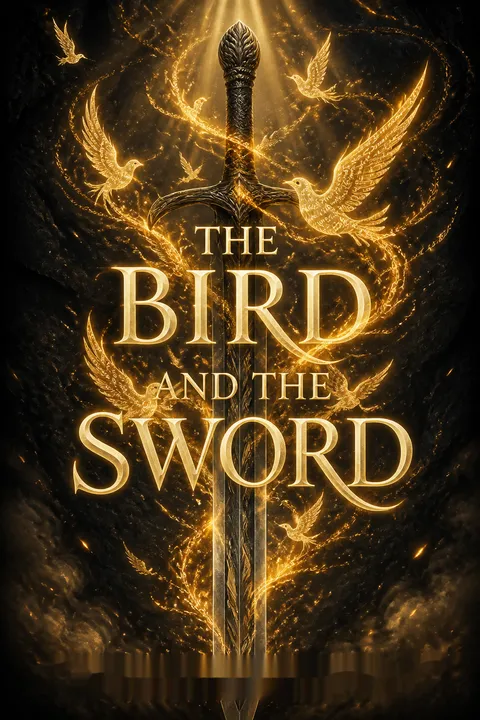
The Bird and the Sword receives overwhelmingly positive reviews, praised for its enchanting storytelling, beautiful prose, and compelling characters. Readers describe it as a captivating fantasy romance with a unique magical system and powerful themes. Many appreciate the author's ability to create a vivid world and develop a slow-burn romance. While some criticize certain aspects of the plot or characterization, most reviewers consider it a must-read, highlighting its emotional depth and the author's skillful writing. The book is often recommended to both fantasy and romance fans.
People Also Read
Characters
Lark
The silent wordsmithA nobleman’s daughter raised under strict watch after her mother’s death, Lark communicates through signs and has never been taught to read. She is observant, compassionate toward animals, and more stubborn than her small, quiet manner suggests. Years of being ignored have made her wary of dependence and hungry to understand the world for herself. She measures people by the gap between their words and their actions, a habit that informs both her relationships and her later judgments. Her central struggle is not simply finding a voice, but deciding how to use power without becoming another person who controls others.
Tiras
The burdened kingKing of Jeru, Tiras is a skilled fighter who carries the weight of his father’s legacy and the demands of a kingdom at war. He can be commanding, politically shrewd, and too ready to decide what others should do for their own good. Beneath that authority is a man deeply concerned with protecting his people, even when he struggles to distinguish protection from control. Lark unsettles his habits because she can see what he conceals and refuses to treat his rank as proof that he is right. Their bond develops through conflict, instruction, shared danger, and the difficult work of respecting one another’s choices.
Boojohni
Lark’s loyal trollA troll and longtime companion to Lark, Boojohni is her protector, confidant, and most consistent source of affection. His grumbling often disguises concern, and his humor gives Lark room to feel more than fear. Because he has guarded her since childhood, he understands the gestures and silences that others misread. He is not a court strategist or a warrior, but his patience and emotional insight make him a crucial guide. Boojohni repeatedly encourages Lark to trust her own judgment while reminding her that grief and hatred cannot be avoided simply by refusing to speak of them.
Kjell
The king’s fierce captainTiras’s captain and closest companion, Kjell is blunt, disciplined, and intensely protective of the king. He distrusts magic because of the persecution and violence woven into Jeru’s history, and that fear initially shapes his view of Lark. His loyalty is not gentle, but it is profound, and he will challenge Tiras rather than flatter him. Kjell’s bond with the king gives him a stake in the succession and in the kingdom’s survival. His suspicion of Lark creates friction, while his willingness to confront uncomfortable truths makes him a strong counterweight to Tiras’s authority.
Meshara
Lark’s prophetic motherLark’s mother is a noblewoman and Teller whose insight into the future makes her cautious with speech. She understands that words can shape events as well as describe them, and she tries to protect her daughter by teaching her restraint. Meshara’s love is practical and urgent: she gives Lark knowledge while also binding her to silence until she can survive the danger around her. Her warnings remain central to Lark’s understanding of family, power, and fate.
Lord Corvyn
Lark’s ambitious fatherLark’s father is a politically astute lord who treats security and succession as matters of survival. His fear of Meshara’s prophecy binds him to his daughter, but it does not make him tender toward her. He manages danger by hiding information, controlling Lark’s education, and weighing every relationship against his own prospects. His mixture of fear, ambition, and resentment makes him difficult for Lark to trust, even when his concern for her safety appears genuine.
Ariel of Firi
The polished envoyAriel represents the province of Firi in the royal court. Beautiful, socially agile, and confident, she moves easily among powerful men and understands how much influence can be gained through charm and careful observation. Her attention to Kjell and her courteous friendship with Lark place her near the center of the court’s personal and political tensions. Ariel is difficult to read, in part because she knows that seeming harmless can be a useful form of access.
Shenna
The guarded healerA young Healer from outside Jeru City, Shenna has learned to be cautious in a society that treats her ability as a crime. She cares for the sick because suffering demands a response, not because she seeks status or reward. Her willingness to help Tiras is conditional on broader protections for the Gifted, showing that compassion can coexist with self-preservation. Shenna gives Lark a model of solidarity grounded in mutual responsibility rather than obedience.
Sorkin
The elder healerAn elderly Healer who has survived generations of persecution, Sorkin brings historical memory and cautious authority to the hidden Gifted community. He studies people before trusting their claims and insists that the use of a gift matters more than the gift itself. His measured presence challenges the fear-driven assumptions of both the court and the rebels. For Tiras, Sorkin’s assessment raises questions that ordinary medicine cannot answer.
Gwyn
The elder TellerGwyn is an old Teller who recognizes abilities others overlook and senses patterns before they become obvious. She is warm without being careless and treats Lark as someone capable of understanding difficult truths. Her ceremonial role and quiet confidence connect the kingdom’s traditions to the hidden history of the Gifted. Gwyn’s gift gives her knowledge, but not unlimited control over what the future brings.
Hashim
The watchful falconerMaster of the royal mews, Hashim cares for the kingdom’s birds with patience and respect. His work makes him attentive to animal behavior and comfortable with forms of life the court tends to treat as tools. He is discreet, observant, and more perceptive than his quiet manner suggests. Hashim’s loyalty to the royal household comes with an unusual openness to those who do not fit its expectations.
Liege
The Volgar commanderThe leader of the Volgar directs the winged attacks threatening Jeru and the neighboring provinces. Unlike the creatures who follow him, he shows strategy and personal ambition, making him a political as well as military danger. His command over the Volgar hints at an intelligence beyond their ordinary instincts. He seeks territory and influence, and his ability to shape the battlefield forces Tiras and Lark to confront the source of the invasion rather than merely contain its consequences.
Lord Gaul
A hardline council lordLord Gaul is among the nobles who argue that the Gifted threaten order and that Tiras is too tolerant of them. He frames persecution as public safety, helping turn fear into official policy. His certainty makes compromise difficult and gives political cover to those who want more power.
Lord Bin Dar
A calculating council lordLord Bin Dar is a practiced political operator who speaks for the council’s hardline position on magic. He favors formal procedure when it serves his interests and uses carefully staged arguments to challenge Tiras’s authority. His composure makes him difficult to read, while his appetite for influence makes him a persistent obstacle to Lark’s claim.
Lord Bilwick
A blustering noblemanLord Bilwick is a wealthy, self-important member of the council whose easy jokes conceal a quick temper and a sense of entitlement. He has long regarded Lark as an unsuitable match for his family. His presence helps show how private contempt and public policy reinforce one another among Jeru’s powerful.
Pia
Lark’s palace attendantPia is a young palace maid who helps dress and attend to Lark. She begins cautiously, unsure how to interpret a mistress who cannot speak aloud, but she shows more curiosity and kindness than the servants who dismiss Lark. Her small acts of assistance help Lark navigate the palace’s daily routines.
Plot Devices
The power of words
Language becomes magicIn Jeru, words can create effects when spoken or formed with sufficient intent. Lark’s Teller ability lets her direct objects, influence animals, calm pain, and shape events, while her inability to speak initially confines her to signs and inward commands. Learning to read and write gives her access to the structures of language that her father tried to deny her. The device makes every command a moral choice: precision, fear, desire, and the target’s own will all affect what happens.
Meshara’s final spell
Protection through silenceAfter King Zoltev kills Meshara, she binds Lark to silence and urges her to keep her words hidden until the right moment. The spell protects a child who has just witnessed violence, but it also leaves her isolated and unable to explain her understanding to others. Its meaning remains unsettled for years because Lark interprets the silence as a permanent curse. The spell ultimately becomes a question of timing, fear, and whether protection can become another form of confinement.
Tiras’s transformations
Identity under pressureTiras’s changing body is a private crisis that affects his ability to rule, fight, and remain close to Lark. The transformation is connected to his family history and the legacy of persecution, but at first he has no reliable control over it. Each change raises the possibility that he may not return to human form, turning a supernatural ability into a source of political instability and intimate fear. The device asks whether identity depends on appearance, choice, or the ability to move between forms.
The Well of Words
Public hope in uncertaintyThe Well of Words is a place where Jeruvians speak their wishes into the depths, hoping the Creator will answer. Its crowds reveal how deeply people long for health, love, wealth, and safety despite the kingdom’s official suspicion of magic. The well acts as a public counterpoint to Lark’s private ability: ordinary people ask for change, while she can sometimes make it happen. It also emphasizes that a wish granted without judgment may carry consequences its speaker did not anticipate.
The Volgar army
A manufactured enemyThe Volgar are winged predators whose raids devastate the border provinces and threaten Jeru City. Their simple instincts make them vulnerable to Lark’s commands, but their coordinated attacks suggest an intelligence directing them. As the story develops, their presence exposes the danger of treating creation as ownership and of confusing a creature’s origin with its moral worth. The army transforms the kingdom’s internal argument about the Gifted into a matter of immediate survival.
FAQ
Synopsis & Basic Details
What is The Bird and the Sword about?
- A Mute Teller's Awakening: The Bird and the Sword follows Lark, a young woman cursed to silence by her Teller mother, Meshara, to protect her from a kingdom that fears magic. Despite her inability to speak aloud, Lark possesses a powerful gift: she can shape reality with her thoughts and words.
- A King's Desperate Alliance: Lark is taken from her home by King Tiras of Jeru, a ruler burdened by his own hidden Changer gift – the ability to transform into an eagle. He uses Lark as a pawn in a political struggle against his own lords and the monstrous Volgar, hoping her unique power can save his kingdom.
- Love, Duty, and Self-Discovery: As Lark and Tiras navigate political intrigue, deadly battles, and their own complex, forbidden gifts, their relationship evolves from captor and captive to a deep, unspoken bond. The story explores Lark's journey to reclaim her voice, Tiras's struggle to control his changing nature, and their combined fight to redefine what it means to be Gifted in a world steeped in fear and prejudice.
Why should I read The Bird and the Sword?
- Unique Magic System: Dive into a world where words hold tangible power, capable of shaping reality, healing, and destruction. Lark's silent, internal magic offers a fresh take on fantasy abilities, making her journey of discovery both fascinating and deeply personal.
- Rich Character Development & Romance: Experience a slow-burn romance built on shared vulnerability and profound understanding between two powerful, yet deeply flawed, characters. Lark's transformation from an invisible mute to a formidable queen, and Tiras's struggle with his identity, are compelling and emotionally resonant.
- Themes of Acceptance and Identity: Beyond the thrilling plot, the novel delves into universal themes of self-acceptance, the courage to embrace one's true nature, and the fight against prejudice. It's a story about finding your voice, even when you can't speak, and the power of love to heal deep-seated societal wounds.
What is the background of The Bird and the Sword?
- A History of Persecution: The land of Jeru is steeped in a history of fear and persecution against the "Gifted" – individuals with magical abilities inherited from the Creator's four original children: the Spinner, the Changer, the Healer, and the Teller. Generations of warrior kings, starting with the one who slayed a dragon-Changer, systematically eradicated the Gifted, believing equality could only be achieved if no one was special.
- The Legacy of King Zoltev: King Tiras's father, Zoltev, was particularly brutal in his suppression of magic, famously cutting off the hands of a Spinner and murdering Lark's Teller mother, Meshara, for a seemingly innocuous act of magic. This era instilled deep fear in the populace and forced any remaining Gifted into hiding, shaping the political landscape and the characters' personal histories.
- A Kingdom Under Threat: Jeru is currently under siege by the Volgar, monstrous birdmen led by the enigmatic Liege. These creatures are believed to be a new, terrifying manifestation of magic, further fueling the council's desire to eliminate all Gifted, even as King Tiras seeks to understand and potentially utilize them.
What are the most memorable quotes in The Bird and the Sword?
- "Swallow Daughter, pull them in, those words that sit upon your lips. Lock them deep inside your soul, hide them 'til they've time to grow. Close your mouth upon the power, curse not, cure not, 'til the hour. You won't speak and you won't tell, you won't call on heav'n or hell. You will learn and you will thrive. Silence, daughter. Stay alive.": This powerful incantation, whispered by Lark's dying mother, Meshara, is the foundational curse and prophecy that shapes Lark's entire life, explaining her muteness and foreshadowing her eventual destiny. It encapsulates the central conflict of her suppressed power.
- "I am not a weapon. I don't want to be a weapon!": Lark's desperate internal cry to Tiras reveals her profound moral struggle with her Teller gift. This quote highlights her deep-seated fear of being used for destruction, contrasting with Tiras's pragmatic view of her abilities and underscoring her journey to define her own purpose beyond mere utility.
- "I have loved you every moment of every day, and I will love you until I cease to be. Bird, man, or king, I love you, and I will always love you.": Tiras's raw and vulnerable confession of love to Lark is a pivotal moment, breaking through her emotional walls and affirming his devotion beyond duty or need. It underscores the novel's central theme that love transcends form and circumstance, offering a powerful counterpoint to the kingdom's history of fear.
What writing style, narrative choices, and literary techniques does Amy Harmon use?
- Lyrical and Evocative Prose: Amy Harmon employs a poetic and sensory-rich writing style, particularly in describing Lark's internal world and her connection to words. Phrases like "words swarm silently all around me, like quiet watchers" or "the air crackled, like a storm was approaching" create a vivid, immersive experience, enhancing the magical realism.
- First-Person Internal Monologue: The narrative is primarily told from Lark's first-person perspective, but uniquely, her "voice" is an internal monologue of thoughts and unspoken words. This narrative choice brilliantly conveys her isolation and the power of her Teller gift, allowing readers direct access to her rich inner life and emotional struggles, even as she remains outwardly silent.
- Symbolism and Foreshadowing: Harmon masterfully weaves symbolism throughout the story, such as birds representing freedom and transformation, the Well of Words signifying lost and found power, and the changing seasons mirroring character development. Subtle foreshadowing, like the "Prince of Poppets" flying, builds suspense and adds layers of meaning that become apparent upon re-reading.
Hidden Details & Subtle Connections
What are some minor details that add significant meaning?
- Boojohni's "Love" Word: Despite his constant grumbling and seemingly gruff demeanor, Lark consistently hears the word "love" emanating from Boojohni's thoughts. This subtle detail reveals his unwavering, unconditional affection for Lark, serving as a constant emotional anchor for her in a world where she often feels unloved or used. It highlights the theme of true connection transcending outward appearances.
- The Well of Words' Significance: The city's "Well of Words," where people shout their desires, is more than a local custom; it's a symbolic echo of the Creator's original act of giving words and gifts. It represents the collective yearning for power and fulfillment, but also the diluted and often misguided understanding of true magic, contrasting with Lark's profound, inherent connection to words.
- Tiras's White Hair as a "Curse": Tiras's striking white hair, a stark contrast to his dark skin, is a physical manifestation of his uncontrolled Changer gift. It's a visible "taint" that mirrors Lark's silence, marking him as different and vulnerable. This detail subtly connects their shared experience of being outwardly marked by their gifts, fostering empathy and understanding between them.
What are some subtle foreshadowing and callbacks?
- The Prince of Poppets' Flight: In the prologue, young Lark's "Prince of Poppets" doll is imbued with the word "fly" and soars out the window. This seemingly innocent act directly foreshadows King Tiras's hidden Changer gift, his ability to transform into an eagle, and his deep desire for freedom and flight, which Lark later helps him control.
- Meshara's Prophecy to Zoltev: Lark's mother tells King Zoltev, "If you kill me, you will lose your soul and your son to the sky." This is a powerful callback throughout the narrative. It foreshadows Zoltev's eventual transformation into the Volgar Liege (losing his soul) and Tiras's Changer gift (losing his son to the sky as an eagle), revealing the deep, generational impact of Meshara's Teller power.
- Kjell's Hidden Healing Gift: Kjell's initial disdain for the Gifted, particularly Healers, is a subtle setup for the later revelation of his own latent healing ability. His fierce loyalty to Tiras, coupled with his prejudice, foreshadows the internal conflict he must overcome, and his eventual role in saving Tiras by embracing the very gift he once scorned.
What are some unexpected character connections?
- Hashim, Master of the Mews, as a Changer: The quiet, unassuming Master of the Mews, Hashim, is revealed to be a Changer himself, and a confidante to Tiras in his eagle form. This connection is unexpected because Hashim is a minor character, yet he provides Tiras with a safe haven and understanding, highlighting that the Gifted exist in all walks of life and often hide in plain sight.
- Lady Firi's True Nature as a Changer/Spinner: Lady Ariel of Firi, initially presented as a beautiful, ambitious, and seemingly loyal ally, is revealed to be a powerful Changer and Spinner, capable of manipulating both form and matter. Her true nature as the orchestrator of Tiras's abduction and an ally of Zoltev is a significant twist, demonstrating that not all Gifted are benevolent and that ambition can corrupt.
- Kjell as Zoltev's Bastard Son: The revelation that Kjell is King Zoltev's illegitimate son adds a profound layer to his character. It explains his unwavering loyalty to Tiras (his half-brother), his deep-seated resentment of the Gifted (a legacy of his father's reign), and his complex relationship with the throne, making his eventual acceptance of his own healing gift and his role as regent even more poignant.
Who are the most significant supporting characters?
- Boojohni, the Loyal Troll: Boojohni is more than just Lark's protector; he is her emotional anchor and the only one who consistently "hears" her true feelings, even before she can communicate with Tiras. His unwavering love, simple wisdom, and comedic relief provide crucial balance to Lark's isolated existence and the story's darker themes, embodying the idea that true loyalty transcends species and status.
- Kjell, the Reluctant Healer: Kjell serves as Tiras's fiercely loyal captain and brother, but his significance deepens with the revelation of his own suppressed healing gift. His journey from prejudice against the Gifted to embracing his own power and becoming a co-ruler with Lark is central to the kingdom's transformation, symbolizing the breaking down of old fears and the forging of new alliances.
- Mother Gwyn, the Ancient Teller: Mother Gwyn, the old woman who anoints Lark's feet, is revealed to be an ancient Teller and a source of profound wisdom. She connects Lark to her lineage, provides crucial prophetic insights, and validates Lark's unique abilities, serving as a spiritual guide and a reminder of the enduring power of the Gifted.
Psychological, Emotional, & Relational Analysis
What are some unspoken motivations of the characters?
- Lord Corvyn's Self-Preservation: Lord Corvyn's primary unspoken motivation is his desperate fear of death, directly tied to Meshara's curse: "if she dies . . . if she is even harmed, you will share the very same fate." This drives his neglectful control over Lark, his attempts to reclaim her from Tiras, and his willingness to conspire against the king, all to ensure his own survival, rather than genuine paternal love.
- Tiras's Yearning for Acceptance: Beyond his duty as king, Tiras harbors a deep, unspoken yearning for acceptance of his Changer gift. His confession to Lark, "I am losing myself. Piece by bloody piece," reveals his fear of becoming a monster like his father. His desire for Lark's understanding and her ability to "see" him, even in his animal form, is a powerful motivator for their bond.
- Lark's Desire to Be "Wanted": Lark's long-standing isolation and muteness create an unspoken desire to be wanted for herself, not just for her utility. Her internal thought, "I want to be wanted," reveals her vulnerability. This motivation drives her resistance to Tiras's initial attempts to "use" her and her eventual surrender to his love, as she seeks genuine connection over mere purpose.
What psychological complexities do the characters exhibit?
- Lark's Traumatic Silence and Power: Lark's muteness is a psychological scar from witnessing her mother's murder, leading to a deep-seated fear of her own words and their potential for harm. This trauma creates a complex internal world where her immense power is both a source of terror and a desperate longing for expression, making her journey one of profound self-acceptance and healing.
- Tiras's Guilt and Identity Crisis: Tiras is psychologically burdened by his father's tyrannical legacy and his own uncontrolled Changer gift. He grapples with immense guilt, believing his gift might have driven his father to suicide and fearing he will become a monster. This internal conflict fuels his relentless pursuit of justice and his struggle to reconcile his human duty with his animalistic nature, leading to an identity crisis.
- Kjell's Prejudice and Suppressed Empathy: Kjell exhibits a complex psychological duality: fierce loyalty to Tiras coexists with ingrained prejudice against the Gifted, a reflection of Jeru's history. His own latent healing gift, which he denies, creates an internal battle between his learned hatred and his inherent capacity for empathy, making his eventual acceptance of his gift a significant personal triumph.
What are the major emotional turning points?
- Lark's First Conscious Spell: The moment Lark consciously commands a candle to move, then accidentally starts a fire, is a terrifying emotional turning point. It shifts her understanding of her gift from a passive, internal awareness to an active, potentially destructive force, forcing her to confront the immense power
Synopsis & Basic Details
What is The Bird and the Sword about?
- A Mute Teller's Awakening: The Bird and the Sword follows Lark, a young woman cursed to silence by her Teller mother, Meshara, to protect her from a kingdom that fears magic. Despite her inability to speak aloud, Lark possesses a powerful gift: she can shape reality with her thoughts and words.
- A King's Desperate Alliance: Lark is taken from her home by King Tiras of Jeru, a ruler burdened by his own hidden Changer gift – the ability to transform into an eagle. He uses Lark as a pawn in a political struggle against his own lords and the monstrous Volgar, hoping her unique power can save his kingdom.
- Love, Duty, and Self-Discovery: As Lark and Tiras navigate political intrigue, deadly battles, and their own complex, forbidden gifts, their relationship evolves from captor and captive to a deep, unspoken bond. The story explores Lark's journey to reclaim her voice, Tiras's struggle to control his changing nature, and their combined fight to redefine what it means to be Gifted in a world steeped in fear and prejudice.
Why should I read The Bird and the Sword?
- Unique Magic System: Dive into a world where words hold tangible power, capable of shaping reality, healing, and destruction. Lark's silent, internal magic offers a fresh take on fantasy abilities, making her journey of discovery both fascinating and deeply personal.
- Rich Character Development & Romance: Experience a slow-burn romance built on shared vulnerability and profound understanding between two powerful, yet deeply flawed, characters. Lark's transformation from an invisible mute to a formidable queen, and Tiras's struggle with his identity, are compelling and emotionally resonant.
- Themes of Acceptance and Identity: Beyond the thrilling plot, the novel delves into universal themes of self-acceptance, the courage to embrace one's true nature, and the fight against prejudice. It's a story about finding your voice, even when you can't speak, and the power of love to heal deep-seated societal wounds.
What is the background of The Bird and the Sword?
- A History of Persecution: The land of Jeru is steeped in a history of fear and persecution against the "Gifted" – individuals with magical abilities inherited from the Creator's four original children: the Spinner, the Changer, the Healer, and the Teller. Generations of warrior kings, starting with the one who slayed a dragon-Changer, systematically eradicated the Gifted, believing equality could only be achieved if no one was special.
- The Legacy of King Zoltev: King Tiras's father, Zoltev, was particularly brutal in his suppression of magic, famously cutting off the hands of a Spinner and murdering Lark's Teller mother, Meshara, for a seemingly innocuous act of magic. This era instilled deep fear in the populace and forced any remaining Gifted into hiding, shaping the political landscape and the characters' personal histories.
- A Kingdom Under Threat: Jeru is currently under siege by the Volgar, monstrous birdmen led by the enigmatic Liege. These creatures are believed to be a new, terrifying manifestation of magic, further fueling the council's desire to eliminate all Gifted, even as King Tiras seeks to understand and potentially utilize them.
What are the most memorable quotes in The Bird and the Sword?
- "Swallow Daughter, pull them in, those words that sit upon your lips. Lock them deep inside your soul, hide them 'til they've time to grow. Close your mouth upon the power, curse not, cure not, 'til the hour. You won't speak and you won't tell, you won't call on heav'n or hell. You will learn and you will thrive. Silence, daughter. Stay alive.": This powerful incantation, whispered by Lark's dying mother, Meshara, is the foundational curse and prophecy that shapes Lark's entire life, explaining her muteness and foreshadowing her eventual destiny. It encapsulates the central conflict of her suppressed power.
- "I am not a weapon. I don't want to be a weapon!": Lark's desperate internal cry to Tiras reveals her profound moral struggle with her Teller gift. This quote highlights her deep-seated fear of being used for destruction, contrasting with Tiras's pragmatic view of her abilities and underscoring her journey to define her own purpose beyond mere utility.
- "I have loved you every moment of every day, and I will love you until I cease to be. Bird, man, or king, I love you, and I will always love you.": Tiras's raw and vulnerable confession of love to Lark is a pivotal moment, breaking through her emotional walls and affirming his devotion beyond duty or need. It underscores the novel's central theme that love transcends form and circumstance, offering a powerful counterpoint to the kingdom's history of fear.
What writing style, narrative choices, and literary techniques does Amy Harmon use?
- Lyrical and Evocative Prose: Amy Harmon employs a poetic and sensory-rich writing style, particularly in describing Lark's internal world and her connection to words. Phrases like "words swarm silently all around me, like quiet watchers" or "the air crackled, like a storm was approaching" create a vivid, immersive experience, enhancing the magical realism.
- First-Person Internal Monologue: The narrative is primarily told from Lark's first-person perspective, but uniquely, her "voice" is an internal monologue of thoughts and unspoken words. This narrative choice brilliantly conveys her isolation and the power of her Teller gift, allowing readers direct access to her rich inner life and emotional struggles, even as she remains outwardly silent.
- Symbolism and Foreshadowing: Harmon masterfully weaves symbolism throughout the story, such as birds representing freedom and transformation, the Well of Words signifying lost and found power, and the changing seasons mirroring character development. Subtle foreshadowing, like the "Prince of Poppets" flying, builds suspense and adds layers of meaning that become apparent upon re-reading.
Hidden Details & Subtle Connections
What are some minor details that add significant meaning?
- Boojohni's "Love" Word: Despite his constant grumbling and seemingly gruff demeanor, Lark consistently hears the word "love" emanating from Boojohni's thoughts. This subtle detail reveals his unwavering, unconditional affection for Lark, serving as a constant emotional anchor for her in a world where she often feels unloved or used. It highlights the theme of true connection transcending outward appearances.
- The Well of Words' Significance: The city's "Well of Words," where people shout their desires, is more than a local custom; it's a symbolic echo of the Creator's original act of giving words and gifts. It represents the collective yearning for power and fulfillment, but also the diluted and often misguided understanding of true magic, contrasting with Lark's profound, inherent connection to words.
- Tiras's White Hair as a "Curse": Tiras's striking white hair, a stark contrast to his dark skin, is a physical manifestation of his uncontrolled Changer gift. It's a visible "taint" that mirrors Lark's silence, marking him as different and vulnerable. This detail subtly connects their shared experience of being outwardly marked by their gifts, fostering empathy and understanding between them.
What are some subtle foreshadowing and callbacks?
- The Prince of Poppets' Flight: In the prologue, young Lark's "Prince of Poppets" doll is imbued with the word "fly" and soars out the window. This seemingly innocent act directly foreshadows King Tiras's hidden Changer gift, his ability to transform into an eagle, and his deep desire for freedom and flight, which Lark later helps him control.
- Meshara's Prophecy to Zoltev: Lark's mother tells King Zoltev, "If you kill me, you will lose your soul and your son to the sky." This is a powerful callback throughout the narrative. It foreshadows Zoltev's eventual transformation into the Volgar Liege (losing his soul) and Tiras's Changer gift (losing his son to the sky as an eagle), revealing the deep, generational impact of Meshara's Teller power.
- Kjell's Hidden Healing Gift:
About the Author
Other books by Amy Harmon




Download PDF
Download EPUB
.epub digital book format is ideal for reading ebooks on phones, tablets, and e-readers.








