

Plot Summary
Ring Beneath the Ring Light
In 2021, screenwriter Rowan Fairfax and novelist Seth Wright leave Los Angeles after the pandemic drains their savings and sends them back to Rowan’s hometown, Ann Arbor. They rent a cramped apartment and promise their creative careers are only paused, but Seth pours his energy into TheWrightStory, a YouTube channel where Rowan increasingly feels like part of the product.
At Rowan’s thirtieth birthday dinner, Seth proposes in front of her family and records the celebration. Rowan says yes, moved by the love she believes they share, even as the camera and repeated takes of their kiss leave a small unease. For now, their engagement makes hardship feel temporary, and Rowan chooses to trust that they still want the same future.
The proposal offers Rowan an emotionally persuasive answer to instability: commitment seems to turn shared hardship into a shared plan. Yet the public setting and Seth’s attention to filming blur the boundary between intimacy and performance. Rowan is not simply deceived; she participates, hoping the staged image can coexist with genuine affection. Her acceptance therefore carries both love and self-silencing. The camera becomes a quiet measure of their imbalance: Seth sees a growing enterprise, while Rowan sees a private life that she has not yet learned to defend.
The Confession Goes Live
At Sunday dinners, Rowan’s mother, Lauren, pushes practical plans while her father, John, quietly slips money into leftovers to help the couple. Rowan resents needing their support, then agrees with Seth to spend a month in the Adirondacks, where he says he will write and she can recover her own creative momentum.
Instead, juggling photography work, filming, and an unanswered screenplay pitch, Rowan drinks alone and livestreams that their online arguments and pranks are staged. She even calls her engagement ring fake, though the accusation is not true.
Seth is hurt and furious about the channel’s lost subscribers. Rowan apologizes on camera and accepts his suggestion to frame the outburst as an alcohol problem. The sympathetic response sends the channel’s numbers soaring, but Rowan feels more trapped inside its success.
Rowan’s outburst is not a clear-eyed manifesto so much as a desperate attempt to make her private discomfort impossible to ignore. Its immediate consequence, however, is to turn distress into profitable content. Seth can interpret the audience’s sympathy as proof that the channel works; Rowan experiences the same response as evidence that even her resistance can be packaged. The episode exposes their unequal relationship to performance. Seth gains purpose and public affirmation, while Rowan’s creative life shrinks behind a role she has not firmly refused. Their shared income disguises a growing difference in what each is willing to sacrifice.
The Crow's White Feather
At their remote cabin, Rowan notices a black crow with one white feather, then meets Jess, a practical, self-possessed ornithologist who calls her chickens off the road. While hiking, Rowan encounters Jess’s partner, Aidan, and learns that the nearby ruins are Camp Callaway, a once-grand retreat whose owner, Eddie Callaway, disappeared in 1975.
In town, diner owner Glenda Hopper recalls Eddie’s free women’s retreats and the local disapproval they stirred. Rowan becomes absorbed in the mystery, especially after spotting the camp’s entrance and exploring its weed-choked grounds with Seth.
Their separate paths through the ruins lead to an old handbook and a rusted chocolate drink tin. The woods, initially a setting for their hoped-for retreat, become a place where Rowan can investigate a story of her own.
The crow and the abandoned camp give Rowan two forms of invitation: one intimate and observant, the other historical and unresolved. Her curiosity grows through encounters with people who have made deliberate lives outside conventional expectations. Jess and Aidan’s homestead contrasts with Seth’s increasingly screen-centered attention, though Rowan has not yet named that contrast as a problem. Camp Callaway also links her stalled writing to a story with physical traces, local memory, and unanswered questions. Instead of waiting passively for Hollywood to validate her pitch, Rowan begins gathering material and following her own attention.
Camp Callaway's Forgotten Tin
Inside one ruined cabin, Rowan and Seth find a hand-bound 1975 Wild Women handbook and the tin, marked to suggest something lies within. Seth films their discovery, reluctant to leave the objects behind. On the way out, a rotten porch board gives way beneath him, opening a deep cut in his leg.
Rowan improvises a bandage, and when they encounter Jess and Aidan, Jess offers to stitch the wound at their off-grid home. Seth turns the treatment into a video; Rowan notices how readily he returns to producing content.
Jess repairs the injury with skill, while Rowan learns more about the couple’s chosen life and asks about the crow. Jess explains its white feather and suggests the cabin’s former occupants may have fed it. Back at the cabin, Rowan finds peanuts for the bird.
The injury makes the ruins materially dangerous, while the couple’s response reveals their different instincts. Rowan prioritizes Seth’s care and the handbook’s preservation; Seth sees footage worth sharing. Jess’s competence offers a model of practical attention that is neither performative nor self-effacing. Her explanation of the crow gives Rowan a plausible reason to feed it, keeping the bird grounded in natural behavior even as it acquires symbolic weight. The scene also establishes a consequential contrast: care can be offered directly, without being converted into an audience-facing story.
A Poem Becomes a Map
Back at the cabin, Rowan and Seth pry open the tin and find a concrete poem by Jude, shaped like an evergreen, with a note from Eddie announcing a treasure hidden on the property. Online research links Jude to the poet Judith Swann and reveals that earlier clue tins were reported in 2008, but no treasure was ever found.
Seth becomes excited by the prospect of filming a hunt, and Rowan agrees, energized by the possibility of a screenplay built around the camp. The handbook gives her Eddie’s own account of the retreats, while the poem offers a practical puzzle to follow. For the first time in months, Rowan fills pages with ideas. She believes she and Seth have become a team again, though they mean different things by the adventure.
The clue transforms historical research into action: Eddie’s ideas are no longer merely archival, because a present-day reader can follow them. Rowan’s renewed writing is genuine, but its revival is entangled with Seth’s appetite for online spectacle. Their agreement feels like restored partnership because shared excitement briefly masks competing motives. The shaped poem makes form part of the plot: it asks the reader to look at words as an object, not just as a message. The novel similarly trains Rowan to notice what has been overlooked, including the difference between making a story and turning it into content.
Edith Becomes Eddie
The story shifts to Edith Jane Callaway’s earlier life. Raised wealthy and trained to be a gracious wife and mother, Edith builds her world around her husband, Stewart, and their son, Theo. Stewart’s affair fractures the marriage; then Theo dies in a car crash on his eighteenth birthday.
Overwhelmed by grief, Edith attempts suicide, survives, and later joins a women’s protest in New York that awakens her to a life beyond her inherited role. She leaves her old identity behind, returns to Camp Callaway, and begins creating free wilderness retreats for women.
With Florence, Samuel, and later Judith and Dot, she restores the neglected grounds into a working refuge. The camp gives Edith a purpose, though her confidence still depends on the people who help her carry it.
Edith’s transformation is not a simple escape from privilege. Her wealth has protected her materially while narrowing the roles she can imagine for herself. Grief breaks that arrangement, but survival alone does not tell her how to live; political solidarity and chosen community provide a new structure. Becoming Eddie is an act of authorship, not an erasure of her past. She retains habits and vulnerabilities even as she changes the terms of her life. The camp’s later generosity grows from this tension: Eddie uses inherited resources to make room for other women, while still needing friends to steady the person who leads them.
Women Claim the Woods
By 1975, Camp Callaway’s retreats combine practical skills, creative workshops, discussions of women’s bodies, and time in the woods. Eddie’s crew includes former teacher Florence, cook and confidant Samuel, writer Judith, and healer Dot.
Their guests arrive carrying exhaustion, fear, and private troubles, and Eddie offers attention without demanding that they remake themselves to earn it. Neighboring owner Victor Valence resents the camp’s public feminist message and confronts Eddie over its flyers and guests.
After the camp’s entrance sign burns, Eddie suspects Victor, though the fire is never proven to be arson. The incident leaves her shaken and more determined to finish a surprise treasure hunt. She prepares clues and a substantial cash prize, intending the discovery to give one woman a chance at greater freedom.
The camp is both a sanctuary and a contested public space. Its practices turn abstract empowerment into material acts: women handle tools, learn about their bodies, and speak about their needs. Eddie’s approach is influential precisely because it does not demand a single model of liberation. Victor’s hostility shows how even a wealthy woman’s property cannot insulate her from gendered policing when she uses it against convention. The fire deepens Eddie’s resolve, but also complicates her confidence. Her plan to offer money is generous, yet its secrecy will later prove dangerous, demonstrating that care without communication can leave others unable to help.
The Box Beneath the Canopy
Before dawn, Victor appears at Camp Callaway with a shotgun and the smiley-face pin Eddie had attached to a note on his gate. Samuel tackles him before he can harm her. Eddie learns the weapon is unloaded and lets Victor leave, but the encounter rattles her. She keeps her morning plan: carrying her mother’s bronze jewelry box, filled with money and a note, into a secluded part of the forest.
There she hides it in a hollow high in a tree, near a place she once shared with Theo. Eddie expects to return and explain the hunt to her friends and guests. She does not tell them exactly where she is going. Her private surprise is meant to create an adventure, but the secrecy leaves the people who love her without a reliable search route.
Victor’s threat is real even though the gun is unloaded, and Samuel’s intervention briefly turns Eddie’s trusted community into physical protection. Her decision to continue alone is not recklessness for its own sake; she is committed to preserving the surprise that gives the hunt its emotional force. Yet secrecy is also a failure of risk management. Eddie’s independence has been hard won, and she may experience asking for help as a threat to that independence. The box embodies both impulses: a gift designed to empower someone else, carried out through a plan that leaves Eddie isolated.
The Email Seth Buried
As Rowan searches for clues, she joins Jess on a hike and tells her how a car accident at sixteen left Rowan scarred and her mother without a leg. Jess listens without rushing her, and Rowan recognizes how far she has drifted from her own ambitions.
Soon the crow accepts peanuts and leaves Rowan a dark, glittering stone, then later a vintage smiley-face pin. When Rowan returns inside, she catches Seth hiding papers over her phone. He admits he had moved an email from her contact Clara into a folder weeks earlier.
Clara and producer Robbie had praised Rowan’s screenplay pitch and requested a meeting in Los Angeles. Seth concealed the opportunity because he feared Rowan would leave and because the channel depended on her presence. Rowan understands that his fear has been governing her choices, and runs into the woods.
Jess’s listening gives Rowan an experience of attention that does not redirect the conversation toward a product or solution. That encounter helps her identify a pattern she has partly maintained herself: she has treated Seth’s needs as the safer priority and her own work as indefinitely postponable. The crow’s gifts echo the camp’s pins, linking the women across time without replacing Rowan’s judgment with magic. Seth’s concealment is a breach of trust with concrete professional consequences. His fear may explain the act, but it does not excuse it. Rowan’s flight marks the moment her body acts before she can bargain away her anger.
Bones Beneath the Embankment
Alone in the woods, Rowan stumbles on a clearing and falls down a steep embankment. While climbing back up, she sees an unfamiliar object lodged in a tree hollow and spots human bones beneath a rocky ledge. She follows a stream to find her way back, injured and shaken, and tells Seth what she saw.
The next morning they return to the clearing. Seth retrieves the bronze jewelry box from the hollow, while Rowan leads him down to the remains. They find old clothing, a broken leg, and a smiley-face pin matching the one the crow brought Rowan.
Convinced the remains belong to Eddie Callaway, Rowan insists on contacting police. Seth photographs the site, but has not told officers about the box. Search teams confirm the remains are human, and the discovery becomes a local news story.
The discovery binds Rowan’s emotional crisis to Eddie’s unfinished story, but the resemblance between their injuries does not make their experiences interchangeable. Rowan survives because she can retrace landmarks and find water; Eddie had no such route back to help. The pin is the first physical link between the crow’s gift, the camp, and the remains, while the box in the tree raises an immediate ethical question. Rowan responds by involving authorities; Seth hesitates, already measuring what can be filmed. Their disagreement over evidence reveals how differently they understand responsibility.
A Hundred Thousand Dollars
While the police investigate the remains, Rowan contacts Judith Swann, the poet whose work is in the tin. Judith confirms that she and Eddie were close, explains that Eddie intended a treasure hunt, and describes her devotion to the camp.
She gives Rowan permission to keep the prize, but Rowan remains uneasy. Seth, meanwhile, argues over the locked box and his plans to film it. After Rowan returns from town with a photograph of Eddie, Seth has forced the lock.
Inside, they find Eddie’s letter, a pristine pink smiley pin, and a Federal Reserve Bank bag containing about one hundred thousand dollars. The letter frames the money as a means for its finder to live more freely. Rowan cries at the scale of Eddie’s gift, while Seth sees a viral opportunity and a way to keep their channel growing.
The money makes Eddie’s intention concrete, but it does not resolve the moral question of who should benefit from it. Judith offers Rowan permission to keep the prize, yet Rowan’s hesitation comes from her sense that the box belongs to a larger unfinished project. Seth’s decision to open it without her consent repeats the pattern of taking control of her choices, now involving evidence and a dead woman’s property. Their conflict is not simply money versus conscience. It concerns whether discovery grants ownership, and whether an audience’s attention can justify overriding another person’s wishes.
The Fall No One Saw
Eddie’s last hike was meant to complete the treasure hunt she had designed. After placing the bronze box in the tree hollow, she moves a fallen log back into position and steps awkwardly on the ankle she sprained the day before.
She tumbles over the embankment and breaks her legs. Unable to climb out, she shelters beneath the rocks and waits for the friends she never told where to search. She rationed her food and water, called for help, and used the secret birdcall she shared with Samuel, but no one found her.
The clues were hidden too well, and one tin remained in her pantry. Over several days, pain and exposure overcome her. In her final moments, Eddie imagines Theo arriving to bring her raspberries, a comforting memory rather than a rescue.
This revelation replaces a decades-long murder mystery with a preventable accident, but it does not make the outcome less tragic. Victor’s earlier threats and Eddie’s conviction that he may have caused the fire invite suspicion; neither explains her disappearance. The decisive failure is ordinary and cumulative: an injured ankle, a hidden location, and a plan kept secret from the people who could have found her. Eddie’s final vision of Theo reflects the enduring shape of her grief, while also exposing the cost of her isolation. Her body is discovered only when Rowan’s own fall leads her to the place Eddie could not leave.
A Treasure Sent Forward
Rowan asks Jess for help returning the box to the woods, preserving Eddie’s hope that another seeker will find it. Before leaving the Adirondacks, Rowan deletes Seth’s unreleased videos of the discovery and returns to Ann Arbor with him.
They separate: Seth takes his channel to New York, while Rowan moves back to Los Angeles. She reconnects with Clara, pitches a new script about Eddie and Camp Callaway, and begins working on it. Rowan also makes peace with her mother by discussing the accident they had both avoided naming.
Later, she publishes the treasure hunt’s clues without revealing the box’s location, inviting others to explore the forest. The authorities identify Eddie through dental records. Rowan’s choices do not undo the past, but they allow Eddie’s gift and story to travel beyond the woods.
Rowan’s resolution is not a clean triumph over betrayal or loss. She does not keep Eddie’s money, and her relationship with Seth ends, but she also does not retreat from the material that has drawn her back to writing. Returning the box preserves the original invitation while making the hunt available to people beyond Eddie’s intended circle. Her reconciliation with her mother repairs a different silence: the family can finally speak about their shared accident without assuming they experienced it identically. The ending locates agency in specific acts of disclosure, refusal, and creative work, not in a fantasy that every wound can be reversed.
Analysis
What Wild Women Do treats agency as a practice of attention: noticing what one wants, naming what has been withheld, and taking concrete steps to act. Rowan’s problem is not simply that she lacks opportunity. She is offered a meeting with a producer, yet Seth’s concealment and her own habit of accommodating him leave the opportunity inaccessible. Her eventual movement toward a screenwriting life begins when she stops interpreting his fear as a shared obligation.
Eddie’s story complicates any easy celebration of self-reliance. She breaks out of a prescribed life and builds a community where women can experiment without having to justify their needs. But her final plan depends on secrecy, and her unwillingness to reveal her route prevents the very people who love her from helping. The accident is not a punishment for independence; it is a tragic reminder that freedom and interdependence are not opposites. A person can choose her own direction while still letting others know where she is going.
The novel’s objects carry this argument across decades. The handbook preserves thought as practical instruction. The pins mark people and places. The hidden money makes generosity material, but the finder must decide what kind of responsibility comes with receiving it. Rowan returns the prize rather than treating discovery as entitlement, then opens the hunt to others through public clues. This does not reproduce Eddie’s original women-only retreat; it adapts her invitation to a broader audience and a different moment.
The book also questions the modern demand that creative work prove its value through immediate attention. Seth’s channel is not dismissed as unreal work, but its audience becomes a substitute for the slower, more uncertain labor of writing. Rowan’s recovery comes when she chooses the less measurable project and accepts that an intimate life cannot be sustained by performance alone. By the end, the mystery has been solved, but its more lasting resolution is Rowan’s willingness to make her own story rather than serve as material in someone else’s.
Review Summary
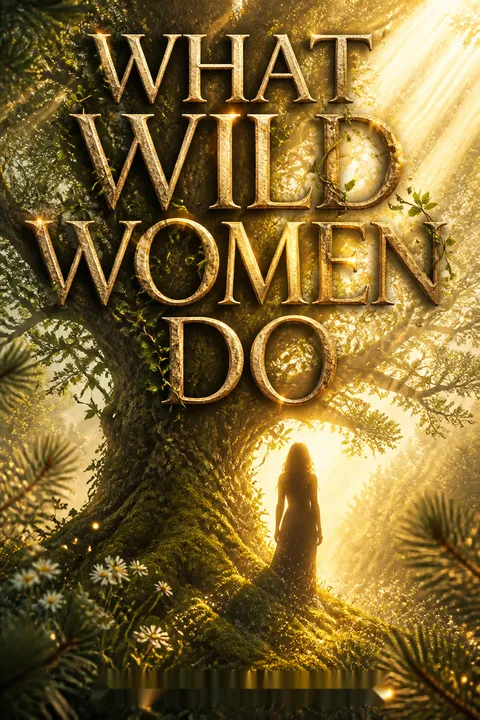
What Wild Women Do is a dual-timeline novel exploring feminism, self-discovery, and mystery. Reviews praise Brown's storytelling, character development, and atmospheric writing. Many readers enjoyed the 1970s storyline featuring Eddie Callaway more than the present-day narrative with Rowan. The book's themes of female empowerment and connection with nature resonated strongly. Some criticisms include predictability and dislike of certain characters. Overall, readers found it compelling and thought-provoking, with many considering it Brown's best work yet.
People Also Read






Characters
Rowan Fairfax
The stalled screenwriterRowan is a screenwriter whose ambition has been gradually crowded out by unstable work, financial strain, and her effort to support Seth. A childhood car accident left a lasting scar and shaped her belief that she should not waste the life she survived, though she rarely discusses the experience. She is observant, funny, and capable, but often softens her needs to preserve closeness. Her interest in Eddie’s story begins as creative curiosity and grows into a personal investigation. Rowan’s challenge is not discovering that she has talent; it is learning to give that talent time, attention, and the authority to shape her choices.
Eddie Callaway
The camp's wild-hearted founderBorn Edith Jane Callaway, Eddie inherits immense wealth and the expectations attached to it. She is a mother, an outdoorswoman, and a generous organizer who builds Camp Callaway into a free retreat where women can explore their needs and abilities. Her feminism is practical and embodied, expressed through workshops, shared labor, and frank conversation. Eddie can be charismatic and decisive, yet she also carries grief, insecurity, and a need for reassurance from her chosen family. Her story asks what it costs to remake a life, and how a person’s generosity can outlast the limits of her own certainty.
Seth Wright
The camera-ready partnerSeth is Rowan’s fiancé, a former graduate writing student whose online channel becomes his chief creative and financial focus. Warm, energetic, and naturally engaging on camera, he knows how to make an audience feel included. His childhood scarcity and fear of being left behind inform his hunger for subscribers and stability. Seth does care about Rowan, but his need to keep their shared project alive can make him treat her time and ambitions as resources he is entitled to manage. He embodies the ambiguity of creative compromise: a side hustle can be real work, but it can also become a refuge from the more uncertain work a person once hoped to do.
Jess
The grounded bird expertJess is an ornithologist who has chosen an off-grid life with Aidan in the Adirondacks. She cares for free-roaming chickens, knows the region’s birds and trails, and is skilled at field first aid. Her confidence is quiet rather than performative; she listens closely and allows other people to reach their own conclusions. Jess’s life offers Rowan a vivid example of what it means to build a daily existence around genuine preferences instead of external approval. She is not presented as having solved every difficulty, but as someone who has learned to inhabit a life that fits her.
Judith Swann
The poet who knew EddieJudith is a poet whose early work becomes one of the clues leading Rowan into Camp Callaway’s history. As a young woman, she arrives at the retreat with artistic confidence and a strong sense of self, eventually becoming one of Eddie’s closest collaborators. Judith’s warmth carries a clear-eyed understanding of both the camp’s achievements and its limitations. In later life, she remains connected to the people and ideals that shaped her, without treating the past as a perfect blueprint. Her memories help Rowan distinguish rumor from intention and show how a creative partnership can continue to influence lives long after its original setting has changed.
Aidan
The wilderness naturalistAidan is Jess’s partner, an ornithologist and practiced forager who has built much of their off-grid homestead by hand. He is genial, curious, and at ease in the woods, though his relationship with Rowan and Seth remains more casual than Jess’s. His scientific work and practical knowledge make the forest legible without stripping it of wonder.
Samuel Harrison
Eddie's steadfast allySamuel, usually called Sam, is Camp Callaway’s cook and one of Eddie’s oldest friends. He knew her as a child and shares a private birdcall with her, a small sign of their long history. His warmth, patience, and practical loyalty help sustain the camp, while his experiences as a war correspondent give him a reserve of pain he does not easily discuss.
Florence Dwyer
The teacher and organizerFlorence is a former teacher and community organizer who joins Eddie in restoring Camp Callaway. She is forthright, compassionate, and alert to the distinct pressures faced by Black women within the broader women’s movement. Her friendship gives Eddie both encouragement and honest correction.
Dorothy Tartt
The camp's folk healerKnown as Nurse Dot, Dorothy is a retired nurse who brings medical knowledge, herbal remedies, and a steady presence to Camp Callaway. She believes in practical care and in creating room for women to make their own choices. Her experience as a mother and healthcare worker widens the camp’s sense of community.
Lauren Fairfax
Rowan's adventurous motherLauren is Rowan’s mother, once an eager traveler and adventurer whose life changed after a serious accident. She now moves through the world with greater caution, partly because of what she and Rowan survived. Her love often takes the form of planning and concern, which can feel like pressure to Rowan even when it is meant as protection.
John Fairfax
The quiet family backstopJohn is Rowan’s father, a retired epidemiologist with a gift for encouragement and a preference for easing family tension. He supports Rowan and Seth financially when they need it, often discreetly, and expresses affection through dependable acts rather than grand declarations.
Glenda Hopper
The keeper of local memoryGlenda owns Hopper’s Diner, a warm gathering place where Rowan finds food, internet access, and fragments of Camp Callaway’s history. She grew up in the area and understands how small-town gossip can distort a person’s reputation. Her family photograph of Eddie gives Rowan a rare glimpse of the woman behind the legend.
Clara Cottingham
Rowan's Hollywood connectionClara is Rowan’s friend from her early years in Los Angeles and a development executive with access to the film industry. She recognizes promise in Rowan’s screenplay pitch and offers her a possible path toward professional work. Clara’s directness and loyalty make her a supportive counterweight to the uncertainty Rowan feels about her career.
Theo Callaway
Eddie's beloved sonTheo is Eddie’s only child and her companion during their childhood summers at Camp Callaway. Curious and imaginative, he shares her affection for birds, fishing, and the woods. His presence is central to Eddie’s memories of the camp and to the private meaning she attaches to its familiar places.
Victor Valence
The resentful neighboring ownerVictor is a wealthy owner of a neighboring Adirondack camp who disapproves of Eddie’s retreats and their feminist message. He is blunt, controlling, and easily provoked by a woman who refuses to observe the limits he expects.
Plot Devices
The Wild Women Handbook
An archive that guides discoveryThe handmade 1975 handbook preserves Eddie’s beliefs in recipes, exercises, poems, and instructions. Rowan’s discovery of it turns the abandoned camp from a curiosity into a readable record of its former life. Its pages provide context for Eddie’s choices, while the concrete poem in the Quik tin offers a clue to the hidden prize. The handbook also links the story’s two periods: Rowan encounters Eddie through the physical traces she left, and those traces influence Rowan’s decisions without dictating them.
The White-Feathered Crow
A living link across timeRowan feeds a crow with a distinctive white feather after learning that someone at her cabin likely fed it before. The bird’s behavior remains rooted in its intelligence and its established relationship with the place, but its gifts connect Rowan to Eddie’s history. It leaves Rowan a stone and later a smiley-face pin, prompting her to notice the pin beside the remains. The crow functions as a clue-bearing presence, not a supernatural explanation, and encourages Rowan to look carefully at the natural world around her.
The Treasure Hunt
A gift disguised as a puzzleEddie designs a hunt using chocolate drink tins, a shaped poem, and clues hidden around Camp Callaway. The puzzle is meant to reward curiosity and give its finder a meaningful financial opportunity. It draws Rowan into Eddie’s history and makes the past active in the present. Because Eddie keeps too much of the plan secret, the hunt also reveals a danger in her approach: an invitation can become impossible to follow when no one knows where its maker has gone.
The YouTube Channel
A camera that changes intimacyTheWrightStory begins as a way for Seth to share his writing life and becomes a source of income and public affirmation. As Rowan joins the videos, the channel blurs the line between authentic experience and staged performance. It shapes Seth’s priorities, makes Rowan’s distress useful to an audience, and becomes the point around which their incompatible hopes gather. The camera is more than a prop: it changes how the couple experiences events, from their engagement to Seth’s response to the treasure.
The Alternating Timelines
Two lives illuminate each otherThe novel moves between Rowan in 2021 and Eddie in 1975, giving each timeline information the other cannot yet supply. Rowan’s investigation gradually recasts Eddie from local mystery into a person with a history, a purpose, and an unfinished plan. Eddie’s experiences, in turn, sharpen Rowan’s understanding of her own creative compromises and silences. The structure delays the explanation of the disappearance while keeping its emotional consequences present, so the final revelation answers both a factual question and a question about what each woman owes to her own life.

Download PDF
Download EPUB
.epub digital book format is ideal for reading ebooks on phones, tablets, and e-readers.








