

Key Takeaways
Treat market contradictions as evidence, not inconvenient noise
Contradictions can be clues. In 2005, the Federal Reserve raised short-term rates by 150 basis points, yet long-term U.S. yields fell. At the same time, stocks climbed to records, while measures of market volatility sank. These signals did not fit the comfortable story that risk was declining. El-Erian argues they pointed to deeper changes in global capital flows and finance. When the 2007 credit crisis spread from U.S. mortgages into banks and money markets, many investors discovered that the anomalies had been warnings, not curiosities.
Do not assume every anomaly matters. A signal is a possibility to investigate, not proof of a new regime. The useful question is whether several inconsistencies share a cause and persist long enough to challenge existing assumptions.
The argument is strongest when contradictions are treated as prompts for inquiry rather than predictions. In complex systems, several indicators can diverge because they capture different forces, time horizons, or groups of participants. That divergence can reveal information hidden by a single headline measure. The caution is that anomalies also occur by chance, and hindsight makes warnings look clearer than they were in real time. Investors need a way to test competing explanations, not simply a bias toward declaring every unusual movement historic.
Watch emerging economies become creditors, investors, and growth engines
The old roles reversed. Textbook economics generally expects capital to flow from wealthy countries to capital-poor ones. Instead, many developing economies accumulated large surpluses and lent to the United States. China’s reserves grew by about 10 percent of GDP annually for three years through 2007. These purchases helped finance U.S. borrowing and pushed down Treasury yields, even as the Federal Reserve raised short-term rates.
Wealth brought influence. Sovereign wealth funds, government investment pools funded by national reserves or resource revenues, began buying assets around the world. In 2007, Abu Dhabi’s investment authority committed $7.5 billion to Citigroup as the bank struggled with losses. These investors were no longer peripheral sources of risk. Their choices could affect asset prices, exchange rates, and the stability of Western institutions.
A change in who lends to whom is also a change in who can shape market outcomes. The case highlights how financial power can shift before institutions, political expectations, or governance arrangements catch up. It also complicates the simple distinction between public and private capital: a state investor may pursue long horizons and commercial returns, yet remain accountable to a government. Transparency and credible investment rules can therefore protect both the fund’s legitimacy and its host markets.
Financial innovation can outrun the infrastructure meant to contain it
New products moved faster than oversight. Derivatives and securitization made it easier to package loans, divide their risks into tranches, and sell them to a much wider range of investors. By June 2007, the global derivatives market measured about $516 trillion in notional value, more than twice its size three years earlier. Banks also moved activities into off-balance-sheet vehicles, including structured investment vehicles, which relied on short-term funding for longer-term assets.
Complexity hid connections. When mortgage losses mounted, investors could not reliably value many products or tell which institutions faced the greatest exposure. Banks hoarded cash, buyers withdrew, and vehicles once treated as separate were pulled back onto bank balance sheets. The book calls the mismatch between new activities and the systems supporting them a financial “plumbing” problem.
The useful distinction is between innovation’s capacity to distribute risk and its capacity to make risk legible. A claim can be divided among many holders without becoming safer if those holders rely on the same assumptions, funding sources, or ratings. Complexity can also make uncertainty contagious: when exposures are opaque, lenders may withdraw from sound borrowers alongside weak ones. This does not make securitization inherently harmful. It does mean that transparency, liquidity planning, and operational capacity are part of the product, not administrative details.
Test anomalies before deciding whether they change the destination or journey
Investigate before copying the crowd. El-Erian’s approach begins by identifying what caused an unusual market move, then comparing it with economic fundamentals, valuations, and market mechanics. Only after forming an independent view should investors weigh the opinions of experts and commentators. The key distinction is whether an anomaly changes the long-term destination or merely makes the route there more turbulent.
A missed signal can look obvious afterward. During a meeting at Harvard, a colleague spotted smoke from a fire on a nearby bridge. El-Erian initially discounted the warning because people were crossing calmly. The fire soon became unmistakable. In markets, as in that incident, familiar patterns can make a new danger seem implausible. The discipline is to examine the cause, consider alternatives, and remain open to a lasting shift.
This is a practical form of disciplined updating: start with a provisional model, compare it with new evidence, and revise when the mismatch persists. It avoids two common errors, dismissing everything unfamiliar and treating every blip as a revolution. The method also recognizes that expert consensus can lag when the old explanation remains socially and professionally convenient. Still, analysis is not a guarantee of foresight. A clear process can reduce avoidable errors, but it cannot remove uncertainty or ensure that the next anomaly is correctly interpreted.
Prepare for growth, trade, inflation, and capital to change together
The global economy was changing its drivers. El-Erian expected emerging economies to contribute more to growth and to rely increasingly on domestic consumption, not just exports. That shift could help rebalance a world economy in which U.S. consumers borrowed heavily while surplus countries financed the resulting deficits. Trade among emerging economies was also growing, creating more than one center of demand.
The price environment could turn. The entry of large, lower-cost workforces had helped restrain inflation, but rising wages and demand for energy, metals, and food could weaken that disinflationary effect. Commodity demand from emerging economies was already contributing to higher prices. Meanwhile, sovereign wealth funds were likely to diversify beyond government bonds. The destination, in short, involved more varied sources of growth, stronger resource pressures, and changing patterns of global investment.
The strength of this framework is that it links real economic activity to financial portfolios. Growth, trade balances, commodity prices, and reserve investment do not move independently, and changes in one channel can reshape the others. The forecast is also conditional, not mechanical: domestic consumption may not replace exports smoothly, and higher resource demand can be offset by new supply or greater efficiency. The most durable lesson is to examine how an investment thesis depends on several global drivers, rather than extrapolating one favorable trend in isolation.
Diversify for tomorrow’s return drivers, not yesterday’s familiar markets
Start with the long view. El-Erian recommends setting a neutral asset allocation around the investor’s return needs and ability to tolerate losses, then reviewing it as conditions change. For a U.S. investor, that means looking beyond domestic stocks toward international equities and considering real assets, such as inflation-protected bonds, commodities, infrastructure, and real estate. Bonds can still steady a portfolio, even if they are not expected to lead returns in every environment.
Popularity can erode an advantage. Harvard Management Company reduced U.S. equities from all of its public-equity allocation in 1980 to 35 percent in 2008. That is an example of institutional adaptation, not a universal prescription. Harvard’s early timber investments also show how an underused asset can lose some of its diversification benefit and return potential once a crowd of investors arrives.
The emphasis on forward-looking allocation challenges home bias, the tendency to favor domestic investments because they feel familiar. It also points toward a deeper question: whether portfolios should be organized around asset labels or the underlying risks that generate returns. Yet diversification is not a shopping list. Assets that looked uncorrelated in one period may move together under stress, and a once-attractive niche can become expensive as money pours in. Allocation should reflect both the investor’s actual constraints and the price paid for exposure.
Do not outsource drawdown protection to managers paid mainly for upside
Incentives shape protection. Investment managers may have strong reasons to seek returns and weaker reasons to pay for insurance that reliably costs money. Benchmark pressure can also encourage a manager to retain a risky position rather than accept a large deviation from the index, even when the absolute loss looks dangerous.
Argentina made the trade-off visible. Argentina represented more than a fifth of the emerging-market bond index. PIMCO judged a crisis likely and removed its long exposure, while many managers merely reduced their holdings. Argentina’s bonds lost 65 percent in 2001, dragging the index to a 1 percent loss. The episode illustrates why investors should examine portfolio-wide risk themselves. A manager’s good individual decisions do not automatically combine into a safe total portfolio.
This is a classic principal-agent problem: the investor bears much of the loss, while the manager’s incentives may reward relative performance, asset growth, or short-term results. The Argentina example makes absolute risk concrete, especially when an index gives a troubled issuer a large weight. Still, a successful decision in one case does not prove that complete exits are generally best. Concentrated bets against consensus can protect capital, but they can also create large opportunity costs if the analysis is wrong.
Buy protection before panic makes the portfolio’s worst risks expensive
Plan for the far left tail. Tail insurance is protection against low-probability events with severe consequences, such as a deep downturn, a liquidity seizure, or a geopolitical shock that disrupts energy supplies. El-Erian recommends thinking in a basket of risks rather than relying on one hedge. Overlays, which adjust a portfolio’s exposure to broad risks such as stocks, interest rates, currencies, or credit, can help keep total risk within an investor’s tolerance.
Protection can create room to act. During the 2007 turmoil, some credit protection rose sharply in value even without a comparable jump in defaults, as investors rushed to reduce exposure. Insurance can therefore cushion losses and help investors keep enough flexibility to buy assets depressed by contagion. It has a cost, however, and should be sized against the investor’s ability to withstand losses and the strength of available market backstops.
Insurance is valuable not only because it pays in a crisis, but because it can prevent forced selling and preserve the capacity to make decisions under pressure. That behavioral benefit matters: investors who are financially or emotionally immobilized at market lows may fail to act on long-term plans. The hard problem is price and design. Protection can expire unused, hedge the wrong scenario, or become crowded and costly. A clear loss budget, repeated stress tests, and a defined purpose make hedging more useful than a vague desire to feel safe.
Modernize public institutions before private markets outgrow their reach
Policy must catch up to markets. The book argues that central banks and regulators need better information about off-balance-sheet activity, shifting liquidity, and financial firms that operate beyond traditional supervisory boundaries. Governments also face difficult choices when capital inflows overheat economies, when households carry unsustainable debt, and when political pressure favors protectionism over cross-border investment.
Global problems need credible coordination. The IMF had broad membership and expertise, but its influence was weakened by declining demand for its loans, outdated representation, and governance structures that no longer reflected the importance of emerging economies. El-Erian calls for renewed expertise, fairer representation, and a stronger role in advising countries and coordinating policies. Without legitimacy and cooperation, national actions can work at cross-purposes and make economic adjustment more disorderly.
This section treats institutions as infrastructure: markets need rules, information, and coordination that match their scale and complexity. It also identifies legitimacy as operational, not ceremonial. Countries are less likely to accept common guidance when their influence is badly underrepresented. The tension is that reform requires established powers to surrender some privileges, while governments remain accountable to domestic voters. Stronger coordination can reduce spillovers, but it cannot eliminate disagreement or make national interests identical. Institutional design must make cooperation credible enough to survive those conflicts.
Analysis
The book’s central achievement is to connect market signals that are often analyzed separately. Falling volatility, rising leverage, unusual interest-rate behavior, developing-country surpluses, and complex credit products become parts of one story: the global economy’s power structure changed faster than its financial and policy infrastructure. This integrated view is more useful than a crisis narrative focused only on subprime mortgages, because it asks why a mortgage shock could impair institutions and markets far beyond housing.
Its strongest practical distinction is between the long-run destination and the uneven journey. Investors can be directionally right about emerging-market growth, capital diversification, or inflation and still suffer losses because funding disappears, correlations rise, or policy responses misfire. That distinction supports its emphasis on allocation and risk protection as separate tasks. A portfolio must participate in structural change without depending on calm conditions to survive.
The book is also historically situated. Written in 2008, it interprets a live crisis and makes forecasts about growth, prices, currencies, and reserve management. Those forecasts should be read as informed scenarios, not timeless laws. In particular, the claim that emerging economies can offset weaker U.S. demand depends on political choices, domestic institutions, and the durability of growth. A framework that encourages testing signals is more robust than any specific forecast it produces.
The policy argument is equally important: private adaptation alone cannot repair rules and institutions that govern cross-border finance. Yet coordination is not simply a technical fix. It depends on legitimacy and on countries accepting costs they might prefer to shift elsewhere. The result is a book best read as a guide to disciplined attention: notice structural inconsistencies, investigate their causes, position for the broad transition, and insure against the possibility that the transition itself becomes disorderly.
Review Summary
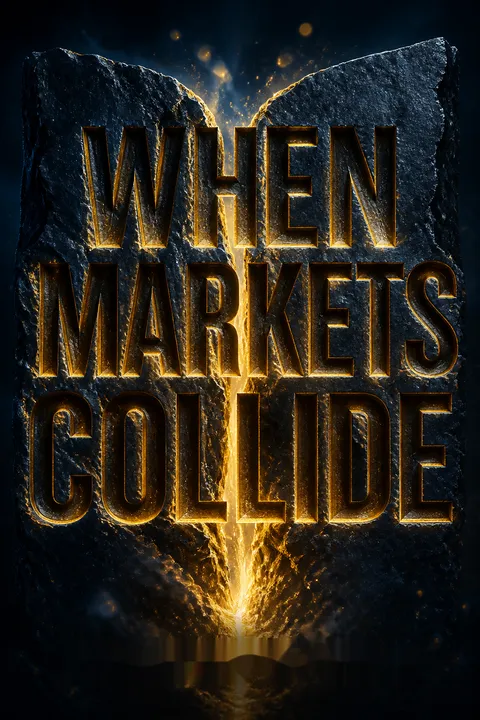
When Markets Collide receives mixed reviews, with an average rating of 3.52/5. Readers appreciate El-Erian's insights on global economic shifts and emerging markets, but some find the writing style dry and overly complex. The book's timing, published in 2008, leads to dated content. Investors value El-Erian's expertise and frameworks for understanding market changes, though some feel the book lacks practical advice. Overall, it's considered a thought-provoking read for those interested in global finance, despite its challenging prose.
People Also Read









Glossary
Stable disequilibrium
A temporarily sustainable imbalanceA global arrangement in which a large underlying imbalance persists because other participants are willing to finance it. El-Erian uses the term for the U.S. current-account deficit funded in substantial part by emerging economies’ surpluses. The arrangement can continue for a time, but its stability does not mean that it is balanced or permanently sustainable.
Endogenous liquidity
Market-created liquidityLiquidity generated within financial markets through expanding balance sheets, leverage, and transactions, rather than mainly through central-bank policy. For example, private-equity borrowing can multiply the funds available to buy companies. Because this liquidity depends on market confidence and risk appetite, it can expand quickly and contract abruptly, complicating central-bank efforts to manage financial conditions.
Market for lemons
Markets distorted by hidden qualityAn information problem in which buyers cannot distinguish high-quality goods or assets from low-quality ones. If buyers fear that poor-quality items are mixed in, they may offer prices that undervalue the good ones. Their owners can then withdraw, worsening average quality and confidence. In a crisis, this can make funding disappear even for sound borrowers.
Multiple equilibria
Several possible market outcomesA situation in which the same underlying conditions can lead to different outcomes depending on expectations, events, and feedback loops. A small shock may prompt withdrawals, falling prices, and further withdrawals, turning a limited problem into a broad disruption. The concept helps explain why financial markets may not smoothly return to a single stable outcome after a shock.
Shadow banking system
Credit outside traditional bankingFinancial activity conducted through institutions and vehicles beyond the conventional, directly supervised banking system. The book highlights structured investment vehicles and other conduits that financed long-term assets with short-term borrowing. Though formally separate from banks, these entities could rely on bank credit lines or guarantees, reconnecting their risks to the traditional system during stress.
Sovereign wealth funds
Government-managed investment poolsInvestment funds owned by governments and typically financed from foreign-exchange reserves, fiscal surpluses, or natural-resource revenues. They can invest across countries and asset classes, giving states a growing role in global capital markets. El-Erian argues that clear governance, commercial investment processes, and risk controls help these funds manage national wealth and maintain confidence abroad.
A Four-Phase Process
Reserve management as wealth growsA sequence describing how countries may adapt when they move from borrowing abroad to accumulating external wealth. The phases are benign neglect of the change, sterilization of capital inflows, liability and asset management, and embracing the lasting shift through policy and institutional changes. The stages can overlap, need not occur automatically, and may differ across countries.
Original sin
Foreign-currency borrowing vulnerabilityA country’s difficulty borrowing internationally in its own currency, often leading it to issue debt in currencies such as the U.S. dollar or euro. If the local currency falls, the domestic burden of foreign-currency debt rises. The resulting mismatch can make an economy and its borrowers more vulnerable to financial stress.
Tail insurance
Protection from extreme lossesA portfolio strategy designed to reduce losses from rare but severe events, including deep economic downturns, liquidity crises, or geopolitical disruptions. It may use several instruments to cover different scenarios. Protection costs money and can expire unused, but it can also limit forced selling and preserve an investor’s ability to act during market turmoil.
Overlays
Portfolio-wide risk adjustmentsTrades made with liquid instruments to adjust an existing portfolio’s exposure to broad risk factors, such as equities, interest rates, currencies, or credit. Overlays can help keep overall risk within an institution’s tolerance without requiring changes to every underlying investment. Their purpose is portfolio-level risk control, not constant market timing.
FAQ
What is "When Markets Collide" by Mohamed A. El-Erian about?
- Global economic transformation: The book analyzes the ongoing structural changes reshaping the global economy, focusing on the shift in economic power, capital flows, and the rise of emerging markets.
- Market collisions theme: El-Erian describes the "collision" between outdated financial systems and new market realities, leading to disruptions and volatility.
- Actionable insights: The book provides strategies for investors, policymakers, and institutions to navigate and benefit from these changes while managing associated risks.
Why should I read "When Markets Collide" by Mohamed A. El-Erian?
- Expert perspective: El-Erian combines academic rigor with real-world investment and policy experience, offering a unique and comprehensive view of global financial transformations.
- Timely and practical guidance: The book anticipates and explains major market disruptions, such as the 2007 financial crisis, helping readers understand and prepare for future volatility.
- Actionable strategies: Readers gain practical advice on asset allocation, risk management, and policy engagement tailored to the new global economic environment.
What are the key takeaways from "When Markets Collide" by Mohamed A. El-Erian?
- Secular transformations: The book highlights long-term shifts in global economic power, trade patterns, and capital flows, especially the rise of emerging markets.
- Importance of adaptation: Investors and policymakers must adapt to new realities, recognizing signals within market noise and updating strategies accordingly.
- Risk management focus: Effective risk mitigation, understanding of "fat tails," and the need for improved financial infrastructure are central themes.
What are the main concepts and themes in "When Markets Collide" by Mohamed A. El-Erian?
- Signals vs. noise: The book stresses the importance of distinguishing meaningful market signals from background noise, especially during periods of transformation.
- Market collisions and plumbing problems: El-Erian explores how outdated financial infrastructures clash with new market realities, causing disruptions and policy challenges.
- Behavioral finance integration: Insights from psychology and neuroscience explain why investors often misinterpret or ignore fundamental changes.
How does Mohamed A. El-Erian explain the 2007 financial crisis in "When Markets Collide"?
- Structural root causes: El-Erian attributes the crisis to deep secular changes and the inability of existing infrastructures to handle new risks and market activities.
- Overconsumption of risk: Investors underestimated risk due to complex financial products and declining volatility measures, leading to systemic vulnerabilities.
- Policy and regulatory failures: Traditional oversight bodies were unprepared for evolving risks, exposing gaps in regulation and coordination.
What investment strategies does "When Markets Collide" by Mohamed A. El-Erian recommend for the age of global economic change?
- Forward-looking asset allocation: Portfolios should be designed based on anticipated secular trends, not just historical data, with increased exposure to emerging markets.
- Managing tail risks: Investors must protect against extreme events ("fat tails") and market accidents through effective risk mitigation and tail insurance.
- Policy context awareness: Successful strategies require understanding and anticipating national and international policy actions that impact markets.
How does "When Markets Collide" by Mohamed A. El-Erian address risk management in a changing financial system?
- Asymmetrical risk mitigation: The book highlights the uneven ability of investors and institutions to manage new types of risks from financial innovation and globalization.
- Fat tails and Black Swans: El-Erian emphasizes the need to protect against rare but impactful events, drawing on behavioral finance to explain why these are often underestimated.
- Infrastructure and oversight: Improved market infrastructure, transparency, and regulatory coordination are essential for effective risk management.
What is the role of emerging economies in the new global landscape according to "When Markets Collide" by Mohamed A. El-Erian?
- Engines of global growth: Emerging markets have become primary drivers of global economic expansion, with growth increasingly fueled by domestic demand.
- Shift in capital flows: These economies have transitioned from net debtors to major creditors, influencing global capital allocation and trade balances.
- Sovereign wealth funds: Emerging markets use SWFs to manage wealth, becoming significant players in global financial markets and affecting asset prices.
What is the "dual mandate" of the U.S. Federal Reserve as discussed in "When Markets Collide" by Mohamed A. El-Erian?
- Definition: The Federal Reserve is required to pursue both maximum employment and stable prices, unlike some central banks that focus solely on inflation.
- Policy dilemma: The shift from disinflation to inflation complicates the Fed's balancing act between controlling inflation and supporting growth.
- Risk of policy mistakes: Navigating this dual mandate amid economic fluidity increases the likelihood of errors that could heighten market volatility.
How does "When Markets Collide" by Mohamed A. El-Erian describe the impact of surges in capital inflows on emerging economies?
- Potential benefits: Capital inflows can support growth, financial integration, and technology transfer.
- Risks and challenges: Large inflows may overwhelm financial systems, cause overheating, fuel inflation, and lead to "Dutch disease" effects.
- Behavioral and systemic vulnerabilities: Sudden wealth changes can trigger destructive behaviors, especially in countries with weak supervision and large deficits.
What is endogenous liquidity and what are its implications according to "When Markets Collide" by Mohamed A. El-Erian?
- Definition: Endogenous liquidity is liquidity generated within the financial system by market participants and innovations, not just by central banks.
- Monetary policy challenges: The rise of endogenous liquidity complicates traditional policy tools, as asset prices and liquidity fluctuations increasingly affect the real economy.
- Need for coordination: Central banks must work closely with supervisory bodies and develop new instruments to manage liquidity and systemic risks.
What asset allocation and risk management advice does Mohamed A. El-Erian provide in "When Markets Collide"?
- Secular theme anchoring: Portfolios should reflect long-term global growth shifts, inflation expectations, and capital flows, with disciplined, iterative reviews.
- Diversification and overlays: El-Erian recommends diversified allocations across equities, real assets, bonds, and alternatives, with overlays to manage risk exposures.
- Tail insurance and manager selection: Investors should use tail insurance to hedge against extreme events and carefully select managers to avoid principal-agent problems and underinsurance.
About the Author
Other books by Mohamed El-Erian

Download PDF
Download EPUB
.epub digital book format is ideal for reading ebooks on phones, tablets, and e-readers.








