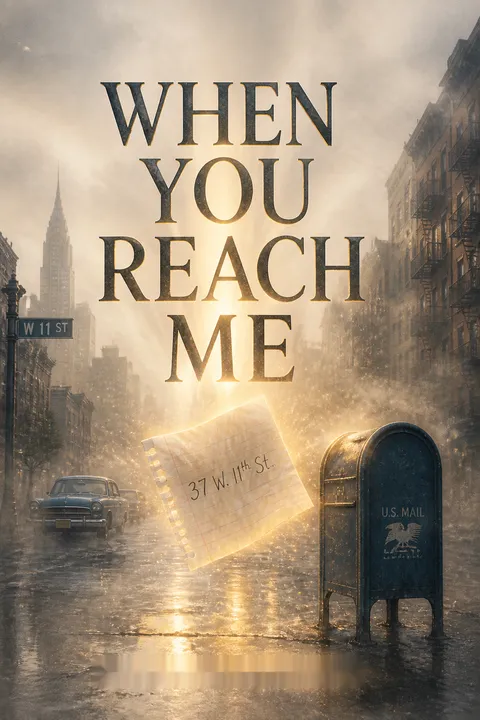


Plot Summary
The Punch Breaks Their Pattern
Miranda and Sal have been inseparable since they were babies, sharing walks home, games, and the private language of a friendship that seems to need no other people. Then, outside a neighborhood garage, a boy in a green army jacket punches Sal in the stomach and face. The boy, Marcus, walks away without explanation.
Sal cries all the way home and shuts Miranda out of his apartment. In the days that follow, he plays basketball alone and finally tells Miranda he wants distance. She interprets the blow as the beginning of their break, unaware that Sal had already been pulling away. With their old routine gone, Miranda must find her way through school and the streets without her closest companion.
The assault supplies a dramatic cause for the friendship's fracture, but Miranda's later understanding will complicate that simple story. At twelve, she treats closeness as a shared identity, so Sal's withdrawal feels less like a request for independence than the loss of a part of herself. The scene also establishes a pattern of misreading: Miranda sees what happens in front of her, but not the quieter changes that preceded it. Her retrospective narration is therefore both a record of events and an account of learning how incomplete a child's explanation can be.
New Friends, Uneasy Work
When Sal begins avoiding her, Miranda accepts Annemarie's invitation to lunch after Julia, Annemarie's longtime friend, publicly freezes her out. Colin soon joins them, and his impulsive suggestion earns all three a lunchtime job at Jimmy's sandwich shop.
Miranda counts bread and struggles to master Jimmy's precise roll-cutting, while Annemarie and Colin serve customers. Their growing closeness brings pleasure and jealousy: Miranda notices Colin's attention and the easy history Annemarie shares with Julia.
Annemarie later has a seizure, and Miranda learns that a strict diet helps control her epilepsy. A rose left at Annemarie's door becomes another mystery, one Miranda hopes came from her kind father rather than from Colin. For now, the shop gives Miranda a place among classmates beyond Sal.
The deli turns ordinary labor into a social experiment. Miranda is not naturally adept at the tasks Jimmy values, yet she keeps showing up, which makes belonging feel earned through time rather than talent. Her jealousy of Annemarie and Colin also reveals that a new friendship does not immediately loosen her old possessiveness. Annemarie's epilepsy complicates the cheerful surface of their work: the shop offers her freedom from being treated as fragile, but ignoring her diet carries a real cost. The rose introduces an affection Miranda cannot comfortably interpret, because she is still sorting other people's feelings through her own insecurities.
A Key, Then a Note
At school, Miranda discovers that Marcus is a math-minded boy who reads advanced material and argues that time travel might be possible. Their discussion begins with the ending of A Wrinkle in Time, where Marcus challenges her ordinary assumptions about cause and sequence.
Soon afterward, Miranda and her mother find their apartment door unlocked and the spare key missing from the fire hose where they hid it. Nothing else has been taken. A note then appears inside Miranda's library book, asking her to write a letter, explain where the key is kept, and remember that its author will arrive changed.
A second note insists that Miranda must tell a true story, but only after the events have happened. She is frightened, and her mother's attempts to dismiss the notes cannot explain the missing key.
The notes transform a domestic security breach into a problem of knowledge: the writer seems to know a hiding place that should be secret, yet asks Miranda to reveal it. Marcus's earlier argument gives the impossible claim a conceptual foothold, but it does not make it emotionally easier to accept. Miranda's mother responds with practical reasoning, while Miranda senses that the facts resist ordinary order. The contrast matters. The novel does not ask the reader to abandon logic; it asks what happens when a new set of facts makes familiar logic insufficient. Miranda's unease begins as suspicion and becomes responsibility.
The Prediction in the Bag
A third note gives Miranda three predictions, including a clue about Colin's knapsack that day. At three o'clock she searches his bag and finds two of Jimmy's missing bread rolls, along with crumbs. The forecast has come true, though Miranda cannot imagine how its author knew.
Leaving school, she visits Annemarie and tries to persuade herself that Annemarie's father left the mysterious rose. On the walk home, she gives her leftover sandwich to the laughing homeless man on her corner, who speaks with unsettling familiarity.
Miranda's mother objects when she hears about the encounter, then admits that fear for her daughter drove her anger. She also confides that Richard wants to marry her and move in, but she is afraid of making the wrong choice.
The first verifiable prediction changes the notes from an eerie nuisance into evidence, while the smallness of the proof is part of its force: two stolen rolls are mundane, observable, and difficult to explain away. Miranda's response is not pure courage. She still tries to control the rose's meaning and resents the possibility that Colin cares for Annemarie. Her kindness to the laughing man, meanwhile, parallels her mother's work with people whom others reduce to their worst circumstances. The conversation about Richard reveals the same anxiety in a more intimate form: adults, too, can mistake hesitation for safety.
Jimmy's Bank Splits the Group
After Thanksgiving, Jimmy discovers that his Fred Flintstone bank, stuffed with two-dollar bills, has vanished. He bars Miranda, Annemarie, and Colin from the shop until their apologetic card persuades him to let them return. Then he accuses Julia of taking the money and links his suspicion to her race.
Annemarie is furious; Miranda tries to explain that her nickname for Julia referred to her interest in Switzerland, but Annemarie hears the hurtful label instead. She tells Miranda that Julia may need the money less than Miranda does, and the friends separate in anger.
During Christmas vacation, Miranda avoids calling either of them and watches Sal play basketball with other boys. On Christmas morning, Richard gives Miranda a signed first edition of A Wrinkle in Time, fulfilling the note's second prediction.
The stolen bank exposes two forms of moral failure at once. Jimmy turns suspicion into a racial stereotype, while Miranda discovers that even an unintentional joke can carry a meaning she has not considered. Annemarie's accusation strikes at Miranda's pride and material insecurity, so neither girl can repair the relationship immediately. Christmas brings a different kind of certainty: the signed book verifies a prediction without explaining its source. The novel sets a moral injury beside a supernatural proof, showing that facts can settle whether something happened while leaving the harder work of accountability and reconciliation untouched.
Miranda Offers a Truce
After ten days apart, Miranda calls Annemarie and visits her, where the two girls apologize for their part in the fight and begin again. Later, during a school assembly, Miranda sees Julia watching Annemarie with the same longing Miranda feels when she watches Sal.
She understands that Julia left the rose and that her own jealousy helped keep the friends apart. Miranda also helps Alice Evans, a classmate routinely teased for needing the bathroom, then slips Julia a peace offering with her phone number.
Their thaw continues when Miranda visits Julia to bake a cake and discovers that Julia shares her love of A Wrinkle in Time and space projects. Meanwhile, Colin kisses Miranda, and Belle's account of the laughing man's folded two-dollar bills connects him to Jimmy's missing bank.
Miranda's growth here is measured by attention rather than by a grand confession. She notices Julia's affection because she recognizes its shape in herself, then acts on that recognition instead of turning it into a rivalry. Helping Alice extends the change beyond Miranda's immediate circle: she begins to see the cost of bystander behavior, even when she has not been the one doing the teasing. The two-dollar bills quietly reconnect the street's oddest figure to the ordinary world of Jimmy's shop. Friendship, embarrassment, and mystery now occupy the same neighborhood, and Miranda has begun to respond with curiosity instead of reflexive judgment.
The Laughing Man's Kick
One afternoon, boys outside the garage taunt Sal until he snaps back. When Marcus runs after him, Sal mistakes the pursuit for another attack and bolts into Amsterdam Avenue. Miranda sees a brief, flickering image of a naked man before the laughing man rushes into the street and kicks Sal out of the truck's path. The truck strikes the rescuer.
Sal survives with a broken arm and several broken ribs, but the laughing man is dead. At the curb, Miranda recognizes Richard's distinctive platform shoe on the body and finds a final note hidden inside it. The words scratched on the mailbox, the earlier notes, and the stolen key fit together: the laughing man had written to her, carried the notes, and saved Sal's life.
The rescue converts the novel's scattered oddities into a single devastating event. The platform shoe makes the connection physical, not merely intuitive, while the mailbox's repeated words turn details Miranda once treated as nonsense into a sequence of evidence. Yet the cost is irreducible: Sal lives because someone else does not. Miranda's habit of covering her ears when she fears disaster cannot protect her from witnessing its consequences. The scene also reframes the laughing man's apparent disorder. His strange movements were not only symptoms to be observed; they were part of a deliberate attempt to reach this moment.
Miranda Protects Marcus
At school, police arrive to question Marcus because Belle believes he deliberately chased Sal into traffic. Miranda gets Marcus to the school dentist's office and calls her mother, whose legal training helps move the officers away until the facts can be gathered.
In the wait, Marcus explains that he punched Sal after failing to defend his older brother Anthony from a beating; he wanted to understand violence by causing it himself, then found he had hurt a smaller boy for no reason that could justify the act. Later, Sal tells Miranda that he had begun wanting other friends before Marcus ever hit him. Their old closeness had left each boy isolated. Sal is healing, and Miranda finally sees that saving a friendship means letting it change.
Miranda's intervention is a moral response to the same problem that shaped her mother's work: a person can be reduced to a damaging act before anyone asks what happened. She does not excuse Marcus's violence, but she prevents suspicion from becoming a verdict. Marcus's explanation is especially unsettling because it reveals a childish experiment with real consequences. Sal's account then corrects Miranda's central misconception. Their separation was not caused by one punch alone; Sal needed a wider life. The recovery of their friendship depends on Miranda accepting that love cannot require exclusivity.
Fifty-Five Seconds of Clarity
On April 27, Miranda, Sal, Louisa, and Richard accompany Miranda's mother to The $20,000 Pyramid. She wins the speed round, then correctly identifies every Winner's Circle category and takes home ten thousand dollars plus the speed-round bonus.
As she celebrates, Miranda understands what the notes could not explain: the old laughing man was Marcus after traveling back through time. The future Marcus had already read the letter Miranda has yet to write, which is why he knew about the key and the events ahead.
His trip saved Sal but killed him, leaving the younger Marcus to discover the same impossible path. Miranda also understands why the older man seemed mentally lost: the journey had changed him. The moment of clarity lasts less than a minute, but its consequences reach across decades.
The game show's rigid format becomes an unlikely instrument of revelation. Miranda has spent months trying to identify a connecting thread among clues; the Pyramid asks her mother to find connections under pressure, turning the domestic subplot into the structure of the insight itself. The time loop does not erase responsibility or grief. Marcus's future action saves Sal, but the younger boy must still face the knowledge that his choices may lead him toward the same sacrifice. Miranda's understanding is therefore not a solution that makes pain disappear. It is a form of coherence she can use to act.
Keys, Letter, and Drawing
After the show, Miranda gives her mother the law-school applications she and Richard have secretly gathered, and gives Richard the apartment keys he has never been allowed to carry. The next morning, she begins the letter the older Marcus requested, knowing it will tell him the truth about his journey and the life he will eventually enter.
Under the mailbox, she finds an old drawing of Julia with their hidden key, a sign that Marcus will not face the future alone. Miranda leaves both in place. Sal and Miranda still do not arrange their lives around each other, but when their paths align, they choose to walk home together. At the mailbox, Sal salutes the dead man, and Miranda sometimes answers with a raised fist.
The ending resolves the book through chosen commitments rather than a return to the past. Miranda gives her mother a chance to resume the legal education she left behind and gives Richard a practical sign that he belongs in their home. Her letter serves as an act of care for Marcus, though she understands its burden as well as its reassurance. The drawing of Julia offers a future companionship that the present cannot yet provide. Most importantly, Sal and Miranda's friendship becomes voluntary. Their shared history remains, but it no longer dictates how close they must stand.
Analysis
When You Reach Me makes a child's ordinary world carry an extraordinary argument. Its time-travel mystery is built from objects and habits that Miranda can touch: a key hidden in a fire hose, rolls missing from a delivery bag, two-dollar bills folded into triangles, a shoe with a platform. These details keep the speculative plot answerable to physical evidence, while the neighborhood setting makes the stakes intimate. The question is not whether time travel can be imagined, but what one person owes another when knowledge arrives out of order.
Miranda's most consequential change is social rather than scientific. At first she treats Sal's friendship as a fixed arrangement and reads his distance as a single injury. She gradually recognizes that he had been asking for room, that Annemarie's bonds do not belong to her, and that Julia's sharpness conceals care. Her decisions to help Alice and protect Marcus show that attention can become ethical action. She learns to notice those who are easy to dismiss, including the laughing man, without pretending that kindness makes danger or grief vanish.
The novel also resists the idea that good intentions settle moral questions. Marcus wants to understand other people and chooses violence as an experiment; his motive does not undo Sal's pain. Miranda means no harm by her nickname, but must still face its effect on Annemarie. Her mother wants to keep her safe, yet recognizes that fear can become its own form of harm. Across generations, care requires more than affection. It requires listening, revising one's explanation, and accepting another person's independence.
The loop gives the ending its strange tenderness. Miranda writes to a future self she has not met, and her letter becomes a gift that carries both relief and burden. The timeline may be closed, but the characters' emotional choices remain open: Sal and Miranda can choose friendship without returning to childhood dependence, and Miranda's mother can reopen a life she set aside. The book's deepest magic is not that time can fold. It is that people can learn to see one another more accurately.
Review Summary
When You Reach Me is a highly praised middle-grade novel that blends mystery, science fiction, and coming-of-age themes. Many readers appreciate its clever plot, engaging characters, and nostalgic 1970s New York City setting. The book's connection to "A Wrinkle in Time" and its exploration of time travel concepts add depth to the story. While some found it predictable or slow-paced, most reviewers were captivated by the intricate puzzle and emotional resonance of Miranda's journey. The novel's unique structure and thought-provoking themes make it appealing to both young readers and adults.
People Also Read










Characters
Miranda
Evidence-minded narratorA twelve-year-old New Yorker, Miranda is observant, funny, and unusually attentive to small irregularities: a missing key, a strange phrase, a change in a friend's expression. She often trusts her interpretations too quickly, especially when jealousy or fear is involved, and her closeness with Sal has taught her to confuse loyalty with being inseparable. Her mother has given her a strong sense of fairness, though Miranda is still learning to apply it beyond people she already loves. Reading and retelling A Wrinkle in Time give her a language for questions that her ordinary explanations cannot settle. She is not fearless; she is a child who gradually learns to act while uncertain.
Marcus Heilbroner
Unsettling young thinkerMarcus is a quiet, mathematically gifted boy who moved to Miranda's neighborhood from Detroit. He can become absorbed in abstract questions and fail to notice the people around him, which makes him seem aloof even when he is trying to understand them. His curiosity about physics and time is genuine, but it sits beside a painful uncertainty about how to participate in ordinary human life. He struggles to read fear and social cues, then makes consequential choices without understanding how they will land. Marcus is neither a simple bully nor a harmless eccentric. His story asks how a person learns empathy after discovering that intellectual curiosity cannot substitute for it.
Sal
Childhood friend seeking roomSal has been Miranda's closest friend since infancy. Gentle and inward, he shares her routines so completely that she assumes they want the same things. He is also beginning to seek friendships beyond their pair, although he struggles to say this directly. When hurt or frightened, Sal withdraws rather than explaining himself, leaving Miranda to fill the silence with her own theories. His attachment to basketball and to the boys at school gives him a route toward a wider social life. Sal's importance lies partly in what Miranda must learn from him: a real bond can survive distance, and affection does not grant ownership.
Miranda's mother
Imperfect, principled parentMiranda's mother is a paralegal, a former law student, and a single parent who balances long workdays with a fierce belief in people's rights. She volunteers with incarcerated pregnant women and treats care as something expressed through practical gestures, from food to advocacy. Her humor and unconventional style make her approachable, but anxiety can make her controlling, especially when Miranda's safety is at stake. She is also uncertain about building a life with Richard, partly because she fears making another mistake that could affect her daughter. Her ambitions have been deferred rather than extinguished, and her relationship with Miranda is honest enough to include irritation, apology, and trust.
Annemarie
Artful, guarded friendAnnemarie is Miranda's classmate and the daughter of an attentive illustrator. She is artistic, generous, and accustomed to a comfortable home, but her private life is shaped by epilepsy and a restrictive diet that can make her feel watched or singled out. Her friendship with Julia has a depth Miranda initially misunderstands, while her new bond with Miranda gives her room to step outside old patterns. Annemarie can be wounded and unfair when she feels betrayed, yet she is capable of apology and renewed trust. She is not merely the polished, privileged girl Miranda first imagines; her vulnerability and loyalty become clearer as Miranda learns to look past appearances.
Julia
Sharp-edged, tender observerJulia is a wealthy, well-traveled classmate whose confidence can look like arrogance. She speaks precisely about her tastes and identity, and she is willing to challenge people who make assumptions about her. Miranda dislikes her for years without understanding how much of that dislike comes from envy and misreading. Julia's attachment to Annemarie is real, though she often expresses it through control, teasing, or indirect gestures rather than openness. She has a private interest in science fiction and outer space that complicates the fashionable image Miranda assigns her. Julia is both socially forceful and emotionally exposed, a girl whose sharpness does not cancel her capacity for care.
Richard
Patient lawyer and sailorRichard is a German lawyer who works with Miranda's mother and has been part of their lives for years. Tall, precise, and knowledgeable, he can seem almost impossibly polished, which earns him Miranda's affectionate skepticism. He teaches her to tie sailing knots and uses the same method to think through problems. A shorter right leg, fitted with a platform shoe, is a quiet reminder that his apparent perfection is only an impression. Richard is patient with Miranda and respects her intelligence, even when he becomes the target of family jokes.
Colin
Restless class clownColin is a short, quick-witted classmate who seeks attention with jokes and impulsive ideas. He recruits Miranda and Annemarie to work at Jimmy's, where his easy sociability contrasts with Miranda's anxiety about fitting in. Colin often acts before weighing consequences, but he is not malicious; his mischievousness and affection can be hard to distinguish. His growing closeness with Miranda gives her a first, tentative experience of romantic attention, while his place among the boys offers Sal a possible friendship beyond Miranda.
The laughing man
Unpredictable corner fixtureA homeless man who spends much of his time near Miranda's building, he kicks toward passing traffic, mutters unusual phrases, and startles the children. Miranda's mother refuses to reduce him to a cruel nickname, encouraging her daughter to see a person rather than a spectacle. His behavior frightens Miranda, but his moments of recognition and politeness complicate her first impressions. He belongs to the street's everyday landscape, where danger, vulnerability, and unexpected kindness share the same block.
Louisa
Loyal neighbor and motherLouisa is Sal's mother and a nurse at a nursing home. She is practical, generous, and loyal to Miranda's mother, bringing home untouched snacks for the women's volunteer work. She protects Sal without pretending that he is never difficult and notices when Miranda has stopped visiting. Louisa offers a second model of adult care: steady, unsentimental, and rooted in showing up.
Belle
Corner-store confidanteBelle runs the neighborhood market where Miranda sometimes waits after school. She gives Miranda food, listens as she recounts A Wrinkle in Time, and treats the girl's thoughts as worth hearing. Her store window also gives her a view of the street's events. Belle's practical generosity makes her one of the adults who expands Miranda's sense of community beyond home and school.
Jimmy
Volatile sandwich-shop ownerJimmy owns the sandwich shop where Miranda, Annemarie, and Colin work during lunch. He is eccentric, exacting about his food, and capable of generosity toward the children, though his moods and prejudices can turn sharply. His attachment to a Fred Flintstone bank reveals how idiosyncratic his habits are. Jimmy creates a workplace where the children gain independence, but also exposes them to an adult's unjust assumptions.
Bruce
School dentist and advocateBruce is the school dentist, providing free care to students whose families may not be able to afford it. Warm and unflappable, he treats Miranda as a capable helper and later gives her room to act when Marcus is in trouble. His small office becomes a haven from the school's official machinery, reflecting a quiet commitment to care without spectacle.
Wheelie
School office gatekeeperThe school secretary, known as Wheelie because she moves around the office in a chair with wheels, is blunt, resourceful, and fiercely protective of the school community. Her hesitation when police ask for Marcus hints at concern beneath her stern manner.
Alice Evans
Quiet classmate needing helpAlice is a classmate who is often teased because she has trouble asking to use the bathroom in time. She avoids complaint and tries to manage embarrassment alone. Miranda's decision to accompany her marks a small but important shift in how Miranda treats people outside her inner circle.
Anthony
Marcus's blunt older brotherAnthony is Marcus's older brother. After being attacked by other boys, he challenges Marcus for failing to intervene, pressing on his younger brother's uncertainty about courage, belonging, and action. His harsh advice leaves Marcus with a distorted lesson about how to understand other people.
Dick Clark
Television game-show hostDick Clark hosts The $20,000 Pyramid, the television contest Miranda's mother has spent months preparing for. His calm, familiar presence anchors the family's hopes in the public world of the studio.
Plot Devices
The anonymous notes
A future-facing trailSmall, brittle notes appear in places connected to Miranda's missing key and ordinary routines. Their writer asks her to produce a true account, requests specific details, and supplies predictions that can be checked against events. Each message shifts the mystery from an unsettling intrusion toward a structured demand. The final revelation identifies the writer as a time traveler who has already read the letter Miranda will write later, making the notes both evidence of a closed loop and the reason the story must be recorded. This device turns Miranda's narration into a promised act of communication across time.
The time-travel model
A theory made personalMarcus introduces the possibility that time is not a simple line and argues that an arrival in the past can be part of the same complete sequence as the departure that causes it. Julia gives Miranda an image of moments as points on a ring, while Marcus uses snapshots to challenge her sense of what can happen first. The idea remains abstract until the notes, the rescue, and the game-show revelation connect it to the characters' lives. The theory does not remove consequences; it makes the characters' choices part of a loop they may not yet understand.
A Wrinkle in Time
A reader's map of timeMiranda rereads her favorite novel, using its missing father, interplanetary journey, and return to familiar ground as a private framework for thinking about family and time. Marcus challenges her understanding of the book's chronology, while a signed first edition later verifies one of the notes' predictions. The novel within the novel does not provide a direct answer to Miranda's mystery; instead, it gives her and Marcus shared language for asking whether an ending can precede its beginning. Its presence also reflects Miranda's habit of understanding life by retelling stories.
The $20,000 Pyramid
A contest of connectionsMiranda's mother practices speed rounds and Winner's Circle categories at home before appearing on the television game show. The speed round rewards quick associations, while the final round requires contestants to recognize what separate clues have in common. Miranda helps with practice and hears her mother describe opening her perspective enough to see a connecting thread. At the studio, the contest's demand for pattern recognition coincides with Miranda's clearest understanding of the notes and their sender. The show also carries the family plot: its winnings enable Miranda and Richard to give her mother a chance to return to law school.
Keys and hidden objects
Ordinary things become evidenceThe spare key in the fire hose begins as a practical solution to Miranda's fear of being locked out, then disappears and becomes a clue in the notes' mystery. Other apparently minor objects acquire similar weight: two-dollar bills connect the laughing man to Jimmy's bank, a platform shoe links the accident to Richard's missing footwear, and marks under the mailbox direct Miranda toward a final drawing. The device fits the novel's attention to domestic detail. Objects are not magical in themselves; their meaning changes when Miranda learns how they have been moved, carried, or left behind.
FAQ
Synopsis & Basic Details
What is When You Reach Me about?
- Time-bending mystery unfolds: A twelve-year-old girl named Miranda in 1970s New York City receives mysterious notes that seem to predict the future, leading her on a quest to understand their meaning and prevent a tragedy.
- Friendship and change explored: The story delves into the complexities of friendship, particularly the sudden distance between Miranda and her best friend Sal, while also introducing new connections with Annemarie and Colin.
- Game show backdrop adds tension: Miranda's mother's participation in the game show "The $20,000 Pyramid" provides a unique setting and a sense of urgency as the mystery of the notes deepens.
Why should I read When You Reach Me?
- Intricate plot and mystery: The novel offers a compelling mystery with elements of time travel, keeping readers engaged with its twists and turns, and encouraging them to piece together the clues alongside Miranda.
- Thought-provoking themes: It explores profound themes of friendship, sacrifice, and the nature of time, prompting readers to consider the interconnectedness of events and the impact of choices.
- Unique narrative style: Rebecca Stead's writing style is both accessible and thought-provoking, using a blend of realism and subtle science fiction elements to create a memorable reading experience.
What is the background of When You Reach Me?
- 1970s New York City setting: The story is set in New York City during the late 1970s, with references to the culture, technology, and social dynamics of the time, including the popularity of game shows like "The $20,000 Pyramid."
- Urban environment influences characters: The urban environment, with its busy streets, apartment buildings, and local shops, shapes the characters' experiences and interactions, adding a layer of realism to the narrative.
- Cultural references enhance atmosphere: The novel incorporates cultural references to the era, such as the music, fashion, and social issues, which help to ground the story in its specific time period.
What are the most memorable quotes in When You Reach Me?
- "Common sense is just habit of thought.": This quote, spoken by Marcus, highlights a central theme of the book, challenging readers to question their assumptions about time and reality, and is key to understanding the time travel elements.
- "I am coming to save your friend's life, and my own.": This line from the mysterious notes encapsulates the core conflict and purpose of the story, foreshadowing the sacrifices and interconnectedness of the characters.
- "Time travel is possible. In theory.": This quote, also from Marcus, underscores the novel's exploration of time travel as a theoretical concept, blending science fiction with the everyday experiences of the characters.
What writing style, narrative choices, and literary techniques does Rebecca Stead use?
- First-person, present tense narration: The story is told from Miranda's perspective in the present tense, creating a sense of immediacy and allowing readers to experience the events as she does, enhancing the mystery and emotional impact.
- Non-linear storytelling: Stead employs a non-linear narrative structure, weaving together past and present events, which mirrors the complexities of time travel and keeps readers engaged in piecing together the puzzle.
- Subtle foreshadowing and symbolism: The author uses subtle foreshadowing and recurring symbols, such as the notes, the laughing man, and "The $20,000 Pyramid", to create layers of meaning and enhance the story's themes.
Hidden Details & Subtle Connections
What are some minor details that add significant meaning?
- The fire hose key: The hiding of the spare key in the fire hose nozzle, initially a minor detail, becomes significant when it's revealed that the key was stolen and later used to leave a note, connecting to the time travel mystery.
- Richard's platform shoes: Richard's platform shoes, a seemingly quirky detail, are later revealed to be the shoes found at the scene of the accident, connecting him to the laughing man and the time travel loop.
- The "bookbag, pocketshoe" chant: The laughing man's nonsensical chant, "bookbag, pocketshoe," is later revealed to be a clue to the notes' hiding places, linking his seemingly random behavior to the larger mystery.
What are some subtle foreshadowing and callbacks?
- The "strawberry-shaped objects": Mom's dismissive term for Belle's strawberries, "SSOs," foreshadows her later frustration with the strawberries Richard brings, highlighting her emotional state and the cyclical nature of her experiences.
- The repeated mention of "dusty": Mom's repeated use of "dusty" when describing why she didn't put her coat down in the apartment foreshadows her fear of making mistakes and her need for control, which is a key part of her character.
- The description of the apartment: The detailed descriptions of the apartment's flaws, like the peeling paint and cigarette burns, foreshadow the characters' desire for change and improvement, which is tied to "The $20,000 Pyramid."
What are some unexpected character connections?
- Marcus and the laughing man: The revelation that the laughing man is a future version of Marcus is a major twist, connecting two seemingly disparate characters and highlighting the complexities of time travel.
- Julia and Annemarie's shared history: The subtle hints about Julia and Annemarie's past friendship, revealed through Annemarie's room full of pictures, add depth to their relationship and explain Julia's protectiveness.
- Belle and the laughing man's interactions: Belle's interactions with the laughing man, where he buys a butter-on-white and banana, reveal a hidden connection and her role in the time loop, as she unknowingly provides him with the two-dollar bills.
Who are the most significant supporting characters?
- Louisa: As Sal's mother and Miranda's neighbor, Louisa provides a sense of community and stability, and her observations about the old people at the nursing home add a layer of empathy and understanding to the story.
- Belle: The owner of the local market, Belle serves as a confidante for Miranda, offering her a safe space and a listening ear, and her role in the time loop is crucial to the plot.
- Richard: As Miranda's mother's boyfriend, Richard provides a sense of stability and support, and his knowledge of knots and sailing adds a unique dimension to his character, and his shoes are a key plot point.
Psychological, Emotional, & Relational Analysis
What are some unspoken motivations of the characters?
- Miranda's desire for connection: Miranda's unspoken desire for connection drives her to seek out new friendships and understand the mysterious notes, as she grapples with the loss of her close bond with Sal.
- Sal's need for independence: Sal's sudden distance from Miranda stems from his unspoken need for independence and his desire to explore friendships outside of their long-standing bond.
- Marcus's search for understanding: Marcus's fascination with time travel is driven by his unspoken need to understand his place in the world and his desire to make sense of his actions and their consequences.
What psychological complexities do the characters exhibit?
- Miranda's anxiety and control: Miranda's anxiety about the future and her need for control are evident in her meticulous planning and her attempts to decipher the notes, reflecting her struggle with uncertainty.
- Sal's emotional withdrawal: Sal's emotional withdrawal after being punched reveals his vulnerability and his difficulty in processing his feelings, highlighting the impact of trauma on his behavior.
- Marcus's social awkwardness: Marcus's social awkwardness and his difficulty in connecting with others stem from his intense focus on intellectual pursuits, which often overshadow his emotional awareness.
What are the major emotional turning points?
- Sal's punch and withdrawal: The moment Sal is punched and subsequently withdraws from Miranda is a major emotional turning point, marking the beginning of their separation and setting the stage for Miranda's journey.
- The laughing man's sacrifice: The laughing man's sacrifice to save Sal is a powerful emotional turning point, revealing the depth of his love and the interconnectedness of their lives, and forcing Miranda to confront the reality of time travel.
- Miranda's understanding of the time loop: Miranda's realization that she is part of a time loop and that the laughing man is a future version of Marcus is a major emotional turning point, leading to a sense of acceptance and understanding.
How do relationship dynamics evolve?
- Miranda and Sal's friendship: The dynamic between Miranda and Sal evolves from a close, almost symbiotic relationship to one of distance and eventual reconciliation, highlighting the complexities of growing up and changing friendships.
- Miranda and Annemarie's friendship: Miranda's friendship with Annemarie develops as a source of support and companionship, offering her a new perspective on relationships and helping her navigate the challenges of adolescence.
- Miranda and Marcus's connection: The connection between Miranda and Marcus evolves from a shared interest in time travel to a deeper understanding of their roles in the time loop, highlighting the power of shared experiences and intellectual curiosity.
Interpretation & Debate
Which parts of the story remain ambiguous or open-ended?
- The exact nature of time travel: The novel leaves the exact mechanics of time travel ambiguous, focusing more on its emotional and philosophical implications rather than providing a scientific explanation, allowing for multiple interpretations.
- The laughing man's motivations: While the laughing man's goal is to save Sal, his specific motivations and experiences during his time travels are left open to interpretation, adding to his mystique.
- The future of the characters: The novel concludes with a sense of resolution, but the future of the characters, particularly Miranda, Marcus, and Julia, is left open-ended, allowing readers to imagine their continued growth and relationships.
What are some debatable, controversial scenes or moments in When You Reach Me?
- Marcus's punch of Sal: Marcus's seemingly random act of violence against Sal is a controversial moment, raising questions about his motivations and the nature of his character, and sparking debate about the impact of his actions.
- Miranda's initial treatment of Alice: Miranda's initial indifference and occasional teasing of Alice Evans, while not overtly malicious, can be seen as a controversial aspect of her character, prompting discussions about empathy and kindness.
- Jimmy's racist comments: Jimmy's racist comments about Julia are a controversial moment, highlighting the presence of prejudice and prompting discussions about the impact of stereotypes and discrimination.
When You Reach Me Ending Explained: How It Ends & What It Means
- Miranda understands the time loop: The ending reveals that Miranda understands the time loop and her role in it, realizing that the laughing man was a future version of Marcus who traveled back to save Sal, and that she is part of a larger cycle.
- The letter is a key to the loop: Miranda's decision to write the letter, even though she knows it has already been read, highlights the cyclical nature of time and the importance of her actions in fulfilling the loop, and she understands that her letter is a key to the loop.
- Acceptance and interconnectedness: The ending emphasizes the themes of acceptance and interconnectedness, as Miranda comes to terms with the complexities of time, friendship, and destiny, and she accepts her role in the time loop and the interconnectedness of her life with others.
Download PDF
Download EPUB
.epub digital book format is ideal for reading ebooks on phones, tablets, and e-readers.








