

Plot Summary
Prologue
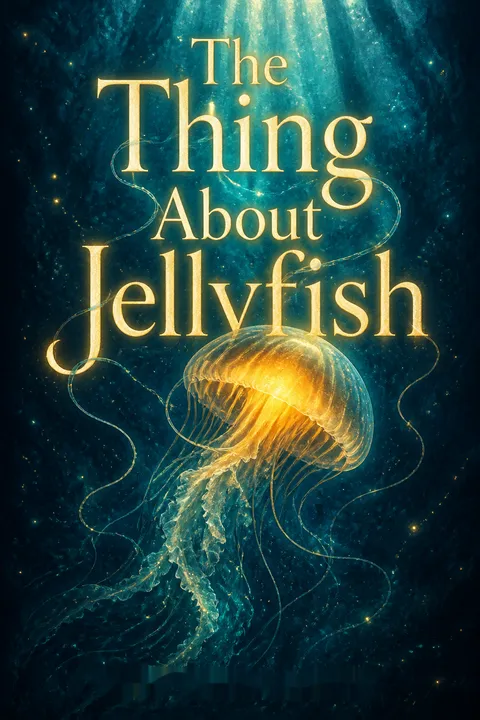
The opening compares a jellyfish’s pulsing body to a heart, though the animal has no heart at all. Suzy measures human life against billions of heartbeats, then considers the smaller number a person might receive in twelve years.
The image of a visible pulse inside a transparent creature becomes the book’s lens: life can be present and fragile even when its workings remain hidden.
The image establishes a tension between what can be observed and what can be known. A jellyfish appears to have a heart, but the resemblance does not explain its biology; likewise, a death may invite explanations that the available evidence cannot supply. The heartbeat also makes childhood feel precarious without turning the novel into a mystery with a guaranteed solution. Suzy’s later investigation begins in this gap between visible loss and inaccessible cause.
The News Arrives Late
At twelve, Suzy hears from her mother that Franny drowned while vacationing in Maryland. The news arrives two days after the accident, leaving Suzy imagining the interval when Franny was gone and almost nobody knew. She cannot accept that her friend, a strong swimmer, could simply drown, and her mother has no explanation beyond the possibility that terrible events happen without one.
After the funeral, Suzy stops filling conversations with words. Her parents, already separated, worry that grief has closed her off, but Suzy treats silence as a refuge from talk that cannot make the loss intelligible. The question of why Franny died will become the problem she tries to solve.
The delay in the news makes grief feel less like a single event than a rupture in shared time. Suzy fixates on the fact that other people knew before she did, then imagines Franny’s final moments as a period of absolute isolation. Her silence is not indifference; it is a refusal to perform ordinary conversation while the world offers her an answer she finds inadequate. The novel lets this refusal protect her briefly, while also showing how it prevents others from reaching her.
The Friendship They Built
Suzy first meets Franny at five, when the two girls hesitate at swimming lessons until Franny dives in and Suzy follows. Their friendship grows through sleepovers, made-up games, songs, and Suzy’s stream of animal facts, which Franny welcomes. As they approach middle school, however, Franny becomes interested in Dylan Parker and the girls who trade beauty advice.
Suzy’s parents’ divorce gives her urgent news to share, but she cannot find a moment when Franny is listening. At lunch, Suzy offers awkward facts about sweat and urine; Franny rejects her as weird and walks away with the other girls. The distance between them has grown from small missed chances into a break Suzy does not know how to mend.
Suzy and Franny’s early closeness depends on a practical form of recognition: Franny receives Suzy’s facts as gifts rather than social mistakes. Their separation is painful precisely because no single change explains it. Franny’s new interests are ordinary, but Suzy experiences them as evidence that the language in which she once felt loved no longer works. The divorce sharpens that vulnerability. She needs to disclose a private upheaval, yet her fear of losing the friendship keeps her from saying it.
The Frog and the Locker
At a sixth-grade campout, Dylan throws a live frog against a tree while Franny watches and then joins the laughter. Suzy tries to stop him with a look and a choked attempt to say Franny’s name, but Franny turns away. Later, someone spits on Suzy while she lies in her sleeping bag, confirming that she has been pushed outside the group.
Remembering Franny’s childhood request for a bold signal if she ever changed, Suzy decides to make one. She freezes her urine in plastic containers and slips the disks through Franny’s locker slats on the last school morning. Franny does not look at Suzy when she discovers the mess. She leaves with the school secretary, and Suzy’s attempt at repair becomes another source of shame.
Suzy mistakes intensity for legibility. The locker stunt is designed as a private code between old friends, but it is delivered in a public, humiliating form that leaves Franny no safe way to interpret it. The frog scene shows the earlier failure beneath the prank: Suzy has no practiced means of intervening, and Franny’s choice not to intervene confirms Suzy’s worst fear. Her actions combine protest, longing, and punishment, even as she insists to herself that they are meant to restore the friendship.
An Invisible Suspect
After Franny’s death, Suzy’s seventh-grade class visits an aquarium. Feeling unseen among her classmates, she slips downstairs to the jellyfish tanks, where a display describes the nearly invisible Irukandji and deaths that may have been misattributed. Suzy wonders whether a sting could have caused Franny’s drowning, especially since Irukandji-like symptoms have appeared far from Australia.
On the bus, she calculates how many people are stung each second, then writes a hypothesis that a jellyfish caused the accident. Mrs. Turton’s science project gives her a legitimate reason to investigate. For Suzy, research offers something grief has withheld: a sequence of questions that might lead to a cause, and perhaps to a way of making amends.
The Irukandji theory is scientifically possible enough to attract Suzy, but emotionally it performs another task: it relocates blame from her own behavior to an external agent. That does not make her curiosity false. The display supplies real uncertainties about diagnosis and migration, while Suzy’s conclusions outrun what those facts can establish. The novel respects both parts of the impulse. Science gives her a disciplined way to ask questions, yet cannot guarantee that the answer she longs for will be found.
Jamie Across the Ocean
Suzy researches jellyfish experts and settles on Jamie Seymour, an Australian biologist who studies dangerous species and has survived an Irukandji sting. Her meetings with child psychologist Dr. Legler remain mostly silent, while Mrs. Turton supports her research and pairs her with Justin Maloney in science class.
Suzy watches Jamie’s footage, but cannot manage to speak when she phones his university. When she presents her report, she explains jellyfish life cycles, ocean blooms, and Irukandji risks, then connects the danger to Maryland.
The class responds with yawns and a Medusa taunt rather than concern. Justin leaves her jellyfish sketches and later makes room for her in their quiet companionship. Her speech reaches people, but it cannot make them accept her theory.
Suzy’s report is a genuine change in behavior, but not the breakthrough she expects. She can speak when she has facts arranged in order; she cannot yet use that speech to ask for help or distinguish evidence from hope. The classmates’ mockery repeats the social injury of the lunchroom, while Justin and Mrs. Turton offer a less theatrical kind of attention. Their response matters because it does not require Suzy to be persuasive or cheerful before they sit beside her.
A Ticket Out
Convinced that only Jamie can settle the question, Suzy secretly copies her father’s credit-card details during their weekly dinners, takes cash from her mother, and later removes money from Aaron and Rocco’s apartment.
She researches airfare, transport, weather, and a cheap motel in Cairns, then books an international ticket without adult permission. The plan gives her temporary calm, though she knows she has hidden the trip from everyone. Before leaving, she calls Franny’s mother to ask after the family dog.
Franny’s mother tells her that Franny admired Suzy’s independence, a revelation Suzy had never considered. Suzy does not explain the journey she has planned; she packs Aaron’s childhood photograph and walks out, still unable to say a proper goodbye to her mother.
The trip converts an unmanageable emotional problem into a logistical one. Suzy can count money, compare fares, and map a route, so planning restores a sense of agency that conversation has not. But the secrecy also repeats her central difficulty: she tries to secure understanding by acting first and explaining later. Franny’s mother interrupts Suzy’s fixed picture of herself as the friend who failed. The information does not erase the hurt, but it gives her a more complicated memory of what Franny saw in her.
The Airport Floor
At the airport, an agent discovers that Suzy lacks a visa and cannot fly internationally alone. Suzy’s borrowed credit-card information and newspaper research cannot change the rules; overwhelmed, she collapses beside the counter.
The agent stays with her, and her mother, father, Aaron, and Rocco eventually arrive. For the first time in months, Suzy tells them about the jellyfish theory and the trip. Her mother admits she had assumed a riptide caused Franny’s drowning, but acknowledges that no one can know for certain.
Suzy apologizes for taking money. Then a television shows Diana Nyad completing her Cuba-to-Florida swim, a feat that once seemed impossible. Suzy watches the swimmer reach shore and leaves the airport with her family, no closer to proving her theory but no longer alone.
The failed journey is the story’s decisive correction: access to an expert would not necessarily have produced certainty, and certainty would not have returned Franny. Suzy’s family does not solve the mystery; they receive her account and remain beside her anyway. Nyad’s swim offers a counterpoint to Suzy’s failed expedition, but not a lesson that effort guarantees success. Its value lies in showing persistence without pretending every attempt can control its outcome.
Three Hundred Seconds
Back home, Suzy’s mother encourages her to try the school dance for five minutes. Outside the gym, Justin, wearing oversized furry mittens, welcomes her, and Suzy calls her father instead of entering immediately. She asks him to visit the dinosaur tracks with her, and includes Aaron and Rocco in the plan.
Sarah Johnston, another quiet student, admits she has no close friends and asks Suzy to enter with her. Inside, the moving lights remind Suzy of glowing sea life; she sees Justin dancing with Mrs. Turton and joins Sarah rather than retreating to the car. Franny remains part of Suzy’s memory, not a problem the dance can solve. Suzy steps into a noisy room with people who have made space for her.
The ending answers the opening’s fear of disappearance through small acts of reciprocal attention. Suzy does not suddenly become socially fluent or stop grieving. She calls her father, accepts Sarah’s invitation, and crosses the gym threshold, each action modest but chosen. The image of a dance floor resembling a pulsing sea joins her scientific attention to ordinary human contact. Unlike the locker stunt, this time Suzy reads another person’s need and responds in a way that makes room for both of them.
Analysis
The novel makes a child’s search for cause emotionally credible without granting her a detective’s reward. Suzy discovers a genuine scientific uncertainty: Irukandji stings can be difficult to identify, and jellyfish ranges may change. But the evidence never establishes that a jellyfish caused Franny’s drowning. That unresolved question is essential. If Suzy received proof, grief could be mistaken for a puzzle with a final answer, and guilt could simply be transferred to a venomous animal. Instead, the story asks whether care can survive not knowing.
Suzy’s scientific habits are both strength and defense. Counting stings and collecting facts give shape to a world that feels arbitrary. The same precision, however, makes it tempting to treat a plausible explanation as a certain one. Her report demonstrates the difference between speaking and being heard: she can deliver a carefully researched account, yet cannot make classmates share the urgency she feels. Justin’s quiet companionship and Mrs. Turton’s open classroom offer a less dramatic form of recognition, one that does not depend on winning an argument.
The friendship with Franny gives the book its sharpest account of social change. Their break is built from ordinary shifts in attention, but Suzy experiences those shifts as the collapse of a shared language. Her frozen-urine prank is a desperate attempt to make an old private signal work in a new social world. It fails because a message cannot control how another person receives it. By the end, Suzy begins again through smaller, reciprocal gestures: calling her father, accepting Sarah’s company, and entering the dance. She does not solve death or recover the childhood friendship unchanged. She learns that uncertainty need not mean abandonment, and that being understood can begin with listening to someone else.
Review Summary
The Thing About Jellyfish is a heartfelt middle-grade novel that resonates with readers of all ages. It explores grief, friendship, and self-discovery through the eyes of Suzy, a socially awkward 12-year-old girl coping with the death of her best friend. The book's beautiful writing style, scientific facts about jellyfish, and Suzy's unique perspective captivate readers. While some found the pacing slow and the jellyfish facts excessive, most praised the book's emotional depth and its ability to tackle complex themes in an age-appropriate manner.
People Also Read






Characters
Suzy Swanson
The observant investigatorSuzy is a twelve-year-old who notices what others overlook, from classroom details to patterns in the natural world. She prefers precise facts to small talk and often struggles to recognize when her attempts to connect are landing badly. Her intense curiosity gives her a method for approaching frightening questions, but her need for certainty can turn a possibility into a conviction. She is also sensitive to exclusion and deeply loyal to the people she loves. The story follows her effort to find language for grief, repair, and belonging without surrendering the inquisitive mind that makes her distinct.
Franny Jackson
Suzy's childhood confidanteFranny is Suzy’s energetic childhood companion, a strong swimmer with freckles and light hair. She enjoys Suzy’s imaginative games and encyclopedic facts, and their early friendship gives both girls a place to feel accepted. As they grow older, Franny becomes more attentive to social approval and the changing expectations of middle school. She is not simply a symbol of what Suzy has lost: she has her own uncertainty, interests, and capacity to admire qualities she does not always share. Their closeness shapes Suzy’s understanding of friendship and of how difficult change can be to name.
Justin Maloney
The unlikely lab partnerJustin is a classmate whose impulsiveness and ADHD make school difficult to navigate. He has a reputation for mishaps, but he is more perceptive and considerate than Suzy first expects. He takes his science work seriously, treats living things with dignity, and finds ways to include Suzy without demanding that she perform conversation for him. His humor can soften a tense moment, while his own description of a crowded mind helps Suzy understand that other people experience the world through different forms of noise.
Mrs. Turton
The curious science teacherMrs. Turton teaches science by making the ordinary world feel open to investigation. She encourages students to choose questions that matter to them and gives Suzy room to pursue jellyfish research. Her support is practical rather than sentimental: she offers resources, recognizes effort, and creates a quiet lunchtime refuge. She notices that Suzy is struggling, but does not insist that every difficulty be explained aloud. Her classroom becomes one of the few places where curiosity, uncertainty, and silence can coexist.
Dr. M. Legler
The patient psychologistDr. Legler is the child psychologist Suzy’s parents consult after Suzy withdraws. She takes grief seriously and does not treat silence as proof of defiance or failure. Her sessions give Suzy space to sit without speaking, though her advice about face-to-face communication also exposes the distance between what Suzy wants to express and what she can manage. Dr. Legler represents an adult effort to help without claiming that grief has a simple timetable.
Meg Swanson
Suzy's protective motherMeg is a real-estate agent, a thrift-store treasure hunter, and the parent who manages much of Suzy’s daily life. She is warm but scattered, often trying to help through practical care when she cannot find an explanation that will comfort her daughter. Her separation from Jim has changed the family’s routines, and she worries when Suzy withdraws. Meg’s affection is persistent, even when Suzy pushes her away or mistakes concern for judgment.
Jim Swanson
Suzy's steady fatherJim works with computer systems and travels frequently, but he keeps a weekly dinner appointment with Suzy after moving out. Their routine gives them a dependable connection even when conversation falters. He tries to reach his daughter with facts and shared interests rather than forcing emotional disclosure, though he is hurt by her silence. Jim’s wish to remain present is clear in the small rituals he maintains and the invitations he offers.
Aaron Swanson
Suzy's encouraging brotherAaron is Suzy’s older brother, an athletic and easygoing presence who has moved into adult life with his partner. He notices that middle school is hard for Suzy and offers reassurance without pretending to have a quick fix. His confidence contrasts with Suzy’s self-consciousness, but he is not distant from her; his visits and familiar affection help make the family feel connected across separate homes.
Rocco
Aaron's literary partnerRocco is Aaron’s boyfriend and a graduate student in literature. He quotes writers, jokes easily, and makes room for Suzy without demanding a response. His relaxed presence gives the Swanson family another model of companionship: attention need not always arrive as questions or instructions. He is affectionate toward Aaron and gently welcoming to Suzy.
Sarah Johnston
The quiet new classmateSarah is a new student who is quiet and observant, qualities Suzy initially recognizes as familiar. She moves among the more socially confident girls but does not feel fully at home with them. Her interest in unsettling science topics reflects a curiosity that is both cautious and genuine. Sarah’s willingness to admit her loneliness gives Suzy a chance to answer another person’s need with care.
Jamie Seymour
The distant jellyfish expertJamie Seymour is an Australian biologist whose work centers on dangerous marine animals, including Irukandji jellyfish. Suzy learns about him through research and footage of his fieldwork, where his curiosity persists despite the risks he has faced. To Suzy, he represents the possibility of finding a knowledgeable adult who will take an unusual question seriously. His real expertise anchors the scientific strand of the story.
Diana Nyad
The determined swimmerDiana Nyad is a long-distance swimmer whose attempts to cross from Cuba to Florida have been complicated by jellyfish stings. Suzy follows her efforts as an example of persistence in the face of physical risk. Nyad’s story is part of the real world surrounding Suzy’s research, rather than a personal acquaintance.
Dylan Parker
The careless popular boyDylan is a classmate whose confidence attracts attention, including Franny’s. He uses teasing and physical pranks to entertain other students, often without considering who or what gets hurt. His behavior helps expose the pressure Suzy feels to understand middle-school social rules.
Aubrey LaValley
The social gatekeeperAubrey is a popular classmate who helps define the appearance-conscious group Franny begins spending time with. She can be dismissive toward students who do not fit the group’s standards. Her presence makes the social hierarchy of middle school visible to Suzy.
Plot Devices
The Irukandji hypothesis
A mystery with no proofA display at the aquarium describes the tiny, nearly invisible Irukandji jellyfish and the possibility that some deaths have been attributed to other causes. Suzy uses that uncertainty to form a theory about Franny’s drowning. The hypothesis drives her research, her search for Jamie Seymour, and her decision to travel. Its eventual importance is not that it solves the death, but that it shows how grief can turn a scientific possibility into a personal necessity.
The science report
A route from facts to speechMrs. Turton’s required research project gives Suzy a structured reason to study jellyfish and a deadline to speak in front of her class. The assignment lets her organize difficult feelings as observations, background, hypothesis, and results. Yet a clear presentation cannot make the audience accept her conclusion. The report therefore advances both the plot and the book’s distinction between communicating information and being understood.
Silence and listening
Communication beyond wordsSuzy’s silence begins as a way to avoid empty conversation and develops into a barrier between her and the people who want to help. At the same time, her close attention to sounds, expressions, and gestures lets her notice forms of communication others miss. The story contrasts silence that shelters her with silence that isolates her, then lets shared quiet become a gentler way of being with Justin, her family, and Sarah.
The Australian escape plan
Control mistaken for certaintySuzy’s detailed plan to reach Jamie gives her grief a destination. She counts cash, studies transportation, copies her father’s card information, and books a flight, imagining that reaching Australia will bring the answer she needs. The plan is a practical expression of her determination, but it also reveals her belief that enough preparation can remove uncertainty. The airport’s refusal to let her travel alone interrupts that belief and returns her to the people she has tried to leave without explanation.
FAQ
Synopsis & Basic Details
What is The Thing About Jellyfish about?
- Grief and Scientific Quest: The Thing About Jellyfish follows Suzy Swanson, a seventh-grader grappling with the sudden, inexplicable drowning death of her former best friend, Franny Jackson. Unable to accept the simple explanation that "sometimes things just happen," Suzy retreats into a world of silence and scientific inquiry.
- Unraveling a Mystery: Convinced that Franny's death was caused by a rare Irukandji jellyfish sting, Suzy embarks on a secret, elaborate research project. Her quest to prove her hypothesis becomes a metaphor for her attempt to find order and meaning in a chaotic, grief-stricken world.
- Journey of Connection: The narrative interweaves Suzy's present-day scientific investigation with flashbacks to her evolving, and ultimately strained, friendship with Franny. It explores themes of communication, loss, the complexities of middle school social dynamics, and the challenging path toward acceptance and renewed connection.
Why should I read The Thing About Jellyfish?
- Unique Blend of Science and Emotion: This novel masterfully combines a deeply emotional story of grief and friendship with fascinating scientific facts about jellyfish and the natural world. Readers gain both a poignant character journey and intriguing insights into marine biology.
- Relatable Exploration of Adolescence: Ali Benjamin captures the awkwardness, intensity, and shifting loyalties of middle school with remarkable authenticity. Suzy's struggles with identity, communication, and fitting in resonate deeply, making her journey of self-discovery compelling.
- Profound Thematic Depth: Beyond the plot, the book delves into universal themes such as the search for meaning in tragedy, the nature of friendship, the power of silence, and the courage it takes to embrace uncertainty. It offers a fresh perspective on how we cope with the inexplicable.
What is the background of The Thing About Jellyfish?
- Author's Personal Fascination: Ali Benjamin's The Thing About Jellyfish emerged from her own "captivation by jellyfish" and a rejected nonfiction essay, as detailed in the author's note. This personal connection imbues the narrative with genuine curiosity and depth regarding the subject.
- Integration of Real Science: The book meticulously weaves in real scientific concepts and figures, such as the immortal jellyfish (Turritopsis dohrnii), the "Pale Blue Dot" photograph by Carl Sagan, and the historic swim of Diana Nyad. This factual grounding lends credibility and educational value to Suzy's fictional quest.
- Setting and Cultural Context: The story is set in South Grove, Massachusetts, with references to the New England Aquarium in Boston, grounding Suzy's experiences in a specific, recognizable environment. The narrative also subtly touches on the cultural context of middle school social pressures and the challenges of communication in a digital age.
What are the most memorable quotes in The Thing About Jellyfish?
- "Jellyfish don't even have hearts, of course—no heart, no brain, no bone, no blood. But watch them for a while. You will see them beating.": This opening line from "Ghost Heart" immediately establishes the central metaphor of the book, linking the seemingly heartless jellyfish to Suzy's own numb grief and the visible, yet unseen, pulse of life and emotion. It highlights the theme of perception versus reality.
- "Not everything makes sense, Zu. Sometimes things just happen.": Spoken by Suzy's mom, this quote encapsulates the frustrating ambiguity that drives Suzy's entire scientific quest. It represents the adult world's acceptance of the inexplicable, which Suzy vehemently rejects, fueling her need for a concrete "villain" in Franny's death.
- "Humans may be newcomers to this planet. We may be plenty fragile. But we're also the only ones who can decide to change.": This powerful reflection from the "What If?" chapter summarizes Suzy's ultimate realization. It shifts the focus from external, uncontrollable forces (like jellyfish or death) to internal agency and the human capacity for growth, resilience, and finding meaning.
What writing style, narrative choices, and literary techniques does Ali Benjamin use?
- Alternating Narrative Structure: The novel employs a dual narrative, alternating between Suzy's present-day scientific investigation (often framed as a lab report with sections like "Hypothesis," "Procedure," "Results," "Conclusion") and flashbacks to her past friendship with Franny (titled "How to Make a Friend," "How to Drift Apart," etc.). This structure effectively contrasts Suzy's analytical mind with her emotional journey, revealing the evolution of her grief and understanding.
- First-Person Limited Point of View: Told entirely from Suzy's perspective, the narrative provides deep insight into her internal world, her unique observations, and her struggles with communication. This allows readers to experience her isolation, her intense focus on science, and her gradual emotional breakthroughs firsthand.
- Metaphor and Symbolism: Benjamin extensively uses metaphor, particularly the jellyfish, to explore complex themes. The jellyfish symbolizes both the alienness of grief and the resilience of life, while Suzy's "not-talking" becomes a powerful symbol of her emotional withdrawal and her struggle to connect. Scientific concepts are often used metaphorically to explain human emotions and relationships.
Hidden Details & Subtle Connections
What are some minor details that add significant meaning?
- The Ming Palace Fish Tank: The fish in the restaurant tank, described as seeing "only their own reflections" and unaware of the "entire ocean," subtly mirrors Suzy's initial self-absorption in her grief and her inability to see beyond her own pain. It highlights her isolation and limited perspective before she begins to reconnect with others.
- The Blank Fortune Cookie: At her last dinner with her dad before her planned trip, Suzy receives a blank fortune cookie, while her dad's reads "A SMOOTH LONG JOURNEY! GREAT EXPECTATIONS." This detail foreshadows the failure of her meticulously planned journey to Australia and the unexpected, uncertain path her healing will actually take.
- Suzy's "Mizz Frizz" Hair: Suzy's perpetually frizzy, "impossible" hair is a recurring minor detail that symbolizes her feeling of being different and "weird" compared to the "flat-haired" popular girls. It represents her internal chaos and her struggle to conform, contrasting with Franny's attempts to smooth her own hair and fit in.
What are some subtle foreshadowing and callbacks?
- The Irukandji Jellyfish Sign: Early in the story, Suzy encounters the "Invisible Enigma" sign about the Irukandji jellyfish, noting its "documented deaths" and "migration over greater distances." This seemingly random detail immediately plants the seed for her central hypothesis, subtly foreshadowing the direction of her scientific quest and her desperate need for an explanation.
- Franny's "Shoot Me" Promise: In a flashback, Franny tells Suzy, "Shoot me if I ever become like that," referring to Aubrey's popularity-driven behavior, and asks Suzy to "Send me a signal. Like a secret message. Make it big." This promise foreshadows Suzy's desperate, misguided attempt to "send a message" with the pee-disks, a callback to Franny's earlier plea for intervention.
- The "Ghost Heart" Metaphor: The book opens with the "ghost heart" description of jellyfish, which lack hearts but appear to beat. This concept subtly foreshadows Suzy's own emotional state: she is alive and functioning, but her heart feels absent or transparent due to grief, struggling to connect with the world around her.
What are some unexpected character connections?
- Justin Maloney's ADHD and Suzy's "Constant-Talking": Justin's explanation of his ADHD, where "everything comes in at once" and his medicine creates "space between all those things," unexpectedly mirrors Suzy's earlier description of her "constant-talking" and her later internal chaos. This shared experience of an overwhelming internal world forms the basis of their unique, empathetic connection.
- Sarah Johnston's "Zombie Ants" Report: Sarah's choice of "zombie ants" as a science report topic, driven by the "scary" idea of something controlling one's brain, subtly connects to Suzy's own feeling of being controlled by her grief and her obsessive quest. It hints at a shared underlying anxiety about loss of control and the unknown, making their eventual friendship more meaningful.
- Aaron and Rocco's Unconditional Acceptance: Aaron and Rocco, Suzy's brother and his boyfriend, provide an unexpected haven of easy happiness and non-judgmental acceptance. Their relationship, marked by playful banter and genuine affection, contrasts sharply with the strained dynamics Suzy experiences elsewhere, offering a glimpse of healthy, uncomplicated connection that Suzy eventually seeks for herself.
Who are the most significant supporting characters?
- Mrs. Turton, the Guiding Scientist: Mrs. Turton, Suzy's seventh-grade life science teacher, serves as a crucial mentor and a symbol of the power of scientific inquiry and wonder. She encourages Suzy's curiosity, provides a safe space for her, and subtly guides her towards broader understanding, even when Suzy's focus is narrow. Her "mote of dust" and "stardust" lessons offer profound philosophical insights that help Suzy reframe her perspective on life and loss.
- Aaron and Rocco, the Pillars of Unconditional Love: Suzy's older brother Aaron and his boyfriend Rocco represent a stable, loving, and accepting presence in her life. Their easygoing nature, playful nicknames for Suzy ("Suzy Q"), and genuine concern provide a stark contrast to the emotional turmoil Suzy experiences. They offer a model of healthy relationships and a sense of belonging that helps Suzy begin to heal and reconnect with her family.
- Justin Maloney, the Unexpected Confidant: Initially perceived as a "messing-up" kid, Justin becomes Suzy's first true confidant and friend in her period of silence. His own struggles with ADHD and his surprising empathy allow him to understand Suzy's "not-talking" in a way others cannot. His consistent kindness and the "Belle" nickname help Suzy feel seen and accepted, paving the way for her to break her silence.
Psychological, Emotional, & Relational Analysis
What are some unspoken motivations of the characters?
- Suzy's Quest for Control: Suzy's intense scientific investigation into Franny's death is driven by an unspoken, desperate need for control and order in a world that feels chaotic and senseless after her friend's drowning. Her hypothesis about the Irukandji jellyfish provides a tangible "villain," allowing her to externalize her grief and avoid the terrifying ambiguity of "sometimes things just happen."
- Franny's Pursuit of Belonging: Franny's gradual shift towards the popular girls and her changing behavior (e.g., worrying about her appearance, laughing at Suzy) are motivated by an unspoken desire for acceptance and belonging in the complex social hierarchy of middle school. Her actions, though hurtful to Suzy, stem from a deep-seated need to fit in and avoid being an "outsider."
- Suzy's Parents' Helplessness: Suzy's parents' attempts to help her, from insisting on therapy to their quiet concern, are motivated by their unspoken helplessness in the face of her grief and silence. They are trying to navigate their own sorrow and the breakdown of their family (divorce) while simultaneously struggling to reach their daughter, often feeling inadequate.
What psychological complexities do the characters exhibit?
- Suzy's Selective Mutism and Obsessive Thinking: Suzy's "not-talking" is a complex psychological response to trauma, serving as both a shield and a manifestation of her inability to process her grief verbally. Her obsessive focus on jellyfish and scientific facts is a coping mechanism, a way to channel her intense emotions into a structured, controllable pursuit, even if it leads to social isolation.
- Franny's Conformity and Identity Struggle: Franny exhibits the psychological complexity of a pre-teen grappling with identity formation and peer pressure. Her shift from valuing Suzy's unique qualities to prioritizing popularity reflects the internal conflict between authenticity and conformity, a common struggle during adolescence that ultimately strains their friendship.
- The Parents' Disconnected Grief: Suzy's parents, despite their love for her, demonstrate a form of disconnected grief. Her mother's "sometimes things just happen" and her father's quiet despair reveal their own struggles to cope with Franny's death and Suzy's withdrawal, highlighting how individual coping mechanisms can inadvertently create distance within a family.
What are the major emotional turning points?
- The Frog Incident at Campout: The scene where Franny laughs as Dylan Parker kills a frog, despite Suzy's silent plea, is a devastating emotional turning point. It shatters Suzy's idealized view of Franny and marks the definitive end of their close friendship, leaving Suzy feeling betrayed and deeply hurt, fueling her later "pee-disk" message.
- The Failed Australia Trip: Suzy's thwarted attempt to fly to Australia is a crucial emotional climax. The airport lady's quiet kindness and Suzy's subsequent breakdown force her to confront the futility of her external quest for answers and the limits of her control. This failure, ironically, opens the door for her to begin processing her grief internally and accepting uncertainty.
- The Phone Call to Her Dad: Suzy's decision to call her dad from the school dance, breaking her five-month silence with him, is a profound emotional breakthrough. Her simple suggestion to "go see those dinosaur tracks" and "try someplace new" signifies her willingness to reconnect, to move forward, and to embrace new experiences with her family, marking a significant step in her healing process.
How do relationship dynamics evolve?
- Suzy and Franny: From Inseparable to Estranged: Their friendship evolves from a deep, almost symbiotic bond in early childhood ("how to make a friend," "how to have a friend") to a strained, distant relationship in middle school ("how to drift apart," "how to lose a friend"). This shift is driven by Franny's desire for popularity and Suzy's inability to conform, culminating in a painful rupture that leaves Suzy feeling abandoned and misunderstood.
- Suzy and Her Parents: From Distance to Reconnection: Initially, Suzy's silence creates a significant emotional gulf between her and her divorced parents, who struggle to understand and help her. Her failed trip to Australia, however, acts as a catalyst for their reconnection. Her parents' immediate presence at the airport and their quiet understanding, followed by Suzy's phone calls, signify a renewed effort to bridge the communication gap and rebuild their family bond.
- Suzy and Justin: From Unlikely Partners to Genuine Friends: Their relationship evolves from an assigned lab partnership based on mutual "weirdness" to a genuine, empathetic friendship. Justin's acceptance of Suzy's silence, his playful "Belle" nickname, and his shared appreciation for scientific wonder ("pollination" video) allow Suzy to gradually open up. Their bond demonstrates the power of finding connection in unexpected places and the importance of being truly seen and understood.
Interpretation & Debate
Which parts of the story remain ambiguous or open-ended?
- The True Cause of Franny's Drowning: While Suzy obsessively pursues the Irukandji jellyfish hypothesis, the novel never definitively confirms the cause of Franny's death. Her mother suggests a "riptide," a "medical thing," or simply swimming "a little too far from shore." This ambiguity is central to the story's theme, forcing Suzy (and the reader) to confront the reality that some tragedies lack clear, satisfying explanations.
- Franny's Final Feelings Towards Suzy: The extent of Franny's regret or understanding regarding their fractured friendship remains open to interpretation. While Suzy believes her "pee-disk" message would lead to an apology and reconciliation, Franny's reaction is one of shock and withdrawal. The narrative leaves it unclear whether Franny ever truly understood Suzy's desperate attempt to reconnect or if their friendship was irrevocably broken before her death.
- The Long-Term Impact of Suzy's Silence: While Suzy begins to speak and reconnect by the end of the novel, the lasting effects of her prolonged silence and intense grief are not fully resolved. The story concludes with a sense of hope and new beginnings, but the journey of healing is presented as ongoing, implying that the psychological scars of her experience will continue to shape her.
What are some debatable, controversial scenes or moments in The Thing About Jellyfish?
- The "Pee-Disk" Incident: Suzy's act of freezing her urine into disks and slipping them into Franny's locker is highly debatable. While Suzy views it as a desperate "secret message" to "bring us back" and make Franny "listen," it is also an act of public humiliation and a violation of trust. Readers might debate whether this act was a justified, albeit extreme, response to Franny's betrayal or a deeply misguided and harmful action.
- Franny's Reaction to the Frog Incident: Franny's decision to laugh and turn away when Dylan Parker kills the frog, despite Suzy's silent plea, is a controversial moment. It can be interpreted as a definitive betrayal of their shared values and a stark illustration of Franny's conformity to peer pressure. The debate lies in whether Franny's actions were a conscious, cruel choice or a desperate attempt to fit in, highlighting the pressures of adolescence.
- Suzy's Theft from Her Parents and Aaron/Rocco: Suzy's actions of using her dad's credit card and taking cash from her mom and Aaron/Rocco raise ethical questions. While her motivation is driven by grief and a perceived "higher purpose," the means she employs are dishonest. This prompts a debate about whether the ends justify the means, especially when driven by intense emotional distress.
The Thing About Jellyfish Ending Explained: How It Ends & What It Means
- Acceptance of Ambiguity: The ending of The Thing About Jellyfish signifies Suzy's profound shift from a rigid need for scientific explanation to an acceptance of life's inherent ambiguities. Her failed trip to Australia, though initially devastating, forces her to realize that knowing the "why" of Franny's death wouldn't bring her back or mend their fractured friendship. She learns that "sometimes things just happen" is a terrifying, yet ultimately liberating, truth.
- Reconnection and Renewed Hope: Suzy breaks her silence, first with her family at the airport, then with her dad over the phone, and finally by choosing to enter the school dance with Sarah Johnston. This signifies her willingness to re-engage with the world, to forge new connections, and to embrace the messy, imperfect reality of human relationships. Her decision to "try someplace new" with her dad for dinner symbolizes a broader openness to new experiences and a future beyond her grief.
- Embracing Fragility and Change: The novel concludes with Suzy's realization that humans, though fragile and "newcomers" to the planet, possess the unique ability
Download PDF
Download EPUB
.epub digital book format is ideal for reading ebooks on phones, tablets, and e-readers.








