

Plot Summary
The Inn Between
Caly, a human assassin who has killed Seelie Queen Saracen, is traveling toward Moirai with Eli, her childhood friend and Seelie prince, and Mendax, the Unseelie prince bound to her. Walter, Mendax’s cousin, is dead, and Eli has learned that Caly spent years lying to him while preparing to kill his mother.
The Fates have summoned all three because Caly is both tied to Eli and bonded to Mendax, a forbidden combination that is draining their strength. They have been warned that one of them may die to break the links. At a packed inn between realms, Mendax takes a mattress by force, then claims the only bed beside Caly. Eli joins them, turning their rivalry into a perilous contest for her closeness.
The cramped inn turns the novel’s supernatural crisis into a physical arrangement: three people whose lives are entangled must negotiate a single bed. Caly’s exhaustion makes her less able to maintain the emotional distance that has protected her, while the men’s teasing briefly restores a sense of ordinary intimacy. Yet Mendax’s possessiveness and Eli’s claim on their shared past are not equivalent forms of love. The scene establishes the central tension between chosen attachment and coercive protection, while the approaching trial makes every moment of tenderness feel borrowed from an uncertain future.
The Sickle in Snow
As the trio crosses the dangerous Infinity Forest, Eli hears a sickle approaching and tricks Caly into climbing a tree, intending to let the creature kill Mendax. He believes Mendax is a monster who cannot love her and sees the attack as a way to end their bond without facing the Fates. But the sickle pins Mendax to the snow with its own ice, and Eli cannot watch Caly’s terror without acting.
He shifts into fox form, draws the creature away, then uses the last of his sun power to destroy it. Eli frees Mendax and removes the ice from his shoulder, though he insists he still hates him. His attempted betrayal becomes an involuntary rescue, exposing the limits of his certainty about both Mendax and himself.
Eli’s scheme is a moral experiment he conducts without consent: he tries to decide which life is worth keeping, then discovers that abstract judgment cannot survive Caly’s grief in front of him. His rescue does not erase the betrayal, but it complicates the identity he cherishes as the decent one. Mendax’s skill in combat also overturns Eli’s belief that he is merely a cruel rival. The scene makes goodness less a stable self-image than a decision made under pressure, and it forces Eli to recognize that compassion can begin after one has already chosen badly.
The Empty Cave
The fight leaves all three injured, powerless, and hungry, so they shelter in a cave and struggle to kindle a fire. Caly watches the men sleep and realizes that the bond and tie may be killing her, while both princes have secretly fed her their power to keep her healthy. Mendax wakes and offers to kill anyone she names, but Caly asks him to spare Eli.
She then allows herself a tender, intimate night with Mendax, speaking openly of her love and their uncertain future. When she wakes, Eli is gone, leaving only the shirts she had used as his blanket. Caly fears he left after witnessing them together, and she and Mendax set out toward Lake Sheridon to find him.
The cave shifts the bond from a magical mechanism into an ethical burden. Caly has been kept alive by acts of care she did not know to ask for, while the men have concealed the cost to protect her from fear and guilt. Her intimacy with Mendax is therefore both an expression of desire and a response to anticipated loss. Eli’s absence turns that private choice into a relational consequence. The scene resists a simple romantic triangle: Caly’s love for Mendax and her lifelong attachment to Eli answer different needs, and neither can be reduced to competition.
The Frozen Scroll
At Lake Sheridon, Caly and Mendax find Eli beside a shattered glass scroll and a dead falcon. Eli says the scroll was already broken when he arrived, and Caly believes him, though the frozen glasswing butterflies scattered nearby suggest someone is sabotaging their route.
To recover the remaining pieces, Eli tests the ice with Mendax’s chest plate, revealing pale, faceless creatures beneath it. Caly crosses the cracking lake and retrieves the message while the creatures pursue her.
Eli and Mendax distract them, then pull her to safety. Afterward, Eli admits that his attachment to Caly is a lifelong, family-deep friendship, not the romance he once imagined. He recognizes that Mendax loves her differently and accepts that their journey must continue.
The lake gives the characters a literal surface that cannot be trusted, matching the uncertainty of their relationships and the sabotaged instructions. Caly’s decision to cross the ice is not proof that she needs rescuing; it is an act of competence that compels both men to cooperate. Eli’s clarification is equally consequential. By naming friendship as a form of lasting love rather than a failed romance, he loosens the emotional contest without diminishing their history. Their new understanding does not eliminate jealousy or danger, but it allows the group to function as a fragile alliance.
The Weathered’s House
The next instruction directs the travelers to the weathered, the goddess who controls weather across the realms. They find Jamie, a sharp-tongued girl living in a modest mountain house with an older woman and several children.
Mendax realizes Jamie’s moods control the weather and provokes her by insisting that her beloved Flora has abandoned her. Her grief opens the clouds and starts the flood required by the Fates. Eli returns to comfort Jamie, helping her remember her love for Flora and accept that the relationship may change rather than vanish.
His kindness brings a break in the storm and restores some of his power. As the water rises, he unfolds his wings and prepares to carry the group uphill, while Caly and Mendax see a cloaked figure waiting above.
Jamie’s weather turns private emotion into shared environment: one person’s grief can flood an entire landscape. Mendax treats that vulnerability as a tool, succeeding tactically while creating real harm. Eli’s response reveals a different form of agency. He does not cancel Jamie’s sadness or promise that Flora will return; he helps her hold the memory without making it proof of rejection. The contrast is not simply between a cruel Unseelie and kind Seelie. It shows how each character handles pain: Mendax weaponizes it, while Eli tries to make room for it, even when doing so jeopardizes the mission.
The Father on High
The cloaked stranger at the summit is Zef, Caly’s father and an Artemi, an ancient being whose symbol is the glasswing butterfly. Eli recognizes him warmly, but Caly sees the man who has spent the journey sabotaging their progress. Zef explains that Mendax’s family helped drive the Artemi into hiding, then creates a skiff as the flood reaches the peak.
He steers it toward a waterfall, vanishes, and leaves the three travelers to plunge into the current. The boat carries them through a hidden passage, but they fall into separate portals: Caly lands in the human realm, while Eli and Mendax arrive in Seelie. Their forced separation leaves Caly alone with the first genuine choice of her life.
Zef’s appearance collapses the distance between the quest’s external obstacle and Caly’s private history. The glasswings that seemed to signal an enemy now identify the father she has spent years imagining as indifferent. His actions remain difficult to read: he guides the group while also obstructing them, and his power makes explanation seem less urgent than control. The waterfall intensifies that uncertainty by dividing the trio just as they approach the truth. Caly must now choose without the immediate presence of either man, testing whether her decisions belong to her or to the bonds that surround her.
The Human Realm Choice
Alone in the human woods, Caly finds a tiny scroll delivered by a talking trillium. It offers a way to stay in Michigan, where her friends will believe she was only away briefly, while the bond and tie are severed without killing either prince. The alternative is to return to Seelie, keep both magical ties, and face the trial.
Caly admits that an ordinary life sounds peaceful, but the message confirms that staying would leave Zef beyond reach and her family’s story unresolved. She chooses the fairy ring. Back in Seelie, she reunites with Eli and Mendax, and Eli’s floricorn, Thistle, joins them after eating part of the shortcut ticket. The three follow the ticket’s strange directions to Arcanus Lane.
The offer is powerful because it does not tempt Caly with wealth or glory; it offers the anonymity and biological normalcy she has never experienced. Her refusal is not presented as uncomplicated courage. She chooses the dangerous path because unresolved grief and unanswered questions have become more compelling than safety, while also wanting to say goodbye to the people she loves. Thistle’s accidental participation makes fate feel both intimate and absurd: a major route through the plot can hinge on a pony’s appetite. The episode tests whether Caly can imagine a self outside vengeance, even as she turns back toward it.
The Book of Lilies
At the end of Arcanus Lane, the trio finds a dark house surrounded by glasswing butterflies. The first room is an impossible stable, complete with hay and a stall bearing Thistle’s name; the second is a vast library. They interpret the instruction to find 538 lilies as a book title and locate the volume on a high shelf.
When Caly opens it, the pages turn by themselves, music sounds, and butterflies carrying fragments of text fill the room. The book becomes a passage. Mendax enters first, then Caly and Eli, with Thistle brought along. They emerge in a pond among exactly 538 lilies, where a mermaid accosts Mendax and Eli surfaces nearby. A monocled attendant leads the muddy, soaked group toward Moirai’s registration hall.
The library turns reading into passage: instructions that once seemed like arbitrary clues become an environment the travelers must physically enter. Its rooms anticipate their needs, especially Thistle’s, suggesting that the Fates have not merely watched them but prepared for their choices. The traveling book also transforms the story’s recurring glasswing symbol from evidence of surveillance into a medium of access. Yet the passage offers no reassurance that the planners are benevolent. The characters arrive by following a route designed for them, still uncertain whether their agency has been honored or simply accounted for.
A Home Rebuilt
At Moirai, Zef tells Caly he never summoned her and admits he tried to keep her away. After their registration, an attendant takes Caly to a cottage modeled on her childhood home. Inside, she sees her mother and young sister at dinner, but they cannot see or hear her. The memory breaks through the anger she has used to survive.
Zef arrives and lets her attack him, then explains that he ascended because the Fates required it and that he watched her from Moirai. Caly begins to accept that he did not leave by choice, though she still blames him for giving Adrianna the Artemi powers that overwhelmed her. He reveals that Caly’s mother loved him and that her death was not the simple abandonment story Caly believed.
The recreated home works as an emotional intervention rather than a conventional reunion. Caly can witness her family but cannot repair the past by touching it, which exposes the limits of revenge as a substitute for mourning. Zef’s explanation does not erase the consequences of his absence; it changes the question from whether he cared to what care could accomplish under the Fates’ rules. Caly’s anger has protected her from helplessness, but it has also frozen her family into a story with one villain. The scene begins to loosen that story without asking her to forgive instantly.
The Pendant’s Secret
Zef explains that Adrianna’s soul remains trapped in Tartarus because Caly wears her ashes, which hold the last drop of her sister’s Artemi power and part of her soul. He reunites the power with the pendant so it can be returned to Adrianna, and Caly relinquishes the piece she has carried as her closest link to her sister.
Zef gives her a glass-and-fern dagger that will transfer the power of anyone it kills to Caly alone. He also reveals that Caly’s mother was a human changeling stolen by the Unseelie as a child and held as a servant of Kaohs, the ruler of Tartarus, until Zef helped her escape. Caly’s understanding of her family expands, but so does the danger surrounding her inheritance.
The pendant changes from a keepsake into an active constraint: Caly’s effort to preserve closeness has unintentionally prevented Adrianna from reaching the afterlife. Letting it go therefore feels like a second loss, even though it offers her sister a possible freedom. The revelation about her mother reframes the family’s human life as an escape from faerie captivity, not a simple separation from the magical world. Zef’s dagger complicates this movement toward grief by offering Caly formidable power through violence. Her growth depends on learning to release what she loves, while the plot keeps placing weapons in her hands.
Two Secret Bargains
Caly learns that the Fates intend to judge the trio and that the bonds may require a death. Mendax secretly offers to serve as a liaison between the Fates and Kaohs, carrying Adrianna’s restored power to Tartarus in exchange for keeping his bond with Caly and preserving her safety. He expects the Fates to remove her memories of him.
Eli, meanwhile, hears that Adrianna is trapped and goes to the Fates himself. He offers his own life and powers rather than let Caly die, asking Mendax to use Zef’s dagger. Before the trial, Mendax tells Caly he plans to die and leave her with Eli. She refuses to accept his plan, but neither can stop the procession toward the Fates’ performance hall.
The two bargains reveal how completely both men have internalized Caly’s habit of treating her own life as expendable. Mendax’s proposal is possessive even as it is self-sacrificing: he imagines remaining connected to her without her memory or consent. Eli’s choice is more openly familial, but it also denies Caly the chance to decide what risks she will accept. Their actions arise from love, yet love does not automatically make sacrifice ethical. The section builds dread by showing that Caly’s partners are trying to protect her through secrecy, repeating the very pattern of control and withheld truth that has shaped her life.
The Harp and Crow
The Fates reveal themselves as spinner, allotter, and decider of death, then explain that the journey tested the trio’s compassion, competence, and integrity. They had originally judged Caly should die, but they accept Eli’s collaboration instead. The Fates sever the lethal dependence between Eli and Caly while leaving the bond between Caly and Mendax.
Eli hands Mendax the pendant and asks him to use the glass dagger. Caly protests, but Eli insists on the choice, giving Mendax his Seelie power and asking him to make her happy. Mendax drives the blade into Eli’s head. Caly catches her dying friend and clings to him as he dies with her sister’s pendant in hand. Zef gathers Caly as she grieves.
The Fates’ performance makes judgment theatrical, but the emotional consequences are immediate and bodily. Eli’s sacrifice is not a simple proof of virtue: he chooses his own end while Caly is still pleading, preserving her life but overriding her wishes. Mendax’s act fulfills an agreement and an intimacy at once, making him both executioner and recipient of Eli’s trust. The blade promises transferred power, yet the scene’s true inheritance is relational. Caly loses the person who gave her a safe childhood, while Mendax becomes responsible for carrying both Eli’s choice and her grief.
Epilogue
Eli wakes in a place he does not recognize, his body seized by cold and his mind crowded with unfamiliar fragments. He finds himself surrounded by people and hears what may be a horse nearby. A small cylindrical object is clenched in his hand.
When someone calls him Aurelius and demands to know why he is there, the familiar voice and brown eyes offer recognition without explanation. The book ends before Eli can understand where he has arrived or what remains of his former life.
The epilogue reopens the apparent finality of Eli’s death without explaining whether he has returned, been transformed, or reached another realm. His unfamiliar memories turn identity into the unresolved question: does a person persist through a name, a body, a bond, or the recollections that connect those things? The small object in his hand gives the scene a concrete mystery, while the voice that recognizes him establishes that someone else may know more than he does. Rather than undoing the grief of the climax, the ending suspends it inside a new uncertainty.
Analysis
The novel makes grief a force that characters repeatedly translate into action. Caly converts loss into a plan for revenge; Eli converts love into rescue and, ultimately, self-sacrifice; Mendax turns fear of abandonment into possession. These strategies are emotionally intelligible, but the plot exposes their costs. Caly’s certainty about her father protects her from the vulnerability of not knowing why he left, while Mendax’s protection can become another form of control. Eli’s compassion can also override the person he intends to save.
The journey through the in-between externalizes the instability of their inner lives. Ice gives way beneath Caly, Jamie’s sorrow becomes a flood, and the route to Moirai is built from instructions that may be manipulated. Each environment makes a private conflict materially dangerous. The Fates’ scavenger hunt therefore functions as more than a fantasy quest: it tests how the trio behaves when information is incomplete and survival depends on cooperation.
The story also refuses to equate love with cure. Caly’s attachments do not erase her violence or her grief, and Mendax’s devotion does not automatically make his possessiveness harmless. Eli’s friendship remains distinct from romance, but its emotional weight is not lesser for that distinction. His death demonstrates both the depth of his care and the troubling way sacrifice can reproduce the pattern of others deciding Caly’s fate for her.
Finally, the novel treats memory as an unstable form of survival. The pendant preserves a connection that also prevents Adrianna’s release; the recreated childhood home lets Caly mourn without restoring the past; the epilogue leaves Eli’s identity unsettled. The ending offers no neat restoration. Instead, it asks whether love can persist through altered bodies, severed ties, and missing memories, and whether grief can become something other than a command to retaliate.
People Also Read

Characters
Calypso Petranova
The human hellhoundCaly is a human assassin whose scientific curiosity, animal affinity, and fierce self-reliance coexist with a life organized around revenge. She has spent years imagining that killing Queen Saracen and her father will answer the deaths of her mother and sister. Her guardedness is not a lack of feeling; it is a survival strategy that converts grief into action before grief can immobilize her. Her bond with Mendax draws out a dangerous intensity, while Eli offers the steadiness of shared childhood and friendship. Caly’s central struggle is learning to distinguish protection from control and justice from the need to make pain visible in someone else.
Mendax
The possessive shadow princeMendax is the Unseelie prince, a formidable Smoke Slayer shaped by a violent history and the loss of his family. He approaches affection through possession, threats, and an insistence that he will destroy anything that endangers Caly. Yet his attention is unusually precise: he notices her needs, protects her body, and gives her power without announcing the cost. His hostility toward Eli begins in inherited war and jealousy, but proximity forces him to recognize qualities he had dismissed. Mendax’s deepest vulnerability is not fear of combat but dependence on the one person whose laughter and trust he cannot command.
Eli Aurelius
Caly’s sunlit best friendEli is a Seelie prince, SunTamer, and fox shifter who has known Caly since childhood. His humor and optimism are genuine, but they also help him manage grief and uncertainty. He wants peaceful relations between Seelie and Unseelie, even when his family history makes that hope costly. Caly’s deception and the death of his mother force him to revise the idealized picture he holds of his friend without erasing his loyalty to her. Eli tends to help first and analyze later; this generosity can become self-sacrifice, and his challenge is to recognize that protecting someone is not the same as deciding for them.
Zef
The absent Artemi fatherZef is Caly and Adrianna’s father, an Artemi whose powers and obligations place him among the beings who serve the Fates. He is patient, observant, and deeply attached to his family, but his choices have caused lasting harm, especially his decision to give Adrianna his powers. His absence leaves Caly to invent explanations for a childhood shaped by loss. Zef believes fate limits what he can change, yet he continues to influence events and protect his daughters from a distance. His composure often conceals grief, and his relationship with Caly requires him to face the consequences of decisions made in her name.
Adrianna
Caly’s beloved sisterAdrianna is Caly’s gentle younger sister and the person whose death gives Caly’s revenge its emotional center. She inherited Artemi power from their father, a burden that shaped the family’s fate. Caly remembers her through the pendant holding her ashes and through the animal connection left behind by her power. Adrianna’s tenderness is important to Caly, but it also becomes part of the idealized memory Caly uses to measure her own survival.
Caly’s mother
The hidden changelingCaly’s mother raised her daughters in the human realm and kept the truth of her own past largely hidden. She loved Zef but did not explain their separation to Caly, leaving her daughter to interpret absence as rejection. Her life connects the family to the Unseelie practice of stealing human children and to Kaohs’s domain. She represents both a loving parent and a person carrying history she could not safely disclose.
Jamie
The weathered goddessJamie is the young-seeming goddess who governs weather across the realms. Her emotions alter the conditions around her, and a long separation from Flora has left her withdrawn and difficult to approach. She resists being treated as a service provider, particularly by strangers who want her to change the weather. Jamie’s sharpness conceals loneliness, while her powers make private sorrow a public force.
Anastasia
The life-spinner FateAnastasia is one of the three Fates and the spinner who creates life. She also serves as Moirai’s registrar, a practical role that makes the cosmic order feel surprisingly bureaucratic. Her manner can be warm and helpful, but she belongs to a system that tests people without revealing its standards. She is closely connected to Zef and has a personal presence in the events she helps oversee.
Genome
The thread-playing FateGenome is the Fate who allots the threads of life. She plays a harp whose strings represent the patterns that shape a life, giving her role a measured, almost musical quality. Her place between creation and death embodies the decisions that determine how a person’s allotted life unfolds. She participates in the Fates’ formal judgments while remaining part of a larger order no individual can easily interpret.
Morta
The death-deciding FateMorta is the hooded Fate who decides death and severs the threads of life. A crow accompanies her, reinforcing the deliberate, final nature of her role. Unlike the more visibly welcoming figures at Moirai, she carries an austere presence. Morta represents the Fates’ power to turn a decision into an irreversible consequence.
Queen Saracen
The Seelie tyrantSaracen is Eli’s mother and the former Seelie queen. Her actions against Caly’s family make her a central force in Caly’s history and in the conflict between the two fae courts. She also shaped Eli’s childhood and his understanding of loyalty, power, and justice. Though absent from most of the journey, her influence remains active in the distrust connecting Caly and Eli.
Walter
Mendax’s lost cousinWalter was Mendax’s cousin and closest companion, whose death deepens Mendax’s hatred of the Seelie court. His loss gives Mendax’s rivalry with Eli a personal history rather than making it merely political. Walter also represents the family connection Mendax struggles to recover as he becomes attached to Caly.
Kaohs
The keeper of TartarusKaohs rules Tartarus, the realm where certain fae and other beings are confined after death. He is connected to Mendax and to Caly’s mother’s history, making him a figure of both political power and personal consequence. His influence extends beyond the living realms, where the fate of souls can remain unresolved.
Thistle
Eli’s stubborn floricornThistle is a small chestnut floricorn who becomes strongly attached to Eli. Her appetite and stubbornness repeatedly complicate the group’s plans, but her presence also gives Eli a source of uncomplicated affection. She is an animal companion rather than a battle-ready ally.
Flora
Jamie’s absent belovedFlora is the goddess of flowers and ferns, and Jamie’s beloved. Her absence shapes Jamie’s emotional state and therefore affects the weather. She is known through Jamie’s memories and through the flowers associated with her.
King Felix
Eli’s late fatherFelix was Eli’s father and a former Seelie king. He is remembered as a principled figure who spoke highly of Zef and influenced Eli’s ideals. His absence shapes Eli’s sense of family and responsibility.
Plot Devices
The bond and tie
Love with lethal consequencesCaly is bonded to Mendax and tied to Eli, two magical relationships that are forbidden to overlap. The connections let the characters sense one another’s emotions and, at times, send power through to keep Caly alive. They also make the group’s survival interdependent, turning jealousy and tenderness into practical dangers. The Fates’ trial tests whether these bonds can continue and what each person is willing to give up to preserve them.
Adrianna’s pendant
Grief carried at the throatThe white-gold pendant contains Adrianna’s ashes and is Caly’s most intimate keepsake. Caly also carries a remnant of her sister’s animal power, which makes the pendant more than a memorial: it connects Adrianna’s soul to the living world and affects where she can rest. Its meaning changes as Caly learns the truth about her sister and must decide whether holding on is helping or preventing release.
The Fates’ scrolls
A trial disguised as directionsGlass scrolls deliver instructions that lead the travelers through the in-between, from Lake Sheridon to the weathered and onward to Moirai. Their clues demand practical ingenuity, while repeated damage and sabotage keep the group uncertain about who is guiding them. The directions gradually reveal that the journey is not only a route but also a test of the travelers’ choices. A tiny edible ticket later offers an unexpected shortcut.
Glasswing butterflies
A trail through hidden powersThe translucent butterflies appear around damaged messages, the dead falcon, and the figure guiding the travelers. Their repeated presence initially suggests surveillance and sabotage, then connects the clues to Zef and his Artemi identity. The butterflies link the family’s hidden history to the Fates’ route, serving as a visible trace of power that can be mistaken for a threat before its source is known.
Zef’s glass dagger
Violence that transfers powerZef makes Caly a unique dagger from a magical bloom and finishes it with her blood. The weapon transfers the power of anyone it kills to Caly, making it both a potential advantage and a dangerous inheritance. Its significance grows as the trial approaches, when the characters must decide whether its power can serve a purpose beyond Caly’s private revenge.
Infatuated Fae Series

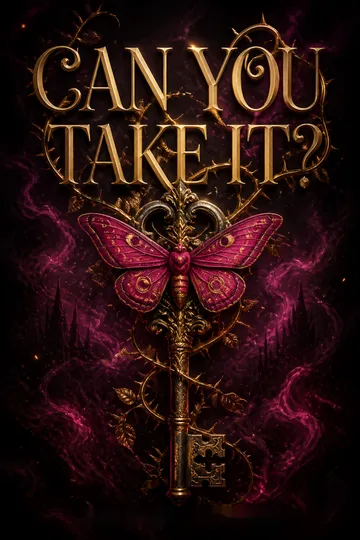
Download PDF
Download EPUB
.epub digital book format is ideal for reading ebooks on phones, tablets, and e-readers.








