

Plot Summary
Death As a Chosen Door
Aurelius, usually called Eli, wakes in Tartarus with the pendant that holds the last of Adrianna's Artemi power. He chose to die so he could return it to Calypso's younger sister, still believing she was a child trapped there. The choice also lets Calypso and the Unseelie king Mendax remain together, though Eli knows he will lose his closest friend and his sister, Tarani.
He tells himself this is the useful, heroic thing to do, the role he has built his life around. Then he hears beasts approaching, opens his eyes, and finds not a cave of torment but an immense hall full of dead fae laughing at his undignified arrival.
Eli begins by treating self-sacrifice as proof of love and usefulness. His decision is generous, but it is also bound to an old bargain with himself: if he can rescue someone, he can earn a place in the lives of people who might otherwise leave him behind. The comic humiliation of his arrival punctures his heroic self-image before the adventure has properly begun. Tartarus will keep testing the difference between helping because he cares and helping because he needs to be needed.
A Party Beneath the Worlds
Walter, an Unseelie shifter and former captain, recognizes Eli and persuades Eletha, the formidable warden of Eromreven, not to send him into the Ten Tiers. As Walter guides him through hidden passages, Eli admits that he volunteered to die because he thought Calypso needed him.
Walter warns him that death brings a temporary loss of inhibition, known as the itch, and that Kaohs, god of Tartarus, will judge whether Eli may stay outside the tiers. At a crowded party, a supposed Seelie ally tries to steal the pendant and Eli's memories, called memento. Eli turns the threat around, then meets Kaohs, who explains that memento is currency and that losing it can erase a soul completely.
The Underworld immediately dismantles the categories Eli trusts. A Seelie stranger exploits him, while Walter, an Unseelie, protects him. Memento makes memory both personal history and literal survival, so generosity can become dangerous in a place where giving something away may erase it from everyone who shared it. The itch also externalizes Eli's changing behavior without absolving him of it. He is discovering that his old restraint may be partly habit, partly fear, and partly a means of securing approval.
The Child Who Grew Up
Kaohs's adopted daughter, Anna, turns out to be Adrianna, the sister Eli came to find, now grown and powerful after centuries in Tartarus. She has been raised by Kaohs since childhood and wants the pendant so she can become strong enough to succeed him.
Eli learns that Kaohs's conflict with Zef, the Titan Artemi and the sisters' biological father, began when Zef took Kaohs's beloved Cede away from Tartarus. Anna resents Zef and has no wish to ascend in Moirai. Kaohs insists that Anna must obtain the pendant willingly before he can entrust her with his position. Eli refuses, convinced that her power and ambition make her dangerous.
The revelation replaces Eli's imagined rescue with a conflict over who has the right to define Adrianna's future. He sees her as a child to return to her biological family; she sees Kaohs as the father who raised her and Tartarus as home. Kaohs's grief over Cede gives his hostility toward Zef a personal history rather than making it simple divine malice. The pendant is therefore not merely a missing power source. It is the contested inheritance of two families and two competing accounts of belonging.
A Voice Across Death
Back in the living realms, Calypso is grieving Eli and struggling with a pregnancy she never expected to want. Her bond with Mendax still carries something of Eli's magic, and when she dreams of her sister and reaches for him, Eli hears her from Tartarus. Mendax hears the connection too, confirming that Eli is still present.
Their conversation reveals that Anna is alive and has become Kaohs's chosen successor. It also brings Calypso's pregnancy into Eli's awareness, giving him a living connection beyond his mission. The possibility of speaking with Cal does not resolve their separation, but it changes Eli's afterlife from complete abandonment into a painful, unpredictable line back home.
The bond makes grief active rather than retrospective: Calypso and Eli can still affect one another, but neither controls when the connection opens or what it carries. Calypso's pregnancy places a future inside a story organized around death, while Eli's presence complicates the idea that sacrifice cleanly separates people. Their contact also exposes the limits of Eli's protective role. He can hear Calypso, yet he cannot decide what she should want for Adrianna or shield her from every consequence.
The Red Keys
To clear the itch and avoid Kaohs's tiers, Eli is pushed toward Eromreven's pleasures, but he instead enters the lethal Red Keys, a mounted contest where each winner claims the dead riders' memento. He rides Thistle, his small, horned floricorn, and fights through the field while Anna proves herself a far more practiced rider.
Eli kills a rider he believes is Anna, then discovers the actual Anna is still alive and has reached the final confrontation. She asks him to finish the match, but he cannot make himself kill Calypso's sister. He rides off the field and opens the Ten Tiers' door. Anna, Eletha, and Walter follow, and the drunken Bexley tumbles in after them.
The match turns Eli's abstract heroism into an immediate moral choice. The rules reward survival through killing, but his deepest conflict is not whether he can fight; it is whether he can keep treating Anna as a threat rather than a person. His exit is neither a clean victory nor a failure. It is a refusal to let the game dictate what kind of person he must become, though the choice strands the whole group in a more demanding test.
Doors in the Dark
The first tier is a lightless chamber lined with doors, each locked except one whose way through is not obvious. Eli and Walter quietly search for an exit, hoping to leave Anna and Eletha behind, while Anna pretends she can open a special door if Eli hands over the pendant. Eli nearly gives in, but Eletha exposes the deception.
Walter, tired of being used as a go-between in his estrangement from Eletha, finally tells her he is done. The group hears a door open and finds Bexley wandering into the forest beyond it. Eli and Walter follow him, leaving the women behind, but the passage leads directly into the second tier rather than out of Tartarus.
Treachery first appears as a property of the room, then as a habit shared by nearly everyone in it. Eli and Walter conceal their intentions, Anna lies to gain the pendant, and the sisters and shifter treat one another's loyalties as tools. The door opens only after the group's motives become visible, suggesting that progress requires more than spotting an exit. Walter's break with Eletha is particularly important: his patience has started to resemble self-erasure, and honesty gives him a boundary even before it repairs the relationship.
A Gnome Plants Doubt
In the second tier, a dead forest loops Eli through the same paths while a murderous little gnome tells him that Walter plans to kill him. Walter disappears, then reappears furious, blaming Eli's mother for his death and for keeping him from Eletha. Under the tier's pressure, Walter grabs Eli by the throat.
Eli does not fight back; he accepts that Walter's anger has a real cause. When Walter releases him, he admits that he still loves Eletha and wants the chance to make things right. The path changes, and the two men find Bexley again. Together they turn back toward the women, recognizing that resentment has been steering them as surely as the gnome's lies.
Wrath here is not merely explosive anger. It is a claim that injury must be answered with injury, and the gnome gives that claim a persuasive voice by using facts from Walter's past. Eli's choice not to defend himself is not a universal moral solution; in this moment, it acknowledges that Walter's grievance is legitimate. The tier shifts when both men stop confusing accountability with vengeance. Their return toward the women marks a change from solitary escape to shared responsibility.
Violence Chains Lovers
The third tier throws the group into a battle that exhilarates Walter and Eletha, whose old attraction resurfaces as they fight side by side. Bexley chains them together and demands that they stop arguing. When their quarrel continues, his damaged wings catch fire, and he reveals that his father repeatedly burned them.
Anna calms him by listening rather than threatening him, then persuades the fighters to lay down their weapons. Their restraint opens the path onward. During this passage, Eli also learns that Calypso and Mendax have united Seelie and Unseelie as one realm, Aurelius, and that Tarani is helping them build a home for the Fallen. The world Eli hoped to change is changing without him.
The tier makes violence attractive, not only frightening. Walter and Eletha feel at home in the fighting, while Bexley's attempt to stop them repeats the coercive pattern that has marked his own past. His flaming wings reveal the injury beneath his erratic behavior, and Anna's attention offers a different form of power: she de-escalates without overpowering him. Eli's news from home sharpens the cost of his sacrifice. The realm he wanted to reform is becoming more inclusive, but he must decide whether that means he is no longer needed.
Sunlight in Greed
The fourth tier opens onto a sunlit forest, and Eli is almost undone by the warmth after Tartarus's false light. Walter and Eletha meet a local wolf pack and choose to help protect its territory for two days, treating the stay as a chance to serve rather than a prize to hoard. Eli and Anna wander together, argue over his assumptions about Tartarus, and grow closer when he learns she can be gentle with animals despite her formidable reputation.
A forest bog attacks them, and Eli protects Anna while she fumbles with a small blade. Their quarrel gives way to teasing and a kiss in a stream, but when Anna reaches toward the pendant, Eli remembers that their attraction cannot settle their disagreement about where she belongs.
Greed does not tempt the group with treasure so much as with a life that feels unexpectedly complete. The sunlight, pack, and companionship offer Eli relief from the role of rescuer, while Anna's choice to remain in Tartarus challenges his assumption that goodness must leave it. Their intimacy grows through conflict rather than agreement. Yet the pendant remains physically between them, a reminder that desire can make trust feel possible before the characters have actually resolved the question of power.
One Vote for Bexley
In a welcoming village, an old woman explains that only one member of the group can leave the tier, and the others must choose that person. Eli finds Bexley in a tavern that supplies endless drink and admiration, a private illusion that keeps him from moving on.
When Eli interrupts an assault nearby, Bexley kills the attackers with a touch, then admits he drinks and uses fairy dust to forget that he belongs nowhere. He urges Eli to recognize how much he depends on being a hero. Eli initially threatens Anna in desperation to secure his own passage, then recoils from what he has done. He votes for Bexley instead. The others join him, and the platform carries them onward.
Bexley's illusion is a sharper mirror for Eli than any accusation from Anna. Eli's instinct to intervene is morally sound, but Bexley asks whether every rescue also serves Eli's need to be admired and indispensable. Eli's threat to Anna shows how quickly that need can turn into control when his exit is at stake. Choosing Bexley does not make Eli purely selfless; it is a concrete decision to value another person's chance at a future over his own immediate escape.
Cal's Last Reckless Hunt
While Eli continues through the tiers, Calypso slips out of the castle late in her pregnancy to hunt Ralyn, an abuser who has preyed on women and children. Ralyn catches her in an alley and threatens her unborn child, triggering Calypso's blue SunTamer fire. She burns him and stabs his remains, then panics when someone follows her through the dark.
Mendax appears, revealing that he had watched over her and would have intervened if she had been in real danger. Rather than treat her as fragile, he responds to her need for intensity with a private, consensual encounter that restores their familiar balance. Calypso returns to the safety of the castle, shaken but no longer treated as a passive patient.
Calypso's excursion is reckless, but it also exposes the cost of being protected so completely that she cannot exercise judgment or power. Her fear for the child changes the encounter with Ralyn: the violence she had imagined as thrilling becomes consequential the moment another life is involved. Mendax's surveillance is ethically uneasy, yet his response recognizes what her caretaking circle has missed. Their intimacy functions as negotiated trust, not simple rescue, because he makes room for her agency without pretending the danger was imaginary.
The Rabbit Burns the Ballroom
The fifth and sixth tiers swap the group's bodies, then force them into a dance with skeletons while a hooded rabbit-faced figure burns the ballroom to ash. In the chaos, Anna's sister Eletha takes the pendant from Eli's body and hands it to Anna. Anna reaches safety but sees Eli pinned by the creature and returns to save him, abandoning her chance to keep the prize.
Once they escape through a painting, Anna gives the pendant back. She explains that she wants to earn Kaohs's trust honestly, not through the confusion of the body swap. Eli is moved by the choice, but it also strengthens his conviction that he should take Anna to the Elysian Fields and Moirai, despite her refusal.
The sequence separates possession from consent. Anna can seize the pendant, and the tier briefly makes that seizure possible, but she chooses Eli's life over the advantage it offers. Returning it is an ethical act, yet Eli still interprets her goodness as evidence that she belongs somewhere other than the home she chose. The scene thus deepens their bond while exposing its asymmetry: Anna recognizes his worth as a person, while Eli continues to confuse care with the right to decide her future.
Bexley Saves Walter
Acedia separates the group in small boats on a sea of thick red water. When Walter falls into a dangerous current, Bexley steers his unstable boat toward him and throws away the flask he has carried for comfort so he can use both hands to pull Walter aboard.
The tier's journey also sends a shock through Eli's lingering bond with Calypso: she is in labor, and Mendax reports complications because their child carries both SunTamer and Shadow Slayer magic. Eli cannot intervene, but Anna holds him while the fear passes through him. Calypso and the baby survive. The boats finally bring the group to Gluttony, where Bexley's rescue has given him a reason to imagine a life beyond intoxication.
Bexley's sacrifice is small in scale but decisive in meaning. He does not announce a new identity or promise instant recovery; he gives up the flask at the moment another person needs both his hands. That action makes change observable rather than aspirational. Eli's helplessness during Calypso's labor offers a parallel lesson: love cannot always be enacted as intervention. Anna's presence matters because she stays with his fear instead of letting him convert it into another task.
Water Instead of Escape
In Gluttony's comfortable manor, Bexley is offered a powerful drink he has wanted for decades. He refuses it and chooses water, then tells Eli and Anna he wants to stop using alcohol and fairy dust to disappear from himself. He hopes to reach the human realm and help people avoid the fate waiting under his father, the Devil.
The decision opens the next tier. In Lust, Eli and Anna are locked together with every temptation aimed at their attraction. They finally choose to make love, but not as a bargain for the pendant. Their intimacy lets them admit that what binds them is more than the magic Eli carries, even as they remain divided over whether he will leave Tartarus.
The book refuses to equate recovery with a single purified moment. Bexley makes a choice that begins a difficult process, and the narration leaves room for that difficulty. The transition into Lust similarly distinguishes desire from compulsion: Eli and Anna can act on attraction without letting it dictate the terms of their future. Their intimacy creates emotional honesty, but it does not solve their incompatible plans. The tier is passed through recognition, not through pretending the conflict has vanished.
Three Years in Aurelius
Time moves differently for the living than it does in Tartarus. In a later glimpse of Calypso's life, her daughter Ten is three years old and already playing with magic in Calypso's laboratory. Mendax arrives to take Ten to train his soldiers, treating the child as a spirited partner rather than a delicate ornament.
Calypso continues her research and the work of governing Aurelius, the united Seelie and Unseelie realm she built with Mendax and Tarani. The scene gives Eli's distant family a future beyond grief: Calypso is not merely surviving her losses, and the political dream Eli once carried is now part of daily life. He hears of these changes through the bond while still seeking his own way forward.
The time jump changes the scale of Eli's separation. His friends are not frozen in mourning while he struggles through the tiers; they have built institutions, raised a child, and continued without his supervision. That is both painful and liberating. Calypso's laboratory and Aurelius make private recovery public: care becomes research, shared rule, and a place for people once divided by realm. Ten's playful presence also counters the inherited violence around her, suggesting that protection can mean giving a child room to act, not only keeping danger away.
Pride Lets the Pendant Go
In Pride, a masked figure reveals herself as one of the Fates, who secretly guided Eli through the tiers. She tells him that passing requires facing the flaw he still protects: his belief that he is destined to be the good hero. Eli gives Anna the pendant, accepting that he may lose his link to Calypso and Mendax.
When he sees his mother waiting in the Elysian Fields, however, he recognizes that the afterlife he imagined is not automatically home. He turns back, chooses to remain in Tartarus with Anna, and asks whether her restored power can bring sunlight there. Anna agrees. The Fates permit the group to leave the tiers, and Eli returns to Eromreven to face Kaohs and declare his love for his daughter.
The final test is not whether Eli can renounce pride in the abstract, but whether he can release the identity that has made him feel valuable. Giving the pendant ends his control over Anna's future and risks the last link to his old family. His return from the Elysian Fields completes that change: he no longer treats a destination or reputation as proof of goodness. Choosing Anna does not erase his grief. It means he can love without making sacrifice the only evidence that he deserves love.
Epilogue
Back in Eromreven, Eli worries that Kaohs dislikes him and suspects the god prefers Walter. Anna reassures him while reminding him that she has taken over Tartarus and can rule it with both warmth and frightening force.
As she comforts him, Eli recognizes that the afterlife he once feared has become home because Anna and his friends are there. His gratitude does not erase the path that brought him to Tartarus; it changes what that path means. He has stopped measuring his life by the people he saves and begun to value the life he chose.
The epilogue settles the romance through an ordinary insecurity rather than another cosmic trial. Eli still wants approval, now from Kaohs, but Anna's reassurance and her demonstrated authority keep the relationship from becoming another rescue fantasy. She is not a reward for his sacrifice; she is a ruler with her own work and power. Eli's acceptance of Tartarus as home completes the book's revision of its opening assumptions: belonging depends less on a realm's reputation than on the relationships and responsibilities one chooses within it.
Analysis
The novel begins with a familiar fantasy bargain: the loyal prince gives his life to rescue a vulnerable girl and preserve the happiness of the woman he loves. It then dismantles that bargain by making each assumption wrong in a specific way. Adrianna is grown, she does not want to be rescued into Moirai, and Calypso's life continues without Eli at its center. Tartarus, too, is not simply a pit of punishment. It contains exploitative pleasure, but also children, community, work, friendship, and the possibility of change. Its moral map is complicated enough to make Eli's Seelie certainty look like a form of pride.
The tiers turn character psychology into physical structure. Doors, forests, battles, taverns, boats, and mirrors externalize forms of evasion: concealed motives, inherited resentment, intoxicating violence, compulsive rescue, and the need to be admired. These environments do not absolve the characters, since their choices still matter. Eli can blame the itch for his aggression, but he must still face the moment he threatens Anna. Bexley can explain his dependence through suffering, but his decision to discard the flask becomes meaningful only because he acts differently when Walter needs him.
The romance develops through an argument over agency. Eli's attraction to Anna is intense, but desire alone does not make him understand her. He repeatedly mistakes her tenderness for evidence that she should leave Tartarus. Her refusal, and her return of the pendant after saving him, challenge his habit of converting affection into a rescue mission. The decisive act is not winning her or taking her somewhere safer. It is entrusting her with power and accepting that she may choose a future he would not choose for her.
The ending rejects the assumption that goodness has one proper address. The Elysian Fields cannot guarantee belonging simply because they are the reward for the dead, just as Tartarus cannot define every person who lives there. Eli's growth lies in moving from a self appointed role to a chosen relationship. His decision to stay is not another sacrifice for someone else's happiness. It is the first future he claims because he wants it.
People Also Read


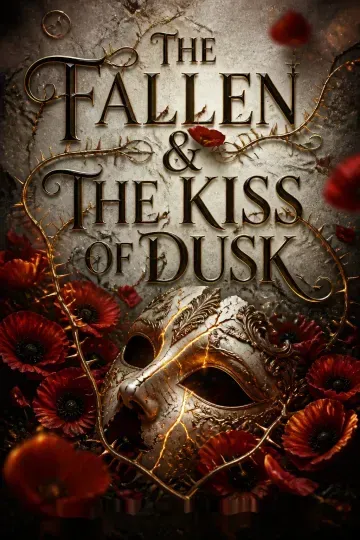
Characters
Aurelius, or Eli
The reluctant heroA Seelie royal and fox shifter, Eli is loyal, quick-witted, and so practiced at helping that he often mistakes usefulness for intimacy. His lifelong attachment to Calypso shaped his sense of purpose, especially after he believed he had failed to protect her family. He is a capable fighter, but his more persistent struggle is emotional: he hides grief behind humor and offers himself as the solution before asking what anyone wants from him. The journey places his chivalry under pressure, testing whether care can survive without control, applause, or self-sacrifice. His connection to the pendant also ties his fate to the choices of the person who carries its magic.
Anna, or Adrianna
The Underworld's heirAdrianna, known in Tartarus as Anna, is Calypso's younger sister and Kaohs's adopted daughter. Raised in the Underworld from childhood, she is at once playful, perceptive, and formidable, with a fierce loyalty to the father who gave her a home. Her ambitions and her gentleness coexist; she can ride into a lethal contest, then respond to a frightened stranger with patience. She resists being defined by her biological heritage or by Eli's belief that goodness must lead her away from Tartarus. Her connection to him is charged by magic, but her choices reveal a personality that cannot be reduced to that bond.
Calypso
The fierce Seelie queenCalypso is Eli's longtime friend, Anna's sister, and Mendax's partner. Fierce, sharp-tongued, and shaped by grief, she once directed much of her life toward revenge and survival. Her connection to Eli is deep, but it does not make her dependent on him; she is capable of challenging his assumptions and choosing her own course. As a ruler, researcher, and person learning to live beyond old expectations, she remains both restless and resourceful. Her instinct to answer pain with action can protect others, but it can also lead her toward risks she has not fully considered.
Mendax
The Smoke Slayer kingMendax is the Unseelie king, a formidable Smoke Slayer, and Calypso's partner. His instincts lean toward control and intimidation, especially when the people he loves are threatened. Yet his loyalty is not merely possessive: he respects Calypso's strength, protects the people she values, and takes an active role in building a shared realm. His relationship with Eli begins in hostility and evolves through the difficult recognition that both men care about Calypso in different ways. Mendax's blunt humor and tenderness rarely appear separately; the contrast makes his affection feel as forceful as his anger.
Walter
The loyal shifterWalter is an Unseelie shifter who can take animal forms and once served as a captain in Mendax's army. Friendly and capable, he is also vulnerable around Eletha, the woman he still loves despite their painful separation. He helps Eli navigate Eromreven while carrying unresolved anger toward Eli's family. Walter's loyalty can become self-neglect when he keeps pursuing someone who pushes him away, and his journey forces him to recognize the difference between patience and surrendering his boundaries.
Eletha
The stern ShepherdEletha is one of Kaohs's daughters and the warden of Eromreven, responsible for directing souls toward the Underworld's tiers. Her authority is immediate, and her bluntness can look like cruelty, but she is also deeply protective of Anna and skilled at defending herself and others. Her past with Walter makes her guarded about renewed intimacy. As a Shepherd, she occupies a threshold between judgment and care, even when she would rather conceal the latter beneath a hard voice.
Kaohs
The weary god belowKaohs is the god of Tartarus, powerful enough to make the Underworld's rules feel personal. His reputation for severity is complicated by his grief for Cede and his devotion to the daughters who remain with him. He has built a realm with distinct spaces and responsibilities, including a place apart from Eromreven's revelry for children who arrive in Tartarus. His desire to pass on his duties reflects exhaustion rather than indifference, though old wounds still shape his judgment of Zef.
Bexley
The forgotten wandererBexley is a long-standing resident of Tartarus, a heavy drinker and user of fairy dust whose ragged appearance conceals unusual power. He is wary of help and quick to retreat into intoxication, yet he repeatedly notices what others miss and acts when danger becomes immediate. His damaged wings and difficult history explain some of his distrust without making his choices inevitable. Bexley wants relief from painful memories, but he also has the capacity to imagine a use for his life beyond forgetting.
Thistle
Eli's fierce floricornThistle is a small floricorn with a sharp horn and a stubborn, affectionate temperament. She is Eli's trusted companion, not merely a mount, and her size leads others to underestimate her. She responds to affection on her own terms and proves capable of defending herself in a contest built for much larger horses. For Eli, her presence is a reminder of home and of a bond that does not depend on titles or heroic performance.
Tarani
The Fallen Fae leaderTarani is Eli's sister and a leader among the Fallen Fae. She is practical, politically engaged, and committed to securing a home for people who have been denied one. Her relationship with Eli is loving, though his decisions sometimes leave her behind while he tries to solve someone else's crisis. She works alongside Calypso and Mendax in reshaping the realms, showing that leadership can be collective rather than inherited by a single ruler.
The Fate Sister
The hidden guideOne of the Fates, she appears in disguise during Eli's final trial. Her manner is dry and watchful, and she prefers to shape circumstances rather than explain them. She notices when Eli helps someone without a promised reward, then uses that knowledge to test what he believes about duty, goodness, and his own destination.
Ten
The curious young heirTen is Calypso and Mendax's lively young daughter, fascinated by the magic around her mother's laboratory. She seeks her father's attention and eagerly joins his activities, meeting a household that is both protective and full of energy. Her curiosity offers a small, bright contrast to the violence and grief that shape the older characters' histories.
Plot Devices
The pendant of ashes
Carries power and promiseThe pendant contains the last drop of Adrianna's Artemi power, preserved with her sister's ashes and marked with a promise of enduring love and friendship. Eli carries it into Tartarus intending to restore Adrianna and complete the Fates' task. Because its power also creates a lingering tie, the pendant links Eli to Calypso and later to Anna. Its transfer is therefore both a practical restoration of magic and a test of whether Eli can respect another person's choices without claiming the right to manage them.
The Ten Tiers
Personal tests for the deadTartarus's Ten Tiers are individualized trials associated with moral failings such as treachery, wrath, violence, greed, envy, fraud, acedia, gluttony, lust, and pride. Their environments change to expose what each entrant avoids or clings to. The exits do not open through force alone; the travelers must make choices that reveal what they have learned. Eli's group experiences the tiers together, so their conflicts and loyalties become part of the test rather than distractions from it.
Memento
Memory becomes currencyMemento consists of a dead person's valuable memories and functions as currency in Eromreven. It can be spent, stolen, or gained through violence, but losing too much threatens the soul's continued existence and erases memories in the living realms. The system makes every transaction ethically unstable: a memory is never merely an object, because it includes people and experiences that shaped the person who holds it. It gives the Red Keys contest consequences beyond physical defeat.
The residual tie
Keeps the living within reachEli's former connection to Calypso survives his death in an altered form because Calypso carries his SunTamer power and the pendant holds Adrianna's magic. It allows Eli, Calypso, and Mendax to sense and sometimes hear one another across the divide. The connection brings comfort and urgent news, including Calypso's pregnancy and labor, but it cannot make Eli present in the living realm. Its uncertain future raises the emotional cost of giving the pendant back.
The Red Keys
A contest with no second lifeThe Red Keys is a mounted tournament in which riders use red skeleton keys to kill their opponents and claim the opponents' memento. The game is designed around a single survivor, making each attack a threat not only to the body but to the dead person's continued identity. Eli enters despite his need to deliver the pendant, then finds the contest morally unbearable when Anna becomes his opponent. The game forces him to confront whether survival and heroism are worth the person he would have to kill.
Infatuated Fae Series

Download PDF
Download EPUB
.epub digital book format is ideal for reading ebooks on phones, tablets, and e-readers.








