

Plot Summary
The Interview That Breaks
At twenty-one, Adam Wilde is a celebrated guitarist in Shooting Star, yet the sixty-seven-show tour ahead feels less like success than a trap. During a New York interview, reporter Vanessa LeGrande asks about the band's mysterious collapse years earlier, then brings up Mia Hall, the cellist Adam once loved.
She has found a high-school yearbook photo and wants to connect Mia's family tragedy to Adam's anguished songwriting. Adam denies their history, then loses control, knocks drinks across the table, and smashes Vanessa's recorder.
His manager, Aldous, cancels the rest of his schedule, but Adam still cannot face the tour. Wandering alone, he sees a poster announcing Mia's Carnegie Hall recital that night. He buys a rush ticket, telling himself he only wants to hear her play.
Adam's crisis is not simply exhaustion from celebrity. The interview exposes the bargain on which his public identity rests: private grief has been converted into marketable music, while he is expected to perform gratitude for the machinery that exploits it. His violent response protects Mia's privacy, but it also reveals how little control he feels over his own story. The recital poster gives him a concrete choice where the tour offers only endurance. He does not yet know what he wants from Mia, but he can no longer keep her sealed inside the past.
A Tent Beneath the Pines
Years earlier, Adam first notices Mia at their Oregon high school, listening in a practice booth before she plays her cello. He is a young guitarist; she is a classical musician with a guarded manner and an ear for music even in silence. Their different musical worlds become a shared language, and they fall in love. On one camping trip, Mia admits that open wilderness makes her feel exposed and without a home.
Adam tells her about shooting a rabbit as a boy, then choosing a guitar instead of the rifle his father had promised him. Mia confides her childhood fears, including butterflies, and says losing Adam frightens her most. They whisper together inside the tent until she falls asleep, each trusting the other with a private fear.
The camping memory establishes the intimacy Adam later tries to recover, but its details also foreshadow their conflict. Mia needs a sense of shelter; Adam offers himself as that shelter, believing closeness can keep fear at bay. His story about the rabbit shows that tenderness and music already define his sense of self, not merely his later fame. Their nighttime confessions create a language of trust, yet they also plant an assumption that love means being responsible for the other's safety. The novel's central rupture grows from this loving but potentially confining idea.
The Cello Brings Her Back
A car crash leaves Mia badly injured and kills her parents, Kat and Denny, and her younger brother, Teddy. Adam stays beside her while she is unconscious, warming her hands and playing music for her; when she wakes, he helps her through surgeries and rehabilitation. At first Mia speaks flatly and seems to absorb her family's deaths from a distance.
Her cello becomes the way back: practicing strengthens her injured arm and leg, exposes gaps in her memory, and gives her a reason to engage with each day. Although doctors offer her time to defer Juilliard, Mia refuses the delay. After months of recovery, she leaves Oregon for New York, while Adam remains behind with his band and their relationship becomes long-distance.
The cello functions here as more than a symbol of Mia's former life. It is a physical tool for rebuilding coordination, a diagnostic instrument for her therapists, and a structure that lets her approach grief without being forced to narrate it. Adam's caretaking is sincere, but his role as the person who must keep Mia alive begins to shape their bond before either can name the cost. Her choice of Juilliard is not a rejection of recovery; it is an insistence that recovery must lead somewhere she chooses.
Silence Across the Country
At first, Adam and Mia exchange long emails and speak each night after she starts at Juilliard. Then Mia's calls go unanswered, her messages grow brief, and eventually she stops responding altogether. Adam visits her grandparents, hoping they will explain, but they do not break her confidence.
He returns to his parents' home, abandons college and Shooting Star, and spends months in bed before taking a data-entry job at a local plant. When Mia's friend Kim visits, Adam lashes out after she refuses to discuss Mia. He punches through a wall and window, then picks up his guitar for the first time in a year. Songs pour out of him; Shooting Star reunites, records his new material, and soon signs with a major label.
The separation is emotionally brutal partly because it has no scene of decision. Adam receives no clear ending, so he turns absence into a problem he can solve through waiting, self-punishment, and eventually songwriting. His outburst at Kim shows how grief narrows his relationships: he treats her loyalty to Mia as betrayal because he cannot tolerate a boundary he did not choose. The songs restore motion, but they also make pain productive. That transformation helps Adam rebuild a career while leaving the underlying wound untouched.
Fame Becomes a Fault Line
Shooting Star's album Collateral Damage becomes a hit, and Adam's grief-struck songs make him the band's public face. As journalists pursue him alone and fans crowd him, bandmate Mike accuses him of taking over the group.
The manager separates Adam and the others into different hotels, a fix that hardens their distance. Adam later meets actor Bryn Shraeder through singer Brooke Vega. Bryn understands that Adam's breakup with Mia left him feeling abandoned, and their relationship offers escape from Oregon and the band's history.
But Adam and Bryn remain emotionally mismatched: she wants a family and a shared future, while he cannot imagine building one with her. Now, years later, he dreads another tour and has become anxious, isolated, and dependent on medication.
Success magnifies rather than resolves Adam's private fracture. The industry rewards his songs while encouraging the mistaken belief that the songwriter's pain belongs to the audience, and the band conflict makes that attention costly at home. Bryn gives Adam recognition and practical refuge, but their relationship is partly organized around what each can provide: she offers stability, while he offers intimacy he cannot fully inhabit. His looming tour condenses these pressures into one number, sixty-seven nights, a schedule he experiences as a loss of agency.
Carnegie Hall, After Three Years
From the rear mezzanine, Adam watches Mia perform a Carnegie Hall recital. Her playing begins with the disciplined concentration he remembers, then opens into a joyful, expansive performance that leaves the audience on its feet. Afterward, an usher leads Adam backstage: Mia has recognized him and asked to see him. They stand face to face for the first time since she left for Juilliard.
Adam can barely manage polite conversation, hiding panic behind a joke and a handshake. When their hands meet, his persistent tremor stops. Mia says she is leaving for Japan the next day, while Adam is bound for London. He walks away before either can make sense of the reunion, shaken by how quickly an old physical familiarity has returned.
The concert lets Adam encounter Mia as a working artist rather than as the injured girl preserved in his memory. Her performance is evidence of a life he did not witness, and its fullness unsettles the story he has told himself about her absence. The handshake matters because it briefly quiets Adam's body, not because it settles their relationship. Their opposite travel plans create a sharp time limit: this meeting can become a passage back into contact, or another moment they let disappear.
A Garden Behind Ninth Avenue
Outside Carnegie Hall, Adam lights a cigarette and Mia catches up with him. She admits the performance has left her keyed up, then invites him to find food because she has barely eaten. As they walk, a photographer recognizes Adam and starts pursuing him. Mia takes his wrist, leads him across traffic, and unlocks a hidden neighborhood garden where they wait until the photographer gives up.
The escape restores their old humor, but Adam sees how much Mia has learned about living in New York and how little he knows of her current life. They reach a diner she used to frequent, where the owners assume Adam is her boyfriend. Mia turns off her phone, misses a post-concert dinner, and begins telling him about her work and her city.
Mia's rescue reverses the familiar arrangement between them: Adam once saw himself as her protector, but now she reads the danger around him and gets him safely out of it. The garden is not merely a romantic hideaway. It is evidence of a life Mia made through improvisation, borrowed keys, and local knowledge, outside Adam's gaze. At the diner, her silenced phone shows her choosing the immediate encounter over professional obligation. The old intimacy returns through practical acts, while the mismatch between their current worlds remains visible.
The City They Relearn
Mia tells Adam that she graduated early from Juilliard and is beginning a touring career as a cellist. At a bowling alley hidden inside the Port Authority bus terminal, she explains how a demanding professor refused to treat her as fragile and pushed her to compete on her musical ability.
Adam listens as she describes earning her place among serious musicians, then bowls while she watches because her elbow still hurts. They take the Staten Island Ferry and joke about the Statue of Liberty before Mia confides that she hears her dead family's voices as an inner presence.
She says leaving Oregon helped those voices return, which is one reason she has not gone back. Adam accepts the confession without dismissing her, and their shared night grows more honest.
Mia's stories dismantle two assumptions Adam carries: that her career is a fragile substitute for what she lost, and that her inner life is knowable through their shared past. Her professor's rigor matters because it grants her ordinary artistic standards instead of making trauma her defining credential. The ferry confession is more ambiguous. Mia does not claim certainty about whether the voices are supernatural or memory, only that they sustain her. Adam's willingness to listen marks a shift from trying to interpret or rescue her toward allowing her account to stand.
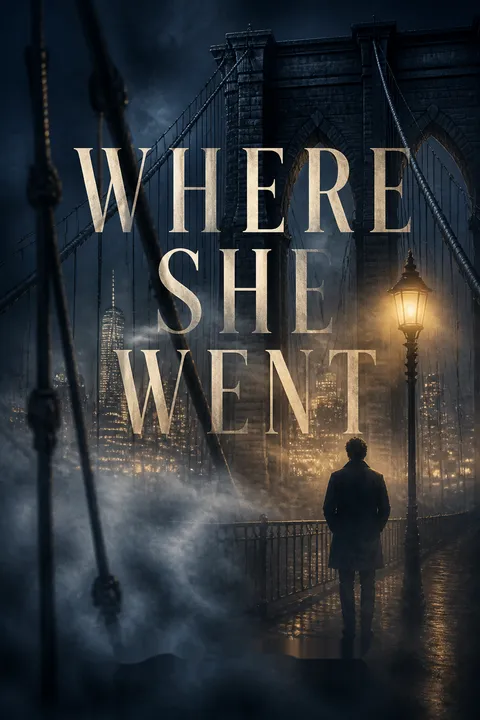
The Promise on the Bridge
As dawn approaches on the Brooklyn Bridge, Adam admits that the band is strained and that his life no longer feels like his own. Mia asks why he has never spoken plainly about their breakup. He finally demands to know why she disappeared.
Mia explains that she felt relief once she was away from him, because Adam had treated her as someone to save and avoided being emotionally honest or physically close. Then she reveals that she hated him because, while she was unconscious after the crash, he begged her to stay alive and promised to let her go if she needed him to disappear.
She had understood his request as a vow she must honor. Adam shouts that he cannot keep living this way, then loosens his grip on the bridge railing and lets Mia walk away.
The bridge confrontation changes the moral shape of their separation. Adam has read Mia's silence as a verdict on his worth; Mia has experienced his devotion as a demand that she survive for him. Both accounts are true to their emotional experience, but neither was available to the other. His promise becomes both an act of love and an unintended burden, while her departure becomes both necessary self-preservation and a painful failure to explain herself. Adam's release begins when he stops treating her return as the only proof that his life can continue.
The Memory She Recovered
After Mia walks away, Adam reaches the Brooklyn side of the bridge and borrows music from a jogger, trying to steady himself. Mia finds him before he can leave and says she cannot let their parting end as it did before. Over coffee and warm pastries, she explains that memories from her unconscious period returned gradually, helped by hypnotherapy.
She had first felt an inexplicable fury toward Adam, then recovered fragments of the hospital: the music he played, his presence outside the hospital, and finally his plea that she live, even if he had to let her go. Her anger had preceded conscious memory of the promise. Adam cries as he realizes she did not invent his vow or leave without knowing what it meant.
The recovered memory does not make Mia's interpretation objectively simple; it makes the emotional history legible. Her mind had registered the vow before she could consciously place it, so anger arrived without a clear narrative and became a way to organize unbearable dependence. The scene also gives Adam a different kind of relief than reunion could provide. He is finally seen as the person who made the promise, not only the famous songwriter or the abandoned boyfriend. Their shared knowledge replaces speculation with a difficult, mutual truth.
The Guitar in Brooklyn
At Mia's home, Adam sees the photographs she keeps of her family and friends, but none of himself. Then Mia opens a locked cabinet and reveals his old Les Paul Junior, the guitar he sold at auction and never stopped missing. She bought it to keep it from being lost among celebrity memorabilia. Adam understands that Mia has followed his career from a distance and still cared about the music they shared.
They tune the guitar against her cello and play together. The performance revives Adam's pleasure in making music, but he recognizes that he cannot continue his life with Bryn or remain in the band indefinitely. He calls Aldous and Bryn, ending their relationship and promising to honor the tour before leaving Shooting Star.
The guitar is a material counterweight to the years of projection between them. It does not erase Mia's absence or guarantee a future; it proves that care persisted even when contact did not. Returning it lets Adam reclaim a part of his musical life that fame had made feel counterfeit. Their playing is a form of mutual recognition rather than a cure. Just as importantly, Adam begins making decisions for reasons beyond Mia: he acknowledges his own exhaustion and ends a relationship that neither he nor Bryn could make whole.
A New Vow Onstage
Mia refuses to let Adam quit music simply to become her caretaker. Instead, they plan around her concerts in Japan and Korea and his remaining tour commitments, then travel together to England. At the Guildford festival, Adam returns to Shooting Star for the scheduled performance. The band is wary, especially Liz and Mike, but Liz recognizes Mia and embraces her, making space for the reunion Adam has not known how to request.
In the rain-softened crowd, Adam plays his old guitar and shares the stage with his band. During the closing song, he stops singing so the audience can carry the refrain, then turns toward Mia at the side of the stage and sings directly to her. The song's old anger becomes a promise they are choosing together.
The ending refuses the fantasy that love requires one person to abandon a vocation for the other. Mia insists that Adam's desire to leave the band must be his own decision, while he makes room for her touring life instead of asking her to stay near him. Returning to the stage is not a full restoration of the band's old harmony; Mike's silence and the unresolved history remain. But the shared performance changes the meaning of Adam's music. What once broadcast an injury to strangers becomes a private commitment spoken in public, on terms both can choose.
Analysis
Where She Went examines the distance between loving someone and knowing what love is doing to them. Adam's promise to Mia is compassionate, but it also becomes an unspoken contract that shapes both lives: he believes he has been abandoned, while she believes she is honoring the freedom he offered. Neither is simply wrong. Their pain comes from the way trauma makes private meanings feel self-evident even when they have never been shared.
The novel also tests the idea that recovery should restore a person to an earlier self. Mia does not return to her former life unchanged; she builds a new one through cello, study, work, friendship, and habits that belong to New York. Her refusal to be treated as fragile is not a rejection of help, but a demand that help leave her agency intact. Adam's growth follows a different route. He has to see that his talent and fame have not made him emotionally understood, and that music can become both an honest expression and a profitable disguise.
The paired instruments make the relationship's final movement precise. The guitar is Adam's lost connection to his own creative beginnings; the cello is Mia's chosen means of work and recovery. Playing together does not promise that distance, touring, or old injuries will vanish. It demonstrates that intimacy can be renewed when neither person is asked to surrender a self in order to keep the other. The final performance turns a song once shaped by abandonment into a vow made with awareness, not obligation.
Review Summary
Where She Went is a highly emotional sequel that surpassed readers' expectations. Told from Adam's perspective, it explores grief, love, and closure three years after the events of If I Stay. Many found it more compelling than the first book, praising Forman's raw and powerful writing. Readers connected deeply with Adam's pain and anger, and appreciated the realistic portrayal of loss and healing. The book's exploration of music and its ability to heal resonated strongly with fans, who found the ending satisfying and cathartic.
People Also Read










Characters
Adam Wilde
Restless rock guitaristAdam writes songs and plays guitar for Shooting Star, a band that grows from local clubs to major stages. He is observant, sardonic, and deeply responsive to music, but he often hides vulnerability behind silence or anger. Fame gives him money and attention without giving him a stable sense of self; he feels most grounded when playing with others, yet increasingly experiences performance as isolation. His care for people can become protective to the point of self-erasure, and he struggles to distinguish loyalty from obligation. Adam's central tension is between the life he has achieved and the life he actually wants.
Mia Hall
Searching cellistMia is a gifted cellist whose discipline is matched by a sharp, curious mind and a dry sense of humor. She dislikes being reduced to her talent or to other people's assumptions about her, and she wants room to make choices without being treated as fragile. Music gives her a language for concentration, ambition, and feeling, but she also finds meaning in unexpected corners of ordinary life, from a hidden bowling alley to a neighborhood garden. Mia is loyal and perceptive, though her instinct to protect her independence can lead her to withdraw rather than explain what she needs.
Bryn Shraeder
Ambitious actor-producerBryn is a successful young actor who is building a production company so she can control more of her work. Having grown up with her appearance treated as her main asset, she is determined to prove her intelligence and ambition. She is perceptive about Adam's emotional evasions and offers him sympathy without pretending his pain is easy to solve. Bryn wants a committed future and is frank about her needs, but her relationship with Adam is strained by their distance and his unresolved attachment to the past.
Kim Schein
Loyal friend with a cameraKim is Mia's longtime best friend, a quick-witted and independent young woman who refuses to let other people choose her future. She supports Mia while also maintaining boundaries that Adam finds difficult to accept. Kim's interest in photography grows into a vocation, and her willingness to take risks reflects a restless curiosity about the world. Her compassion is not passive: she can make painful choices for people she loves, yet she will not serve as a messenger or interpreter when they need to speak for themselves.
Liz
Shooting Star's drummerLiz founded Shooting Star and recruited Adam, Fitzy, and Mike, making her both a bandmate and the group's steady center. She is practical, warm, and capable of defending Adam while also telling him when he has hurt the others. Her loyalty does not make her blind to the band's imbalances. Liz understands that musical talent cannot excuse emotional withdrawal, and she tries to preserve the group's sense of shared purpose even when fame threatens to turn it into one person's story.
Mike
Resentful bandmateMike is Shooting Star's drummer after Liz and a longtime member of the group. He values the band's collective identity and resents the way reporters and the music industry focus on Adam. His anger becomes public during a tour, exposing grievances that had been accumulating beneath the band's professional success. Mike can be cutting and confrontational, but his complaint is not simply jealousy: he believes the group has lost the shared, democratic character that made it worth joining.
Fitzy
The band's blunt optimistFitzy plays bass in Shooting Star and often acts as its comic pressure valve. He uses teasing to deflate egos, but he also recognizes when joking cannot resolve a conflict. Fitzy welcomes Adam back after his retreat and argues for the value of the songs and the friendship still available to the band. His humor helps keep the group human amid label deals and publicity, though he is willing to leave a room when Adam and Mike refuse to behave like friends.
Aldous
Manager and steady handAldous manages Shooting Star and spends much of his time balancing the band's needs against the demands of labels, promoters, and press. He is protective of Adam without confusing friendship with professional responsibility. When Adam panics, Aldous cancels appointments and gives him space rather than forcing him onto a plane. His calm can make the music business seem manageable, but he cannot make Adam's decisions for him or repair the fractures between bandmates.
Kat Hall
Mia's outspoken motherKat is a former punk musician and Mia's mother. She is funny, direct, and warmly irreverent, with a talent for puncturing self-importance and turning family life into a joke. She encourages Mia to be herself rather than fit a polished image, and her old musical world helps connect Mia to Adam's. Kat's fierce, practical affection makes her presence in Mia's life feel vivid and particular.
Denny Hall
Mia's music-loving fatherDenny is Mia's father, a former punk musician who becomes a middle-school teacher. He balances a fondness for vintage style and music with the patient routines of family life. His bond with Mia is rooted in shared musical experience, while his relationship with Teddy brings a gentler, everyday humor to the household. Denny's presence helps explain why music is not merely Mia's ambition but part of the family's way of being together.
Teddy Hall
Mia's younger brotherTeddy is Mia's younger brother, lively, funny, and quick to notice what seems unfair. He loves loud music and wants to share in the family's outings, especially the concerts associated with his parents' past. His affectionate teasing gives the Hall household a buoyant energy, and his bond with Mia reveals her nurturing side without making her seem solemn or dutiful.
Mia's grandparents
Quiet family anchorsMia's grandparents provide practical support and a steady connection to her Oregon family. Her grandmother tends an award-winning orchid greenhouse, while her grandfather is reserved and stoic about his own difficulties. They respect Mia's choices even when they worry about her pace of recovery. Their quiet presence offers Adam a glimpse of the family life he once shared, but they do not intrude on Mia's privacy or speak for her.
Ernesto Castorel
Conductor and mentorErnesto is an accomplished conductor who becomes a mentor and friend to Mia. His own childhood loss gives him an understanding of how other people's good intentions can become restrictive. He encourages Mia's musical development and helps her pursue the opportunities she has earned, without treating her as a symbol of tragedy. Adam's jealousy of him arises from limited information, but Ernesto's real role is that of a trusted professional guide.
Professor Lemsky
Unsparing music professorProfessor Lemsky teaches at Juilliard and refuses to spare Mia from the demanding critique given to other musicians. Blunt and socially difficult, he believes excessive sympathy can smother talent. His insistence that Mia be judged as a cellist rather than protected as a survivor helps her claim a place among her peers.
Vanessa LeGrande
Hungry music reporterVanessa is a young journalist assigned to profile Shooting Star. She is ambitious and willing to dig through Adam's past to explain the band's artistic transformation. Her curiosity crosses the boundary between music reporting and private grief, provoking Adam into a public outburst. Vanessa represents the attention economy surrounding the band, where a painful personal history can become the hook for an article.
Brooke Vega
Singer who connects themBrooke is a singer-songwriter who knows Adam through the music scene and introduces him to Bryn. She is confident, sociable, and comfortable arranging encounters between people she thinks might connect. Her brief role links Adam's private grief to the celebrity world he later inhabits.
Stavros and Euphemia
Diner's affectionate ownersStavros and Euphemia run the New York diner Mia frequents. They know her as a cellist who once played in the subway and tease her when she arrives with Adam, assuming they are a couple. Their warm meddling gives the reunion a public, ordinary texture, briefly allowing the two musicians to occupy the role of an unremarkable young pair.
Plot Devices
Adam's Les Paul Junior
A recovered piece of selfAdam's old guitar is tied to his earliest music, the songs he wrote after Mia left, and the sound he misses as Shooting Star becomes successful. He sells it at auction for charity and regrets losing it, making its absence a concrete measure of how disconnected he feels from his own work. Mia later reveals that she bought it and kept it safe. When Adam plays it with her cello, the instrument does not solve their history, but it lets him experience music as a shared act again rather than a product or obligation.
The hospital promise
Love turned into obligationWhile Mia is unconscious after the crash, Adam asks her to stay alive and promises to let her go if she needs him to disappear. He does not tell her about the vow after she wakes, and she initially has no conscious memory of it. The promise becomes the hidden cause of their later misunderstanding: Adam experiences Mia's departure as abandonment, while she understands it as an act he had explicitly allowed. Recovered memory eventually gives both of them a shared explanation, without making the years apart harmless.
The cello
A tool for recoveryMia's cello is simultaneously her craft, a means of physical rehabilitation, and a route into memories that ordinary conversation cannot reach. Practicing strengthens her injured body and reveals uneven areas of memory to her clinicians. Later, her performances show Adam that she has become an artist beyond the person he remembers. The cello also supplies the note against which Adam tunes his returned guitar, making their musical connection audible without suggesting that either instrument can repair grief by itself.
New York's hidden places
A map of Mia's independenceMia takes Adam through an unlocked-looking but privately secured garden, a diner, the Port Authority bowling alley, and the Staten Island Ferry. These places reveal how she has built a life in New York through observation and personal ritual rather than prestige alone. They also shift the balance between the former couple: Mia guides Adam through a city that once seemed inaccessible to him. Their route creates space for disclosures that would be harder under the gaze of reporters, fans, or concert patrons.
The public persona
Fame as a pressure systemAdam's fame alters how he moves through ordinary spaces. Reporters mine his past, photographers follow him, fans can turn recognition into a crowd, and tabloids invent stories about his relationship with Bryn. These pressures help explain his anxiety and isolation, but the novel does not treat celebrity as a complete excuse for his choices. His public image also gives him a way to hide from difficult conversations, including with his bandmates and Mia, until the private consequences become impossible to ignore.
FAQ
Synopsis & Basic Details
What is Where She Went about?
- Second Chance Romance: The story follows Adam, a rock star, and Mia, a classical cellist, as they reconnect years after a painful separation, exploring themes of love, loss, and second chances.
- Dual Perspective Narrative: The novel alternates between Adam's and Mia's points of view, revealing their individual struggles and the complex emotions surrounding their past relationship.
- Emotional Journey: It delves into their personal growth, the challenges of fame, and the healing power of music, as they confront their past and navigate a path toward a possible future together.
Why should I read Where She Went?
- Emotional Depth: The novel offers a raw and honest portrayal of grief, love, and the complexities of human relationships, resonating with readers on a deeply emotional level.
- Character-Driven Story: The characters are richly developed, with relatable flaws and vulnerabilities, making their journeys of self-discovery and reconciliation compelling and engaging.
- Exploration of Themes: It explores profound themes such as the impact of trauma, the search for identity, and the power of music to heal, providing a thought-provoking and meaningful reading experience.
What is the background of Where She Went?
- Contemporary Setting: The story is set in the contemporary world, with references to modern technology, social media, and the music industry, making it relatable to a modern audience.
- Music Industry Backdrop: The novel provides a glimpse into the world of rock and classical music, exploring the pressures of fame and the challenges of maintaining personal relationships in the public eye.
- Emotional Trauma Context: The narrative is deeply influenced by the characters' past trauma, particularly Mia's experience with loss, which shapes their present actions and decisions.
What are the most memorable quotes in Where She Went?
- "It well may be. I do not think I would.": This quote from the epigraph, a line from Edna St. Vincent Millay's poem, foreshadows the central theme of love's endurance despite hardship and the characters' internal conflicts.
- "I'm just tired, I justify. Overtaxed.": This quote captures Adam's emotional exhaustion and his struggle to cope with the pressures of fame and his unresolved past, highlighting his vulnerability.
- "You made me stay!": This quote reveals Mia's complex feelings towards Adam, expressing her anger and resentment for his role in her survival, a pivotal moment in their reconciliation.
What writing style, narrative choices, and literary techniques does Gayle Forman use?
- First-Person Perspective: The novel employs a dual first-person narrative, allowing readers to intimately experience the thoughts and emotions of both Adam and Mia, creating a strong sense of empathy.
- Emotional and Reflective Tone: Forman's writing style is characterized by its emotional depth and introspective quality, using vivid imagery and metaphorical language to convey the characters' inner turmoil.
- Non-Linear Storytelling: The narrative incorporates flashbacks and memories, seamlessly weaving together past and present events to reveal the characters' history and the evolution of their relationship.
Hidden Details & Subtle Connections
What are some minor details that add significant meaning?
- The Les Paul Junior Guitar: Adam's old guitar, which he later learns Mia bought, symbolizes their shared past and the enduring connection between them, representing a tangible link to their history.
- The "Groovy and the Geek" Nickname: The high school yearbook nickname, revealed by Vanessa, highlights the contrast in their personalities and the unique bond they shared, adding a layer of nostalgia and irony.
- Mia's Cello Body: The description of Mia's "cello body" (broad shoulders, muscular arms) emphasizes the physical and emotional strength she gained through her music, a subtle detail that reveals her resilience.
What are some subtle foreshadowing and callbacks?
- The Edna St. Vincent Millay Epigraph: The poem's theme of love's endurance foreshadows the central conflict and eventual reconciliation between Adam and Mia, hinting at the enduring nature of their bond.
- The "Stitch" Lyrics: The lyrics from "Stitch" foreshadow Mia's physical and emotional scars, hinting at the pain she endured and the healing she seeks, creating a thematic echo.
- The Mention of "Mammary Liberation Day": This seemingly random detail from their past foreshadows Mia's later assertion of her independence and her rejection of being defined by her past trauma.
What are some unexpected character connections?
- Brooke Vega's Role: Brooke's connection to both Adam and Mia, through the hospital visit and later introducing Adam to Bryn, highlights the interconnectedness of their lives and the unexpected ways people influence each other.
- Ernesto Castorel's Influence: Mia's mentor, Ernesto, serves as a parallel to Adam, both being musicians who have experienced loss, and his advice to Mia about not being defined by her trauma mirrors Adam's journey.
- Kim Schein's Actions: Kim's role as a bridge between Adam and Mia, both during their relationship and after, reveals her loyalty and her impact on their lives, despite her absence from the main narrative.
Who are the most significant supporting characters?
- Liz: As Adam's bandmate and friend, Liz represents the stability and camaraderie he craves, and her reactions to his actions highlight the impact of his choices on those around him.
- Aldous: Adam's manager, Aldous, serves as a voice of reason and a reminder of the pressures of fame, providing a counterpoint to Adam's emotional turmoil and his struggle with his public image.
- Kim: Mia's best friend, Kim, acts as a silent witness to their relationship, and her actions, both past and present, reveal the depth of her loyalty and her impact on both Adam and Mia's lives.
Psychological, Emotional, & Relational Analysis
What are some unspoken motivations of the characters?
- Adam's Need for Control: Adam's actions, such as his reliance on medication and his attempts to control his public image, stem from a deep-seated need to manage his anxiety and the chaos in his life, a reaction to his past trauma.
- Mia's Desire for Independence: Mia's decision to leave Adam and pursue her career is driven by a need to establish her own identity and to heal on her own terms, rejecting the role of a victim.
- Bryn's Yearning for Validation: Bryn's desire for a child and her constant need for public validation reveal her insecurities and her struggle to find genuine connection, highlighting the superficiality of her relationship with Adam.
What psychological complexities do the characters exhibit?
- Adam's Anxiety and Self-Destructive Tendencies: Adam's reliance on medication, his outbursts, and his self-isolation reveal his deep-seated anxiety and his struggle to cope with the pressures of fame and his unresolved past.
- Mia's Trauma and Emotional Detachment: Mia's emotional detachment and her initial inability to express her feelings stem from the trauma of losing her family, highlighting the long-lasting impact of grief and loss.
- Bryn's Insecurity and Need for Control: Bryn's ambition and her desire for a child reveal her underlying insecurities and her need to control her life and her public image, masking her vulnerability.
What are the major emotional turning points?
- Adam's Breakdown at the Interview: Adam's outburst at the Shuffle interview marks a turning point, revealing his deep-seated anger and his inability to cope with the pressures of fame and the intrusion into his personal life.
- Mia's Confession on the Bridge: Mia's admission that she hated Adam for making her stay alive is a pivotal moment, forcing them both to confront the pain and resentment that have defined their relationship.
- Adam's Acceptance of Mia's Perspective: Adam's realization that he was trying to "save" Mia, and his subsequent acceptance of her need for independence, marks a turning point in his emotional growth and understanding.
How do relationship dynamics evolve?
- Adam and Bryn's Superficial Connection: Their relationship is initially based on public image and mutual convenience, but it gradually reveals the lack of genuine emotional connection and their differing needs.
- Adam and Liz's Strained Friendship: Their friendship, once a source of stability, becomes strained by Adam's withdrawal and his inability to communicate his feelings, highlighting the impact of his personal struggles on his relationships.
- Adam and Mia's Reconnection: Their relationship evolves from a place of unresolved pain and resentment to one of understanding, forgiveness, and a renewed sense of love, highlighting the transformative power of communication and vulnerability.
Interpretation & Debate
Which parts of the story remain ambiguous or open-ended?
- The Nature of Mia's "Voices": The novel leaves the nature of Mia's "voices" open to interpretation, whether they are a manifestation of her grief, a spiritual connection, or a psychological phenomenon, adding a layer of mystery.
- The Future of Adam's Music Career: While Adam decides to leave Shooting Star, the novel does not explicitly state what his future holds in terms of his music career, leaving room for speculation and interpretation.
- The Long-Term Viability of Adam and Mia's Relationship: The novel ends on a hopeful note, but the long-term viability of their relationship, given their individual careers and past traumas, remains open-ended, inviting readers to consider the challenges they may face.
What are some debatable, controversial scenes or moments in Where She Went?
- Mia's Decision to Leave Adam: Mia's decision to leave Adam without explanation is a controversial point, with some readers viewing it as a necessary act of self-preservation, while others see it as a cruel and selfish act.
- Adam's Groupie Behavior: Adam's casual relationships with groupies, while a coping mechanism, can be seen as a morally questionable aspect of his character, sparking debate about his personal responsibility.
- The Nature of Adam's "Promise": The interpretation of Adam's promise to Mia while she was in a coma is debatable, with some viewing it as a selfless act of love, while others see it as a form of control and a burden on Mia.
Where She Went Ending Explained: How It Ends & What It Means
- Reconciliation and Forgiveness: The ending emphasizes the importance of forgiveness, both of oneself and others, as Adam and Mia confront their past and find a path toward healing and understanding.
- Second Chances and Hope: The novel concludes with a sense of hope, suggesting that love can endure despite past mistakes and that second chances are possible, offering a message of optimism.
- Personal Growth and Self-Discovery: The ending highlights the characters' individual journeys of self-discovery, as they learn to let go of the past and embrace a future that is true to themselves, emphasizing the importance of personal growth.
If I Stay Series

Download PDF
Download EPUB
.epub digital book format is ideal for reading ebooks on phones, tablets, and e-readers.








