

Plot Summary
Prologue
Blood stains Suzume Kimura’s hands, and a short blond lock clinging to the sink tells her the violence was real. On television, the government names her responsible for seven deaths. She calls Chubs, the friend who once helped her survive the camps, expecting him to defend her.
Instead, he urges her to surrender, while carefully chosen hints point her toward Haven, a hidden refuge in Virginia. Suzume ends the call and prepares to travel with Roman and Priyanka, the two strangers who helped her escape. She cannot yet tell whether they are allies, but she needs a place to hide and evidence that will prove what happened.
The opening makes guilt physical before the reader knows its cause: blood will not wash away, and the unexplained hair turns panic into evidence. Suzume’s struggle is not simply to deny a crime. She has learned to trust institutions that once imprisoned her, and now even Chubs seems to speak for their rules. His coded guidance suggests that care survives inside compromised systems, but only through concealment. The prologue’s central uncertainty is therefore both factual and moral: whether Suzume caused the deaths, and whether the people who claim to protect her can still be trusted.
The Speech Turns Deadly
Three days earlier, Suzume travels under police escort to a university event, where anti-Psi protesters hurl a firebomb at her vehicle. Her publicist, Mel, urges her to continue, and Suzume takes the stage expecting another carefully managed speech.
Then the teleprompter displays a government order temporarily removing Psi from voter rolls. Suzume cannot bring herself to announce it. A warning appears next, claiming someone intends to kill her. Amid the crowd, an armed man in a Defender uniform approaches with a gun concealed in his jacket.
Suzume releases an electrical charge to stop him, but it races through the connected speakers and equipment. The resulting explosion kills Mel and others, leaving seven people dead and Suzume at the center of an apparent massacre.
The disaster follows two kinds of coercion at once. The government has scripted Suzume’s public voice, while the attacker uses a uniform meant to signify safety as cover for violence. Her attempt to defend herself becomes indistinguishable, on camera, from an attack. That gap between lived event and public image drives the novel’s political plot: a person can be made dangerous by the story others tell about her, especially when her own power leaves spectacular evidence behind.
The Wrong Rescuers
A red-haired teenager named Roman drags Suzume from beneath the collapsed stage while his tall friend Priyanka helps them move through smoke and fleeing spectators. Police fire at the group, believing they are pursuing an attacker. When they reach the government SUV, Suzume finds Agent Cooper dead behind the wheel.
Men in black tactical gear ambush them; Roman shoots with unnerving precision, while the kidnappers use a White Noise device that disables the Psi teens. Suzume destroys the device, but a soldier forces a drug-soaked cloth over her face. She wakes briefly in a rubber-lined shipping container, restrained beside Roman and Priyanka, and hears Roman give his name before their captors gas them again.
The rescue is built from mistrust. Roman and Priyanka save Suzume, yet their training and silence make them look like possible conspirators. Her old survival instincts demand separation, but the gunfire makes cooperation the only usable choice. The container then reverses the familiar image of rescue: all three are transported as cargo, their bodies controlled by people who understand both their abilities and their vulnerabilities. Roman’s name offers a small human foothold in a situation designed to erase individual identity.
A Truck Becomes a Trap
The kidnappers move their prisoners into an insulated truck and drip a yellow sedative into their veins. Suzume frees herself from the IV and waits until one guard turns away. Although rubber walls block her access to the engine, she can reach his electronic comm and the battery in his phone.
She destroys both, then ignites the phone battery and kills him. Priyanka wakes, admits that she and Roman once served the secretive Psi group called the Psion Ring, and helps cut their restraints.
Roman amplifies Suzume’s electrical control long enough to stall the truck. Their escape nearly costs Priyanka her life when she falls beneath the speeding vehicle, but she survives. They reach a motel, where Suzume finds evidence on a stolen phone and discovers another device in Priyanka’s jacket.
Suzume’s power changes meaning here. At the university, a defensive impulse appeared to cause indiscriminate destruction; in the truck, deliberate attention lets her use electricity with precision. The contrast does not prove the first blast was her fault, but it shows why she doubts herself. Her choice to save Priyanka despite suspecting deception is equally important: ethical action under uncertainty becomes a form of self-definition, not a luxury she can postpone until she knows whom to trust.
The Fugitive’s Road
Suzume tries calling Chubs for help, but he tells her to surrender. She recognizes his coded directions to Haven and sets out with Roman and Priyanka. At a roadside motel, Priyanka’s injury and an assault on the manager leave the group with stolen money but no working phone line. As Suzume’s face appears on billboards, Priyanka modifies a phone to scramble drone footage and highway cameras.
They slip past a checkpoint by using a little-known, unmonitored route, then stop at a diner. A customer recognizes Suzume and raises the alarm. Suzume blows out the lights, and the trio escapes as a drone and police sirens converge. The government now calls her a dangerous fugitive, making every public place another potential arrest.
The road strips Suzume of her official identity while surrounding her with its images. A government headshot turns her into a warning, and Priyanka’s improvised phone gives them a way to evade the same surveillance network Suzume once trusted. Their different instincts sharpen the conflict between lawful protection and practical safety. Suzume still wants to call the authorities, yet each attempt exposes her to more danger. Her flight begins to teach her that obedience does not guarantee either innocence or security.
Haven’s First Goodbye
Three years before the present crisis, Chubs secretly brings Suzume to Blackstone, Virginia, where they meet Ruby and Liam at Haven, their secluded home for Psi children abandoned or endangered by their families. Ruby and Liam invite the two of them to stay.
Chubs rejects the idea that survival in the woods can repair a political system, while Liam argues that the government has failed to protect children. Suzume shares Chubs’s hope that she can improve conditions for many Psi by working with the interim government.
She leaves with him, even though Ruby promises Haven will remain open to her. The choice creates an old wound: Suzume believes she is serving a wider community, but her closest friends experience her departure as another separation.
This earlier meeting explains why Suzume’s return to Haven is so emotionally charged. The disagreement is not a simple contest between idealism and cynicism: each side sees a different scale of responsibility. Liam and Ruby build safety for particular children; Suzume wants laws that could protect thousands. Her choice also lets her exchange immediate belonging for the promise of broad influence. The cost is that she later mistakes political access for intimacy and assumes her friends will always understand why she left.
Haven Without Its Keepers
In the present, Suzume reaches Haven with Roman and Priyanka, but its residents mistake them for threats and surround them at the lakeshore. Suzume signals that she needs help, and Jacob and Lisa take her away from the others. They explain that Ruby and Liam left on separate rescue missions two weeks earlier and have not returned.
The home has grown to shelter about twenty children, with tree houses and hidden cameras protecting its residents. Suzume sees artwork and photographs that show the place she chose not to join has continued to thrive. She also learns that Ruby’s last trace lies near an address in Mississippi. Before the group can investigate, the phone Suzume brought inside alerts the people tracking them to Haven’s location.
Haven’s growth makes Suzume’s absence visible. Its children have built a community without her, and its walls preserve a record of people she no longer knows. The discovery unsettles her belief that choosing government work was a neutral sacrifice. She has gained a platform, but lost everyday participation in the lives of her friends. The tracked phone then turns her private search for belonging into a threat to everyone who offered her shelter.
The House Goes Dark
The power fails, trip wires ring, and armed men in black attack Haven while jamming communications. Lisa leads the younger children through a tunnel, while Suzume and Jacob stay behind to protect those in the tree houses.
A White Noise weapon incapacitates the others, but Suzume is nearly immune to it after the university blast damaged her hearing. Her electrical ability then vanishes, leaving her unable to disable a second speaker. A quiet Red boy, Owen, still has his power: he sets the attackers alight and forces them to release the children.
Roman and Priyanka return to fight beside Suzume. A hostile girl reveals herself as Lana, Roman’s missing sister, and attacks them with a power that suppresses Psi abilities. She escapes as the group evacuates, and the house burns.
The assault tests the assumptions that have shaped Suzume’s public life. Her power is neither constant nor sufficient, and Owen, the boy others might fear most, becomes the person who saves the children. His uncontrolled-seeming fire is both rescue and danger, exposing the thin line between protection and terror. Haven survives as a community but loses its physical home. The raid also introduces a more intimate threat: Lana’s power can silence others from within, turning family history into a weapon.
A Nation Names Her
A bomb destroys Joseph Moore’s campaign plane, and the government’s media machine attributes the attack to Suzume and a supposed Psion Ring. President Cruz authorizes the Defenders to pursue Psi, suspends reparations, and gives former camp guards a chance to avoid prosecution by cooperating.
Suzume hears her estranged father publicly denounce her, then lets Priyanka cut her hair so she can stop looking like the government’s polished spokesperson. At a Kansas farm, she finds Liam wounded and reunited with Chubs, who escaped Washington with help from Cate.
The former friends mend their quarrel and share what they know about Ruby. Suzume’s personal betrayal and the public campaign against her now point toward the same truth: powerful people are using her name to reshape the country.
The propaganda campaign converts Suzume’s visibility into a weapon against her. Her father’s opportunistic appearance on radio deepens the injury because it confirms that public recognition is not the same as familial care. Cutting her hair is a modest, self-chosen break from the image she was trained to perform. The reunion with Chubs and Liam suggests another possibility: relationships can survive abandonment and anger, but only when people stop pretending that political compromises have not hurt them.
Clancy’s False Trail
A search of Ruby’s car reveals repeated visits to the Charleston home where Clancy Gray lives under a new identity. Clancy, whose memories of his former life were erased, says Ruby had recently warned him she might disappear and left a contact number.
Priyanka discovers the number is false and decodes it as an address in Georgia. Inside an abandoned house, the group finds a server that begins uploading and deleting files as soon as Priyanka activates it. Lana arrives with armed support and says Clancy arranged an extraction.
Suzume learns that the captors are connected to Blue Star, a criminal syndicate, but Roman and Priyanka still conceal the extent of their own history with it. The server yields only a partial archive before the group must flee.
Clancy’s altered life makes memory an unstable form of evidence. He cannot explain his past, yet his visits with Ruby have drawn the group toward a server and a dangerous extraction. The false phone number extends the pattern of partial truth: useful clues are also traps. Suzume’s distrust is justified, but it does not protect her from needing help. The scene asks whether information can be separated from the people who control it, and whether a damaged witness can still point toward a crime.
Blue Star’s Children
Roman finally explains that he, Priyanka, Lana, and Max were taken as children and raised by Gregory Mercer, leader of Blue Star. A Leda Corporation scientist, John Wendall, experimented on them with a toxic compound meant to reproduce the Psi mutation.
Their abilities were forced into being; Roman became a Mirror who can copy another Psi’s power by touch, Priyanka a Hacker who can enter machines, and Lana a Limit who can suppress other abilities. Roman and Priyanka escaped after refusing a mission that would have required killing children, while Lana remained with Mercer.
At an abandoned roller rink in Baton Rouge, the group finds a dead young girl and tracks showing many children had been held there. Suzume records the evidence and decides they must reach Max in a Texas facility.
The revelation changes the meaning of the group’s abilities from natural identity to imposed injury. Their powers are not gifts bestowed by a strange world; they are the results of deliberate experimentation and coercion. Roman’s secrecy grows from a wish to protect the people he loves, but it also keeps Suzume from choosing her own risks. The dead girl at the rink gives that hidden history a public cost: Blue Star’s operation is not only about controlling its own children, but trafficking others.
The Pit Behind School
To reach Max, the group deliberately stages a robbery so police will take them to Moore’s Personalized Independent Training facility near Wheeler, Texas. They expect a school and find a fortified prison, where the captors remove Psi implants only to disable the children’s abilities.
Max lives there under the name Monk, refusing to fight because he believes he deserves punishment for his past work for Mercer. He reveals that Mercer visits monthly to select children, and that Moore may be using the facility to build a private force.
Suzume offers Max a chance to help rather than remain imprisoned. Priyanka disables cure implants for the children who agree, restoring their powers, while Max accepts that escaping is not absolution but a chance to prevent further harm.
The facility exposes the distance between its public language and its actual function. Training and reintegration mask confinement, forced medical procedures, and an economy in which children are selected for use. Max’s self-punishment mirrors Suzume’s habit of accepting blame before evidence is clear. Her offer does not erase his responsibility, but it refuses to treat suffering as repair. The children’s choice to restore their abilities is crucial: recovery begins with consent, not with another institution deciding what is safest for them.
The Pit Breaks Open
Suzume persuades Cubby, the Pit’s hardened leader, to help by promising a real escape rather than another bargain with the guards. Max and Cubby stage a public fight while Priyanka and Roman infiltrate the facility’s controls.
When a restored Blue’s power knocks a soldier into the mud, Suzume gives the signal. The Psi disable lights, overwhelm guards, and open the way into the main building. Several children escape in stolen vehicles, but armed guards kill two boys during the revolt.
Priyanka supports Roman as his copied powers trigger another debilitating migraine, and Suzume waits until the others are out before leaving the Pit. Max joins the group, carrying both his guilt and the knowledge that Mercer’s operation extends beyond the prison.
The escape is not a clean victory. The children reclaim agency, but the deaths of two boys expose the cost of opposing a system built to make resistance lethal. Cubby’s authority, first expressed through control of food and fear, becomes useful when redirected toward collective survival. Suzume’s plan depends on trust among people who have every reason to expect betrayal. It succeeds not because the prisoners become fearless, but because they coordinate despite knowing exactly what failure could cost.
A Mind Finds Ruby
After reaching Kansas, the group reunites with Liam, Chubs, and Vida. Max uses Liam’s memories to locate Ruby, whose presence he senses inside a laboratory marked with a swan symbol.
The trail leads to Leda Corporation’s Philadelphia building, where civil unrest has erupted after the United Nations postpones the election and extends its oversight. The group crosses the city on foot, slips into an overflow parking garage, and enters through a concealed route identified by Max, whose father once worked at the lab.
They split up to search the building while Max helps arrange transport. Suzume records what she can, knowing the search for Ruby and the evidence against Blue Star must now happen amid a city where soldiers and demonstrators are already colliding.
Max’s locating ability turns another person’s memory into a map, but the method binds the search to Liam’s grief and fear. Their rescue mission unfolds against a manufactured political crisis: Moore’s campaign benefits as public disorder makes emergency control seem necessary. Suzume is no longer simply escaping the state’s story about her. She is moving through the material conditions that story helps produce, where real children remain hidden behind official claims of safety.
Ruby and Roman Separated
Suzume finds Ruby shaved, unconscious, and prepared for surgery. Touching her triggers a memory that shows eight children imprisoned on another floor, so Suzume and Priyanka open their rooms while Vida leads the children toward an exit.
Lana confronts them, and Priyanka tries to reach her by reminding her that Roman still loves her. When Lana triggers the alarm, the others fight their way out with Ruby and the children. Suzume returns for the last child, only to find Lana holding her at gunpoint.
Roman appears and restrains Lana by copying her suppressive power, allowing Suzume to escape through the quarantine route. Blue Star soldiers arrive, and Roman stays behind with Lana rather than abandon his sister. Suzume leaves with Ruby, the children, and the evidence she has recorded.
The rescue forces Suzume to choose between the person she loves and the people she can still save. Roman’s decision to remain with Lana repeats his oldest obligation, but now it is conscious rather than imposed: he will not leave her alone with Mercer. Suzume’s retreat is not indifference. It is an acceptance that saving everyone at once is impossible, and that survival sometimes means carrying an unfinished rescue forward. Ruby’s return is therefore inseparable from Roman’s disappearance.
A Memory Under Sand
At a safe house in Dover, a medic finds Ruby dehydrated and injured but does not believe she underwent surgery. Ruby remains unconscious, yet a memory she passes to Suzume reveals a flash drive hidden beneath the playground at Blackstone Elementary.
Suzume, Priyanka, and Max retrieve it, while the others regroup with Liam, Chubs, and Vida. They learn that Ruby had been investigating missing Psi children and trafficking routes, and that Clancy’s information helped put her on the trail.
Suzume recognizes the limits of her old strategy: working within government institutions has not prevented secret prisons or the sale of children. She chooses to use the evidence, build an independent network, and keep rescuing Psi, even as Chubs and Vida still hope for reform from within.
Ruby’s memory is not merely a clue; it is a form of communication from someone unable to speak for herself. The hidden drive gives Suzume evidence, while its location among schoolyard equipment links childhood to the political future being contested. Her decision to organize outside official channels does not arise from simple rejection of law. It follows the discovery that legal oversight has been selectively withheld from the places where it matters most.
Epilogue
Two weeks later, Suzume and a growing network of Psi attack one of Blue Star’s warehouses. They free trafficked children and take John Wendall, but Roman and Lana are not there. A rescued girl remembers another captive in a hidden room. Suzume and Priyanka uncover Lana and a badly beaten Roman beneath Mercer’s office, then bring both of them out.
Suzume sends evidence against Mercer and Moore to Chubs and releases a recorded account that identifies her as the supposed Psion Ring leader while exposing the accusations as lies. With Roman, Priyanka, and Lana beside her, Suzume runs toward the next rescue.
The final rescue offers emotional repair without pretending the wider conflict has ended. Roman and Lana are found, but the network must keep searching for other children and dismantling Blue Star’s operations. Suzume’s public confession deliberately occupies the identity others fabricated for her, then uses that attention to release evidence rather than seek personal rehabilitation. The ending trades institutional approval for collective action. Its hope lies not in a clean return to normal, but in a network large enough to outlast any one spokesperson, leader, or safe house.
Analysis
The novel’s central conflict is not simply whether a government can be trusted. It asks what happens when people who have survived state violence are invited to help administer a new system that preserves many of the old system’s habits. Suzume’s public work gives her influence, but also trains her to smooth over evidence that would disturb political cooperation. Her flight forces her to see that calm rhetoric can become complicity when it persuades the vulnerable to wait for protections that never arrive.
The book tests two models of care. Chubs and Suzume initially believe policy can protect Psi at scale. Ruby and Liam build Haven for children whose immediate need cannot wait for legislation. Neither approach is sufficient alone. Institutions can distribute resources and establish rights, but they can also conceal prisons; shelters can save lives, but they remain exposed and difficult to sustain. The eventual network combines practical rescue, political evidence, and public communication without pretending these methods are interchangeable.
Family is likewise treated as an action rather than a blood relation. Roman’s devotion to Lana, Priyanka’s bond with both siblings, and Suzume’s renewed connection with Chubs and Liam are all tested by secrecy. Protection can become control when one person decides what another is allowed to know. Yet withholding information often begins as an attempt to prevent harm, which makes trust a difficult practice rather than a sentimental ideal.
The book’s most important ethical distinction is between accountability and punishment. Max believes his past makes him unworthy of freedom; Suzume insists that responsibility requires action, not permanent self-erasure. Similarly, restoring the children’s powers matters because they are given a choice, not because ability itself is automatically virtuous. The ending’s improvised Psion Ring refuses both passive faith in official reform and violence as an end in itself. Its legitimacy must come from what it protects, what it reveals, and whether it leaves people more able to choose their own futures.
Review Summary
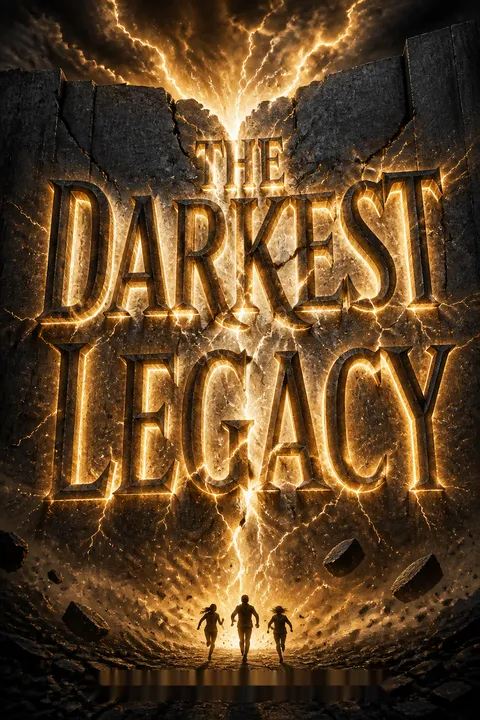
The Darkest Legacy received mixed reviews, with many praising its action-packed plot, character development, and world-building. Fans appreciated the return to the Darkest Minds universe and Zu's perspective. Some found the pacing slow at times and felt the book was unnecessarily long. Critics noted similarities to the original trilogy and questioned the need for this addition. Overall, readers enjoyed the political themes, new characters, and emotional reunions, though some wished for a more conclusive ending.
Characters
Suzume Kimura
The reluctant public voiceSuzume is a Japanese American Psi with electrical abilities and a history of surviving camps, abandonment, and life on the run. The government has made her a spokesperson, asking her to embody a reassuring version of Psi citizenship. She is earnest about public service, but her faith in institutions often makes her suppress anger and doubt. Under pressure, she is resourceful, capable of precise control, and willing to take risks for people she barely knows. Her deepest tension is between wanting to belong to a protected community and wanting to shape a safer world for all Psi. She learns to treat her voice as something she owns, not a role assigned to her.
Roman Volkov
The guarded protectorRoman is a quiet, Russian-born Psi whose composed manner conceals grief, fear, and a formidable capacity for tactical violence. He is fiercely protective of his sister Lana and his close friend Priyanka, often treating their safety as his personal responsibility. His power lets him copy another Psi’s ability through touch, but the physical cost makes every use a gamble. Roman’s carefulness is not coldness; it is a survival strategy shaped by childhood danger and guilt over the people he could not save. He notices what others miss and offers help without demanding trust. Suzume’s independence challenges his instinct to shield her, while her attention helps him imagine a life beyond duty.
Priyanka
The fearless hackerPriyanka is a tall, sharp-witted Green whose ability lets her enter and manipulate complex technology. Humor gives her a way to stay mobile when fear or grief might otherwise pin her down. She is loyal to Roman and Lana, but her history has taught her that love does not always protect people from exploitation. Under intense strain, her power can produce a dangerous surge of adrenaline and physical strength, making self-control as important as courage. Priyanka judges Suzume harshly at first because she distrusts the government image Suzume represents. Their growing friendship is built through concrete acts of care, shared danger, and the difficult work of admitting when either has crossed a line.
Ruby Daly
The hidden memory keeperRuby is a powerful Psi whose ability reaches into other people’s memories, making her unusually sensitive to pain they have tried to bury. She is compassionate without being untouched by what she witnesses, and she often protects others by keeping her own distress private. Her bond with Suzume, Chubs, and Liam is shaped by shared survival, but her work sheltering endangered children gives her a different idea of what meaningful action looks like. Ruby values chosen family and small acts of protection, while also carrying a burden few people can see. Her quietness should not be mistaken for passivity; she observes, remembers, and acts when she believes others are at risk.
Liam Stewart
The shelter builderLiam is a warm, stubborn survivor who has long taken the role of protector, especially for younger Psi and the friends he considers family. His humor and appetite for music soften the severity of life on the road, but his need to rescue others can become a burden he carries alone. He and Suzume share a deep bond formed through years of danger, yet they disagree about whether lasting change comes from institutions or from directly sheltering people the system abandons. Liam’s loyalty is practical: he builds homes, searches for missing children, and returns for people who cannot protect themselves. He is learning that he, too, needs a place where others can care for him.
Chubs
The principled councilmanChubs is Suzume’s close friend and a leader on the Psi Council. Intelligent, organized, and deeply committed to policy, he believes durable protections must be built through political work, even when progress is slow and compromise feels corrosive. He carries pressure quietly and has difficulty admitting when public service has exhausted him. His relationship with Suzume is rooted in mutual understanding, while his conflict with Liam reflects competing responses to the same injustice. Chubs is neither simply a government loyalist nor blind to its failures. He is trying to make institutions answer for their choices without surrendering the possibility that they can still be changed.
Vida
The relentless strategistVida is a former Children’s League operative who brings hard-earned tactical judgment to crises that overwhelm everyone else. Blunt, irreverent, and fiercely protective, she prefers action to reassurance and rarely mistakes charm for safety. Her loyalty to Suzume is expressed through risk, planning, and the willingness to challenge her assumptions. Vida understands how institutions use surveillance and intimidation because she has worked inside dangerous systems herself. She is not immune to exhaustion or fear, but she tends to turn both into forward motion. Her practical intelligence makes her a counterweight to Suzume’s instinct to trust official processes and to Chubs’s faith in political negotiation.
Max Wendall
The remorseful trackerMax is a Psi whose locating ability connects him to the thoughts and memories of people he seeks. The power makes him useful, but it also forces him to experience suffering and guilt that he cannot easily set aside. He once participated in dangerous work for Mercer, and he carries responsibility for the harm that work caused. Max responds by denying himself the chance to act, believing punishment is more honest than change. Suzume and Roman challenge that logic, asking him to use his ability to protect people rather than disappear from the consequences of his past. His choices expose the difference between accountability and self-destruction.
Lana
The estranged sisterLana is Roman’s younger sister, a gifted Psi whose power can suppress other people’s abilities. She grew up amid danger and learned to associate strength with protection, making her vulnerable to anyone who offers safety in exchange for loyalty. Her bond with Roman and Priyanka is complicated by separation, love, and the pain of feeling left behind. Lana is intelligent, forceful, and capable of tenderness, though she may hide those qualities beneath anger. Her choices are shaped by a struggle over who gets to define her power and what she owes to the people who claim to care for her.
Gregory Mercer
The criminal patriarchMercer leads Blue Star, a criminal network involved in smuggling, trafficking, and the exploitation of Psi children. He presents himself as a provider, using attention and protection to make dependence feel like family. His patience and control make him dangerous: he studies what people need, then turns those needs into leverage. Mercer treats ability as a resource to acquire and refine, not as part of a person’s identity. His power depends on secrecy, hierarchy, and making the exploited believe that no safer alternative exists.
Joseph Moore
The opportunistic candidateJoseph Moore is a presidential candidate whose political appeal grows by amplifying public fear of Psi. He presents himself as a practical answer to social instability, while promoting compulsory service and privatized Psi training. Moore understands that stories of threat can make extreme policies seem reasonable, and he uses Suzume’s public image to support his ambitions. His polished manner conceals a willingness to make alliances that endanger children and democratic accountability. He is driven less by a coherent theory of Psi than by the power he can gain by promising to control them.
Clancy Gray
The uncertain former heirClancy is the son of a former president and a former Psi whose memories of his earlier life have been altered. He now lives under a different identity, trying to build an ordinary future while others manage the truth around him. His charm and intelligence remain visible, but so does the unsettling sense that he can read people more easily than they can read him. Ruby’s visits connect his present life to a past he cannot fully access, making him a complicated witness rather than a simple villain or ally.
Owen
The quiet Red survivorOwen is a young Red Psi who has endured conditioning that damaged his ability to speak and trust others. He appears withdrawn, but his silence should not be mistaken for emptiness. His power is frighteningly destructive, and he knows how much fear it can provoke. Ruby tries to help him recover a sense of choice, while Suzume treats his contribution as an act of courage rather than a reason to control him. Owen’s struggle raises the question of how a child can live with an ability that adults repeatedly turn into a weapon.
Dr. John Wendall
The compromised scientistJohn Wendall is a Leda Corporation researcher whose scientific work becomes entangled with Mercer’s criminal ambitions. He treats children as sources of data and experiments with ways to induce Psi abilities, placing technical curiosity above their safety. His connection to Max makes his choices especially difficult to separate from family loyalty and professional complicity. Wendall represents a form of harm that does not require personal rage: procedure and expertise can become instruments of violence when a scientist refuses to recognize the people inside the experiment.
Mel
Suzume’s media guideMel is Suzume’s publicist and trusted guide through the demands of government communication. She helps shape speeches, manage events, and shield Suzume from a hostile public, often balancing care with the expectation that the show must go on. Her professional discipline reflects the compromises of political work: she can protect Suzume in one moment and ask her to deliver words that cause harm in the next. Mel’s steady presence gives Suzume a model of competence, but also shows how difficult it is to distinguish personal loyalty from an assigned role.
President Cruz
The pressured interim leaderCruz leads the interim government during a fragile period of reconstruction and election planning. She has worked with Psi representatives, but her decisions are constrained by public hostility, political rivals, and the United Nations’ oversight. Her daughter is Psi, giving her a personal stake in the debate without guaranteeing that she will consistently protect the community. Cruz represents the uneasy combination of genuine political partnership and expedient compromise. Suzume’s trust in her rests on past cooperation, but the crisis tests whether that trust can survive decisions made under pressure.
Cate
The trusted guardianCate is a trusted adult who has provided a home and protection for Suzume and other young Psi. She is connected to government work, yet her loyalty to the young people in her care can take precedence over professional obligations. Cate’s steadiness offers a quieter model of protection than either security forces or political speeches: she notices what people need and makes room for them. Her presence helps connect Suzume’s private circle to people with the practical skills and access needed during a crisis.
Lisa, Jacob, and Miguel
Haven’s young stewardsLisa, Jacob, and Miguel help run Haven, care for the children there, and maintain its defenses. Lisa is attentive to the younger residents, Jacob is a capable protector, and Miguel uses his technical skill to monitor the house and its security. They are younger than Suzume’s established circle, but they have learned to make decisions and protect one another in the absence of their founders. Their work shows that Haven is not only Ruby and Liam’s refuge; it is a community whose residents have begun to take responsibility for its survival.
Cubby
The Pit’s hardened leaderCubby has survived another camp and learned how hunger, force, and reputation govern life inside the Pit. Her toughness is partly armor and partly a method of keeping other children from becoming easy targets. She distrusts newcomers but understands the value of a plan that offers a genuine way out. Suzume’s ability to speak from lived experience earns her attention, while the staged revolt gives Cubby a chance to redirect her authority toward collective escape.
Agent Cooper
Suzume’s security escortAgent Cooper is one of the government officers assigned to protect Suzume during public appearances. He is practical, alert to threats, and familiar enough with her to offer ordinary reassurance amid a hostile political climate. His presence represents the protection Suzume has learned to accept from the government, even as the attack reveals how fragile that protection can be.
Plot Devices
Psi abilities and cure implants
Power made politicalPsi abilities are grouped into color classifications that signal different powers and shape how the government treats their bearers. The classifications become more than labels: buttons make identity publicly legible, while cure implants can suppress a person’s ability. The Pit reveals how institutions can claim to offer training while stripping children of their power and controlling them physically. Priyanka’s ability to deactivate implants lets the imprisoned Psi choose whether to reclaim their abilities. The device links bodily autonomy to the larger political question of who is allowed to define safety.
White Noise
A weapon against PsiWhite Noise is a device used by captors to disrupt Psi abilities and incapacitate their targets. Its effect is physical and psychological, making it useful in kidnappings and attacks on hidden communities. Suzume’s altered hearing leaves her less vulnerable than the others, a consequence of the university explosion that first made her a fugitive. The weapon repeatedly turns a group’s abilities from protection into a liability. Its use at Haven also exposes the attackers’ tactical preparation and connects their methods to the forces pursuing Roman and Priyanka.
Memory transfers
Clues carried by memoryRuby can pass memories to Suzume, allowing information to survive when Ruby cannot speak or act. One memory reveals the location of children imprisoned in Leda’s laboratory. Another directs Suzume toward a flash drive hidden under the playground at Blackstone Elementary. Max’s separate locating ability uses Liam’s memories to find Ruby, making memory both a map and a connection between people. These abilities preserve evidence across isolation, but they also carry other people’s fear and pain into the person receiving them.
Surveillance and zone crossings
Movement under watchHighway cameras, drones, checkpoints, and Psi registration systems make travel visible to government authorities. The characters evade them by exploiting a neglected route and using Priyanka’s technical skill to scramble camera feeds. The same surveillance infrastructure can protect against trafficking, but it can also make fugitives easy to locate and return to custody. A phone Suzume believes she has secured ultimately exposes Haven. The device keeps the story’s central dilemma concrete: a system that records movement may prevent crime, while also making escape from abuse nearly impossible.
Recorded evidence
A counterstory with proofSuzume records the abandoned roller rink, the captured children, and the evidence gathered inside Moore’s training facility and Leda’s lab. Priyanka and Max help recover digital records, while Ruby’s hidden flash drive offers another source of proof. The recordings let Suzume challenge the government’s claim that she is a terrorist and show how private prisons and trafficking networks operate. They do not automatically secure justice, because political leaders can suppress information or frame it. Their power comes from combining verifiable images with a clear account of who benefited.
The Darkest Minds Series



About the Author





Download PDF
Download EPUB
.epub digital book format is ideal for reading ebooks on phones, tablets, and e-readers.








