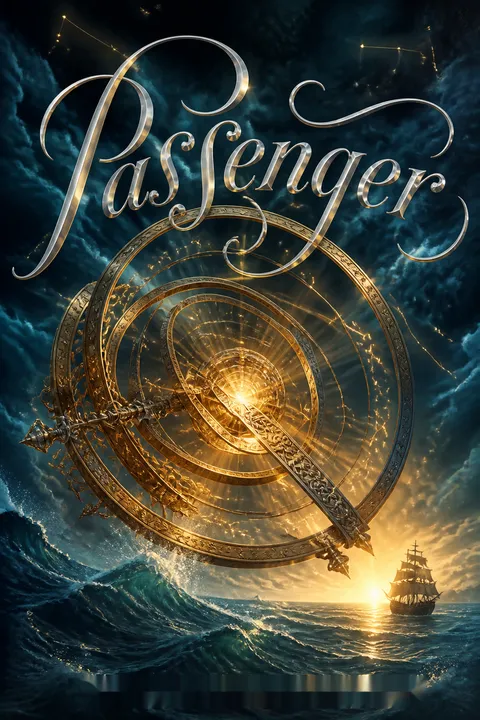


Plot Summary
Prologue
In 1910, Nicholas Carter climbs Bhutan’s Tiger’s Nest monastery with Julian Ironwood, the half brother he has been ordered to serve. Nicholas has already learned that the promised place in the family means little more than carrying Julian’s burdens.
When rain breaks the cliff path beneath Julian, Nicholas hesitates, then reaches for him. Julian falls into the ravine and dissolves into glittering dust as the passage collapses. Nicholas survives, left with guilt that will shape every later risk he takes.
The prologue makes the novel’s central wound literal: Nicholas must choose whether to reach for a brother who has helped keep him subordinate. His hesitation is morally charged, but the passage’s violent collapse denies him a clean answer about what his choice means. The scene also establishes that traveler deaths can damage the routes connecting eras, turning private loss into a hazard for everyone who follows. Nicholas’s survival is not a victory so much as a sentence to remember the instant when he could not save someone he loved.
The Met’s Unheard Alarm
Near eighteen, violin prodigy Etta Spencer is preparing for her first major solo debut while longing for approval from her distant mother, Rose. Before a museum performance, Rose gives her antique earrings and a coded note, then tells her she is proud. Etta soon overhears Rose and her longtime violin teacher, Alice, arguing about whether Etta is ready for something.
Believing they mean her career, Etta storms onstage. As she plays, a shrill sound overwhelms her, though no one else hears it. Fellow violinist Sophia leads her through the museum toward the sound. They find Alice shot, and Sophia forces Etta through a shimmering opening in the air. Etta wakes far from the Met, amid smoke and blood.
Etta begins by treating excellence as a reliable route to love: if she performs well enough, perhaps Rose will finally show warmth. The earrings and note briefly confirm that hope, but the overheard argument turns affection into suspicion. Her decision to play despite Alice’s warning is both an assertion of agency and a tragic misreading of what the adults are trying to protect her from. The passage responds to music, making Etta’s deepest discipline the instrument of her rupture from ordinary life. Performance does not simply fail her; it carries her into a history she never knew belonged to her.
Aboard the Ardent
The opening has delivered Etta to the Ardent, a British merchant ship captured in the Atlantic in 1776 by American privateers. Nicholas Carter, the prize master, dives into the water when a collapsing mast throws Etta overboard, cuts her free from tangled netting, and helps revive her on deck.
Captain Nathaniel Hall protects her from the crew, while Sophia claims the two girls are sisters returning to England. Etta recognizes the ship’s violence and her own bloodied eighteenth-century dress, but has no idea how she arrived. Nicholas says he has been paid to bring the passengers to New York. Sophia privately admits Etta traveled through time, then warns her to conceal the truth from everyone aboard.
Etta’s first encounter with Nicholas is practical rather than romantic: he risks his life to retrieve a stranger whose arrival threatens the order of his ship. That rescue gives her a reason to trust him, but his paid assignment also makes him part of the system carrying her toward danger. Sophia’s cover story shows how survival in the past depends on performance, just as Etta’s concert did, though now clothing, silence, and social rank replace music. The ship makes history bodily: Etta must reckon with blood, captivity, and the fact that she cannot simply explain herself into safety.
The Ironwood Inheritance
In their cramped cabin, Sophia explains that certain families can cross naturally occurring passages between specific years, and that the ability can be inherited. Etta realizes Rose must be a traveler, though she has kept that part of her life secret. Sophia says her grandfather, Cyrus Ironwood, ordered her to retrieve Etta, but offers no reason for his interest.
She teaches Etta how to dress for the era and warns her to behave as a dependent young woman. Etta refuses to accept Sophia’s rules as natural, yet understands that an open challenge could leave her stranded. She begins gathering information from the crew, using cabin boy Jack’s grooming help to learn Nicholas’s habits and the ship’s relationships.
The revelation gives Etta a family history at the exact moment she feels most abandoned by her existing one. Yet belonging is not automatically comfort: the Ironwoods treat inherited ability as an obligation to serve their patriarch. Sophia’s lessons expose the gendered mechanics of survival, where a woman’s apparent passivity can be a tactical disguise. Etta’s decision to question Jack rather than rely on Sophia is an early shift from bewildered passenger to investigator. Her musical habits have trained her to notice patterns, but she is learning that social knowledge, not technical virtuosity, may keep her alive.
The Dinner Table Reckoning
At dinner, captured officer Edward Wren humiliates Nicholas with racist claims about his ancestry and freedom. Etta slaps Wren, ending his attack but risking trouble for herself and the crew. Nicholas later explains that he was born enslaved in the Ironwood household, then freed and raised by Hall alongside first mate Davy Chase.
He is a distant Ironwood relative, but rejects the family that once controlled him. On the ferry toward Manhattan, smoke from the Great Fire of New York darkens the sky. Etta recognizes that Nicholas’s guardedness conceals a life built against other people’s definitions of him. Their attraction grows, but he still sees her arrival as a job tied to Cyrus’s payment.
Wren’s insult is not an abstract test of Etta’s character; it confronts her with the ease with which a society can make cruelty sound respectable. Her slap expresses solidarity, but Nicholas’s skillful restraint also reveals that he has long survived by refusing to let an aggressor dictate his response. His chosen name and life at sea are acts of self-authorship, though neither erases the structures that constrain him. The scene deepens intimacy through ethical recognition, while exposing its limits: Etta can witness his experience, but cannot inherit it or solve it through a single brave gesture.
Cyrus Names His Price
At a tavern outside Manhattan, Cyrus Ironwood receives Etta and Sophia, then shows Etta a photograph proving that Rose is being held captive. He explains that he wants a lost astrolabe Rose took from the family, an instrument he believes can identify passages and reveal where they lead. Etta must follow clues hidden in Rose’s letter, retrieve it, and return by September 30 or Cyrus will harm her mother.
He reveals that the concert was arranged to bring Etta within Sophia’s reach. Etta conceals that she can read the letter using a star-shaped overlay. Nicholas, meanwhile, accepts Cyrus’s private offer of wealth and plantation holdings in exchange for helping secure the astrolabe, keeping the deal from Etta.
Cyrus turns kinship into leverage: Rose’s safety is made conditional on Etta’s obedience, while the language of family conceals a coercive contract. The astrolabe initially appears to be a navigation tool, but the scale of Cyrus’s preparations suggests he wants more than a route home. Etta’s hidden ability to read the letter gives her a small private space inside an arrangement designed to control her. Nicholas’s secret bargain complicates the rescue narrative: his desire for economic independence is understandable, yet Cyrus has recruited him by offering freedom through another form of service.
The First Unauthorized Leap
Rather than wait for Cyrus to dictate her next move, Etta slips out at night and enters a passage near the site where Nathan Hale will be executed. Nicholas discovers her trail and follows, although traveling again risks the punishment of exile Cyrus placed on him after Julian’s death. They emerge in wartime London, where a bombing has damaged the Burlington Arcade.
Nicholas argues that Etta cannot return to the moment Alice was shot: passages connect different years, and a traveler cannot occupy the same time twice. Grief does not end her determination to help Alice, but it forces her to accept that saving the dead may be impossible. Together they decode Rose’s letter and identify the next clue.
Etta’s escape marks a change from reacting to Cyrus’s power to making choices under its shadow. Nicholas follows partly from duty and partly from a promise of protection, but his decision also reopens the history he has tried to bury. The rule against meeting oneself gives time travel ethical weight: grief cannot simply be repaired by returning to an earlier scene. Etta’s wish to save Alice is loving, but it also risks treating the past as something she can personally command. The journey begins to teach both travelers that agency means choosing among consequences, not abolishing them.
Alice in the Blitz
Etta recognizes the London clue as a reference to ancient Greek artifacts at the British Museum, but the museum is closed and its treasures have been evacuated. She instead finds Alice, decades younger, living in the house where Alice grew up. This Alice is not a traveler, but her family has guarded the Linden line.
She explains that Rose once associated with the Thorns, enemies of Cyrus, and confirms the astrolabe is more dangerous than Etta knows. Alice points them toward the Elgin Marbles, hidden in an Underground tunnel between Aldwych and Holborn stations. Ironwood’s agents and a Thorn pursuer appear, forcing the group to flee. Etta refuses to warn Alice about her future death, honoring Alice’s wish to live her own life.
Meeting Alice in her youth turns Etta’s grief into an encounter with a person rather than a memory. The younger woman is not simply a source of clues; she is someone with a future Etta knows and must not seize control of. Her refusal to warn Alice is painful precisely because it rejects the fantasy that love grants unlimited authority over another person’s life. The hidden Marbles also sharpen the novel’s concern with possession: artifacts, histories, and people can all be claimed under the name of protection. Etta and Nicholas must learn to guard without turning guardianship into ownership.
The Elgin Tunnel
With pursuers closing in, Etta and Nicholas race through London as air-raid sirens begin. They reach Aldwych station and shelter among civilians while bombs strike above. In the darkness, Etta steadies herself by imagining violin practice, and Nicholas comforts her; their closeness crosses from guarded affection into a kiss.
At dawn, they slip down onto the tracks and find the hidden passage beside the evacuated Marbles. A Thorn guardian spots them, so they cross before he can catch them. They emerge in the Cambodian jungle, where Nicholas carries Etta through traveler’s sickness until she can stand. Their first hours in the wilderness bring hunger, danger, and a cobra that Nicholas shoots at close range, accidentally grazing Etta’s leg.
The Underground shelter makes private fear share a physical space with public danger. Etta’s imagined violin practice is not a retreat into achievement this time; it is a method for regulating panic, while Nicholas’s presence lets her accept comfort without surrendering her agency. Their intimacy grows in a crisis, but the novel keeps it entangled with unequal risks and unfinished obligations. The passage from the crowded tunnel to the jungle also shifts the danger from political pursuit to bodily survival. Nicholas’s shot saves Etta from the cobra but wounds her, a reminder that protection can be necessary and still cause harm.
The Wrong Paris Fountain
The next clue leads Etta and Nicholas to the Luxembourg Garden in Paris, where they interpret a reference to a coin and a widowed queen as the Medici Fountain. The passage there opens, but two travelers arrive and one mistakes Etta for Rose. He is Augustus Ironwood, Nicholas’s father, and he fires at them as they flee.
Etta realizes the painting of the garden was not the destination after all; Rose’s newer desert painting and the story of the Damascus earrings point farther on. Back in Angkor, Etta hears two distinct passage calls where Nicholas hears only one. Nicholas spots the hidden entrance atop the Phimeanakas temple, and they take it to Damascus in 1599.
The failed Paris interpretation makes the clue trail feel less like a puzzle with one clever answer and more like a family story whose evidence has been deliberately arranged. Etta’s understanding depends on noticing that Rose’s paintings and spoken memories can correct the written instructions. Augustus’s appearance forces Nicholas to confront a parent he has never been free to escape, even in a different century. The two passage sounds establish Etta’s unusual perceptiveness as a practical skill, not merely inherited magic. She is learning to trust her own listening when both family authority and Nicholas’s experience have limits.
The Linden House Key
In Damascus, Etta and Nicholas enter a house once belonging to her great-grandfather, Benjamin Linden. Its guardian, Hasan, initially attacks them, then recognizes Etta through her resemblance to Rose and the earrings Rose received from his wife, Samarah. Hasan unlocks a hidden drawer containing a photograph of Rose as a girl and another coded letter.
The message warns Etta to trust carefully and says the astrolabe must be destroyed, because both Cyrus and the Thorns intend to use it for their own ends. Hasan identifies the next clue as Palmyra, the ruined city known as the Bride of the Desert. He offers to guide them across the dangerous route, while Nicholas’s impatience grows under the approaching deadline.
Hasan’s house gives Etta a material connection to a family that had previously existed only as fragments and labels. The earrings, first offered as a sign of Rose’s affection, now serve as evidence linking generations and places. Hasan’s caution is not obstruction for its own sake; he has protected the Linden household by refusing to trust a resemblance without proof. His hospitality contrasts with Cyrus’s transactional version of family, while Nicholas’s haste shows how fear can make even a protector dismiss useful care. The letter changes the mission from recovery to prevention: finding the object may be less important than denying anyone its power.
Rose’s Knife in Damascus
At the Damascus market, Etta sees a younger Rose and runs after her, but Rose mistakes her for someone pursuing the astrolabe and throws a knife. Two men then attack Etta; Nicholas intervenes and is stabbed. During his hospital recovery, he admits he accepted Cyrus’s offer for wealth and a fleet, though he now understands that Cyrus intends to alter history.
Etta does not excuse the secrecy, but recognizes the motive behind it. Before Nicholas can recover, Sophia arrives with armed men, knocks Etta unconscious, and forces her onto a horse. Sophia says she followed their route and wants to prove herself worthy of leading the Ironwoods. She takes Etta toward Palmyra, leaving Nicholas behind with a fever and Hasan’s care.
Etta’s meeting with her younger mother is a sharp lesson in temporal asymmetry: Rose sees a threat where Etta sees a chance for recognition. Nicholas’s confession then replaces a simple betrayal with a more difficult moral picture. His desire for a ship and independence is real, but his choice still withheld information Etta needed to judge the danger. Sophia’s abduction marks ambition becoming action. She has listened to Etta’s argument for self-determination, yet converts it into a bid for authority over others, showing that liberation without a changed ethical framework can reproduce the same coercion.
The Astrolabe in Palmyra
In Palmyra’s Valley of Tombs, Etta finds the Linden tree sigil carved over a concealed compartment. She pulls out the gold astrolabe, but before Sophia can claim it, Etta smashes it against the stone. The device dents rather than breaks. Two guides reveal themselves as Thorns, seize the astrolabe, and prepare to abandon Etta and Nicholas in the desert.
Nicholas arrives despite his wound and fever, and fires at an attacker as Etta lunges for the device. The bullet strikes Etta’s shoulder instead. At the same instant, the passage surges and Etta dissolves from Nicholas’s grasp. He believes she has died, while the Thorns leave with the astrolabe and Sophia is also left behind, badly injured.
The tomb forces Etta to choose between her mother’s instructions and the immediate terror of losing control of the object. Her attempt to destroy it is an ethical refusal, but the astrolabe’s survival means refusal alone cannot prevent others from wielding power. Nicholas’s arrival is an act of loyalty that ends in unintended violence, echoing the prologue’s failed rescue without repeating its moral circumstances. Etta’s disappearance makes the consequences larger than either traveler can see: the passage reacts to a change in the timeline, turning a private wound into evidence that history itself has shifted.
A Future Torn Loose
After days alone, Nicholas meets Rose in Palmyra. She confirms that Etta’s disappearance may be a wrinkle: the Thorns’ possession of the astrolabe has altered events, and Etta may have been thrown into the last year shared by the old and new timelines rather than killed.
Rose also admits she deliberately arranged the chain of events that brought Etta to the passages, including Alice’s shooting, believing Etta had to reach the astrolabe to stop Cyrus. Nicholas is horrified by the sacrifice.
Rose reveals that Henry Hemlock, leader of the Thorns, is Etta’s father, then sends Nicholas to seek the device and Etta. On the way, Nicholas and Hasan find Sophia alive but gravely wounded. Nicholas sets out again, now searching for both women and the astrolabe.
The ending overturns the apparent death without restoring the world Etta lost. A wrinkle preserves her as a possibility, not as a person Nicholas can readily reach. Rose’s confession gives strategic necessity an unbearable human cost: she used Alice’s death to propel her daughter toward a mission, treating both as pieces in a plan. Her reasoning may be aimed at preventing catastrophe, but it repeats Cyrus’s habit of deciding what other people must endure. Nicholas’s final purpose is therefore more complicated than rescue. He must oppose the family systems that made Etta useful at the expense of allowing her to choose.
Analysis
Passenger treats time travel less as a fantasy of escape than as a problem of responsibility. Its passages promise mobility, but every journey carries the travelers into social systems that constrain them differently: Etta meets gendered dependence, Nicholas encounters enslavement and racism, and both discover that historical knowledge can become a tool of power. The novel’s central object, the astrolabe, intensifies that problem. To create passages is to make the past politically available, yet the ability to alter history does not make its users wise or benevolent. Cyrus wants to recover one lost love without surrendering the empire built after her death; the Thorns want to restore a world stolen from them. Both projects risk treating millions of lives as material for correcting personal grief.
Etta’s wish to save Alice gives this conflict emotional precision. Her desire is not selfish in the ordinary sense: Alice has loved and guided her. Yet Etta must learn that love does not grant the right to rewrite another person’s life, especially when Alice herself refuses that intervention. Nicholas faces a parallel struggle. His instinct to protect Etta grows from genuine tenderness, but it can become another way of deciding for her. Their developing partnership is strongest when he recognizes her as a capable equal and she acknowledges the costs his choices carry.
The family plot extends the same question across generations. Rose’s secrecy, Cyrus’s control, and Sophia’s ambition all emerge from histories of injury, but pain does not excuse the harm they inflict. The novel refuses a simple moral division between a rightful timeline and a corrupt one, because each faction imagines its preferred past as justice. Its unresolved ending leaves Etta displaced and Nicholas pursuing her, making the next ethical task concrete: recover the power to change time before either side can claim the future as private property.
Review Summary
Passenger received mixed reviews from readers. Many praised the time travel concept, historical settings, and diverse characters, particularly the interracial romance between Etta and Nicholas. Readers enjoyed Bracken's writing style and world-building. However, some found the pacing slow, especially in the beginning, and criticized the lengthy descriptions and information dumps. The romance was divisive, with some loving the slow-burn development while others felt it was insta-love. Despite these issues, many readers were intrigued by the cliffhanger ending and looked forward to the sequel.
People Also Read


Characters
Etta Spencer
The listening virtuosoEtta is a gifted young violinist whose discipline has long organized her life and helped her manage severe stage fright. She is ambitious, perceptive, and hungry for Rose’s approval, though she gradually sees that achievement cannot repair a relationship built on silence. Her musical ear becomes unexpectedly useful when she encounters the resonant passages, while her training in concentration helps her endure fear and grief. Etta’s confidence can harden into impatience, especially when others try to decide what she is ready to face. Beneath that temper is a strong instinct for fairness and a growing willingness to make choices for herself, even when no option promises safety.
Nicholas Carter
The sea-born protectorNicholas is a skilled sailor and privateer prize master, raised by Captain Hall after escaping the Ironwoods’ control. He values competence, frankness, and the hard-won freedom of choosing his own work. His composure conceals grief over his mother and guilt surrounding his half brother Julian, losses that make him wary of attachment and quick to assume responsibility for others. Nicholas is proud, protective, and often too ready to treat care as a burden he must carry alone. His relationship with Etta unsettles that habit because she asks to stand beside him rather than beneath his protection. He is also sharply aware of how race and law limit the futures available to him.
Rose Linden
The guarded mapmakerRose is Etta’s reserved mother, an art conservator whose surviving paintings and stories are the fragments through which Etta first knows her past. She has lived through a difficult childhood, learned to rely on herself, and treats information as something that can protect as readily as it can endanger. Rose’s affection is real but often indirect, expressed through objects, coded notes, and carefully chosen memories rather than easy conversation. Her secrecy frustrates Etta and leaves their relationship vulnerable to misunderstanding. She is intelligent, resourceful, and willing to plan far beyond the immediate moment, but her guardedness raises the question of how much control one person may claim in the name of protecting another.
Sophia Ironwood
The ambitious family wardSophia is a traveler raised under Cyrus Ironwood’s authority and assigned to bring Etta into the family’s orbit. She is sharp, socially skilled, proud of her education, and adept at reading what other people want. Her contemptuous manner often hides a deep dependence on the family structure that has limited her choices. Sophia wants recognition and a secure place in a lineage that prizes inheritance, status, and male authority. She can be perceptive about the injustices Etta faces, yet she is also tempted to answer exclusion by seeking power for herself. Her mixture of vulnerability, resentment, and strategic intelligence makes her neither a simple ally nor a simple antagonist.
Cyrus Ironwood
The patriarch of passagesCyrus is the controlling head of the Ironwood family and the authority to whom travelers are expected to answer. He is wealthy, patient, and skilled at making coercion appear like a reasonable exchange. He measures people by usefulness and treats family history as an instrument for consolidating power. His past contains genuine grief, but he has built a life in which loss fuels control rather than compassion. Cyrus understands that money, secrets, and access to travel can shape entire eras, and he uses all three to keep others dependent. His certainty that he knows what must be done makes him particularly dangerous to people whose lives he claims to protect.
Alice
Etta’s steadfast mentorAlice is Etta’s elderly violin teacher and closest source of dependable affection. Once a celebrated performer, she now teaches with warmth, humor, and a keen understanding of the fear that can silence a young musician. Alice gives Etta practical routines for handling anxiety and believes that talent needs both discipline and care. Her closeness to Rose gives her knowledge of the family secrets Etta has never been told, but her protective instincts can put her at odds with Rose’s plans. Alice represents a form of chosen family grounded in daily attention: lessons, encouragement, and the patience to let Etta become more than her reputation.
Hasan
The Linden household guardianHasan cares for the Linden family home in Damascus and protects its history without submitting to the Ironwoods. He is generous, hospitable, multilingual, and capable of defending himself when strangers threaten the household. His loyalty is rooted in affection and responsibility rather than a demand for status. Hasan becomes a guide to Etta and Nicholas, offering local knowledge and practical help while treating them as guests rather than assets. His account of his parents’ unconventional life also gives Etta a model of love shaped by tenderness and responsibility, not by social approval.
Nathaniel Hall
The sailors’ chosen fatherCaptain Hall commands the privateer Challenger and protects the people who sail under him. He is physically formidable, practical, and fair-minded, with a warmth that survives years of violence at sea. Hall helped free and raise Nicholas and Chase, giving them education, work, and a sense of belonging they had not received from the Ironwoods. His authority depends on competence and mutual responsibility, not inherited rank. Though he appears only briefly in the main journey, his example shapes Nicholas’s ideas about family and the kind of leader he hopes to become.
Davy Chase
The loyal first mateChase is Nicholas’s closest friend and first mate, raised alongside him by Captain Hall. He combines a cheerful, generous nature with a disciplined command of the crew. Chase notices what Nicholas refuses to admit, especially when ambition or fear makes him isolate himself. His loyalty is affectionate but not passive; he challenges Nicholas when he thinks his friend is denying himself a possible future. As a sailor, he provides Etta with a glimpse of the family Nicholas built by choice.
Julian Ironwood
The careless half brotherJulian is Nicholas’s half brother and Cyrus’s grandson, accustomed to privilege and travel. He can be charming and adventurous, but his confidence often depends on other people carrying the practical burdens he ignores. Nicholas once hoped their shared blood would become a real bond, and Julian’s treatment of him complicates that hope. Their history is essential to understanding Nicholas’s guilt, his reluctance to travel, and his difficulty distinguishing affection from obligation.
Jack Winstead
The eager cabin boyJack is a young member of Hall’s prize crew who is learning the work of a sailor under Nicholas’s command. Curious and earnest, he takes pride in his duties and enjoys showing Etta how to care for her hair. His openness gives her an early way to learn about the crew without relying on Sophia. Jack also reflects the ship’s close hierarchy, where children are expected to work and prove themselves alongside adults.
Edward Wren
The polished racist officerWren is an officer aboard the captured Ardent who relies on manners and elaborate stories to disguise his hostility. He belittles Nicholas’s ancestry and questions his right to command, using the social conventions of the era as cover for cruelty. His conduct shows Etta how prejudice operates in the ordinary rhythms of conversation, not only through open violence.
Abraham Goode
The cautious ship surgeonGoode is the Ardent’s young surgeon’s mate, pressed into service after the ship is captured. He is fastidious, nervous, and more capable than his small stature and polished appearance initially suggest. His practical medical work helps the wounded crew and the rescued passengers.
Augustus Ironwood
Nicholas’s dangerous fatherAugustus is Nicholas’s father and Cyrus’s son, a traveler whose appearance in Paris brings the family’s past into the present journey. He is associated with the Ironwood line’s privileges and with the history Nicholas would rather leave behind. His arrival makes clear that passages can bring travelers face to face with people from different points in their own family histories.
Henry Hemlock
The Thorn movement’s leaderHenry leads the Thorns, a group of travelers and guardians who oppose Cyrus’s control and hope to restore a different version of history. He is described as wealthy and politically shrewd, with enough influence to mobilize followers across eras. His intentions make him a formidable presence even before Etta meets him.
Virgil Ironwood
The family’s letter writerVirgil is one of Cyrus’s sons and the writer of a letter that helps connect Rose’s disappearance to Etta’s existence. His report draws on a visit to the future and offers a glimpse of how travelers communicate across distant years.
Benjamin Linden
The hidden family historianBenjamin is Rose’s grandfather and an important keeper of Linden knowledge. His books, family emblem, and riddles preserve information that can outlast the family’s displacement. Hasan remembers him as an educated and curious man who taught languages and left a lasting impression on the household.
Samarah
The Damascus market womanSamarah is Hasan’s wife and the woman who gives Rose the pearl-and-gold earrings that later connect Etta to the Linden household. Her generosity turns an object that seems decorative into proof of family history.
Plot Devices
Time passages
Doors between fixed yearsPassages are natural openings that connect specific locations in different years. Travelers hear or detect their resonance, then cross through the opening without machinery. Each passage links years rather than chosen dates, and a traveler cannot meet another version of themselves in the same time. The routes make travel possible but also dangerous: a traveler’s death can destabilize a nearby passage, and an unstable crossing can strand someone in an unfamiliar era. Their fixed connections shape the journey, forcing Etta and Nicholas to solve clues as a sequence of destinations rather than simply choose when and where to go.
Musical resonance
Sound reveals hidden routesPassages produce a painful, distinctive sound that most people cannot hear unaided. A three-note chord can make the sound detectable, while Etta’s trained musical ear lets her distinguish overlapping passage calls and locate openings others miss. Her violin performance at the Met first draws her attention to the phenomenon, and a harmonica later helps the travelers test for passages. Music therefore changes from Etta’s professional ambition into a navigational instrument, joining her old identity to the dangerous new one.
Rose’s coded clues
A mother’s map in fragmentsRose hides messages in ordinary-looking letters, which become legible when a shaped overlay selects particular words. The clues point through places and historical details, while her paintings and stories provide additional context. Etta must compare those sources rather than trust any single one: a clue that seems to lead to a Paris fountain proves incomplete until she notices a second passage in Angkor. The method makes Rose’s care tangible, but also leaves Etta to reconstruct a plan for which she received no training.
The Linden astrolabe
Power over passage creationCyrus initially describes the astrolabe as a device for identifying passage destinations and testing their stability. Rose’s letter and Alice’s account reveal its greater capacity: it can create passages, potentially opening access to years otherwise out of reach. That power makes the object more consequential than a family heirloom or navigation aid. Cyrus wants it to reshape history for personal reasons, while the Thorns seek their own revision of the past. Etta’s effort to destroy it becomes the novel’s decisive conflict over who should be allowed to alter time.
Wrinkles in the timeline
History ejects displaced travelersWhen a traveler’s actions cause a sufficiently large change, time attempts to realign itself. Travelers caught outside the resulting history are not erased, but may be thrown into the last year shared by the former and revised timelines. This mechanism explains why Etta’s disappearance after the Thorns take the astrolabe may not mean she has died. It also gives the story a sharp distinction between changing a detail and transforming the world: the traveler survives, but the people, relationships, and future she recognizes may no longer exist in the same form.
Passenger Series

About the Author






Download PDF
Download EPUB
.epub digital book format is ideal for reading ebooks on phones, tablets, and e-readers.








