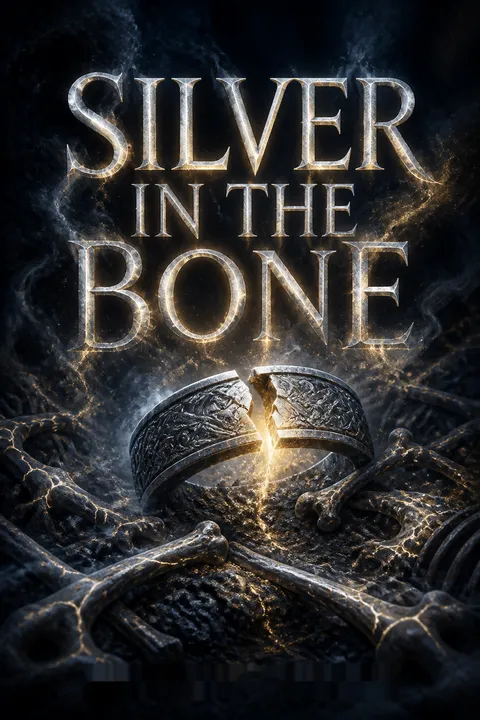


Plot Summary
Prologue
Seven years earlier, Tamsin follows her guardian Nash and her brother Cabell into the ice-bound vault of Sorceress Edda, determined not to be left behind. She helps Cabell clear curses, then spots the bodies of Hollowers frozen in the walls. Nash retrieves King Arthur’s dagger, Carnwennan, and leads the children to Tintagel, where he says the real prize still waits.
By morning, he has vanished. Tamsin finds Cabell alone in the storm, terrified that their guardian is gone and his curse is taking hold. She holds him close and retells Nash’s Arthurian stories, using the familiar tale to steady her brother when she has no magic of her own.
The childhood episode establishes the emotional wound that drives Tamsin’s choices: she expects abandonment, yet feels responsible for keeping Cabell safe. Her practical skills cannot prevent Nash from disappearing or control her brother’s curse, so she turns to the one tool she can offer, a story. That act makes storytelling both refuge and inheritance. Nash’s tales give the children a shared language, but his disappearance also turns legend into an explanation Tamsin can keep pursuing. The prologue therefore plants the novel’s central tension: stories can help people endure uncertainty, but believing too firmly in them can lead them into danger.
Tarot Cards, Hidden Curses
In Boston, Tamsin Lark earns money pretending to read tarot above a seafood restaurant, while her perfect memory and Hollower training do the real work. She has no magical sight, unlike her brother Cabell, whose unusual gift lets him redirect curses. They take paid recovery jobs and argue over Cabell’s wish to chase legendary relics instead of steady work.
During a reading, Neve Goode arrives in a burst of cheer, asks whether she will find what she seeks, and invites Tamsin to meet as a friend. Tamsin refuses, wary of closeness and of a client learning too much. Cabell returns with work from Sorceress Madrigal, and the siblings head to New Orleans to deliver a brooch.
Tamsin’s practical life is not simply a rejection of adventure. Stability is her defense against the childhood pattern of being dependent on adults who disappear. Cabell’s appetite for relics threatens that hard-won safety, while his magical gift makes him appear better equipped for the work they share. Neve’s invitation tests Tamsin in a smaller but revealing way: she treats friendship as another liability to manage. The tarot performance sharpens the irony. Tamsin sells clients comforting narratives while refusing to let herself trust any hopeful story about her own life.
Madrigal’s Deadly Competition
At Rook House, the crone Sorceress Madrigal receives Tamsin in a mirrored dining room crowded with eerie, animal-headed guests. Emrys Dye, the wealthy guild heir who needles Tamsin whenever they meet, is already at the table. After Tamsin delivers the brooch, Madrigal offers both Hollowers a contest: whoever brings her the Servant’s Prize first will earn a fortune.
Emrys warns Tamsin away, but she accepts, unwilling to let a richer rival claim the job. Later, Cabell’s fear of the prize triggers his curse. He changes into a huge hound and attacks Tamsin in their apartment; she survives by shooting him with a tranquilizer dart. Once he returns to human form, she learns how close she came to losing him.
The contest turns a financial opportunity into a family emergency. Tamsin accepts because money means safety, but the same stubborn refusal to yield keeps her from hearing Emrys’s warning or fully registering Cabell’s deteriorating control. Her fight with the hound is a brutal reversal of their usual roles: the person she protects becomes the immediate danger, and love cannot make her physically safe. Yet she refuses to treat him as a monster to be destroyed. The scene makes care an action under pressure, not a sentimental certainty.
The Ring Beneath the Story
At the guild library, Tamsin connects the Servant’s Prize to Lancelot’s Ring of Dispel, a relic that can break curses. She also discovers Emrys concealed a sorceress’s account of the ring from the guild. While searching Nash’s old journal, she deciphers its final entry and learns he went to Tintagel to trade Carnwennan for the ring.
Cabell admits Nash told him this seven years ago and made him promise to keep it from Tamsin. He believes the sorceress killed Nash, and rejects Tamsin’s hope that their guardian might still be alive. Their argument exposes how differently they have carried the same abandonment: Tamsin needs answers, Cabell is exhausted by hope. He leaves, and she prepares to pursue the ring alone.
The ring offers Tamsin a concrete answer to Cabell’s curse, but the revelation also exposes a second injury: Cabell has withheld the one fact that could have changed their shared search. His silence was meant to spare her, yet it repeats the family pattern of deciding what she can bear. Tamsin’s certainty that she must act is partly love and partly an attempt to control loss before it happens. The chapter’s crucial distinction is between hope as a possibility and hope as a demand. Cabell has stopped wanting the latter; Tamsin cannot yet relinquish it.
Venom at Tintagel
To search Tintagel’s hidden magic, Tamsin obtains basilisk venom from the Bonecutter and puts a drop in each eye despite the risk of death or blindness. Emrys, already camping nearby, hears her fevered cries and treats her with cooling salves. The venom gives her the One Vision, allowing her to see magic directly for the first time.
Together they search the ruins and uncover a pouch hidden beneath a doorway, wrapped in Tamsin’s childhood raincoat. It contains a blood-darkened coin and Nash’s note, which suggests he entered Avalon and expected to return. Emrys recognizes the importance of the clue, but Tamsin keeps the note’s meaning close. At the nearby village, Septimus Yarrow’s men seize Cabell.
Tamsin’s decision to take the venom is both an act of agency and a costly answer to a lifetime of being excluded from magical work. Sight does not arrive as a reward without consequence: she must endure the toxin and accept dependence on Emrys, the rival she distrusts. The childhood raincoat makes the cache intimate rather than merely archaeological. Nash’s clue binds the search to the abandoned child she was, while Cabell’s capture immediately turns private grief into shared danger. Her new perception expands what she can know, but it does not yet teach her whom to trust.
The Shed Explodes
Near the barn where Septimus’s crew holds Cabell, Neve appears and blasts apart a wall with a spell sigil, giving Cabell a chance to escape. Tamsin recognizes her from the tarot shop, and Neve admits she is a self-taught sorceress, not a Cunningfolk client. Her aunt, a Finder, once tried to locate Carnwennan for Nash.
Neve proposes an alliance: she can track Nash, while the others help her win the Ring of Dispel for the Council of Sistren. Emrys adds that he can summon the Hag of the Mist to reach an Otherland. They bury Nash’s coin with bone and ash, triggering a sudden darkness. Septimus’s men surround them. Emrys pretends to join his father’s allies, but they force the group to summon the Hag.
Neve’s deception is less a scheme than a test of whether Tamsin can tolerate being surprised by someone who wants to help. The alliance gives each traveler something the others lack, but every offer carries its own private ambition: Neve wants recognition, Emrys wants independence, and Tamsin wants her brother and guardian back. Emrys’s performance before Septimus complicates Tamsin’s distrust because he may be protecting them while appearing to betray them. The coin’s darkness warns that Nash’s artifacts are not inert clues. Following them means entering a world where the group cannot control the price of passage.
The Isle Behind Mist
In Merlin’s Cave, Emrys offers the Hag of the Mist a magical mixture in exchange for passage to Avalon. The Hag takes a lock of Tamsin’s hair and gives her a cryptic warning about blood and light. Septimus pushes the captives through the portal.
They land beside a polluted lake, where a decayed forest and a statue broken into pieces reveal that this is no enchanted refuge. Children of the Night, twisted dead creatures, attack the party.
Neve instinctively releases a shield of brilliant light, holding the monsters back until Caitriona and other armored priestesses arrive on horseback. They identify the isle as Avalon, bind the newcomers, and take them to the tower. There, Caitriona imprisons them while the healer Olwen argues they should first be treated.
The arrival destroys the safe, idealized Avalon that Neve and Tamsin know from stories. Its ruin is visible in specific losses: dead trees, polluted water, and bodies that hunt the living. Neve’s untrained magic saves the group, but the priestesses meet her power with suspicion because history has taught them to fear sorceresses. The newcomers are caught between two worlds’ inherited stories, each side believing the other caused its suffering. The dungeon is more than captivity; it is the first sign that survival has made Avalon’s defenders cautious enough to mistake strangers for threats.
Nash’s Bones in the Watchtower
At the tower, Tamsin meets the Nine, including Caitriona, their severe leader, and Olwen, their healer. They learn that Avalon has been sickening for two years, and its dead rise as the Children of the Night. The next day Caitriona takes Tamsin and Cabell to a watchtower where a nameless skeleton has been kept in hope that family might identify him.
Cabell finds Tamsin’s childhood stitching inside the dead man’s collar: the remains are Nash’s. Grief overwhelms both siblings. Cabell begins to shift, but the knight Bedivere steadies him with a strange power over animals. Tamsin learns that the ring must be claimed by killing its current owner, making the hoped-for cure more dangerous than she understood.
Nash’s death removes the possibility that the siblings can ask him why he left, while making his last choice more consequential than either expected. The sewn name is an intimate piece of evidence: Tamsin’s childhood labor survives where Nash’s body and explanations do not. Cabell’s transformation links grief to physical danger, but Bedivere’s intervention demonstrates that someone beyond Tamsin can help him. That possibility unsettles her protective role. The Ring of Dispel is no longer a simple remedy; its rule makes healing depend on violence, forcing Tamsin to confront the possibility that salvation may require becoming the threat she fears.
The Tower Besieged
After Tamsin admits the group came for the ring, the Children of the Night surround the tower and fail to retreat at daylight. The priestesses light the moat, but the creatures break through the defenses and attack. Neve’s sudden burst of magic incinerates them, yet Cabell loses control and transforms into the hound. In the chaos, he bites Caitriona, who had been defending Neve.
Bedivere and the others stop the attack, and Cabell flees to the stables, convinced he has killed Caitriona and may have silver in his bones. Bedivere promises to help him master his transformations. Tamsin, meanwhile, discovers that survival in Avalon requires accepting help from people she had treated as temporary obstacles.
The siege makes the cost of Cabell’s curse public. Tamsin’s private fear that he could hurt someone becomes an injury to Caitriona, and his remorse turns inward as he tries to inspect his own blood. Bedivere’s promise offers a form of care Tamsin cannot provide by herself. That is emotionally difficult because she has built her identity around being Cabell’s sole protector. Neve’s light also unsettles the priestesses’ assumptions about magic: a sorceress’s power saves the tower, even as old resentments make it hard for them to acknowledge the debt.
Roots Beneath the Hall
As Tamsin and Emrys search the tower’s underpaths, living roots lead them to a concealed chamber filled with sculptures made from human bones and a cauldron of cold silver. A cloaked figure secretly drips blood into it, while the Children howl outside.
The pair suspect someone is controlling the monsters. Following another passage, they find Merlin fused into the Mother tree, speaking in broken prophecies. Olwen explains that the bone sculptures preserve memories and that one belongs to High Priestess Viviane, but its skull is damaged.
Caitriona denies creating the curse, and the apparent clues prove less simple than Tamsin’s suspicions. The discovery points instead to missing memories, old death magic, and a history Avalon’s living inhabitants cannot fully access.
The chamber’s imagery turns the investigation into a question of what a community chooses to preserve. Bone vessels retain memory, but the missing part of Viviane’s skull makes preservation vulnerable to deliberate erasure. Tamsin’s suspicion of Caitriona shows how readily fear fills gaps in evidence, especially when a leader is guarded and the stakes are life or death. Merlin’s damaged speech offers knowledge without reliable interpretation. The characters must learn to distinguish a clue from a verdict, a discipline Tamsin struggles with because certainty has often seemed safer than trust.
The Missing Ritual Knife
Neve searches the tower’s records and finds a rite that could cleanse Avalon and break its curses, but it requires nine priestesses and three sacred objects. The Nine lack a ninth trained member, and their ritual knife, the athame, has been missing for years. Neve also tells Tamsin why she wants the Sistren’s approval: her adoptive aunt concealed her sorcerous inheritance, and Neve hopes the Council’s records may reveal her mother.
Tamsin admits she has been withholding the ring’s deadly condition, and the two repair their friendship. That night Bedivere confesses he took Viviane’s athame and buried it with her remains. He means to retrieve it himself, but Tamsin insists on going in his place, leaving the tower before dawn.
Neve’s disclosure reframes her ambition as a search for identity, not merely status. Tamsin recognizes the pain of having no reliable account of one’s origins, which allows her to apologize rather than defend every omission. The ritual offers a collective answer to problems Tamsin has approached one at a time, but its missing tool makes the solution contingent on a risky act. Bedivere’s confession also exposes the cost of honoring the dead: his attempt to protect Viviane’s remains has endangered the living. Tamsin volunteering is a meaningful change, but it still expresses her habit of taking danger onto herself.
The Revenant’s Silver Ring
Tamsin follows Bedivere’s directions through the forest to Viviane’s burial mound, where she finds the grave disturbed. A revenant rises from the lake wearing the Ring of Dispel, with Viviane’s athame fused to her wrist. The creature slashes Tamsin’s arm, exposing bone that shines silver, then drags her beneath the water.
Tamsin finds a sword on the lakebed; its blue fire drives the revenant away long enough for her to surface, but she loses consciousness before reaching safety. The blade is Dyrnwyn, though she does not yet know its name. The wound and silver bone deepen her fear that she, too, may be touched by the same death magic that made Avalon’s monsters.
The encounter collapses the distinction between the quest’s reward and its danger: the ring is present, but held by a creature that embodies the history Tamsin hoped to repair. Her silver bone makes the threat bodily and personal, not merely something happening to Avalon. Yet Dyrnwyn answers her in the moment of greatest danger, suggesting that her capacity is not exhausted by what she fears she has become. The scene’s tension comes from incomplete knowledge. Tamsin survives, but cannot tell whether survival marks resilience, contamination, or both.
A Dragon Guards the Cottage
Emrys finds Tamsin and carries her to a watchtower, where he stitches her wound and keeps her alive through the night. As they recover, he admits his father caused the scars across his body and that he took Madrigal’s job to escape Endymion’s control with his mother. Tamsin confesses that her parents gambled her away and that she pursued Nash partly to learn whether he had ever wanted her.
They follow the revenant’s trail through snow to a hedge grown around a dragon’s skeleton, where they find Neve, Caitriona, and Olwen sheltering in a cottage. Tamsin explains that Viviane has the ring and athame, and her companions choose to help her face the revenant rather than return her alone to the tower.
The rescue changes intimacy from a threat into a chosen form of dependence. Emrys reveals that wealth has not protected him from coercion, while Tamsin names the shame she has hidden beneath her competence. Their disclosures do not erase their differences; they make each person more legible to the other. Neve and the priestesses’ decision to follow Tamsin completes the movement from solitary self-sacrifice to shared risk. The dead dragon above the cottage makes their shelter feel fragile, but the group’s presence is itself a new kind of protection.
The King Becomes Bait
The group reaches Arthur’s tomb and sees Viviane’s revenant drag the sleeping king’s body out to the Children, who devour him. With the tomb’s protective magic now at stake, Caitriona, Tamsin, and Emrys fight through the creatures while Olwen and Neve work to break the spell sustaining the revenant.
Tamsin’s sword burns blue as she helps defeat Viviane, whose final words suggest the disaster began beyond her control. The athame falls free, and Caitriona mourns the High Priestess she loved. Tamsin turns toward Emrys, but he has disappeared. His footprints lead toward the portal, and the Ring of Dispel is gone with him. Tamsin chooses not to pursue him, prioritizing the survivors and the coming ritual.
The climax at the tomb forces the characters to confront the difference between preserving a symbol and protecting living people. Arthur’s death ends the old promise attached to his body, while Viviane’s final admission leaves responsibility more complicated than simple villainy. Caitriona’s grief is not proof that her devotion was misplaced; it is evidence of how much of her identity rests on a damaged inheritance. Emrys’s departure wounds Tamsin precisely because she has let herself trust him. Her decision not to chase him marks a difficult priority: she chooses the people still beside her over the possibility of recovering a relic.
The Tower After the Siege
The party returns to the tower and finds its inhabitants slaughtered, the Mother tree burned, and the bodies of the priestesses scattered across the courtyard. In the underpath, Tamsin finds a bloodied piece of Nash’s old jacket and a scrap of Cabell’s tattooed skin, and believes her brother is dead.
As she and Neve help Olwen and Caitriona lay out the dead, they discover a shard that fits the broken vessel of Viviane’s memories. There is no time to repair it. Caitriona has lost the Nine and rejects the idea that their ritual can still work, but Tamsin argues that the wording may allow them to proceed with fewer priestesses. Grief gives way to a choice: attempt the rite or let Avalon’s remaining hope end.
The slaughter strips away the comfortable fantasy that saving the land will restore everyone who lived in it. Tamsin’s search for Cabell turns the catastrophe into a personal reckoning, and the fragment of his skin is devastating precisely because it offers no full body or certainty. Her work beside Olwen and Neve becomes a way to remain present when she cannot undo what happened. The recovered vessel shard represents history still damaged but not wholly lost. Choosing the rite does not mean Tamsin has regained faith; it means she refuses to let despair make the decision for everyone.
A God Wears Arthur’s Face
Tamsin, Neve, Olwen, and Caitriona perform the renewal rite with the recovered athame, blood, water, earth, and flame. The magic erupts, tearing open the tower. When Tamsin wakes, Cabell is alive beside a man claiming to be Bedivere.
He reveals himself as Lord Death, wearing Arthur’s body, and explains that the real Bedivere was killed and that he engineered the catastrophe to escape the sorceresses’ protections. Cabell believes his hound form is a gift and joins the god, blaming Tamsin for treating him as something to fix.
Lord Death leads him away. The ritual has not purified Avalon: it has restored the isle to the mortal world, at Glastonbury Tor. Tamsin and the surviving women escape before the transformed landscape is exposed to the public.
The apparent restoration becomes a catastrophic reversal: the rite succeeds according to its deeper function, but not according to the survivors’ hopes. Lord Death exploits the gap between intention and outcome, while Cabell’s choice is painful because it draws on a real grievance. Tamsin has tried to protect him, but protection has sometimes denied him authority over his own identity. The revelation does not make Cabell’s alignment harmless or erase the deaths he enabled. It does, however, make the separation more tragic than a simple spell of control. The world’s boundaries have changed, and so have the stakes of every private conflict.
Nash Knocks Again
Back in Boston, Tamsin brings Neve, Olwen, and Caitriona to the apartment she once shared with Cabell. They agree to seek someone who can repair Viviane’s broken memory vessel, warn the Council of Sistren, and find a way to bring Cabell back. Tamsin notices that some of Cabell’s crystals still hold magic, a small sign that his past remains present even in his absence.
A vision connected to her old Moon tarot card leaves her wary of Lord Death’s reach. Then Nash appears at the door, alive and looking younger than she remembers. Tamsin confronts him for abandoning the children and insists she knows he wanted the ring for Cabell. Nash corrects her: he sought it to break Tamsin’s curse.
The novel closes by reopening its oldest wound. Tamsin has just begun to build a chosen family, yet Nash’s return gives her a new explanation for the abandonment that shaped her. His revelation also reverses the quest’s apparent center: Cabell’s curse mattered, but Tamsin herself was the hidden problem Nash pursued. The surviving group has concrete tasks, though none can undo the deaths or restore trust automatically. Ending at the threshold keeps the emotional question unresolved: whether Tamsin can hear the truth from the man who once made stories a substitute for care.
Analysis
Silver in the Bone is structured around the collision between inherited stories and lived evidence. Tamsin knows legends with the precision of a scholar, but the world she enters refuses to behave like a story with reliable moral roles. Avalon is not a lost paradise awaiting restoration; its defenders have made choices under siege, and even their most cherished historical account has been shaped by grief, secrecy, and partial memory. The novel repeatedly asks who gets to narrate a community’s past, then makes that question material through Viviane’s damaged bone vessel.
Tamsin’s emotional strategy is to convert fear into competence. Research, sarcasm, and planning let her feel useful, especially beside Cabell, whose curse has made her believe that vigilance can prevent catastrophe. Her growth comes not from abandoning responsibility but from learning that care cannot mean deciding another person’s identity or carrying every danger alone. Neve’s persistence and Olwen’s hospitality offer alternatives to Tamsin’s defensive certainty. Emrys, meanwhile, complicates the easy equation between wealth and freedom by revealing how privilege can conceal coercion without erasing its advantages.
The ending refuses a comforting distinction between cure and corruption. Cabell’s transformation may be understood as a gift by him and as a curse by Tamsin, while the ritual meant to save Avalon restores the isle through an outcome its participants did not intend. Those reversals make the central ethical problem one of agency: who has the right to define what another person is, and what consequences follow when protection becomes control? Nash’s final revelation sharpens that question by exposing Tamsin’s own hidden condition. The book closes not with a solved mystery but with a reconfigured one, leaving its heroine to decide whether truth can be trusted when it arrives from the person who taught her to survive through stories.
Review Summary
Silver in the Bone receives mixed reviews, with an overall rating of 3.87/5. Readers praise the intriguing plot, unique magic system, and engaging characters, particularly enjoying the enemies-to-lovers romance. However, some find the pacing slow and world-building confusing. The Arthurian-inspired fantasy is described as darker than expected, with a cliffhanger ending leaving readers eager for the sequel. Critics note underdeveloped characters and dialogue issues. Despite polarized opinions, many fans of the author's previous works appreciate this new series.
People Also Read


Characters
Tamsin Lark
The Memory Without SightTamsin is a Hollower who can remember everything she reads but cannot initially see magic. Abandoned by her birth family and later by her guardian, Nash, she has learned to treat suspicion as practical equipment. She researches carefully, watches for danger, and works to keep her brother Cabell safe, often assuming that responsibility belongs to her alone. Her dry wit protects a much more vulnerable need to be wanted and included. Tamsin’s central struggle is not simply whether to hope, but whether she can allow other people to share the burden of acting on that hope.
Cabell Lark
The Cursed ExpellerCabell is Tamsin’s brother and a rare Expeller, able to redirect curses with his mind. He is sociable, curious, and drawn to the danger and possibility of legendary relics, traits that often clash with Tamsin’s preference for steady work. A curse that makes him change into a hound has shaped his relationship with his own body and with the sister who has spent years trying to protect him. Cabell’s charm can conceal deep weariness, and his longing for agency complicates the love and loyalty that bind the siblings.
Emrys Dye
The Heir With Green MagicEmrys is the son of Endymion Dye, a powerful Hollower whose family wealth and influence make him Tamsin’s apparent opposite. He hides earnestness beneath teasing, cultivated confidence, and a taste for wagers. As a Greenworker, he can communicate with plants, a gift his guild undervalues. Emrys wants to make choices that belong to him rather than inherit a life designed by his family. His rivalry with Tamsin draws on genuine differences in privilege, but their sharp exchanges also become a way to test whether either can be known without losing control.
Neve Goode
The Self-Taught SorceressNeve is an energetic, curious sorceress who taught herself magic without a formal mentor. Her bright clothes, old music player, and fascination with fungi and death make her difficult to mistake for anyone else. Beneath her enthusiasm is a persistent search for belonging and knowledge, especially knowledge of her origins. Neve tends to act before a plan is secure, but that boldness is paired with unusual compassion. She challenges Tamsin’s assumption that hope is naïve and insists that friendship requires showing up even when the other person resists.
Nashbury Lark
The Missing GuardianNash is a notorious Hollower who raised Tamsin and Cabell, teaching them to survive through research, relic work, and stories of Arthurian legend. His charm and appetite for risk made him an exciting but unreliable guardian. The children inherited both his knowledge and the consequences of his choices. Tamsin’s memories of him are divided between warmth, resentment, and unanswered questions.
Endymion Dye
The Guild’s Iron PatriarchEndymion is Emrys’s father and a wealthy Hollower with considerable authority in the guild. His polished manners and family prestige mask a rigid need to control people and outcomes. To Tamsin, he represents the advantages and dangers of inherited power. His influence over Emrys gives their rivalry a deeper context than simple competition.
Septimus Yarrow
The Relic-Hunting ThreatSeptimus is an experienced Hollower, known for recovering Herakles’s club and for moving among the guild’s most powerful figures. He watches Tamsin’s research and treats her lack of magical sight as weakness. His confidence comes from experience and force, but he is also willing to use other Hollowers as tools in a hunt for valuable relics.
Madrigal
The Crone With GamesMadrigal is an ancient sorceress whose decaying mansion and theatrical dinners reflect her taste for unsettling spectacle. She hires Tamsin and Emrys to find the Servant’s Prize, then turns their work into a competition. Her power makes courtesy a matter of survival, but she also enjoys testing what people will risk for money, recognition, or the chance to win.
Caitriona
Avalon’s Unbending CaptainCaitriona is the leading priestess of Avalon and its most disciplined defender. She trains, fights, and makes difficult decisions with the belief that her people’s survival rests on her judgment. Her mistrust of sorceresses grows from inherited history and the responsibility of protecting a dwindling community. Beneath her severity is deep loyalty to her sisters and the traditions she was taught to uphold.
Olwen
The Healer Who HopesOlwen is a healer of Avalon, born to a naiad mother, and one of the first priestesses to welcome the newcomers. She combines practical knowledge of herbs and healing with an openness to new explanations. Olwen sees the emotional injuries beneath people’s guarded behavior and tries to keep the community’s care from hardening into suspicion.
Bedivere
The Knight’s Old HonorBedivere is presented as an aging knight who protects Avalon and trains its defenders. His patience with Cabell contrasts with Tamsin’s instinct to intervene whenever her brother struggles. He carries the weight of an old code of honor and offers a calm presence in a community shaped by fear. His connection to Arthurian legend makes him a living link between the stories Nash told and the realities Tamsin encounters.
Fayne, called Flea
The Thieving Young PriestessFlea is the youngest priestess in Avalon, a sharp-tongued child with quick hands and little patience for being underestimated. She steals small objects, dodges lessons, and wants to contribute to the tower’s defense. Her humor and defiance disguise the grief of growing up in a community devastated by the Children of the Night.
Mari
The Quiet Keeper of LoreMari is a shy elfin whose knowledge of Avalon’s history and legends makes her an important resource. She tends to work at the margins, carrying out necessary tasks without seeking attention. Her quietness should not be mistaken for passivity: Mari remembers stories and details that others overlook.
Viviane
The Last High PriestessViviane was the High Priestess of Avalon and teacher to the Nine. Her long life tied the current priestesses to an ancient history they cannot fully remember. Through her recorded memories and the objects associated with her, Viviane remains a powerful presence in questions of ritual, loss, and what a community preserves.
Linden Goode
Neve’s Cunningfolk GuardianLinden is Neve’s adoptive aunt and a Cunningfolk Finder, able to locate lost things. She raised Neve outside the formal sorceress world and tried to protect her from dangers Neve did not understand. Her secrecy complicates their closeness, even though her care for Neve is sincere.
Merlin
The Tree-Bound ProphetMerlin is an ancient druid associated with Arthur’s legend. In Avalon, he is bound to the Mother tree and speaks in fragmentary prophecies. His words offer possible clues, but their broken form makes interpretation uncertain.
King Arthur
The Sleeping KingArthur is the legendary ruler whose history shapes the relics and stories pursued by the Hollowers. In Avalon, his name carries religious and political weight, and his preserved presence represents the promise that the old world might one day return.
Lord Death
The Ruler of AnnwnLord Death is a powerful figure in the mythology surrounding Annwn, the realm of the dead. Stories associate him with the Wild Hunt and with a form of magic distinct from that practiced by sorceresses and priestesses. His presence is feared even by people who disagree about whether his power is real.
The Hag of the Mist
The Mistway KeeperThe Hag of the Mist is a primordial being able to cross the boundaries between worlds. She accepts offerings for passage and treats each journey as a bargain rather than a service. Her riddling manner makes the price of her help difficult to understand in advance.
Librarian
The Automaton CuratorLibrarian is an ancient automaton who tends the Hollower guild’s library and enforces its rules. He communicates in ancient Greek and shows more tenderness than his metal body suggests. Tamsin and Cabell relied on his care when they were children without a safe home.
The Bonecutter
The Occult ProcurerThe Bonecutter supplies Hollowers with rare materials, including bone-and-blood keys for magical passages. Their services are useful but rarely free, and payment often comes as a future favor. Tamsin’s dealings with the Bonecutter reflect the risks behind even ordinary preparations.
The White Lady
The Snowfield SpiritThe White Lady is a spirit from Tamsin’s childhood, encountered in a snowy field after she had been left alone. Her touch and appearance remain vivid in Tamsin’s memory, though Tamsin has never fully understood what happened.
The Other Priestesses
Avalon’s DefendersThe remaining priestesses include skilled fighters, archers, healers, and keepers of ritual. They support Caitriona’s leadership while carrying individual grief and doubts about the old traditions. Their small community depends on shared labor as much as on magic.
Plot Devices
The Hand of Glory
A Light Into MagicTamsin carries Ignatius, a sentient severed hand whose flames reveal magic hidden from ordinary sight and help open enchanted locks. Because Tamsin initially lacks the One Vision, Ignatius is her practical substitute, though using him is unpleasant and his temper makes him an unreliable companion. After basilisk venom gives Tamsin magical sight, the hand becomes less necessary for seeing, but remains useful when she confronts powerful enchantments. Its revealing light also lets the book turn invisible magical structures into concrete clues that Tamsin can investigate.
The Ring of Dispel
A Cure With a CostThe Ring of Dispel is a relic associated with Lancelot and capable of breaking curses. Tamsin believes it may free Cabell from the hound transformation, and its possible location draws Hollowers, sorceresses, and the Council of Sistren into a race. The ring is not a simple cure: it can only be claimed by killing its current owner. That rule transforms a rescue object into a moral and physical danger, while its final disappearance leaves Tamsin without the remedy she pursued.
Veins and Mistways
Passage Between WorldsVeins are magical passageways used by Hollowers to travel between places, while the guild’s All Ways door can open temporary routes for members carrying its key. The Hag of the Mist offers a different route, carrying the group across the boundary into Avalon in return for a lock of Tamsin’s hair. Her bargain also limits the return passage. These systems make travel an active risk: a doorway can lead to a vault, a guild library, or an Otherland, and the travelers rarely control every condition of arrival.
Viviane’s Bone Vessel
Memory Preserved in BoneAvalon’s bone vessels preserve the memories of the dead, while a silver-filled cauldron strengthens the memories and magic placed within them. The vessels allow the living to consult the past through visions, but Viviane’s vessel is damaged and missing a fragment. That absence makes the historical record incomplete and gives the characters reason to question the explanations they inherited. The missing shard later becomes a clue to deliberate concealment and a possible object to repair, linking physical remains to the struggle over who controls a community’s memory.
The Renewal Rite
A Collective RebirthViviane’s ritual is intended to renew Avalon through the combined use of sacred objects, blood, water, earth, flame, and mist. The rite’s language appears to require the Nine priestesses, but Neve and Tamsin interpret its demand for unity as a matter of shared purpose rather than a fixed number. Their attempt becomes the story’s decisive act because the ritual’s meaning is larger and more dangerous than its participants understand. Its failure to restore the isle as expected forces the survivors to confront the gap between what they meant to summon and what the rite actually does.
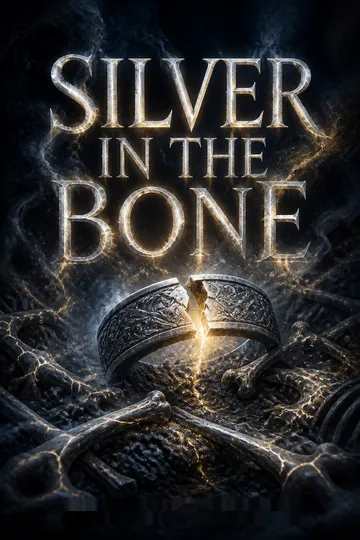
Silver in the Bone Series

About the Author




Download PDF
Download EPUB
.epub digital book format is ideal for reading ebooks on phones, tablets, and e-readers.








