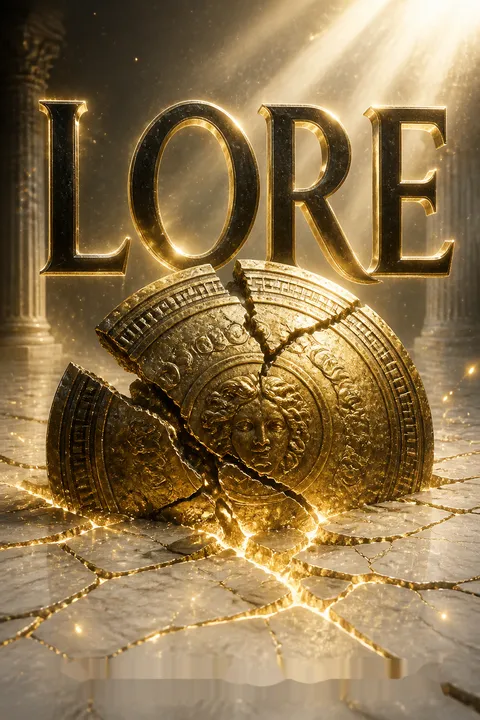


Plot Summary
Prologue
At the start of the new Agon, Aristos Kadmou7 wakes in Central Park as Wrath,7 the newly ascended god of war. His hunters have gathered the dead, including the old god Hermes,9 whom Wrath7 kills after demanding to know where a hidden object can be found.
He claims the name Wrath7 and sets his followers to work. The hunt has begun, but his search for something beyond victory already threatens a larger violence.
The opening makes divine succession look less like honor than a transfer of appetite. Wrath inherits power by killing, then immediately turns that power toward an undisclosed objective. The cleanup crew and the bloodline’s practiced secrecy place myth inside modern Manhattan, where ancient violence can be concealed with tarps and SUVs. Hermes’s death establishes the cost of withholding information, while Wrath’s declaration makes the Agon feel less like a contest with rules than a system ready to be captured by anyone ruthless enough to exploit it.
The Dead Boy Returns
For months, Lore1 has used illegal fights to numb the grief left by Gil’s10 death. During one match, a drunk opponent forces a kiss on her, and Lore1 beats him until the crowd pulls her away. Frankie sends her straight into another bout, this time against a masked hunter from the House of Achilles.
When he removes his mask, Lore1 recognizes Castor,2 her childhood partner,2 whom she believed had died seven years earlier. Her anger at his long absence eclipses her relief. Castor2 lets her win, then warns that someone is searching for something and may be looking for her. He leaves a hidden message on a cup, giving Lore1 a childhood game as a clue to where she can find him.
Lore’s fighting is both a coping strategy and a reenactment of the world that shaped her: danger becomes manageable when it can be met with a raised fist. The unwanted kiss breaks that control, showing how quickly the body can return to an old state of threat. Castor’s reappearance offers attachment and injury at once. Because he was presumed dead, his survival does not simply restore their bond; it makes her past feel deliberately withheld. The childhood clue invites her back into shared history, but the warning makes clear that nostalgia now carries practical danger.
Athena on the Stoop
Near dawn, Lore1 and her roommate, Miles Yoon,4 find Athena3 bleeding on the steps of Lore’s1 Harlem brownstone. Lore1 rejects Miles’s4 call to emergency services, fearing that hunters watch the hospitals, and hides Athena3 inside while scrubbing away her blood trail. Athena3 says Artemis12 betrayed her during the Awakening and that Wrath7 is hunting a hidden version of Zeus’s origin poem.
She also knows Lore’s1 family15 was murdered and claims to know who wielded the blade. Lore1 has spent years blaming Aristos Kadmou,7 the new Ares, for ordering those deaths. Athena3 offers to kill him if Lore1 binds her life to the goddess’s for the week. Lore1 accepts, tying her survival to the being she most distrusts.
The stoop turns Lore’s refuge into a threshold she cannot keep sealed. Her practical choices, hiding Athena and misleading Miles, are acts of protection, but they also make her responsible for drawing danger into the house. Athena’s bargain works because it converts grief into a task with a deadline. Lore does not suddenly trust the goddess; she calculates that a dangerous alliance may deliver the vengeance she has denied herself. The oath therefore exposes the difference between consent and freedom: Lore chooses, but under pressure created by an unjust world and a wound she cannot leave untouched.
The Hunt Explained
With Athena3 barely stable, Lore1 tells Miles4 what she has hidden: every seven years, nine gods become mortal for a week, and descendants of ancient heroes hunt them for their powers. Only a few bloodlines remain, and the House of Perseus is nearly extinct. Its history includes a woman who became the new Poseidon,14 a precedent the other houses feared enough to help destroy Lore’s1 family line.
Lore’s1 parents15 and sisters17 were later murdered, and she has spent years avoiding the hunt rather than seeking revenge. Miles4 understands that Lore’s1 assumed name and guarded habits were survival measures, not casual lies. He refuses to abandon her, while Lore1 realizes that the Agon has reached the home she built outside it.
The explanation makes the Agon a political institution, not merely a supernatural spectacle. Its rules preserve male inheritance, reward violence, and punish the possibility that a woman might claim power for herself. Lore’s family history shows how an exception becomes a threat to the system, then gets rewritten as shameful disorder. Miles’s presence provides a contrasting social logic: he is not trained to accept bloodline hierarchy as natural. His decision to stay does not make him a fighter, but it challenges Lore’s belief that protecting people requires keeping them ignorant and alone.
Apollo in Silk
Lore1 infiltrates Thetis House to find Castor2 and medical help for Athena.3 At a lavish ceremony, she discovers that Castor2 has become the new Apollo, though he had been a sick boy when she last saw him.
His archon, Philip Achilleos,19 presents children as future oracles and marriage offerings; Castor2 forbids the practice and rejects Philip’s19 demand that he manufacture disease for profit. Evander,5 Castor’s2 cousin5 and a Messenger, reports that Wrath7 killed Hermes9 and Tidebringer14 and has drawn the House of Theseus into his alliance.
Wrath7 then attacks through the house’s screens, crushing the hunters with fear and threatening Castor’s2 line. Philip19 later tries to assassinate Castor2 in his room. Lore1 stops him, and she and Castor2 escape as Artemis12 attacks.
Castor’s first public acts as Apollo define power through refusal. He rejects both the exploitation of children and the profitable manufacture of illness, directly opposing the bloodline’s expectation that a god should serve its appetite. Yet his ethical stance does not make him secure: Philip views him as a weak instrument, and Wrath sees him as a rival to recruit or destroy. Lore’s rescue places her between the old friendship and the new divine role. Their reunion becomes more than an emotional return; it tests whether care can survive inside institutions designed to turn every relationship into allegiance.
The Girl Who Ran
Lore’s1 history explains the cost of returning. As a child, she entered Achilles training with Castor,2 a chronically ill boy assigned as her partner. They endured the other trainees’ cruelty together, and Lore1 became fiercely protective when Castor’s2 cancer worsened. After her family15 was killed, the Odysseides sheltered her.
Their interim archon later tried to force himself on her and end her training; Lore1 killed him with a letter opener and fled. In France, she found Gil10 after he had been attacked and brought him back to New York, where he gave her a home. Castor2 says he searched for her during the years he lacked a body, but she had vanished from the gods’ sight. Their reunion carries both old devotion and the hurt of lost time.
Lore’s past links physical training to a more complicated education in power. The hunters taught her to endure pain, but the Odysseides’ archon taught her that skill cannot guarantee bodily autonomy when authority protects an abuser. Killing him is an act of self-preservation, not the glory she was raised to seek, and fleeing is another form of agency. Gil’s home appears to offer a different ethic of care, while Castor’s absence leaves a wound neither affection nor explanation can immediately close. Lore’s resistance to the Agon is rooted in experience, not cowardice.
A Sanctuary of Enemies
Lore1 brings Castor2 and Van5 to the brownstone, where Athena3 attacks Castor2 with a spear made from Lore’s1 broom. Lore1 forces them to stop and reports that Wrath7 has killed Hermes9 and Tidebringer.14 Castor2 heals Athena,3 who accepts his help only because she needs strength to confront Wrath.7 Van5 reveals that the Achillides have been devastated, with only twenty-seven hunters still free.
Miles4 offers an abandoned Brooklyn warehouse as shelter and volunteers to meet Van’s5 informant, despite Van’s5 distrust. Lore1 admits she has bound herself to Athena, who promised to kill Wrath.7 The group agrees to seek a truce with the Odysseides and use their knowledge to locate the missing poem, while Athena3 and Castor2 remain only uneasy allies.
The brownstone becomes a small experiment in cooperation across categories that the Agon insists must remain enemies: old gods, new gods, hunters, and an unblooded mortal. No one arrives without suspicion, but practical need forces each person to recognize another’s competence. Miles’s warehouse and willingness to meet the informant matter precisely because he lacks inherited status. Castor’s healing of Athena is also a moral choice, not merely a tactical one: he protects someone who may eventually oppose him. The alliance remains provisional, which makes trust an action repeatedly renewed rather than a feeling anyone can assume.
Ithaka House Falls
At Baron Hall, Lore’s1 former home, the group finds the Odysseides bound and being forced onto a bus. Wrath7 holds Heartkeeper,13 their new Aphrodite, and demands the code to a vault. He threatens the prisoners until several falsely claim to be Iro,6 Lore’s1 old friend, but one frightened hunter exposes her hiding place.
Lore1 remembers a second entrance and leads Athena3 through a tunnel into the vault. Castor’s2 blast breaks through the glass dome, scattering the Kadmides but giving Wrath7 cover to escape.
Lore1 reaches Iro6 too late to save her father,13 whose body Wrath7 has split open. Athena3 knocks Iro6 unconscious so they can flee. The rescue preserves Iro’s6 life, but leaves her grieving, suspicious of Castor,2 and bound to the bloodline she once served.
The attack turns the Agon’s abstract competition into a crisis of collective survival. Wrath uses loyalty as a weapon, forcing prisoners to watch one another weigh self-preservation against solidarity. Lore’s remembered tunnel gives her a concrete advantage, but Castor’s uncontrolled power changes the battle before she can reach Heartkeeper. The rescue is therefore neither victory nor failure: Iro lives, yet her father is gone and Wrath remains free. The scene also shows how quickly the old ritual language of honor collapses under coercion, while the more fragile act of saving one person becomes the only meaningful success available.
Gil’s Other Face
At the Frick, Lore1 finds the Reveler,11 the new Dionysus, injured and searching for something Hermes9 may have left behind. He denies killing the museum guards and tells Lore1 that Hermes9 had secretly protected her. The old god9 had taken the form of Gil,10 given Lore1 a feather amulet that hid her from other gods, and left her the brownstone.
The revelation makes Lore1 question whether their years of comfort were genuine or another divine manipulation. Before she can get more answers, Kadmides lionesses shoot the Reveler.11 Athena3 ends his suffering, angering Castor,2 who believes he could have healed him. Lore1 pursues the hunter who escaped and fights Belen,8 Wrath’s7 son,8 in Central Park, cutting off his thumbs rather than killing him.
Gil’s revelation destabilizes the distinction Lore has relied on between the violent mythic world and her chosen mortal life. The home that seemed to prove care could exist outside the Agon was also a concealment strategy, though that does not make the care automatically false. The Reveler’s death denies Lore a clean account of Hermes’s motives and sharpens the book’s concern with mixed intention. Her choice to maim Belen instead of kill him shows a shift in how she uses violence: she wants to injure the story his family tells about him, not grant him a heroic death.
The City Takes Fire
After Lore1 wounds Belen,8 Castor2 catches up with her and objects to letting him escape, warning that Wrath7 may retaliate against everyone around them. They argue, and Lore1 kisses Castor2 in a rush of anger and longing; Castor2 stops her, asking her to return to him when she means it. Belen8 then uses a drone to trigger an explosion near Rockefeller Center.
Lore1 jumps between the blast and Castor.2 Castor2 surrounds them with a barrier of power and holds back a collapsing slab, while Athena3 uses her strength to protect wounded bystanders. The attack leaves people dead and the city shaken. Lore1 blames herself for pursuing Belen,8 but Athena3 reframes the destruction as leverage that may make Wrath7 act rashly.
The explosion makes the cost of revenge visible beyond the people who chose to enter the Agon. Lore’s impulsive pursuit gives Belen an opening, and Castor’s rescue cannot undo the civilians caught in the blast. Their interrupted kiss follows the same pattern: feeling surges, then one of them insists on a more deliberate choice. Athena’s response is morally revealing. She treats catastrophe as strategic opportunity, while Lore remains troubled by those harmed. That difference foreshadows a deeper conflict over whether effectiveness alone can justify action.
The Pond Ambush
Artemis12 lures the group to Morningside Park by leaving Miles4 bound beside the pond. She attacks with dogs and controlled animals, forcing the others to follow her through the park. Castor2 tries to reach her for answers about Apollo’s death, but Artemis12 refuses to listen and fights him near the waterfall. Her footing gives way, and she falls to her death.
Before anyone can recover, Iro6 and Odysseides hunters arrive. Iro6 believes her bloodline needs a god and orders Castor’s2 death; one hunter shoots him through the heart. Lore1 kills the shooter and turns on Iro,6 but Castor2 rises again, alive. He condemns Lore’s1 willingness to kill and leaves her with Athena,3 who insists the two of them must continue without him.
The ambush brings three kinds of grief into one confined landscape: Artemis’s loss of Apollo, Iro’s loss of her father, and Lore’s fear of losing Castor. Each character turns grief into a different claim on justice. Artemis insists on personal vengeance, Iro chooses bloodline protection, and Lore acts on immediate rage. Castor’s survival unsettles the rules they thought governed gods and mortality, but it does not repair the trust damaged by his apparent death. His departure leaves Lore with the painful freedom to choose whether loyalty means following him or pursuing the task she promised Athena.
A Flooded Manhattan
As water surges through Manhattan, Lore1 and Athena3 follow Kadmides activity to River House, where they discover Tidebringer14 imprisoned underground. The new Poseidon says Wrath7 forced her to cause the flood and intends to use the city’s collapse to advance his plan.
She also warns that the Kadmides have moved dangerous materials through the tunnels. Athena3 questions Tidebringer,14 then kills her before Lore1 can learn more. The flood disables transport, power, and emergency services, pushing residents into shelters and leaving Manhattan isolated.
Lore1 understands that the devastation is not weather but a weapon. With the city’s civilians exposed and Castor2 gone, she and Athena3 continue tracking Wrath’s7 hunters, hoping to find a way to stop the next attack.
The flood expands the scale of the story from a hidden feud to a civic emergency. Manhattan’s ordinary systems, trains, lights, hospitals, become vulnerable infrastructure, and Lore reads their failure as a threat to people who never agreed to participate in the Agon. Tidebringer’s survival complicates the apparent certainty of the hunt’s reports, while Athena’s decision to kill her reveals how quickly strategy can erase a possible source of truth. Lore’s concern for the city is not abstract patriotism; it is grounded in the neighborhoods and people whose routines she knows.
The Shield in Hiding
A memory from the previous Agon reveals why Wrath7 wants Lore.1 At ten, she sneaked into the Kadmides’ hidden vault and stole the aegis, Zeus’s shield, then concealed it in a storm drain near the Phoenician restaurant. She had hoped the inheritance would persuade her parents to remain in the hunt. Instead, she returned home to find them and her two younger sisters murdered.
In the present, Iro6 explains that an old letter locates a fuller version of Zeus’s poem on the shield. Wrath7 believes Lore1 can retrieve or decipher it. Lore1 still assumes Aristos7 ordered her family’s deaths, unaware that Athena3 has been keeping the true story from her and steering her toward the aegis.
The theft binds Lore’s childhood wish for agency to the object that becomes the source of her family’s destruction. She took the shield not for power alone, but to prevent her parents from leaving a world she believed was her destiny. The choice is understandable and still consequential, which gives her guilt its painful complexity. The hidden poem turns a family heirloom into a political instrument: whoever controls its meaning may reshape the rules of the hunt. Lore’s desire to recover the aegis is therefore both personal reclamation and a dangerous return to the system she escaped.
Athena’s Confession
Athena3 finally tells Lore1 that she killed her parents15 and sisters17 to find the aegis. She had learned from Hermes9 that a child had taken the shield, followed the Perseous family, and tortured them for information after Lore1 hid it. Athena3 also admits that her alliance with Artemis12 was a deception and that she used Lore’s1 anger to draw her back toward the shield.
Lore1 attacks Athena,3 but the goddess breaks her hand and pins her leg with a spear. Believing the oath and her life are both lost, Lore1 pulls the weapon from her wound and stabs herself rather than let Athena3 claim the aegis. She collapses in the tunnel, but Hermes9 appears in the Underworld and guides her toward the boundary where Castor2 can reach her.
The revelation destroys Lore’s last stable account of her grief. She had assigned responsibility to Wrath because his violence fit the history she knew; Athena’s confession exposes how easily a victim’s search for justice can be redirected by someone exploiting that need. Lore’s self-stabbing is not triumph but refusal: she will not let either god turn the shield or her body into an instrument. Hermes’s appearance offers no easy absolution. It gives her just enough help to choose life again, while leaving the harm and her own difficult decisions intact.
The Mortal Who Stayed
Castor2 finds Lore1 barely alive and heals her, then listens as she admits she stole the aegis as a child and hid it in the drain beneath the Phoenician. He tells her what he remembers of Apollo: the old god, wounded and despairing, asked the dying boy for help. Lore1 returns to the restaurant with Castor2 and retrieves the shield.
Its hidden inscription gives the Agon’s missing final condition, involving a god remade whole and a fearsome conquest. Lore1 does not hand the shield to either Athena3 or Wrath.7 She uses its power to send Athena3 a signal, then joins Castor,2 Miles,4 Van,5 and Iro6 as they infer Wrath’s7 plan: sea fire is hidden beneath the Waldorf Astoria, ready to ignite the flooded tunnels.
Recovery here means more than physical healing. Lore finally tells Castor the truth she had withheld, and he answers with a truth of his own, establishing intimacy through reciprocal vulnerability rather than rescue alone. The aegis returns to her hands, but its meaning has changed: it is no longer proof that she can force her family to remain in the hunt. It is a choice she can withhold from both gods. The incomplete inscription preserves uncertainty, while the sea-fire threat makes the group’s next decision concrete and urgent.
The Last Conquest
Lore1 and Castor2 enter the flooded subway as Miles4 heads to warn people above and Van5 and Iro6 organize the remaining hunters. Wrath7 has dressed for a ritual and placed sea fire on a rail car. Athena3 appears to serve him, but the performance hides her own hunger for the aegis. Wrath7 kills his son Belen8 as the sacrifice that begins his plan to burn the city and remake the world.
Lore1 cuts off Wrath’s7 arm, then uses the aegis and her sword to defeat him without killing him. She offers Athena3 the shield and identifies what it truly demands: surrendering the possession she values most. Wrath7 poisons Lore,1 and Athena3 kills him, then gives Lore1 the dagger. Together they drive it through Athena’s3 heart, transferring her power to Lore.1
The climax forces Lore to distinguish victory from repetition. Killing Wrath would satisfy revenge but preserve the logic of succession; refusing to kill him denies him the heroic ending he expects. Athena’s willingness to sacrifice her attachment to the aegis is tested against the very desire that has governed her for centuries. Her choice does not erase her crimes, and Lore’s decision to help end her life is not forgiveness. It is a costly interruption of a cycle in which power survives by making each new claimant repeat the old violence.
Fire Beneath the City
As Athena3 dies, Lore1 inherits her power and feels herself beginning to ascend. She asks to remain long enough to stop the sea fire. Lore1 reaches the moving rail car, crushes its wheels, closes the leaking tank, and diverts the burning chemicals away from the tunnels beneath Grand Central.
Because water would feed the flames, she breaks open the ground and forces the fire and flood into a deep fissure, burying the burning tracks beneath stone. Castor2 reaches her as the station begins to collapse and pulls her back from the blaze. Lore’s1 power overwhelms her, but Castor2 kisses her and anchors her to the mortal world until she loses consciousness. The city survives, though the flood and explosion have left it badly damaged.
Lore’s new power becomes meaningful through its use, not its scale. She does not claim a throne or make the city submit; she spends her strength on a dangerous repair that gives other people a chance to live. Her choice to remain mortal in intention, even while ascending, echoes the care she learned from Gil and practiced with Miles. Castor’s role is not to command her or save the city for her, but to keep her connected to a world she is trying to protect. The scene makes attachment a form of grounding rather than weakness.
The Eighth Day
Lore1 wakes in the brownstone on Saturday to find Miles4 safe and her friends recovering. On the roof, she learns that Castor2 remembers Apollo’s final act: the old god placed the blade in the boy’s hand and chose to die, hoping to escape the endless hunt. Lore1 shares what Athena3 did, and the group faces the uncertain fate of the Agon.
Before midnight, she and Castor2 step away from their sleeping friends. They expect the divine power to take them, but as the eighth day begins, the power leaves both of them without pain. Castor’s2 eyes return to their ordinary dark color, and his heart beats like a mortal’s. Lore1 kisses him, then rejoins the people who have become her chosen family.
The ending resolves the book’s central question through relinquishment rather than conquest. Apollo and Athena each surrender power, though for different reasons and with very different moral records. Lore and Castor do not secure a promised eternal home or a complete account of what comes next; they receive the more modest gift they have wanted throughout the story, time together in ordinary bodies. The eighth day is significant because it lies outside the hunt’s schedule. Their return to mortality suggests that freedom is not a perfected life beyond consequence, but the ability to choose what kind of life to build.
Analysis
Lore1 is a story about the difference between inherited obligation and chosen responsibility. The Agon disguises an appetite for power as a noble contest: the bloodlines invoke heroic ancestry while reproducing gender hierarchy, coercion, and political violence. Lore’s1 desire for glory is not foolish; it is the language in which her family taught her to imagine belonging. Her gradual rejection of that language does not require her to deny her anger or abandon the dead. It asks her to distinguish justice from reenactment.
The book’s gods complicate any easy division between mortal innocence and divine corruption. Athena3 can defend a city and murder a family. Hermes9 can protect Lore1 while concealing his motives. Castor2 gains overwhelming power yet remains oriented toward healing. Their choices suggest that power intensifies existing values, but institutions shape which values are rewarded. The hunters’ world turns care into weakness and violence into proof of worth; Miles,4 Iro,6 and Van5 each offer partial alternatives by using knowledge, loyalty, or refusal in ways their inherited roles do not prescribe.
The aegis concentrates these tensions. It is a stolen family inheritance, a weapon, and a record of the rules governing the hunt. Lore’s1 relationship to it changes from a child’s attempt to keep her family in the world she knows, to an adult’s decision about what power should be allowed to do. Her refusal to kill Wrath7 for the satisfaction of vengeance matters because it interrupts the cycle of succession. The ending’s return to mortality gives that interruption emotional weight. Lore1 and Castor2 do not secure immortality or certainty. They choose finite life, friendship, love, and a city still capable of being rebuilt. The novel locates freedom not in escaping consequence, but in refusing to let old stories decide what one must do next.
Review Summary
Lore received mixed reviews, with an average rating of 3.75 out of 5. Many praised the unique blend of Greek mythology and modern-day setting, fast-paced action, and interesting premise. However, some found the plot confusing, characters underdeveloped, and world-building lacking. The romance received mixed reactions, with some enjoying the childhood friends-to-lovers trope while others found it forced. Critics appreciated the feminist themes and strong female lead but felt the book didn't fully live up to its potential. Overall, readers who enjoy Greek mythology and action-packed stories may find it entertaining.
People Also Read


Characters
Melora Perseous
The fighter who escapedKnown as Lore, Melora is the last mortal heir of the House of Perseus and a young woman shaped by combat, bereavement, and years of hiding. She protects herself with sarcasm and decisive action, but her instinct to fight can turn grief into a danger she cannot easily control. She wants freedom from the Agon, yet she also wants justice for her murdered family and feels the pull of the warrior identity she once cherished. Her relationships with Castor2 and Miles4 reveal different kinds of safety: a childhood bond rooted in shared struggle, and a chosen friendship grounded in ordinary care. Lore’s central conflict is not whether anger is justified, but whether she can use it without allowing it to define her.
Castor Achilleos
The healer turned godCastor is Lore’s1 childhood training partner, a gentle and perceptive boy whose serious illness once kept him close to his bed. He was raised among hunters who equated strength with physical prowess, but his instinct has always been to care for the vulnerable and avoid needless harm. His bond with Lore1 is built from shared training, private jokes, and mutual protection, though years of separation leave both uncertain about what they can still expect from each other. Even when he gains extraordinary power, Castor remains troubled by the possibility that strength will make him into someone he does not recognize. His healer’s instincts and reluctance to dominate distinguish him from the bloodline’s idea of a worthy leader.
Athena
The strategist in exileOne of the original gods, Athena is a strategist and warrior accustomed to treating emotion as a liability. Her centuries of exile have sharpened her intellect while deepening her fixation on divine purpose and her father’s approval. She sees people through their usefulness and potential, a habit that makes her both formidable and difficult to trust. Her interest in Lore1 is shaped by the young woman’s skill, rage, and connection to the Perseus line. Athena’s beliefs are not simple vanity: she sincerely identifies with wisdom, craft, and the defense of cities, even as her certainty can obscure the damage her choices cause. She embodies the tension between service to a purpose and obedience to a hierarchy.
Miles Yoon
Lore’s steady-hearted roommateMiles is Lore’s1 roommate and closest everyday friend, a thoughtful urban-planning student with a gift for reading the city and the people in it. He is not trained for the Agon, but he refuses to let that make him passive when Lore1 is in danger. His practical knowledge, humor, and willingness to help repeatedly solve problems the hunters overlook. Miles also draws boundaries: he wants to contribute, but he does not want others to decide that his lack of bloodline status makes him disposable. His loyalty is grounded in knowing Lore1 as a person rather than as an heir or fighter. The ordinary affection he brings into the story makes the stakes of the divine conflict painfully human.
Evander Achilleos
The watchful MessengerUsually called Van, Evander is Castor’s2 cousin2 and a Messenger for the Achillides, responsible for intelligence and communication between bloodlines. He is observant, controlled, and technically skilled, relying on surveillance tools and careful planning rather than physical combat. His prosthetic hand and his reluctance to fight have made him an uneasy fit in a culture that prizes warriors. Van’s loyalty to Castor2 is profound, but his suspicion of outsiders can make him dismissive, especially toward Miles4. Beneath that guardedness is a person who has spent years trying to protect the few relationships he trusts.
Iro Odysseos
The heir with divided loyaltiesIro is Lore’s1 former closest friend and a skilled member of the Odysseides. She once offered Lore1 companionship and protection after the murder of her family15, and the two girls learned to rely on each other inside a rigid household. Iro believes deeply in her bloodline’s traditions, including honor and the pursuit of glory, but she is also capable of seeing the system’s costs. Her conflict comes from trying to reconcile loyalty to the people who raised her with the knowledge that those people have protected cruelty. She is disciplined and controlled, yet her bond with Lore1 exposes the grief and tenderness beneath that composure.
Aristos Kadmou
The ruthless war leaderAristos is the former archon of the Kadmides, a calculating leader whose ambition is inseparable from his belief that power proves a person’s worth. He treats alliances as transactions and expects people, especially women and girls, to accept the futures he assigns them. His history with Lore’s1 family15 gives their conflict a personal and political dimension. As a hunter, he commands loyalty through wealth, fear, and the promise of glory; as an enemy, he knows how to make cruelty feel like policy. Aristos’s worldview is rooted in domination, but he is not merely impulsive. He understands that institutions and customs can make brutality appear legitimate.
Belen Kadmou
The favored sonBelen is Aristos’s7 son7, raised close to power but never entirely secure in his place within the Kadmides. He shares his father’s7 confidence and capacity for cruelty, while also carrying the burden of proving himself worthy of the attention he receives. His relationship with Lore1 turns their inherited rivalry into a direct personal contest. Belen is a product of a culture that teaches boys to measure themselves through dominance, yet his dependence on his father’s7 approval makes that confidence more fragile than it appears.
Hermes
The elusive old godHermes is an original god associated with travel, language, cunning, and the passage of the dead. He is difficult to track and even harder to read, relying on disguise and misdirection where other gods use force. His old connections to the other immortals complicate the alliances forming during the hunt. Hermes’s actions matter even when he is absent, because the traces he leaves behind alter what Lore1 and the other characters believe about their past.
Gilbert Merrit
Lore’s generous landlordGil, as Lore1 knows him, is an elderly professor who gives her work, a home, and the kind of steady companionship she has rarely received from adults. He is humorous, patient, and attentive to the small routines that make a house feel safe. His relationship with Lore1 grows from a practical arrangement into something closer to family. He helps her build a life in Harlem and encourages her to imagine a future beyond survival, making him a powerful presence in her memories and choices.
The Reveler
The wounded DionysusThe Reveler is the current bearer of Dionysus’s power and one of the few surviving new gods. He is volatile, secretive, and burdened by a history of choices he does not know how to undo. His alliance with Wrath7 has fractured, but he is not eager to trust the people now asking for his help. He uses bluster and intoxication to cover a deeper exhaustion with the hunt. His knowledge of Hermes9 and the hidden poem makes him valuable, while his refusal to become anyone’s tool keeps him unpredictable.
Artemis
The relentless huntressAn original goddess of the wilderness and the hunt, Artemis is fiercely protective of her twin brother and accustomed to moving through the world beyond ordinary sight. Her independence has hardened into isolation, and grief narrows her attention toward vengeance. She trusts few people, including her sister Athena3, and reacts to perceived betrayal with punishing force. Artemis’s command over animals gives her an uncanny reach even inside a modern city, where parks and streets become extensions of her hunting ground.
Heartkeeper
The Odysseides’ divine patronHeartkeeper is the new Aphrodite and former archon of the Odysseides. His authority rests on a complicated mixture of parental attachment and the bloodline’s demand for obedience. His daughter Iro6 looks to him as both family and protector, making their relationship central to her sense of duty.
Tidebringer
The exiled PoseidonTidebringer is the new Poseidon and a distant relative of Lore1, once a mortal woman who challenged the bloodlines’ male succession rules. The hunters remember her as a threat to their order, but her own choices are driven by survival and the desire to act on her own terms. Her control over water gives her immense power, while her history makes her a living reminder of what the House of Perseus lost.
Demos Perseous
Lore’s principled fatherDemos is Lore’s1 father1 and the former archon of the Perseides. He tries to balance the pride of his bloodline with the practical need to protect his wife16 and daughters1. His tenderness toward Lore1 coexists with a belief that leaving the hunt may be wiser than pursuing inherited glory.
Helena Perseous
Lore’s protective motherHelena was born into the House of Odysseus and chose a life with Demos15 and their daughters1. She encourages Lore’s1 courage but understands that strength does not make a child invulnerable. Her care for the family offers a gentler model of loyalty than the bloodlines’ demanding code.
Olympia Perseous
Lore’s spirited sisterOlympia, called Pia, is Lore’s1 younger sister1. Artistic and affectionate, she brings playfulness into a household overshadowed by the hunters’ expectations. Lore1 feels protective of her, but Olympia also tries to soothe Lore1 when anger takes over.
Damara Perseous
The youngest PerseousDamara is Lore’s1 infant sister, small enough to be carried and cared for by the whole family. Lore1 whispers secrets to her and finds tenderness in her presence, a quiet counterweight to the harshness of hunter training.
Philip Achilleos
The old Achilleides archonPhilip is the archon of the Achillides and a relative of Castor2 and Van5. He values hierarchy, tradition, and control, and sees the family’s god as a means to secure its position. His contempt for those he considers weak makes him a source of conflict within his own house.
Cleon Achilleos
Castor’s devoted fatherCleon is Castor’s2 father2 and the longtime property manager of Thetis House. He loves his son2 but is often powerless against the bloodline’s authority and Castor’s2 illness. His grief and tenderness reveal how much the hunters’ rigid expectations cost the families inside them.
Plot Devices
The Agon
A repeating divine huntEvery seven years, the nine gods become mortal for a week, and descendants of ancient heroes hunt them. A hunter who kills a god can take that god’s power and immortality, then become a target in a later cycle. The bloodlines treat the contest as a source of status and wealth, but its rules also enforce hierarchy, reward violence, and preserve the hunters’ dependence on the hunt. Its fixed week creates urgency: alliances, rescues, and betrayals must unfold before the gods regain their power. The Agon is both the story’s central danger and the institution the characters must question.
The Aegis
A stolen inheritance and weaponThe aegis is Zeus’s shield, bearing the image of Medusa and belonging by inheritance to the House of Perseus. It can inspire terror and unleash immense force, making it valuable in battle as well as a symbol of the family’s lost standing. Lore’s1 childhood theft and concealment of the shield connect her private grief to the broader struggle over the Agon. A hidden inscription on its inner lining contains a fuller version of Zeus’s instructions. The shield therefore serves as a physical inheritance, a source of dangerous knowledge, and a test of whether Lore1 will treat power as something to possess or something she can choose how to use.
The Hidden Poem
A riddle inside the rulesThe hunters possess an incomplete account of Zeus’s command that created the Agon. Wrath7 searches for another version, believing it explains how the hunt can end and how its victor may gain greater power. Iro6 learns that a fuller text was recorded on the aegis, hidden beneath its lining. Its final instructions are open to interpretation, forcing the characters to connect ritual, sacrifice, and divine purpose rather than trust a convenient reading. The poem drives the search for Lore1 and the shield, but it also makes every alliance unstable because no one knows what the information will authorize.
The Feather Amulet
A charm that conceals LoreA gold feather necklace Lore1 received from Gil10 functions as an averting charm, hiding her from the sight of gods. Its protection explains why she can live in Manhattan without being found and why Castor2 cannot locate her during the years he is without a body. The charm’s ordinary appearance allows it to pass as a keepsake, while its connection to Lore’s1 safety is only understood later. When its protection ends, gods and hunters can see her again, and her carefully built refuge becomes vulnerable. It also carries emotional meaning for Lore1, who associates it with Gil’s10 kindness and the life she believed she had made for herself.
Oaths and Binding
Promises with mortal consequencesThe world of the bloodlines treats sworn promises as forces capable of binding life and death. Lore1 agrees to protect Athena3 through the hunt in exchange for the goddess’s promise to kill Wrath7, accepting a risk that reaches beyond ordinary alliance. The hunters also rely on old rules governing inter-house violence and the role of Messengers. These vows make loyalty legible, but they can also trap people in bargains struck under duress. As the story progresses, the characters learn that an oath’s force does not guarantee its moral truth, and that a promise cannot replace judgment about the person who made it.
FAQ
Synopsis & Basic Details
What is Lore about?
- Deadly game of gods: Every seven years, nine Greek gods become mortal and are hunted by descendants of ancient heroes in a brutal competition called the Agon.
- Mortal caught in the middle: Lore Perseous, the last of her bloodline, is drawn back into this world when she encounters a wounded goddess, forcing her to confront her past and make dangerous alliances.
- Quest for power and revenge: The story follows Lore as she navigates the treacherous world of the Agon, seeking revenge for her family's murder while trying to survive the deadly game.
Why should I read Lore?
- Unique blend of genres: Combines elements of Greek mythology, urban fantasy, and action-packed thriller, creating a fresh and engaging reading experience.
- Complex characters: Features morally gray characters with compelling backstories and motivations, making their choices and actions unpredictable.
- High-stakes plot: The deadly game of the Agon and the constant threat of betrayal create a suspenseful and thrilling narrative that keeps readers on the edge of their seats.
What is the background of Lore?
- Ancient Greek mythology: The story is rooted in Greek mythology, drawing on the stories of gods, heroes, and monsters, but with a modern twist.
- The Agon's origins: The Agon was created by Zeus to punish nine gods who tried to overthrow him, forcing them to walk as mortals every seven years and be hunted by their descendants.
- Bloodlines and legacies: The bloodlines of ancient heroes are central to the story, each with their own unique history, traditions, and motivations for participating in the Agon.
What are the most memorable quotes in Lore?
- "The old gods must die to allow the new to rise.": This quote, spoken by the new Ares, highlights the cyclical nature of power and the brutal reality of the Agon.
- "A feather fallen from a wing is not lost, but free.": This quote, given to Lore by Gil, serves as a reminder of hope and resilience in the face of loss and adversity.
- "You still fight like a Fury.": Castor's words to Lore reveal her inner strength and the fierce warrior she has always been, despite her attempts to suppress it.
What writing style, narrative choices, and literary techniques does Alexandra Bracken use?
- Fast-paced and action-oriented: Bracken employs a dynamic writing style with vivid descriptions and intense action sequences, keeping the reader engaged and invested in the story.
- Multiple perspectives: The story is told from Lore's point of view, but also incorporates the perspectives of other characters, providing a more nuanced understanding of the complex events.
- Foreshadowing and symbolism: Bracken uses subtle foreshadowing and recurring symbols to create a sense of unease and anticipation, hinting at future events and deeper themes.
Hidden Details & Subtle Connections
What are some minor details that add significant meaning?
- The color blue: The sky-blue tunics worn by the gods in their mortal forms are a symbol of their vulnerability and the loss of their divine power, contrasting with the crimson of the hunters.
- The use of masks: The hunters' masks, each bearing the visage of a serpent, a horse, or a lion, represent their bloodlines and the ancient oaths they have sworn, but also hide their true identities and intentions.
- The city as a character: The descriptions of New York City, with its "electric, restless feel," reflect the chaotic and dangerous nature of the Agon, as well as Lore's deep connection to her home.
What are some subtle foreshadowing and callbacks?
- The origin poem: The poem, which is recited at the beginning of the book, foreshadows the events of the Agon and hints at the true nature of the hunt and the power it offers.
- The game of apodidraskinda: The childhood game of hide-and-seek that Lore and Castor played is a callback to their past and a foreshadowing of their reunion and the challenges they will face.
- The feather necklace: The necklace, given to Lore by Gil, is a recurring symbol of hope and freedom, but also a reminder of the loss and betrayal she has experienced.
What are some unexpected character connections?
- Gil and Hermes: The revelation that Gil was actually Hermes in disguise is a shocking twist that recontextualizes Lore's past and highlights the manipulative nature of the gods.
- Lore and Tidebringer: The fact that Lore is the last of the Perseides and Tidebringer was once part of that bloodline creates a complex connection between them, despite their opposing roles in the Agon.
- Castor and Apollo: The reveal that Castor is the new Apollo is a surprising twist that forces him to grapple with his identity and the expectations of his bloodline.
Who are the most significant supporting characters?
- Miles: Lore's roommate and friend, provides a grounded perspective and a source of emotional support, highlighting the importance of human connections in the face of divine conflict.
- Van: Castor's cousin and a messenger of the Achillides, is a complex character with his own hidden motives and a deep understanding of the Agon's political landscape.
- Iro: Lore's former friend and a member of the House of Odysseus, serves as a reminder of the past and the complex relationships that exist between the bloodlines.
Psychological, Emotional, & Relational Analysis
What are some unspoken motivations of the characters?
- Lore's desire for control: Lore's actions are driven by a need to control her own fate and to protect those she cares about, stemming from her past trauma and the loss of her family.
- Athena's need for validation: Athena's actions are motivated by a desire to prove her worth to her father and to reclaim her place among the gods, highlighting her deep-seated insecurities.
- Castor's struggle with identity: Castor's actions are driven by a desire to reconcile his mortal past with his new identity as a god, as well as his need to protect Lore.
What psychological complexities do the characters exhibit?
- Lore's trauma and grief: Lore's past trauma and grief over her family's murder manifest in her fierce independence, her distrust of others, and her need for control.
- Athena's pride and insecurity: Athena's pride and her need to be seen as powerful and wise mask her deep-seated insecurities and her fear of being rejected by her father.
- Castor's self-doubt and guilt: Castor's struggle with his new identity as a god is complicated by his self-doubt and guilt over his past illness and his inability to save his father.
What are the major emotional turning points?
- Lore's alliance with Athena: Lore's decision to ally with Athena is a major emotional turning point, as she grapples with her desire for revenge and her need for protection.
- Castor's transformation: Castor's ascension to godhood is a major emotional turning point, as he struggles with his new identity and the expectations of his bloodline.
- Lore's betrayal by Hermes: The revelation that Gil was actually Hermes in disguise is a major emotional turning point, as it shatters Lore's trust and forces her to confront her past.
How do relationship dynamics evolve?
- Lore and Castor: Their relationship evolves from a childhood friendship to a complex bond of trust, loyalty, and unspoken feelings, complicated by their different roles in the Agon.
- Lore and Athena: Their relationship evolves from a reluctant alliance to a complex partnership, marked by mutual respect and a shared desire to end the Agon.
- Lore and Miles: Their relationship evolves from a comfortable friendship to a deeper bond of loyalty and support, as Miles becomes more involved in the dangerous world of the Agon.
Interpretation & Debate
Which parts of the story remain ambiguous or open-ended?
- The true nature of the Agon: The true purpose of the Agon and the motivations of Zeus remain ambiguous, leaving readers to question the nature of power and the role of the gods.
- The new version of the origin poem: The existence and content of the new version of the origin poem remain a mystery, leaving readers to speculate about its true meaning and significance.
- The future of the gods and mortals: The ending of the Agon leaves the future of the gods and mortals uncertain, raising questions about their ability to coexist and the potential for future conflicts.
What are some debatable, controversial scenes or moments in Lore?
- Lore's decision to ally with Athena: Lore's decision to ally with Athena is controversial, as it puts her in a dangerous position and forces her to trust a goddess who has a history of betrayal.
- Castor's ascension to godhood: Castor's ascension to godhood is controversial, as it forces him to grapple with his identity and the expectations of his bloodline, and raises questions about the nature of power and destiny.
- Athena's actions at the end of the book: Athena's actions at the end of the book are controversial, as she betrays Lore and reveals her true nature as a ruthless and power-hungry goddess.
Lore Ending Explained: How It Ends & What It Means
- Lore's choice of mortality: Lore's decision to reject godhood and embrace her mortality is a powerful statement about the importance of human agency and self-determination.
- The end of the Agon: The end of the Agon marks a turning point in the story, as the cycle of violence and rebirth is broken, leaving the future of the gods and mortals uncertain.
- The power of choice: The ending of Lore emphasizes the power of choice and the importance of making decisions based on one's own values and desires, rather than succumbing to fate or external pressures.
About the Author



Download PDF
Download EPUB
.epub digital book format is ideal for reading ebooks on phones, tablets, and e-readers.








