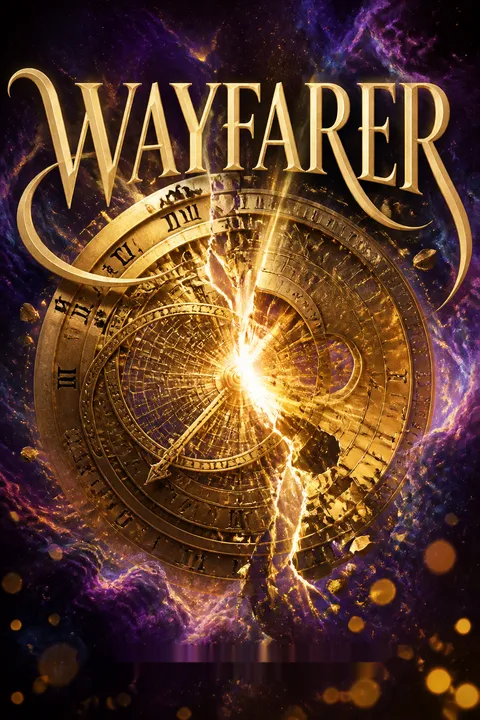


Plot Summary
Prologue
In 1932 London, young Rose Linden hides behind a bookcase while masked intruders murder her parents and search their home for the astrolabe. When Cyrus Ironwood arrives, he attacks her father’s body and orders his men to remove both parents.
Rose slips out through the back of the house and follows Ironwood’s vehicle by bicycle, carrying the knowledge of where the bodies are taken. The child who had been taught to stay still turns her grief into a private vow: one day, she will make Ironwood pay.
Rose’s first act of resistance is not a battle but a choice about what to remember. Her parents teach her to hide so she can survive; after witnessing their deaths, she converts that discipline into a promise of future action. The prologue also distinguishes Ironwood’s violence from the masked intruders’ search: he arrives after the murders and still chooses to brutalize the dead. That image introduces the story’s central moral problem. Power does not merely alter history; it trains people to treat other lives as material they can use, erase, or punish.
Texas Passage, Broken Girl
After the astrolabe is taken in Damascus, Etta is hurled through a passage and wakes alone in the Texas desert, badly burned and unable to stand. Julian Ironwood, a restless young man traveling with the Thorns, recognizes her and carries her to their refuge in earthquake-damaged San Francisco. When she wakes, he explains that she has been unconscious for days and that the altered timeline has orphaned them both from their natural years.
Etta learns she is in 1906, not the future she remembers, and that Nicholas is missing. Still injured, she tries to escape through the window, but the scaffolding gives way. Julian catches her and brings her back inside, where his name makes her realize she has met Nicholas’s supposedly dead brother.
Etta’s displacement is both physical and relational: the passage removes her from her year, while the missing Nicholas deprives her of the trusted partner who helped her interpret danger. Julian’s rescue gives her a foothold, but not security. She knows he belongs to the Ironwood family and that the Thorns possess something she needs, so she treats his kindness as a possible tactic. Her attempt to climb away, despite a shattered shoulder, shows how survival has become a demand for control. The scene establishes the book’s recurring tension between accepting help and fearing the debt or danger attached to it.
Nassau’s Vanishing Letter
Meanwhile, Nicholas waits in Nassau with Sophia Ironwood, whose damaged eye and worsening distrust have made their partnership brittle. Rose’s Linden guardian appears without her and delivers a sealed letter, but a disguised thief steals it during the tavern brawl Sophia starts by firing a pistol.
Nicholas and Sophia track the thief to their camp and discover Li Min, a young mercenary who has already taken their food and supplies. Li Min agrees to return the letter if Nicholas explains its unusual code and Sophia grants her a kiss.
Nicholas refuses to reveal the Linden cipher, but decodes the message aloud: Rose cannot meet them and directs them to seek the Belladonna. Sophia recognizes the name as a powerful broker of secrets and lost objects, giving the pair a new route forward.
The Nassau episode turns the pair’s quarrel into a practical test of what each is willing to risk. Nicholas protects Rose’s code even when revealing it would save time; Sophia uses force, then accepts an intimate bargain she does not want, because she believes the information may matter. Li Min’s terms resist the assumption that men automatically control the exchange. The stolen letter does not simply provide a clue. It introduces a world where private knowledge has a price and where trust must be negotiated under pressure. Nicholas’s sense of honor and Sophia’s instinct for survival remain opposed, but both now depend on the same outsider.
The Father in Ruins
At the San Francisco refuge, Etta learns that Julian once traveled with Nicholas and that his presumed death came from a timeline shift. She punches him when she understands that Nicholas mourned him for years, then refuses to be treated as a captive. Her escape brings her face to face with Henry Hemlock, the composed leader of the Thorns, who recognizes her and says he is her father.
Henry returns an earring that belonged to Etta’s mother and identifies the matching necklace he gave Rose, making his claim difficult to dismiss. He also tells Etta that the Thorns do not have the astrolabe. His welcome is strained by suspicion, but he offers her safety and a chance to understand why Ironwood is hunting her.
Etta’s anger at Julian is more than outrage at an old deception. She hears his survival as evidence that Nicholas’s suffering could have been prevented, and acts before she has learned the full history. Henry, by contrast, offers recognition through objects and memory rather than demanding immediate affection. The earring lets Etta test his claim without surrendering her judgment. Her father’s presence unsettles the story she has told herself about family, but does not repair the absence that shaped her. The scene makes kinship a question of conduct: a title can be asserted in an instant, while trust must be earned through attention.
A Tsar’s Borrowed Future
Henry shows Etta a San Francisco spared from the devastating fires she remembers, then explains how Ironwood’s intervention in the Russo-Japanese War changed later history. The Thorns believe the original timeline can be restored by destroying the astrolabe, though doing so could cost them their way of traveling. Etta chooses to join Henry in Russia rather than remain sheltered.
In Petrograd, she sees the human scale of the history Henry describes when he introduces her to Tsar Nicholas II, a friend whose fate is approaching. At the tsar’s request, Etta plays a violin concerto with Henry at the piano. The music gives her a moment of shared joy with her father, and she begins to imagine a life beyond the future she lost.
This section shifts Etta’s understanding of history from a sequence of facts to a field of consequences. Henry links a single diplomatic choice to later disasters in San Francisco, asking her to see ordinary lives inside the grand machinery of cause and effect. Yet his argument for restoring the timeline is not abstract to Etta: she meets a living tsar and watches Henry’s affection for him. Playing together gives father and daughter a form of connection that does not rely on confession or ancestry. Etta’s choice to travel is therefore both political and intimate. She wants to help repair history, but also to discover who she can become without her old ambitions.
A Ring With Teeth
In Prague, Nicholas and Sophia enter the Belladonna’s shop seeking the last common year and information about the Thorns. The Belladonna confirms that the group has recently held the astrolabe, then offers answers in exchange for a future favor. Nicholas asks whether the Thorns still possess it and learns they were last reported in San Francisco.
He accepts the bargain before knowing what task she will demand. A gold ring tightens around his finger and begins poisoning him when the Belladonna names her price: Nicholas must kill Cyrus Ironwood. He refuses to accept murder as a simple debt, but the ring makes refusal a sentence of its own. Outside, a revolution shakes the city and shifts the timeline again.
Nicholas’s decision grows from urgency, not appetite for power. He believes every delay reduces Etta’s chance of survival, so he accepts an agreement without securing its terms. The Belladonna turns his own ethics into leverage: the man who prizes consent and honorable promises is bound by a contract designed to exploit haste. The ring makes the cost bodily, not metaphorical, and therefore impossible to debate away. Yet his moral resistance remains real. He does not become willing to kill merely because the task has been assigned. The scene begins his central struggle: whether survival can be separated from the values that make a life his own.
Carthage’s False Welcome
Following a route through several passages, Nicholas and Sophia reach besieged Carthage in 148 B.C. Black-cloaked fighters armed with curved blades attack them near the harbor, forcing them to flee into the city. Remus Jacaranda, an elderly traveler punished by Ironwood with exile to Carthage, offers shelter and promises information.
Nicholas notices that Remus’s healer husband is absent and that a physician’s bag has been left behind, but he does not act quickly enough. Remus drugs Sophia with poisonous tea and admits he hopes to regain Ironwood’s favor by capturing them. Nicholas avoids drinking, knocks Remus unconscious, and carries the paralyzed Sophia toward an escape passage as Ironwood’s men close in.
Remus’s betrayal works because he offers the exact things the travelers lack: rest, food, and a route out of danger. Nicholas detects inconsistencies but is too depleted to convert suspicion into action. His failure is not a lack of intelligence; it is the cost of sustained urgency, which narrows attention until a warning can be seen but not interpreted. Sophia’s poisoning makes that cost immediate and forces Nicholas into care he has not yet learned to offer freely. The siege setting sharpens the choice: the travelers move through a city already subjected to military coercion, while their own secret war repeats its logic on a smaller scale.
A Death Notice in Rome
Li Min leads the wounded pair into a hidden chamber beneath the Vatican, where she treats Sophia and stitches Nicholas’s shoulder. When the attackers reach the tombs, Li Min reveals that she was stolen as a child and trained among the Shadows, then escaped.
Their pursuers serve an ancient traveler who seeks the astrolabe. Nicholas and Sophia fight their way through the necropolis, and Nicholas glimpses the terrifying figure behind the Shadows before escaping.
In the Vatican above, Li Min receives a report that Etta died in Texas in 1905 from wounds inflicted by Ironwood’s guardians. Nicholas cannot reconcile the notice with the matching earring found nearby, but the report drives him toward Cyrus, believing that killing Ironwood may be his only chance to reach the truth.
The Vatican joins two kinds of buried history: family records erased by Ironwood and the literal tombs where the fugitives hide. Li Min’s account gives the old children’s warning about the Shadows a material source, while her own survival contradicts the idea that her past must determine her role. Nicholas’s response to Etta’s death notice is less acceptance than a desperate attempt to make the loss actionable. He turns toward vengeance because uncertainty is harder to bear than a terrible answer. The earring resists that conclusion, but not strongly enough to restore hope. Knowledge here does not settle reality; it multiplies the possible explanations Nicholas must endure.
Heir to Ironwood’s House
In the New York of 1776, Nicholas confronts Cyrus in the house where he was raised as a servant. Cyrus gives him Etta’s bloodied clothes as proof of her death, then offers him the place of heir and a chance to help recover the astrolabe at the Belladonna’s auction. Cyrus explains that destroying the device may restore the original timeline but could also close every passage forever.
Nicholas sees that the old man wants the astrolabe to save his first wife, not to end its power. With the poison in his ring worsening, Nicholas pretends to accept the heirship so he can reach the auction and destroy the device himself. He secretly tells Li Min and Sophia to prepare for the journey.
The childhood house makes Nicholas’s choice inseparable from his history of coercion. Cyrus offers the recognition Nicholas once wanted, but only after converting him into a tool for a new plan. The bloodied clothes intensify the temptation to accept the promise of restoring Etta, while the warning about closed passages complicates the Thorns’ own solution. Nicholas’s apparent surrender is therefore an act of strategy, but also a dangerous intimacy with the authority he has resisted. He must imitate obedience without letting the old man define what obedience means. His plan remains morally unstable: he intends to end the system, but has not yet accepted what that ending will cost others.
Petrograd Explodes
At dinner in the Winter Palace, a waiter hurls an explosive bottle toward the tsar’s table and shouts a revolutionary slogan. Henry throws himself over Etta, shielding her from the blast, while the floor collapses and the tsar, Winifred, and Jenkins disappear from sight.
Etta survives with serious injuries and learns that the assassin was an Ironwood agent. In the confusion, Henry’s words make her believe Rose helped cause Alice’s death. Etta flees with Julian as revolutionaries seize the palace.
The passage carries them not to the New York she remembers but to a city devastated by atomic attacks. Central Powers have struck New York, Los Angeles, and Washington, turning Ironwood’s attempt to redirect history into a catastrophe on a scale Etta can hardly comprehend.
The attack destroys the protective fiction that the Thorns can manage history from a safe distance. Etta sees a political act become bodily ruin in seconds, then learns the altered timeline has produced a disaster beyond anyone’s control. Her father saves her, but the blast also makes their new bond feel precarious. The apparent revelation about Rose collapses Etta’s remaining defenses against anger, while the ruined city gives that anger a public object. She no longer thinks only about recovering her own life. The people killed by the changes are not historical abstractions; their absence surrounds her as she moves through the wreckage.
The Hospital’s Separate Lines
At an emergency camp in New Jersey, Etta and Julian find survivors treated according to racist segregation even amid the mass casualties. Julian cannot understand why Black patients wait outside while beds remain empty; Etta forces him to face how privilege has shielded him from suffering.
They find Julian’s former nanny, Octavia Ironwood, dying from burns. She tells Julian that Cyrus has traveled to obtain gold for an auction and warns that the Shadows are real.
After Octavia dies, Julian grieves instead of fleeing, and the pair understand that the Belladonna may be selling the astrolabe. Etta chooses to pursue the auction with him. Her purpose shifts from recovering her old future to preventing Ironwood from causing another historical catastrophe.
The hospital makes Julian confront a social order he has experienced as convenient background. Etta does not let him treat segregation as a mystery; she connects it to the same structures that denied Nicholas respect within his own family. Octavia’s death gives Julian a moment of care that he cannot turn into a joke, and her warning gives the grief a direction. Etta, meanwhile, sees that responsibility cannot stop at condemning Ironwood. She must decide what to do with the astrolabe before he reaches it. The episode binds personal awakening to political attention: compassion begins when suffering is no longer kept safely outside one’s field of vision.
Iceland’s Divided Company
Near the Icelandic coast, Etta and Julian watch Nicholas arrive with Cyrus and Ironwood’s men to collect gold. Before Etta can reach him, Sophia intercepts her. Julian’s survival shocks Sophia, while Etta’s appearance exposes the false report of her death.
Li Min admits Henry hired her to track the astrolabe and keep Etta and Nicholas apart when she judged it safer. Sophia, still furious over her injuries and Li Min’s deception, tells Etta that Nicholas has willingly become Ironwood’s heir and never searched for her.
Etta rejects the claim but learns from Sophia that destroying the astrolabe could seal all passages and strand families in different centuries. She and Julian take gold from the cache, deciding to attend the auction and delay destruction until they know the full cost.
The Iceland encounter makes information itself the battlefield. Li Min’s deception was meant to protect Etta, but it repeats the paternal habit of deciding what Etta can safely know. Sophia weaponizes a plausible lie because she fears Nicholas will sacrifice himself, yet the same lie threatens Etta’s trust in him. Etta’s response is not to accept either woman’s account uncritically. She adjusts her plan around the newly revealed cost of destroying the astrolabe. Her choice to preserve the device temporarily is an ethical pause, not a retreat from responsibility. The group is divided by secrecy, but each character’s concealment grows from a different fear.
Found Beneath the Masks
At the Kurama mountain auction, Nicholas enters disguised among Ironwood’s bidders, carrying the ring’s poison and hiding how close he is to collapse. Sophia and Li Min have kept him on his feet, while Etta and Julian arrive with the required gold.
Nicholas mistakes the masked pair for attackers and lunges to protect Sophia, but Etta pulls off her mask. Their reunion is joyful and immediately frightening: she can feel his weakness, and he admits that he cannot stay with her.
Etta says she will not destroy the astrolabe, because the passages may be their only way to reunite separated families. Nicholas believes the travelers’ power must end. They kiss, disagree, and part as the auction begins, each determined to act before the other can be lost.
The reunion offers emotional relief without resolving the moral conflict that has kept the pair apart. Etta recognizes Nicholas’s physical decline before he explains it, because their intimacy is built on attentive knowledge rather than idealized romance. Their disagreement is equally intimate: each understands what the other is trying to protect, yet neither can consent to the other’s cost. Etta fears permanent separation; Nicholas fears another cycle of historical violence. The auction’s masks literalize their divided understanding. They can identify one another, but they cannot yet see the full bargain each has made. Love becomes a reason to argue, not an excuse to avoid the argument.
The Auction Burns
The Shadows attack the auction, killing bidders as their ancient master appears to claim the astrolabe. The Belladonna recognizes him as her brother, and Etta realizes Rose’s childhood visions were not delusions. Henry reaches the fight, and Rose arrives to confront Cyrus. She stabs him, but the ancient traveler cuts her throat; Li Min helps keep Rose alive.
Etta wounds the ancient traveler with fire, while Nicholas finds the astrolabe in the forest. Its visions tempt him with the life he wants, but he drives his dagger through its core. The device breaks, the timeline resets, and the passages close. Nicholas and Etta are torn apart once more as the survivors are scattered into their natural years.
The climax brings the book’s competing explanations into collision. Rose’s trauma was real, but so was the danger she described; treating her as merely unstable allowed the Thorns to overlook a threat that had shaped her life. Cyrus’s death does not end the struggle, because the deeper source of violence is the power everyone has tried to possess. Nicholas destroys the astrolabe while its visions offer him precisely what he longs for, making the act a refusal of personal rescue at collective expense. Yet the cost is not clean or abstract. The passages close, and love is separated again. The choice prevents one kind of domination while leaving grief behind.
A Passage in His Hand
Nicholas wakes in 1776 with a burned mark shaped like the astrolabe across his palm and finds the Belladonna’s ring gone. Captain Hall discovers him, explains that the passages have closed, and brings him back to the ship.
A letter from the Belladonna reveals that destroying the master astrolabe transferred its power to Nicholas, though it did not make him invulnerable. Rather than use that power only to reach Etta, Nicholas first goes back to save his mother and begins searching for the scattered travelers.
Months later, Etta performs at Carnegie Hall in the altered present. Nicholas arrives with Henry and Rose, and explains that Li Min helped save Rose and that he found their family. Etta and Nicholas reunite, then leave together to reconnect the survivors.
The ending revises destruction into stewardship. Nicholas inherits the power he tried to abolish, but the scar on his palm makes inheritance visible as burden rather than triumph. His first use of that power is to repair a harm from his own childhood, then to search for people separated by the reset. Etta’s return to performance gives her a future grounded in music rather than the career she once pursued for recognition. Their reunion does not restore the old timeline or erase loss. Instead, it offers a new practice: use power to reconnect people, while accepting that no system can promise perfect control.
Epilogue
In a closing glimpse of Rose’s childhood, a radiant stranger finds her after her parents’ deaths and shows her visions of future suffering, persuading her that the astrolabe can save everyone. The encounter is the source of the warnings the adults dismiss as a child’s trauma.
Later, in the place where her grandfather has taken her, Etta appears and tells Rose she believes her. She does not give Rose a full account of what lies ahead. Instead, she asks her to paint a happy memory, offering the frightened child a listener at the moment her family’s secrecy has left her alone.
The epilogue changes the meaning of Rose’s supposed delusion without making her choices harmless. The radiant stranger truly reaches her, but his visions exploit the grief of a child who has just lost both parents. Rose’s later secrecy and manipulation grow from a real encounter filtered through trauma, fear, and the absence of anyone willing to hear her. Etta’s visit offers a small counterforce: she cannot repair Rose’s childhood or undo what Rose will do, but she can refuse to dismiss her. Asking for a happy painting gives Rose a task shaped by imagination rather than terror, and closes the story on an act of listening.
Analysis
Wayfarer treats time travel as a problem of power rather than a neutral marvel. The passages let a small group intervene in centuries, but the people affected by those interventions cannot consent, anticipate the change, or even know why their lives have altered. Henry’s example of the Russian war reshaping San Francisco makes causality tangible; the later destruction of New York shows how quickly a tactical alteration can become a mass death event. The book refuses the comforting idea that good intentions automatically justify such control. The Thorns want to restore a better timeline, while Cyrus claims he has already improved the world, but both positions risk making ordinary people the price of someone else’s design.
The family conflict gives this ethical question its emotional force. Nicholas has been treated as property by the family that claims him, while Etta longs for a father and learns that biological kinship can coexist with neglect. Sophia’s hunger for independence grows from poverty and exclusion; Li Min’s refusal to belong grows from a childhood stolen by the Shadows. Their different histories make simple moral categories inadequate. Each has reason to distrust the others, and each can cause harm while trying to protect someone. The novel’s recurring image of inheritance is therefore double-edged: people inherit names and abilities, but also injuries, fear, and obligations they did not choose.
Etta and Nicholas offer contrasting answers to the astrolabe’s power. Nicholas initially believes that stopping the cycle may require surrendering his own future. Etta fears that destroying the passages would turn every separated family into another permanent loss. Their disagreement is not a contest between selfishness and virtue. It is a conflict between two real forms of care, one centered on preventing further harm and the other on refusing to abandon people already bound together. The ending preserves that tension. Nicholas gains the ability to travel, but uses it to reconnect rather than rule. Etta returns to music without returning to her old life. The book’s final hope rests not on perfect history, but on a more accountable use of power and a willingness to keep listening.
Review Summary
Wayfarer received mixed reviews, with many praising its diverse characters, complex plot, and satisfying conclusion to the duology. Readers appreciated the exploration of social issues and historical settings. Some found the pacing slow and the separation of main characters frustrating. The writing style was praised for its beauty but criticized for being overly descriptive at times. Many enjoyed the character development, particularly for Sophia. While some felt confused by new plot elements, overall the book was well-received as an emotional and engrossing finale.
Characters
Etta Spencer
Stranded violinistEtta is a gifted young violinist whose life is abruptly redirected when she discovers she can travel through time. She is observant, stubborn, and more comfortable preparing for a performance than trusting strangers with her fear. Her music offers a private language for grief and joy, while her training in history helps her recognize that small changes can alter countless lives. Etta wants connection, especially with her mother and with Nicholas, but she must learn that love does not require obedience to someone else’s plan. Her strongest quality is not simply courage. It is her willingness to revise her judgment when new evidence changes what she believes is right.
Nicholas Carter
Reluctant time travelerNicholas is a sailor raised outside the privileges of the Ironwood family, despite his connection to it. His past as a child in bondage has made him alert to power, insult, and the difference between a promise and genuine respect. He values honor, but his loyalty can become self-punishment when he believes other people’s safety depends on him. His love for Etta gives him hope for a life beyond the family conflict, while his bond with Captain Hall shows him what chosen kinship can look like. Nicholas is resourceful in danger and less certain when asked to choose between his conscience and his own happiness.
Sophia Ironwood
Defiant family survivorSophia is an Ironwood raised to pursue status in a family that treats women as instruments of alliance. Her sharp tongue, appetite for risk, and talent for violence conceal a history of poverty and a fear of being powerless again. She initially sees Nicholas as an obstacle and Etta as a rival, but her behavior is shaped as much by the need to survive as by cruelty. Sophia mistrusts kindness when it comes without proof, yet she wants a life whose terms she chooses, including freedom in love and companionship. Her damaged eye changes how she fights, but does not diminish her determination to remain in control of her own path.
Rose Linden
Secretive traveler motherRose is an intelligent, guarded traveler whose childhood was marked by the murder of her parents. She is fiercely resourceful and accustomed to hiding her intentions, even from people who love her. Her sense of danger grows from a traumatic encounter that others dismiss, leaving her isolated with knowledge she cannot easily prove. Rose’s devotion to protecting her family is tangled with a willingness to manipulate it, and she often treats secrecy as safer than trust. Her life embodies the danger of letting old wounds become a private system of certainty, especially when the people closest to her are denied the chance to understand what she sees.
Henry Hemlock
Thorn leader and pianistHenry leads the Thorns with a mixture of charm, political caution, and genuine feeling. He is a musician who finds in performance a form of creation that does not require controlling history, and his piano playing becomes a bridge to people he struggles to comfort with words. Henry believes the timeline should be restored, but he also recognizes the human cost of every intervention. His long relationship with Rose leaves him carrying affection, anger, and unanswered questions at once. As a leader, he balances protecting his community against allowing it to become another instrument of coercion.
Julian Ironwood
Restless Ironwood heirJulian is Nicholas’s half-brother, an energetic, talkative traveler whose humor often arrives just before an uncomfortable truth. He has spent much of his life trying to escape Cyrus’s judgment and the expectations attached to being an heir. Julian is charming but unreliable in practical matters, and his self-protective habits make him slow to accept responsibility for others. His affection for Sophia is complicated by their history and by the ways their family arranged their future. Beneath his flirtation and jokes is an artist who remembers tenderness, especially from the caretaker who raised him.
Li Min
Mercenary from the shadowsLi Min is a skilled traveler and mercenary who survives by reading people faster than they can read her. Her compact build and calm manner conceal formidable fighting ability, a sharp commercial instinct, and a past shaped by captivity. She resists belonging to any family or cause, yet her actions repeatedly reveal that she is capable of loyalty and care. Li Min understands the cost of being treated as a weapon, so she values self-determination above respectability. Her bond with Sophia grows through training and frank attention, while Nicholas earns her trust by treating her as an equal rather than a tool.
Cyrus Ironwood
Master of the travelersCyrus is the patriarch who has consolidated control over travelers, guardians, and the passages between eras. He is strategic, ruthless, and convinced that his changes to history have produced a better world. His ambition is bound to a private grief he has never accepted, which gives his pursuit of the astrolabe a human motive without making its consequences less destructive. Cyrus can recognize qualities in others that resemble his own, but recognition does not prevent him from exploiting them. He treats family as both inheritance and leverage, demanding loyalty while keeping affection conditional.
The Belladonna
Prague’s occult brokerThe Belladonna is an elusive collector who trades in rare objects, secrets, and future favors. Her shop combines an alchemist’s workshop with an auction house, and she makes every visitor feel that she knows more than she admits. She is playful when it suits her and merciless when a bargain gives her leverage. The Belladonna understands that people reveal their priorities most clearly when they are desperate. Her bargains turn private desire into obligation, making her an unsettling reflection of the larger traveler families.
The Ancient One
Radiant shadow masterThe Ancient One is a mysterious traveler associated with the Shadows and with the old legends surrounding the astrolabe. Stories describe him as unnaturally powerful, persuasive, and difficult to distinguish from a figure in a nightmare. His interest in Rose’s family places him at the far edge of the conflict long before the younger travelers understand what they face. He represents a kind of authority that does not need a throne or a uniform; it enters through fear, promises, and control over what a person believes.
Alice
Etta’s devoted mentorAlice raises Etta and teaches her violin, discipline, and the breathing techniques that help her manage fear. She is a steady presence in Etta’s life, offering the attention and warmth that Etta struggles to receive from her mother. Alice’s love is practical as well as emotional: she helps Etta build a life through music and protects her when the hidden world of travelers intrudes. Etta’s memories of Alice remain a source of grief and guidance as she tries to understand what family means.
Captain Hall
Nicholas’s chosen fatherCaptain Hall is the sailor who gives Nicholas a home, work, and a model of authority rooted in care rather than ownership. He teaches navigation and seamanship, while his patience allows Nicholas to make mistakes without being reduced to them. Hall believes that power can be used responsibly, but he does not pretend that responsibility is painless. His steady affection helps Nicholas imagine himself as more than the role imposed by the Ironwoods.
Octavia Ironwood
Julian’s beloved nannyOctavia is Julian’s former nanny and one of the few people who remembers him with tenderness rather than disappointment. She sees the child beneath his evasions and gives him affection without making him earn it through status. Even when circumstances leave her physically fragile, her judgments remain direct. Her bond with Julian reveals the care he has received from someone outside Cyrus’s system of power.
Remus Jacaranda
Exiled record-keeperRemus is an elderly traveler and former record-keeper exiled to ancient Carthage. His knowledge of family history and alchemical lore makes him useful, but years of isolation and fear have left him eager to bargain for his own safety. He is a reminder that shared opposition to Ironwood does not guarantee shared loyalty.
Fitzhugh Jacaranda
Carthaginian physicianFitzhugh is Remus’s husband and a physician living in besieged Carthage. Though he is absent when Nicholas and Sophia reach the household, his medicines and healer’s bag shape their attempt to survive. His work places him among the ordinary acts of care that continue even in a city facing destruction.
Tsar Nicholas II
Henry’s imperial friendThe tsar is a historical ruler whose relationship with Henry is built on years of advice, political conflict, and trust. He is proud and conscious of his failures, but capable of warmth toward those he considers friends. Meeting him allows Etta to see a famous figure as a fallible person rather than a name in a history book.
Winifred
Unforgiving Thorn auntWinifred is Henry’s formidable relative and Etta’s great-aunt. She enforces manners and security with relentless severity, often making Etta’s adjustment to Thorn life harder. Her devotion to the group is expressed through control and criticism rather than comfort.
Plot Devices
Passages
Doors through historyPassages are openings that carry travelers between particular times and places. They make the characters’ journeys possible, but each has a location and destination that must be learned, remembered, or discovered. A nearby traveler’s death can cause a passage to collapse, leaving others stranded. The passages therefore create both mobility and vulnerability: the characters can cross centuries quickly, yet their routes can vanish through events they cannot control. When the astrolabe is destroyed, the known passages close, making the survival of family bonds depend on whether any other means of travel remains.
The Astrolabe
History’s dangerous keyThe astrolabe is a powerful device tied to the creation of passages and the ability to alter the timeline. The Linden family has hidden it, while Ironwood and the Thorns pursue opposing plans for its use. Each historical intervention can ripple into later events, sometimes with consequences no traveler intended. The story gradually reveals that the device is not simply a tool for opening routes: its destruction can restore the timeline, but threatens the travelers’ way of life. Its power also leaves a mark on the person who breaks it, turning the apparent end of the conflict into a new responsibility.
Timeline Orphaning
Lives cut from their yearsWhen a traveler’s actions change history, people born after the divergence can be pushed through passages to the last year shared by both timelines. They are called orphaned because their natural lives and connections no longer exist in the altered version of history. Etta and Julian experience different forms of this displacement, while later changes create further uncertainty about where a person belongs. The mechanism gives historical alterations a personal cost: a shift is not merely a new political map, but the loss of homes, relationships, and futures. It also explains why characters seek the last common year before making another move.
The Belladonna’s Bargains
Knowledge at a priceThe Belladonna’s auctions and private deals turn information into currency. A traveler may pay in gold, secrets, or a favor whose terms are chosen later. Nicholas accepts such a bargain to learn about the Thorns and the timeline, only to discover that the obligation can be lethal. The Belladonna’s methods expose how desperation weakens consent: people agree because they see no other route, then learn the true cost after they are bound. The device also brings otherwise separated characters to the same marketplace, where concealed motives and competing claims become impossible to keep apart.
The Shadows
A warning made fleshThe Shadows are a feared force associated with stolen traveler children, black cloaks, and distinctive curved blades. Their existence survives in nursery warnings and scattered family records, even though the Ironwoods suppress evidence of them. The characters first encounter their violence before understanding who commands them or what they seek. Li Min’s history gives the legend a human cost: the Shadows are not merely monsters in a rhyme but a system that takes children and trains them to serve. Their attacks connect Rose’s childhood terror to the present struggle over the astrolabe.
Passenger Series
About the Author


Download PDF
Download EPUB
.epub digital book format is ideal for reading ebooks on phones, tablets, and e-readers.








