Key Takeaways
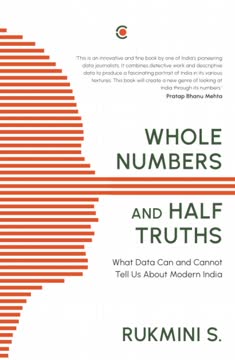
1. India's Narratives are Built on Statistical Half-Truths
The problem is most of these established ‘narratives’ are pure fiction masquerading as fact.
Misleading Narratives. Despite India's vast and impressive statistical architecture, public discourse is often dominated by inaccurate narratives about what Indians think, feel, and do. These "established narratives" frequently become political fodder, repeated until they are accepted as fact, even when contradicted by robust data. The author argues that this problem stems from either ignoring data or misinterpreting it.
Data's Potential. India possesses a wealth of data from various sources, including the Census, National Statistical Office (NSO), National Crime Records Bureau (NCRB), and private research organizations. This data can illuminate the complexities of modern India, helping citizens and policymakers understand lived experiences, anticipate future trends, and critically engage with democratic processes. Numbers, far from being cold, can capture human nuance.
Need for Context. Raw statistics alone are insufficient; they require context, interpretation free from ideological spin, and critical scrutiny. The author, with over a decade of experience in Indian socio-economic data, aims to provide a toolkit for understanding these numbers, revealing how ground realities aggregate into statistics and what these figures truly mean, or fail to capture.
2. Crime Statistics Mask Complex Realities
Beneath India’s crime statistics lies a complicated world of true crime, but also corruption, laws both underpowered and over-powered, power and pride—and even love.
Distorted Picture. Official crime statistics, primarily from the National Crime Records Bureau (NCRB), present a deeply distorted picture of crime in India. The "principal offence rule" undercounts specific crimes (e.g., rape as murder), and non-criminal activities like elopement are often misreported as kidnapping and rape due to familial objections, particularly in inter-caste or inter-religious relationships. Police often use informal scripts, adding elements like "sedative-laced cold drinks" to FIRs to make consensual acts appear as non-consensual.
Systemic Flaws. The reliance on First Information Reports (FIRs) is problematic due to police venality and complex sociological forces.
- Misclassification: Non-criminal acts are booked as crimes.
- Wrong Laws: Incorrect sections of law are applied (e.g., drug possession as "causing hurt using a poisonous substance").
- Under-reporting: A vast range of non-violent crimes are significantly undercounted.
- Low Conviction Rates: Often reflect poor quality of evidence, not judicial bias against victims.
Policy Consequences. Problematic laws, such as raising the age of consent to eighteen, can lead to unjust convictions for consensual teenage relationships. The "love jihad" narrative further exacerbates misclassification, leading to arrests of Muslim men for dating Hindu women. This distorted data not only misinforms the public and media but also creates perverse incentives for the police and undermines judicial willingness to believe complainants.
3. Indian Society is Deeply Conservative, Not Liberal
The vast majority of opinion polling in India is centred around elections. The best estimates of Indian attitudes and beliefs too usually emerge from surveys done before and after elections.
Conservative Values. Contrary to popular belief, data consistently shows that Indians hold deeply conservative views.
- Democracy: Lower commitment to democratic principles compared to other major countries.
- Leadership: High support for a "strong leader" and army rule.
- Freedoms: Low importance given to freedom of expression, free media, and human rights organizations.
- Majoritarianism: Strong belief that the state should punish those who don't conform to nationalistic slogans, disrespect cows, or engage in religious conversion.
Religious and Caste Divides. Despite a professed tolerance for all religions, deep illiberalism and hostility exist.
- Segregation: Most Hindus and Muslims see themselves as "very different" and primarily befriend people from their own religious group.
- Housing: Jains and Hindus are often unwilling to accept Muslim neighbors, leading to housing segregation.
- Marriage: Over 85% oppose inter-religious marriage, and a majority across religious groups prioritize preventing inter-caste marriages.
- Untouchability: Still widely practiced, especially by Brahmins and OBCs, and more prevalent in central, northern, and hill regions.
Gender and Sexuality. Traditional gender norms are prevalent, with a majority believing wives should be subservient.
- Women's Role: Two-fifths of youth believe women should not work outside the home after marriage.
- Relationships: Two-thirds of young people disapprove of live-in relationships, and over half oppose dating before marriage.
- Homosexuality: While acceptance is growing among youth, it remains low overall.
Education and urbanization do not automatically lead to more liberal values; lasting change requires political and social norm shifts.
4. Voters are Ideological, Not Just "Aspirational"
To reduce every election to a vote against caste, a vote for development, a vote against corruption, an aspirational vote, a vote against dynasty, or an anti-incumbency vote is a mistake.
Flawed Narratives. Analysis of Indian elections is often based on incorrect data or selective misreading, leading to simplistic narratives that voters primarily care about "development" or economic growth. The author argues that this overlooks the complex decision matrix of voters, who are strongly and consistently ideological.
Ideological Polarization. Indian parties and voters are deeply ideological.
- BJP Voters: Systematically support core Hindu nationalist issues like cow slaughter bans and oppose religious conversion.
- Congress Voters: Systematically oppose these issues (with upper-caste Congress voters as an exception).
- Strategic Voting: Muslims often vote for parties best positioned to defeat the BJP, even if those parties don't fully align with their interests, demonstrating a strategic ideological choice.
Identity and Representation. Caste and religious identity play a crucial role.
- Vote-banks: The BJP's upper-caste Hindu vote-bank is highly loyal, often more so than the Muslim vote for Congress.
- Dalit Vote: BJP has gained support from non-Jatav SC groups and EBCs through targeted strategies, sometimes exploiting fault lines.
- Ghettoization: Dalit MPs are increasingly confined to reserved constituencies, limiting their broader political mobility.
- Women Voters: While BJP has made gains among women, the reasons are complex, involving welfare schemes, but also intersecting identities.
Media Influence and Data Integrity. Voters' perceptions are heavily influenced by media exposure, particularly in Hindi, which often favors the BJP. The Election Commission's neutrality, while crucial, is maintained by multi-party electoral politics rather than being "above" politics. The suppression of inconvenient polling data further distorts public understanding, highlighting the need for transparent, high-frequency, and creatively designed surveys to capture the true motivations of Indian voters.
5. Everyday Life: Tradition Meets Subtle Change
Data answers some of the biggest questions about India—how Indians make and spend their money, what work they do, how they vote, what kills them. But numbers can also fill in the minutiae of people’s lives and draw a picture of what they do when they’re just living it.
Dietary Habits. Cereals remain a staple, but consumption patterns vary regionally. India is not predominantly vegetarian; only one-quarter to one-third of the population is vegetarian, with meat-eating growing, especially among lower castes and classes. The Hindu Right's narrative of a vegetarian India often dismisses the dietary preferences of the majority. Eating healthy remains expensive, and alcohol consumption is on the rise.
Religious Observance. India remains a deeply religious country, with 84% of people considering religion very important. Daily prayer is common, and youth are also quite religious. While hybrid practices exist (e.g., Hindus praying at mosques), Dalits are less likely to visit temples regularly. The reverence for godmen is high, particularly in rural areas and among the poor.
Leisure and Relationships. Leisure time is unequally distributed, with women spending 84% of their working hours on unpaid activities.
- Leisure: Upper castes and the rich have the most leisure time, often spent watching TV or engaging in religious practices. Youth leisure activities are gendered, and social media/internet usage is lower than often perceived.
- Marriage: Arranged marriages are still the norm (93%), with only slight changes over time. Inter-caste and inter-religious marriages are rare and often fraught with danger due to societal opposition and punitive laws.
- Autonomy: Women's autonomy within marriage remains limited, with many having no say in their marriage, facing dowry demands, and requiring permission to leave the house.
Despite the appearance of rapid modernization, many aspects of Indian life remain deeply traditional, with subtle changes occurring at the margins, often driven by economic necessity or individual rebellion against entrenched social norms.
6. The "Middle Class" is a Myth, Poverty is Pervasive
The truth is that if you’re reading this, you’re almost certainly not middle class.
Misconceptions of Class. The self-identification of Indians as "middle class" is largely inaccurate; over half of the rich and 40% of the poor also identify as middle class. India does not officially collect income data, relying instead on consumption expenditure, which reveals a stark reality:
- Poverty: A little under 5% live on less than $2/day, and 87% live on $2-$10/day (lower-middle class).
- Consumption: The average Indian spends less than Rs 2,500/month. The top 5% of urban Indians spend just over Rs 8,500/month.
- Precariousness: Millions were pushed into poverty during the pandemic, highlighting the fragility of non-poor status.
Income and Mobility. Most Indian households have multiple income sources, but salaries are the most lucrative yet rare. Education and salaried jobs are primary drivers of wealth and upward mobility.
- Caste & Income: Scheduled Castes (SCs), Scheduled Tribes (STs), and Muslims earn the least, while forward castes are the richest.
- Mobility: Inter-generational mobility has improved for SCs/STs (partly due to affirmative action) but worsened for Muslims. Upper castes experience consistent upward mobility.
- Discrimination: Despite reservations, discrimination in hiring persists, and upper castes often resist affirmative action, fueled by a sense of victimhood.
Poverty Measurement. India's poverty lines are contentious and often inadequate, leading to misclassification of the poor. The Socio Economic and Caste Census (SECC) offers a more nuanced view of deprivation but is outdated. The government's neglect of poverty numbers, despite evidence of rising poverty, is dangerous. By global definitions, India's middle class is tiny, and even the "upper-middle class" lacks basic amenities, challenging the aspirational narrative.
7. Economic Data is Suppressed and Discredited
To suppress it because it shows the government in a poor light—that has never happened before.
Suppression of Data. The 2017-18 household consumption expenditure survey, a crucial source of data, was suppressed by the government because its findings were unflattering. This report indicated a decline in real consumption expenditure for the first time since the 1960s, a trend corroborated by other data like stagnating rural wages and rising unemployment.
Historical Context. The National Sample Survey (NSS) has a long history of providing vital socio-economic data, occasionally facing controversies over methodology. However, past governments, even when facing inconvenient findings, released the raw data for public debate. The current government's outright suppression marks an unprecedented shift.
Discrepancy Debate. A long-standing debate exists regarding the divergence between household survey data and national accounts data.
- Government/Right-wing Argument: Surveys are flawed, miss consumption in the "new India" (e.g., car sales, airline travel), and under-represent the rich.
- Counter-Argument: National accounts often overstate consumption (e.g., double-counting restaurant food), and surveys like IHDS corroborate NSSO findings, especially for the poor. The NSSO's issues (urban sampling, recall errors) are acknowledged but fixable.
Politicization of Statistics. The integrity of India's statistical system is under threat due to politicization.
- NSC Sidelined: The National Statistical Commission (NSC), meant to be an autonomous oversight body, has been rendered toothless, leading to resignations.
- GDP Recalculation: A controversial change in GDP calculation methodology and backdated series painted past growth in a negative light, released by a political think tank (NITI Aayog) rather than the official statistical body.
- Administrative Data Preference: The government increasingly favors administrative data (e.g., toilet construction numbers) over household surveys, even when the latter provide a more nuanced and accurate picture of ground realities.
This systematic neglect, discredit, and suppression of official data undermines public trust and hinders evidence-based policymaking.
8. A Deep Jobs Crisis, Especially for Women, Goes Unacknowledged
India’s female labour force participation rate has been falling steadily over time, and fell to a historic low of 23.3 per cent in 2017-18, meaning that over three out of four women over the age of fifteen in India are neither working nor seeking work.
Unemployment Crisis. Despite Prime Minister Modi's claims that official data misses informal jobs, the NSSO's surveys do capture these. India's official unemployment rate, while low overall (around 5%), hit a 45-year high in 2017-18, a report the government initially suppressed. This low aggregate masks severe unemployment among:
- Educated Youth: Especially rural male youth and educated women (17.1% for women with secondary education).
- Women: India has one of the lowest female labor force participation rates globally, declining to a historic low of 23.3% in 2017-18.
Reasons for Declining FLFP. The decline in women's workforce participation is complex:
- Domestic Duties: Most women out of the workforce report attending to household chores.
- Social Norms: Restrict women's educational and employment opportunities to gender-conforming, slow-growing sectors. Marriage is a significant factor in women leaving the workforce.
- Job Availability: Lack of viable work opportunities and demand for women's labor.
Poor Job Quality. The majority of Indian jobs are informal, insecure, and poorly paid.
- Informal Sector: Over half of workers are self-employed, and a quarter are casual laborers, with little job protection or social security.
- Overwork, Low Pay: Indians are among the most overworked globally, yet minimum wages are among the lowest.
- Misclassification: Official job classifications can mask low-paying, insecure self-employment (e.g., "Directors and Chief Executives").
Government Job Craze. There's an enormous gap between desired jobs (government jobs, offering stability and better pay) and available jobs. Public sector employment has shrunk, and even government jobs are increasingly contractual. This disparity fuels demands for caste-based reservations, as dominant castes also seek the security of public sector employment amidst a precarious job market.
9. Population Growth is Slowing, But Gender Bias Persists
India’s fertility rate has fallen faster than earlier predicted by international agencies, on the back of a remarkable turnaround led by some of India’s most marginalised women.
Demographic Transition. The "population bomb" narrative is outdated. India's population growth has slowed dramatically, falling below 1% annually, much faster than anticipated. The total fertility rate (TFR) is now 2.2, nearing the replacement level of 2.1, with 23 states already below this threshold. Muslim fertility is also falling faster than Hindu fertility, closing the gap between communities.
The Dark Side: Sex Ratio. This demographic success has a grim consequence: the desire for a male child intensifies with smaller family sizes.
- Worsening Sex Ratio: The sex ratio at birth was slightly worse in 2011 than in 2001, indicating unnatural processes like sex-selective abortion and the "stopping principle" (stopping births after a son).
- Smaller Families, Fewer Girls: Families with fewer children are more likely to have more boys than girls, and this disparity has sharpened over the last decade.
- Policy Impact: State policies incentivizing small families or debarring candidates with more than two children from elections have inadvertently worsened sex ratios.
Two-Speed India. India is undergoing a two-speed demographic transition:
- South: Developed southern states are aging rapidly, with TFRs well below replacement levels (e.g., urban India's TFR is 1.7, comparable to Belgium).
- North: Poorer northern states, particularly Bihar and Uttar Pradesh, still have higher fertility rates and will account for most of India's population increase by 2036.
This divergence creates political tensions, with southern states feeling penalized for their success in population control (e.g., in parliamentary seat allocation and revenue sharing).
Future Challenges. The "demographic dividend" of a large working-age population requires jobs and skills, which India currently lacks. The focus needs to shift from outdated fears of overpopulation to preparing for an aging society, ensuring social protections for the elderly, and addressing the persistent gender bias that leads to fewer girls.
10. Urbanization is Slower and More Complex Than Assumed
Every narrative about India’s urbanisation and growth has become outdated and inaccurate.
Rural Dominance. Contrary to popular belief, the median Indian still lives in a village. India's urbanization rate is slower than anticipated and lower than predicted for its income level. Only 31% of Indians lived in cities in 2011, a modest increase from 20% in 1971.
Drivers of Urban Growth. Urbanization is driven by:
- Natural Growth: Urban populations having more children and fewer deaths than rural areas. High rural fertility in northern states slows overall urbanization.
- Reclassification: Rural areas slowly acquiring urban characteristics and being officially reclassified as "census towns." This has been a major driver, with 2,532 census towns added between 2001 and 2011.
- Migration: While significant, migration is not the primary driver of overall urbanization.
Migration Nuances. Indian migration is less about permanent, long-distance moves to megacities and more about:
- Proximity: Most migrants move within their district or state.
- Female-dominated: Over two-thirds of migrants are women moving for marriage.
- Short-term/Circular: The Census undercounts seasonal migrants who move for work and then return home, a reality starkly exposed during the 2020 lockdown exodus.
- Economic Status: Migrants are not the poorest; short-term migrants are often less educated Dalits/Adivasis from poorer states, driven by desperation.
Future Demographics. The population is shifting northward, with Bihar and Uttar Pradesh accounting for over a third of India's population increase by 2036, while southern states' share declines. This has implications for language (Hindi's growing dominance) and political representation. While urban populations are projected to grow, the 2021 Census faces challenges due to its linkage with the National Population Register (NPR) and National Register of Citizens (NRC), threatening data integrity and trust, especially among minorities.
11. India's Health Data Deficit Exacerbated the Pandemic
But when it comes to health, our misunderstandings of the data have, and have had, the potential to kill.
Undercounting Disease. India entered the pandemic with a severely flawed understanding of its health landscape. Official statistics (National Health Profile) are gross underestimates of disease incidence and mortality, failing to capture the true burden due to:
- Private Sector Dominance: Most people use private healthcare, which often doesn't report data.
- Asymptomatic Cases: Many infections (e.g., dengue, COVID-19) are asymptomatic and undetected.
- Mortality Data: Only 9 out of 10 deaths are registered, and only 22% are medically certified, with doctors often recording mode of death instead of underlying cause.
Health Disparities. Health outcomes are deeply intertwined with socio-economic factors.
- Double Burden: Poorest states face a "double burden" of high communicable diseases and rising non-communicable diseases, coupled with abysmal health infrastructure.
- Access Inequality: The poor are more likely to be ill but less likely to access healthcare. Women, despite higher rates of NCDs, are less likely to receive treatment.
- Cost: Healthcare costs are prohibitive, driving poor families into debt, with high out-of-pocket expenditures.
Public vs. Private Dilemma. The pandemic exposed the failures of both public and private healthcare.
- Public Sector: Characterized by neglect, lack of basic care, and horrific incidents (e.g., patients dying unattended).
- Private Sector: Often predatory, price-gouging, and prone to unnecessary procedures (e.g., high C-section rates).
- Quality: Quality of care is generally low across both sectors, with informal providers dominating rural areas.
Pandemic Data Failures. India's pandemic response was hampered by a lack of transparency and data integrity.
- COVID Undercounting: Official COVID-19 cases and deaths were severely undercounted due to stringent definitions and political pressure. Excess mortality data revealed massive discrepancies.
- Data Suppression: The government withheld detailed COVID data and suppressed routine health service utilization data (NHM-HMIS) when it showed negative trends.
- Misleading Information: Overselling vaccine effectiveness with incomplete data and engaging in partisan blame games instead of data-driven analysis.
This systemic failure to collect, collate, and transparently share health data had deadly consequences and highlights the urgent need for reform.
12. The Future of Indian Democracy Hinges on Data Integrity
Indian data has told us the real story of life in India for decades—not always at the right time, and not always without controversy, and not always the full story. But using official and private sources, we have been able to piece together the story until now.
Data's Power. Data is crucial for understanding India's big and small stories—from voting patterns and crime rates to economic realities, demographic shifts, and health outcomes. It reveals the complexities of Indian society, challenging simplistic narratives and informing critical debates on growth, development, and social justice.
Threats to Data Integrity. India's official statistics are not necessarily "faked," but they are being systematically silenced through:
- Neglect: Lack of investment and modernization in data collection mechanisms.
- Discredit: Undermining the credibility of inconvenient data by claiming it's flawed or misses the "new India."
- Dismissal: Suppressing reports that paint an unflattering picture of government performance.
- Obfuscation: Not publishing existing data in usable formats or making it difficult to access.
Consequences for Democracy. This erosion of data integrity has profound implications for Indian democracy. Without reliable data, citizens cannot hold the state accountable, policymakers cannot make informed decisions, and public discourse becomes untethered from reality. The linkage of the 2021 Census with the NPR/NRC, for instance, threatens to contaminate crucial demographic data by eroding public trust.
A Call to Action. To safeguard India's democratic future, a public movement is needed to secure data integrity. This requires:
- More Data: Investing in better collection methods and expanding the scope of surveys.
- Better Collection: Improving surveyor training and updating methodologies.
- Greater Openness: Making data widely available and easily understandable.
- Independent Oversight: Strengthening autonomous statistical bodies like the NSC.
Engaging with data, even when inconvenient, can bridge ideological divides and foster a shared understanding of the country's challenges, enabling collective action for a better future.
Last updated:
Similar Books