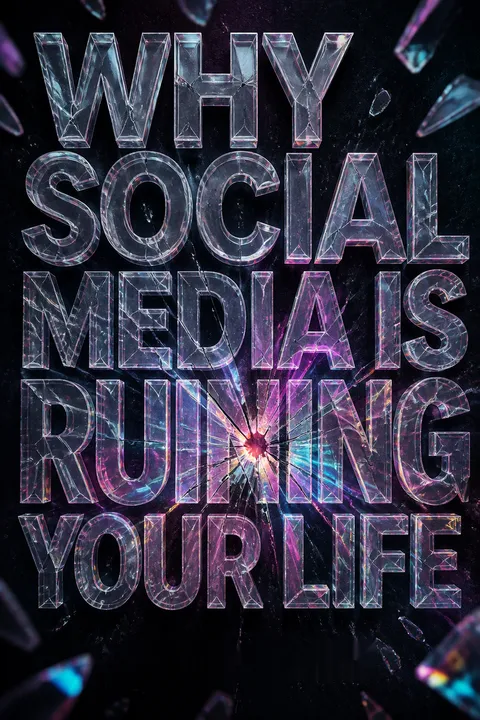


Key Takeaways
Social feeds are edited showcases, not fair measures of a life
A selective window. Ormerod’s central argument is that social media turns other people’s highlights into a constant comparison set. Holidays, career wins, attractive homes, and smiling families appear far more often than illness, debt, failed plans, or ordinary days. Because images are quickly absorbed and emotionally vivid, users can know a post is curated and still feel diminished by it. The book cites an average of 1 hour and 58 minutes a day spent on social platforms in a 2016 survey, enough time for selective glimpses to become a powerful backdrop to daily life.
Not a simple villain. Online groups can also make isolated people feel recognized and supported. The practical task is not to deny those benefits, but to stop treating a feed as a representative sample of anyone’s life, including one’s own.
The key distinction is between a person and the slice of a person that a platform makes visible. This resembles a sampling problem: a feed is not a random cross-section of life, but a stream selected by users, platforms, and commercial incentives. That explains why simply reminding someone that images are edited may not undo their emotional effect. The book’s title is deliberately forceful, but its stronger argument is conditional: harm depends on what users see, how they use it, and what the platform rewards.
Curate identity for expression, not an audience that expects you never to change
A public performance. Drawing on sociologist Erving Goffman, Ormerod describes online life as a stage where people manage impressions. Profiles emphasize success and attractive traits, while the private, less polished self gets less room. The book names the self-promotion-envy spiral: one person’s boastful or glowing post can prompt others to promote themselves more intensely, leaving the whole group feeling pressure to keep raising the standard.
Identity is still developing. Ormerod recounts reshaping her accent, tastes, and presentation as she moved between social worlds. Social media can preserve old versions of a person and invite strangers to judge whether a change is authentic. Yet identity naturally evolves. Online communities can also help people explore marginalized identities and find others with shared experience.
Self-presentation is not automatically deception. People have always adjusted how they speak across settings, and experimenting with identity can be part of learning who they are. The distinctive pressure online is persistence: an old performance can remain visible while an audience expects the performer to stay consistent. That tension matters especially for young users, whose identities are still forming. A healthier standard is not total transparency, which few people want, but enough room to grow without treating every change as a betrayal.
Treat filtered bodies as fabricated images, not attainable targets
A new beauty benchmark. Ormerod argues that editing apps make unrealistic appearance standards intimate: users compare themselves not only with influencers, but with altered versions of their own faces and bodies. She cites research suggesting that nine in ten teenage girls digitally enhanced social images of themselves. Tools that smooth skin, reshape features, or narrow a waist can turn a playful edit into a false memory of how someone looked. Fitspiration can reproduce the old thin ideal in a new form, adding visible muscle without broadening the range of bodies represented.
Reduce exposure, not your worth. Studies cited in the book associate social-media use and appearance comparison with body dissatisfaction and disordered-eating concerns. The author recommends breaks, unfollowing accounts that trigger self-criticism, and treating physical function and wellbeing as more important than a picture-ready outline.
The striking feature is the feedback loop between image production and image consumption. A person edits a photo to meet a perceived standard, then sees the edited result as evidence that the standard is achievable. That loop can make ordinary variation look like personal failure. Body-positive images can widen representation, but visibility alone does not erase ingrained beauty hierarchies. The book’s studies show associations, not proof that social media alone causes eating disorders, so individual vulnerability, offline culture, and access to care still matter.
Break reward loops before they take sleep, focus, and self-trust
A habit with consequences. The book describes social-media use through six features of behavioral addiction: salience, tolerance, euphoria, conflict, withdrawal, and relapse. These are warning signs to reflect on, not a diagnosis. It cites a study estimating that typical phone users touched their devices 2,617 times daily, and research connecting more screen use, especially near bedtime, with worse sleep. Likes can provide a brief reward, while uncertainty about new messages or reactions encourages repeated checking.
Put friction back in. Ormerod’s suggestions include limiting app access, turning off notifications, keeping phones out of bedrooms, and scheduling time alone without a screen. These boundaries can protect concentration as well as rest. She also recommends noticing which content reliably worsens mood, instead of assuming every scroll has the same effect.
The design problem is not merely weak willpower. When a service offers unpredictable social rewards, checking can become automatic, while the next interruption competes with work, rest, and conversation. Environmental changes, such as removing alerts, can therefore be more practical than relying on resolve in the moment. Still, frequent use is not synonymous with addiction, and the relationship between distress and scrolling can run both ways: people may use platforms more when already struggling. Self-observation should guide boundaries, not shame.
Exchange ambient connection for conversations that can hold nuance
Contact is not closeness. The book uses ambient intimacy for the low-effort feeling of connection created by small updates about many people. It also discusses Dunbar’s Number, an estimate that people can maintain roughly 150 meaningful social relationships. Following hundreds or thousands of accounts does not make all those ties friendships. Passive browsing can instead bring envy and loneliness, while a silent phone on the table can weaken an in-person conversation.
Keep the useful connections. Ormerod’s own family lives across countries, and messaging helps them stay involved in one another’s lives. The point is not that digital contact is fake, but that it cannot always replace the emotional cues and focused attention of speaking face to face. She recommends making time for a smaller number of important relationships and practicing difficult conversations rather than permanently avoiding them through text.
Digital communication is especially valuable when distance, disability, or time makes meeting difficult. It can also give people room to compose a careful message before a stressful exchange. The risk appears when convenience becomes the default for every kind of relationship, including those that need sustained attention or repair. Face-to-face contact is not inherently profound, and text is not inherently shallow. The more useful test is whether a channel helps people understand each other, or simply keeps them updated about one another.
Reject the perfect-mother scoreboard; use communities without surrendering judgment
Motherhood under display. Ormerod describes social media’s polished maternal ideal: attractive homes, serene parenting, and bodies that seem to recover instantly after birth. In a UK survey cited in the book, more than 80 percent of mothers said Instagram and Facebook added pressure to be the perfect mum. That pressure can sharpen during pregnancy, fertility struggles, miscarriage, and the exhausted early months of parenting, when comparison is especially painful.
Support has two sides. Online groups can give mothers practical advice and reduce isolation, including around pregnancy loss and postpartum health. But forums can also turn differences in feeding, birth, work, and childcare into moral judgments. The author’s advice is to question whether a feed is helping or triggering distress, and to remember that no single parenting style fits every family.
Parenting advice often presents contested choices as universal rules, making social media a particularly fertile setting for judgment. A supportive group can counter isolation, but a large audience is not the same as dependable care. The book’s emphasis on maternal confidence is valuable because constant comparison can make ordinary decisions feel like public examinations. At the same time, rejecting perfection should not mean dismissing useful medical guidance. A good boundary separates evidence-based safety advice from lifestyle preferences presented as proof of moral superiority.
Don’t finance an online lifestyle whose work and price are hidden
The glamorous frame omits the bill. Ormerod argues that social feeds often show the rewards of work without the labor behind them. Her own early fashion career involved years of unpaid internships, long hours, and low salaries, even as the job could look glamorous online. Later, industry perks such as gifted clothes and travel made her public lifestyle appear wealthier than her finances really were. The book also cites a survey in which 49 percent of millennials said they would go into debt to pay for a trip.
Count costs and labor. Posts may conceal credit-card balances, brand gifts, long workdays, or the ordinary routines that pay the bills. Social-media interruptions also fragment work, with one cited report estimating an average 25 minutes to regain focus after interruption. Before copying a purchase or trip, consider its true cost and whether it serves a priority beyond the post.
Visible consumption can masquerade as evidence of wealth, while the work, sponsorship, debt, and trade-offs behind it remain invisible. That makes social comparison financially consequential: a person may borrow to imitate an image whose creator did not pay its full retail price. The book’s autobiographical account usefully exposes this hidden economy. Still, not every polished post is financially misleading, and people need not publish private budgets to be honest. The better response is skepticism about what an image proves, not suspicion toward every person who shares something enjoyable.
Assume political feeds are personalized persuasion, then seek evidence and dissent
Your feed has a business model. Ormerod describes how personal data can be used to target political messages and recalls the Cambridge Analytica scandal, in which information from roughly 87 million Facebook accounts was harvested without users’ permission. Algorithms can also narrow the news and opinions a person encounters. The result may be a feed that feels like a picture of public consensus, while actually reflecting the user’s past behavior and platform choices.
Make engagement deliberate. Political conversations online can reward speed, certainty, and outrage rather than patient debate. The book recommends reviewing privacy settings, checking claims before sharing them, reading beyond familiar sources, and focusing on a tangible civic goal instead of posting merely to signal concern. Respectful disagreement can widen perspective; abuse can be blocked without treating every opposing view as abuse.
Personalized feeds create both a privacy problem and an epistemic one: users may not know what data shaped the message or what relevant evidence was excluded. This is a form of information asymmetry, since platforms can infer patterns that users cannot easily inspect. Individual media literacy helps, but it cannot replace transparency and accountability from companies that collect and distribute the data. Seeking disagreement is useful only when the source is credible and the exchange safe. Exposure to every viewpoint is not the same as understanding.
Keep a private life as platforms turn identity and friendship into business
The commercial reach expands. In the book’s account of the near future, influence becomes more distributed: brands court small creators, social sharing shifts into private messaging, and virtual personalities compete for attention alongside human influencers. Automated replies and virtual reality could push online interaction further into everyday life. These developments make the platform’s commercial logic harder to separate from friendship, self-expression, and personal identity.
Choose the role of each tool. Ormerod’s answer is conscious use rather than total withdrawal. Before opening an app, decide whether it is for connection, information, work, or entertainment. Keep some moments and relationships outside public performance, and do not assume new features are obligations. The central question is whether a platform is serving a chosen purpose or quietly converting attention, personal data, and social ties into value for someone else.
The future-facing argument is strongest when it treats technology as a set of incentives, not as destiny. A paid, ad-free service or private messaging tool could alter those incentives, but neither guarantees humane design or meaningful connection. The deeper issue is that monetization can travel with users into spaces that feel intimate, including family chats and small creator communities. Preserving some unmeasured, noncommercial interaction is therefore more than a lifestyle preference. It protects the possibility of relating without turning every moment into content or influence.
Analysis
The book’s organizing insight is that social media does not merely show a person’s life; it changes the standards by which that life is judged. Across identity, body image, relationships, motherhood, work, and politics, the same mechanism recurs: selective self-presentation meets algorithmic distribution and measurable approval. Users compare ordinary experience with curated evidence, then respond by editing, posting, checking, spending, or withdrawing. The author’s personal stories make this mechanism legible. Her account of a career that looked glamorous online but involved unpaid work and financial strain is especially effective because it reveals how a feed hides its own production costs.
The book is also more balanced than its title suggests. Online communities can support marginalized identities, maintain distant relationships, and make experiences such as miscarriage or mental illness easier to discuss. Its practical aim is not abstinence, but deliberate consumption that preserves these benefits while limiting comparison and compulsion.
Its evidentiary limits matter. Much of the research cited is correlational, and the author writes in 2018, when platforms, usage patterns, and public understanding were changing rapidly. Distress may prompt heavier use as well as follow it, and a phone is not the same thing as social media. The findings do not establish that every user is harmed in the same way. The book’s force is therefore best understood as diagnosis and warning, not as a universal causal verdict.
A useful extension is to distinguish personal habits from platform design. Muting accounts, setting phone-free periods, and choosing face-to-face contact can help individuals regain agency. Yet those strategies operate within systems that profit from sustained attention and personal data. The book’s durable contribution is to make the reader ask two questions together: what is this feed doing to my sense of reality, and what incentives make it behave this way? That combination avoids both helplessness and the convenient fiction that the problem is simply a failure of self-control.
Review Summary
Why Social Media is Ruining Your Life receives mixed reviews, with an average rating of 3.51/5. Many readers find it insightful, well-researched, and relatable, particularly regarding body image, relationships, and mental health. However, some criticize its focus on female influencers and lack of depth on broader societal impacts. The book is praised for its balanced approach and personal anecdotes but criticized for repetitiveness and obvious points. Some readers appreciate its eye-opening statistics, while others find it lacks credibility due to the author's continued social media use.
People Also Read





Glossary
self-promotion-envy spiral
Mutual escalation of self-displayA cycle in which one person’s positive, self-promotional posts prompt others to present their own lives more impressively. Those increasingly polished displays can intensify envy and pressure across the group, encouraging still more image management. The term describes a social feedback loop, not simply an individual feeling jealous of one post.
self-curation anxiety
Stress from maintaining an online selfAnxiety created by trying to live up to the edited identity a person presents online. It can arise when the everyday self seems less successful, attractive, or interesting than the digital version, or when a person worries that others will expose the difference. The pressure may persist even when the person knows the online presentation is selective.
ambient intimacy
Low-effort feeling of connectionA sense of closeness produced by receiving small, frequent updates about people’s lives without meeting or speaking with them at length. Social feeds can make distant contacts feel continually present. This can offer comfort and help maintain weak ties, but it is not necessarily equivalent to reciprocal friendship or deeper conversation.
Dunbar's Number
Estimated limit on social tiesAnthropologist Robin Dunbar’s estimate that humans can maintain roughly 150 meaningful social relationships, based on the limits of social cognition and observed group sizes. In the book, the idea helps explain why very large online networks should not be mistaken for an equally large circle of close friends.
phubbing
Snubbing someone for a phoneA blend of phone and snubbing, describing attention given to a mobile device instead of a person who is physically present. The book connects this behavior with feelings of rejection and relationship conflict. It can be habitual and mutual, which makes it easy for people to condemn a partner’s phone use while overlooking their own.
dark social
Sharing outside trackable platformsOnline sharing through private or less visible channels, such as direct messages and messaging apps, where analytics tools cannot easily trace how content travels. The phrase does not mean inherently secret or harmful activity. It refers to a measurement gap that matters to advertisers and publishers seeking to understand how people share links and recommendations.
parasocial friends
One-sided remote social bondsPeople followed online who can feel familiar or emotionally significant despite little or no reciprocal personal relationship. The term draws on parasocial relationships, traditionally used for one-sided bonds with media figures or fictional characters. Such connections may entertain or comfort users, but they do not provide the mutual care and responsibility of close friendship.
brain hacking
Design exploiting psychological vulnerabilitiesA term used in the book for technology design that takes advantage of human attention, reward, and social-validation systems to encourage continued engagement. Features such as notifications and visible approval counts can make checking compelling. The phrase is a critical description of design incentives, not a clinical diagnosis or proof that every user experiences addiction.
FAQ
What's Why Social Media is Ruining Your Life about?
- Explores social media's impact: The book examines how social media affects various aspects of life, including identity, body image, health, relationships, motherhood, career, and politics.
- Dual-edged sword: It discusses the opportunities social media provides for connection and discovery, while also highlighting the negative consequences such as self-criticism and mental health issues.
- Cultural critique: Katherine Ormerod critiques societal norms perpetuated by social media, emphasizing the unrealistic standards it sets for women.
Why should I read Why Social Media is Ruining Your Life?
- Relevant and timely: The book addresses contemporary issues that resonate with anyone using social media, making it highly relevant in today's digital age.
- Research-backed insights: Ormerod supports her arguments with research and statistics, providing a well-rounded perspective on the psychological effects of social media.
- Empowerment through awareness: Reading this book can help readers understand the impact of their social media habits and encourage healthier consumption patterns.
What are the key takeaways of Why Social Media is Ruining Your Life?
- Awareness of identity crisis: Social media can lead to an identity crisis as users curate their online personas, often leading to feelings of inadequacy.
- Body image issues: The book highlights how constant exposure to idealized images can negatively affect women's body image and self-esteem.
- Mental health implications: Ormerod discusses the correlation between social media use and mental health issues, including anxiety and depression.
What are the best quotes from Why Social Media is Ruining Your Life and what do they mean?
- “Social media is clearly linked to an increase in mental health problems.”: This quote underscores the book's central argument that social media can exacerbate issues like anxiety and depression.
- “We mustn’t forget that we’re also the ones at the controls.”: This emphasizes personal responsibility in managing social media use and its effects on our lives.
- “Social media is a fairy tale.”: Ormerod uses this quote to illustrate how social media often presents an unrealistic and curated version of life, obscuring the struggles behind the scenes.
How does Why Social Media is Ruining Your Life address body image issues?
- Impact of idealized images: The book discusses how social media bombards users with images of "perfect" bodies, leading to unrealistic beauty standards.
- Editing and filters: Ormerod highlights the prevalence of photo editing apps that distort reality, making it difficult for users to appreciate their own bodies.
- Comparison culture: The author explains how constant comparison to others on social media can lead to feelings of inadequacy and body dissatisfaction.
What specific methods does Katherine Ormerod suggest for managing social media use?
- Mindful consumption: Ormerod encourages readers to be conscious of their social media habits and to take breaks when feeling overwhelmed.
- Curate your feed: She advises unfollowing accounts that trigger negative feelings and focusing on those that promote positivity and authenticity.
- Set boundaries: The book suggests establishing limits on social media use, such as designated times for checking apps to reduce compulsive scrolling.
How does Why Social Media is Ruining Your Life explore the impact on mental health?
- Correlation with anxiety and depression: Ormerod presents research linking increased social media use to higher rates of mental health issues among users.
- Social comparison theory: The book discusses how comparing oneself to others on social media can lead to feelings of inadequacy and low self-esteem.
- Need for validation: Ormerod highlights the psychological need for likes and comments, which can create a cycle of dependency and anxiety.
What does Katherine Ormerod say about the role of social media in relationships?
- Changing definitions of friendship: The book explores how social media alters our understanding of friendship, often prioritizing quantity over quality in connections.
- Impact on communication: Ormerod discusses how digital communication can lead to misunderstandings and a lack of emotional depth in relationships.
- Isolation despite connectivity: The author points out that while we may feel connected online, it can lead to feelings of loneliness and disconnection in real life.
How does Why Social Media is Ruining Your Life address motherhood and social media?
- Pressure to be the perfect mom: Ormerod highlights how social media creates unrealistic expectations for mothers, leading to feelings of inadequacy.
- Comparison with other mothers: The book discusses how mothers often compare themselves to curated images of other moms, which can exacerbate feelings of failure.
- Support networks: Despite the pressures, Ormerod acknowledges that social media can also provide valuable support and community for mothers.
How does Why Social Media is Ruining Your Life discuss career and money?
- Consumerism and social media: The book explores how social media encourages a culture of spending to impress others, often leading to financial strain.
- Work-life balance challenges: Ormerod discusses the difficulty of maintaining a healthy work-life balance in an age where work and personal life are increasingly intertwined.
- Authenticity in professional branding: The author emphasizes the importance of being genuine in professional settings, rather than curating a perfect online persona.
What does Why Social Media is Ruining Your Life say about political engagement?
- Polarization of opinions: The book discusses how social media can create echo chambers, reinforcing existing beliefs and reducing empathy for opposing views.
- Impact of misinformation: Ormerod highlights the role of social media in spreading false information, particularly during elections and political campaigns.
- Encouragement for respectful discourse: The author advocates for civil discussions and understanding differing perspectives to foster a healthier political environment.
How can I apply the lessons from Why Social Media is Ruining Your Life to my own life?
- Limit social media use: Consider setting boundaries for social media consumption to reduce its impact on your mental health and well-being.
- Focus on real-life connections: Prioritize spending time with friends and family in person, fostering deeper relationships outside of the digital realm.
- Practice self-compassion: Embrace your imperfections and recognize that social media often presents a curated version of reality, not the full picture.
Download PDF
Download EPUB
.epub digital book format is ideal for reading ebooks on phones, tablets, and e-readers.








