

Key Takeaways
Treat a spell as focused practice, not a shortcut around reality.
Ritual gives intention shape. The kit gathers about 160 workings across candle, crystal, and herbal magic. Their shared pattern is simple: settle the mind, choose materials with meaning, picture a desired outcome, and perform a deliberate act such as lighting a candle, writing a statement, or making a charm. The author understands this as directing personal energy; readers can also approach it as a spiritual practice for concentrating attention on a goal.
Keep responsibility in view. A prosperity working, for instance, may help someone clarify what financial security means to them. It cannot replace budgeting, job applications, medical care, or other practical steps. The book repeatedly encourages practitioners to shape and personalize rituals, while reminding them that their own state of mind matters.
A ritual can be valuable without requiring every supernatural claim to be accepted. Repeated gestures, sensory cues, and focused attention can make an intention feel concrete, while the physical act creates a natural moment to pause and choose what to do next. The useful test is whether a working leaves the practitioner clearer, steadier, or more prepared to act. Its limits matter too: confidence and visualization are not substitutes for treatment, material resources, or changes in unsafe circumstances.
Choose materials by meaning, then adapt the recipe until it resonates.
Correspondences guide selection. In this book, a correspondence is a traditional symbolic link between an ingredient and a purpose. A candle color, crystal, or herb is chosen because its associations seem to fit the work. Green is linked with prosperity, blue with calm and communication, and rose quartz with love and emotional healing. These links make the three collections navigable without requiring a single universal recipe.
Personal fit comes first. The author invites readers to substitute a white candle when a specified color is unavailable, add an object that represents the intended color, change spell words, or borrow a ritual's structure for another goal. A spell followed exactly can be meaningful, but only if its details feel appropriate to the practitioner.
Correspondences work like a symbolic vocabulary: they let a practitioner translate an abstract wish into visible, tangible choices. That flexibility is a strength because a ritual becomes easier to remember when its materials have personal significance. At the same time, symbolic systems vary across traditions, and the book's associations should be read as its chosen map, not a fixed law of nature. A useful adaptation preserves the ritual's purpose while making its symbols personally legible.
Use color as a symbolic shorthand for the work at hand.
Fourteen colors, many intentions. The candle collection groups its workings by color, each introduced through a set of magical associations. Red is used for vitality, courage, and passion; blue for patience, peaceful communication, and protection of the home; green for luck, employment, and material abundance. Grey supports neutrality and careful decisions, while white is presented as a flexible substitute when another candle color is hard to find.
Color helps focus attention. A yellow mirror exercise, for example, asks the practitioner to identify genuine strengths rather than write praise that feels false. An orange ritual for adapting to change combines a candle with freewriting about possible new opportunities. In both cases, the color is part of a larger act of reflection, not a stand-alone guarantee of an outcome.
Color makes an intention visible at a glance. In this system, a candle is not merely decoration; it reminds the practitioner what quality to bring into the ritual, whether that is steadiness, courage, or openness. This is a compact and memorable design choice. The caution is that color meanings are culturally learned and personally variable. Someone who experiences a color differently can adapt the association rather than forcing a prescribed meaning.
Keep a few crystals, and make each a purposeful touchstone.
One stone, one relationship. The crystal collection covers 13 stones and organizes its workings by mineral rather than by goal. Clear quartz is treated as a versatile stone for storing intention and amplifying a working; rose quartz is associated with compassion and self-worth; amethyst with calm and support through difficult habits; hematite with grounding. The author recommends working with stones individually and cleansing and charging them before use.
A small collection can suffice. A crystal might be carried as a reminder during a difficult conversation, placed near study materials, or used in a reflection exercise. The book also describes crystal elixirs, while warning that some minerals are toxic. That warning deserves particular care: a stone should not be put in drinking water unless its safety is reliably established, and a crystal ritual should not be treated as medical care.
A carried object can function as a portable cue: touching it may remind someone to breathe, speak clearly, or return to a chosen intention. That role does not depend on proving that the mineral emits a particular spiritual force. The kit's advice to avoid accumulating an overwhelming collection is practical, since a few well-chosen objects are easier to use consistently. Safety is the sharper boundary here: mineral composition can be uncertain, so direct contact with food or drink should not be assumed safe.
Let familiar herbs carry ritual meaning, but verify their physical safety.
Kitchen plants become ritual materials. The herbal collection features 13 herbs, many available as everyday cooking ingredients. Basil is associated with money and relationships; chamomile with calm and sleep; rosemary with memory and purification; thyme with courage and resilience. The author often keeps spells focused on one or two ingredients, arguing that simplicity helps practitioners become familiar with each herb's traditional associations.
Research before use. Some workings involve burning herbs, applying oils, bathing with plants, or drinking infusions. The book itself warns that mugwort should not be ingested in pregnancy and advises researching unfamiliar herbs to avoid toxicity. Essential oils can also be potent, and the text cautions that oil on fingers can catch fire when lighting candles. Treat magical recipes as instructions requiring ordinary safety checks, not as proof that an ingredient is harmless.
Familiarity makes herbs accessible: their scent, taste, and ordinary uses give a ritual a strong sensory anchor. That accessibility also makes caution essential. A plant's presence in a kitchen does not establish that every preparation, dose, or route of use is safe. Symbolic use, such as placing a dry leaf beside a candle, is distinct from ingesting an infusion or applying concentrated oil. The safest reading keeps those categories separate and checks reliable safety information first.
Give difficult feelings a structured route through writing and symbolic action.
Make inner experience visible. Many workings ask practitioners to write freely about a worry, identify the feelings beneath it, and then use a physical action to mark a shift. In a spell for sudden change, the person records what they miss about the old situation and explores possible benefits of the new one. For releasing a painful attachment, writing may be followed by tearing or burning a short note, with fire precautions.
Let the exercise be honest. The book warns against forcing affirmations that feel untrue. A mirror exercise asks someone to name qualities they genuinely recognize, even if those are modest. These rituals are framed as ways to clear mental space and redirect attention, not as instant cures for grief, depression, or trauma.
The combination of naming, imagining, and acting can turn vague distress into something a person can examine. Writing helps separate an emotion from the whole of one's identity; a symbolic closing gesture can then make the transition feel deliberate. The book's insistence on believable affirmations is especially sound: forced positivity can feel alienating. Serious or persistent distress, however, may need support beyond private ritual, and symbolic release should not be confused with resolving the conditions that caused the pain.
Use divination to observe impressions, record them, and reflect carefully.
Create room for impressions. The collections offer several forms of divination, including gazing into water, watching candle flames or incense smoke, and setting intentions before sleep. Scrying means looking receptively at a surface or visual medium for images and impressions that may prompt insight. The author recommends a quiet setting and a soft, non-forcing focus rather than trying to command a specific image.
Keep a record. The dream sachet and dream tea practices both pair intention with a notebook kept near the bed. Other exercises encourage journaling after meditation or flame observation. Recording impressions allows the practitioner to revisit them, notice patterns, and consider what they mean instead of treating a passing image as an unquestionable prediction.
The strongest part of these practices is their emphasis on observation before interpretation. A journal can preserve details that memory quickly reshapes, while delayed reflection gives an impression room to become meaningful without granting it automatic authority. That distinction is important: a vivid image or dream may reflect concerns already on the mind rather than reveal an external message. The ritual can still be useful as a structured way to ask questions and examine one's assumptions.
Aim spells at your own choices, never at another person's will.
Consent shapes the working. Across the collections, the author cautions against spells meant to control another person. A relationship ritual should focus on the qualities and experiences the practitioner seeks, not force a named person to fall in love. A friendship or conflict ritual should aim for mutual goodwill rather than a guaranteed change in someone else's behavior.
Some work requires participation. The household harmony ritual explicitly asks both people to take part in a respectful conversation. Other exercises encourage practitioners to define the kind of relationship they want and remain open about who might share it. This ethic treats magic as a way to clarify one's intentions and conduct, not as permission to bypass another person's agency.
This boundary gives the book's relationship magic a coherent ethical center. It shifts the practitioner from possession to participation: instead of scripting someone else's feelings, the ritual clarifies what kind of connection is welcome and what behavior the practitioner can offer. That is a useful distinction in any relationship practice. A ritual cannot guarantee reciprocity, so its ethical value depends partly on whether it leaves room for refusal, uncertainty, and an honest conversation.
Turn prosperity rituals into prompts for concrete, measurable next steps.
Give intention a practical partner. Several workings join visualization to an action plan. In a success spell using a gold candle, the practitioner writes three actions needed to meet a goal, such as preparing a résumé or training for an event. A long-project ritual breaks work into separate tasks. A thyme planting ritual uses the care of a growing plant as a recurring reminder of renewal after disappointment.
Track what happens. The seven-day money exercise asks the practitioner to record the ritual and any results, including small ones, then look back for patterns. This is more useful than treating any coincidence as proof: the notes can show what the person noticed, what they actually did, and what remains uncertain. The book's most actionable spells connect a symbol to follow-through.
This is where symbolic practice becomes especially grounded. A written action list converts a broad wish into behaviors that can be attempted and reviewed, while a recurring object can serve as a reminder to return to the task. The record-keeping invitation also opens the door to a more discerning practice: distinguish effort, opportunity, chance, and interpretation instead of attributing every outcome to the spell. Ritual can support agency, but the observable steps do the work of moving a goal forward.
Analysis
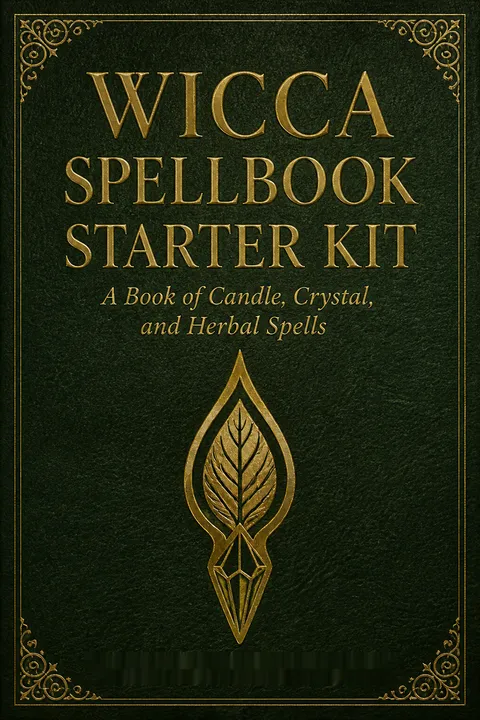
Wicca Spellbook Starter Kit is less a single argument than a working library: three collections of candle, crystal, and herbal rituals, grouped respectively by color, stone, and plant. Its organizing principle is symbolic correspondence. A practitioner chooses materials whose traditional associations match an intention, then combines them with preparation, visualization, spoken or written focus, and a closing gesture. The result is an accessible grammar for turning diffuse aims into repeatable ceremonies.
The book's strongest contribution is procedural rather than evidentiary. Its many examples teach readers how to build a ritual: make the purpose specific, choose meaningful objects, create a focused setting, and make room for reflection. Its invitation to alter ingredients and wording prevents the recipes from becoming rigid scripts. The repeated warnings against manipulating another person's will also give the collection a recognizable ethical boundary.
The limitation is that spiritual explanations are often presented alongside psychological exercises without clearly separating their claims. A candle may help focus attention, and journaling may clarify a problem; those effects do not establish that a color, crystal, or herb changes external events through invisible energy. Health-related workings require particular care. The text sometimes frames magic as an adjunct to medical care, but readers should not interpret ritual recipes, crystal water, or herbal preparations as treatment. Ordinary fire, plant, and mineral safety also remains essential.
Read as a spiritual practice or symbolic self-guidance, the kit is most useful when it prompts honest reflection and concrete action. Read as a promise of guaranteed outcomes, it asks for more trust than its evidence can support. Its best principle is its own practical one: make the ritual meaningful, keep the intention ethical, and remain responsible for what happens outside the circle.
Review Summary
Wicca Spellbook Starter Kit receives mostly positive reviews, with an average rating of 4.24 out of 5. Readers appreciate its adaptability, simple spells, and comprehensive coverage of candle, crystal, and herbal magic. Many find it an excellent resource for beginners, praising its clear explanations and practical approach. Some readers, however, express disappointment, feeling the content is too basic or inaccurate. Overall, the book is generally recommended as a helpful starting point for those interested in witchcraft and Wiccan practices.
People Also Read

Glossary
Book of Shadows
personal magical recordA Book of Shadows is a collection of spells, rituals, notes, and other material used in Wiccan practice. In this work, the phrase describes organized spell collections and also points toward a practitioner's own record of workings. Keeping notes can preserve instructions, personal adaptations, and observations about how a ritual was experienced.
correspondence
symbolic associationA correspondence is a symbolic link between a magical material and a quality, purpose, or spiritual category. In this book, colors, stones, herbs, planets, elements, and directions are paired with intentions. For example, blue is associated with calm and communication, while rosemary is connected with memory and purification. These links guide material choices within the author's system.
charging
focusing intention into an objectCharging is the practice of directing intention or spiritual energy into an ingredient or tool before using it in a working. The book describes methods such as holding an object between the palms, visualizing a purpose, or speaking an intention over it. The process is meant to align the object with the ritual's goal.
scrying
receptive visual divinationScrying is a form of divination in which a practitioner gazes at a visual medium, such as water, smoke, a flame, or a crystal, while remaining receptive to images or impressions. The book treats the practice as a skill developed through quiet focus and repetition, and recommends recording impressions for later reflection rather than forcing a particular vision.
asperging
ritual sprinkling of waterAsperging is a ritual method of cleansing or blessing a space by sprinkling water over it. In the book's sacred-space practice, a bundle of mugwort is dipped into water and flicked around the area's perimeter. The remaining water is then poured onto the Earth, completing the symbolic act of clearing the space.
talisman
charged symbolic objectA talisman is an object prepared or treated for a particular purpose and then kept nearby, carried, or displayed. In these spell collections, crystals, coins, jewelry, and handmade charms serve as talismans associated with goals such as confidence, protection, or prosperity. They can also act as physical reminders of an intention.
crystal elixir
water charged with crystalA crystal elixir is water that a practitioner intends to infuse with a crystal's symbolic or spiritual properties. The book describes placing clear quartz in water and using the water in a healing ritual, while warning that some minerals are toxic. That caution is significant: direct contact between a mineral and drinking water should not be assumed safe.
lucid dream
dream with awarenessA lucid dream is a dream in which the dreamer recognizes, at least for part of the experience, that they are dreaming. The book presents lucid dreaming as a way to interact more deliberately with dream events and recommends recording dreams on waking. It describes mugwort tea as a ritual aid, while warning against excessive use and use during pregnancy or nursing.
About the Author
Other books by Lisa Chamberlain
Download PDF
Download EPUB
.epub digital book format is ideal for reading ebooks on phones, tablets, and e-readers.








