

Plot Summary
A Vampire at the Door
Two weeks after rescuing five children from a creature’s otherworldly lair, witch Cassandra Reilly is still searching Fallow Creek for the sixth child that slipped through the closing gap. While watching a family’s home, she catches a vampire entering through a window and freezes him with a spell. Silver from her borrowed ring stuns him when she punches his face.
Cass forces him to leave town, then admits to her Fae ally Merich that the vampire was probably just hungry, not connected to their quarry. The encounter protects the sleeping family but offers no clue about the missing creature. Cass and Merich return to their search, aware that something dangerous remains inside the town’s fading boundaries.
The opening makes Cass’s competence inseparable from fear: she is able to restrain a vampire, yet magic’s cost immobilizes her too. Her bluff succeeds because she acts decisively while concealing that vulnerability. The rescued children are not a completed adventure but the cause of a new crisis, and the vampire’s remark about weak borders turns local danger into a problem of containment.
A Body Too Dead
While walking dogs, Cass hears that James Porter has vanished overnight and sees a dead deer in his yard, its body strangely slack and without a wound. Merich takes her into the woods, where Warden Ilian has found Porter’s corpse in the direction of Fallow Creek’s boundary. Porter looks far more decayed than someone dead for only hours, matching the deer’s unnatural condition.
Cass senses no trace of the Sixth Child, but Emma Carfax, a rescued five-year-old, later tells her that she dreams of the boy the creature once resembled. Emma says the boy knows about Cass and predicts danger. The clues suggest the Child is acting through living minds and bodies, though its purpose remains unclear.
The investigation advances through physical evidence and a child’s partial perception, neither of which provides a complete explanation. The deer and Porter make decay a recognizable signature, while Emma’s dream establishes that the Child can reach beyond direct encounters. Cass’s habit of doubting her own suspicions delays certainty, but the convergence of clues makes simple coincidence harder to accept.
A Ticket Out
Cass earns money walking dogs and keeps a bus ticket for November first, determined to leave Fallow Creek once the Child is dealt with. Her aunt Louisa has trained Cass and her siblings for the role of Witch, guardian of the town’s magical well, but its rite requires a candidate to spill blood at a sacred stone and risk death.
Survival would bring power and immortality, at the price of never leaving. Cass’s older brother Theo researches the creature, while seventeen-year-old Penelope wants to help and is kept out of the hunt. Cass’s oldest friend, Will Miller, is preparing to marry Stephanie, though he seems unhappy. Fleur Elbridge invites Cass for coffee, offering a glimpse of a life beyond the town’s suspicion.
The supernatural crisis presses on choices that predate it. Cass’s bus ticket represents a desire for self-authorship, while the Witch’s rite offers safety by making that freedom permanent property of the town. Her ordinary work, strained family life, and tentative social invitation give her something specific to lose. The danger is therefore not only whether she can stop the Child, but whether protection must consume the life she hoped to build.
The Wedding Goes Dark
At Will and Stephanie’s wedding, the ceremony stalls because Will has locked himself away, uncertain he can marry. Cass also learns that townspeople had imagined she and Will would eventually become a couple, a history that helps explain Stephanie’s hostility.
In the foyer, Cass uses life-giving magic to restore Stephanie’s wilting bouquet, sacrificing another arrangement. Before the ceremony can proceed, a woman attacks Cass in the bathroom with unnatural strength and a blank, borrowed stare.
Cass fights back with wind and broken fixtures until the lights fail and the presence leaves its host. The wedding is canceled when both Will and Stephanie admit they cannot go through with it. At home, Cass tells her family the attacker was possessed.
The wedding gathers private doubts and public expectations into one failed ceremony. Cass’s practical kindness toward Stephanie briefly crosses their hostility, but the possession exposes the danger beneath the town’s social rituals. Her struggle also shifts the mystery: the Child can take over a person, yet its need for a host may reveal a limitation. Will’s broken engagement adds emotional upheaval just as Cass’s pursuit becomes more dangerous.
The Coyote Circle
After learning the possessed woman and her husband have died, Cass helps Louisa attempt a banishment in a forest clearing. Louisa surrounds the group with branches, herbs, salt, and wards, drawing power from Cass, Theo, and Pen. A decaying coyote enters the circle, speaks through its stolen body, and taunts Louisa with knowledge of her past. The spell cannot expel the Child.
When the animal lunges at Cass, Merich knocks it away, and Cass uses her unusual, cost-free magic to freeze its muscles. Louisa calls down lightning, killing the coyote after the Child abandons it. The failed ritual proves ordinary witchcraft cannot remove the entity from a host, and the group faces the moral problem of whether its victims can be saved.
The circle’s folkloric materials promise safety through meaning, but the Child’s immunity exposes the limits of inherited ritual. The coyote makes the threat visibly mobile and forces the group to distinguish the possessed body from the entity inside it. Cass’s strange magic works where Louisa’s spell fails, while Louisa’s lightning reveals that her claimed weakness may not tell the whole story.
Blood Weakens Borders
Louisa brings Cass, Theo, and Will to a tomb to consult Zachariah Crane, a necromancer who can sense spirits. Crane cannot tell whether victims remain conscious during possession, but he warns that the town’s boundaries are failing. Murderous bloodshed can weaken magical barriers, and the Reilly witches may be the only reason the borders have endured without a Witch.
The next morning, the family learns that Elijah Foster has murdered relatives and disappeared into the woods. Cass feels the boundaries weaken and understands the Child may be killing to escape. Louisa demands that one of the siblings perform the dangerous rite that day. Cass refuses, while Theo proposes placing wards near the boundary instead.
Crane converts scattered deaths into a mechanism: violence is not merely the consequence of the Child’s presence, but a possible tool for dismantling its confinement. Louisa’s urgent demand makes the rite newly immediate, while the family’s refusal exposes the cost of asking young people to become permanent guardians. Cass’s resistance is not indifference to the victims; it is a refusal to treat her own life as an automatic public resource.
Louisa’s Missing Pages
Cass discovers Louisa has hidden an old spellbook and suspects she knows more about the boundaries and memory magic than she admits. When Cass confronts her, Louisa refuses to explain, though she acknowledges the book matters.
Cass and Theo choose boundary wards over the rite, and Cass drives to warn Helen, the eldest sibling who left six years earlier to escape the Witch’s calling. Helen initially refuses to join them. A possessed man, apparently Elijah Foster, breaks into her home and attacks.
Cass restrains him with dark magic, while Helen knocks him down with a log. They cannot know whether his mind survived the possession. Helen agrees that the Witch may be needed, but will not promise to help. Cass returns with more questions than answers.
Cass’s suspicion is both a response to real secrecy and a product of exhaustion and supernatural influence, leaving her without a stable way to judge herself. Helen embodies an alternative to obedience: she escaped the family’s assigned future, but her absence wounded the siblings. Their reunion is cut short by violence, forcing Helen to confront the danger she left behind without resolving their personal estrangement.
The Stone and the Kiss
Alone at the sacred stone, Cass weighs the deaths already caused by the Child against the life she wants beyond Fallow Creek. She cannot bring herself to begin the rite, though she believes someone may need to become the Witch. Merich finds her and listens as she describes Louisa’s secrecy, her meeting with Helen, and her fear that the Child has been influencing her thoughts.
He tells her that wanting a life of her own is not a moral failing, then kisses her. The moment gives Cass a rare sense of safety, but the warded bracelet on her wrist suddenly glows, signaling danger at home. Cass runs back before Merich can follow, leaving their new intimacy unresolved.
The sacred stone turns an abstract decision into a bodily one: Cass can see the place where she would have to risk her life, and still cannot consent to it. Merich’s response separates goodness from self-sacrifice, offering recognition rather than an easy answer. The bracelet interrupts that intimacy with responsibility, showing how quickly Cass’s private hopes are pulled back into the family emergency.
Louisa’s Last Night
At home, Cass finds Stephanie hiding in the bathroom and believes the former bride has come to see Will. The apparent visitor is the Child, which has already stabbed Louisa in the kitchen. Cass drives it away long enough to try healing her aunt, but the attacker returns and stabs Cass in the back and stomach.
Merich arrives and fights the Child, while Cass uses her remaining magic to wound its host. The Child escapes through the back door, leaving Louisa dead and Cass near death. Theo and Pen use costly magic to save Cass, transferring her injuries into Louisa’s garden. When Cass wakes, Merich tells her the Child is still loose and Louisa is gone.
The attack makes the Child’s imitation of ordinary behavior more dangerous than its earlier clumsy possessions. Cass’s mistaken trust in Stephanie creates the opening, but the violence is not a simple failure of caution: the Child has learned to exploit familiar social gestures. Cass’s attempts to save both Louisa and the host body split her attention at the worst possible moment, and the cost of survival becomes visible in the damaged garden.
The Book Underneath
The family hides the evidence of the attack and arranges for Louisa’s body to be found elsewhere, while Pen blames Cass for arriving too late. During the crowded condolence visits, Cass searches Louisa’s room and finds the concealed spellbook beneath the mattress. Several pages have been torn out, including whatever Louisa most wanted hidden.
Will urges Cass to stop pursuing answers and offers to leave town with her once the Child is stopped. Before she can decide, Helen returns to the house and comforts Pen. The sisters and Theo begin recovering memories that do not fit their childhood stories, making Cass’s suspicion of a long-running memory spell harder to dismiss.
Grief turns investigation into a form of self-punishment: Cass tears through Louisa’s room because uncertainty feels unbearable. The missing pages preserve the central secret even after the book is found, while returning memories complicate love and betrayal rather than neatly resolving them. Will’s offer of escape gives Cass a possible future, but the family’s renewed connection and the ongoing threat make departure emotionally and practically difficult.
Max Becomes the Bait
Fleur arrives to report that her seven-year-old brother Max has vanished, and Cass realizes the Child has likely taken his body. Helen agrees to help the family face the threat. Merich identifies faint Fae ancestry in Helen and brings a small enchanted mirror designed to pull bodiless or shape-changing monsters out of their hosts.
They bury it in the woods, hoping to trap the Child without harming Max. When Max appears, the Child stays outside the trap’s range. Cass offers her own body as a substitute, but the Child attacks instead. Merich and Ilian’s crow interrupt the strike, and the Child leaves Max. The boy wakes with a headache, but the creature escapes again.
The mirror offers a technical solution to the moral problem of killing a host, but its narrow range demands that the team lure the Child rather than simply overpower it. Cass’s offer of herself reflects both desperation and a recurring belief that her body is the most expendable resource available. Max’s recovery proves a host can survive, but the failed capture leaves the family with less time and no reliable way to locate their enemy.
The Houseful of Hosts
On Halloween night, blank-eyed townspeople gather around the Reilly home, and the lights fail as the crowd begins breaking in. Merich says the Child can possess only one body at a time, but may be controlling the others. The family fights attackers through the house, using spells and force to knock them unconscious rather than kill them.
Pen is nearly stabbed, and Cass saves her by breaking the attacker’s wrist. The Child finally appears wearing Will’s body. Will strikes Theo unconscious and stabs Merich with a broken fence post before the entity escapes into the woods. Cass knocks Merich away from danger and follows, knowing she cannot allow the Child to use Will against the rest of her family.
The assault converts the town’s familiar faces into a weapon, collapsing the boundary between community and threat. The family’s effort to avoid killing the controlled townspeople makes every defensive choice slower and more ethically fraught. When the Child chooses Will’s body, it targets Cass’s deepest vulnerability, turning an abstract magical danger into a conflict she cannot solve without confronting love and prior guilt.
The Price of Will
The Child leads Cass deeper into the woods and attacks her using Will’s body. Cass refuses to strike him, even as he chokes her and threatens her family. When the Child invokes their childhood memories, Cass understands that it is using Will’s mind to weaken her.
She finally uses her magic on herself: snapping her own finger creates a corresponding break in Will’s body, killing him and the Child before it can escape. Cass crawls away from the body, horrified by the cost and the fulfilled consequence of having resurrected Will years earlier. Merich and the others find her alive, but she does not answer when they call. The creature is stopped, and Cass’s oldest friend is gone.
The climax makes the novel’s rule of magical exchange brutally intimate. Cass cannot kill an abstract monster without also harming the person it inhabits, and her own body becomes the only available anchor. Will’s death fulfills the cost of Cass’s childhood spell, but the fatal act is also a choice made under immediate coercion. Survival therefore brings no clean triumph, only responsibility and grief.
A Murder Made Accident
After the fight, the survivors stage Will’s death as a car accident, and the town explains away the many gaps in people’s memories. Stephanie is found in the woods with little recollection of what happened. Cass remains in Louisa’s house, where the missing pages and the reasons for Louisa’s memory spell remain unresolved.
She has lost the aunt who raised her and the friend she once brought back from death; Merich stays nearby, watching her grief without forcing her to speak. In the final scene, Cass takes a knife and leaves the house for the woods. She does not say whether she intends to perform the Witch’s rite or face another danger, only that she no longer expects peace.
The ending denies the survivors a public account of what happened. Concealment protects them from police scrutiny, but it also extends the isolation that has shaped the family for years. Cass’s final walk echoes her earlier visit to the stone, yet the knife and her purpose remain unexplained. The story closes not with restored safety, but with grief poised to become another irreversible choice.
Analysis
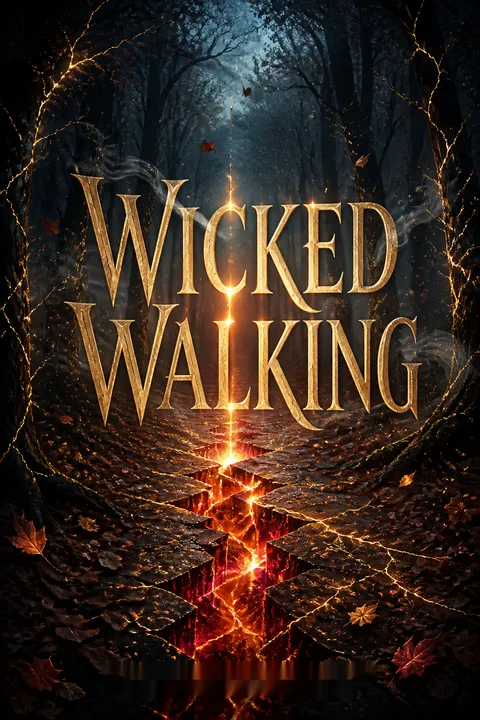
Wicked Walking turns the familiar fantasy bargain of power for sacrifice into a question about who gets to demand the sacrifice. Fallow Creek needs a Witch, but the rite does not ask a candidate to surrender an abstract comfort. It claims freedom, future, and possibly life. Cass’s resistance is therefore not a failure to care for others; it is a refusal to let care become an unquestioned license to consume her.
The novel’s magic system gives this conflict physical force. Healing transfers injury, boundaries can be weakened by blood, and a spell meant to bind an enemy can bind its caster. Every intervention leaves evidence on a body or in a damaged garden. The supernatural never lets the characters pretend that good intentions erase consequences. Cass’s most painful decisions arise because the available choices are all costly, not because she has failed to discover a morally pure option.
The Sixth Child sharpens the story’s concerns with agency. It uses other people’s bodies while their consciousness may or may not remain, turning rescue into a problem of uncertain consent. The family’s repeated debate over whether a host can be saved is not merely tactical. It asks what responsibility survivors have toward someone whose inner experience they cannot verify. Cass’s final act answers the immediate threat, but cannot make the answer clean.
The family’s hidden memories deepen that uncertainty. Louisa’s care and secrecy coexist, and her memory spell leaves the siblings unable to distinguish protection from control. The book refuses to make grief a revelation machine: Louisa dies before explaining the missing pages, and the family must live with what they can remember rather than what they can prove. Cass ends at the edge of another choice, not restored or absolved. Her story’s strongest claim is that responsibility matters, but it does not make a person’s freedom disposable.
Review Summary
Wicked Walking, the second book in the Fallow Creek series, receives overwhelmingly positive reviews with an average rating of 4.43/5. Readers praise its darker, creepier tone than the first installment, featuring body possession, witches, fae, and supernatural horror. The atmospheric writing and fast-paced action scenes keep readers engaged, with many comparing it to Stranger Things and Supernatural. The slow-burn romance between Cassandra and Merich is widely appreciated. Most reviewers found it superior to book one, though some noted repetitive plot elements. The cliffhanger ending left readers desperately wanting book three.
People Also Read
Characters
Cassandra Reilly
Reluctant town guardianCass is a young witch whose unusual magic can harm otherworldly creatures, though she does not fully understand its rules. Protective, sharp-tongued, and wary of being needed, she would rather leave Fallow Creek than inherit its supernatural burdens. Her rescue of five children has made her a local curiosity, while her scars and nightmares keep the rescue painfully present. Cass is loyal to her siblings and to Will, but often mistakes self-sacrifice for the only form of responsibility that counts. Her choices are driven by a fierce instinct to protect people, even as she struggles to claim a life that belongs to her.
Merich
Fae woods guardianMerich is a Warden of the Woods, a Fae protector who helps Cass search for the escaped creature. His teasing manner and human clothing soften his otherworldly power, though his sword and command of shadows reveal the danger beneath the charm. He treats Cass as capable rather than fragile, supports her without pretending her choices are easy, and recognizes when fear is overtaking her. His growing closeness to Cass complicates her plan to leave town, but he does not demand that she surrender her independence for him.
The Sixth Child
Otherworldly fugitiveThe Sixth Child is a creature from beyond the veil, a place where physical bodies do not work as they do in the human world. Cut off from its former source of power, it struggles to maintain a shape and learns to act through living hosts. It can influence dreams, manipulate human behavior, and exploit whatever its victims fear most. Its language and motives are difficult to interpret, making it hard for Cass’s group to tell when it is bargaining, deceiving, or simply trying to survive.
Louisa
The family’s guarded matriarchLouisa raised Cass and her siblings after their mother repeatedly left them in her care. A healer with deep knowledge of Fallow Creek’s magic, she trained the children for the role of Witch while keeping much of her own history private. She is loving and protective, but her secrecy shapes the family as powerfully as her care does. Louisa’s fear of outside attention and insistence on maintaining the town’s protection often conflict with her nieces’ and nephews’ need for honest choices.
Theo Reilly
The family’s researcherTheo is Cass’s older brother, a thoughtful researcher who tries to turn supernatural danger into a solvable problem. He studies books, proposes wards, and questions whether a host can survive possession. His calm can become skepticism, especially when Cass’s suspicions seem driven by exhaustion, but he does not stop caring for her or Pen. Theo is also unhappy in Fallow Creek and hopes to return to California, making him a practical counterweight to the family’s inherited expectation that one of them must stay.
Penelope Reilly
The youngest witchPen, usually called Pen, is Cass’s seventeen-year-old sister, an inventive and outspoken witch who embroiders her clothes and resents being kept away from danger. Her humor masks a strong wish to contribute, and she is particularly protective of the people she considers family. Pen is still young enough to need protection, but she refuses to be treated as incapable. Her bond with Louisa gives the family’s conflicts a different emotional weight from Cass and Theo’s more analytical doubts.
William Miller
Cass’s oldest friendWill is Cass’s lifelong friend and the kind, dependable son of the family that runs Fallow Creek’s diner. He is gentle, attentive, and more patient than Cass believes herself to be. His plans to marry Stephanie and his old conversations with Cass about leaving town reveal competing versions of his future. Will often tries to protect Cass from danger, even when he does not know the full truth about her magic or the history binding them together.
Helen Reilly
The estranged eldest sisterHelen left the family six years earlier to escape the expectation that she would become the Witch. Beautiful, independent, and able to alter her face, she has built a home and life apart from Louisa’s influence. Her return exposes how deeply her departure hurt Pen and Cass, while also showing that she understands the desire to be free of inherited supernatural duties. Helen is capable in a crisis but reluctant to promise that she will stay.
Stephanie
Will’s former fiancéeStephanie is Will’s fiancée, a religious young woman whose longstanding dislike of Cass softens only when Cass helps her at the wedding. She wants a life beyond Fallow Creek, even as the ceremony approaches. Her fear and uncertainty reveal that the broken engagement is not simply a result of Will’s doubts. Stephanie is familiar with the town’s expectations and struggles to distinguish what she wants from what she believes she is supposed to choose.
Fleur Elbridge
A grateful new allyFleur is the older sister of Max, one of the children Cass rescued. She believes Cass’s warning about supernatural danger and stays alert to changes in her brother. Friendly and direct, Fleur offers Cass coffee and later asks for help when Max disappears. Her trust provides Cass with a connection beyond her family, though it also gives Cass another person whose safety she feels responsible for.
Max Elbridge
A rescued young brotherMax is Fleur’s seven-year-old brother, one of the children taken beyond the veil and brought home by Cass. He is young enough that the ordeal continues to shape his sleep and sense of safety. His family’s care for him gives Cass a concrete reason to heed the danger of the Sixth Child’s influence on former captives.
Emma Carfax
A child with troubling dreamsEmma is a five-year-old survivor of the creature’s lair who struggles with sleep after her rescue. She speaks plainly about the boy who appears in her dreams, offering Cass an early warning that the escaped entity remains connected to the children who encountered it.
Ilian
The crow-guided WardenIlian is a Warden of the Woods like Merich, but appears more overtly otherworldly, armored in changing colors and accompanied by crows. He watches the territory and reports discoveries to Merich and Cass. His blunt manner and command of birds make him an efficient, unsettling ally.
Zachariah Crane
The neutral necromancerCrane belongs to the Order of Necromancers and lives behind the sealed door of a cemetery tomb. He can sense spirits and explain the consequences of magical death, but his order refuses to interfere in human affairs. His stillness and impersonal manner make his warnings feel less like advice than a verdict.
James Porter
The first missing townsmanPorter is a Fallow Creek resident whose unexplained disappearance draws police attention. The condition of his home and body gives Cass and Merich an early reason to suspect that the Child is affecting people beyond the rescued children.
Plot Devices
Fallow Creek’s boundaries
Containment under strainA magical perimeter surrounds Fallow Creek, preventing dangerous entities from entering or leaving. Its strength is tied to the territory’s Witch, and the town has gone many years without one. The Sixth Child’s apparent use of murder to weaken the borders turns the boundary into both a defense and a countdown. The Reilly family’s continued presence may help sustain it, though the exact reason remains uncertain.
The Witch’s rite
Power purchased with a lifeTo become Fallow Creek’s Witch, a candidate must spill their blood at a sacred stone and survive a rite that may kill them. Success grants immense power and immortality, but binds the Witch to the town. The rite embodies the book’s conflict between personal freedom and communal protection. It is not a simple promotion: the risk is real, the cost is permanent, and no one can guarantee the candidate will return.
Magic’s reciprocal price
Every spell takes somethingWitchcraft works through physical anchors and demands a cost proportionate to what the spell changes. Healing may transfer injury, life must be balanced with life, and spells that constrain an opponent can constrain the caster too. Cass also has a darker form of magic that can affect creatures resistant to ordinary spells, though she does not understand its full nature. This rule system makes each magical victory a question of what the caster is willing to lose.
The Warden’s mirror
A trap for bodiless creaturesMerich carries an enchanted metal mirror used by the Wardens to catch monsters that change shape or lack a stable body. When activated, it can pull a creature out of its host and hold it within the mirror. The device offers the family a possible way to spare a possessed person, but its limited range requires the target to approach the trap. Its usefulness depends on luring the Child rather than forcing it into place.
Louisa’s memory spell
A past kept out of reachCass’s suspicion of memory magic begins with Louisa’s evasions and a hidden spellbook with missing pages. After Louisa dies, members of the family begin recalling childhood experiences that had been inaccessible. The memories suggest a spell had been maintained for years, but the torn pages conceal its details and the exact reason it was cast. The device makes family history an unreliable source of knowledge while leaving the central secret unresolved.
Download PDF
Download EPUB
.epub digital book format is ideal for reading ebooks on phones, tablets, and e-readers.








