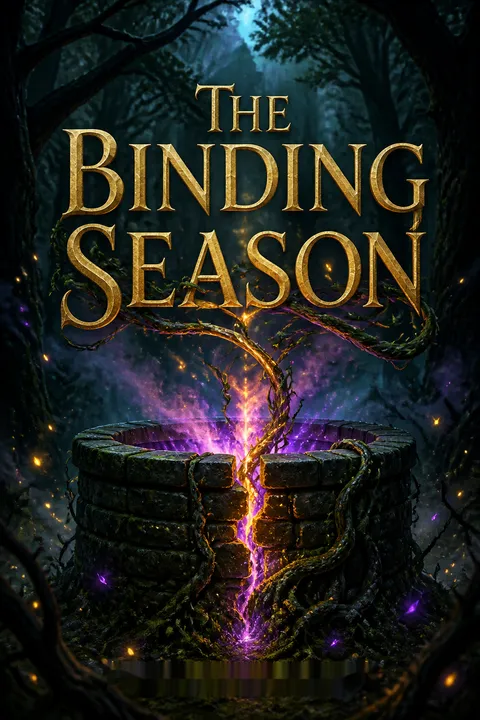


Plot Summary
Blood at the Witch Stone
Cassandra Reilly wakes in a forest clearing with blood on her clothes, a new scar across her throat, and the knife she used to cut it nearby. She remembers offering her life and all her magic to the stone, the ancient rite that makes one witch the supernatural guardian of Fallow Creek. The rite demands death, yet she has returned with a surge of power and names herself the town's new Witch.
Her siblings Helen, Theo, and Pen find her and carry her home, where their aunt Louisa has recently been murdered and Cassandra's friend Will is already gone. The title brings immortality and a duty to stay within Fallow Creek. Cassandra has gained immense power, but cannot yet make it obey her.
The rite makes office inseparable from bodily sacrifice: Cassandra becomes the authority by nearly dying, not by inheriting a stable identity or a clear instruction manual. Her survival looks like triumph, but its cost is already double. She is bound to a place and a supernatural duty just as grief has narrowed her sense of the future. The opening also places her in a family that has survived catastrophe without recovering from it. Her declaration of immortality reads less like confidence than an attempt to bargain with death after it has taken so much.
A Witch Who Cannot Cast
Weeks after the rite, Cassandra cannot reliably use her new power. An attempt to warm coffee blows apart its mug, while a later effort to move paper sends books tumbling across the room.
As Helen tries to draw her out of bed and Theo records each failure, Cassandra retreats into grief over Louisa, Will, and the life beyond town she can no longer choose. Then Merich, a Fae Warden and Cassandra's closest companion, brings a spirit shaped like a striped yellow rabbit crossed with a bee. Pen names it Buzz and stays home to care for it.
Merich explains that powerful magic is pulling invisible spirits into the world and twisting them into physical forms. Since the Fae are threatened and Cassandra is their Witch, she agrees to meet their Elders despite her failing magic.
Cassandra's malfunctioning magic turns a supernatural promotion into a daily test she cannot pass. The family's attempts to help are loving but also make her feel observed, as though her grief has become another problem to document. Buzz offers a small counterexample to the coming horrors: a summoned creature can be odd and harmless, not automatically a monster. Cassandra's decision to answer the Fae is therefore not confidence in her competence. It is a choice to accept responsibility while still afraid, because withdrawing would leave both her new office and the people it is meant to protect undefended.
The Beehive Warden
Merich guides Cassandra, Helen, and Theo through a lightning-split tree into the hidden Fae territory. The Elders greet Cassandra with contempt, particularly Telara, who insults Helen's mixed Fae ancestry.
Cassandra's anger earns her a grudging measure of respect, but the audience turns grim when Holland, an antlered Elder, shows them a dead Warden whose chest has become a nest of bees and golden growth. Forbidden magic has killed him and is also summoning vile spirits, entities that take on physical shapes when dragged into the world.
Holland orders Cassandra to find the killer and stop the attacks, offering little practical help. On their way out, a grey-skinned Fae woman calls the siblings experiments and suggests Louisa once meant to kill Cassandra. Helen recognizes the implication and says she remembers being taken to the Witch Stone as a child.
The Warden's altered body gives the investigation its first concrete measure of danger: the magic is not merely strange, it is converting a person into part of a hostile ecosystem. The Elders' contempt compounds the assignment by making Cassandra answerable to people who doubt her before she starts. Her defense of Helen matters because it establishes her authority as relational, not just ritual. The woman's accusation then shifts the threat inward. The family may have been shaped by secrets long before the Fae entered their lives, so Cassandra's task now has two fronts: an external killer and an unreliable family history.
Helen's Lost Memory
Helen admits that a childhood memory has returned: someone once took her to the Witch Stone and cut her throat. She suspects Louisa hid the event with a spell, and the siblings argue over whether their aunt could have tried to murder her. Theo uses magic on the stone to show what it remembers. The scene reveals their mother, Elizabeth, holding young Helen at knifepoint until Louisa arrives and drives her away.
Louisa fights Elizabeth with powerful magic, but the memory ends before the siblings can learn what became of their mother. Theo's effort leaves him bleeding from his eyes and ears, so Helen and Cassandra drag him home. Helen is relieved Louisa did not attack her, yet the violent gap in their family's past remains unresolved.
The recovered memory does not simply replace one family story with a truer one. It forces the siblings to confront how their knowledge has been edited and how much they have mistaken silence for certainty. Louisa's intervention gives Helen a rescuer, but the memory's abrupt end prevents that relief from becoming closure. Theo's physical collapse also shows that inquiry itself has a price; the past is not a neutral archive he can browse safely. The family can recover evidence, but not control what it will reveal or what each person is ready to believe.
Flowers That Swallow Bees
The siblings and Merich search the place where the dead Warden was found, discovering black vines and yellow flowers that close over a passing bee. Cassandra risks reading the area's magical traces and feels a surge far stronger than ordinary witchcraft.
Merich connects the power to the unnatural humidity, early blooms, and transformed spirits: someone is forcing nature out of its proper rhythms. The group has no clear suspect, so Cassandra keeps searching rather than accept paralysis.
Soon Fae Wardens arrive at her house, ostensibly to help but really to report on her progress. Before dawn, the woods outside her home erupt into tropical growth. A figure formed from leaves builds a body, speaks Cassandra's name, and beckons her into the trees. The Elders' spies tell her not to follow.
The clues form a single pattern only after Cassandra puts them together: the killer's magic does not create isolated monsters but disrupts the processes that make living systems predictable. That insight gives her a way to investigate, while the sudden growth at her doorstep makes the danger personal. The Wardens' surveillance turns institutional mistrust into another pressure on her judgment. Cassandra must decide whether to follow evidence that may be a trap or obey people who have shown little faith in her. Her willingness to move, despite uncertainty, marks the beginning of active leadership.
The Warden in the Flames
Cassandra, Helen, Merich, and several Wardens follow the living trail to an abandoned mill, where Ianthe, a former Warden, reveals she killed Gwilym. She says she wants the Witch's power because she believes the Fae should govern themselves, free of human authority.
Cassandra cannot simply surrender the role, which is bound to her by the rite, and refuses. Ianthe attacks with plants and summoned beetles. Helen sets the clearing alight, while Merich fights Ianthe and a three-headed spirit wolf.
The battle leaves Merich badly injured and kills Cedrus, a Warden who tries to shield Cassandra. Ianthe escapes. Cassandra is left holding Cedrus as he dies, unable to use her failing magic to save him, and the killer's political grievance has become a war.
Ianthe's grievance is not fabricated: the Fae do answer to a human Witch, and Cassandra herself does not fully understand why. But Ianthe's methods turn a political question into coercion, making her critique impossible to separate from the bodies it produces. Cassandra's helplessness beside Cedrus intensifies her guilt because she occupies an office whose promises exceed her current abilities. The scene also clarifies the personal stakes of Merich's loyalty. His willingness to fight for her is moving, but in a society that punishes Fae for killing one another, protecting Cassandra could eventually cost him his place among his own people.
Asphodel at the Fence
After returning from the mill, Cassandra and her siblings use Theo's memory spell to confirm that Louisa once fought Elizabeth at the stone. They later attempt to scry for Ianthe, but Cassandra's erratic power blasts the room apart, injuring Theo, Helen, Pen, and Merich without finding their target.
Merich leaves to report the failure. During the night, a vile spirit lures Cassandra into the woods; Asphodel, an Elder who had come to guard the family, is killed outside the house while the creature attacks a Warden.
The Elders then blame Cassandra for failing to stop Ianthe. Holland and Brigid defend her, but the confrontation makes clear that her allies are few and the spirits are spreading. Cassandra decides she needs answers about her own family as well as the killer.
These failures expose the difference between possessing power and being able to use it safely. Cassandra's attempt to accelerate the search injures the people she most wants to protect, while the attack at home demonstrates that caution cannot guarantee safety either. Asphodel's death makes the family's refuge feel porous and turns institutional criticism into a moral burden. Yet the Elders do not agree on what Cassandra's duty requires, which leaves room for her to define it herself. She begins to recognize that useful action may require questioning the history that produced the Witch's office, not merely obeying its inherited expectations.
Children Made for Power
The siblings visit Calla, a Fae healer whose body is already showing signs of Ianthe's spreading magic. Calla explains that Elizabeth sought children with Fae and magical ancestry, believing their inherited power could be harvested through a blood sacrifice at the Witch Stone.
The memory of Elizabeth's attack on Helen supports Calla's account, though Calla cannot say exactly what Louisa did to stop her. Cassandra remembers finding an old spellbook in Louisa's bedroom, one containing instructions for draining another witch's power, but the book has disappeared.
Will may have hidden it while trying to protect Cassandra during her grief. Theo is shaken by the possibility that the siblings were conceived as experiments, and the family has more evidence of Elizabeth's motives than it has answers about her fate.
Calla's explanation makes the siblings' origins feel horrifyingly instrumental: their mother may have treated kinship as a method for acquiring power. The grimoire complicates that account because knowledge of the spell does not prove who intended to use it, and its disappearance deprives the siblings of a way to verify the details. Theo responds by questioning whether their existence itself has value, showing how abuse can survive as an internal judgment even when the abuser is absent. Cassandra's effort to understand the past is not detached research; every new fact alters how her siblings understand their own right to belong.
The Woods Give Back
When Merich fails to return from patrol, Cassandra uses his jacket to track him through the woods. She finds his bloodied sword and then the vile spirit that attacked him, a bear-shaped skeleton of shadow and vines.
Cassandra cannot wither its living parts without strengthening them, but she discovers a way to seize the spirit's dark magical structure and destroy it. Merich is alive, though gravely wounded, and Cassandra drags him home for Theo and Helen to heal. Once he wakes, Merich suggests that her magic works best when it follows an anchor's natural tendency.
Cassandra tests the idea by encouraging winter plants to grow, and a garden blooms around her. The breakthrough gives her confidence, and she kisses Merich, finally admitting her feelings after weeks of fearing she would lose him.
Cassandra's rescue is a decisive change in how she sees herself. She cannot heal Merich or master every kind of magic, but she can observe, adapt, and act under pressure. Merich's theory gives her a practical principle rather than another demand to be stronger. The garden becomes an experiment in cooperation with nature instead of domination over it, a direct contrast to Ianthe's distortions. The kiss follows the same movement: Cassandra stops treating attachment as a threat she can prevent through distance. She accepts that love cannot guarantee safety, but withdrawing from it would only guarantee loneliness.
The Grave Without a Name
Helen tells Cassandra how a monster-hunting group she joined after leaving home collapsed in a tunnel attack. The Fae companion Saith abandoned her and her dying friends, leaving Helen to escape alone; the loss explains why she distrusts Fae loyalty, even as she begins to trust Merich. The siblings search their family cemetery for Elizabeth and discover she has no grave among their relatives.
Cassandra asks Zachariah Crane, an immortal necromancer, to locate her mother's body. He cannot find it and warns that death is not the only terrible possibility. The failed search leaves the family unsettled. It also turns the absent grave into evidence: if Louisa had defeated Elizabeth, she may have hidden what happened rather than burying her.
Helen's story reframes her hostility as an adaptation to abandonment, not a simple prejudice. She has seen a Fae choose self-preservation over a group that trusted him, so Merich's devotion challenges a painful rule she learned through survival. The cemetery search gives the family history a physical geography: their relatives are accounted for, except for the person they most need to locate. Crane's refusal to explain what he senses preserves uncertainty but changes its emotional register. The siblings are no longer asking only what Elizabeth did. They must consider whether her absence means she remains capable of returning.
The Elders' Ambush
A human photographer is found dead among Ianthe's carnivorous plants, and the Elders summon Cassandra to investigate. A Warden secretly aligned with Ianthe stabs her as the woods surge around them. Ianthe arrives, urging the Fae to reject the Witch's rule, but the Elders refuse to support her.
She kills Aeborn, badly wounds Telara, and unleashes spirits against the gathered Fae. Cassandra uses her improved magic to stop the infection spreading through Telara, while Helen burns away the hostile growth.
Theo turns Ianthe's own power against her, making its corruption advance faster. Ianthe retreats, and the battle reveals that her magic is consuming her as well as the forest. Yet Cassandra and Merich discover the plague has already begun growing inside them.
Ianthe's political appeal briefly gathers a crowd, but the false summons and attack destroy any distinction between her promised liberation and her coercive rule. Cassandra's response is more complex than simply defeating an enemy: she saves Telara, an Elder who has repeatedly scorned her, and thereby acts on responsibility rather than personal approval. Theo's intervention reveals a tactical opening, but it also troubles him because the strategy accelerates Ianthe's suffering. The battle changes the clock. The threat is no longer only what Ianthe may do to the community; her magic is already inside the people who oppose her.
Two Witches, One Well
As flowers begin growing from her own skin, Cassandra understands why her magic has been inconsistent. Elizabeth was the previous Witch of Fallow Creek, and the power drawn from the town's well has been divided between mother and daughter.
Louisa's memory spells may have hidden the family from Elizabeth after their fight, but those spells are fading now that Louisa is dead. Elizabeth was forced beyond her territory, where a Witch's power can transform its bearer into something monstrous.
Cassandra tells Theo and Helen, and Merich urges them to keep the revelation from the Fae, who might see the family as a threat. They cannot postpone dealing with Ianthe: the spreading plague is killing them, and Ianthe's blood has left a trace Cassandra can use to track her.
The revelation turns Cassandra's apparent incompetence into a consequence of an impossible arrangement: she is trying to command a power that belongs, in part, to another Witch. It also recasts Louisa's secrecy. Her memory spells may have been less an effort to conceal wrongdoing than a defense against a mother who would exploit her children. That possibility does not erase the harm of being kept ignorant, but it changes the moral picture. Cassandra must act before she can resolve the truth, carrying both the danger of Elizabeth's return and the suspicion that revealing it could put her family at risk.
The Church of Rot
Cassandra tracks Ianthe to the ruins of Fallow Creek's original church, following her blood through a forest that bends its paths and flowers toward the dying Fae. Helen and Theo fall behind as the corruption worsens, so Cassandra continues with Merich and carries a broken stick that can summon her siblings if she snaps it.
Inside the church, Ianthe is barely recognizable, her body overrun by plants and fungi, yet she still refuses to surrender. She attacks Cassandra with a knife and unleashes enough power to make flowers grow through Cassandra's skin and the plague surge through Merich.
Cassandra uses her magic to force Ianthe's corruption to grow, but cannot hold the spell long enough to kill her. Ianthe escapes the church, leaving Cassandra injured and Merich collapsing.
The church makes Ianthe's cause feel like a failed attempt at restoration: she has chosen a ruin as her refuge, but the power she hoped would free the Fae is dismantling her body. Cassandra's decision to leave Helen and Theo behind is protective, yet it also repeats the loneliness she has spent the book resisting. Her magic can now reach Ianthe, but it cannot yet finish the work. The encounter strips away any comforting idea that understanding an antagonist will make her harmless. Cassandra can pity Ianthe and still face the necessity of stopping her.
Bones Beneath the Church
Cassandra learns that Elizabeth may still be alive, then follows the bloodied leaf to Ianthe's lair with Merich and her siblings. At the abandoned church, Ianthe ambushes them. Her knife is stopped by Cassandra's scarf, while Merich fights and Helen and Theo struggle against the spreading magic.
Cassandra raises bones from the cemetery hillside to pin Ianthe, but hesitates to kill her. Ianthe breaks free and attacks again; Merich drives his sword through her before she can kill Cassandra.
The plague and unnatural growth vanish with Ianthe's death, though her body crumbles away. Cassandra tells the others she killed Ianthe, shielding Merich from the Fae law against killing one of their own. She grants Holland sanctuary, then swears with Helen and Theo to oppose Elizabeth in exchange for Fae wards.
The climax tests whether Cassandra can distinguish refusal to kill from refusal to protect. She does not want to become an executioner, and the bone spell gives her a chance to restrain Ianthe without immediately taking her life. When Ianthe renews the attack, Merich makes the choice Cassandra cannot, accepting the consequences of violating Fae law. Cassandra's lie afterward is not a denial of what happened so much as an act of care: she tries to preserve Merich's future as he preserved hers. The bargain for sanctuary extends that ethic into politics, turning protection into mutual obligation.
A Home Behind Wards
The Fae lay thirty wards around Fallow Creek, creating a second defense against Elizabeth's possible return. Holland explains that humans hold the Witch's office because other supernatural beings might exploit the town's well, while humans can balance care with restraint.
With the immediate threat ended, Theo decides to leave town and pursue a life beyond the family crisis. Cassandra, once terrified of being abandoned, encourages him to go; Helen chooses to stay, and Merich remains by Cassandra's side.
The siblings' future is still uncertain, and Cassandra's bond to Fallow Creek remains permanent, but the house is no longer merely a refuge guarded by failing magic. It is a place where her family can choose closeness without being forced to remain together.
The resolution answers the opening's fear of permanent confinement with a more nuanced form of belonging. Cassandra cannot leave Fallow Creek, but she stops treating other people's departures as proof that she will inevitably be abandoned. Letting Theo go is an act of attachment that permits separation rather than preventing it. The wards also transform protection from a solitary burden into shared work: Cassandra accepts help from a community that once doubted her. Her authority becomes credible not because she controls everyone, but because she can make agreements, set limits, and keep a home open.
Epilogue
After the wards are laid, Pen goes alone into the woods carrying Louisa's missing notebook. She has secretly read it and pieced together that Elizabeth is alive, while her siblings have kept the discovery from her. Pen believes the wards are the only thing preventing their mother from returning and that removing them will end her isolation.
She pulls a blood-marked stone from the boundary, then removes a fragment of bone and conceals a piece of quartz. The wards may take hours or days to fail, but Pen intends to tell her siblings once Elizabeth can come back. She walks home through the rain, convinced she is opening a door to family.
The epilogue overturns the security of the resolution without undoing the work that produced it. Pen's choice grows from real deprivation: she has been excluded from dangerous decisions and has learned the family's truths through overheard fragments rather than trust. But the notebook gives her knowledge without the context to judge the threat Elizabeth poses. By dismantling the wards, Pen turns a plea for belonging into a dangerous act of agency. The ending makes secrecy costly in a precise way: the siblings protected Pen from frightening information, but that protection also left her alone with the power to act on incomplete information.
Analysis
The Binding Season treats supernatural authority less as a reward than as a relationship with obligations, limits, and other people's consent. Cassandra inherits a role that makes her powerful over the Fae, yet her first experience of the office is bodily vulnerability and unreliable control. The story refuses to equate power with competence: Cassandra becomes a credible Witch through observation, ethical judgment, and the willingness to accept help, not by mastering every spell or winning every fight alone.
Its treatment of family is similarly resistant to easy categories. Louisa's care and secrecy coexist; Elizabeth's absence becomes evidence of possible exploitation; and the siblings inherit consequences before they understand their origins. Their memories are incomplete, but recovered knowledge does not automatically heal them. Theo sees the family as an experiment, Helen carries the cost of abandonment, and Pen experiences protection as exclusion. Each responds to the same history through a different wound.
The novel's magic system gives these conflicts physical form. Ianthe's attempt to control nature produces bodies and landscapes that cannot sustain the force imposed on them. Cassandra's most effective magic instead begins with attention to what an anchor naturally does. That contrast has ethical force: her power succeeds when she works with life rather than treating it as raw material. Her refusal to kill every spirit extends the same principle beyond human and Fae communities.
The ending offers a provisional resolution, not a sealed one. Cassandra chooses connection over self-punishing isolation, makes a political bargain, and allows Theo to leave. Yet the epilogue shows how secrecy can reproduce the very danger it was meant to prevent. Pen's decision to remove the wards is reckless, but it grows from a credible need to be trusted and included. The book's final unease therefore belongs not only to supernatural threats, but to the family's unfinished work of telling one another the truth.
Review Summary
The Binding Season receives overwhelmingly positive reviews (4.48/5), with readers praising its atmospheric horror, plant-based terror, and character development. Reviewers highlight the compelling witch-fae romance between Cass and Merich, describing it as a perfect slow burn. The sibling dynamics and trauma exploration resonate strongly. Many note this third installment is darker and more intense than previous books, featuring graphic botanical and body horror. Readers appreciate the balance between fantasy plot and romance, with authentic character arcs addressing grief and loss. The cliffhanger ending leaves fans eagerly anticipating book four.
People Also Read




Characters
Cassandra Reilly
Reluctant town WitchCassandra is a young witch carrying grief, guilt, and a supernatural office she never feels fully prepared to hold. She measures herself harshly against her siblings' confidence and her own unreliable magic, often reading survival as evidence that she must now protect everyone else. Her reflex is to run toward danger when someone needs help, even when she has no clear plan. That impulse can be reckless, but it also gives her a moral center: she resists treating strange beings as disposable and tries to protect even those who have insulted her. Cassandra's growth is less about becoming fearless than learning to use power with judgment, accept help, and let love exist without mistaking it for a promise against loss.
Merich
Fae Warden and allyMerich is an immortal Fae warrior who patrols the woods and serves as a Warden, but his daily presence in Cassandra's home gives him a life beyond his official role. He is capable in battle and comfortable with danger, yet he is also attentive to small things: he brings Cassandra flowers and explains their meanings, stays near her through grief, and notices patterns in her magic. His longing for lasting connection contrasts with Fae customs that often treat relationships as temporary. Merich's humor softens his intensity, but his loyalty can become self-endangering. He wants Cassandra to survive, not merely to fulfill the Witch's office, and he offers support without demanding that she recover on his timetable.
Helen
Fae-blooded older sisterHelen is Cassandra's striking, sharp-tongued older sister, a powerful witch with Fae ancestry and an instinct for taking charge. She returns to the family home after years away and uses jokes, stories, and practical care to pull Cassandra out of isolation. Her confidence can look like ease, but she is guarded about her past and carries deep distrust of the Fae. Helen is protective of Pen and often decides what others are ready to know, sometimes reproducing the secrecy that shaped their childhood. Beneath her command and sarcasm is a person who has known abandonment and loss. She wants to keep her family safe, while learning that protection also means listening and allowing her siblings to act.
Theo
Researching older brotherTheo is Cassandra's analytical older brother, a witch who reaches for books, notes, and tests when faced with a problem. He handles practical responsibilities and often steadies the family through competence, but he is exhausted by years of staying in Fallow Creek under Louisa's expectations. His relationship with Helen is strained by her long absence, and his arguments reveal resentment he has tried to contain. Theo's rationality is genuine, not a mask, yet it can become a way to defer painful feelings. He cares deeply for Cassandra and Pen, supporting them even when he doubts their plans. His desire to leave is not a rejection of family, but a necessary claim to a future of his own.
Pen
Youngest witch siblingPen is Cassandra's seventeen-year-old sister, a witch with a quick temper, a fierce sense of humor, and a hunger to be included. Her siblings often treat her as too young for danger, a choice rooted in care but experienced by Pen as proof that she does not matter. She takes delight in Buzz, Christmas preparations, knitting, and small acts of defiance. Pen is not simply impulsive: she notices what others conceal and wants a fuller understanding of her family and its history. Her anger grows where information is withheld. The need to be seen and trusted drives her more strongly than a desire for adventure, making her both a source of warmth and a force the family underestimates.
Louisa
The siblings' aunt and guardianLouisa raised Cassandra, Helen, Theo, and Pen in Fallow Creek, teaching them witchcraft while keeping their family life tightly controlled. She is remembered through ordinary acts of care as well as through secrets that the siblings uncover after her death. Louisa's attachment to the children is real, but it exists alongside decisions that leave them isolated and uncertain about their past. She believed the Witch's role mattered enough to shape the family's future around it. Her influence persists because she is absent: her lessons, memory spells, and silences continue to govern what the siblings know and how they interpret one another.
Ianthe
Rebellious Fae WardenIanthe is a former Fae Warden who resents the Witch's authority over her people and regards human rule as an indignity. She is politically perceptive enough to identify a genuine imbalance in the supernatural order, but her ambition gives her no patience for negotiation that might limit her power. Ianthe uses forbidden magic to alter plants, summon spirits, and force the world to serve her aims. Her control is inseparable from physical cost, though she insists the resulting damage is necessary. She sees Cassandra as a symbol of the order she opposes, not as a grieving young woman struggling to understand the role. Her certainty makes her dangerous even as her argument remains unsettling.
Holland
Antlered Fae ElderHolland is an Elder of the Fae, recognizable by his antlers and measured manner. He initially treats Cassandra's appointment as a question of competence, but he is more willing than some of his fellow Elders to listen to evidence and revise his position. He values order and the survival of his people, while recognizing that those aims do not always align with the Elders' pride. His relationship with Cassandra becomes a negotiation between mutual dependence and mistrust. Holland offers practical political support, but expects the Witch to accept the responsibilities attached to it.
Brigid
Red-haired Fae WardenBrigid is a Fae Warden whose bright appearance and martial skill accompany a thoughtful, independent judgment. She begins as an observer sent to monitor Cassandra, yet she is willing to challenge the Elders when their expectations become unjust. Brigid respects the work of protecting people more than the appearance of obedience. Her willingness to defend Cassandra's family helps turn an imposed alliance into a chosen one. She is also drawn toward Helen, though that attraction develops quietly beside the larger conflict.
Calla
Reclusive Fae healerCalla lives alone in a cottage deep in Fae territory and bears visible signs of the magical corruption spreading through the woods. She is blunt, suspicious, and more interested in hard truths than in comforting the people who ask her for help. Her history with Elizabeth gives her insight into the siblings' origins, though not a complete account of what happened to their mother. Calla's knowledge is valuable precisely because it is limited: she can explain the ambition behind Elizabeth's experiments without solving every mystery left by Louisa.
Elizabeth
The siblings' absent motherElizabeth is Cassandra, Helen, Theo, and Pen's mother, a witch whose absence shapes the siblings' understanding of family. She had little part in raising them, leaving Louisa to provide their home and instruction. The children know her chiefly through gaps in their memories and the explanations adults gave them. Her connection to Fae ancestry and witchcraft makes her absence more consequential than an ordinary estrangement. For the siblings, she remains both a person they never knew and a question about why they were born, what Louisa was protecting, and how much of their past has been deliberately concealed.
Will
Cassandra's childhood friendWill was Cassandra's closest childhood friend, remembered for his kindness, his baking, and the cinnamon rolls he brought to her family. His connection to Cassandra is bound to the grief she carries and the guilt she struggles to examine. She recalls him not only through the violent events surrounding his final days, but through ordinary warmth: a familiar presence in the kitchen and someone who cared when she was overwhelmed. That tenderness gives Cassandra a fuller memory of him than guilt alone allows.
Theo's friend group
Helen's lost companionsWhile away from Fallow Creek, Helen joined a group of supernatural investigators that included Aline, a Halfling, Werner, a shapeshifting sorcerer, Annika, and Saith, a Fae warrior. The group gave Helen the companionship and shared purpose she had lacked at home. Their different relationships to magic and supernatural identity shaped how Helen understood belonging. Their history matters because it explains why she fears relying on Fae allies, even when she wants to believe Merich is different.
Asphodel
Moth-eyed Fae ElderAsphodel is an ancient Fae Elder whose shifting, moth-eyed appearance makes her unsettling to Cassandra at first. Unlike the more openly dismissive Elders, she approaches Cassandra with patience and treats the young Witch as a potential ally. She notices Cassandra's magical difficulty and offers to help her keep that weakness private. Asphodel's calm attention gives Cassandra a rare experience of support from within Fae leadership, one based on candid observation rather than flattery.
Zachariah Crane
Necromancer of the OrderZachariah Crane is an immortal necromancer who lives in a tomb and can perceive the dead. Cassandra seeks him out for help locating her mother's grave. His manner is grave and restrained, and he does not offer easy explanations when the dead remain beyond his reach.
Cedrus
Spidery-haired WardenCedrus is a stern Warden sent to monitor Cassandra's investigation. He initially treats the Witch's household as a source of danger, but his sense of duty puts him in the path of violence. His rigid confidence contrasts with Cassandra's improvisational approach.
Ilian
Crow-guided WardenIlian is a Warden who can command or work with crows. He has crossed paths with Cassandra before and provides a connection between the Fae's patrols and the dangers moving through the woods.
Telara
Floating Fae ElderTelara is a pale, floating Elder whose appearance and manner make her seem remote from ordinary human life. She is openly scornful of Cassandra's authority and Helen's ancestry. Her contempt puts the conflict between the Witch's office and Fae self-rule into personal terms.
Aeborn
Ancient green-skinned ElderAeborn is an ancient Fae Elder with a small, almost childlike form and a voice that suggests the age of trees. He speaks in the language of laws and inherited responsibility, offering little warmth but a clear sense of the order he believes must be preserved.
Plot Devices
The Witch's Rite
Power bought with lifeThe rite at the stone in the woods grants one person the office of Witch, magnifying their authority over the supernatural and binding their power to Fallow Creek. Its cost is a life, so performing it risks death and makes succession a matter of blood as well as skill. For Cassandra, the rite creates a permanent obligation before she understands the family history or politics attached to it. The office protects the town's well of magic, but also limits the Witch's freedom and makes challengers a threat to everyone nearby.
Magic Anchors
Spells follow natureWitchcraft works through anchors, physical connections that let a spell act on the world and impose a cost on its caster. Air can move, fire can spread, plants can grow; trying to force an anchor against its nature can make magic fail or turn dangerous. Cassandra's unreliable power makes this principle central to her learning. Merich helps her recognize that working with an anchor's natural tendency is more reliable than trying to dominate or reverse it. The rule guides her growth and later provides a way to resist Ianthe's distorted magic.
The Memory Stone
The earth preserves evidenceThe Witch Stone and other parts of the landscape retain traces of past events that a skilled witch can uncover. Theo uses the stone to replay the fight between Elizabeth and Louisa, revealing that the siblings' memories have been deliberately obscured. The visions provide evidence but not a complete record: the scene ends before the family's questions are answered. The device makes memory something external and examinable, while emphasizing that recovered fragments still require interpretation and can endanger the person performing the spell.
Vile Spirits
The unseen made physicalVile spirits exist between the visible world and the veil. Powerful magic can pull them into physical forms, which they construct by copying animals, plants, or combinations of things they have observed. Some forms are harmless, like Buzz, while others become predators capable of killing Fae and humans. The spirits establish the difference between existence and threat: Cassandra resists the Elders' demand to kill every summoned creature simply because it is unfamiliar. Their changing shapes also reveal how Ianthe's magic is warping the natural world.
The Fae Wards
A boundary against returnThe Witch's home is protected by wards, and Holland later helps lay a second network of Fae wards around Fallow Creek. Blood, bone, stone, and other materials connect the protections to the people and land they guard. The wards give Cassandra and the Fae a practical defense when Elizabeth's return becomes a possibility. They also make protection dependent on trust and maintenance. The epilogue reveals that a family member can weaken this defense from within, turning the ward network into a vulnerable boundary rather than an absolute guarantee.

Download PDF
Download EPUB
.epub digital book format is ideal for reading ebooks on phones, tablets, and e-readers.








