

Key Takeaways
Treat political crises as accumulated conditions, not isolated sparks
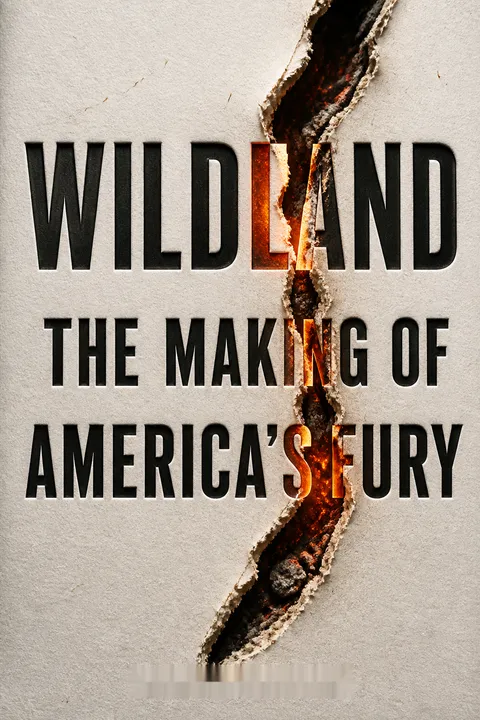
A spark needs tinder. In 2018, a rancher’s hammer struck a metal stake, sending a spark into California grass dried by extreme heat. The fire became the largest in the state’s history at that time. Two years later, lightning ignited an even larger blaze. Osnos uses these fires to illuminate a political crisis that also built over years: inequality, racial division, declining trust, and institutions weakened by neglect. The book follows those forces from September 11, 2001, to the attack on the Capitol on January 6, 2021.
Three places, one system. Greenwich represents concentrated wealth and political influence. Clarksburg shows the costs of extraction and economic decline. Chicago reveals how segregation shapes opportunity and danger. Their stories are not separate regional curiosities. They show how decisions made in one place alter the lives of people elsewhere.
The wildfire image is more than a metaphor for sudden anger. It makes a useful distinction between an immediate trigger and the conditions that make a trigger consequential. That distinction discourages the comforting habit of blaming a single candidate, protest, or news event for a crisis with older roots. The book’s cross-country structure also resists a simple urban-versus-rural account. Still, the three places are illuminating case studies, not a representative sample of every American community. Their value lies in revealing connections, not proving that every locality follows the same path.
Follow wealth to see who gains, and who absorbs the damage
Finance changed its purpose. Greenwich’s rise as a hedge-fund center reflects a broader shift: financial firms gained the freedom to take larger risks, while executive compensation increasingly rewarded rising share prices. Between 2008 and 2017, companies in the S&P 500 spent 53 percent of profits on stock buybacks and another 35 percent on dividends. That money could instead have supported wages, training, equipment, or research. The distance between executive and worker pay widened too, from about 20 times in 1965 to 278 times in 2019.
Costs travel outward. Hedge funds enriched Greenwich, but the book traces their reach into West Virginia coal bankruptcies and Chicago mortgages. Wealth can be private while its costs become public: lost jobs, abandoned obligations, foreclosed homes, and damaged land.
The useful question here is not whether finance creates value in the abstract, but who receives returns and who carries risks when a deal fails. That accounting connects corporate governance to public health and local budgets: a financial decision can shift costs onto workers, taxpayers, or future residents without appearing as a loss on the investor’s balance sheet. The book’s critique is strongest when it follows those consequences into people’s lives. It is less persuasive if every financial transaction is treated as extraction, since investment can also fund productive activity. The distinction depends on the actual outcome, not the label.
Protect representation before money turns access into a private privilege
Access became routine. A study of congressional offices found that senior staffers agreed to meet three to four times more often when they knew a request came from a donor. A leaked guide for incoming House members recommended spending at least five hours a day raising money. After the 2010 Citizens United decision, super PACs spent a billion dollars in the 2012 election, with 73 percent supplied by just 100 people.
Paralysis also serves power. Lawrence Lessig’s Mayday project tried to elect lawmakers who would reform campaign finance, but the effort failed. Meanwhile, Mitch McConnell’s use of the filibuster helped block legislation and make government dysfunction politically useful. When citizens see that access is purchased and problems remain unsolved, distrust is not merely a communications failure. It is a verdict on how power works.
This account highlights a democratic weakness that is easy to miss: unequal access can distort policy without requiring an explicit bribe. The system may remain formally open to everyone while the practical cost of being heard becomes prohibitive for ordinary citizens. That is a problem of political equality as much as corruption. Yet money is not the only cause of legislative failure. Parties, electoral rules, and genuine ideological conflict also matter. Reform therefore has to address both the funding pipeline and the incentives that reward obstruction, rather than assuming that removing campaign cash alone will restore effective government.
Ask who owns the land, the jobs, and the local story
Extraction shaped Appalachia. West Virginia separated land ownership from the mineral rights below it, allowing outside companies to profit while local people lived with the consequences. Mountaintop removal made coal extraction faster, but it buried streams, damaged ecosystems, and contributed to health problems. A study cited in the book estimated that the costs of illness and lost income in heavily mined counties exceeded the economic benefits coal brought them.
Local knowledge matters. Clarksburg’s glass industry declined, its population shrank, and its newspaper struggled to survive. From 2005 to 2020, more than 2,100 American newspapers closed. Local reporting helps residents scrutinize officials and recognize shared problems. As news shifted toward national spectacle and outrage, people could know more about distant political fights while knowing less about their own neighbors and government.
The chapter links material resources to information, two forms of local power that are often discussed separately. Ownership determines who can shape a place’s economy; journalism helps residents see how those choices are made. When both weaken, communities lose not only income but also the means to contest decisions. The account also complicates the idea that extraction is simply a bad bargain accepted freely. A choice made amid limited jobs, concentrated ownership, and little political leverage is not equivalent to a choice among good alternatives. A fuller assessment should ask what options people actually had.
Treat a ZIP code as infrastructure, not background scenery
Segregation compounds. In Chicago, the distance between prosperous downtown districts and predominantly Black neighborhoods shaped access to jobs, transport, safety, and public services. One report counted up to 700,000 jobs within a short commute from thriving areas, compared with about 50,000 near the South Side. In poor Black neighborhoods, homicide rates averaged thirteen times those in better-off white areas.
Reese Clark’s life shows the accumulation. His family could not afford bus fare for the high school he hoped to attend. He entered a poorly resourced school, joined a gang, and went to prison. After release, an employer used him as a temporary worker but refused to hire him permanently because of his record. Predatory mortgage lending then helped cost his family its home. Each event had its own cause, but together they narrowed his choices.
Place operates here as a bundle of opportunities and constraints, not a scenic detail. That model helps explain why equal effort can produce unequal results: transport, school quality, nearby employers, and safe public space affect what effort can accomplish. Clark’s experience makes structural disadvantage concrete without erasing his responsibility for his actions. That balance matters. A purely individual account misses the accumulated barriers; a purely structural one risks portraying people as passive products of place. The strongest reading holds both together: personal choices matter, and the conditions shaping those choices are politically made.
Reduce the distance between a decision and its human consequences
Harm can become abstract. Hedge-fund manager Chip Skowron paid a medical researcher for information about a drug trial, then traded ahead of bad news. He later pleaded guilty to securities fraud and received five years in prison. In interviews, he described how money and performance had helped blur his sense of right and wrong. The book calls attention to psychological distance: people may find it easier to harm those they never meet.
Punishment is unequal too. The book contrasts the influence available to former Virginia governor Robert McDonnell, who received a two-year sentence for corruption, with the severe sentence of teenager Travion Blount, who had far fewer resources and advocates. Their offenses were different, so the comparison is not a claim of equivalence. It shows how social standing can shape who is understood, defended, and offered another chance.
The distance between action and victim is a powerful explanation for ordinary wrongdoing, especially in systems where harm arrives through paperwork, trades, or policy rather than face-to-face violence. It also suggests a practical ethical test: make the affected people visible before judging an action only by its returns. The justice comparison adds a separate question about accountability. Different crimes warrant different penalties, but access to skilled advocates and public sympathy should not determine whose life remains recoverable. The book’s examples are vivid; they do not, on their own, establish that every disparity in sentencing has the same cause.
Notice when fear is being sold as protection
Threats can be manufactured. American violent crime fell by nearly half over two decades, yet almost 70 percent of Americans surveyed believed crime had risen the previous year. The gun industry and political campaigns could turn fear into sales, votes, and group identity. By the book’s account, Americans owned about 310 million firearms, while gun ownership was increasingly concentrated among fewer households. Guns from West Virginia also moved into other states through what federal agents called the iron pipeline.
Politics sharpened the divisions. Trump’s warnings about immigrants and urban violence framed social change as a threat from an enemy population. The combat mindset, a term for approaching ordinary life as if danger were imminent, made suspicion feel like vigilance. That frame encouraged people to interpret disagreement as a fight for survival rather than a dispute among citizens.
Fear is not simply a private emotion in this account. It becomes a marketable political resource when institutions, media, and industries repeatedly attach danger to a recognizable out-group. That helps explain why evidence of falling crime may not calm people who experience a steady stream of frightening images. The counterpoint is important: some threats are real, and dismissing fear as manipulation can sound like contempt for people’s lived insecurity. A responsible response distinguishes specific dangers from sweeping claims about whole groups, then asks whether a proposed remedy actually reduces harm or mainly intensifies alarm.
Do not mistake self-reliance for a substitute for public capacity
A weakened state fails in emergencies. After years of cuts and hostility toward federal administration, the United States struggled to organize its early Covid response. In West Virginia, public-health spending had fallen 27 percent between 2010 and 2018, and staffing had also declined. The pandemic exposed how shortages of trained workers, equipment, and reliable data affect everyone, though low-income communities faced higher risks and fewer protections.
War left another human cost. Marine Sidney Muller returned from Afghanistan with worsening trauma, insomnia, and heavy substance use. He received prescriptions and disability payments, but his life unraveled, ending in the deaths of four people and a life sentence. He was responsible for the killings. The story also asks what happens when a country promises care to veterans, then leaves them with inadequate support and little structure after service.
Self-reliance can offer dignity and initiative, but it cannot replace systems that coordinate expertise, treatment, and emergency response. The pandemic makes that dependence visible; Muller’s story shows its quieter, longer aftermath. Both caution against treating public institutions as either universally competent or inherently useless. Their quality depends on investment, oversight, and whether people can access them. The book’s account of Muller also holds a difficult ethical line: acknowledging institutional failure should deepen the explanation, not erase responsibility for killing. Explanation and accountability answer different questions, and a serious society needs both.
Build civic trust through shared work close to home
Local action can cross divides. In 2018, 22,000 West Virginia teachers and school staff struck for nine days and won a 5 percent raise, inspiring similar walkouts elsewhere. Activists in the West Virginia Can’t Wait movement then recruited candidates for local office who refused corporate donations. Their effort grew to 93 candidates, supported by 2,449 small donors, while the incumbent governor had 13.
Relationships make public life tangible. In Chicago, organizer Jahmal Cole brought young people into unfamiliar parts of the city through field trips and arranged neighborhood tours for police officers led by local children. The purpose was practical exposure, not instant agreement. The book closes with Tenesha Barner, who found care from relatives, neighbors, church members, and coworkers when she became ill. Political repair begins with institutions, but it also depends on people learning to recognize one another as part of the same place.
These examples shift the focus from national agreement to shared capacity. People can cooperate on a school, a neighborhood, or a public service without resolving every disagreement about identity or ideology. That is a more plausible starting point than demanding complete consensus. The book also avoids treating local solidarity as a cure-all: community groups cannot substitute for fair budgets, strong public services, or accountable institutions. Their distinctive contribution is to make needs visible, create relationships across social boundaries, and give residents a way to act together before national politics turns every difference into a total contest.
Analysis
Wildland argues that America’s political breakdown is not a single eruption but a system of interacting failures. Economic decisions concentrate wealth; concentrated wealth gains political access; political paralysis weakens public services; declining local news makes shared conditions harder to see; and fear-based media recasts neighbors as threats. The wildfire metaphor captures this cumulative logic: an ignition matters, but the landscape determines whether it becomes catastrophe.
The book’s strongest method is its geographic braid. Greenwich, Clarksburg, and Chicago are not merely symbols for rich, rural, and urban America. They are linked through finance, labor, housing, race, and public policy. A hedge-fund transaction can alter a coal town’s obligations; segregation can confine a Chicago resident’s access to jobs; a depleted public-health department can magnify a pandemic. By moving between intimate lives and structural forces, Osnos makes abstraction answerable to human experience.
The account also resists two easy explanations. Trump is neither an inexplicable aberration nor the sole author of the crisis. He inherits political habits and institutional vulnerabilities built over decades, then intensifies them. Yet structural explanation does not absolve individuals. Skowron, Muller, McConnell, and voters retain agency, even as their choices occur within unequal systems. The distinction between explaining conduct and excusing it is essential to the book’s moral argument.
A limitation is that the three locations are selected to reveal mechanisms, not to represent the full country. The narrative can make connections feel more unified than they are, and it sometimes emphasizes elite choices more than local cultural agency. Still, the book’s central question is not whether America can recover a lost past. It is whether citizens can rebuild public capacity and mutual obligation under conditions that reward private escape. Its answer is cautiously hopeful: not through civility alone, but through concrete institutions, local accountability, and relationships strong enough to make distant consequences visible.
Review Summary
Wildland examines America's growing divisions from 9/11 to the Capitol attack, focusing on Greenwich, Chicago, and West Virginia. Osnos explores income inequality, healthcare access, and racism through personal stories and historical context. Readers appreciate the insightful analysis of political polarization, though some find it depressing. The book highlights the influence of wealth on politics, the decline of local media, and the erosion of trust in institutions. While praised for its engaging storytelling, some critics desire more solutions or balanced perspectives.
People Also Read


Glossary
Wildland
Landscape primed to burnA term firefighters use for terrain where dry vegetation, weather, and other conditions make fire spread rapidly. Osnos extends the word into a political metaphor: a society may be primed for crisis by accumulated stresses, so a small event can trigger consequences far larger than itself.
Golden Triangle
Greenwich wealth concentrationA five-square-mile area in Greenwich, Connecticut, identified by geographer Stephen Higley as the highest concentration of wealth in the United States. The term names not only a wealthy neighborhood but also the tight proximity of extreme private fortunes, financial power, and political influence.
Great Divergence
Growing separation of livesOsnos uses this term for the widening distance between Americans’ material conditions and life prospects. Wealthy people gained advantages in health, security, and opportunity, while many others experienced stagnant wages, declining mobility, and diminished public services. The divergence is visible between places as well as within them.
good Germans
People normalizing corruptionLawrence Lessig’s term for people who accept or accommodate a corrupt system through ordinary choices, even if they do not commit a conspicuous crime themselves. The phrase points to how harmful norms can persist through routine participation, silence, and small compromises rather than only through dramatic acts of misconduct.
Psychological distance
Separation from harmA concept used by criminologist Eugene Soltes to describe how people may feel less responsible for harm when they are remote from those affected. Financial decisions can injure many people whom decision-makers never meet, making consequences feel abstract and ethical boundaries easier to blur.
The Combat Mindset
Life approached as dangerA firearms and self-defense concept, popularized by instructor Jeff Cooper, that encourages constant alertness and readiness to fight. Osnos examines how this outlook moves beyond personal safety into politics and culture, where it can make ordinary disputes seem like emergencies requiring force.
Radical self-reliance
Depend on yourself firstA principle associated with the Burning Man community and adopted by some survivalists. It means preparing to manage without relying on others, while remaining willing to help. Osnos contrasts personal preparedness with the larger political danger of withdrawing from shared institutions and treating public failure as someone else’s problem.
peek-a-boo world
Fragmented, fleeting informationNeil Postman’s phrase for a media environment in which one event appears briefly, then disappears as attention shifts to another. Osnos applies it to political life shaped by rapid news cycles and social media, where people receive fragments without sustained context or connections among events.
the body of fact
Established factual recordA phrase from a tobacco-industry memo describing verified information that threatened corporate interests. The memo proposed creating doubt as a way to compete with that evidence. Osnos uses the episode to trace how organized uncertainty became a political tactic across issues such as climate, elections, and public health.
Download PDF
Download EPUB
.epub digital book format is ideal for reading ebooks on phones, tablets, and e-readers.








