

Plot Summary
A Head in Winter
On the morning before Christmas, retired businesswoman Sofia Cleves1 welcomes an impossible visitor: a child's head floating through her Cornwall home. It began as a blue-green speck in her vision, but an optician finds no damage and no explanation. Over several days, the speck grows, moves through rooms, and behaves with a shy courtesy that makes it harder to dismiss as frightening.
Sofia1 even lets it follow her into the house after it offers her a sprig of holly, which becomes her Christmas wreath. Her composure cracks elsewhere: a bank's cold refusal to release her cash leaves her sitting in traffic, newly able to feel the human misery she had spent years screening out.
The head arrives through a medically ordinary explanation that refuses to stay ordinary. This uncertainty matters: Sofia is not simply choosing between belief and disbelief, but confronting a perception that makes her newly vulnerable to other people's suffering. The bank episode gives that change a social cause. A woman who has made emotional distance part of her competence discovers that impersonal systems can injure both the person denied help and the person trained not to notice.
Art Hires a Stranger
In London, Sofia's1 adult son3 Art3 discovers that his former partner,5 Charlotte,5 is posting lies under his nature-writing account. She has also damaged his laptop and published his phone number, leaving him exposed to angry calls and online ridicule. With no partner to bring to his mother's1 Christmas gathering, he offers a thousand pounds to a young woman he notices reading a takeaway menu at a bus stop.
She agrees to spend three days posing as Charlotte. She calls herself Lux,4 admits she has no phone and needs the money, and treats the arrangement as work rather than courtship. Art3 wants a convincing substitute for family; Lux4 accepts a short contract that gives her income and a place to go.
Art's crisis is not merely that a relationship has ended. Charlotte's impersonation makes his public identity feel as unreliable as his private judgment, while his response is to buy a temporary version of normality. Lux sees the transaction clearly and does not pretend it is romance. That clarity gives her an unexpected advantage: she can notice the emotional evasions Art mistakes for his character, and can enter his family without sharing his assumptions about what a family visit should require.
A Cold Welcome
Art3 and Lux4 reach Sofia's1 isolated house after the local bus service has been permanently cancelled and a taxi leaves them at the gate in the dark. Inside, the radiators and range are dangerously hot, yet Sofia1 sits bundled in a coat, scarf, gloves, and fur hat. She rejects Art's3 concern, makes clear that Lux4 is unwelcome, and suggests she sleep in the storage shed.
Lux4 gently removes Sofia's1 outer layers and brings her water; Art,3 frozen by his mother's1 hostility, cannot take charge. Lux4 then persuades him to contact Iris,2 Sofia's1 estranged older sister,2 despite his insistence that the women have not spoken for nearly thirty years. The call opens the door to the holiday's buried history.
The first family encounter exposes three different habits of survival. Sofia uses control and withdrawal, Art falls back into the helpless role he knows from childhood, and Lux acts on the visible need rather than waiting for permission. Her intervention is practical, not sentimental: she removes an overheated coat and gets water. The important consequence is that she makes contact possible between siblings whose estrangement Art has treated as a fixed fact.
The Sister Who Left
Sofia's1 memories show how affection and rebellion grew together. When she is fourteen, Iris2 sneaks her out of school, lends her a leather jacket, and takes her to London for coffee and an Elvis film.
Sofia1 sees the performer turn a puppet show into something unexpectedly intimate, an early glimpse of art as a meeting between strangers. Years later, Iris's2 protests against chemical weapons and military policy provoke their father's8 fury. After another family confrontation, Iris2 packs Sofia's1 suitcase with her belongings and walks away.
Sofia1 remains inside the respectable family life Iris2 rejects, while Iris2 stays away through their mother's funeral and most of Art's3 childhood. Neither sister1 knows how to cross the distance without reopening the argument that created it.
The sisters' separation is not a simple opposition between a sensible woman and a reckless one. Sofia's memory of Iris is full of generosity and daring, but the same daring becomes intolerable when it challenges the family's authority. The borrowed jacket captures their intimacy: Iris lends Sofia a way to move through the world that Sofia would not have chosen alone. Later, silence becomes a family inheritance, maintained by everyone who prefers a clean account of the past to a difficult conversation.
The Gate at Greenham
Iris's2 activism becomes part of the history she and Sofia1 cannot agree about. In 1981, after a peace march reaches an American airbase at Greenham Common, Iris2 and three other women chain themselves to the entrance fence with cheap locks bought from a local hardware shop.
They read a statement opposing nuclear weapons and refuse to leave when the authorities treat the protest as an inconvenience. The women decide to keep a permanent camp, despite cold nights, arrests, threats, and repeated destruction of their belongings.
Their action grows into a long-running protest, drawing thousands of women to surround the base. For Iris,2 it is proof that collective refusal can alter public life; for Sofia,1 it remains a source of shame and family conflict.
Greenham makes the sisters' disagreement historical rather than merely personal. Iris sees political action as an answer to dangers that respectable people prefer to keep at a distance. The tiny locks are a deliberate mismatch for the military enclosure: their weakness turns into an invitation for others to join, not a claim that they can overpower the base. The camp's persistence also complicates Sofia's belief that Iris simply threw away her life. The protest may be disorderly and costly, but it creates a public memory the family cannot erase.
The Nature Writer's Mask
During the journey, Lux4 learns that Art's3 polished nature blog often describes places he has never visited. He has used maps and general memories to manufacture scenes, then defended the practice as a useful way to guide readers. Lux4 asks him for one real childhood memory instead.
Art3 recalls sitting on someone's knee while hearing about a lost child at an icy door, but he cannot imagine publishing something so personal. Meanwhile, Charlotte's5 fake posts continue to attract birdwatchers and online abuse. Art3 is caught between a public persona he cannot control and writing that hides him from view. Lux4 does not call him a fraud; she asks why he trusts invented nature more than his own experience.
Art's invented writing is a defense against exposure disguised as professional technique. He can describe a credible landscape so long as it does not require him to reveal a particular person, wound, or memory. Lux recognizes that the problem is not whether his details are factually plausible, but what his method keeps out of sight. Her question shifts the standard from authenticity as a credential to authenticity as an act of attention.
The Man Behind the Story
On a late-night kitchen visit, Sofia1 accepts food from Lux4 and begins describing a man she met in Cornwall on Christmas Day, 1977. They shared a walk and an intense conversation about art, Chaplin, and grief, then lost each other's addresses. Eight years later they met again in London and traveled to Paris, but Sofia1 decided they could not build a life together.
She tells Lux4 that this man, Danny,7 is Art's3 biological father. Sofia1 later made a practical family arrangement with comedian Ray, known professionally as Godfrey Gable,6 who became the father6 Art3 recognizes. She has kept Danny's7 identity from her son,3 believing silence protected him from a complicated inheritance, and asks Lux4 to keep the secret.
Sofia's confession distinguishes protection from truth. She has treated Art's origins as a private matter she alone can manage, while Lux understands that an undisclosed history still shapes a family. The arrangement with Ray is not presented as a false family so much as a carefully built one, but Sofia's confidence that she can separate its parts reveals her need for control. Her decision to tell Lux, a near-stranger, suggests that intimacy becomes possible precisely because Lux has not been assigned a fixed place in Sofia's story.
The Head Becomes Stone
As Christmas morning approaches, the floating child's head changes. Its hair falls away, then its features vanish, leaving a heavy, polished stone shape that can no longer hover or make expressions. Sofia1 holds it against her body and feels relief in its plain physical weight, though she cannot explain what it has been.
She wraps it away beneath the floor of her wardrobe, where it will be safe from the cold and from anyone else's questions. The transformation does not cancel the tenderness she felt toward the head. Instead, it gives her an object she can keep without pretending to understand it, a private remnant of the brief time when she could no longer remain untouched.
The stone does not solve the mystery; it changes the terms of Sofia's relationship to it. A face invites interpretation, while a stone offers weight and contact without a demand for explanation. Sofia's relief comes from finding a form that does not need to be classified as alive, dead, or imagined. Hiding it preserves the intimacy but also repeats her old habit of keeping consequential truths under her own control. The act is both a new tenderness and an old concealment.
A Coast Above Christmas
At the Christmas meal, Iris2 arrives with food while Sofia1 refuses most of it and treats her sister2 like a visitor in a house they once shared. Lux4 asks why a holiday devoted to peace is confined to a few days and whether the infant in the manger is destined to be consumed by the world. Her questions sharpen the sisters'1 dispute about refugees, national borders, and the referendum.
Sofia1 turns away from the table. Art3 tries to redirect everyone by telling them about a vivid dream, but then sees a slab of coastline hovering over their heads. Sand and fragments fall onto the meal; he can feel grit in his hair. Nobody else looks up. The vision makes his private confusion impossible to hide.
The meal stages political disagreement as a failure of shared perception. Sofia, Iris, and Lux do not merely hold different opinions; they inhabit incompatible accounts of who belongs and who owes care. Art's floating coastline gives that division a physical image, yet the others cannot see it. The scene refuses to settle whether his vision is supernatural or a symptom. Its dramatic function is clearer: the family has been living beneath a history too large to acknowledge, and Art is the first to experience it as something literally overhead.
The Story Each Remembers
On Boxing Day, Art3 asks his mother1 and aunt2 who told him the story of a child lost in snow and carried into an underworld. Each woman claims the memory, and each remembers details that exclude the other. Iris2 says she made the hero a child of either sex; Sofia1 recalls adding scientific facts and making the child a boy.
Their disagreement exposes a deeper contest over who helped raise Art3 and who gets to define his past. Yet the argument loosens into an old song they know in two-part harmony. Iris2 tells Sofia1 about her work with refugees in Greece and asks her to tell others what she has seen. Sofia1 admits she has kept important truths to herself, then lies beside her sister.2
The disputed story is not a puzzle with one reliable witness. It reveals how memory can become a claim to relationship, especially when one sibling has been excluded from the official family account. Their shared song offers no verdict, but it demonstrates a form of knowledge that survives disagreement: the sisters still know how to breathe and move together. Iris's request that Sofia speak about refugees extends reconciliation beyond their private history, asking for witness rather than agreement.
The Birdwatchers Arrive
Art's3 fabricated social-media posts have announced a rare Canadian bird in Cornwall, and on Boxing Day a busload of birdwatchers arrives to inspect the supposed sighting. They treat Art3 as a witness, though he has not seen the bird, and their excitement briefly tempts him to preserve the lie.
Sofia1 takes them into her storage shed, where her failing retail business has left boxes of lamps and other vintage-style goods. The visitors buy enough to turn a family embarrassment into a profitable clearance sale.
Lux's4 instinct for selling helps the transaction, and Sofia1 recognizes her talent. When Lux4 prepares to leave for her own appointment, Art3 worries she will disappear, but neither of them turns their three-day arrangement into a conventional romance.
The bird is a falsehood that produces real consequences: strangers travel, money changes hands, and a family business finds an unexpected buyer. The episode mirrors the novel's uncertainty about what counts as real without claiming that all fictions are harmless. Art's lie is exposed by the gap between his claims and his experience, while Lux's sales ability transforms the resulting attention into something useful. Her departure remains a boundary, not a betrayal. Art has to value the connection without owning it.
A Search Without an Address
After Lux4 returns to London, Art3 gives his nature blog to Charlotte,5 whose sharper political writing draws readers, and tries to contact his employer as a real person rather than through its automated system.
He searches for Lux4 at the warehouse where she worked and the library where she once slept, but learns she has been fired and barred from the building. The trail ends there. He keeps exchanging questions with Sofia1 and Iris,2 who answer in opposing voices and remain connected through him.
The book closes its seasonal frame with public news about exclusion, political aggression, and leaders invoking Christmas in midsummer. Lux4 is absent, but the brief encounter has made Art3 less willing to mistake a screen, a story, or a silence for the whole truth.
The ending resists the comforting reward of reunion. Art does not recover Lux through persistence, and his search reveals how precarious people can vanish from the systems that record everyone else. His new correspondence with the sisters creates a different kind of continuity: not harmony, but repeated contact across disagreement. The summer political coda makes the winter's questions ongoing. Seasonal return offers no guarantee that compassion returns with it; people must choose to notice one another again.
Analysis
Winter uses one Christmas gathering to bring private memory into contact with public history. Sofia's1 house is crowded with the things she has accumulated and the people she has kept at a distance; its overheated rooms make physical comfort feel almost coercive. Her floating head and Art's3 vision of a coastline suspended over the dinner table disturb the boundaries between perception and fact, but the novel does not make supernatural certainty the point. Both images give material form to what the characters have learned not to see.
The sisters'1 conflict turns on competing definitions of responsibility. Sofia1 trusts stability, commerce, and personal boundaries. Iris2 treats borders, governments, and family respectability as systems that can conceal preventable harm. Their political divide is also a sibling2 wound: each has built a version of the past in which her own choices make sense and the other's do not. Their shared songs offer a brief alternative to argument, a form of coordination that does not require either woman to surrender her account.
Art3 inherits this problem of unreliable stories in a digital form. His online self is manufactured, attacked, and mistaken for evidence, while his nature writing substitutes plausible scenes for remembered experience. Lux's4 attention pushes him toward a difficult distinction: fiction can create connection, but it can also become an instrument for avoiding the people nearest to us. Her precarious life makes the cost of invisibility concrete. She can disappear from a workplace, library, or family gathering without leaving a trace others know how to follow.
The novel's seasonal structure refuses the easy promise that winter automatically yields to spring. Light returns by small increments, just as compassion must be practiced rather than assumed. The ending leaves relationships unfinished and politics unsettled. Its hope lies less in resolution than in renewed attention: seeing a person, a memory, or a crisis that a comfortable story had made convenient to ignore.
Review Summary
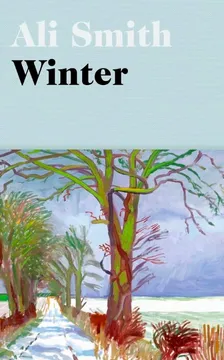
Winter is the second installment in Ali Smith's seasonal quartet, receiving generally strong praise for its wordplay, political commentary, and layered storytelling. Set during Christmas 2016, it follows Art, his mother Sophia, aunt Iris, and hired stand-in girlfriend Lux. Reviewers admire its Brexit themes, Dickensian references, and connections to Autumn. Some find it slightly inferior to its predecessor, citing occasional didacticism, while others consider it even stronger. Barbara Hepworth's sculptures and Shakespeare's Cymbeline feature prominently as artistic touchstones.
People Also Read





Characters
Sofia Cleves
The guarded matriarchSofia is a retired international businesswoman whose discipline, financial competence, and exacting manners have helped her build a life she can control. She is the mother of Art3 and the younger sister of Iris2, but family closeness unsettles her more than professional negotiation. Raised in a household shaped by war and convention, she learned to treat emotional restraint as good judgment. She has a sharp eye for art and detail, yet can overlook suffering when it arrives through systems she trusts. Her habit of organizing people and stories protects her from uncertainty, while her buried tenderness appears most clearly in small acts of care and in the memories she cannot fully suppress.
Iris
The unquiet activistIris is Sofia's1 older sister, a lifelong dissenter who distrusts official explanations and acts on what she sees as urgent injustice. Her commitment to antiwar protest, environmental causes, and displaced people has repeatedly placed her at odds with her family. She is inventive, funny, and socially fearless, with a gift for making strangers feel included and for turning everyday objects into tools of protest. Her certainty can become exhausting, but it is rooted in a refusal to treat distant suffering as somebody else's concern. Iris carries affection for Sofia1 beneath decades of argument and remains attentive to the stories that families edit out.
Art
The borrowed nature writerArt is Sofia's1 adult son, a paid copyright monitor and an online writer about nature. He is observant about words and landscapes but uncertain about his own experience, often relying on invented scenes and public personas rather than exposing private memories. His online life makes him vulnerable to impersonation, while his comfortable circumstances encourage him to dismiss political crises that do not touch him directly. Beneath his self-protective irony is a strong need for approval and family belonging. He is especially susceptible to shame, but also capable of being moved by an honest question, a vivid image, or another person's unguarded kindness.
Lux
The resourceful outsiderLux is a young woman raised in Canada after being born in Croatia, an educated and perceptive outsider living with insecure work and housing. She agrees to accompany Art3 under the borrowed identity of Charlotte, but never confuses that role with who she is. Her quick humor and practical intelligence let her navigate unfamiliar people without surrendering her own judgment. She notices what others avoid, from Art's3 fabricated nature writing to Sofia's1 physical discomfort, and turns insight into action rather than performance. Lux's own family history has left her cautious about intimacy, yet she is capable of direct empathy and expects people to take responsibility for the lives around them.
Charlotte
Art's former partnerCharlotte is Art's3 former partner and a politically engaged environmentalist whose intensity often exposes the complacency he would rather excuse. She takes public issues personally and presses him to connect his writing about nature with the damaged world around him. Her anger and conviction make their relationship combustible, especially when Art3 treats her concerns as excessive. Charlotte is also a forceful online presence, capable of making her own account of events impossible to ignore.
Ray, known as Godfrey Gable
The performer fatherRay, who performed under the name Godfrey Gable, is a comedian and actor whose public persona survives in cardboard displays and old recordings. He is connected to Sofia's1 family life and to Art's3 understanding of what a father is. His career depended on theatrical timing and audience response, making performance both his work and a way of moving through the world. Even when absent from the present action, his image gives Art3 a complicated model of masculinity, humor, and family.
Danny
Sofia's elusive companionDanny is an older, intellectually curious man Sofia1 encounters during a lonely Christmas in Cornwall. He loves art, poetry, and stories, and approaches conversation with a seriousness that makes Sofia1 feel noticed rather than assessed. His own sadness gives their meeting a sense of mutual recognition. Danny is connected to a formative moment in Sofia's1 life, though the relationship remains difficult for her to fit into the orderly account she presents to others.
Sofia's father
The war-shaped patriarchSofia1 and Iris's2 father is a financial professional whose memories of war harden into racial and national prejudices. He values respectability, family order, and the ability to provide, and he cannot understand Iris's2 confrontational politics. His influence is strongest in the rules his daughters inherit, including the expectation that public dissent brings shame. He is not a simple villain; his fear and discipline help shape the emotional climate in which both sisters grow up.
Plot Devices
The Floating Head
A bodyless measure of feelingSofia's1 visual disturbance develops into a floating child's head that behaves with politeness and apparent affection. The optician can find no physical explanation for the original speck, leaving the phenomenon suspended between hallucination, ghost, and symbol. As Sofia's1 numbness gives way to empathy, the head becomes a companion she feeds with attention and protects from the cold. Its eventual transformation into stone preserves the encounter while refusing to explain it. The device makes the novel's emotional change visible without turning uncertainty into a solved supernatural puzzle.
Borrowed Charlotte
A paid identity tests intimacyArt3 hires Lux4 to pose as his estranged partner so he can arrive at his mother's1 house with a companion. The deception gives Lux4 access to the family while letting Art3 postpone an honest explanation of his breakup. Because Lux4 is neither his actual partner nor a blank prop, she unsettles the role she has accepted: she challenges his writing, assists his mother1, and asks questions his family avoids. The borrowed identity exposes how people use names and social performances to manage embarrassment, and how a temporary fiction can create a real encounter.
The Greenham Chain
Small locks build a public protestThe cheap locks Iris2 and other women use at Greenham Common connect private acts of refusal to a sustained political movement. Their improvised restraint does not defeat the military base; it creates a visible obstruction that authorities must answer and other protestors can join. The camp's persistence, later demonstrations, arrests, songs, and repairs show how repetition can turn a seemingly minor gesture into a public force. For the novel's family story, Greenham also gives concrete form to the political conviction that helped separate Iris2 from Sofia1.
Art in Nature
A blog hides and reveals its authorArt's3 nature blog initially presents carefully assembled scenes as personal observation, even when he has never visited the places he describes. Charlotte's5 online impersonation makes his public identity unstable, and Lux's4 questions show that his writing is also a defense against personal exposure. Later, Charlotte's5 more openly political contributions bring the blog new attention. The device links authorship to ownership, truth, and the difference between observing the natural world and using it as cover. Its changing voice tracks Art's3 uncertain movement toward a more honest account of himself.
The Lost Winter Story
Memory becomes a family battlegroundA story about a child lost in snow, entering an underworld and confronting a god of cold, is remembered differently by Sofia1, Iris2, and Art3. The competing versions carry scientific facts, family memories, and different ideas about who cared for the child. No final authority settles which woman told it, so its value comes from what each version reveals about love and exclusion. The story also links winter's apparent death to the possibility of renewal, while its shifting details echo the novel's larger question of how truth survives when memory is shared.
Download PDF
Download EPUB
.epub digital book format is ideal for reading ebooks on phones, tablets, and e-readers.








