

Plot Summary
The Archduke Leaves the Box
At the opera, twenty-three-year-old Archduke Felix recognizes that his father-in-law, Count von Hertzendorff, and brother-in-law Radomir are preparing to make his death look like suicide. Felix has spent years submitting to the Count’s beatings and political control, but with his wife, Emmeline, dead, he believes there is no one left to endanger by resisting.
He rises to expose the Count in front of the audience. Radomir knocks him back into his seat before Felix can be heard. Their argument then turns to the Witch Queen of Kitvaria, whose magic has forced Estarion’s surviving troops to retreat. Felix sees an opening: if he can reach the queen, he may find protection beyond the Count’s reach.
Felix’s rebellion begins not with confidence but with the disappearance of the person he had been protecting. His attempt at public truth is physically suppressed, showing how thoroughly the Count has made even speech unsafe. Yet the news from Kitvaria changes the meaning of Felix’s isolation: losing Emmeline leaves him grief-stricken, but also frees him from the fear that resistance will hurt her. His flight is an act of self-preservation, though he frames it as a gamble rather than a claim to power.
The Witch Hires a Shadow
Four days later, Felix crosses Queen Saskia’s magical border without a weapon and is waved through by the trolls guarding it. He reaches Kadaric Castle dressed in a stolen black cloak, expecting the Witch Queen to decide whether he lives. Saskia, meanwhile, is annoyed that a new dark wizard has arrived just as she is working on an experiment.
She takes his silence and hidden face for wizardly menace, then hurries away before he can explain himself. Her majordomo, Morlokk, and housekeeper, Mrs. Haglitz, welcome the supposed wizard and warn him not to damage the castle. Felix realizes that correcting Saskia’s mistake could expose him, so he accepts the library post she has assigned him and lets the disguise stand.
The mistaken identity is more than comic concealment. It gives Felix a place in a household where power is exercised differently: Saskia’s staff expect danger from wizards, but they also treat him as a person capable of restraint. Felix accepts a role that is not his, yet the work itself will let him act according to his real values. Saskia’s impatience, meanwhile, conceals a ruler who is exhausted by the obligations attached to her reputation. Their connection begins with mutual misreading, but both are offered a chance to revise their assumptions.
The Missing Archduke
The next morning, Saskia hosts the queens of Balravia and Nornne, Lorelei and Ailana, who warn that Emperor Otto may use the Empire’s Purification movement to justify fresh conquests. Ailana’s spies have also learned that Archduke Felix has vanished. Whoever finds him could control what happens next in Estarion, so Saskia wants a spell to locate him.
Outside the library, the masked newcomer hears the plan and realizes his employer intends to hunt him. When Saskia asks him to search the books for a way to find a stranger, he conceals his alarm and agrees. He plans to bury any useful spell rather than help deliver himself into her hands.
The queens’ meeting makes Felix’s personal escape part of a much larger contest over borders, ideology, and succession. Saskia’s hostility toward the Archduke is based on the policies carried out in his name, while Felix knows that the same policies threaten him. Their positions are therefore genuinely opposed, even as they begin to depend on each other. The library becomes a charged space: Saskia gives Felix the means to pursue her goal, and he must decide whether his new safety can survive the truth.
A Library Finds Its Keeper
Felix begins sorting the neglected library with the languages and classical poetry he was taught instead of the practical government lessons withheld from him. He discovers that spell structures follow poetic rhythms and treats fragile manuscripts with more care than the previous wizards did.
When Mrs. Haglitz finds him skipping meals and sleeping on the floor, she insists he eat and rest, then explains that no one in Saskia’s household is punished for honest mistakes. Saskia notices his care for her books and crows, and he asks for a fountain pen to avoid spilling ink on the manuscripts. She arranges to get one. When he locates Queen Ana’s papers on a more inclusive approach to magic, Saskia entrusts him with the hidden final volume.
The library turns education from an instrument of confinement into a resource Felix can use for himself and others. The Count taught him poetry without political agency; here, the same training helps him read magic and protect a history that power tried to erase. The household’s insistence on food, sleep, and shared work also unsettles his learned expectation that care must be earned through flawless service. Saskia’s decision to trust him with her mother’s manuscript is therefore both practical and intimate: she recognizes a keeper of knowledge who does not treat it as a tool of domination.
A Feast for the Continent
As the Empire renews pressure on Kitvaria, Saskia’s First Minister, Mirjana, insists that she appear publicly as queen and host Winter’s Turning. The festival recalls the last royal celebration she attended as a child, when her uncle Yaroslav had paraded her before nobles who accepted his claims that she was a monster.
The memory sends Saskia fleeing to the tower roof, where she admits she must host a feast but refuses to recreate the old palace ceremony. Felix invites her to see his progress in the library and asks whether she truly needs to disguise her nature to reassure her guests.
His question helps her choose spectacle over appeasement: she will receive the continent’s rulers at Kadaric Castle as the feared witch queen they already believe her to be.
Saskia’s choice is not a simple rejection of diplomacy. She understands that her neighbors may enable an invasion if they see her as weak, but she also knows the old performance of harmless respectability will not make them trust her. The childhood memory exposes how political legitimacy was once made to depend on her accepting a story about herself written by her uncle. Felix’s counsel matters because he does not ask her to become more palatable; he asks whether she wants the change at all. Her decision turns fear into a deliberate political instrument.
The Mouse in the Hall
While Saskia and Felix search the library for a spell to locate the Archduke, another dark wizard arrives and demands the position for himself. He mocks Saskia’s authority, then throws fire at Felix to provoke a magical duel. Saskia stops the attack before it reaches him. Rather than killing the intruder, she asks Felix what punishment would deter others; he advises humiliation, because death might turn the wizard into a martyr among his peers.
Saskia accepts the counsel and transforms the attacker into a mouse, leaving her crows to chase him from the hall. The incident changes their working relationship: Saskia begins joining Felix in the library, where shared research and dry humor make their company increasingly easy.
The rival wizard provides a test of what power means in Saskia’s court. She can answer an insult with overwhelming force, but Felix’s advice distinguishes protection from vengeance: a punishment that discredits the aggressor may serve her people better than one that glorifies him. His intervention is notable because he has no magical strength to rely on, only a clear understanding of how bullies recruit attention. Saskia’s willingness to listen signals a growing trust, while their later hours together allow attraction to emerge through collaboration rather than spectacle.
Winter’s Turning, Bone Crown
At the festival, Saskia enters in a darkened ballroom filled with smoke, glowing vapors, and waiting nobles. Lorelei and Ailana arrive as allies, and their show of force makes it harder for neighboring rulers to treat Kitvaria as an easy target. During the religious ritual, Divine Elva appears to Saskia and directs Her attention toward Felix, standing among the guests with a crow on his shoulder.
Saskia reads the moment as a possible warning about the Archduke and resolves to protect Felix from whatever divine scheme may involve him. Later, Lorelei corners Felix in the library and tries to draw out his secrets. Saskia interrupts, forbids her from touching her staff, and stays with Felix after the fae queen leaves.
The ritual links private attraction to public danger. Saskia’s first response to Elva’s attention is not reverence but protective suspicion, shaped by a lifetime of seeing political and religious authority used against her. Lorelei’s probing makes the danger concrete: even allies can treat people as instruments when they believe a larger cause justifies it. Saskia’s intervention is possessive, but it is also an assertion of responsibility toward someone in her care. The scene pushes her toward intimacy while reminding the reader that neither divine favor nor political alliance guarantees consent or safety.
A Poem and Poisoned Coffee
When Mirjana interrupts Saskia and Felix’s first physical intimacy, she challenges Saskia’s judgment and revives painful memories of her parents’ murder. Afterwards Saskia avoids the library, though she discovers a poem Felix has left among his papers, illustrated with a crow and her bone crown. He also leaves her rosemary and thyme, scents that remind her of the refuge where she once found safety.
Saskia responds by secretly gathering books to research what Divine Elva may want from Felix. Exhausted, she drinks coffee that tastes wrong but keeps working. The poison gradually robs her of balance and clarity; she reaches the library barely able to stand, where Felix catches her as she collapses.
The poem and herbs give Saskia evidence of affection that does not demand an immediate answer. She carries the poem close but still tries to retreat into research, translating vulnerability into a problem she can solve alone. The poisoned coffee exploits exactly that habit: she ignores her body because duty has taught her that rest is a risk. Her collapse interrupts the fantasy that self-sufficiency can protect everyone. Felix’s presence at the moment she falls turns their emotional tension into an urgent question of whether she can accept care without losing authority.
One Minute from Elva
Felix carries Saskia to a couch and searches the medical shelves for a spell, but he cannot make it work himself. Mrs. Haglitz recognizes poison on Saskia’s breath; the storm outside prevents anyone from fetching a physician, and the household begins searching the castle. In a fever dream, Divine Elva tells Saskia that she is dying and grants her a brief return to consciousness.
Felix recognizes the poison-leaching spell in Queen Ana’s manuscript and guides Saskia through it. She expels the poison, then loses consciousness again. The spell saves her, while the household discovers that an unknown person must have brought the tainted coffee into the castle.
The rescue depends on two kinds of knowledge that the Empire’s hierarchy keeps apart. Felix can interpret the written spell but cannot power it; Saskia has the necessary magic but needs his guidance while barely conscious. Elva’s intervention makes survival possible without turning the goddess into an uncomplicated savior, since Saskia must still act within the narrow window she is given. The scene also reverses Felix’s history of helplessness beside a dying loved one. This time he cannot command the outcome, but he can use learning, attention, and care to help Saskia save herself.
The Poisoner in the Tunnels
Once Saskia is awake, the staff discovers that the poisoned coffee did not come from its kitchens. Morlokk later finds the culprit, Kosar, a former agent of Yaroslav who had posed as a footman in the Countess Markovic’s party and hidden in the goblin tunnels during the storm. Kosar offers to work for Saskia, but she refuses to employ a man willing to commit any cruelty for pay.
When he reaches for a concealed weapon, Felix tackles him and Morlokk breaks his hand. Saskia changes Kosar into a viper and sends him to Markovic, confiscating her property and forcing her into exile. Saskia then resolves to confront Yaroslav and the Estarian power behind him.
Kosar’s offer tempts Saskia with the familiar logic of authoritarian rule: use a ruthless agent more effectively than the last ruler did. She rejects the bargain because controlling cruelty is not the same as ending it. Felix’s physical intervention protects her while she is still recovering, and Morlokk’s strength completes the defense without taking the decision from her. Her punishment turns the assassin into a public warning, yet the encounter also clarifies the deeper threat: Yaroslav remains protected by Estarion’s influence. Saskia’s next move must therefore address the political structure that keeps sending violence into her home.
Snowfest’s Hidden Confession
At Snowfest, Felix gives Saskia a carefully printed edition of her mother Ana’s magical work, while she gives him a custom fountain pen. Their gifts make visible the trust they have built through months of shared labor, and Saskia takes him to her room to accept his poem and herbs as signs of his feelings.
Felix tells her he loves her but insists he must disclose a truth first. After they become intimate, Saskia notices the golden ring in his ear and realizes it suppresses magic. Felix removes his mask and reveals himself as Archduke Felix of Estarion. Saskia connects his face to the regime that supported her uncle, and her shock overwhelms the tenderness of the night.
The gifts carry two forms of inheritance: Saskia’s mother’s ideas are restored to public form, while Felix receives a tool that lets him continue the work he values. Their intimacy grows from mutual attention, but the earring exposes how little either has known about the other’s past. Saskia’s reaction is psychologically credible because Felix’s identity is not an abstract political fact; it activates the memory of her uncle’s violence and the suspicion that trust always conceals another betrayal. The revelation does not erase their affection, but it forces that affection to answer for history.
The Broken Golden Earring
As Saskia leaves to hear Mirjana’s urgent warning that Imperial forces may attack within hours, Felix breaks the earring with a goblin’s help. Lorelei then portals into the castle and kidnaps him, intending to use the Archduke as leverage. Once the broken ring is removed, Felix discovers that he can wield magic and uses a spell to escape.
Saskia tracks him through the poem he wrote for her, confronts Lorelei, and refuses to let the alliance decide Felix’s fate without her. Ailana recognizes that Felix’s devotion is genuine, and the queens revise their plans. Felix chooses to join them openly, accepting responsibility for Estarion rather than remaining a protected fugitive.
The earring reveals that Felix’s apparent lack of power was imposed, not innate. Removing it is both a physical release and a break with the story others have told him about what he can do. Yet the discovery does not instantly make him secure: Lorelei’s kidnapping shows how easily a person can become a political instrument even among allies. Saskia’s pursuit, guided by a poem rather than a spy network, places emotional knowledge alongside statecraft. Felix’s decision to return to public responsibility marks a shift from survival toward accountable action.
The Archduke Returns
At the Kitvarian border, Count von Hertzendorff, Radomir, Yaroslav, and the Golden Beacon prepare a public ceremony to break Saskia’s wall with Imperial mages. Felix arrives with Saskia, Mirjana, Lorelei, and Ailana, then removes his mask before the assembled reporters. He identifies himself as Estarion’s Archduke and exposes the scars left by the Count’s abuse.
When Radomir tries to seize him, Felix uses his newly awakened magic to throw the general aside. The soldiers refuse the Count’s demand to attack and instead kneel to Felix. He orders the Count and Radomir arrested for treason. When Yaroslav lunges at Felix with a sword, Saskia turns him into a slug and publicly claims control of her own power.
The climax replaces the private violence that shaped both rulers with public evidence. Felix’s scars make the Count’s control visible, while his first successful spell transforms him from a symbol used by others into an actor who can issue commands. The soldiers’ choice gives that authority political force. Saskia, meanwhile, refuses to let her uncle define her magic as uncontrollable: she uses it precisely, against an immediate attacker, before witnesses. Their victories are not identical. Felix reclaims a stolen office; Saskia reclaims the right to describe what her power means.
A Dangerous Shared Future
After the confrontation, the Golden Beacon warns Felix that the Emperor may punish him once he reports what happened. Ailana advises Felix to make gradual changes in Estarion and keep a residence in Kitvaria, where Saskia can help protect him. Saskia refuses to let him face the danger alone, and Felix agrees to stand beside her as her consort.
The immediate invasion has been prevented, but the Empire remains powerful and their alliance still has work ahead. Felix and Saskia leave the battlefield together, no longer separated by his false identity or her fear that closeness must cost her independence. They decide to protect each other while pursuing change from within their kingdoms.
The resolution deliberately stops short of claiming that one battlefield can undo imperial policy. Felix has reclaimed his authority, but the Emperor still controls the larger political structure; Ailana’s advice recognizes the difference between symbolic victory and durable reform. Saskia’s offer of shared residence is not a retreat from her kingdom but a refusal to treat love as a private weakness. Felix, in turn, accepts partnership without abandoning responsibility for Estarion. Their future rests on a harder model of power: mutual protection paired with sustained political work.
Epilogue
Three nights later, Saskia and Felix return to Kadaric Castle and settle into a life that includes both intimacy and preparation for the next political danger. Ailana reports that the Golden Beacon has disappeared, as has Lorelei.
A brief shift in time reveals the cause: Lorelei has secretly taken the general to an enchanted lodge and bound him with living ivy. She has acted without informing her allies, leaving Saskia and Felix to wonder what her private plan will cost.
The epilogue gives the couple a hard-won moment of domestic safety, then refuses to let that safety become a false ending. Saskia’s new mirror allows the queens to coordinate, an infrastructure for alliance that contrasts with the isolated rule she once preferred. But Lorelei’s secret action immediately tests that arrangement. Her kidnapping of the Golden Beacon may be meant to protect her friends, yet it repeats the very political habit the story has challenged: deciding what another person is for without asking. The closing uncertainty preserves the series’ central tension between loyalty, autonomy, and the seductive belief that a good outcome excuses unilateral power.
Analysis
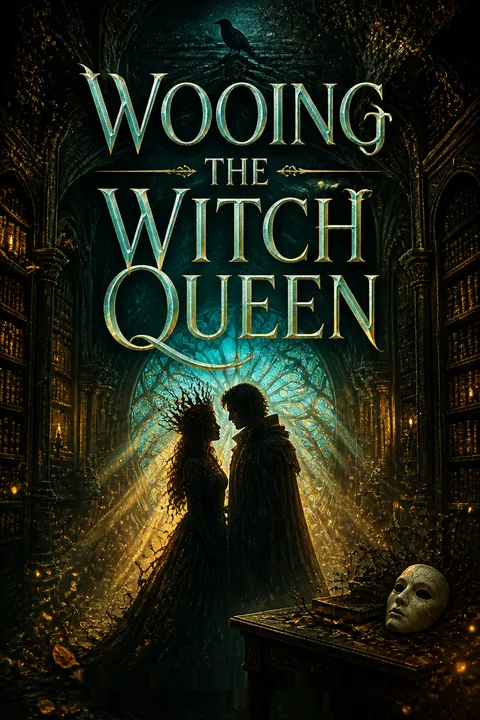
Wooing the Witch Queen makes political power intimate by showing how a ruler’s public identity can be built from stories imposed by other people. Saskia’s uncle calls her a monster to excuse his seizure of the throne; Estarion’s Count turns Felix into a ceremonial figure while denying him agency. Both are harmed by systems that confuse control with protection. Their romance becomes meaningful not because affection erases those systems, but because each learns to recognize the other beyond the role assigned to them.
The novel also treats care as a political practice. Saskia’s household offers food, rest, and respect across species and rank, while the Empire removes magical children from their families and constrains their abilities in the name of order. Mrs. Haglitz’s insistence that Felix eat is therefore not incidental warmth. It models a community in which responsibility includes noticing what another person needs. Felix’s work in the library similarly turns scholarship into service, preserving Ana’s ideas and helping Saskia survive.
The story refuses an easy contrast between power and vulnerability. Saskia’s magic is not the problem her uncle claims it is; the crucial question is how she chooses to use it. Felix’s newly discovered ability does not make him worthy of agency, because he was worthy before he could cast a spell. His real change comes when he accepts responsibility without accepting the false guilt that others placed on him. Their partnership offers a practical answer to isolation: neither has to surrender authority in order to rely on the other.
Finally, the political resolution remains deliberately incomplete. The Count and Radomir are removed, Yaroslav is stopped, and the immediate invasion is prevented, but the Emperor’s ambitions survive. Gradual reform, public legitimacy, and alliances remain necessary. Even the epilogue complicates loyalty through Lorelei’s unilateral decision to take the Golden Beacon. The novel’s lasting insight is that good intentions do not automatically make control ethical. Durable solidarity depends on both protection and consent.
Review Summary
People Also Read









Characters
Saskia
The Witch QueenQueen of Kitvaria, Saskia is a formidable witch who would rather experiment in her laboratory than perform the polished rituals expected of a ruler. Her uncle’s murder of her parents and his effort to define her as a monster have left her wary of trust and convinced that constant vigilance is the safest form of love. She protects her staff fiercely and respects practical competence, but often treats her own needs as distractions from the kingdom’s survival. Her magic is powerful and precise, shaped through years of study and self-control. Saskia’s central struggle is not whether she can rule, but whether she can remain fully herself while letting other people share the burdens she carries.
Felix
The Masked LibrarianA quiet, masked newcomer at Kadaric Castle, Felix becomes Saskia’s librarian and approaches books with the patience of someone who knows what it means to be denied a life of his own. He is courteous without being servile, particularly attentive to fragile manuscripts and to the castle’s nonhuman residents. Years of coercion have taught him to expect punishment and to hide his needs, yet his education in poetry and languages gives him unexpected tools for understanding magic. Felix’s tenderness is not passivity: he notices when others are threatened and will risk himself to protect them. He longs for meaningful work, safety, and the freedom to choose whom he serves.
Mirjana
The Queen’s First MinisterSaskia’s First Minister and former lover, Mirjana is a polished courtier with a strong instinct for how public opinion and noble alliances work. She believes presentation can keep a ruler and a country safe, so she pushes Saskia toward visible, conventional queenship. Her advice is often politically astute, but she can mistake her own preferred version of Saskia for the ruler Kitvaria needs. Beneath her confidence lies real devotion to the kingdom and a desire to be trusted as more than a strategist.
Lorelei
The Fae QueenQueen of Balravia, Lorelei is a glamorous fae ruler whose teasing manner masks sharp political instincts and a habit of acting before others can agree. She champions solidarity among the continent’s independent queens and enjoys unsettling anyone who mistakes charm for softness. Her relationships are full of performance, flirtation, and tests of nerve, though her loyalty to her friends is genuine. Lorelei believes that decisive intervention can protect those she cares for, even when that confidence risks overriding their choices.
Ailana
The Winter QueenQueen of Nornne, Ailana is a restrained strategist whose network of spies gives her a broad view of the continent’s shifting threats. Her ice magic and carefully controlled manner have made her reputation formidable, but she is not merely a cold political operator. Ailana values evidence, preparation, and alliances that can survive more than one crisis. She watches Saskia and Felix with an unusually perceptive understanding of what binds them, while keeping her own emotional life closely guarded.
Morlokk
Saskia’s Ogre MajordomoMorlokk is Saskia’s steady, ceremonious majordomo and one of the people who protected her after she escaped her uncle. His imposing ogre strength is matched by a careful sense of responsibility toward the castle and its inhabitants. He offers counsel without trying to replace Saskia’s judgment, and he can challenge her when her impatience threatens the people who serve her. His loyalty is built on years of practical care rather than titles.
Mrs. Haglitz
The Castle’s Troll HousekeeperMrs. Haglitz is the castle’s troll housekeeper and one of Saskia’s oldest protectors. Blunt, capable, and fiercely attentive, she regards meals, rest, and decent treatment as necessities rather than favors. She sees through Felix’s attempts to neglect himself and refuses to let Saskia’s position excuse her from being cared for. Her memories of Saskia’s childhood preserve a kinder account of the queen’s family and offer Felix a glimpse of the home Saskia once lost.
Yaroslav
Saskia’s Usurping UncleYaroslav is Saskia’s uncle, a former king who seized Kitvaria’s throne after murdering her parents. He uses fear of magic and human supremacy to justify his rule, presenting Saskia as a danger while exploiting the kingdom’s people and resources. His political survival depends on making cruelty appear protective and traditional. He is a personal source of Saskia’s trauma and a continuing threat to the country she inherited.
Count von Hertzendorff
Estarion’s Controlling MinisterFelix’s father-in-law and Chief Minister of Estarion, the Count has exercised control over the principality for years while presenting himself as its necessary guardian. He relies on strategic violence, isolation, and political manipulation to keep others obedient. His authority reaches beyond the palace because he has shaped the public account of Felix and cultivated Estarion’s alliance with Yaroslav. He represents governance stripped of care and accountability.
Radomir
Estarion’s High GeneralRadomir is the Count’s son and Estarion’s high general. His physical intimidation and military position make him an effective enforcer of the Count’s will. He treats Felix as someone to control rather than a family member with independent judgment, embodying the everyday brutality behind the court’s polished public image.
Emmeline
Felix’s Late WifeEmmeline was Felix’s childhood companion and wife, a kind and steady presence in the isolated life they shared at court. Their bond gave him comfort and a rare sense of mutual understanding. Her memory shapes his grief and his deep reluctance to watch someone he loves suffer without being able to help.
Divine Elva
The Watchful GoddessElva is an ancient goddess associated with Estarion and with the wild magic that the Empire seeks to regulate. She can appear to mortals and occasionally intervene, but her motives are not always transparent. Her interest in Saskia and Felix complicates the boundary between divine guidance and political influence. Elva is playful as well as powerful, and she expects mortals to make choices rather than simply obey.
Gerard de Moireul
The Golden BeaconKnown as the Golden Beacon, Gerard is the admired high general of the Serafin Empire. His troops regard him with extraordinary devotion, and his reputation gives him influence beyond his formal command. He is disciplined, politically alert, and capable of recognizing the difference between a legitimate order and an attempt to exploit his forces. His presence makes the Empire’s military threat more than an abstract danger.
Kosar
Yaroslav’s Former AgentKosar is an experienced operative once employed by Yaroslav for tasks the former king preferred to keep secret. He treats loyalty as a price to be negotiated and expects a new ruler to value his ruthlessness. His confidence rests on knowing how power works in corrupt courts, but he underestimates Saskia’s refusal to build her government on the same bargains.
Oskar
Felix’s Crow CompanionOskar is one of Saskia’s crows, a bold, noisy bird who chooses to spend much of his time with Felix. He brings Felix messages, follows him through the castle, and reacts strongly to his distress. His attachment gives Felix companionship and offers Saskia a small but telling sign of the trust growing between them.
Krakk
A Helpful GoblinKrakk is one of the castle’s goblin staff, cheerful and resourceful in equal measure. He welcomes Felix into the household, shares in its celebrations, and understands the practical skills needed to solve problems beneath the castle. His friendliness reflects the community Saskia has built among the people her uncle’s government treated as lesser.
Countess Markovic
A Gossiping NoblewomanCountess Markovic is a socially ambitious noblewoman who uses courtly charm and gossip to preserve her position. She is adept at presenting herself as a friend to whoever holds power, while avoiding the risks of genuine loyalty. Her retinue becomes one route by which danger enters Saskia’s household.
Plot Devices
Kitvaria’s Magical Wall
Keeps Imperial armies outSaskia’s protective barrier seals the Kitvarian border against anyone carrying an offensive weapon or serving in a military uniform. It forces Estarion’s troops to withdraw and buys Kitvaria time, but it does not end the Empire’s interest in conquest. The wall shapes the political stakes throughout the story: the neighboring rulers must decide whether to support Saskia, and the Empire searches for ways to break through or attack from another direction.
Felix’s Golden Earring
Suppresses hidden magicThe slender golden hoop in Felix’s ear has been concealed by his hair since childhood. It is a magical suppressant, though neither Felix nor the reader initially knows this. Its presence helps explain why he has been judged powerless, and its break becomes a turning point in his escape from Lorelei’s captivity. The earring embodies how family and state authority can shape a person’s understanding of their own abilities.
Queen Ana’s Primer
Connects poetry with spellcraftThe late Queen Ana’s manuscript proposes a broader approach to magic that includes the traditions of different peoples. Felix studies it while cataloguing Saskia’s library, using his knowledge of language and poetic meter to understand spell structures. The book preserves Ana’s intellectual legacy and gives Felix a foundation for interpreting magic. Its ideas also challenge the Empire’s claim that magic must be restricted and standardized for human safety.
The Poem and the Crow
Guides Saskia to FelixFelix’s private poem, marked with a crow and an image of Saskia’s crown, expresses feelings he has difficulty stating openly. Saskia keeps it, though she initially resists the vulnerability it represents. Later, she uses the poem as a magical link to find Felix after Lorelei kidnaps him. The object thus changes from a private gesture into a practical means of reunion, joining emotional recognition to magical action.
The Poison-Leaching Spell
Turns knowledge into rescueA spell preserved in Queen Ana’s writings can draw poison from a victim, but it requires substantial magical power and careful understanding. Felix finds and interprets it while Saskia is unconscious, then guides her through its words when Divine Elva briefly restores her awareness. The spell cannot make Felix powerful by itself, but his learning enables Saskia to use her own. Its successful casting saves her and confirms the value of the knowledge they have developed together.
Download PDF
Download EPUB
.epub digital book format is ideal for reading ebooks on phones, tablets, and e-readers.








