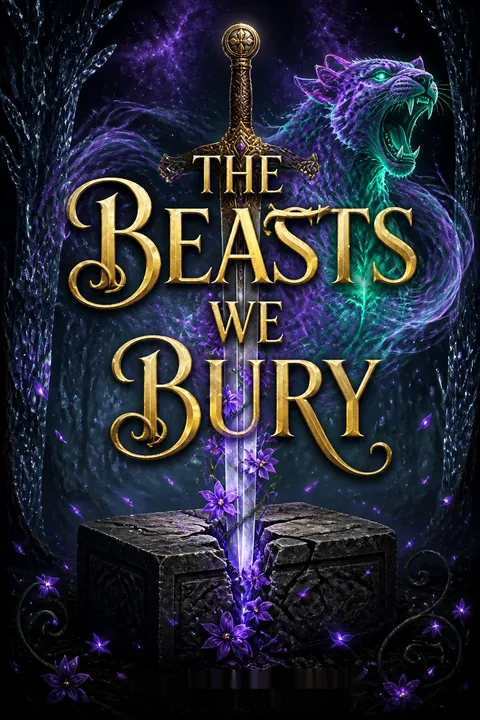


Plot Summary
The Jaguar's Last Breath
With her appointment as Seconde only two weeks away, Mancella Cliff expects her father to release her from the yearly animal killings he has demanded since childhood. Instead, he sends her into the former ballroom to fight a jaguar. His magic lets her summon the spirits of animals she kills, but each victory leaves their memories and grief inside her.
The jaguar's teeth break through Mancella's helmet and its bite tears her hand; when her own magic floods her with bloodlust, she strangles the animal. Its last memories reveal two cubs waiting in the jungle. Afterward, Mancella lays white starsprouts on the body and weeps, still unsure whether she is strong enough to endure what her father calls necessary.
The fight makes Mancella's power inseparable from its cost. She does not simply collect useful animal abilities; she inherits fragments of the lives her father orders her to end. Her restraint before the kill and grief afterward expose the gap between the public image of a ruthless heir and the frightened child being trained to suppress her own response. The starsprouts establish a small, stubborn counter-practice: Mancella cannot save the jaguar, but she can refuse to treat its death as a triumph.
Silver Scales the Palace
Outside the castle, Silver climbs a cliff and threads a forest of magically unbreakable glass trees while his friends Vie and Rooftop wait below. All three are Academy runaways, shut out of lawful work and housing; the money Vie earns fighting and the food Rooftop scavenges are no longer enough.
Silver's contact, a soldier named Guerre, has promised the three of them forged graduation papers and a safe house if Silver completes three jobs. The first is to steal the Prime's seal. Guerre has him tested on the climb, then gives him a servant's uniform and a way into the palace. Silver accepts, despite sensing something wrong, because the promised future seems worth the risk.
Silver's recklessness is not simple bravado. The cliff is dangerous, but the ordinary life he wants has been made nearly inaccessible by laws that punish both runaways and anyone who employs them. Guerre turns that structural desperation into leverage, offering security in exchange for escalating acts of trust. Silver's loyalty to Vie and Rooftop makes the bargain emotionally credible, while his decision to proceed without knowing the full plan foreshadows how easily survival can become complicity.
The Citadel's Old Wound
Mancella's drugged sleep brings back the day she entered the Broken Citadel as a child. Her older sister Mara went in first and emerged badly scarred, without magic; Mancella followed and came out changed, while their cousin Alect vanished. The memory frames the danger behind the royal family's powers. In the present, a new Grasslands ruler, Prime Azele, visits after the death of her predecessor, Sangua.
Mancella's father serves jaguar meat at dinner, then boasts that his daughter killed it. Mancella summons the jaguar's spirit in protest, but her father presents the display as a threat. Azele ends the meal without agreeing to an alliance. A servant quietly leaves Mancella a note inviting her to the kitchen.
The flashback complicates the family's claim that magic is a test of worth: the Citadel injures one child, transforms another, and takes a third without explaining why. Merod treats its results as authority rather than mystery. At dinner, he turns Mancella's grief into state theater, making her power serve diplomacy against her wishes. Her failed attempt to control the display shows how little agency she has inside the role she is about to inherit, while the anonymous invitation introduces a possible connection beyond her father's command.
A Torte and a Letter
The servant is Silver, working under the false name Marc. He has prepared an elaborate dessert, but Mancella first rejects the gesture and then lashes out when he presses her to discuss her troubles. His blunt challenge follows her back to the library, where memories of her missing cousin Alect and the flowers he once gave her prompt her to rescue a starsprout from her father's daily burnings.
Mancella writes an apology to Azele and asks Silver to smuggle it out. At sunrise, Silver admits his real name and describes how the Academy traps children in a life of punishment and conscription. Moved by what she hears, Mancella hands him the sealed letter and agrees to keep his identity secret.
The dessert does not resolve the conflict between Mancella and Silver; it gives them a reason to remain in the same room long enough to see past their assumptions. His advice is intrusive, but it makes her consider that action is possible. The starsprout then converts that thought into a modest, concrete choice: she saves one flower rather than surrendering to the expectation that everything worth protecting will be destroyed. Her letter extends that choice outward, toward diplomacy.
The Academy's Stone Punishment
When Azele does not answer, Mancella visits the Academy herself. She finds children forced to drag punishment stones through drills and sees a girl restrained in a chair after an outburst. Her guide explains that isolation and pain train students to obey, then reveals that he has suffered the same treatment.
Mancella demands reforms from her father, who promises her a budget, but uses the visit to propose a new experiment: she must kill a human and see whether her magic can summon that person. He threatens to execute one Academy student each week if she refuses. When Mancella tries to leave, Merod freezes her body and restricts her breathing until she collapses, then kills the snake she summoned.
Mancella's reform effort exposes the continuity between her private abuse and the state's public machinery. The Academy does not merely prepare children for war; its punishments teach them that survival depends on obedience. Merod's proposal turns Mancella's magic into a potential instrument for endless war, while his use of it on her demonstrates that his power is also a method of discipline. Her new knowledge brings no immediate freedom, only a deadline and a threat aimed at children.
Vie's Staged Death
To avoid letting Merod choose a real student, Mancella asks Silver to help stage a killing. Silver recruits Vie and Rooftop, who devise a plan around a public fight in the execution arena.
Vie takes Silver's place as Mancella's opponent, but the combat becomes frighteningly real: Vie hurts Mancella, Mancella's magic takes over, and she snaps Vie's neck in front of the watching court. Rooftop carries Vie away as Mancella collapses in apparent horror. Silver believes his friend is dead and flees.
Mancella catches him in the hedge maze and uses a sharp neck adjustment to convince him that the fight was staged and Vie survived. He leaves shaken and angry, while Mancella is left confronting how convincingly she became the monster everyone expects.
The ruse succeeds publicly but fails emotionally. Mancella's bloodlust, Vie's genuine hostility, and Silver's grief cannot be made unreal simply because Vie survives. The staged death forces Mancella to witness the role her father has fashioned for her and to feel how readily others accept it. Silver's panic, meanwhile, reveals that his loyalty to Vie is not a performance. Their separate responses leave the conspiracy intact but make their growing trust more fragile.
The Animals on the Wall
Before stealing the Victory's Herald, Silver joins Mancella in the room where her father displays the animals she has killed. She explains how the killings began as a childhood game rewarded with cupcakes, then became a punishment when she refused to kill a fox.
Her father locked her in a stable without food until she gave in; later he turned the deaths into regular combat trials. Mancella also describes how her mother failed to intervene and how Mara comforted her afterward without stopping the abuse.
Silver tells her how soldiers took his parents and how he, Vie, and Rooftop escaped the Academy. Hearing one another's histories shifts their distrust into intimacy. Mancella gives Silver the ceremonial sword, trusting his claim that its absence can prevent war.
The mounted animals are both trophies of Merod's power and a record of the childhood he took from Mancella. Her account does not erase the harm she caused, but it restores the coercion behind it, making room for responsibility without reducing her to the violence she was trained to perform. Silver's story provides a parallel, not an equivalence: both have been shaped by the same regime, yet he responds by building loyalty with friends, while Mancella has been left largely alone.
The Sword Changes Hands
Silver carries the Victory's Herald to Guerre, who has disguised himself as a blacksmith. Before the handoff, Rooftop warns that several Academy runaways who accepted Guerre's jobs have vanished. Silver nevertheless gives him the sword, still believing the promised house and papers will secure his friends' future.
Two days later, Merod apologizes to Mancella and agrees to close the Academy's restraint rooms and punishment system. He also invites her to discuss the danger of war on a trip to the border. Silver sees the invitation and warns her to be careful, but she goes. During the journey, Merod admits that the Citadel's loss of his brother left him hungry for control, then reveals he knows Mancella faked Vie's death.
This section places two kinds of trust under pressure. Mancella sees a rare concession from her father and a chance to learn about war; Silver hears evidence that Guerre's earlier jobs may have cost other runaways their freedom or lives. Neither has enough information to act decisively. Merod's admission about grief offers a human explanation for his need for control, but his discovery of the staged fight shows that insight into his pain cannot make his power safe.
The Border Erupts
At the Grasslands border, Merod fastens a magical bracelet around Mancella's wrist while her animals are outside her body. The barrier prevents her from recalling them. When Prime Azele arrives to challenge the gathering Cliff troops, Merod orders an attack and demands that Mancella make her animals fight.
He uses his magic to provoke her anger; the animals respond by attacking soldiers on both sides. Merod then freezes Mancella and leaves her unable to intervene.
Silver, secretly following in a soldier's uniform, breaks the carriage window with a stone and frees her. Azele calls a retreat, and Mancella escapes with Silver on horseback. They reach a vine-covered boat hidden in the woods, where she removes her war makeup and tries to recover.
Merod turns Mancella's emotions into a battlefield resource, stripping her of the distinction between command and response. Her animals attack indiscriminately because her power reflects her state, not her father's strategy. Silver's rescue interrupts the physical control but cannot undo the deaths already caused. The episode also gives Mancella direct evidence that Merod's promise of honest conversation was another way to place her where he could use her.
A Bracelet Becomes a Trap
On the boat, Mancella tells Silver it was once a refuge she shared with Alect, and he recognizes the Victory's Herald on Azele's person as the sword he delivered to Guerre. He later confronts Guerre, who orders him to put the bracelet on Mancella while her animals are inside and bring her in. Silver refuses, but Guerre threatens to burn down his home with Vie and Rooftop inside.
Silver also finds letters proving Guerre has intercepted and rewritten messages between Merod and Azele, manufacturing a war neither Prime wants. Still, afraid for his friends, Silver tells Mancella that wearing the bracelet might permanently free her from Merod's use of her magic. She trusts him and locks it around her wrist.
Silver's betrayal grows from a desperate attempt to protect his chosen family, but the forged correspondence makes clear that his actions have helped create the danger he hopes to contain. His pitch about the bracelet draws on a real desire Mancella has for autonomy, making the manipulation especially intimate. The scene turns trust into the book's most consequential form of vulnerability: Mancella takes the risk because Silver has listened to her, while Silver knows he is using that bond to deliver her.
Alect Returns in Disguise
Silver brings Mancella to his home, where she meets Vie and Rooftop and discovers that Guerre is Alect, the cousin she believed lost in the Citadel. Alect admits he once tried to kill Merod and has spent years working toward the throne. He claims he killed Sangua and helped Azele reform the Grasslands, then offers Mancella rule if she names him Seconde.
He reveals that Mara possesses magic and is technically next in succession, but says her place has been dealt with. When Mancella refuses to agree without learning what happened to her family, Alect splits into a sword-wielding copy that attacks her. The bracelet blocks her animals. Silver's silence makes his betrayal plain, and Mancella flees toward the palace.
Alect returns as both a beloved childhood memory and a political threat. His vision of improving the realms resembles Mancella's hopes, but he treats murder and secrecy as acceptable instruments for reaching them. The revelation that Mara has magic destabilizes the family history Mancella thought she understood. Silver's role sharpens the rupture: he has not merely concealed information but helped make Mancella vulnerable at the moment she most needed allies.
Blood on the Palace Floor
At the palace, Mancella sees her parents and Mara alive through a dining-room window, then watches Rift, Azele's shadow-moving bodyguard, enter the room and attack. She escapes him through a window and hides on the roof, fearing her family has been killed. Elsewhere, Guerre's black magical fire destroys Silver's tree-house after Vie and Rooftop open a bottle from Alect's bag.
Vie survives, and Silver and Vie pull Rooftop from the wreckage with a broken leg, a head wound, and cold, spreading marks from the fire. The letters in the bag confirm that Guerre forged both sides' correspondence. Silver also finds Mancella's earlier apology to Azele, which he had kept instead of delivering. He leaves his injured friends to try to stop the crisis.
The parallel disasters show the cost of delay: Mancella faces violence inside the palace while Silver's attempt to keep his friends safe fails in a burst of magical destruction. The preserved apology becomes evidence of what Silver could have chosen to honor earlier. It is not enough to undo his betrayal, but it supplies a truthful account of Mancella's intent just as false letters have distorted the rulers' intentions.
Mara's Hidden Magic
Mara reaches Mancella on the palace roof and confirms that their parents survived Rift's attack. She reveals that Merod's experiments forced her own magic to surface years earlier: she can create barriers using blood, hair, and other materials. Mara also offers a necklace that may remove Mancella's magic entirely.
When it begins pulling animal spirits from her, Mancella tears it off before it can erase more of them. She chooses to keep the power and the selves bound up in it, despite how it came to her. The sisters prepare a barrier trap for Rift. Silver arrives with the letters and Mancella's apology, then shows Rift the evidence that Guerre manipulated both realms. Rift accepts the proof and leaves to report it to Azele.
Mara's confession reframes her apparent passivity as a survival strategy shaped by the same father who controlled Mancella. Her offer to remove Mancella's magic is an attempt at repair, but the painful process forces Mancella to distinguish freedom from erasure. Keeping the animal spirits is not approval of the violence that created them; it is a refusal to let Merod define which parts of her count as hers. The sisters' plan gives them a way to act together rather than suffer separately.
Thirteen Alects Attack
After Rift departs, Alect arrives and admits his divided bodies are all parts of himself. When Mancella refuses to join his plan, he sends his sword-bearing self against her. Thirteen versions of Alect fill the room, each expressing a different impulse.
Merod, Mara, Silver, and Mancella fight them while Mara's blood barriers shield the parents. Merod gives Mancella a bottle he expects to contain sleeping gas, but it releases explosive black magic instead. Silver throws himself over Mancella and takes the blast across his back.
The explosion kills or maims several Alects; one wounded version remains alive long enough for Mancella to receive his spirit and memories. Merod celebrates the discovery that her magic can take a human life, revealing that he planned the experiment.
Alect's divided selves literalize the conflict between ideals and methods: parts of him grieve or hesitate while others pursue power without restraint. Yet the fight does not make those parts morally separate; Mancella must face the whole person and the harm he has done. Merod's celebration after the blast exposes the same pattern at home. Even Silver's rescue cannot make the event clean, because the adults around Mancella keep turning other people's suffering into proof of a theory.
The Prime Loses His Power
Mancella finds the surviving Alect and holds a starsprout between their hands as he dies. His spirit enters her, bringing his memories and his magic: the ability to divide himself into separate bodies. When Merod orders her to summon him, she realizes he engineered the explosion to force her to kill a human. Mancella splits herself, then attacks her father with the barrier necklace Mara made.
One part of her revels in choking him; the other forces them back together before she kills him. She strips away his magic and keeps him alive for prison, ending his claim to the throne. Mara declines succession, and the Captain and soldiers accept Mancella as Prime. Mancella orders Merod seized rather than repeating his rule through execution.
Mancella's victory is not a clean purification. Alect's power gives her an effective weapon, while the split in her own self makes visible how easily justified rage can become appetite. She survives that danger by rejoining the part of herself that recoils from killing and by choosing restraint over revenge. Taking Merod's magic and authority, rather than his life, breaks the machinery of succession without reproducing its most violent logic.
Trust After the Betrayal
After healing magic repairs Silver's injuries, Mancella waits beside him. She asks whether his affection was another lie; Silver admits he wanted her, while acknowledging that he had deceived and endangered her. Mancella forgives him, then returns to the work of ruling. She invites Azele and Rift to negotiate in the restored former arena, and the two realms agree to peace.
At Azele's request, they walk through the Outskirts, where Azele turns shattered glass trees to ash. Silver refuses a house handed to him and asks instead for the chance to earn a job. Mancella ends employment papers as a requirement. She also asks the Captain to reform the Academy, while Rooftop joins the palace kitchen and Vie enjoys its meals.
Forgiveness here is not a reset that erases consequences. Mancella asks a direct question, receives an answer, and then decides what she is willing to restore. Silver's refusal of another unearned gift matters because the old bargain made security dependent on taking advantage of others. The political repair follows the same principle: peace is built through accurate communication and practical changes, not through displays of strength or sentimental promises alone.
A Crown of Starsprouts
On Assurance morning, the crowd expects Mancella to appear beside her father in the severe costume he chose for her. Instead, she walks out alone in a simple dress and bare-faced. The Captain's soldiers swear loyalty to a Prime, not a Seconde. Mancella replaces Merod's prepared vows of strength and glory with promises to serve her people and protect their well-being.
Rather than wear the sharp glass crown, she places a circlet of starsprouts on her head. The flowers have spread across the lawn her father once kept bare, and sunrise catches their petals. Mancella's appointment becomes an ascension, publicly marking a new kind of rule without pretending that the past can be undone.
The ceremony transforms symbols that once served Merod's authority. Glass remains part of Mancella's inheritance, but she describes it as rooted and reflective rather than merely a weapon. The flowers make that change visible: what her father treated as disorder has survived his attempts to eradicate it. Her new vows matter because they replace inherited language with explicit commitments to ordinary people, giving political power a standard beyond its own preservation.
Epilogue
After the ceremony, Mancella hears someone pounding from inside her closet. A second version of herself emerges, wearing her magical armor and carrying the anger and violent appetite she has tried to contain.
Mancella promises to find her safer quarters, but the other self rejects the idea of a cushioned cage and breaks through the door. The new Prime's first private crisis is not an enemy at the gate but a part of herself she cannot simply imprison without consequence.
The epilogue refuses to let the crown stand for a completed cure. Mancella has changed the political structure, but the violence cultivated by her father still has a home inside her. Her divided self makes repression visible: the impulse she locks away does not disappear, and treating it as a prisoner risks repeating the same logic of control she opposed. The scene leaves her new rule facing an intimate version of its central challenge: how to contain harm without denying the person who carries it.
Analysis
The novel treats power less as an abstract gift than as a relationship among bodies, stories, and choices. Mancella's animal magic makes that literal: every increase in her capacity begins with a death she did not choose, and every summoned spirit carries evidence that the victim was more than a resource. Merod's control magic and the Academy's punishment stones extend the same logic into government. People become instruments first, then are told that their coerced obedience protects them.
Silver's plot shows how oppression can reproduce itself through survival strategies. He is not initially loyal to the regime, but his desperate wish to house Vie and Rooftop makes him willing to work for a man whose promises require secrecy and harm. His betrayal is therefore neither excused nor detached from its cause. The story asks readers to distinguish explanation from absolution: deprivation helps explain Silver's choices, while the people he endangers still bear their consequences.
Mancella's alternative is not innocence. She inherits violent magic, loses control of it, and eventually feels its appetite inside herself. Her decisive change is that she stops treating harm as inevitable collateral. She restrains herself when killing Merod would be easier, keeps the animals that make up part of her identity, and replaces inherited vows with obligations to her people. The starsprouts and the rebuilt arena give those commitments physical form, but the epilogue refuses an easy triumph. Political reform cannot automatically heal an inner life trained by abuse. A better ruler must keep facing the parts of herself that power would prefer to lock away.
Review Summary
The Beasts We Bury receives mixed reactions with an average 3.74/5 rating. Reviewers praise the unique magic system where protagonist Mancella must kill animals to absorb their powers, though many find the graphic animal violence disturbing. Mancella's abusive father and her internal struggle resonate strongly, while love interest Silver is criticized as bland and underdeveloped. The romance feels rushed to many readers. Strengths include strong pacing, unexpected plot twists, and an engaging premise. Weaknesses include shallow worldbuilding, simple character development, and uneven tone. Despite criticisms, many appreciate the originality and find it a solid YA fantasy debut worth reading.
People Also Read




Characters
Mancella Cliff
Reluctant animal-bearerMancella is the young heir of the Cliff Realm, trained by her father to kill animals and absorb their spirits. She is disciplined in combat and guarded in public, but her grief for the creatures she kills contradicts the brutal image her family cultivates. She longs to make choices that are not dictated by her father, though years of coercion have taught her to mistake endurance for strength. Her relationship with Silver gives her a rare chance to be seen outside her title, while her complicated bond with Mara reminds her that love and protection do not always look like open defiance. Mancella's defining struggle is to claim agency without adopting the cruelty that has shaped her.
Silver
Reckless street survivorSilver is an Academy runaway who survives through audacity, theft, and the loyalty of Vie and Rooftop. His parents were taken into war and died, leaving him suspicious of the rulers who call sacrifice necessary. He is quick with a joke and quicker to improvise, but his determination to secure a home for his friends makes him vulnerable to anyone promising a way out. With Mancella, his teasing gradually gives way to honest attention, though he must confront how readily he has used deception as a survival tool. Silver's central tension is between protecting the people he loves and treating everyone else as expendable.
Mara
Scarred elder sisterMara is Mancella's older sister, recognizable by the scars left by her experience in the Broken Citadel and the scarves she wears over them. She is observant, sardonic, and skilled at reading the dangers of court life. Her closeness with Mancella is real but uneven: she often offers comfort after harm rather than confronting the person who caused it. Mara protects herself through secrecy, collecting strange materials and keeping her private life apart from the palace. Beneath her composed manner is a sister who wants to help but fears what open resistance may cost. Her relationship with Mancella carries both affection and the old hurt of surviving the same household in different ways.
Vie
Fierce street fighterVie is Silver's close friend, a compact, tattooed fighter who earns money in the Outskirts by taking on opponents larger than herself. Her suspicion of the Cliff family comes from lived experience, not abstract rebellion. Blunt and fiercely loyal, she treats vulnerability as a liability but cares deeply about Silver and Rooftop. Her toughness is both a weapon and a shield, allowing her to survive a world that gives runaways few safe choices.
Rooftop
Baker and loyal friendRooftop is Silver's tall, curly-haired friend, raised around baking and still able to create comfort from scarce ingredients. His dry humor often masks his fear of losing the people he loves. Unlike Silver, he is inclined to plan before acting, but loyalty repeatedly draws him into danger. He helps keep the trio fed and grounded, making ordinary pleasures feel like a promise of a life beyond mere survival.
Prime Merod
Controlling Cliff rulerMerod is Mancella and Mara's father and the Prime of the Cliff Realm. His magic lets him control other people, and he regards control as protection against a world he believes will otherwise destroy him. Grief over his brother's disappearance hardened into a political philosophy: obedience, military strength, and sacrifice are acceptable prices for security. He can show regret and even tenderness, but he does not allow those feelings to limit his plans. His relationship with his daughters is shaped by affection twisted into entitlement, as he treats their bodies and powers as instruments of rule.
Alect
Absent scholar cousinAlect is Mancella's older cousin, once a constant presence in her childhood and a source of stories about other realms. Curious and intellectually ambitious, he encouraged her to imagine a world beyond the palace's rules. His long absence leaves Mancella with memories that are warmer than the political history surrounding him. He represents both the intimacy of her lost childhood and the pull of a broader vision for the realms.
Guerre
Mysterious palace fixerGuerre is a cool-eyed operative who recruits Silver for increasingly difficult work. He studies people closely, disguises himself effectively, and offers exactly the rewards a desperate runaway most needs. His calm makes him difficult to read, while his refusal to explain his full purpose creates an atmosphere of threat around every bargain. He represents the danger of accepting security from someone who insists that the details can wait.
Lady Wespa
Fearful court motherWespa is Mancella and Mara's mother, a noblewoman whose careful appearance cannot conceal her fear of Merod. She shows tenderness in private moments, especially when her daughters are hurt, but rarely turns that care into effective resistance. Her silence leaves her children to interpret whether she tried to protect them or simply failed to act. She embodies the painful difference between loving someone and being able to keep them safe.
Captain Petrice
Blunt royal guardPetrice is the salt-and-pepper-haired captain responsible for the Cliff guard and a steady presence around Mancella. She questions Merod's treatment of his daughters and objects when a child's life is at risk. Practical and direct, she understands the limits of speaking against a ruler while continuing to push against his worst decisions. Her military discipline is joined to a strong sense of responsibility for the people under her command.
Prime Azele
Young Grasslands rulerAzele inherits the Grasslands Realm unexpectedly after Sangua's death. Young but composed, she must navigate the weight of succession while others attempt to define her choices. Her ash magic gives her a vivid presence, but she is not simply a figure of force; she seeks a workable relationship between realms. Her interactions with Mancella reveal the possibility of diplomacy grounded in mutual interest rather than intimidation.
Rift
Azele's shadow guardianRift is Azele's bodyguard, a reserved figure whose magic lets him move through shadows and fissures. His loyalty makes him an imposing presence in tense negotiations, while his watchfulness suggests a man who does not accept appearances without evidence. He serves as Azele's protection and as a conduit between the Grasslands ruler's intentions and the threats surrounding her.
Sangua
Former blood-wielding PrimeSangua ruled the Grasslands Realm before Azele and wielded the power to manipulate blood. Her abrupt death leaves a succession crisis and unsettles relations among the realms. Though she appears only through reports and the consequences of her rule, her absence helps set the political story in motion.
Plot Devices
The Broken Citadel
Grants costly magicThe ruined Citadel is the source of the realms' magic, but entry offers no guarantee of survival or of receiving a power. Its influence can alter those who return and devastate those who do not. Mancella's animal-summoning and Merod's ability to control people both begin there, while the scars and absences in the Cliff family show that the Citadel's effects are never merely ceremonial. It links personal trauma to political power and makes succession dependent on surviving an unpredictable ordeal.
Animal Spirits
Turn killing into powerMancella must kill an animal with her bare hands before she can summon its spirit. The animal's abilities become available to her, but its memories and emotional residue enter her as well. Her father treats this power as a military resource, while Mancella experiences each death as an ongoing relationship and source of grief. Because the spirits react to her emotions rather than obeying precise commands, Merod can exploit her anger but cannot guarantee that the resulting violence will serve his chosen side.
The Royal Seal and Sword
Make diplomacy vulnerableThe Cliff Prime's seal authenticates official documents, while the Victory's Herald is a ceremonial weapon associated with the start and end of wars. Guerre's demand for the seal gives Silver access to the palace's political machinery; the later theft of the sword draws Mancella into the scheme. Together, these objects make it possible to counterfeit authority and manipulate communication between rulers. Their importance lies not only in what they symbolize, but in how easily control of them can distort the decisions of entire realms.
Mara's Barrier Craft
Contain bodies and magicMara can make barriers from materials including blood, hair, and crafted jewelry. Some barriers restrain physical movement; others can block magic from passing through. Merod uses a bracelet based on this craft to separate Mancella from her animal spirits, and the same principle later becomes part of the sisters' efforts to protect their family. The barriers give the characters a countermeasure to powers that otherwise seem absolute, but they also raise a personal question: whether safety is worth surrendering access to a part of oneself.
The Starsprouts
Mark stubborn hopeStarsprouts are small white flowers that Merod considers weeds and has ordered removed from the palace lawn. They keep returning, and Mancella privately connects them to memories of Alect and to her refusal to let her father's values define beauty. She saves and tends one plant, later using the flowers in the public ceremony that marks her new rule. Their role remains concrete: a fragile living thing survives repeated efforts to uproot it, then becomes part of Mancella's chosen public identity.
Download PDF
Download EPUB
.epub digital book format is ideal for reading ebooks on phones, tablets, and e-readers.








