

Key Takeaways
Treat words as tools that shape attention, not transparent labels
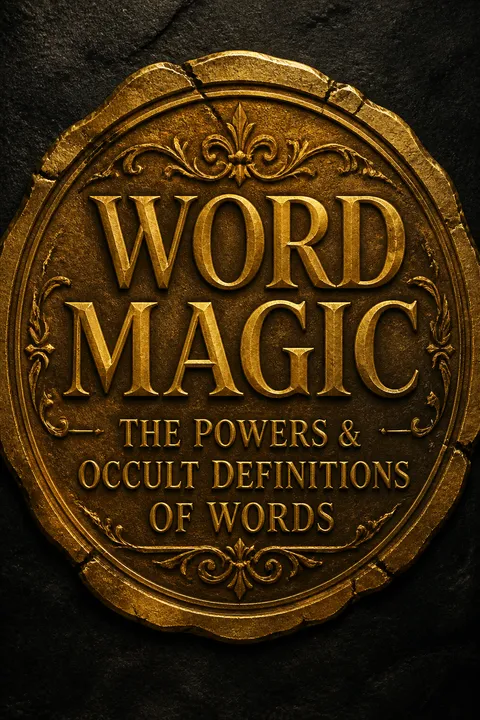
Words carry weight. Chang’s central idea is that language does more than name things: spoken words carry sound and information, while symbols can steer how people interpret the world. He calls the deliberate use of words and symbols to influence outcomes “word magic.” In his spiritual framework, sound and intention can direct energy, so words may heal, mislead, or influence behavior.
Meaning has consequences. The book asks readers to notice how labels, repeated phrases, legal language, and media narratives affect what feels possible or normal. It links this power to a wider cosmology in which human thought and awareness help shape reality. That cosmology is the author’s spiritual interpretation, not an established scientific account.
The most durable insight is that language changes attention and social behavior. A label can frame a person as a threat, a patient, or a citizen before any discussion begins, and repeated slogans can make assumptions feel like common sense. That is a real kind of power, even without supernatural forces. The distinction matters: sound can affect emotion and communication, but that does not establish that words physically command hidden energy. Reading the book productively means keeping its useful account of rhetoric separate from its stronger metaphysical claims.
Use etymology to generate questions, not prove secret intent
Look beneath the surface. Chang’s method combines word origins with homophones, anagrams, prefixes, and suffixes. He asks readers to split a word into pieces, find words that sound alike, and explore how the meanings might connect. For instance, he notices that “world” resembles “whirled,” then associates both with spinning. He also points to “words” and “sword” as anagrams to suggest that language can wound as well as communicate.
Follow the evidence. These exercises can make ordinary language feel newly vivid, but the book often treats resemblance as evidence of hidden design. Its playful readings of “language,” “government,” and other terms are interpretations, not reliable histories of how those words developed. The practical lesson is to investigate a word’s documented origin before accepting an occult explanation.
This method has a genuine strength: it slows down automatic reading and makes people ask who benefits from a particular label or definition. It also resembles close reading, where attention to form reveals assumptions that ordinary use hides. But historical linguistics depends on dated records and regular sound changes, not just similar sounds or rearranged letters. A pun can be meaningful without proving a conspiracy. Treating wordplay as a prompt for inquiry preserves its creative value while preventing coincidence from masquerading as evidence.
Separate the author's spiritual matrix from established science
A hidden-system story. Chang portrays Earth as an “artificial matrix,” a fabricated layer of reality maintained by powerful nonphysical entities he calls the Dark Forces. In this account, those entities exploit fear, conflict, and human energy. The book connects this story to claims about dormant DNA, “light codes,” quantum computers, and a cosmic virus that supposedly feeds on living beings.
Metaphor or mechanism? Chang uses the movie The Matrix and the idea of people acting as batteries to make the model memorable. He argues that awareness, peace, and spiritual development can weaken the system. The claims about DNA activation, hidden codes controlling perception, and energy-harvesting entities are not demonstrated by the examples in the book. Readers can understand the model as spiritual mythology without mistaking it for verified biology or physics.
The matrix image gives a memorable name to a familiar human concern: institutions and technologies can shape perception without people noticing. That concern is worth examining through media literacy, psychology, and political economy. The scientific language in this account, however, does not itself supply scientific evidence. DNA research does not support the book’s account of dormant spiritual powers being switched off by frequency, and computer-code analogies are not proof that reality is a simulation. Keeping metaphor and mechanism distinct allows the story to raise questions without turning speculation into fact.
Do not confuse paperwork metaphors with legal ownership
Birth as commerce. Chang builds a metaphor between childbirth and shipping: a woman’s body becomes a vessel, birth resembles a ship being berthed, and a birth record becomes a cargo manifest. He argues that birth certificates and names written in capital letters create a fictional legal identity that governments can control. This is part of what he calls the “Legal Name Game.”
A consequential claim. The book distinguishes a living person from a paper-based legal person and urges readers to reclaim natural rights by challenging government presumptions. It also advises correcting one’s status and disputing documents. These are the author’s claims, not established legal conclusions. A birth certificate is a civil record, and capitalization alone does not turn someone into a corporation or transfer ownership of a person to the state.
The metaphor draws attention to a real distinction between a human being and the administrative records used to identify that person. Bureaucratic categories can affect access to services, taxation, and legal procedures, so it is sensible to ask what a document actually does. The leap from metaphor to legal doctrine is the problem. Courts do not generally accept arguments that all-capital names create separate corporate identities or that individuals can escape ordinary law by declaring a different status. Legal disputes require jurisdiction-specific advice, not wordplay.
Read debt and commerce as power relations, not occult proof
Energy as a metaphor. Chang describes commerce as a battery system: people supply time and labor, currency represents that contribution, and institutions use the resulting value to sustain themselves. He links terms such as “charge,” “current,” and “currency” to the flow of energy, then extends the metaphor into claims that corporations and financial systems drain human life force.
Follow the material trail. The book criticizes debt, mortgages, stock markets, and banks for concentrating power and leaving people with obligations they may not fully understand. It also claims that banks create money from promissory notes and that borrowers may effectively be lending their own money back to themselves. These claims need careful, independent verification. The stronger practical point is to understand a contract’s costs, risks, and terms before signing.
The battery image works well as a critique of systems that convert time and labor into institutional power. It directs attention toward concrete questions: who controls the money, who carries the risk, and who benefits from a contract? Those questions are more useful than assuming that similar-sounding words reveal a hidden energy transfer. Modern banking does involve credit creation, but its mechanics are not accurately captured by the book’s claim that a borrower simply supplies the bank’s loan funds. Financial literacy strengthens the critique by replacing insinuation with inspectable details.
Question how schools, media, and rituals teach people to see
Culture trains attention. Chang argues that education, television, language, and religion condition people to accept authority and repeat familiar ideas. He interprets the alphabet and spelling lessons as preparation for “casting spells,” and calls television programs tools for programming the mind. In his account, words, images, and repeated rituals shape belief before a person consciously evaluates them.
Watch the symbols. The book applies this lens to Christian stories and holidays. It reads Jesus as a symbol of the Sun and inner illumination, and interprets Christmas and Easter through older seasonal and solar imagery. It also suggests that holiday customs can operate like spiritual contracts. These readings are Chang’s interpretations, not proof that participants unknowingly consent to supernatural agreements.
The section’s strongest point is that learning is never just the transfer of facts. Schools and media also teach attention, authority, and social norms, while rituals help communities mark shared values. That insight is compatible with research on social learning and framing. Yet interpreting every routine as covert control risks making ordinary culture unfalsifiable: any symbol can be folded into the theory after the fact. A balanced reading asks both what a ritual means to participants and what evidence supports claims about its origins or effects.
Build agency through responsibility, not dependence on saviors
Power begins with action. Chang rejects reliance on external saviors, politicians, and institutions as the route to spiritual freedom. He places responsibility on individuals to learn, think critically, live peacefully, and defend their natural rights. His version of Natural Law is a spiritual order that he considers more fundamental than rules made by governments.
Choose care with caution. The book recommends studying both spiritual principles and man-made law. It also encourages readers to challenge contracts, correct legal status, and use waivers to withdraw consent. Those legal tactics can carry serious consequences and are not reliable substitutes for legal advice. The more broadly useful principle is to understand obligations, ask questions, and take responsibility for decisions without assuming that a personal declaration cancels a law or contract.
The call for agency has value when it means informed participation rather than passive trust. People are better equipped to protect themselves when they understand their rights, obligations, and options. But autonomy is not the same as immunity from shared rules. The book’s contrast between spiritual Natural Law and government law can encourage courage, yet its suggested legal maneuvers may expose readers to avoidable harm. A sound form of self-reliance includes consulting qualified counsel and distinguishing moral conviction from legal effect.
Turn resistance into practical, peaceful community-building
Twenty routes to change. Chang’s closing list urges personal responsibility, peaceful living, careful spending, less reliance on politicians, and stronger local communities. He recommends supporting small businesses and farmers, bartering, investing in alternative energy, and learning enough about law to protect oneself. He opposes most protests and conventional voting, arguing that people should withdraw support from systems they consider harmful.
Change the dependencies. The book’s preferred alternative is a community that can meet more of its own needs through local teachers, doctors, farms, and markets. It speculates that if about 15 percent of the world’s population adopted many of its proposals, significant freedom could return within a generation. That prediction is not supported with evidence in the text. Still, the emphasis on peaceful cooperation and resilient local services is a concrete vision of action.
Local capacity can make communities more resilient, especially when people build trusted services and keep resources circulating nearby. That idea connects the book’s dramatic language to practical civic work. Its blanket rejection of voting and protest is less persuasive: both can be imperfect tools, but each has sometimes helped groups secure rights and policy changes. The useful test is not whether an action belongs to an official system, but whether it reduces harm, distributes power, and produces measurable benefits. Community-building and democratic participation need not be opposites.
Analysis
Word Magic is an esoteric manifesto that combines spiritual cosmology, political suspicion, religious reinterpretation, and advice about personal autonomy. Its narrative moves from a modest premise, language influences perception, toward an expansive claim that words, paperwork, finance, education, and ritual are coordinated mechanisms for harvesting human energy. The book’s abundance of examples gives this worldview a strong sense of pattern and urgency. Its best contribution is the insistence that words and institutions deserve scrutiny rather than automatic trust. The central analytical weakness is a recurring shift from association to proof. A word that sounds like another may inspire a metaphor, but sound resemblance does not establish shared origin or intentional design. Etymology requires historical documentation and regular sound correspondences. Likewise, the presence of symbols in holidays or courtrooms does not demonstrate that participants have entered supernatural contracts. These interpretive leaps make the account vivid, but also difficult to test or disconfirm.
The legal claims deserve particular caution. Birth records do not generally make people state property, and writing a name in capitals does not create a separate corporate person that can be disclaimed to escape ordinary law. Such arguments are often rejected in courts, and acting on them without qualified legal advice can be costly. The same distinction applies to claims about DNA, quantum codes, and hidden energy systems: scientific vocabulary should not be confused with scientific support.
A careful reader can still extract a useful practice from the book: inspect the language of institutions, ask who benefits from a rule, and take responsibility for choices. The strongest version of that practice combines symbolic curiosity with evidence, spiritual meaning with intellectual humility, and personal sovereignty with practical knowledge of shared law. Read the book as a provocative map of suspicion, not as a verified account of biology, finance, or jurisprudence.
Review Summary
Word Magic receives mixed reviews, with many readers praising it as mind-blowing and enlightening, while others criticize it as conspiracy-laden and unscientific. Positive reviews highlight the book's insights into language and its power to decode reality, describing it as life-changing and essential reading. Critics argue it lacks scientific basis and promotes fear-mongering. Some readers appreciate the word breakdowns and decoding methods, while others find the content repetitive or difficult to accept. Overall, the book appears to be polarizing, resonating strongly with some readers while alienating others.
People Also Read




Glossary
Word Magic
Words used to direct energyChang’s term for using words, sounds, symbols, rituals, and sometimes sacred geometry to influence energy and produce an intended effect. He argues that language can be used to enlighten or deceive, and that awareness of persuasive language makes people less susceptible to manipulation. The term belongs to the book’s spiritual framework, rather than an established scientific discipline.
Earth Matrix Drama
Humanity’s spiritual enslavement storyChang’s name for the alleged process through which the Dark Forces manipulate human beings and use them as sources of energy. The story connects birth records, legal identity, religion, commerce, conflict, and media to a larger spiritual struggle over freedom and consent. It functions as the book’s overarching narrative, not as a documented institutional system.
Dark Forces
Entities said to exploit humanityThe book’s label for self-serving nonphysical beings, also described as false gods or thought-form entities. Chang claims they feed on fear and human life force, and influence institutions through human agents called Dark Magicians. These beings are part of the author’s metaphysical worldview and are not presented as empirically established entities.
Legal Name Game
Alleged control through legal identityChang’s term for his claim that governments use names and civil documents to attach living people to artificial legal identities, then treat those identities as corporate entities. He argues that this process enables control over people and their property. The book’s legal interpretation is disputed and should not be treated as a reliable account of how legal identity works.
artificial matrix
Alleged overlay on natural realityChang’s name for a supposedly fabricated reality imposed over Earth’s natural order. He describes it as sustained by artificial information patterns, advanced technology, and human participation, with the aim of controlling consciousness and extracting energy. The concept combines spiritual and science-fiction imagery; the book does not establish it as a physical system.
Natural Law
Spiritual order above human rulesChang uses Natural Law to mean a universal spiritual order that governs life, consciousness, and ethical relations. He treats natural rights and free will as part of this order, and regards it as superior to rules made by governments. The phrase also has established meanings in philosophy and jurisprudence, but the book’s specific spiritual and legal claims are its own interpretation.
FAQ
What is "Word Magic: The Powers & Occult Definitions of Words" by Pao Chang about?
- Explores the hidden, occult, and energetic power of words and language, arguing that words are not just tools for communication but also instruments of control and magic.
- Reveals how language, legal systems, commerce, and religion use word magic to manipulate, enslave, and drain the energy of individuals and societies.
- Connects etymology, phonetics, and symbolism to show how words are used as spells, with deep roots in secret societies, ancient myths, and esoteric traditions.
- Offers practical advice and solutions for readers to reclaim their sovereignty, understand the true nature of reality, and protect themselves from manipulation.
Why should I read "Word Magic: The Powers & Occult Definitions of Words" by Pao Chang?
- Gain Awareness of Manipulation: The book exposes how everyday language, legal terms, and societal systems are designed to control and deceive people.
- Learn Occult Etymology: Readers will discover the hidden meanings and origins of common words, revealing how language shapes perception and reality.
- Empowerment and Sovereignty: Pao Chang provides actionable steps to reclaim personal power, natural rights, and spiritual freedom from oppressive systems.
- Unique Perspective: The book blends linguistics, spirituality, law, and conspiracy theory, offering a perspective rarely found in mainstream literature.
What are the key takeaways from "Word Magic: The Powers & Occult Definitions of Words"?
- Words as Energy and Spells: Words carry sound, frequency, and intention, making them tools for both creation and manipulation—hence the term "spelling."
- Language as a Control System: The structure and use of language, especially in legal and commercial contexts, are intentionally designed to enslave and drain human energy.
- Legal Name Game: The concept of the "legal name" is a central mechanism for spiritual and physical enslavement, turning people into corporate entities.
- Solutions for Freedom: Awareness, reclaiming natural rights, understanding Natural Law, and removing consent from manipulative systems are essential for personal and collective liberation.
How does Pao Chang define "word magic" in "Word Magic: The Powers & Occult Definitions of Words"?
- Word magic is the art of using sacred sounds, symbols, and language to direct and control energy, producing desired effects in reality.
- All words have magical properties, but certain words, especially those used in rituals or legal documents, carry more power due to their energy and intention.
- The book distinguishes between entertainment magic (illusions) and real magic, which is about manipulating energy and consciousness.
- Word magic can be used for both benevolent and malevolent purposes, depending on the intent and awareness of the practitioner.
What is the "Legal Name Game" according to "Word Magic: The Powers & Occult Definitions of Words"?
- The Legal Name Game refers to the process by which governments assign a legal name (often in all capital letters) to individuals, creating a corporate entity or "strawman."
- By using and signing this legal name, individuals unknowingly consent to be treated as artificial persons, subject to commercial and statutory law rather than natural law.
- This system is used to claim ownership over people's bodies, property, and energy, making them "products" or "batteries" for the state.
- The book argues that understanding and rejecting the legal name is crucial for reclaiming sovereignty and natural rights.
How does "Word Magic: The Powers & Occult Definitions of Words" connect the birthing process and commerce?
- The book draws parallels between maritime/commerce terminology and the birthing process, such as "berth" (ship docking) and "birth" (child delivery).
- Terms like "vessel," "shipping," "delivery," and "birth certificate" are shown to have dual meanings in both commerce and human birth, symbolically turning people into products.
- The birth certificate is described as a contract that registers individuals as property of the state, enabling their energy to be traded on financial markets.
- This system is said to be a foundational mechanism for spiritual and economic enslavement from the moment of birth.
What role does the education and religious system play in word magic, according to Pao Chang?
- Both systems are depicted as tools for indoctrination, conditioning individuals to accept external authority and suppress their innate spiritual powers.
- The education system teaches "spelling" and the use of words without revealing their magical or energetic effects, preparing children to cast spells unknowingly.
- Religious rituals and holidays (e.g., Christmas, Easter) are described as mass magic rituals that harvest energy and consent from participants.
- The book claims that true spiritual empowerment comes from inner knowledge and direct connection to the divine, not from external saviors or institutions.
How does "Word Magic: The Powers & Occult Definitions of Words" explain the connection between commerce, law, and energy vampirism?
- Commerce and legal systems are portrayed as vampiric games designed to drain human life force through contracts, charges, and currency (current-sea).
- Legal proceedings are likened to magical rituals, with judges as magicians, courtrooms as game arenas, and legal terms as spells.
- The use of words like "charge," "battery," "currency," and "bank" is shown to have both financial and energetic implications, symbolizing the extraction of energy from people.
- The book suggests that by understanding these mechanisms, individuals can stop consenting to energy theft and reclaim their power.
What are some of the most important occult definitions and wordplays revealed in "Word Magic: The Powers & Occult Definitions of Words"?
- "Government" = "govern" (to control) + "ment" (mind), meaning "to control the mind."
- "Person" in legal terms refers to a corporation or artificial entity, not a living human.
- "Mortgage" = "mort" (death) + "gage" (pledge), meaning "death pledge."
- "Christmas" and "Santa" are shown to have hidden connections to sun worship, Saturn, and Satan through etymology and symbolism.
- "Spelling," "curse words," and "grammar" are linked to ancient magic, with "grammar" related to "grimoire" (book of spells).
What practical solutions does Pao Chang offer in "Word Magic: The Powers & Occult Definitions of Words" for freeing oneself from word magic and enslavement?
- Become aware of the power and intent behind words, contracts, and rituals, and consciously remove consent from manipulative systems.
- Study Natural Law and learn to assert natural rights over legal fictions and artificial authorities.
- Nullify fraudulent contracts (e.g., birth certificate, driver's license) and correct legal status to reclaim sovereignty.
- Support local, self-sufficient communities, use money wisely, and invest in empowering technologies and knowledge.
What are the best quotes from "Word Magic: The Powers & Occult Definitions of Words" and what do they mean?
- "Words are not just elements of speech or writing, because when words are spoken out loud, they transform into sound, frequency, and vibration."
This highlights the book's core idea that words have energetic and creative power beyond mere communication. - "The language system is the Dark Forces' favorite tool to use to cast magic spells on mankind, so they can control our bodies, minds, and souls."
Emphasizes the belief that language is intentionally designed for control and manipulation. - "The external savior program is a psychological operation and magic spell created by the Dark Forces to enslave your body, mind and soul, and turn you into a cowardly slave to be used as a battery."
Warns against reliance on external authorities or saviors, advocating for personal empowerment. - "With the right words, you can command the Forces of Nature to enforce justice and put your will into action."
Suggests that conscious use of language can be a tool for liberation and manifestation.
How does "Word Magic: The Powers & Occult Definitions of Words" reinterpret major religious and cultural holidays?
- Christmas is described as a pagan holiday rooted in sun worship, with symbols like the tree, gifts, and Santa Claus having occult and energetic meanings.
- Easter is traced back to ancient fertility rites and goddess worship, with eggs and rabbits symbolizing rebirth and sexual energy.
- The book claims that participating in these holidays without awareness can result in energetic consent to manipulation and energy harvesting.
- It encourages readers to reinterpret these rituals internally, focusing on personal spiritual growth rather than external celebration.
What is the ultimate message or call to action in "Word Magic: The Powers & Occult Definitions of Words" by Pao Chang?
- The book urges readers to awaken to the hidden power of words and the systems of control embedded in language, law, and culture.
- It calls for reclaiming personal sovereignty, natural rights, and spiritual power through knowledge, awareness, and responsible action.
- Pao Chang emphasizes the importance of removing consent from manipulative systems and supporting the creation of new, harmonious ways of living.
- The ultimate goal is collective liberation from the artificial matrix and the restoration of true freedom, consciousness, and connection to the divine.
Download PDF
Download EPUB
.epub digital book format is ideal for reading ebooks on phones, tablets, and e-readers.








