

Key Takeaways
Make power serve a just order, or victory will rot from within.
Ambition needs a compass. Cyrus begins by answering Media’s call for help against Assyria, but his ambitions reach far beyond defending an ally. He argues that rule is worthwhile only when it improves the lives of those being ruled. His father warns him that rulers who chase global domination without understanding their limits can lose everything they have gained.
Cunning has a boundary. Cyrus uses surprise, misdirection, and persuasion, yet presents them as tools against enemies rather than methods for exploiting friends. His ideal is a leader who works harder after gaining power and treats subjects’ safety as a central responsibility. The narrative’s question is not whether a ruler should be strategic, but whether strategy remains accountable to a humane purpose.
The book’s distinctive claim is that morality can strengthen power rather than soften it. Fair treatment can make subjects less likely to resist and allies more willing to contribute. Yet noble purpose is also a convenient story rulers can tell themselves. Cyrus’s belief that conquest will create a better order does not erase the coercion involved in conquest. The useful test is therefore practical: Are people safer, treated with dignity, and able to share in the gains, or is their welfare merely invoked to justify expansion?
Study widely, secure supplies, and keep plans flexible.
Knowledge precedes action. Before commanding an army, Cyrus reads histories, questions merchants, and tries to understand distant societies. When opportunity arrives, he is ambitious, but his father makes him confront practical weaknesses: the army needs food, healthy camps, medical care, and backup plans if an ally fails to provide supplies. Confidence, Cambyses insists, cannot substitute for logistics.
Plan for the promise to break. Cyrus expects his Median uncle to supply the army, but agrees that he must be able to provision it independently. His father also urges him to anticipate disasters and soften their effects, rather than assume they can all be prevented. The lesson is preparation with options: know what resources a plan requires, identify what could fail, and avoid making one person or one supply line indispensable.
This is a practical account of resilience: preparation is not prediction, but reducing the damage when prediction fails. Modern risk management makes a similar distinction between a forecast and a contingency plan. Cyrus’s broad curiosity also matters because it helps him notice opportunities beyond the immediate military problem. Still, the narrative gives divine signs and personal confidence a prominent role. Those may strengthen morale, but decisions about food, health, and transport need evidence and redundancies, not reassurance alone.
Earn obedience through competence, shared hardship, and visible fairness.
Trust makes orders work. Cambyses tells Cyrus that followers stay loyal when they believe their interests are protected. Punishment may produce compliance, but people are more willing to follow someone they consider capable of guiding them away from danger. Leaders should know the work, share hardship, protect their people, and avoid promises they cannot keep.
Make belonging visible. Cyrus has Persian noble officers sleep and eat alongside common soldiers, gives both groups demanding training, and uses contests and public recognition to reward performance. He offers commoners a chance to advance through merit, rather than treating rank as a permanent measure of worth. These practices help turn a divided force into a community with shared risks and a stake in the outcome.
Cyrus builds loyalty through more than speeches. Shared living arrangements and public rewards make membership tangible, while competent leadership gives people a reason to accept authority. This resembles the organizational idea that a common identity can bridge status differences when people work toward a shared task. There is a tension, however: Cyrus also manages incentives deliberately, appealing to ambition and self-interest. Fairness is strongest when advancement is genuinely accessible, not when inclusion is only a way to extract greater effort.
Turn morale, surprise, and timing into force multipliers.
Initiative changes the contest. While his uncle hesitates, Cyrus argues that waiting will drain supplies and weaken morale. The allied force advances into Assyrian territory, conceals its strength, and uses an unexpected night march to catch a retreating enemy. In the first battle, Cyrus leads from the front, but disciplined preparation matters as much as his courage: when he orders a retreat, the troops reform instead of scattering.
Fear compounds defeat. Cyrus pursues quickly after the Assyrians flee, reasoning that a beaten army will be less able to resist before it can recover. He also studies what enemies expect, conceals his force, and attacks when their position is vulnerable. Surprise is not treated as magic. It works because intelligence, timing, training, and force are coordinated.
The narrative understands morale as a real operational resource. Confusion can multiply the effects of a physical setback, while confident, practiced units can remain functional under pressure. This is why Cyrus invests in preparation before battle rather than relying on a final rousing speech. The same logic applies beyond war: a team’s response to a shock depends partly on habits established beforehand. But morale cannot compensate indefinitely for poor supplies, flawed intelligence, or an opponent whose capabilities have been underestimated.
Make former enemies safer and richer by joining your coalition.
Understand what people need. Cyrus wins allies by noticing their motives. The Hyrcanians want their families protected and freedom from Assyrian rule; he promises them a place alongside his Persians and Medes. Gobryas, an Assyrian noble, offers his fortress and cavalry after the new king murders his son without punishment. Cyrus promises to avenge the crime and respects Gobryas’s grief rather than treating him as just another source of troops.
Share gains to build trust. Cyrus lets allies divide captured spoils, gives them a role in decisions, and frees captives to return to their homes and farms. He believes local people are more useful as secure, productive members of the new order than as slaves or fugitives. His coalition grows because allies can see what they stand to gain, and because he tries to make his promises credible.
Coalition-building here is an exercise in reciprocal commitment. Cyrus asks what each group values, then gives it a reason to cooperate without requiring identical motives. That is more durable than demanding loyalty as a matter of abstract virtue. The harder question is whether such inclusion changes the structure of power or simply makes empire more acceptable. Cyrus’s alliances remain organized around his command. Still, sharing authority and benefits can constrain domination, especially when partners retain enough standing to negotiate.
Reward initiative, but train discipline before danger arrives.
Build capability before the test. Cyrus transforms his infantry by acquiring captured horses and persuading his soldiers to learn cavalry skills. He also adopts modified chariots, uses camels to unsettle enemy horses, and builds mobile towers for ranged attacks. Competitions and repeated practice help turn unfamiliar equipment into usable skills. When a later battle reveals that the Egyptian infantry is much tougher than expected, Cyrus adjusts rather than pretending his first estimate was right.
Freedom needs coordination. One Cadousian commander breaks formation to raid near Babylon, and the Assyrians kill many of his men. Cyrus does not respond with public humiliation. He explains the danger, requires approval for future independent actions, and promises support for operations that keep communication open. Initiative has value, but action detached from the larger force can expose everyone to avoidable risk.
The book links innovation to adoption, not invention alone. New equipment only changes outcomes when people learn to use it, leaders revise their assumptions, and units coordinate. The Cadousian setback makes the same point at the level of organization: autonomy without communication can become fragmentation. Modern teams face a similar design problem, balancing local initiative with shared situational awareness. Cyrus’s response is constructive, although his authority remains centralized. The useful principle is clear: empower action, define coordination rules, and treat mistakes as information.
Let a critic expose your ambition before it destroys an alliance.
Hear the case against yourself. Cyrus’s growing victories leave his Median uncle, Syazarees, feeling displaced. At first Cyrus defends his actions as service to the alliance. Syazarees forces him to see the cost from the other side: Cyrus has taken command of the Median cavalry, gained influence over its people, and made his uncle look powerless. Cyrus finally admits that his ambition has harmed their relationship and asks for reconciliation.
Repair requires more than apology. Cyrus gives Syazarees public respect, returns him to a visible leadership role, and arranges for his followers to honor him. This restores some of the dignity that Cyrus’s success had threatened. The episode complicates the image of the flawlessly strategic commander: even a leader with good intentions can confuse personal glory with service and must be willing to change course when confronted with the consequences.
Syazarees’s challenge is valuable because it exposes a gap between intent and impact. Cyrus believes he is helping, but his ally experiences a loss of agency and status. Organizational conflict often turns on precisely this mismatch. A credible apology therefore needs behavioral repair, not merely a declaration of good character. The scene also shows why critics must be able to speak plainly to powerful people. Its limitation is that reconciliation depends heavily on Cyrus’s personal generosity, rather than on a procedure that would prevent the imbalance.
Conquer strategically, then govern without treating people as spoils.
Limit the harm of victory. Cyrus often prefers surrender and negotiation to destruction. He agrees to protect farmers on both sides from attack, frees captives who lay down their weapons, and refuses to let his soldiers sack Sardis. Instead, he has the defeated king, Croesus, ask the city’s residents to surrender valuable goods in return for the safety of their families and homes. Preserving the city’s people and trades, Cyrus argues, leaves it able to prosper again.
Respect can be strategic and humane. When the Egyptian soldiers remain in a defensive formation after their allies flee, Cyrus stops the attack and offers them terms. They surrender their arms in exchange for pay and a place in the new order. These decisions show a ruler trying to reduce needless deaths while converting defeated people into future subjects and allies. The narrative does not pretend that the conquest itself is voluntary.
The strongest distinction here is between defeating an army and destroying a society. Restraint can preserve lives, skills, agriculture, and the possibility of future cooperation. It also gives defeated groups reason to accept a new ruler rather than continue resisting. Yet humane treatment after conquest should not be confused with consent to conquest. The framework is ethically useful precisely when that tension remains visible: ask who bears the cost of expansion, who receives protection, and whether promises survive once resistance has ended.
Build institutions that transmit knowledge and restrain local power.
Turn command into administration. After taking Babylon, Cyrus appoints officials for revenue, finance, public works, and property. He organizes provincial government around clear responsibilities and keeps military garrisons separate from governors, reducing the chance that a local ruler can control both civil administration and armed force. Annual inspectors, called the “king’s brothers,” report failures to protect people, manage resources, or send tribute.
Move information at the speed of events. Cyrus establishes relay stations a day’s ride apart, with fresh horses and riders carrying messages along improved roads. He also promotes talented people from different peoples and respects the Hebrews’ religious needs, helping them return home and rebuild their temple. The empire is held together not just by soldiers, but by communication, oversight, skilled administrators, and policies that give varied communities reasons to participate.
This is a shift from personal leadership to institutional capacity. Relay networks shorten the distance between a problem and a response, while separated offices and inspections reduce dependence on any one governor’s goodwill. These are recognizably modern governance problems: information asymmetry, local capture, and inconsistent service. Oversight has a double edge, however. The same reporting system that helps detect neglect can also become surveillance. Good administration therefore needs both reliable information and limits on how authority uses it.
Guard victory from luxury, and prepare successors to share responsibility.
Success creates a new danger. Cyrus warns his commanders that the habits that won the empire can disappear amid comfort. He keeps himself and his officers physically active, rewards current merit instead of past glory, and distributes wealth among supporters rather than hoarding it. He describes trusted friends as a better store of security than piles of guarded gold. His point is practical: generosity can build relationships, while luxury can weaken readiness and public duty.
Leadership must outlive its founder. Near death, Cyrus names his elder son emperor and assigns his younger son a substantial governorship. He tells them that the empire depends on loyal friends who must be cultivated through kindness, not assumed to appear automatically. His final advice is consistent with his central ideal: rulers have obligations to people beyond themselves, and power is safest when responsibility is shared.
Cyrus’s warning about comfort recognizes that success changes incentives. Once rewards arrive, the discipline that produced them can feel unnecessary. Shared wealth and continuing standards of effort are attempts to preserve the coalition that made victory possible. Succession reveals the deeper weakness of a system built around a celebrated leader: personal virtue is difficult to inherit. Institutions can help, but they cannot guarantee wise successors. The narrative’s answer is relational, urging leaders to cultivate capable allies before a crisis makes their absence impossible to repair.
Analysis
This book is best read as a political education staged as an adventure, not as a dependable modern biography of Cyrus. Xenophon uses the Persian king to ask what makes authority legitimate and effective; Larry Hedrick’s edition recasts that portrait for contemporary readers and shifts it into Cyrus’s first-person voice. The result is unusually concrete: leadership ideas appear through supply problems, battlefield decisions, negotiations, military reforms, and the awkward business of keeping allies from feeling eclipsed.
The narrative’s central strength is its refusal to separate ethics from operations. Generosity secures allies, discipline prevents avoidable losses, and protecting civilians helps conquered territory recover. Yet the logic runs in both directions. Humane treatment is presented as a moral duty and as a way to make an empire more durable. That overlap is politically useful, but it leaves a hard question: would a ruler honor people’s dignity when doing so brought no strategic advantage?
Cyrus is also more fallible than the ideal-leader framing initially suggests. His dispute with Syazarees exposes how ambition can disguise itself as service, while the costly Egyptian battle reveals the danger of confident misjudgment. His better moments come when he listens, revises a plan, or accepts responsibility for harm. That makes the portrait more useful than a simple catalogue of triumphs.
The final movement from campaign to administration broadens the lesson. A ruler cannot govern a vast territory through charisma alone, so Cyrus creates inspectors, relay stations, provincial offices, and checks on governors. Still, those arrangements depend on a powerful center and a morally exceptional sovereign. The book offers a compelling ideal of service, but not a complete safeguard against abuse. Its lasting challenge is to make institutions preserve the humane intentions that personal leadership can inspire, even when the leader is absent or flawed.
Review Summary
Cyropaedia is viewed as a complex work blending history, philosophy, and political theory. Many readers appreciate Xenophon's insights on leadership and human nature, though some find it dull or historically inaccurate. The book is seen as influential, inspiring figures like Machiavelli and Jefferson. Opinions vary on its genre and purpose, with some viewing it as a guide for rulers, while others see it as a critique of unchecked power. The ending is noted as particularly thought-provoking, contrasting with the earlier portrayal of Cyrus.
Glossary
Paean
Battle hymnA ceremonial song used by Cyrus’s army before or during battle. The soldiers sing it together after invoking divine help, turning a ritual into a shared act of courage and coordination. In the narrative, it helps focus the troops before they advance, but it is part of a broader system of training and preparation.
Magi
Persian ritual specialistsPriestly figures whom Cyrus consults for religious rites and offerings. They select sacrifices and interpret signs, including omens associated with the outcome of a campaign. Their role gives spiritual form to public decisions in the story, while Cyrus also makes practical preparations rather than relying on ritual alone.
king's brothers
Royal provincial inspectorsThe name given to Cyrus’s inspectors, who travel through the provinces to examine governors’ performance. They look for failures such as neglecting the population, mismanaging land, or withholding tribute. When a problem exceeds their authority, they report it to Cyrus, who issues instructions to the governor.
FAQ
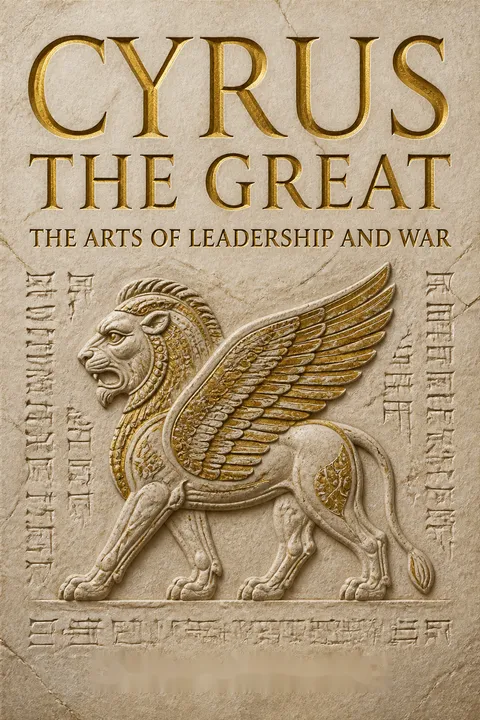
What's "Cyrus the Great: The Arts of Leadership and War" about?
- Historical Account: The book is a historical account of Cyrus the Great, the founder of the Persian Empire, as depicted by Xenophon, a historian and student of Socrates.
- Leadership and Strategy: It explores the leadership qualities and military strategies that Cyrus employed to build and expand his empire.
- Ethical Leadership: The narrative emphasizes ethical and spiritual dimensions of leadership, reflecting the influence of Socratic philosophy.
- Success Story: It is considered one of the greatest success stories, illustrating how Cyrus united the Medes and Persians and created a vast empire.
Why should I read "Cyrus the Great: The Arts of Leadership and War"?
- Timeless Leadership Lessons: The book offers timeless lessons on leadership, strategy, and management that are applicable in various fields today.
- Ethical Insights: It provides insights into ethical leadership, emphasizing the importance of integrity and benevolence.
- Historical Perspective: Readers gain a historical perspective on one of the most influential figures in ancient history and the founding of the Persian Empire.
- Inspirational Story: The story of Cyrus the Great is inspirational, showcasing how vision and determination can lead to monumental achievements.
What are the key takeaways of "Cyrus the Great: The Arts of Leadership and War"?
- Visionary Leadership: Cyrus exemplifies how a clear vision and strategic planning can lead to the successful creation and expansion of an empire.
- Ethical Conduct: The importance of ethical conduct and treating conquered peoples with respect is a recurring theme.
- Adaptability and Innovation: Cyrus's ability to adapt and innovate, such as rearming his troops and employing new tactics, is highlighted.
- Unity and Loyalty: The book underscores the significance of unity and loyalty among followers for achieving great success.
How does Xenophon portray Cyrus the Great's leadership style?
- Benevolent Ruler: Cyrus is portrayed as a benevolent ruler who prioritizes the well-being of his subjects and allies.
- Strategic Thinker: He is depicted as a strategic thinker who carefully plans his military campaigns and diplomatic efforts.
- Ethical Leader: Cyrus's leadership is deeply ethical, influenced by Socratic teachings, focusing on justice and fairness.
- Inspirational Figure: He inspires loyalty and dedication among his followers through his vision and personal integrity.
What are some of the best quotes from "Cyrus the Great: The Arts of Leadership and War" and what do they mean?
- "True Leadership Is Making People All They Ought to Be": This quote emphasizes the role of a leader in helping individuals reach their full potential.
- "Success always calls for greater generosity": It highlights the importance of sharing success and wealth to build loyalty and trust.
- "The truly contented man is not the possessor of vast riches": This reflects the idea that true happiness comes from using wealth wisely and not being consumed by greed.
- "The leader must be a living law": It underscores the necessity for leaders to embody the principles and values they wish to instill in others.
How does "Cyrus the Great: The Arts of Leadership and War" compare to other leadership classics like "The Art of War" and "The Prince"?
- Concrete Examples: Unlike "The Art of War," which offers brief, undeveloped remarks, Xenophon provides concrete examples of leadership through Cyrus's story.
- Ethical Focus: While "The Prince" by Machiavelli often advocates for deceit, Xenophon emphasizes ethical leadership and the long-term success it brings.
- Narrative Style: Xenophon's work is a narrative that combines historical events with leadership lessons, making it more engaging than the theoretical approach of Sun Tzu.
- Moral Lessons: The book offers moral lessons and spiritual insights, setting it apart from the more pragmatic and sometimes cynical advice in "The Prince."
What role does ethical leadership play in "Cyrus the Great: The Arts of Leadership and War"?
- Foundation of Success: Ethical leadership is portrayed as the foundation of Cyrus's success, guiding his decisions and actions.
- Respect for Conquered Peoples: Cyrus's respect and fair treatment of conquered peoples are highlighted as key to maintaining a stable and prosperous empire.
- Influence of Socratic Philosophy: The ethical dimension of leadership reflects the influence of Socratic philosophy, emphasizing justice and virtue.
- Long-term Impact: The book suggests that ethical leadership leads to lasting success and a positive legacy.
How does Xenophon illustrate the importance of adaptability and innovation in leadership?
- Rearming Troops: Cyrus's decision to rearm his troops with heavy weapons demonstrates his adaptability to changing circumstances.
- New Tactics: The use of new tactics, such as employing scythed chariots, showcases his innovative approach to warfare.
- Strategic Alliances: Forming strategic alliances with various tribes and nations illustrates his ability to adapt diplomatically.
- Continuous Improvement: The narrative emphasizes the need for continuous improvement and learning to stay ahead of adversaries.
What lessons on unity and loyalty can be learned from "Cyrus the Great: The Arts of Leadership and War"?
- Shared Vision: Cyrus unites his followers with a shared vision of a prosperous and just empire, fostering loyalty.
- Inclusive Leadership: His inclusive leadership style, which values contributions from all ranks, strengthens unity.
- Rewarding Loyalty: The book highlights the importance of rewarding loyalty and dedication to maintain a cohesive team.
- Overcoming Rivalries: Cyrus's ability to overcome internal rivalries and direct energy outward is key to his success.
How does "Cyrus the Great: The Arts of Leadership and War" address the challenges of success and power?
- Avoiding Complacency: The book warns against complacency and the temptation to indulge in luxury after achieving success.
- Maintaining Discipline: It emphasizes the need to maintain discipline and hard work to preserve achievements.
- Balancing Power: Cyrus's strategies for balancing power among his governors and military leaders are explored.
- Legacy and Responsibility: The narrative underscores the responsibility of leaders to use their power wisely and leave a positive legacy.
What is the significance of the spiritual and philosophical elements in "Cyrus the Great: The Arts of Leadership and War"?
- Socratic Influence: The spiritual and philosophical elements reflect the influence of Socratic teachings on Xenophon and the narrative.
- Moral Compass: Cyrus's actions are guided by a moral compass, emphasizing the importance of virtue and justice.
- Divine Favor: The book suggests that divine favor and spiritual guidance play a role in Cyrus's success.
- Inner Journey: Cyrus's journey is as much inward as outward, focusing on the development of his soul and character.
How does "Cyrus the Great: The Arts of Leadership and War" depict the relationship between leadership and cunning?
- Strategic Deception: The book illustrates the use of strategic deception in warfare, such as feigned retreats and surprise attacks.
- High vs. Low Cunning: It distinguishes between high cunning, used for noble purposes, and low cunning, which is deceitful and self-serving.
- Balancing Ethics and Strategy: Cyrus balances ethical leadership with cunning strategies to achieve his goals.
- Practical Wisdom: The narrative emphasizes the importance of practical wisdom in navigating complex challenges and adversaries.
About the Author
Other books by Larry Hedrick

Download PDF
Download EPUB
.epub digital book format is ideal for reading ebooks on phones, tablets, and e-readers.








