

Key Takeaways
Read Xenophon’s Socrates as a practical portrait, not a historical transcript
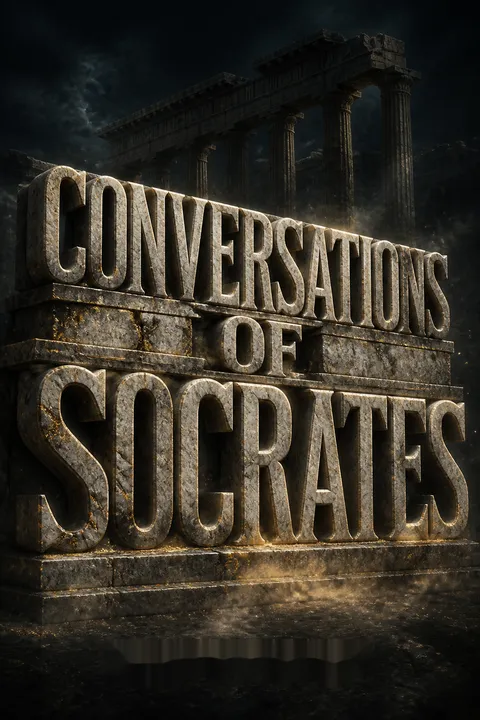
Four works, one model. This volume brings together Socrates’ Defence, Memoirs of Socrates, The Dinner-party, and The Estate-manager. Across trial scenes, conversations, a lively banquet, and lessons in household management, Xenophon presents Socrates as a disciplined teacher of practical virtue. He is less the dazzling philosophical questioner familiar from Plato than a guide to living well, managing responsibilities, and helping companions improve.
History stays uncertain. Xenophon was not in Athens for Socrates’ trial, and his reports of many conversations cannot be treated as transcripts. The dialogue genre blended remembered details with invention, while Xenophon’s interests in farming and military leadership shape what Socrates discusses. His account also defends a friend convicted of impiety and corrupting the young, charges bound up with Athens’ political tensions.
The value of this portrait does not depend on treating every speech as historical evidence. It offers a distinct account of how a student understood Socrates’ influence: as habits, judgments, and practical counsel. Reading it beside Plato resembles comparing witnesses with different vantage points, rather than choosing one as perfectly transparent. That comparison also sets a useful limit: a vivid moral portrait can preserve the teacher’s impact while revealing as much about the pupil’s ideals as about the teacher himself.
Build freedom by training appetite, not by obeying it
Desire can rule. Xenophon’s Socrates treats dependence on food, drink, sex, sleep, and money as a kind of servitude. Self-discipline is the trained ability to resist immediate appetite when it blocks a better choice. Socrates eats enough to enjoy food without needing elaborate indulgence, and he argues that waiting until one is hungry or thirsty makes ordinary pleasures more satisfying.
Practice creates options. Socrates tells the sophist Antiphon that modest needs let him choose his conversations freely, while paid teaching obliges the teacher to serve whoever pays. In another conversation, he argues that a person ruled by appetite cannot reliably fulfill duties to family, friends, or city. Discipline, then, is not rejection of pleasure: it is a way to enjoy it without becoming dependent on it.
The insight aligns with a useful distinction in behavioral science: restraint is easier when a person has practiced routines and reduced exposure to tempting situations, rather than relying on a fresh act of will each time. Xenophon’s emphasis on training captures that cumulative dimension. Still, restraint is not equally available to everyone. Poverty, illness, and exhausting conditions can narrow choices in ways that moral language alone cannot fix. Discipline can expand freedom, but it should not become a reason to blame people for constraints they did not choose.
Use judgment for human questions, and divination for hidden outcomes
Separate skill from uncertainty. Xenophon’s Socrates believes people should use reason where human skill can answer a question: choose a qualified pilot, measure land, or learn the craft of governing. He discourages asking the gods to settle matters people can decide through knowledge and effort. But when the outcome is concealed, such as whether a marriage or military command will ultimately prove fortunate, he recommends divination.
Piety includes limits. Socrates also claims that a divine voice, which he calls the divine, warns him against certain actions. Xenophon presents this as evidence of religious belief, not rejection of the gods. His picture combines practical investigation with humility about what people cannot foresee. The distinction reflects Socrates’ religious outlook in these texts; it does not establish that divination reliably predicts events.
This passage offers a durable question: is the uncertainty due to missing information that better inquiry could supply, or is it genuinely beyond prediction? Modern risk analysis makes a similar distinction between reducible uncertainty and outcomes that remain probabilistic even with good data. That distinction can prevent both magical thinking and overconfidence. The difficulty is drawing the boundary. Xenophon’s account places faith in divine messages, whereas contemporary readers may use probability, consultation, or contingency planning instead.
Judge leaders by what they enable others to accomplish
Office is a duty. Socrates questions would-be generals about more than tactics. A commander must protect troops, supply them, understand when to fight, and lead them toward the purpose for which they were appointed. In another conversation, he compares a good general to a shepherd responsible for the safety and well-being of those in his care.
Responsibility requires knowledge. Socrates mocks a young man who takes a short course in troop formations and assumes he is ready to command. He then challenges Glaucon, who wants influence in Athens but cannot identify the city’s revenues, expenditures, military strength, or food needs. Glaucon cannot even persuade his uncle to follow his advice about a household. Ambition may be admirable, Xenophon suggests, but it does not substitute for preparation.
The leadership standard here is stronger than charisma or a winning résumé: authority is justified by competence that benefits the people affected by a decision. This resembles modern ideas of stewardship, in which leaders are accountable for the conditions they create, not just their own performance. Expertise is essential, but it cannot settle every question of legitimacy. Technical skill still needs public accountability, especially when leaders define the goals and distribute the costs of their decisions.
Question inherited customs while understanding why communities fear dissent
Custom held society together. Xenophon explains that Athenian religious observance was tied to civic life: honoring the gods according to custom helped sustain the community’s relationship with them. The indictment accused Socrates of rejecting the city’s gods and introducing new divine powers. The charge of corrupting the young was similarly charged with political meaning, because Socrates encouraged people to examine what they thought they knew rather than simply inherit accepted views.
The trial had subtexts. Socrates’ circle included men such as Critias and Alcibiades, whose political actions fueled suspicion of his influence. Xenophon argues that Socrates did not cause their later wrongdoing, but the association mattered in a city recently shaken by oligarchic rule. The trial, then, was about more than abstract theology: it brought civic loyalty, political fear, and intellectual independence into conflict.
A society needs shared practices to coordinate life, yet those practices can also shelter injustice or mistaken beliefs. Socrates’ questioning makes that tension visible: dissent may be valuable precisely because it unsettles comfortable assumptions. But the danger of dissent does not prove the dissenter right, and the fear of disorder does not prove a community’s charges fair. The account is most useful when it resists both easy conclusions, asking what a challenge exposes and what social trust it risks damaging.
Make friendship through reciprocal care, not simple calculation
Friendship needs tending. Socrates notices that people carefully maintain houses, animals, and tools while neglecting friends, whom they call their greatest possession. He urges Critobulus to assess potential friends by how they have treated others, then to become the kind of person worth keeping: disciplined, reliable, and eager to return kindness.
Take the first step. When Chaerecrates quarrels with his brother, Socrates asks why he will not begin repairing the relationship. He compares brothers who obstruct each other to body parts that refuse to work together. In another episode, he helps Aristarchus turn a household crisis into shared work: women relatives make goods for sale, restoring both income and goodwill. Friendship is useful, but its usefulness grows from mutual effort and care.
The book’s practical account of friendship connects with the idea of social capital: trusted relationships make cooperation, support, and collective action possible. Xenophon’s examples emphasize maintenance rather than sentiment alone, a useful corrective to treating friendship as something that survives without attention. Yet valuing friends chiefly for their usefulness risks turning affection into a ledger. The strongest reading is reciprocal rather than transactional: practical help matters because it expresses concern, not because every kindness needs an equivalent return.
Turn possessions into assets through knowledge and order
Ownership is not enough. In The Estate-manager, Socrates argues that a possession becomes genuinely useful only when its owner knows how to use it. A horse can injure an inexperienced rider; land can produce losses when badly managed; and money can do harm if spent destructively. Even selling an unused item helps only if the seller knows how to use the proceeds.
Order makes work easier. Ischomachus describes arranging household goods by use and location so that servants can find and return them. He also trains workers through instruction, supervision, praise, and consequences. For Xenophon, managing an estate is a practical discipline connected to managing oneself. The picture has limits: it assumes household hierarchy, slavery, and distinct roles for women and men, rather than offering a model of equal partnership.
The distinction between owning a resource and being able to use it well anticipates a broad principle in management: resources create value only through organization, knowledge, and execution. The example of the orderly storeroom is small but concrete, showing how systems reduce wasted effort. The social framework matters just as much. Ischomachus’ efficiency depends on enslaved labor and a wife assigned domestic authority within a patriarchal household. The management lesson can travel; the hierarchy should not travel with it.
Test your competence before claiming authority
Self-knowledge is practical. Euthydemus has collected books by famous writers and assumes he is prepared to advise the city. Socrates questions him about justice, goodness, and what he actually knows. Euthydemus discovers that owning texts has not given him reliable judgment. Socrates then treats self-knowledge as understanding one’s abilities and limits, much as a horse buyer checks a horse’s qualities before trusting it.
Evidence beats assumption. Glaucon’s political ambitions receive the same test: he has not studied the city’s finances or defenses, yet imagines he can lead it. Socrates does not dismiss ambition; he asks it to show its preparation. The lesson is to inspect the gap between confidence and demonstrated ability before taking responsibility for consequential decisions.
This is a strong account of calibration: confidence should be compared with observable competence, not merely with aspiration or accumulated information. Euthydemus’ books resemble credentials that have not yet been converted into judgment. Contemporary research on metacognition likewise focuses on how people assess what they know, though confidence can remain poorly calibrated even after training. Socratic questioning helps reveal gaps, but public embarrassment can make learners withdraw. Challenge is most productive when it leads to better inquiry rather than humiliation.
Choose love that develops character, not just appetite
At the banquet, love becomes an argument. Socrates distinguishes attachment to someone’s character from desire focused only on physical beauty. He claims that admiration for the mind can deepen as a person grows wiser, while attraction based on appearance may fade. In his account, a good lover wants the beloved to become better and must cultivate goodness in himself to help make that possible.
Callias gets a challenge. Callias is attracted to the young athlete Autolycus. Socrates praises the young man’s endurance and ambition, then urges Callias to become a useful guide rather than simply enjoy his beauty. The party’s comic exchanges and final romantic performance keep the discussion lively, but they also reveal the era’s male-centered assumptions about desire, age, and influence.
The enduring insight is that love can be evaluated by what it asks people to become: more attentive, generous, and capable of mutual respect. That ideal extends beyond romance to mentoring and friendship. Still, moral improvement is not a substitute for consent or equality. The banquet’s older admirer and younger beloved occupy different positions of power, and Xenophon’s idealization of character does not fully examine that imbalance. A modern reading can preserve the aspiration while asking whether both people have genuine agency.
Live so integrity, not courtroom persuasion, can answer for you
A life before a defense. In Xenophon’s account, Socrates does not prepare a speech designed to win acquittal. He tells Hermogenes that his conduct has been his preparation: he has tried not to wrong others. He also says a divine warning discouraged efforts to construct a defense, and argues that dying before the decline of old age may be preferable to living through it.
Dignity does not erase injustice. After the jury convicts him, Socrates refuses to propose a lesser penalty and declines his friends’ offer to help him escape. Xenophon portrays him as calm, convinced that his life has been honorable, and confident that posterity will judge his accusers differently. The account is a partisan memorial, not neutral access to Socrates’ final thoughts, but it closes the book’s portrait with a test of consistency under pressure.
The scene gives integrity a demanding meaning: conduct matters most when reputation or survival is at stake. That idea resonates with traditions that ask whether a person’s choices cohere with a considered life, rather than with momentary advantage. Yet acceptance of death should not be confused with proof that a verdict is just. Xenophon’s dignified ending can inspire courage while also making political violence look nobler than it was. The distinction between personal composure and public justice deserves to remain visible.
Analysis
Xenophon’s Socrates is most valuable not as a rival transcript to Plato, but as a case study in how philosophy can become a daily practice. Across four distinct works, the same ideal appears in different settings: restraint at meals, judgment in political life, affection among friends, religious observance, and careful management of a household. The recurring claim is that virtue requires knowledge, but Xenophon gives that knowledge a distinctly practical shape. It means knowing what one can do, what one ought to do, and how to organize people and resources toward an end.
That practical emphasis is also the book’s limitation. Socrates often arrives with conclusions ready to teach, and his questions guide interlocutors toward Xenophon’s preferred standards. The result is less an open-ended inquiry than a dramatized education in self-command and social responsibility. The editor’s framing makes this especially important: Xenophon’s reported conversations are shaped by memory, literary convention, personal interests, and a desire to defend Socrates. The portrait should therefore be read both for its moral arguments and for the values of its author.
The tension between individual judgment and civic custom gives the defense of Socrates its historical force. Athenian religion was not simply private belief; its rituals helped bind citizens together. Socrates’ invitation to examine customary assumptions could therefore seem both intellectually liberating and politically dangerous, particularly after oligarchic violence. The book neither settles whether the trial was fair nor makes its political pressures disappear. Instead, it shows how a society may interpret independent thought as a threat, while also reminding readers that association and influence carry real consequences.
The work’s most portable contribution is a connection between self-government and external responsibility. A person who cannot manage appetite, attention, or possessions is poorly equipped to manage a household or command others. That analogy is useful, but it must be separated from the ancient social order that supports it. Xenophon’s ideal depends on gender hierarchy and slave labor. Readers can retain the emphasis on discipline, competence, and mutual service while rejecting the unequal structures through which his examples operate.
Review Summary
Reviewers present mixed perspectives on Conversations of Socrates, generally rating it 3-5 stars. Many compare Xenophon's portrayal unfavorably to Plato's, noting Xenophon's Socrates is more pragmatic, down-to-earth, and less philosophically sophisticated—lacking the famous dialectical method. Some appreciate this "realistic" portrayal as historically credible, showing Socrates giving practical advice on daily matters. Critics find Xenophon's writing "patchy," with excessive homilies and poor treatment of women. Persian and other non-English reviewers offer enthusiastic praise, highlighting Socrates' teachings on self-control and virtue. Most agree the work provides valuable historical context despite Xenophon's limitations as philosopher and writer.
People Also Read






Glossary
to daimonion
Socrates’ divine warningXenophon’s term for the divine voice or sign that Socrates says communicates with him. It generally warns him against an action rather than prescribing a complete course of conduct. Xenophon uses this belief to defend Socrates against the charge of introducing new deities, presenting it as a personal form of divine guidance within Greek religious life.
nomos
Custom, law, and conventionA Greek term covering written law, customary practice, social convention, and the traditions that organize a community. In Xenophon’s account of Athens, religious observance and civic loyalty are closely connected to nomos. Socrates’ questioning could unsettle it by encouraging individuals to examine beliefs and moral standards they might otherwise accept without reflection.
kalos kagathos
Xenophon’s ideal of goodnessA Greek expression meaning, broadly, fine and good. Xenophon uses it for a person who combines moral virtues with practical competence, including self-discipline, education, friendship, household management, and service to the city. The ideal reflects the social world of the well-to-do citizen, although Xenophon presents Socrates’ character as its fullest example.
Sokratikoi logoi
Socratic dialogue writingsAncient literary works in which Socrates appears as a speaker or central character. Several followers of Socrates wrote them, and surviving examples differ in their portrayals of him. The form mixes remembered people and ideas with literary construction, so its conversations offer evidence about Socratic thought while also reflecting each writer’s purposes and outlook.
estate-management
Managing household resourcesXenophon’s practical account of managing a household and its property so that its resources are useful and productive. It includes organizing possessions, supervising workers, directing agricultural activity, and training household members. The work connects external management with self-discipline, but its examples assume ancient hierarchies, including slavery and sharply differentiated roles for women and men.
About the Author
Other books by Xenophon

Download PDF
Download EPUB
.epub digital book format is ideal for reading ebooks on phones, tablets, and e-readers.








