

Key Takeaways
Stop treating body size as a report card on character
A familiar verdict. The book opens with a story about model Rosie Mercado, whose 240-pound weight loss was presented as proof of determination. The story makes humiliation seem like useful motivation and thinness like a prize earned through effort. It leaves out how little a stranger can know about someone’s body, health, or goals.
Choice does not settle dignity. Body size can reflect genetics, health conditions, medication, environment, and personal choices. Lipedema and PCOS, for example, can complicate weight loss. Some people also choose to be fat. None of these explanations is required before a person deserves respect. The problem is not merely an inaccurate theory of weight. It is using that theory to make dignity conditional on becoming thin.
The key shift is from asking why a person has a body to asking what others believe that body entitles them to do. That distinction resembles the difference between explaining a condition and assigning blame for it. Explanations can guide care; blame often licenses neglect. The argument also avoids making respect depend on proving that body size is involuntary. That is important because a person’s freedom to choose should not determine whether they are protected from cruelty.
Replace calorie arithmetic with a more realistic model of weight regulation
Bodies adapt. The simple calorie ledger misses the body’s response to weight loss. The book describes appetite hormones such as ghrelin and leptin, and research finding that people who lose weight can remain hungrier for at least a year. Calorie restriction can also lower daily energy use. These changes help explain why effort alone does not reliably produce lasting weight loss.
Short-term is not lasting. A review of 121 trials covering 14 popular diets found an average initial loss of about 10 pounds, with that effect diminishing by a year. Exercise can improve health in other ways, even when it produces little weight loss. The point is not that energy intake is irrelevant, but that a basic equation cannot predict an individual body’s response or make weight loss simple.
The useful distinction is between a physical principle and a practical forecast. Energy balance matters, but people do not control every variable that shapes appetite, expenditure, or long-term weight. Treating the equation as a complete personal instruction turns a complicated system into a character test. At the same time, the evidence summarized here does not establish that every intervention has the same result for every person. A sound conclusion is uncertainty and individual variation, not a new universal rule.
Read BMI and epidemic headlines as contested tools, not verdicts
A measure with a past. The body mass index, or BMI, began as a population statistic developed by Adolphe Quetelet, not as a clinical test for an individual’s health. Its ideal was based on white European men. Later researchers adopted it because it was easy to calculate, although the book notes that even its proponents found it an imperfect measure of body fat.
Categories can move. When US BMI thresholds changed in 1998, about 30 million people became classified as overweight or obese without gaining weight. Estimates of deaths attributed to body size have also differed sharply. One widely repeated figure of 400,000 deaths a year was challenged by researchers using different methods. Such disputes do not prove weight has no health relevance. They do show why a threshold or headline cannot substitute for careful evidence.
A measurement can be useful for population comparisons while still being a poor verdict on a particular patient. That is a basic problem of scale: group averages do not automatically describe individuals. The history also shows how definitions shape what appears to be a sudden crisis. Scrutiny of BMI is not a reason to dismiss every health concern, but it is a reason to ask what a measure can actually support before turning it into policy.
Protect children and patients from coercive care disguised as concern
Pressure can backfire. Schools in many US states have sent families BMI report cards. In a trial involving more than 28,000 students, these reports did not change children’s weight. They did, however, worsen some students’ satisfaction with their bodies and increase discussion of dieting. Fat camps can also produce short-term losses that do not last: the book cites research finding that 90 percent of campers regained weight within ten months.
Care must address the actual problem. The book recounts patients whose symptoms were attributed to weight, delaying diagnoses such as lung cancer or scoliosis. Removing children from loving homes to force weight loss is especially troubling given the lasting harm associated with family separation. Health care should investigate symptoms, provide suitable equipment, and treat patients respectfully, rather than making thinness the price of attention.
The strongest test of an intervention is not whether it signals concern, but whether it helps the person receiving it. Here, the gap between intention and outcome is stark: a policy can claim to protect children while worsening shame and family stress. This is also a lesson in informed consent. Patients and families should be able to ask what evidence supports a recommendation, what alternatives exist, and what happens if the preferred outcome does not occur.
Do not praise weight loss before knowing what it means
A compliment carries assumptions. When Adele appeared thinner, fans praised her for getting healthy before she had explained the change. Their reaction treated thinness as proof of hard work, good health, and personal success. But weight loss can also accompany illness, grief, or disordered eating. An observer cannot reliably infer its cause or whether it is welcome.
Advice can feel like surveillance. The same assumptions underlie unsolicited diet tips and repeated suggestions for surgery. In one study of people in a weight-loss program, 98 percent reported disparaging remarks from family members. Good intentions do not erase the message that someone is monitoring another person’s body. Ask before discussing weight, avoid body-based praise, and interrupt diet talk when it targets someone who has not invited it.
The social reward for weight loss is not neutral: it teaches people which bodies receive approval and which changes count as improvement. Silence about weight gain can carry the same judgment in reverse. A practical alternative is to compliment choices or qualities that do not depend on appearance. That avoids guessing about someone’s health and reduces pressure on people whose bodies change for reasons that are private, complicated, or painful.
Make fat visibility ordinary, and keep body politics structural
Being seen is not an endorsement. When singer Lizzo appeared at a basketball game, commenters accused her of promoting obesity. The same charge met a plus-size model in a razor advertisement and another in a music video. In each case, the alleged offense was largely that fat people appeared in public without apology. The book argues that ordinary visibility is not the same as urging anyone to gain weight.
Remember the movement’s roots. Fat acceptance grew through activism, including a 1967 public protest and the Fat Underground, which challenged discrimination and the diet industry. Corporate campaigns later recast body positivity as personal confidence while often excluding very fat, disabled, and gender-nonconforming people. A movement focused only on feeling better about oneself can leave inaccessible spaces and unequal treatment untouched.
Representation matters, but visibility alone cannot change who can find clothing, enter a clinic, or sit comfortably in public. The book’s distinction between personal affirmation and collective justice helps prevent a movement from being reduced to a marketing style. It also offers a useful question for any branded social cause: who is included in the image, who is missing from the product or policy, and who benefits from the new language?
Track anti-fatness where it changes pay, care, access, and safety
Bias has material costs. Anti-fatness, the book’s term for attitudes and systems that marginalize fat people, affects more than how strangers behave. As of 2022, the author notes, explicit protection from weight discrimination existed in only a small number of US jurisdictions. Research cited in the book found lower average earnings for fat workers, particularly women, and many workers with higher BMIs reported discrimination on the job.
Design excludes people too. Fat passengers face inconsistent airline rules, sometimes paying for an extra seat or risking removal from a flight. The book contrasts this with Canada’s one-person, one-fare policy for fat and disabled travelers. In health care, undersized equipment and provider bias can restrict access or lead to poor diagnoses. These examples show why discrimination must be measured in lost income, care, mobility, and safety, not only insults.
This framing shifts attention from whether an individual meant harm to whether institutions distribute access fairly. That is a productive way to study discrimination because outcomes can persist even when no single person claims responsibility. The intersectional examples matter too: anti-fatness can compound racism, ableism, or gender discrimination. At the same time, evidence about one institution should not be generalized automatically to every setting. Specific policies and outcomes still need to be documented.
Let fat people narrate their own bodies, appetites, and desires
Appearance is not a diagnosis. The book challenges the assumption that fat people are emotionally damaged or eat to manage their feelings. Trauma and body size can be related, but a correlation cannot explain every person. The Adverse Childhood Experiences study began after a doctor running a weight-loss clinic noticed a connection between trauma histories and patients’ experiences. That history may inform care, but it does not justify assigning a trauma story to someone by looking at them.
Desire is not a pathology. Fat people describe varied romantic and sexual lives, including being desired, being kept secret, choosing not to date, or identifying as asexual. Treating all attraction to fat people as fetishistic replaces their accounts with outsiders’ assumptions. Ask what a person says about their own experience, and do not demand an explanation for their body or relationships.
The common thread is interpretive authority. A body may invite observation, but it does not give observers permission to invent a biography, diagnosis, or romantic narrative. This principle is especially valuable in health settings, where assumptions can redirect attention away from symptoms. It also has limits: listening to self-description does not mean every medical question is inappropriate. The distinction is between asking with relevance and consent, and presuming an answer from appearance.
Examine learned bias without equating discomfort with oppression
Name without shame. Gordon uses “fat” as a neutral description reclaimed by many fat people. When thin people rush to correct someone who calls themself fat, reassurance can deny that person’s language and lived experience. The book also distinguishes internalized anti-fatness, which fat people can absorb after repeated stigma, from anti-fat beliefs held by people who are not fat.
Compare the stakes. Insults aimed at thin people can hurt and should stop. But individual body shaming is not equivalent to the larger pattern of discrimination that affects fat people’s jobs, health care, and public access. The author calls the way privileged people absorb and enact superiority “internalized dominance.” A practical check is to notice whether body talk, diet advice, or claims of being “the real target” shift attention away from people facing material exclusion.
This section asks readers to distinguish pain from power without dismissing either. Someone can genuinely suffer from body dissatisfaction and still benefit from a system that treats their body as more acceptable. That distinction is more precise than ranking whose feelings count. The reclaimed use of “fat” also illustrates how language depends on speaker and context. Respecting a person’s chosen words is not the same as demanding that everyone adopt one vocabulary.
Fight anti-fatness without pretending other discrimination has ended
Avoid the final-oppression claim. Calling anti-fatness the last socially acceptable form of discrimination can express solidarity, but it can also imply that racism, ableism, transphobia, and other systems are already solved. The book argues that discrimination often persists in less visible forms, including policy, unequal access, and ordinary institutional practice.
Make solidarity specific. Support fat people without turning different struggles into a contest. That means listening to fat people with intersecting identities, advocating for nondiscrimination protections, challenging weight-based workplace practices, and pushing for accessible equipment and public spaces. Learning is useful, but the author emphasizes that awareness alone does not change daily conditions. The practical question is where a person has influence, and what concrete barrier they can help remove.
The closing argument resists a familiar political shortcut: treating recognition of one injustice as proof that others are finished. Solidarity is stronger when it names particular harms and connects them without flattening differences. The call to act locally is also realistic. No single intervention ends a system, but a policy change, a defended patient, or an accessible seat can reduce the cost imposed on people now.
Analysis
Gordon’s book is an essay-driven guide to a social problem, not a clinical manual or a unified blueprint for liberation. Its organizing device, twenty familiar myths, lets personal stories lead into research and then into practical responses. That structure is effective because anti-fat beliefs often survive as common sense rather than as explicit arguments. A reader can recognize the everyday form of the bias before confronting its institutional consequences.
The most important analytic move is separating three questions that public debate often collapses: what influences body size, what health risks may correlate with it, and how people should be treated. Evidence about the first two cannot by itself settle the third. Even if a behavior were voluntary, it would not justify discrimination. Conversely, challenging stigma does not require claiming that body weight has no relationship to health. The book is most persuasive when it asks for better diagnosis, respectful care, and stronger evidence rather than using appearance as a proxy for either health or virtue.
Its historical account of BMI and the epidemic narrative also shows that categories are not merely descriptive. Once a threshold becomes policy, it changes who is labeled, monitored, and treated as a problem. Yet the book’s sharp critique should not be mistaken for a complete scientific review of every weight intervention or every health outcome. The cited findings vary in design and scope, and population-level results cannot settle an individual’s care. That limitation strengthens, rather than defeats, the call for humility: clinicians should explain evidence and uncertainty, while patients should not have symptoms dismissed on the basis of size.
The book’s ethical center is body autonomy joined to material change. Respect is not a reward for health, thinness, or a persuasive account of one’s history. Its practical challenge is to turn that principle into institutional habits: accessible spaces, unbiased care, fair employment, and less intrusive everyday conversation.
Review Summary
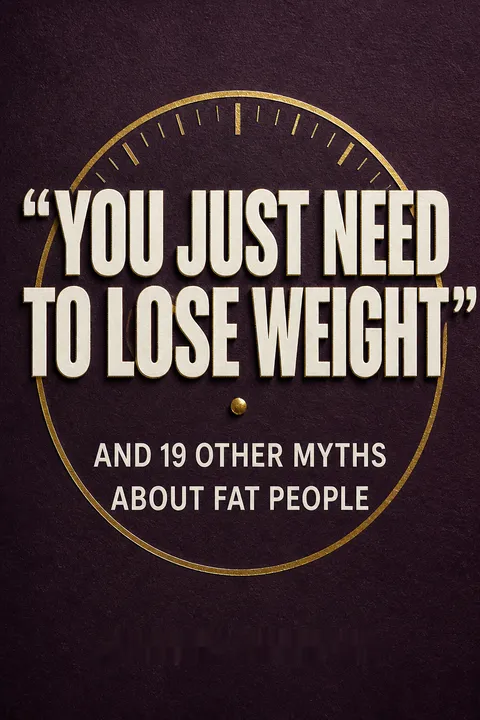
"You Just Need to Lose Weight" receives mixed reviews, with many praising its thorough debunking of anti-fat myths and Gordon's accessible writing style. Readers appreciate the book's research-backed approach and actionable steps for combating fatphobia. Some found it repetitive or too basic, while others felt it was an essential read for understanding weight stigma. Critics argue it lacks nuance or promotes harmful ideas. Overall, the book is seen as a valuable resource for those new to fat acceptance, though opinions vary on its effectiveness for more experienced readers.
People Also Read







Glossary
Anti-fatness
Bias and systems targeting fat peopleThe book’s umbrella term for individual attitudes, interpersonal behaviors, and institutional systems that marginalize, exclude, underserve, or oppress fat people. It includes personal prejudice as well as policies and designs that restrict access to work, health care, transportation, clothing, and public spaces. Gordon uses it in place of “fatphobia,” which she considers inaccurate and potentially stigmatizing language about mental illness.
Diet culture
Thinness treated as virtueA system of beliefs and practices that elevates thin bodies, often treating thinness as evidence of health, discipline, and moral worth. It promotes weight loss as a path to social approval and status, and benefits industries and people able to afford weight-loss products and services. The book notes that wellness language can preserve diet culture while presenting weight loss as self-care.
Body mass index (BMI)
Weight divided by height squaredA numerical measure calculated from a person’s weight and height, used to sort people into weight categories. The book traces it to Adolphe Quetelet’s population-level index, which was not designed as an individual health diagnosis. Later medical and public-health institutions adopted and revised BMI thresholds, despite limitations across populations and the measure’s inability to establish an individual’s overall health.
Healthism
Health treated as personal virtueA framework that makes personal health a primary measure of well-being and treats lifestyle modification as the main route to achieving it. Gordon uses the term to describe how social and structural influences on health, such as poverty or discrimination, are obscured when health is framed chiefly as individual responsibility. In this logic, people perceived as unhealthy are often judged as morally or personally deficient.
Obesity paradox
Health findings that defy weight assumptionsA term used for research findings in which people classified as overweight or obese have similar or, in some studied groups, lower mortality risks than people in the so-called normal-weight category. Gordon uses the term to challenge the assumption that a higher BMI automatically predicts worse outcomes. The findings do not prove that body size is irrelevant to health; they show that the relationship is not captured by a simple universal rule.
Internalized anti-fatness
Absorbed stigma among fat peopleThe process by which fat people absorb or reproduce negative messages about fatness after experiencing repeated stigma. In the book, it can include policing one’s own food or clothing, accepting discrimination as deserved, or urging other fat people to conform to thin standards. Gordon distinguishes this from anti-fat bias held by people who are not fat.
Internalized dominance
Absorbed belief in superiorityThe process by which people with social privilege absorb and enact beliefs that their group is normal or superior to marginalized groups. Gordon applies the concept to thin people who monitor fat people, recommend weight loss without consent, or treat thinness as earned status. The term describes learned social positioning, not a claim that every thin person acts with conscious hostility.
Normative discontent
Socially expected body dissatisfactionA pattern in which people regularly express dissatisfaction with their bodies because such talk has become socially familiar and accepted. The book argues that complaints about thighs, weight, or appearance can reinforce thin ideals rather than provide relief, and can make fat people feel judged or erased. It contrasts this pattern with more affirming talk about bodies.
Moral panic
Disproportionate alarm about a groupA public reaction marked by heightened concern, hostility toward a supposedly threatening group, broad agreement that the threat is serious, and a response disproportionate to the evidence. Gordon applies this framework to the “obesity epidemic” narrative, arguing that alarmist news coverage and policy sometimes magnified fear of fat people rather than producing careful, effective public-health responses.
Adverse Childhood Experiences (ACE) study
Research on childhood adversityA large research project that examined the relationship between adverse experiences in childhood and later health. Gordon recounts that it grew from a physician’s observations at a weight-loss clinic, where many patients had histories of childhood trauma. The study is relevant to the book’s discussion of trauma and body size, but its findings describe associations and do not explain every fat person’s body or history.
FAQ
What's You Just Need to Lose Weight about?
- Debunking Myths: The book addresses 20 common myths about fatness and fat people, aiming to dismantle misconceptions that fuel anti-fat bias.
- Personal Experience: Author Aubrey Gordon shares her experiences as a fat person, adding depth and relatability to the arguments against these myths.
- Call to Action: It encourages readers to confront their biases and advocate for fat acceptance, serving as a resource for understanding and combating anti-fatness.
Why should I read You Just Need to Lose Weight?
- Understanding Anti-Fat Bias: The book provides insights into systemic issues surrounding fatness, essential for challenging biases and supporting fat individuals.
- Empowerment for Fat People: It offers validation and empowerment for fat individuals, encouraging them to embrace their bodies and reject societal pressures.
- Educational Resource: Well-researched and drawing on personal stories, it is valuable for activists, educators, and anyone interested in social justice.
What are the key takeaways of You Just Need to Lose Weight?
- Myths vs. Reality: The book debunks myths like “being fat is a choice,” emphasizing that fatness is not solely a result of personal choices.
- Intersectionality of Fatness: It highlights how race, gender, and socioeconomic status intersect with fatness, broadening the understanding of fatness.
- Advocacy for Fat Acceptance: The book advocates for accepting fat bodies and dismantling the stigma associated with them.
What are the best quotes from You Just Need to Lose Weight and what do they mean?
- “Just lose weight falls...”: Highlights the disconnect between those who haven’t experienced fatness and the oversimplification of weight loss.
- “Anti-fatness is the last...”: Underscores the pervasive nature of anti-fat bias, often overlooked compared to other forms of discrimination.
- “A diet is a cure...”: Critiques the medicalization of fatness and the diet industry, arguing that the focus on weight loss is misguided.
How does You Just Need to Lose Weight address health concerns related to fatness?
- Critique of BMI: Discusses the limitations of BMI as a health measure, arguing it perpetuates stigma against fat people.
- Health Beyond Size: Emphasizes that health cannot be determined solely by body size, advocating for a nuanced understanding of health.
- Impact of Anti-Fat Bias: Highlights how anti-fat bias can negatively affect health outcomes, as fat individuals may avoid medical care due to discrimination.
What strategies does You Just Need to Lose Weight suggest for combating anti-fatness?
- Educate Yourself: Encourages readers to learn about fatness and anti-fat bias to challenge their own and others' biases.
- Support Fat Advocacy: Urges support for fat activists and organizations working towards fat acceptance and social justice.
- Interrupt Anti-Fatness: Provides advice for interrupting anti-fat comments and behaviors, fostering a more inclusive environment.
How does You Just Need to Lose Weight define anti-fatness?
- Broad Definition: Describes anti-fatness as attitudes, behaviors, and systemic practices that marginalize fat individuals.
- Cultural Context: Links anti-fatness to issues of race, gender, and class, highlighting unique experiences of different identities.
- Impact on Lives: Illustrates how anti-fatness affects daily lives, creating barriers to acceptance and well-being.
What personal experiences does Aubrey Gordon share in You Just Need to Lose Weight?
- Navigating Relationships: Recounts experiences with friends and family expressing concern about her health, revealing pervasive anti-fat bias.
- Public Perception: Shares anecdotes about being judged in public spaces, illustrating the societal scrutiny faced by fat individuals.
- Empowerment Through Advocacy: Discusses her journey towards embracing her fat identity and becoming an advocate for fat acceptance.
What is the author’s perspective on the “obesity epidemic”?
- Critique of the Epidemic Narrative: Argues that the term is misleading and used to justify discrimination against fat people.
- Focus on Stigmatization: Highlights increased stigmatization and moral panic resulting from the epidemic narrative.
- Call for a New Framework: Advocates for a shift in discussion towards understanding the multifaceted nature of health.
How does You Just Need to Lose Weight address discrimination against fat people?
- Legal and Social Context: Discusses the lack of legal protections against weight discrimination, highlighting its permissibility in many states.
- Personal Accounts: Shares stories illustrating the pervasive nature of anti-fat bias in healthcare and employment.
- Advocacy for Change: Calls for advocacy to combat discrimination, urging support for policies protecting fat individuals.
How does You Just Need to Lose Weight redefine the conversation around health and body size?
- Holistic View of Health: Promotes a view of health beyond weight, considering mental health and social determinants.
- Challenging Traditional Metrics: Critiques metrics like BMI, advocating for a nuanced understanding of health.
- Empowerment Through Acceptance: Encourages embracing body diversity and rejecting narrow beauty standards.
What specific methods or advice does the author provide for combating anti-fat bias?
- Self-Reflection: Encourages self-reflection on biases and assumptions regarding fatness, using tools like implicit bias tests.
- Advocacy and Activism: Calls for participation in movements supporting fat acceptance and challenging discriminatory practices.
- Support for Fat Individuals: Advises supporting fat individuals by listening to their experiences and advocating for their rights.
Download PDF
Download EPUB
.epub digital book format is ideal for reading ebooks on phones, tablets, and e-readers.








