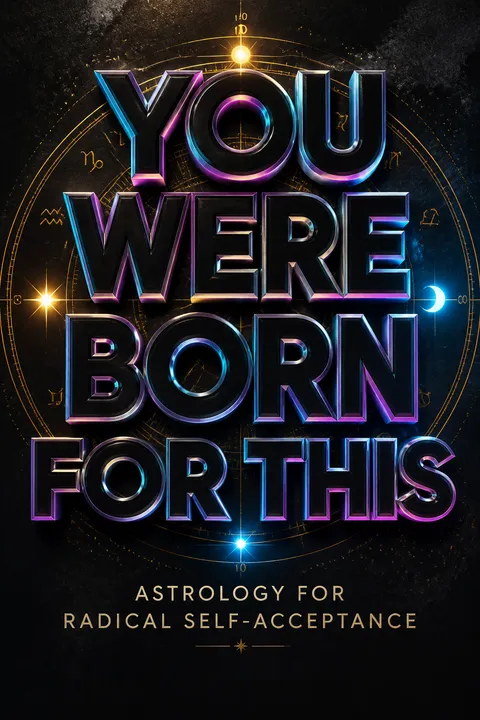


Key Takeaways
Use astrology as a mirror, not a verdict about who you can become.
Being seen can matter. Nicholas describes growing up amid addiction, violence, and fear, often retreating behind a guarded persona. At eight, she met a stranger who called her judgmental. The word felt affirming: it gave her a way to understand her discernment as a strength rather than a flaw. Astrology first mattered to her as an experience of being recognized, not as a forecast of events. She argues that a chart can reflect capacities and vulnerabilities without assigning moral value to them.
Keep the person in charge. A chart reading can prompt questions about what feels true, what needs care, and what may be possible. It should not decide what someone is allowed to become.
The account captures a powerful function of interpretation: a new description can help someone organize experience without erasing it. That resembles narrative identity, the process of building a coherent story from events and traits. The benefit depends on flexibility. A label that loosens shame can be liberating; one treated as an unchangeable diagnosis can narrow a life. Astrology is most constructive here as a language for reflection, not as authority over the person it describes.
Read the whole birth chart, not only the Sun sign people know from horoscopes.
A chart is a system. A natal chart, also called a birth chart, maps the positions of planets at the time and place of birth. In Nicholas's symbolic grammar, planets represent roles or drives, signs describe their style, houses locate the areas of life where they play out, and aspects describe relationships among planets. A Sun sign alone is one piece, not a complete account. A precise birth time matters particularly for the Ascendant and houses. If the time is unknown, signs and planetary relationships can still be explored, but house placements and the Ascendant remain uncertain.
Build the reading patiently. Nicholas recommends studying the chart as a whole, taking notes, and letting interpretations develop instead of trying to master every symbol at once.
The chart's layered structure encourages contextual thinking: a trait is not interpreted in isolation but in relation to setting and other forces. That is a useful habit well beyond astrology, including in systems thinking and case formulation. The caveat is that complexity can create an illusion of precision. More symbols do not automatically mean more reliable conclusions. A disciplined reader should separate the chart's internal rules from claims about what objectively causes a person's behavior.
Let the Sun name your purpose, and the Moon reveal what living it requires.
Purpose needs a body. Nicholas's first two keys are the Sun and Moon. The Sun symbolizes life force and purpose: its sign describes a style of expression, its house points to a life area, and its planetary aspects suggest support or friction. The Moon symbolizes physical and emotional needs, daily rhythms, the body, and early experiences of care. Its sign describes how someone seeks nourishment, while its house points to where that nourishment is needed.
Connect ambition to care. The book's example of Frida Kahlo links a Taurus Moon, associated with tangible stability and sensory life, to a career in which her body and art were central. The practical question is not simply what someone wants to do, but what conditions help them sustain it.
Pairing aspiration with ordinary needs is a particularly humane move. Career advice often treats energy, care, and bodily limits as inconveniences rather than part of the problem being solved. The Moon gives those conditions equal interpretive weight. A useful extension is to test the proposed need against actual experience: does a routine, relationship, or work setting restore energy, or merely match a flattering description? Self-knowledge becomes actionable when it changes how a day is arranged.
Treat your rising sign as motivation, and its ruling planet as direction.
Find the chart's starting point. The Ascendant, or rising sign, is the zodiac sign on the eastern horizon at birth. Nicholas reads it as a person's motivation for entering life and what they may want to be known for. The planet that rules that sign is the Ascendant ruler, which the book treats as a guide to the direction of the person's life. Its sign describes how it operates, and its house identifies the area of life it emphasizes.
Check the birth time. Because the Ascendant changes relatively quickly, a reliable time of birth is important. Nicholas's framework uses this third key alongside Sun and Moon to give a reading more context than a Sun sign alone. The ruler may point toward work, relationships, community, learning, or another life domain.
This distinction between motivation and direction resembles the difference between a person's preferred mode of action and the contexts in which that action has consequences. It can help turn broad identity language into practical questions: what gets someone moving, and where does that energy repeatedly go? The symbolic model is not a substitute for examining constraints such as money, discrimination, health, or caregiving. Those conditions can shape a life path regardless of what a chart suggests.
Interpret each placement through its role, style, setting, and planetary relationships.
Use a consistent grammar. The book's core reading method combines four elements: the planet's role, the sign's style, the house's life area, and the aspects linking planets. For instance, Mars represents drive and conflict; in a sign it takes on that sign's approach, in a house it acts in a particular life domain, and its aspects describe how other planetary roles support or complicate it.
Notice the relationship pattern. Nicholas groups aspects symbolically: sextiles and trines are relatively supportive, squares and oppositions bring friction or a need for balance, and conjunctions blend planetary influences. She also uses traditional conditions such as domicile, detriment, exaltation, and fall to describe how comfortably a planet can perform its role in a sign. These are interpretive categories, not moral grades.
A repeatable grammar protects the reader from free association: a symbol's meaning must be connected to a role, context, and relationship. That is a genuine teaching strength. It also makes interpretations easier to challenge, because each step can be inspected. Still, words such as difficult or strong can sound like objective measurements. The book is most empowering when these terms describe symbolic emphases rather than fixed outcomes, especially when a reader is interpreting painful experiences.
Treat difficult placements as growth questions, never as sentences of doom.
A chart can be misread. Nicholas recounts an astrologer telling her that her chart made it hard to imagine how she could be loved. She understood the concern but felt reduced to a prediction of damage. She chose not to let that interpretation define her capacity for intimacy, and describes later finding love in conditions where she could thrive. Her response illustrates the book's central safeguard: no chart placement removes a person's capacity to learn, heal, or change.
Keep interpretation provisional. Nicholas advises approaching a chart with curiosity, humility, and room to revise earlier conclusions. A challenging symbol may point to work or awareness, but it does not prove that a person is doomed to repeat a pattern. The reader remains responsible for decisions and growth.
This is an important ethical boundary for any interpretive practice. In psychology, labels can become self-fulfilling when people and institutions treat them as destiny; a tentative description can instead create room for choice. The same standard should apply to astrological readings: ask whether an interpretation increases agency, specificity, and compassion. If it induces fear or claims certainty about trauma, love, or success, the reader has good reason to question the reader's authority.
Look for purpose where your talents, daily needs, and real opportunities meet.
A calling may take time. Nicholas spent years in healing work, teaching yoga, and searching for a respectable career, while feeling unfulfilled. Her therapist noticed that she became animated whenever she talked about astrology. Nicholas eventually began writing about it, studied traditional astrology, and recognized that the work joined her interests in healing, social justice, and writing. The story grounds the book's advice: watch what consistently brings energy and meaning, not only what looks impressive from outside.
Read biographies with care. Nicholas also interprets Maya Angelou's Aries Sun and ninth-house emphasis alongside her writing, activism, and educational work. These examples show how chart symbolism can organize a life story, while the person's choices and circumstances remain essential to what that life becomes.
The author's career story is persuasive because it relies on observable signals: sustained interest, a therapist's feedback, and repeated returns to the work. These are useful clues in career exploration even without astrology. The biographies are vivid illustrations, but retrospective pattern-matching is not the same as prediction. A reader can borrow the method by asking what activities generate durable engagement and what opportunities are realistically available, then treating the chart as one prompt among several.
Use chart study to make more deliberate choices, then test those choices in life.
Turn symbols into practice. Nicholas treats the book as a workbook: obtain a chart, record what resonates, pause when material feels intense, and discuss insights with trusted people, mentors, or a therapist. She suggests returning to the chart over time rather than expecting one reading to settle its meaning. A trusted astrologer can offer perspective, but the reader must decide how an interpretation fits lived experience.
Keep the method grounded. Ask concrete questions: What kind of work repeatedly energizes me? What do I need to feel physically and emotionally supported? Which relationships help me become more fully myself? The value lies in answers that improve choices and self-care, not in collecting labels or surrendering judgment to a diagram.
The workbook approach turns a symbolic system into a reflective routine, much like journaling or values clarification. The strongest safeguard is the feedback loop: interpretations should be compared with experience and revised when they do not fit. This matters because people naturally notice confirming examples and overlook mismatches. Used lightly, astrology can help generate questions; consequential decisions deserve additional evidence, practical planning, and advice from people with relevant expertise.
Analysis
The book's lasting contribution is less a claim that planets determine personality than a structured invitation to interpret a life without contempt. Its three focal points organize questions about aspiration, bodily and emotional needs, and motivation. The broader chart grammar then adds context: a quality has a style, a setting, and relationships with other qualities. This makes the system legible to beginners while resisting the reductive claim that a Sun sign explains a whole person.
The autobiographical opening gives the method emotional stakes. Nicholas's childhood experience of being named as discerning illustrates how recognition can interrupt shame. Her career story adds a more ordinary form of evidence: recurring enthusiasm, external feedback, and a willingness to develop a skill can reveal vocational direction. Angelou and Kahlo provide memorable examples, although their charts are interpreted retrospectively. Their lives demonstrate the symbolic system's narrative usefulness, not that astrology predicted their achievements.
That distinction is essential. Astrology is not established as a scientifically validated causal or predictive account of human character. Its broad archetypes can feel personally precise partly because readers supply their own context and attend to confirming details. The book's strongest safeguard is its repeated insistence on agency: chart meanings remain interpretations, and no difficult placement should be treated as fate. Its weakest moments are the confident links between planetary placements and trauma, caregiver behavior, or health. Such claims can accidentally convert a metaphor into a diagnosis.
A careful reader can preserve the book's humane core while holding its metaphysics lightly. Use the chart to generate specific questions, then compare answers with memory, relationships, material conditions, and present behavior. The test is not whether a symbol sounds profound, but whether the reflection increases self-understanding and supports choices that improve life. In that role, astrology functions as a poetic map: potentially illuminating, never a replacement for the territory or for the traveler's judgment.
Review Summary
You Were Born for This receives mixed reviews. Many praise its accessibility for astrology beginners, clear explanations, and focus on self-reflection. Readers appreciate Chani Nicholas's inclusive approach and personal insights. However, some find it too basic for experienced astrology enthusiasts, lacking depth or historical context. The book's "choose your own adventure" format is both praised for its personalization and criticized for its brevity. Overall, it's seen as a good primer for those new to astrology but may leave more knowledgeable readers wanting more.
People Also Read

Glossary
Natal chart
birth sky mapA natal chart is a diagram of the sky's planetary positions at a person's birth, calculated from the birth date, time, and location. In Nicholas's approach, its planets, signs, houses, and aspects form a symbolic account of a person's capacities, needs, motivations, and life areas. The book treats it as a tool for reflection, not a judgment.
The Three Keys of Your Chart
purpose, needs, directionNicholas's organizing framework focuses on the Sun, Moon, and Ascendant with its ruling planet. The Sun describes life purpose and how and where a person shines. The Moon describes physical and emotional needs and daily nourishment. The Ascendant suggests motivation, while its ruler indicates the direction and life area emphasized.
Ascendant
rising zodiac pointThe Ascendant is the zodiac degree rising on the eastern horizon at the moment and location of birth. Its sign is commonly called the rising sign. Nicholas interprets it as a key to motivation and how a person approaches life. Because it changes quickly, its calculation depends on having a reasonably accurate birth time.
Ascendant ruler
planet ruling the rising signThe Ascendant ruler is the planet associated in traditional astrology with the sign of a person's Ascendant. Nicholas treats this planet as a guide to life's direction. Its sign describes its operating style, its house indicates a major area of life, and its relationships to other planets add support or difficulty to the interpretation.
Houses
life areas in a chartHouses divide a birth chart into twelve areas associated with domains of life, such as identity, livelihood, family, partnership, career, and community. Nicholas uses a house to locate where a planet's themes may be expressed. She favors whole sign houses, in which each zodiac sign corresponds to one house, while acknowledging that other house systems exist.
Aspects
planetary relationshipsAspects are angular relationships between planets or chart points. Nicholas interprets them as interactions that may blend planetary themes, create friction, or offer support. The book groups conjunctions as mergers, squares and oppositions as challenges, and sextiles and trines as gifts. These categories describe the tradition's symbolic meanings, not experimentally established effects.
Domicile, detriment, exaltation, and fall
planetary sign conditionsThese traditional astrology terms describe how a planet is said to function in particular signs. Domicile is a sign where a planet is at home; detriment is considered an uncomfortable sign; exaltation is a sign where it is especially honored or strengthened; and fall is a sign where it is considered diminished. Nicholas uses them as interpretive conditions, not as measures of a person's worth.
FAQ
What's "You Were Born for This" by Chani Nicholas about?
- Astrology for Self-Discovery: The book uses astrology as a tool for radical self-acceptance and understanding one's life purpose. It aims to guide readers in discovering their potential through their birth charts.
- Personal Growth Focus: Chani Nicholas emphasizes using astrology to witness oneself, heal past traumas, and grow into one's best self. The book is structured to help readers understand their unique astrological makeup.
- Practical Guidance: It provides practical steps for pulling up and interpreting one's birth chart, focusing on the Sun, Moon, and Ascendant as key elements.
- Empowerment Through Astrology: The book encourages readers to embrace their astrological traits as strengths and use them to navigate life's challenges and opportunities.
Why should I read "You Were Born for This"?
- Self-Acceptance: The book offers a path to radical self-acceptance by understanding and embracing one's astrological chart.
- Life Purpose: It helps readers uncover their life's purpose and how to live it out through the lens of astrology.
- Healing and Growth: Chani Nicholas provides insights into using astrology for personal healing and growth, making it a valuable resource for those seeking self-improvement.
- Accessible Astrology: The book is written in an accessible manner, making astrology understandable and applicable to everyday life.
What are the key takeaways of "You Were Born for This"?
- Three Key Elements: The book focuses on the Sun, Moon, and Ascendant as the three keys to understanding one's life purpose, emotional needs, and motivation for life.
- Astrology as a Mirror: Astrology is presented as a mirror that reflects both strengths and growth areas, helping individuals accept and love themselves.
- Practical Application: Readers learn how to pull up their birth chart and interpret it to gain insights into their personality and life path.
- Empowerment and Agency: The book emphasizes the power of choice and agency in shaping one's life, even within the framework of astrological influences.
How does Chani Nicholas suggest using astrology for self-acceptance?
- Witnessing Oneself: Astrology is used as a tool to witness and understand one's true self, beyond societal expectations and judgments.
- Healing Past Traumas: By understanding astrological influences, readers can reframe past experiences and heal from them.
- Embracing Strengths: The book encourages embracing astrological traits as strengths and using them to navigate life's challenges.
- Continuous Growth: Astrology is seen as a lifelong journey of learning, unlearning, and relearning about oneself.
What is the significance of the Sun, Moon, and Ascendant in astrology according to Chani Nicholas?
- Sun - Life's Purpose: The Sun represents one's life force and purpose, detailing how and where one needs to shine.
- Moon - Emotional Needs: The Moon reflects physical and emotional needs, daily experiences, and how one nurtures and is nurtured.
- Ascendant - Motivation for Life: The Ascendant reveals one's motivation for life and the direction in which life is steered.
- Interconnectedness: These three elements are interconnected and provide a comprehensive understanding of one's astrological makeup.
How can I pull up and interpret my birth chart as suggested in "You Were Born for This"?
- Accessing Your Chart: Visit Chani Nicholas's website to pull up your birth chart using your birth date, time, and location.
- Understanding the Elements: Focus on the Sun, Moon, and Ascendant as the primary elements to interpret.
- Sign and House Analysis: Analyze the sign and house each element is in to understand its influence on your life.
- Aspect Relationships: Consider the aspects between planets to gain insights into challenges and gifts in your chart.
What role do aspects play in understanding my birth chart?
- Relationships Between Planets: Aspects are the relationships between planets that influence how they interact in your chart.
- Gifts and Challenges: Sextiles and trines are considered gifts, offering ease and support, while squares and oppositions present challenges that require effort.
- Mergers: Conjunctions represent mergers of planetary energies, which can be either harmonious or challenging.
- Personal Growth: Understanding aspects helps in recognizing areas of growth and potential in one's life.
How does Chani Nicholas address the concept of radical self-acceptance in her book?
- Astrology as a Tool: Astrology is used to reflect one's true self, encouraging acceptance of all aspects of one's personality.
- Healing and Empowerment: The book provides insights into healing past wounds and empowering oneself through understanding astrological influences.
- Embracing Uniqueness: Readers are encouraged to embrace their unique astrological traits as strengths rather than flaws.
- Continuous Journey: Self-acceptance is presented as a continuous journey of growth and learning through astrology.
What are some of the best quotes from "You Were Born for This" and what do they mean?
- "Astrology offers a mirror in which we see both our best selves and our growth edges." This quote highlights astrology's role in self-reflection and personal growth.
- "Being witnessed is essential to our humanity, our growth, and our ability to move past the trauma that we have survived." It emphasizes the importance of being seen and understood in the healing process.
- "Our astrological chart will show you all that and more if you have the patience to learn its language." This quote encourages patience and dedication in understanding one's astrological chart for personal insights.
- "When we turn toward the things that fill us with a sense of purpose, energy, and enthusiasm, we become a channel for more of the same." It underscores the importance of pursuing passions and purpose for a fulfilling life.
How does Chani Nicholas suggest dealing with challenges in one's birth chart?
- Understanding Challenges: Recognize that challenges in the chart, such as squares and oppositions, are growth opportunities.
- Reframing Obstacles: Use astrology to reframe obstacles as areas for personal development and learning.
- Embracing Growth Edges: Accept challenges as part of the journey toward self-acceptance and fulfillment.
- Support and Resources: Seek support from trusted astrologers or resources to gain deeper insights into challenging aspects.
What is the role of the Ascendant ruler in one's life according to "You Were Born for This"?
- Steersperson of Life: The Ascendant ruler is the planet that steers the direction of one's life, influencing motivation and purpose.
- Sign and House Influence: The sign and house of the Ascendant ruler provide insights into the style and area of life it influences.
- Life's Journey: Understanding the Ascendant ruler helps in navigating life's journey with clarity and purpose.
- Personal Fulfillment: Aligning with the Ascendant ruler's influence can lead to greater personal fulfillment and self-awareness.
How does "You Were Born for This" guide readers in using astrology for personal empowerment?
- Self-Discovery: The book encourages using astrology for self-discovery and understanding one's unique potential.
- Healing and Growth: It provides tools for healing past traumas and growing into one's best self through astrological insights.
- Empowerment Through Choice: Readers are empowered to make conscious choices aligned with their astrological makeup.
- Practical Application: The book offers practical steps for interpreting one's birth chart and applying insights to everyday life.
Download PDF
Download EPUB
.epub digital book format is ideal for reading ebooks on phones, tablets, and e-readers.








