

Key Takeaways
Treat food and drugs as brain-active chemicals, not separate moral categories.
Chemistry crosses categories. Wenk’s central point is that substances we eat or drink can affect thought and feeling when they resemble neurotransmitters or alter the processes that make, release, or remove them. The boundary between food and drug is therefore less useful than asking what a substance does, where, and at what dose. Plants and animals share ancient biochemical roots with humans, which helps explain why some natural chemicals can interact with our nervous systems.
Access matters too. A substance must reach a relevant site to have an effect. The blood-brain barrier restricts many chemicals, while fat-soluble substances such as caffeine and nicotine enter the brain more readily. But being brain-active does not make every food a drug in any practical sense, nor does shared chemistry mean equal danger.
This framing replaces moral labels with a better question: what mechanism, dose, and context produce the effect? It is useful for understanding why familiar items such as coffee can alter alertness while other nutrients mainly serve ordinary metabolic needs. The evolutionary explanation also makes plant toxins less mysterious: biological resemblance creates opportunities for interaction. The caution is that chemical activity alone says little about real-world impact. A molecule may reach the brain only in tiny amounts, act briefly, or affect different tissues in different ways.
Predict a drug's effect from dose, biology, and the brain's starting state.
Baseline changes the outcome. The book calls this the Law of Initial Value: a drug’s effects depend partly on a person’s existing physiology, health, drug history, genes, and surroundings. Morphine may ease distress and produce euphoria in someone in pain, yet cause unease in a comfortable, pain-free person. Aspirin lowers a fever, but does not cool someone whose temperature is already normal.
Genes can turn risk personal. Wenk recounts a student who became temporarily paralyzed after drinking alcohol. A physician suspected an inherited problem with alcohol metabolism that could damage muscle and eventually the kidneys. The story’s practical lesson is not to diagnose oneself from an unusual reaction, but to take unexpected effects seriously and learn relevant family health history.
The starting-state model is a strong antidote to the idea that a drug has one fixed effect for everyone. It also connects pharmacology to personalized medicine: the same intervention can help when a system is out of balance and do little, or cause trouble, when it is not. A limitation is that the Law of Initial Value is a broad organizing idea, not a precise tool for forecasting an individual response. Genetic history can inform caution, but observed reactions and medical advice remain essential.
A drug changes neural signaling, then the brain adapts to its presence.
Signals have several checkpoints. Neurons make chemical messengers, store them, release them into the synapse, bind them to receptors, then clear or break them down. Drugs can alter any stage. An agonist activates a receptor or strengthens its effect; an antagonist blocks or reduces it. Fat-soluble drugs may enter the brain faster, and rapid onset can make some substances more reinforcing.
Adaptation creates a pushback. With repeated exposure, the brain adjusts its signaling in response to a drug. When the substance falls away, the user may experience craving or symptoms opposite to the drug’s effects. Wenk calls this opposite response rebound. Amphetamine, for example, can produce euphoria followed by fatigue and low mood. These changes help explain dependence, though craving and addiction are more complex than a single chemical adjustment.
The signaling sequence gives readers a practical map: a substance need not imitate a neurotransmitter directly to change its effects. It can alter release, receptor response, or clearance. The adaptation concept also clarifies why repeated use can change the experience itself, not merely repeat it. Still, describing addiction as the brain craving a chemical it has come to expect risks making a varied human condition sound mechanically simple. Learning, social environment, stress, and access also shape patterns of use.
Respect acetylcholine's narrow window for attention, memory, and safe movement.
One transmitter, many circuits. Acetylcholine helps regulate attention, learning, memory, movement, and automatic functions such as breathing. Its role depends on where its neurons project. In Alzheimer’s disease, acetylcholine neurons reaching the cortex and hippocampus gradually die, which may contribute to trouble paying attention and forming memories. Drugs that slow acetylcholine’s breakdown can modestly ease some symptoms for some patients, but they do not stop the disease.
More is not automatically better. The brain generally responds to a dietary choline shortage, not an extra supply, so Wenk rejects the claim that choline supplements boost memory in healthy adults. Too much acetylcholine can also be dangerous. Nicotine stimulates a subtype of acetylcholine receptor, but its rapid entry and rewarding effects help make tobacco highly addictive.
Acetylcholine illustrates why a neurotransmitter cannot be reduced to a single function: the same messenger participates in cognition, muscle control, and autonomic processes. Alzheimer’s treatments that target its breakdown show how a mechanistic insight can guide symptom management without curing the underlying disease. The supplement discussion also offers a useful test for health claims: does the proposed nutrient actually limit the process in question? A plausible pathway is not proof that consuming more of a precursor improves brain performance.
Dopamine drives reward, but treating psychosis does not prove dopamine causes it.
Reward and movement overlap. Dopamine supports reward-seeking and helps regulate movement. Cocaine increases dopamine’s presence between neurons by blocking its reuptake, while amphetamine also promotes neurotransmitter release. Such drugs can produce euphoria and heightened arousal, followed by fatigue or low mood as their effects fade. Dopamine activity in movement circuits also helps explain why Parkinson’s disease and some dopamine-blocking drugs impair movement.
Treatment is not a cause test. Antipsychotic drugs that block dopamine receptors can reduce some psychotic symptoms, but that benefit does not prove psychosis begins with a dopamine abnormality. The same drugs can produce movement-related side effects, among others. Wenk’s useful distinction is between a drug acting on a system and that system being the original cause of a disorder.
This section makes an important distinction in causal reasoning. A medication can improve a symptom by compensating for a problem without revealing what initiated that problem. The distinction applies well beyond neuroscience: successful intervention identifies a leverage point, not necessarily the first cause. Dopamine also resists the popular shorthand of a single pleasure chemical. Its effects vary by circuit and connect reward to motivation and movement, so a simple rise-or-fall account cannot explain the full experience of pleasure or psychosis.
Treat hallucinations as disrupted perception, not automatic evidence of revelation.
Serotonin reaches widely. Although only a small share of the body’s serotonin is in the brain, serotonin neurons project broadly and may help shape how incoming sensations are processed. Hallucinogens such as LSD and psilocybin affect serotonin systems, but Wenk stresses that the full mechanism is uncertain. One possible experience is synesthesia, in which sensory channels seem to blend, such as a sound acquiring a visual quality.
Interpretation is a separate question. Wenk proposes that changes in sensory filtering may help explain why hallucinations can feel mystical, and considers possible links between serotonin, anxiety, and religiosity. These links remain hypotheses, not proof that religious belief is caused by brain chemistry. Likewise, antidepressants that alter serotonin do not by themselves establish that serotonin dysfunction is the root cause of depression.
The distinction between an experience and its interpretation is especially valuable here. A brain-based account can describe how perception shifts without deciding what a person should believe about the experience. This preserves both scientific caution and respect for personal meaning. The section is strongest when it marks uncertainty around hallucinogens and weakest when it extends limited correlations toward broad claims about religiosity. A complex cultural practice is unlikely to be explained by one receptor profile or one altered state.
The brain's cannabis-like system links appetite, memory, mood, and inflammation.
The brain makes its own cannabinoids. Wenk describes anandamide and 2-AG as endogenous cannabinoids, chemical messengers produced by the body that act on cannabinoid receptors. Unlike many transmitters, they are made when needed and travel backward across a synapse, influencing the release of other messengers. This helps explain marijuana’s varied effects: appetite stimulation, altered memory, changes in movement, and euphoria.
The same system can protect or disrupt. A drug blocking cannabinoid receptors reduced appetite in a clinical effort to address weight, but participants also became severely depressed. Wenk also discusses research suggesting cannabinoid activity might reduce inflammation and protect older brains. That possibility is not a recommendation to use marijuana: the proposed benefits require further study, and intoxication itself can impair memory and cognition.
The endocannabinoid system is a useful example of modulation rather than simple message transmission. By changing how other signaling systems behave, it can connect appetite, mood, and memory without serving as a single-purpose switch. The weight-loss drug example shows why a side effect can reveal that a system matters to functions beyond the treatment target. The neuroprotection discussion requires more restraint: promising mechanisms and early findings do not establish that recreational cannabis prevents age-related disease in people.
Keep glutamate and GABA in balance; sedatives can shut down vital circuits.
One excites, one inhibits. Glutamate is the brain’s principal excitatory transmitter. Its activity helps neurons form memories and reshape connections, but excessive calcium entry can damage or kill cells. GABA is the principal inhibitory transmitter, reducing neural activity across many brain regions. Drugs that strengthen GABA’s action can ease anxiety or induce sleep, but excessive inhibition can suppress essential functions.
Combination risks compound. Alcohol enhances GABA’s effects and interferes with glutamate, which helps explain sedation, memory blackouts, and impaired judgment. Barbiturates and benzodiazepines also affect GABA signaling. Combining alcohol with sedatives can dangerously depress brain activity, including circuits involved in breathing. Eating GABA does not reliably reproduce these effects, since ingested GABA does not readily cross the blood-brain barrier.
The excitation-inhibition contrast is a memorable entry point into a complicated system. It explains why a substance can calm one person, impair memory, or become life-threatening at a higher dose or in combination. It also shows why familiar feelings such as relaxation do not guarantee safety: several neural systems may be affected at once. The two-transmitter model is necessarily simplified, however. Brain activity depends on interacting circuits, not a single balance scale that can be read from a person’s mood.
Use caffeine to delay sleepiness, not to erase the brain's need for rest.
Adenosine accumulates during wakefulness. In Wenk’s account, adenosine gradually inhibits brain activity, including acetylcholine neurons involved in attention. Caffeine blocks adenosine receptors, temporarily reducing that signal of sleepiness. It can make a tired person feel more alert, but it does not remove the underlying need for sleep. Histamine neurons also support wakefulness, which helps explain why some antihistamine cold medicines cause drowsiness.
Sedation can stack. Alcohol, barbiturates, and benzodiazepines enhance GABA activity, while antihistamines can reduce histamine signaling. Combining these effects may produce excessive drowsiness and impaired functioning. The practical point is to treat these substances as active brain chemicals, even when they are sold as ordinary drinks or nonprescription medicines.
Caffeine’s appeal comes from masking a signal, not replenishing whatever sleep restores. That distinction is a useful model for many stimulants: feeling more capable does not mean the underlying limitation has disappeared. The book also rightly draws attention to interactions between everyday products, which are easy to overlook when each is considered in isolation. Its account is a simplified sketch of sleep regulation, though; adenosine and histamine are parts of a larger network rather than complete explanations of wakefulness.
Match pain treatment to mechanism: aspirin and morphine do different jobs.
Pain has different routes. Morphine acts on opioid receptors and can reduce pain signals, but it also depresses breathing and can be dangerous at high doses. The body has related endogenous peptides, including endorphins, that influence pain. Aspirin works differently: it reduces the production of prostaglandins, chemicals involved in pain and inflammation at injured tissue. That makes aspirin useful for some kinds of pain and fever, but not a universal substitute for opioids.
Context shapes pain. Wenk notes that expectation, anxiety, fatigue, and prior experience can alter how pain is felt. He also describes evidence that expectations can change reported pain, an effect known as the placebo effect. This does not mean pain is imaginary. It means the brain participates in the experience, while different medicines intervene at different points in the process.
Mechanism-based distinctions help explain why pain treatments are not interchangeable and why the same symptom can respond differently to different drugs. The placebo effect adds a second layer: perception is shaped by expectation, but that does not make the sensation voluntary or unreal. The book’s account cautions against both extremes, treating pain as purely mechanical or dismissing it as merely psychological. Its examples also remind readers that a medication’s desired effect and its risks often arise from the same biological reach.
Reject brain-boosting claims that confuse feeling sharper with becoming smarter.
Faster is not smarter. Stimulants such as caffeine may increase arousal or processing speed, but Wenk argues that this is not the same as raising intelligence or stopping normal aging. He questions claims for herbal cognitive enhancers such as ginkgo, noting that studies often lacked strong controls or reliable measures before treatment. He cites large trials following more than 3,000 people for eight years that found no prevention of age-related memory problems.
Favor support over miracle cures. The book points to exercise, a balanced diet, and adequate nutrition as ways to support brain function, while warning that supplements may be ineffective or unsafe. It also argues that expectations can shape perceived benefit, which helps explain why a product may feel effective without demonstrating lasting cognitive improvement.
This is a useful consumer lesson because a subjective sense of alertness can be mistaken for a durable gain in ability. The insistence on baseline testing, placebo controls, and adequate sample sizes is a strong defense against wishful interpretation. The book’s confidence about what can or cannot enhance cognition should still be read in light of its 2010 publication date. Its more durable point is methodological: claims of lasting benefit need evidence that separates genuine improvement from expectation, selective memory, and temporary stimulation.
Analysis
The book’s most durable contribution is not a catalogue of substances but a way to ask better questions about them. What does a chemical reach? Which receptors or processes does it affect? How quickly does it act, and what does the brain do in response? This turns familiar experiences, from coffee-induced alertness to alcohol-related memory loss, into clues about neural function.
Its strongest scientific lesson is also a warning against easy explanations. A neurotransmitter does not have one universal job; a drug’s effect depends on its location, dose, timing, and the organism’s starting condition. Nor does a successful treatment prove the treated system caused the disorder. These distinctions protect the reader from reducing complex experiences to slogans such as dopamine equals pleasure or serotonin equals happiness.
The book is less reliable when suggestive mechanisms become broad claims. The proposed connections among serotonin, hallucinations, and religiosity, or among cannabis and protection from aging, are presented amid acknowledged uncertainty. That uncertainty matters: a plausible pathway is not the same as demonstrated benefit in everyday human use. The same caution applies to food. A nutrient may participate in neurotransmitter production without extra consumption improving cognition.
The title’s promise is therefore best understood as biological literacy, not a menu of brain hacks. Foods, medicines, and recreational drugs can alter mental life, but their meaning is not fixed by a chemical label. The reader gains the most by combining curiosity with restraint: follow mechanisms, notice individual variation, distinguish temporary performance from lasting capacity, and demand strong evidence before turning an intriguing effect into advice.
Review Summary
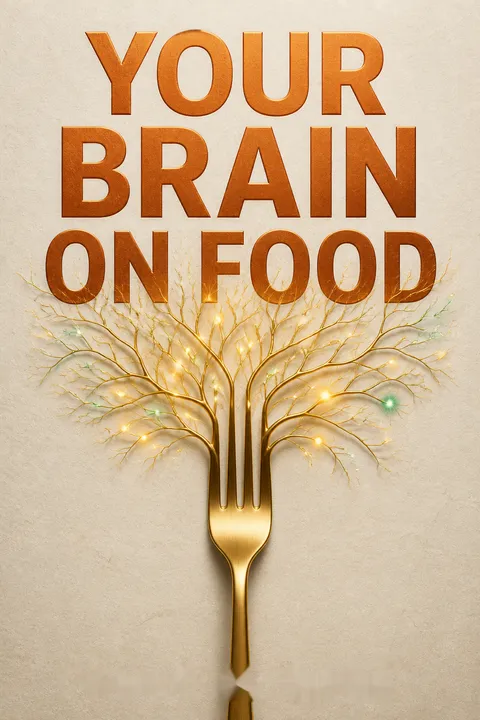
Your Brain on Food receives mixed reviews (3.42/5), with readers frequently noting the title is misleading. Most reviewers expected content about food and nutrition but found the book primarily focuses on drugs and neurotransmitters. Many appreciate the accessible explanations of brain chemistry and entertaining anecdotes, though some criticize the lack of citations and oversimplification. Positive reviews praise the clear neurochemistry overview and engaging writing style. Common complaints include minimal food discussion, inconsistent audience targeting, and the professor's lecture-like tone. Despite disappointment with the title, many found the neuroscience content interesting and educational.
People Also Read







Glossary
Law of Initial Value
Baseline shapes drug responseA principle describing how a person’s response to a psychoactive drug depends partly on their condition before taking it. Genetics, health, mood, drug history, and surroundings can all affect the starting state. A drug may relieve a symptom when that symptom is present but have a different or weaker effect in someone who feels well.
Agonist
Activates a receptorA substance that binds to a receptor and activates it, or otherwise produces an effect similar to the natural chemical that normally acts there. In the book, agonists are contrasted with antagonists. Their effects depend on which receptor they reach, where it is located, and how much of the substance is present.
Antagonist
Blocks receptor activityA substance that binds to a receptor and blocks or reduces the action of a natural neurotransmitter or an agonist. Antagonists can reveal what a signaling system contributes by interrupting its activity. Their effects are not necessarily limited to one behavior because the same receptor type may appear in multiple brain and body regions.
rebound
Opposite response after withdrawalA biological or behavioral response that moves in the opposite direction from a drug’s initial effect as the drug leaves the brain. The book gives low mood after stimulant-induced euphoria as an example. Rebound reflects the brain’s adjustment to a drug, but it is not a complete explanation of craving or addiction.
blood-brain barrier
Filters entry into the brainA system of protective boundaries between the blood and brain that restricts the entry of many substances. Some fat-soluble chemicals cross more readily than water-soluble ones. Whether a drug can cross this barrier helps determine if it can act directly on the brain, though entry alone does not determine its effect or safety.
endocannabinoids
The body's cannabinoid messengersCannabinoid-like signaling molecules produced by the body, including anandamide and 2-AG. Unlike many neurotransmitters, they are made when needed rather than stored in synaptic vesicles, and they can travel backward across a synapse to influence other neurons’ release of chemicals. The book links their receptors to appetite, memory, mood, and other functions.
synesthesia
Blended sensory experienceA mixing of sensory experiences, such as perceiving a sound as having a color or a smell as having a shape. The book discusses synesthesia as one possible feature of hallucination and altered sensory processing. It distinguishes the experience itself from the meaning a person assigns to it.
placebo effect
Expectation alters experienceA change in how a person feels or reports a symptom that is influenced by expectations about a treatment, rather than solely by the treatment’s active chemical ingredients. The book gives pain relief as a particularly relevant example. A placebo response does not mean that a symptom is imaginary, and it does not establish that a product has lasting therapeutic value.
Download PDF
Download EPUB
.epub digital book format is ideal for reading ebooks on phones, tablets, and e-readers.








