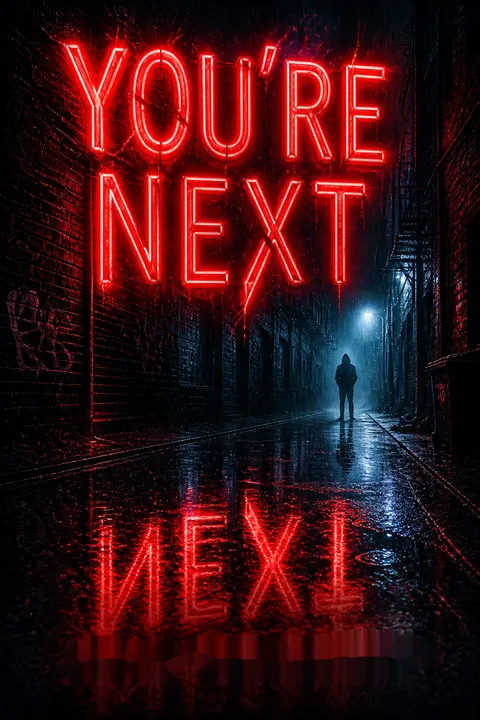


Plot Summary
Ava's Last Address
Flora Calhoun is a teenage investigator who spends her free periods tracking criminals, with help from her CIA-trained grandfather, William, and her best friend, Cass. When she runs into Ava McQueen, the girl she once kissed and still misses, Ava seems frightened but refuses to explain why. That night, Ava calls Flora and sends her to a Whitley street corner.
Flora bikes there alone, hears gunshots, and finds Ava bleeding in an alley. Ava manages to name Wes Grays before she dies, leaving Flora with a clue she cannot interpret and another body she cannot forget. Police arrive to find Flora soaked in blood, and Detective Richmond treats her as a suspect as well as a witness.
The murder strikes at Flora’s deepest vulnerability: she has already found a murdered girl once, and the police response taught her that proximity to a victim can become suspicion rather than authority. Ava’s final clue gives grief a task, which is both Flora’s strength and her defense against helplessness. Her decision to go alone also establishes the cost of her self-reliance. She acts quickly to save Ava, but the secrecy that makes her effective will strain the relationships meant to keep her safe.
Grief Becomes a Case
After Ava’s death, Flora returns to school through whispers that blame her for being at the scene. The police call the killing a mugging, but the explanation does not fit Ava’s fear before the shooting. In the photo lab, Ava’s best friend, Lainie Andrews, tells Flora that Ava had changed after taking a secret messenger job at her father’s newspaper.
The paper has no record of employing her. Lainie also recalls that Ava apologized for withdrawing from friends after Thanksgiving, yet remained distracted. She confirms Ava respected Flora’s earlier attempt to expose Lucy MacDonald’s killer. Flora, still haunted by that failed investigation, promises to uncover what happened, then slips out of school to search Ava’s house.
Flora’s promise is not simply a vow to avenge someone she loved. Lainie’s account makes the case about the difference between the public Ava and the private girl who had been quietly withdrawing. The apparent mugging offers everyone a comforting explanation, but Flora recognizes how quickly such explanations can erase a victim’s complexity. Her memories of Lucy make her alert to that erasure, while also making her vulnerable to repeating old mistakes. Investigation becomes both moral action and a way to avoid grief.
The Missing Diary Page
Flora enters Ava’s sealed home through the back door while Cass keeps watch outside. In Ava’s bedroom, she finds little beyond ordinary school papers and reminders of their unfinished romance. Police arrive to search for a missing page from Ava’s notebook, forcing Flora to hide in the bathtub until they leave. Back home, she and Cass sort through the papers.
A folded page finally surfaces, covered in doodles and a date that matches Lainie’s memory of Ava’s apology. In one corner is an address, 4044 West Grace Street. Flora realizes Ava’s last words sounded like the street name, and a search places the address at an abandoned hospital in Whitley. She promises Cass they will investigate together, but anxiety soon drives her out alone.
The bedroom search makes absence tangible: Ava’s clothes and perfume remain, while the person who could explain them is gone. Flora responds by turning scraps of ordinary life into evidence, a habit that gives her agency but also keeps intimacy at a distance. The missing page’s address is a literal bridge between private memory and public danger. Flora’s promise to wait for Cass shows that she understands the need for partnership; breaking it shows how quickly fear and urgency override that understanding.
Fights Beneath the Hospital
At the abandoned hospital, Flora follows battery-powered lights through basement tunnels and discovers a crowded illegal fight club called the Basement. Teenagers fight for cash while spectators gamble and drink.
One fighter, known as VT, defeats a much larger opponent with startling speed, then gets sucker-punched after the match. Flora follows him outside, and he offers information in exchange for her story. At a diner, he identifies the club’s profits and says suited men with political connections visit its VIP area.
Flora shows him Ava’s photograph; he has seen her but claims not to know whether she fought. He gives his name as Valentine. Their mutual curiosity opens a line of cooperation, though each is already holding something back.
The Basement converts economic pressure into spectacle: young people’s injuries become entertainment and a source of profit for adults who can remain unseen. Valentine’s graceful fighting hints at a self that does not fit his cultivated tough-guy persona, while Flora’s fascination with him grows beside her distrust. Their bargain mirrors the club itself, with each person trading access to something valuable. For Flora, the discovery expands Ava’s case beyond a single alley, but it also places her inside the violent system she hopes to expose.
A Wallet in Campaign Trash
Valentine takes Flora back to the alley, where interconnected side streets suggest a killer could escape without crossing a busy road. In a nearby dumpster, Flora finds discarded campaign flyers beside a mint-green wallet containing Ava’s identification and nearly a thousand dollars.
The money and cards remain, making a simple robbery far less convincing. The dumpster stands beside Congressman James Dorsey’s local campaign office, giving Flora a possible political connection.
Her grandfather insists she bring the wallet to police, and Richmond scolds her for interfering while claiming the evidence could still fit a panicked mugger. Flora also tells Valentine how Lucy’s killer escaped consequences after Flora’s reckless break-in, while Valentine reveals that he left Juilliard after his mother and sister died in a car crash.
The wallet is powerful because it is a concrete contradiction, not merely another suspicion. Yet its location beside Dorsey’s office tempts Flora to leap from evidence to culprit, a pattern shaped by her earlier failure to prove Lucy’s case. The exchange of histories with Valentine briefly replaces performance with vulnerability. Both characters have learned to turn pain into motion, but neither has yet learned that disclosure alone creates trust. The police station scene also sharpens the conflict between Flora’s private methods and the accountability her grandfather is asking her to accept.
The Basement Reaches School
At school, Flora and Cass find that the Basement’s violence has already shaped friendships. Penn Williams’s limp and bruises connect to his falling-out with his best friend, Damian Rivera, who admits he bet against Penn after using his mother’s credit card to buy marble for an art contest.
Elle Dorsey confirms that students call the fight club the Basement and describes its participants as cash-strapped classmates. After Flora presses her, someone writes a warning on her locker. At Ava’s memorial, Congressman Dorsey turns grief into a polished political speech.
Valentine slips beneath the bleachers and admits Boyd, the club’s manager, had sent him to steer Flora away from the truth. He also suspects Dorsey has influence over the operation and is investigating his own sister’s death.
The school setting exposes how violence can hide in plain sight when each injury has an acceptable cover story. Penn’s limp, Damian’s financial desperation, and the locker threat are not isolated details but fragments of a social economy built on secrecy. The memorial sharpens the contrast between public performance and private grief: Dorsey speaks about Ava while using the occasion to advance his image. Valentine’s confession changes their relationship from a wary alliance into a compromised one. Flora now has reason to question both the political theory and the person supplying it.
Molly's Unfinished Story
Flora and Cass track down Molly Sawyer, a teenager left in a coma after an assault in a Whitley alley. Molly’s brother, Max, visits her daily, and a hospital warning tells Flora to stay away. At school, Paige Thomas arrives badly beaten and warns Flora against asking about Molly. Valentine identifies Paige as the Basement fighter called the Ice Queen and says someone matched her against a much larger opponent.
Austin Yi, who had pointed Flora toward Molly, is then nearly strangled by a sabotaged weight machine. He blames Flora, though she had tried to warn him. These attacks make the stakes unmistakable: whoever protects the club is willing to injure anyone who might expose what happened to Molly, and the police have not stopped it.
Molly’s coma turns the Basement’s hidden costs into a continuing emergency, while Paige and Austin show how coercion can make participants both victims and enforcers. Flora is tempted to interpret every injury as proof of one grand conspiracy, but the people involved have distinct motives and fears. Max’s loyalty to his sister makes the danger intimate rather than abstract. The threats also complicate Flora’s self-image as a protector: her questions may help expose the truth, but they can put vulnerable people in greater danger before protection arrives.
The Night Turns Violent
Disguised in a purple wig, Flora enters the Basement with Valentine and meets Boyd, who orders Valentine to fight despite his objections. Congressman Dorsey arrives during the matches, and Flora sees him meet a sharply dressed associate.
She breaks her promise to stay put and follows them into the tunnel, overhearing them discuss completed work and removed obstacles. Before she can learn more, three men corner her outside. Valentine fights them off, but one cuts Flora’s cheek and another stabs him in the side.
Flora drives them away, then stitches Valentine’s wound in his apartment. As he tends her cut, they kiss, briefly dropping their defenses. Later, he admits Boyd offered him information about his sister in exchange for getting Flora to the club, confirming that Valentine had used her to pursue his own case.
This turning point fuses the investigation’s external danger with Flora’s longing for connection. Her choice to follow Dorsey yields suggestive evidence, but it also brings the attackers down on her and Valentine. The violence strips away the romance of amateur detection: a case can leave permanent marks on the body. Their kiss is not a resolution but a moment of exposure, made more painful by Valentine’s earlier deception. Both characters want partnership while behaving as if survival requires unilateral control.
Ava Ran the Ring
Flora confronts Austin about the injuries and his lost football scholarship. He reveals that Ava recruited fighters and ran the Basement with someone powerful, while Paige admits she accidentally put Molly into a coma during a match.
Boyd arranged Molly’s hospital admission and helped conceal the fight. Paige says Ava had offered to go to police, but Paige feared the racialized backlash that would ruin her future. Flora now sees that Ava may have tried to dismantle the operation after Molly’s injury.
The evidence remains uncertain, and Flora is still tempted to cast Dorsey as the sole architect. Elle approaches with claims that her father controls the club and provides financial records tying him to an anonymous LLC, apparently strengthening Flora’s theory.
Ava’s leadership forces Flora to grieve someone more complicated than the idealized girl she remembers. The revelation does not cancel Ava’s affection or bravery, but it places her inside a system that harmed Molly. Paige’s refusal to come forward grows from a rational fear of being publicly cast as a violent stereotype, not simple indifference. The financial records seem to provide the missing political link, yet their neatness should invite skepticism. Flora’s need for a coherent villain makes her especially susceptible to evidence that confirms what she already expects.
The Van at the Crossing
Flora receives photographs showing that someone has watched her, Cass, Olive, William, and Valentine, but she hides them to spare Cass and preserve the calm between them. When Cass discovers the pictures, she accuses Flora of treating her like a sidekick and leaves.
Flora and Olive head toward the hospital without her, only for a white van to ram their car and drive away. Flora escapes with minor injuries; Olive is left unconscious and critically hurt.
At the hospital, William blames himself for failing to protect the girls, while Flora confesses that she knew the family was being watched. Their shared guilt does not repair the rupture. Max finds Flora afterward and tells her Molly has awakened, giving her a reason to keep moving even as her family is in crisis.
Flora’s concealment repeats the very pattern she fears: she tries to protect loved ones by excluding them, then deprives them of the chance to choose their own risks. Cass’s anger is therefore not a rejection of loyalty but a demand for equality. The crash makes the cost of secrecy physical and irreversible in the moment, though Olive’s condition remains unresolved. Flora and William each claim responsibility because blame feels more manageable than helplessness. Max’s news about Molly offers a fragile counterweight, but it also pulls Flora back toward danger.
Elle at the Reservoir
After Molly wakes, she recalls hearing Ava argue with someone about taking her to the hospital rather than disguising her injury as an accident. Flora asks Molly to testify, then returns to Valentine and commits to exposing the club.
Elle lures Flora to the reservoir with a fake message, where Boyd chains and gags her. Elle reveals that she, not her father, created the Basement with Ava, and that she shot Ava when Ava tried to stop the operation after Molly’s injury. Flora’s account of Ava’s final terror breaks through Elle’s composure, and Elle confesses.
Boyd throws Flora into the water, but a recording on her phone captures Elle’s admission. Cass tracks the phone, arrives with William, and pulls Flora from the reservoir. Richmond issues a warrant for Elle’s arrest.
The climax dismantles the convenient story Flora has built around Dorsey. Elle is not merely a spoiled political daughter but a young person with power, ambition, and an intimate capacity for violence. Flora’s account of Ava’s last moments forces the killer to confront the human consequence she had reduced to a manageable problem. The confession is secured not through a perfect deduction alone, but through Flora’s willingness to speak from grief. Cass and William’s rescue also makes the case a collective act at last, rather than Flora’s solitary performance.
Justice Without Certainty
At the precinct, Flora gives Richmond the phone recording and the other evidence, and police issue an arrest warrant for Elle. Richmond warns that the case will be difficult in court, especially against a powerful family.
Flora and Cass hold hands, but Cass makes clear their friendship is still damaged; William and Flora later acknowledge that both have failed to communicate, and he tells her he is proud of her. Olive remains hospitalized but stable. Flora calls Valentine to tell him the case is over and that she is safe.
Before she can rest, police arrive with news that a fire destroyed his apartment and a body was found inside, too badly burned to identify. The officers are awaiting dental records. Flora breaks down, then recognizes that grief has not made her incapable of surviving.
The ending refuses the fantasy that solving a murder restores the world. Elle faces arrest, but the prosecution remains uncertain, Dorsey has already begun shaping public opinion, and Valentine’s fate is unresolved. Flora’s growth lies less in becoming fearless than in accepting help and allowing others to remain complicated. She and Cass are not instantly reconciled, but they choose not to sever the bond. The final report of the fire reopens loss just as Flora has begun to imagine life beyond the case. Her survival is not closure; it is the capacity to continue without pretending she is unhurt.
Analysis
You’re Next treats detection as an ethical problem as much as an intellectual one. Flora is excellent at noticing what adults overlook, but her talent does not make her immune to bias. Lucy’s case has taught her that powerful people escape accountability, so she repeatedly interprets ambiguous evidence through that history. The novel makes this understandable without making it harmless: Flora’s secrecy alienates Cass, frightens her grandfather, and exposes Olive to danger. Her development depends on recognizing that protection without consent can become another form of control.
The Basement gives the mystery a material foundation. Students do not enter it because they are simply reckless; they need tuition, supplies, or a way out of lives that feel tightly managed. That does not make the fights safe or fair. The club converts economic pressure into apparent choice, while adults and organizers profit from the injuries. Paige’s fear of racist public judgment and Molly’s plan to escape with Max show that vulnerability is shaped by class, race, and family circumstance. The novel refuses to divide the participants neatly into innocent victims and guilty outsiders.
Ava’s role in the operation also resists easy mourning. Flora has loved an image of Ava, then must confront evidence of choices that image cannot contain. The story does not argue that Ava’s participation makes her responsible for her death; it shows how grief can demand both affection and honest accounting. Elle’s polished political world echoes the Basement’s performance: each relies on spectacle, concealment, and the manipulation of what observers believe. By the end, Flora has evidence and an arrest warrant, not guaranteed justice. Her meaningful change is relational: she begins to share danger, accept help, and understand that courage is not the same as refusing to depend on anyone.
Review Summary
You're Next received mixed reviews, with an average rating of 3.77/5. Praised for its fast-paced plot, diverse characters, and LGBTQ+ representation, some readers found the 464-page length excessive and the main character unlikable. The mystery and writing style were generally well-received, but the ending left many unsatisfied. Some felt it read like a sequel, lacking backstory. Despite criticisms, many readers appreciated the complex characters and tense atmosphere, comparing it favorably to other YA mysteries.
People Also Read


Characters
Flora Calhoun
The stubborn teen detectiveFlora is a sharp, impulsive high-school investigator who takes paid cases despite lacking a license and relies on observation, nerve, and her grandfather’s old intelligence contacts. Finding Lucy MacDonald’s body years earlier changed her understanding of safety and justice, and the unresolved guilt from that case shapes how she approaches Ava’s murder. Flora is funny and resourceful, but she also lies, keeps secrets, and treats self-sufficiency as a form of protection. Her feelings for Ava and her attraction to Valentine complicate her work rather than soften it. Beneath the bravado is a teenager terrified that everyone she loves will leave, a fear she must learn to face without making decisions for them.
Cassidy Yang
Flora's steadfast partnerCass is Flora’s best friend, co-investigator, and chosen family. Practical, observant, and socially adept, she can draw information from people without making every conversation a confrontation. She is also a talented guitarist and songwriter who wants a life beyond tending to Flora’s emergencies. Cass’s loyalty is genuine, but it is not limitless self-erasure: she needs Flora to trust her as an equal, not treat her as backup. Her developing interest in musician Elliot gives her a claim on joy outside the investigation. Cass’s warmth and clear speech offer Flora a model of intimacy that does not depend on guessing what the other person needs.
William Calhoun
Flora's watchful grandfatherWilliam raised Flora after her father left and her mother became emotionally unavailable. Retired from a career he describes as humble diplomacy, he is controlled, observant, and quietly capable, with old government contacts and a gift for reading people. Baking and practical help are his forms of affection; he rarely presses Flora to explain herself, partly because he trusts her and partly because he fears what the truth may demand. He is protective of Flora and Olive, yet his fear can make him seem to withdraw or take control. His relationship with Flora is loving but emotionally restrained, and both struggle to speak before worry hardens into anger.
Ava McQueen
The guarded activistAva is a senior known for political conviction, quick humor, music, and the ability to draw people toward her. She is Flora’s first meaningful kiss and, later, the almost-relationship Flora never learned how to define. Their history is tender but incomplete: Flora remembers their summer closeness alongside the long silence that followed. Ava’s activism is not a simple public persona; she is ambitious, secretive, and capable of making difficult choices without explaining them to the people closest to her. Her distance leaves friends guessing, and that uncertainty becomes central to how Flora tries to understand both the girl she loved and the person she did not fully know.
Valentine Yates
The bruised fighterValentine, known in the Basement as VT, is a teenage fighter with a theatrical bad-boy manner and the precise movement of a trained dancer. He left Juilliard after the deaths of his mother and older sister, Annabelle, and has spent years using combat, cigarettes, and bravado to avoid grief. He is perceptive enough to read Flora quickly, but his need to pursue his sister’s story makes him secretive and willing to manipulate. His attraction to Flora is real, though trust remains difficult for both of them. Valentine’s central conflict is between solitary vengeance and the risk of allowing someone else to stand beside him.
Olive Calhoun
Flora's perceptive younger sisterOlive is thirteen, disciplined in ballet, technically curious, and more observant than Flora initially gives her credit for. She has lived with the feeling that their mother chose distance and that the family’s attention often centers on Flora. Her resentment is not simply jealousy; it comes from wanting her own relationship with their mother and a meaningful role in the family. Olive proves capable of research and digital problem-solving, while Flora’s protectiveness repeatedly threatens to exclude her. Beneath their old rivalry is a strong desire to be sisters rather than competitors for care.
Elle Dorsey
The polished political heiressElle is the congressman’s daughter, a socially powerful student who collects secrets and uses elegance as armor. Her sharpness can look like cruelty, and she is accustomed to treating relationships as contests in which the better-informed person holds power. Yet her contempt for her father’s political opportunism suggests a private conflict: she wants his approval even as she resents being used to advance his career. Elle’s friendship with Ava and her interest in the Basement reveal a more complicated person than Flora first assumes. She understands how public narratives are manufactured, and that knowledge shapes the way she navigates school and family.
Lainie Andrews
Ava's grieving best friendLainie is Ava’s closest friend and the school paper’s photo editor. She is grieving both Ava’s death and the months when their friendship drifted without explanation. Her memories of Ava’s secret job and changed behavior give Flora an important first lead. Lainie is direct about her confusion and hurt, but she does not turn grief into accusation for long. She asks Flora to keep searching because she knows the police’s easy explanation cannot answer the questions that remain.
Detective Jennifer Richmond
The wary homicide detectiveRichmond leads the official investigation into Ava’s death and knows Flora from an earlier case. She is capable and procedural, but also defensive about her authority and wary of Flora’s history of interfering. Richmond’s caution is partly justified by Flora’s unlawful methods, yet her readiness to accept a convenient theory frustrates the girl who found the victim. Their uneasy relationship reflects the gap between formal policing and a witness who refuses to stop asking questions.
Paige Thomas
The guarded Ice QueenPaige is a high-achieving student from a wealthy family who has spent years performing composure for school, parents, and their social circle. Her life is tightly organized around achievement, leaving little room for something that belongs only to her. In the Basement she finds an intense outlet, but the risk of being publicly labeled a violent, angry Black girl shapes what she is willing to disclose. Paige’s guardedness is not a lack of conscience; it grows from knowing how quickly other people can turn her into a stereotype.
Molly Sawyer
The injured young fighterMolly is a teenager from Whitley who fights for money and shares a close, protective bond with her younger brother, Max. Before her injury, she had hoped to save enough for the two of them to escape a difficult home life. Her determination and secrecy reflect the narrow choices available to a young person trying to protect someone more vulnerable. Molly’s account of what she remembers is fragmentary, but her experience matters because it can connect the hidden violence of the Basement to the people who concealed it.
Max Sawyer
Molly's devoted little brotherMax is a boy of about ten who visits Molly in the hospital and holds tightly to the promises she made him. He is independent enough to travel alone, yet still a child carrying knowledge he does not know how to share safely. Max notices more than adults assume, including Molly’s nighttime absences and the money she saved for their imagined escape. His loyalty makes him brave, but it also places too much responsibility on small shoulders.
Austin Yi
The cornered football playerAustin is a strong student-athlete whose football scholarship represents a route out of Hartsdale. When an injury threatens that future, money becomes urgent and the Basement offers a dangerous solution. He is hot-tempered and capable of intimidating others, but he is also frightened of losing the future he has worked toward. Austin’s silence about the club is driven by self-preservation, a choice that leaves others exposed and later weighs on him.
Damian Rivera
The ambitious young sculptorDamian is an art student whose ambition centers on a large marble sculpture and a contest that could open doors to art school. He takes money from his mother and bets against Penn because ordinary work cannot meet the cost of his ambition. His choices damage his closest friendship, even though he insists he did not cause Penn’s loss. Damian shows how financial pressure can turn loyalty into a calculation.
Penn Williams
The quiet Basement fighterPenn is a reserved student and gifted artist who is easy for classmates to overlook. He fights in the Basement and keeps his personal life private, including his relationship with Victoria Ramirez. His anger at Damian comes from betrayal and the sense that his friend judged his risks for profit. Penn’s silence makes it difficult for Flora to help him, but it also reflects how little trust he has in classmates who treat his life as a mystery to solve.
James Dorsey
The ambitious congressmanJames Dorsey represents Hartsdale and Whitley in Congress and is campaigning for a Senate seat. He is practiced at public sympathy and skilled at turning community events into political opportunities. At home, he pressures his daughter to serve his ambitions and treats family loyalty as an obligation. His access to wealth, political networks, and public attention makes him an imposing figure in Flora’s investigation, though his polished image reveals little about his private dealings.
Boyd
The Basement's fixerBoyd manages the Basement’s practical operations, from arranging fights to handling problems when someone is badly hurt. He is composed, discreet, and accustomed to making other people carry out the dangerous work. His authority depends on threats as much as organization, and his connections make the club seem protected from ordinary scrutiny.
Lucy MacDonald
The case that haunts FloraLucy was a girl Flora knew from school whose murder became Flora’s first obsessive investigation. Lucy was not universally liked, and the public’s willingness to blame her for her own death taught Flora how quickly victims are reduced to moral judgments. Flora’s memories of finding Lucy’s body continue to shape her determination to question easy explanations.
Flora's mother
The distant parentFlora’s mother is an artist living in Berlin for an extended residency. She loves her daughters but struggles to meet their needs consistently, especially when their lives become emotionally difficult. Her distance leaves Flora accustomed to expecting abandonment and Olive longing for a more reliable mother. Their video calls are warm in flashes, but often avoid the painful subjects that separate them.
Matt Caine
The unresolved old adversaryMatt Caine is the wealthy man Flora suspected in Lucy MacDonald’s murder. His legal and social protection became an early lesson in how power can outlast evidence. The memory of confronting him helps explain Flora’s anger, her recklessness, and her skepticism toward official assurances.
Elliot Graham
Cass's musical crushElliot is a gifted multi-instrumentalist who coordinates the school’s new rock ensemble. He encourages Cass’s songwriting and treats her talent seriously, helping her imagine a future that is not organized around Flora’s crises. His gentle attentiveness makes Cass hopeful and visibly nervous.
Plot Devices
The Moleskine address
Decodes Ava's final clueA page from Ava’s notebook contains an address that sounds like the name she tried to give Flora while dying. Flora eventually recognizes it as West Grace Street and traces it to the abandoned hospital. The clue moves the investigation from the alley to the Basement, where Ava’s hidden life begins to emerge. Its ordinary appearance among school papers emphasizes that major evidence can be concealed inside the debris of an everyday life.
Ava's discarded wallet
Disproves a simple robberyFlora finds Ava’s wallet in a dumpster near Dorsey’s campaign office, still holding her identification, cards, and a large amount of cash. Because the wallet was supposedly the reason for the killing, its contents undermine the police theory that Ava died in a panicked mugging. The location creates a tempting political lead, but it does not by itself identify the killer. The wallet drives Flora into conflict with Richmond over who should control evidence.
The Basement
Turns desperation into spectacleAn illegal fight club operates in tunnels beneath a closed hospital. Teenagers fight for cash while spectators bet and drink, and political figures can meet privately amid the noise. The venue gives economically pressured students a way to make money while hiding injuries and identities. It connects Ava, Molly, Paige, Austin, Penn, and Valentine, but their reasons for entering it differ. The Basement is both the crime’s setting and a mechanism that makes exploitation appear voluntary.
The anonymous LLC
Builds a misleading money trailFinancial documents connect an anonymous company, EVAH LLC, to political donations associated with Congressman Dorsey. The paperwork appears to support Flora’s suspicion that the Basement’s profits are being funneled into a campaign, while Delaware-style shell companies make the real source of funds difficult to trace. The documents also become a tool for manipulating Flora’s assumptions. Their apparent clarity is part of their danger: a paper trail can look conclusive while concealing who arranged it and why.
The phone's evidence trail
Records and locates the truthFlora’s phone links several crucial pieces of the investigation. Its recording app captures Elle’s confession before Flora is abducted, and a cloud backup preserves the audio after the phone is lost in the reservoir. Cass also uses a tracker she installed earlier to locate Flora and help rescue her. Separate photographs recovered from Ava’s cloud account show Elle at the Basement. Together, the recording, images, and tracking turn digital tools into evidence and rescue mechanisms, though none can erase the danger created by Flora’s secrecy.
Download PDF
Download EPUB
.epub digital book format is ideal for reading ebooks on phones, tablets, and e-readers.








