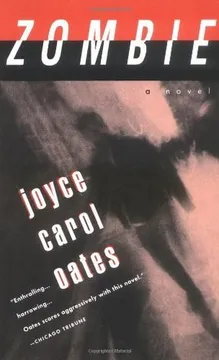


Plot Summary
The Plea That Bought Time
At thirty, Quentin faces a sexual-misconduct charge after a twelve-year-old boy escapes from his van. Quentin recasts the encounter as a confused dispute, but his shifting account cannot hide that the child was in danger. His father hires a lawyer, who negotiates a guilty plea to a misdemeanor.
The judge gives Quentin two years, suspended, with probation and mandatory treatment instead of prison. Quentin performs remorse for his mother, father, sister Junie, and grandmother, and they welcome him back. The sentence leaves him under official supervision, yet still inside the family circle, where his relatives believe that discipline, therapy, and another chance can make him safe.
The suspended sentence establishes the novel's central tension between visible accountability and actual safety. Quentin accepts the court's terms as obstacles to manage, not as evidence that he has harmed someone. His family, meanwhile, treats reintegration as proof of his capacity to change. The gap between those interpretations lets him keep access to ordinary life. Oates makes institutional leniency feel less like a single decision than a network of social permissions: a respected father, a hired lawyer, a compliant performance, and a family eager to believe in repair.
Barry Never Leaves
Quentin's memories reach back to age seven, when he says Bruce threatened him during a playground encounter, then later describes being treated as the aggressor. At twelve, his father discovers male bodybuilding magazines and a toy figure Quentin has altered with drawings. Father and son burn the material together, but Quentin remembers the episode as humiliation rather than protection.
Around the same age, his school friend Barry dies in a swimming accident. Quentin keeps a sock and school clippings, turning grief into private physical relics. Years later, those memories fuse in his mind: the boy he desired, the boy he lost, and the boyhood self he cannot recover become a pattern he tries to impose on other people.
These memories do not function as a clean origin story, and Quentin's account of Bruce is too self-serving to settle what happened. Their importance lies in the emotional habits they establish. He experiences intimacy through concealment, keeps objects when relationships are unavailable, and recasts rejection as an injury done to him. Barry's death becomes especially consequential because Quentin preserves a child as an image instead of accepting the loss. That frozen memory later shapes his fixation on Jamie, but it does not explain away Quentin's choices. The novel shows how grievance can furnish a private mythology without making it an excuse.
A Lobotomy for Love
In his twenties, Quentin hears his father lecture about the vast, indifferent universe and turns the idea into permission to believe individual lives do not matter. He researches frontal lobotomy, imagining that an ice pick could erase another person's resistance and leave him an obedient companion.
His first attempts fail catastrophically. Bunnygloves dies soon after the procedure; Raisineyes breathes for hours without recovering; Big Guy survives longer but never becomes the compliant being Quentin expects.
Quentin treats each disaster as a technical failure and studies how to improve. He hides the evidence, keeps mementos, and continues to plan, converting the language of medicine into a private system where domination can masquerade as care.
Quentin's fantasy is not simply a wish for companionship. He wants a person who cannot refuse, remember, or judge him, and he borrows scientific vocabulary to make that wish sound procedural. The failed operations matter because they do not interrupt his reasoning. He responds to suffering as feedback, not as a moral limit. His father's lecture supplies a distorted cosmology in which human scale becomes negligible, while the medical texts supply a technique. Together, abstraction and procedure let Quentin imagine that his violence is both inevitable and skilled.
Borrowed Faces, Buried Men
After strangers beat and rob him in Detroit, Quentin studies his swollen, stitched face and realizes that injury can make him seem like someone else. He begins collecting disguises and using the invented identity Todd Cuttler, believing a changed appearance can separate his crimes from his ordinary self.
In an earlier rented room, he brings home a hitchhiker he calls No-Name, drugs and restrains him, then attempts the operation. The ice pick causes fatal damage instead of obedience. Quentin disposes of the body far from home, keeps a gold tooth as a memento, and returns to his caretaker's work without reporting what happened. Anonymity does not make him invisible, but it helps him behave as if he is.
The beating gives Quentin a practical insight, not a moral awakening. He learns that other people read faces quickly and that a constructed identity can exploit their assumptions. Todd Cuttler becomes a compartment in which Quentin can act and then retreat into the familiar role of dutiful son. The gold tooth condenses this method: he converts another person's identity into an object he can keep, while telling himself that the person has disappeared. The alternation between disguise and respectability exposes how carefully he separates his public self from the consequences he refuses to acknowledge.
The Caretaker Chooses Jamie
After the conviction, Quentin's father gives him responsibility for his grandmother's old Victorian rental house, including a master key and access to its cellar. The family calls the job a chance to rebuild trust. While doing yard work at his grandmother's home, Quentin sees Jamie Waldron, a teenage busboy who resembles Barry.
He watches Jamie at the pool and restaurant, learns his bicycle route and work schedule, and tracks him to his home. Quentin starts preparing the cellar and considers how to abduct a boy who has a family and will be missed. He buys a larger van, gathers restraints and supplies, and raises thirty-six baby chicks. What Quentin calls destiny is a plan built from patient observation and borrowed family trust.
The caretaker role turns domestic trust into operational access. Quentin is given keys, space, and a respectable explanation for moving through the property, while his relatives interpret responsibility as evidence of progress. His fixation on Jamie depends on replacing the living teenager with a preserved image of Barry. That substitution allows Quentin to treat Jamie's independence as a defect to remove rather than a reality to respect. The chicks reveal the practical intelligence beneath his delusions: he can plan carefully, anticipate suspicion, and use gentleness as bait even while insisting that fate, not choice, directs him.
Chicks in the Alley
On an August evening, Quentin releases the chicks in an alley along Jamie's route home. Jamie stops his bicycle to help gather them, and Quentin uses that pause to overpower and restrain him. Wearing his Todd Cuttler disguise, Quentin drives away with the boy, then takes him into the Manistee Forest.
Jamie revives frightened and resists Quentin's attempts to turn him into a submissive companion. Quentin assaults him, grows angry at his resistance, and ultimately kills him. He weighs the body, cuts the throat, and leaves it in a river, then returns to town believing darkness and distance have erased the evidence. The plan that began as a fantasy of possession ends in another murder.
The capture exposes the violence concealed by Quentin's language of help and love. The chicks make Jamie's kindness usable against him, turning an ordinary act of assistance into the opening of an ambush. Quentin's breakdown of the plan is not caused by a sudden discovery of Jamie's personhood. He becomes angry precisely because Jamie continues to resist being reduced to an object. The body in the river marks the material consequence of that refusal, while Quentin's return to routine shows how quickly he tries to make murder feel like a completed task.
The Search Comes Home
The next morning, police arrive at Quentin's house to ask about Jamie's disappearance. Quentin refuses entry and calls his father's lawyer, who advises him to wait for a warrant. Before the search begins, Quentin destroys or relocates the items linking him to the crime, including evidence hidden in the cellar and his room.
Investigators find the abandoned bicycle and the thirty-six chicks, but no clear connection to Quentin. His grandmother and her elderly friend confirm that he had been helping at the house, unknowingly supporting his alibi. The officers search the property and van, find nothing usable, and leave. Quentin remains free, but the police inquiry has shown him how close his carefully maintained public life came to exposure.
The search dramatizes the difference between being innocent and being difficult to prove guilty. Quentin's politeness, his lawyer's advice, and the relatives' sincere testimony all protect him, though none of them knows the whole truth. The chicks and bicycle form a fragmentary puzzle that investigators cannot complete. Quentin experiences this failure not as a warning but as confirmation that procedure can be managed. The scene also reverses his fantasy of control: for several hours, other people enter his private spaces and inspect the machinery of his life. His survival depends on concealment, not on any change of heart.
A Nobel Name Unravels
After the search, Quentin resumes medication, attends therapy, and starts university extension classes, while Jamie's parents appear on television asking for help and offering a reward. Quentin watches home-movie footage of Jamie and reacts with anger when the family speaks as though their son might still be alive.
Then news reports reveal that Dr. M. K., the Nobel-winning scientist who mentored Quentin's father, led secret radiation experiments on children with intellectual disabilities and on prisoners.
Quentin's father publicly expresses disbelief and privately grieves the damage to his mentor's reputation. He removes their framed photographs. Quentin does not comfort him or connect the scandal to his own crimes; he watches a respected family ideal collapse while continuing to perform the routines expected of him.
The revelation about Dr. K. enlarges the novel's concern with respectable authority and unconsented harm. The scandal does not make Quentin's father equivalent to his mentor, nor does it erase the difference between their acts. Instead, it shows how institutions can preserve moral prestige around people whose work has injured the vulnerable. Quentin observes the exposure with detached amusement because he recognizes the distance between public honor and private conduct, yet he refuses to apply that recognition to himself. His father's grief and Quentin's indifference reveal two different responses to a damaged ideal.
The Cistern Still Waits
As the months pass, Quentin keeps his caretaker position, takes medication inconsistently, and tells his therapist that he is making progress. At a dinner hosted by Junie, he studies her colleague Lucille and imagines a future plan involving a tenant who is leaving the country.
He considers offering a ride to the airport, drugging the passenger, and bringing him back to the cellar, where he now thinks he should first silence the victim.
When Lucille notices the braided wristband made partly from Jamie's hair, Quentin invents a harmless explanation; Junie helps divert attention. A garbled message from his mother later invites him to Christmas. The novel ends with family contact still available and Quentin's next scheme still alive in his mind.
The ending refuses the familiar shape of confession, capture, or recovery. Quentin can describe therapy, medication, and family dinners as signs of normal life while using the same ordinary settings to refine another crime. His lie about the wristband is small enough to pass unnoticed, which is exactly why it matters: concealment survives through mundane social cooperation. Junie protects the family atmosphere without knowing what she is protecting. The final message from his mother offers connection, but Quentin's private planning has already displaced its emotional meaning. The threat persists because he remains embedded in the relationships that help him appear harmless.
Analysis
Zombie builds its horror from the distance between Quentin's orderly public presentation and the violence concealed beneath it. He keeps appointments, maintains a caretaker's routine, and speaks in the language of treatment and responsibility. Those habits do not counter his predation; they help him pass through institutions that measure attendance, employment, and cooperation more easily than motive. The novel's fragmented narration makes that gap audible. Quentin revises memories as he tells them, turning coercion into misunderstanding and choice into destiny. Readers must distinguish the events he describes from the explanations he supplies.
His fantasy of making a person into a compliant companion is the most concentrated form of his emotional failure. He wants closeness without mutual recognition, so another person's resistance appears to him as betrayal rather than evidence of personhood. The repeated objects in the novel, a gold tooth, a lock, a wristband, a key, reduce human relationships to things Quentin can store, hide, or control. His attachment to Barry and his fixation on Jamie expose the same impulse: he preserves an image instead of meeting a person in the present.
The book also examines how protection can fail when it relies on reputation. Quentin's father, family, lawyer, probation officer, and therapist each see part of him, but the systems around him reward legible signs of reform. His father's faith in science and Dr. K's hidden abuses deepen the critique without equating different harms: prestige can shelter wrongdoing, while personal devotion can blind people to danger. The ending offers no moral reset. Quentin remains under the roof of family trust, rehearsing another crime. His apparent progress is therefore not an ambiguous promise of redemption but a warning about how easily routine can conceal continuing intent.
Review Summary
Reviews of Zombie are sharply divided. Many praise it as a masterfully unsettling psychological portrait of a Dahmer-inspired serial killer, lauding Oates's ability to inhabit a psychopath's fragmented, disturbing consciousness. The stream-of-consciousness style, featuring run-on sentences, ampersands, and capitalized words, is seen by admirers as brilliantly immersive. Critics, however, find the experimental prose tedious and the narrative monotonous, arguing it adds little beyond shock value. Most agree it is deeply disturbing, not for the faint-hearted, and best approached with caution.
People Also Read


Characters
Quentin P.
Engineer of controlQuentin is a withdrawn thirty-one-year-old who measures himself through other people's reactions and experiences eye contact as exposure. He imitates the manners expected of a son, student, and caretaker, but beneath that compliance he cultivates elaborate fantasies of possession. He is intelligent enough to plan, disguise himself, and read social situations, yet he uses those abilities to protect his self-image rather than to understand others. His narration is fragmented and self-correcting: he shifts blame, contradicts himself, and treats memory as something he can edit. That unreliability is central to how readers encounter him. He wants intimacy without another person's freedom, and he mistakes obedience for love.
Professor P.
Prestigious, watchful fatherQuentin's father is a respected physicist and philosopher whose professional reputation shapes the family's sense of dignity. He wants his son to succeed, arranging education, work, legal help, and treatment when Quentin falters. His care is genuine, but it often takes the form of supervision and correction, which leaves Quentin feeling scrutinized rather than understood. He believes responsibility can steady his son, and the caretaker job becomes one expression of that belief. His admiration for his former mentor also ties family identity to scientific authority.
Mrs. P.
Family's quiet advocateQuentin's mother tends to approach trouble through practical care: she checks on his health, arranges appointments, invites him to meals, and tries to maintain family closeness. She believes in his capacity to improve and offers affection even when he is distant or evasive. Quentin experiences her warmth as both reassurance and pressure, often describing her physical presence with discomfort. Her efforts to keep him included show how love can persist without giving her a clear view of what he is hiding.
Junie
Protective older sisterJunie is five years older than Quentin, accomplished, sociable, and accustomed to taking responsibility. A school principal and former athlete, she sees her brother as someone who can still be guided toward an ordinary life. She alternates between blunt criticism and protective concern, urging him toward realistic work and keeping an eye on his isolation. Her confidence makes her a stabilizing presence in the family, but it also encourages her to assume that persistence and good advice can reach him.
Grandma P.
Kindness with loose boundariesQuentin's grandmother owns the Victorian house where he becomes caretaker and lives in the suburb nearby. She is generous with money, errands, meals, and praise, often treating her grandson as a source of companionship as much as help. Her secrecy about paying him and her trust in his goodness give Quentin both resources and cover. She sees the family child she loves, not the hidden life he maintains. Her affection is sincere, but its unguarded generosity becomes dangerous in ways she cannot foresee.
Jamie Waldron
Teenage summer workerJamie is a teenage busboy who lives in Dale Springs and spends time swimming with friends. He is energetic, sociable, and capable of casual kindness, qualities Quentin fixates on without truly seeing him. Quentin associates Jamie's appearance with an earlier friend, then treats that resemblance as if it reveals Jamie's purpose. Jamie's ordinary life among family, schoolmates, and coworkers stands in sharp contrast to the role Quentin invents for him.
The first boy
A young accuserThe twelve-year-old boy from the Roosevelt projects is the child whose accusation brings Quentin before the court. Quentin's account of their encounter shifts between denial and self-justification, making the boy's perspective conspicuously absent from the narration. His presence exposes the gap between Quentin's version of events and the consequences that others must address.
Dr. E.
Detached treating psychiatristDr. E. conducts Quentin's individual therapy and prescribes medication, while also reporting on his progress to probation authorities. He tries to draw Quentin into describing dreams and feelings, often meeting silence, sleepiness, or evasions. His professional manner can seem mechanical to Quentin, who suspects alliances between the psychiatrist and his father. Even so, the sessions offer a structured space where Quentin occasionally makes an effort to appear emotionally engaged.
Dr. B.
Group therapy facilitatorDr. B. leads the probation-linked group sessions and encourages participants to discuss their feelings. He recognizes Quentin's first emotional disclosure as progress, though Quentin's performance makes it difficult to know what the apparent breakthrough means.
Mr. T.
Probation's polite gatekeeperQuentin's probation officer conducts routine appointments and inspects the caretaker residence. Mr. T. values employment, compliance, and orderly surroundings, and Quentin learns to present exactly those signs. His limited visits show how supervision can document a person's public conduct without reaching the private motives beneath it.
Dr. M. K.
Father's revered mentorDr. K. is a Nobel-winning scientist who mentored Quentin's father early in his career. His photograph appears in the family's home and in the father's university office, making him a symbol of scientific achievement and personal inheritance. Quentin knows him chiefly through his father's admiration and the public stature attached to his name.
Mr. and Mrs. Waldron
Parents seeking their sonJamie's parents appeal publicly for information and hold on to hope as the search continues. Their television appearances bring the missing teenager's ordinary family life into Quentin's home. Their grief and persistence offer a human perspective that Quentin tries to dismiss rather than face.
Akhil
Reserved foreign tenantAkhil is a physics graduate student from Calcutta who rents a room in the North Church house. He is courteous and reserved, and his everyday interactions with Quentin remain brief. His presence helps establish the house as a working home for international students rather than merely Quentin's private domain.
Jean-Paul
Sociable West Indian tenantJean-Paul is an economics graduate student from the West Indies. Friendly and curious, he approaches Quentin easily and asks for help with ordinary household matters. His openness contrasts with Quentin's suspicion of contact and shows how quickly a tenant might mistake the caretaker's surface manners for trustworthiness.
Dr. Fish
Routine family dentistDr. Fish has treated the P. family for years and examines Quentin after his mother arranges an appointment. His clinical routine makes Quentin unusually alert to instruments, blood, and bodily vulnerability. The visit reveals how an ordinary medical setting can become charged by Quentin's private associations.
Mrs. Thatch
Grandmother's elderly friendMrs. Thatch is a friend of Quentin's grandmother whom he sometimes drives between homes. Her trust in him and her casual presence within the family's routine become part of the innocent social world surrounding Quentin.
Rooster
Loose drug-world companionRooster is one of Quentin's acquaintances from his drug-using years and provides him with clothing. He belongs to the unstable network Quentin enters outside his family's respectable circle, a world where borrowed identities and temporary alliances are commonplace.
Lucille
Junie's outgoing colleagueLucille teaches at Junie's school and joins the dinner at Junie's home. Warm and socially confident, she notices Quentin's wristband and asks about it, briefly bringing his private fixation into the shared conversation without knowing its meaning.
No-Name
Unknown hitchhiking strangerNo-Name is Quentin's private label for a young traveler picked up on an interstate route. Quentin focuses on the stranger's appearance and imagined attitude, revealing how quickly he reduces a person to a role in his own fantasy.
Bunnygloves, Raisineyes, and Big Guy
Early objects of fixationThese are Quentin's labels for men he remembers through distinctive clothing, eyes, or build. The names reveal his habit of sorting people into vivid physical categories while withholding the ordinary details that would make them full individuals.
Barry
Lost childhood friendBarry is Quentin's school friend who dies in a swimming accident. Quentin remembers his appearance, saves school clippings, and keeps a personal relic connected to him. Barry becomes inseparable in Quentin's memory from grief and unspoken desire, though the version preserved in Quentin's mind is not the same as a living relationship.
Plot Devices
The zombie fantasy
Control dressed as careQuentin imagines that a lobotomy could leave a person alive but unable to resist, judge, or leave him. This fantasy turns his hunger for intimacy into a demand for absolute obedience. Medical books and surgical diagrams give the idea a false technical authority, while every failed attempt is treated as a problem to solve. The device exposes the distance between Quentin's language of love and the coercion he actually wants.
The caretaker's access
Respectability grants accessQuentin's father gives him responsibility for the North Church rental house as a sign of renewed trust. The master key, private caretaker's quarters, and restricted cellar provide access to spaces ordinary tenants cannot enter. The job also gives Quentin a plausible reason to move around the building and handle tools. Its dramatic function is to make family support materially useful to a person whose private intentions contradict the role he has been assigned.
Todd Cuttler
A second faceAfter a beating changes his appearance, Quentin decides that disguise can separate his actions from his known identity. He uses wigs, facial hair, glasses, and clothing to construct Todd Cuttler, a persona he can wear while stalking or transporting people. The disguise is imperfect and sometimes comes loose, but Quentin treats it as a psychological border between his public self and his crimes. It helps him evade recognition while reinforcing his belief that he can split himself into innocent and guilty versions.
The baby chicks
Innocence becomes baitQuentin buys thirty-six chicks and releases them in the alley along Jamie's bicycle route. Their helplessness gives him a plausible emergency and draws Jamie away from his bicycle, making the capture possible. The chicks also become unexplained evidence for the police, who cannot connect them to the missing boy or to Quentin. The device compresses the novel's central contradiction: Quentin uses something vulnerable and apparently harmless to exploit another person's kindness.
Clocks, stones, and cosmic fate
Fate as an alibiQuentin repeatedly thinks about time, cosmic matter, and stones counted down on his air conditioner. He imagines events as collisions already set in motion, which lets him describe deliberate decisions as inevitable. The stones mark the approach of his planned abduction, while his clock imagery suggests that the past can be ignored and the future can be privately authored. These motifs do not remove his agency. They reveal how he uses abstract systems to disguise it from himself.
Download PDF
Download EPUB
.epub digital book format is ideal for reading ebooks on phones, tablets, and e-readers.








