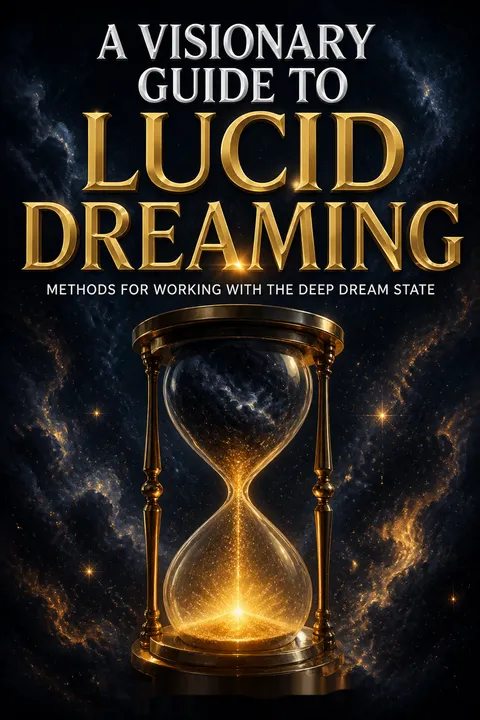


Key Takeaways
Treat lucidity as a doorway to self-understanding, not a dream-control trophy
Awareness is the beginning. Lucid dreaming means knowing that you are dreaming while the dream is happening. Lee Adams traces the practice from ancient traditions to modern research, including Stephen LaBerge’s work establishing that people can learn to signal lucidity during sleep. But the book’s deeper claim is not that dreams are a playground for wish fulfillment. Adams began lucid dreaming for entertainment and escape, then came to use it to explore inner conflicts and feel more integrated in waking life.
Choose a reason to explore. Before practicing, ask what you want from the experience. Excitement, curiosity, and self-understanding are different motives, and motives can change. The point is to approach dreams with intention while remaining open to what they contain, rather than treating lucidity itself as the finish line.
The book’s most compelling distinction is between achieving an unusual state and making use of it. That echoes a broader principle in contemplative practice: attention is a capacity, not a conclusion. Lucidity can create room to notice a fear or question that ordinary dreaming obscures. Yet a vivid subjective experience is not, by itself, evidence that a dream reveals hidden facts about the world. Its value can remain substantial when treated as material for reflection rather than proof of a metaphysical theory.
Journal dreams immediately; recall is the foundation of lucid practice
Catch the fading details. Adams says people commonly dream several times a night but remember only a fraction. The difficulty is not merely having dreams, but keeping enough of them in memory to recognize patterns or notice that a dream has become lucid. He recommends recording whatever remains after waking, including fragments, sensations, characters, and emotions. A paper journal is simple; the important part is making recall a routine.
Turn memory into material. Review entries for recurring locations, odd events, and feelings that could help identify a future dream. The record also lets a dreamer compare later interpretations with what was actually written, rather than relying on a story reshaped by the day. Adams presents journaling as both a memory aid and an early form of attention training.
A dream journal is more than an archive. It makes an elusive experience inspectable and gives the dreamer a way to distinguish remembered content from later interpretation. That resembles a basic research notebook: record observations first, then build explanations. The discipline also exposes how selective memory can be. A journal cannot prove that a recurring symbol has one fixed meaning, but it can show which associations and concerns keep returning for a particular person.
Practice reality checks with genuine attention, not as a mindless ritual
Train the noticing muscle. A reality check is a deliberate pause to examine whether the current experience is waking life or a dream. Adams suggests attending to familiar details, such as hands, clocks, or phones, while asking whether anything seems inconsistent. In dreams, these objects may behave strangely. The check works best when it involves real observation, not a question repeated automatically.
Carry awareness into sleep. Mindfulness, the practice of attending to present experience without immediately reacting to it, supports this habit. Adams describes ordinary waking life as full of automatic stretches, such as arriving somewhere after driving without remembering the route. Pausing to notice surroundings interrupts that drift. The book cites research finding an association between mindfulness practice and lucid dreaming, while presenting daily awareness as useful in its own right.
This approach connects lucid dreaming to metacognition, the ability to notice what the mind is doing while it is doing it. Repeated, meaningful checks may also function as prospective-memory cues: reminders to perform an action when a familiar situation appears. The crucial word is meaningful. If the check becomes mechanical, it may train repetition without training awareness. The practice is strongest when the person briefly tests the evidence for the state they are in.
Rehearse lucidity inside a recent dream before returning to sleep
Use the dream as a rehearsal. MILD, or Mnemonic Induced Lucid Dreaming, is a method for remembering to recognize a future dream. After waking from a dream, recall it and imagine noticing that it is a dream. Picture how you might respond once lucid, then return to sleep holding that intention. The recalled dream provides a concrete scene for the mind to revisit, rather than relying on a vague wish to become lucid.
Build a memory bridge. Adams recounts trying MILD and briefly becoming lucid in a dream about struggling through a college course. The moment did not last long, but it showed how a familiar dream scene could become a cue. He describes research by LaBerge supporting the technique. The practice is a rehearsal, not a guarantee, and dream recall makes it easier to use.
MILD has an intuitive strength: it joins an intention to a recently experienced situation. In psychology, this resembles implementation intentions, plans that connect a cue with a response, and mental rehearsal, which lets people practice recognizing a moment before it occurs. The dream setting makes the cue less predictable than an everyday routine, so outcomes will vary. Still, the technique converts desire into a specific mental action: remember a dream, imagine recognition, and return with purpose.
Use a late-night waking window to bring alertness back into dreams
Wake after several hours. Wake Back to Bed, or WBTB, means sleeping for roughly four to five hours, getting up briefly, then returning to bed with an intention to dream lucidly. Adams suggests staying awake for around thirty to sixty minutes, long enough to become more alert, while keeping the activity manageable. The method aims to combine an awake mind with a body ready to resume sleep, when dreams may be easier to recall.
Keep sleep the priority. WILD, or Wake Induced Lucid Dreaming, is a more demanding approach in which the person tries to remain aware while falling asleep. Both methods can involve disrupted sleep and unusual sensations. Adams emphasizes rest as a prerequisite, not an expendable obstacle. A technique that repeatedly leaves someone exhausted defeats the broader purpose of a healthy, sustainable practice.
WBTB takes advantage of a practical tension: alertness helps recognition, while sleep makes dreaming possible. That combination is appealing, but it also creates a cost. Sleep is essential to daytime attention, mood, and health, so more dream practice is not automatically better practice. A useful test is whether the experiment leaves waking life more stable, rather than turning the night into another performance target. Gentle, occasional experimentation is different from chronic sleep interruption.
Recognize sleep paralysis as a frightening transition, not an attack
Know what the body is doing. Sleep paralysis is a brief inability to move while awareness returns during a sleep transition. The muscle inhibition that normally helps prevent people from acting out dreams can persist as the mind becomes alert. Some people also experience a sensed presence, sounds, or vivid images layered over the room. Adams describes his own terror at feeling pinned down, then relief when he learned the experience was a known sleep phenomenon.
Reduce the alarm. The book suggests relaxing, breathing slowly, and trying a small movement such as wiggling a finger or toe. It also recommends seeking medical advice if episodes raise health concerns. Sleep paralysis may occur alongside lucid-dream induction methods, so understanding it beforehand can help. An out-of-body sensation during such a transition may feel intensely real, but the experience alone does not establish that someone literally left the body.
This is a useful example of how a physiological event can acquire a terrifying interpretation. Knowing that sleep paralysis is a recognized sleep phenomenon can reduce panic, much as naming a panic response can help someone respond less automatically. That reassurance should not become dismissal: frequent, distressing episodes deserve appropriate clinical attention. The book’s grounded explanation is most helpful when it makes room for both facts, the experience can feel overwhelming, and its frightening imagery need not be taken as external danger.
Interpret dream symbols through personal associations, not universal dictionaries
Start with the dreamer’s life. Adams treats dream symbols as images whose meaning depends on the person, context, and emotional response. A chase, animal, or doorway may carry familiar cultural associations, but a dictionary cannot determine what it means to a particular dreamer. He recommends recalling the dream in detail, retelling it as a story, and noticing which scenes and feelings connect to current concerns.
Allow more than one layer. In one example, a dream about an alluring woman leading him among the dead seemed connected to a physical illness. Medical treatment addressed one part of the problem, but he later recognized that his many commitments were also draining his energy. The interpretation expanded from bodily concern to psychological strain. Adams advises using trusted listeners to help a dreamer find their own associations, not to impose an answer.
Personal interpretation respects context, which universal symbol lists often erase. The story also offers a useful caution: a dream may prompt questions about health or stress, but it cannot diagnose an illness. Dreams can be meaningful as narratives without being reliable forecasts or medical instruments. Treating interpretations as hypotheses keeps curiosity intact while making room for ordinary evidence, including conversations with clinicians, friends, or counselors.
Meet frightening dream figures with curiosity, while respecting your limits
Look behind the monster. In Jungian psychology, the shadow refers to traits or feelings a person disowns or avoids recognizing. Adams often encounters frightening dream figures as possible images of fear, anger, or dissatisfaction. In one recurring dream, a zombie becomes a copy of himself and says it is unsatisfied. Rather than treating the figure as an enemy to destroy, he listens and considers what the encounter might reveal about his waking life.
Stay grounded. The book frames difficult encounters as chances to observe emotion instead of being swept into automatic flight or attack. That does not mean forcing a person to confront intense material. Adams warns that emotionally charged dream work requires readiness and recommends pausing or seeking support from a trusted person or professional when the experience feels overwhelming.
The idea of approaching a feared image with curiosity resembles exposure-based learning, where a person encounters a feared cue in a controlled way and discovers that their response can change. The important distinction is between gradual exploration and overwhelming exposure. A dream figure may be a productive metaphor, but it is not automatically a hidden truth that must be obeyed. Curiosity, grounding, and the option to stop make this kind of reflection safer and more useful.
Explore the dream without assuming you control the world it creates
Lucidity is not authorship. The book describes a progression from enjoying a dream or changing its scenery to questioning dream characters and becoming interested in awareness itself. Adams’s central caution is that knowing one is dreaming does not mean controlling every part of the dream. He compares the experience to being inside a simulation whose environment keeps unfolding beyond the dreamer’s conscious plans.
Follow the unexpected. Dream characters may be repetitive, insightful, or emotionally forceful. Adams recounts asking a recurring panda figure questions about dreams, then treating its answers as prompts for reflection. The book connects this practice to the Hero’s Journey, a mythic pattern of departure, challenge, and return changed, and to Jung’s individuation, the effort to bring conscious and unconscious parts of the self into greater balance. These are interpretive maps, not mandatory scripts.
The balance between agency and surrender is one of the book’s more distinctive ideas. A dreamer can choose a response, ask a question, or change direction, while still encountering material they did not deliberately compose. This resembles improvisation: structure and choice coexist with surprise. The caution is epistemic. A dream character’s answer may be psychologically revealing, imaginative, or simply part of the dream. Its value lies in what thoughtful reflection makes of it, not in presumed authority.
Treat lucid-dream supplements as risky aids, not shortcuts to insight
Separate induction from wisdom. Adams gives special attention to galantamine, a medication used for cognitive symptoms in Alzheimer’s disease and discussed in lucid-dream research. He cites 2018 studies reporting that it increased the likelihood of lucid dreams when paired with a method such as WBTB. He also describes possible side effects, including nausea, headache, mood changes, and trouble concentrating. The book repeatedly advises consulting a health professional before using supplements, especially alongside other medications.
Do not trade health for vividness. Adams argues that supplements cannot replace sleep, journaling, and deliberate practice. He is skeptical of dream-induction gadgets that try to detect REM sleep and deliver cues, noting that consumer devices may not reliably identify the right sleep stage. A pen, a journal, and a sleep mask may be more useful foundations than complicated equipment.
The chapter’s useful distinction is between a substance that may increase dream lucidity and a substance that guarantees safe, meaningful, or beneficial experiences. Those are separate claims. Medication effects depend on individual health and context, so the book’s caution matters more than its language of a dream-induction shortcut. The same skepticism applies to devices: a signal is only useful if it arrives at the right moment and does not disrupt rest.
Analysis
This book is both a practical manual and a personal account of learning to treat dreams as serious material for reflection. Its narrative arc moves from entertainment and escape toward a more demanding aim: using lucidity to encounter fear, examine neglected feelings, and carry insights into waking life. That shift gives the techniques a purpose beyond collecting spectacular experiences.
The most reliable guidance is also the least mystical. Remember dreams, keep a journal, practice attentive reality checks, set intentions, and protect sleep. These actions are specific, repeatable, and low-cost. The discussion of MILD and WBTB translates the general goal of lucidity into procedures readers can test. The author’s warnings about sleep paralysis and supplements add useful preparation, though any attempt to induce dreams should remain secondary to adequate rest and personal well-being.
The book is less consistent when it moves from subjective experience to explanations of consciousness, brain chemistry, astral travel, or the collective unconscious. It often places empirical findings, personal interpretations, and spiritual possibilities side by side. That openness suits its exploratory spirit, but the different kinds of claims are not equally supported. A vivid out-of-body sensation can be psychologically important without demonstrating travel beyond the body. A dream can suggest a concern without diagnosing it. Readers gain the most by distinguishing the experience itself from the explanation attached to it.
The practical value of the Jungian language is similarly interpretive. Shadow figures and dream guides can help people organize emotions into memorable images, but no symbol has to carry a single hidden message. The author’s strongest advice is therefore also his most modest: listen, test interpretations against waking life, and stay willing to revise them. Lucidity becomes valuable not because dreams offer unquestionable answers, but because they create a vivid setting in which questions can be noticed, felt, and explored.
Review Summary
A Visionary Guide to Lucid Dreaming receives overwhelmingly positive reviews, with readers praising its comprehensive approach to lucid dreaming. Many appreciate the balance of scientific research, practical techniques, and spiritual insights. Beginners find it accessible, while experienced practitioners value the advanced tools provided. Readers highlight the book's clear structure, easy-to-follow instructions, and the author's expertise. Some note improved dream recall and sleep quality after applying the techniques. The book is commended for its unique perspective, combining psychology, neuroscience, and personal experiences to offer a holistic guide to lucid dreaming.
People Also Read







Glossary
Lucid dreaming
Awareness during a dreamA dream state in which the dreamer recognizes that they are dreaming. Lucidity can vary in strength. A person may simply know the experience is a dream, or may also make choices and interact deliberately with the dream. In this book, lucid dreaming is a practice for exploration and reflection, not only for controlling dream events.
Reality checks
Tests of waking awarenessBrief, deliberate checks used to strengthen awareness of whether one is awake or dreaming. The dreamer examines a familiar object or sensation, looks for inconsistencies, and genuinely considers the current state. Repeating the practice during waking life may make it more likely that the person will question reality during a dream.
Mnemonic Induced Lucid Dreaming (MILD)
Dream-based intention rehearsalA technique in which a dreamer wakes after a dream, recalls it, imagines recognizing that it is a dream, and returns to sleep intending to become lucid. The remembered dream provides a concrete scene to rehearse. The method is associated in the book with Stephen LaBerge’s research on lucid-dream induction.
Wake Back to Bed (WBTB)
Brief waking before resleepingA lucid-dreaming method that involves sleeping for several hours, waking for a short period, setting an intention, and returning to bed. The pause is meant to increase mental alertness while the body remains ready for further sleep. Because it interrupts sleep, it should not be pursued at the expense of adequate rest.
Wake Induced Lucid Dreaming (WILD)
Awareness carried into sleepA technique in which the dreamer attempts to remain aware while falling asleep, rather than becoming lucid after a dream has already begun. It can involve noticing sleep-onset sensations and imagery without reacting to them. Adams presents it as challenging and notes that it may coincide with sleep paralysis.
Sleep paralysis
Awareness with temporary immobilityA brief state in which a person becomes aware while the body remains unable to move during a sleep transition. It can include vivid sounds, images, or a sensed presence. The book explains the immobility as part of the normal mechanism that limits movement during dreaming and emphasizes that frightening sensations do not by themselves indicate an external threat.
Active imagination
Engaging emerging inner imagesA Jungian practice of allowing spontaneous mental images to develop and then engaging with them as meaningful material, rather than forcing them into a predetermined direction. In the book, it can accompany lucid-dream methods by helping dreamers observe imagery as it arises and explore associations with the unconscious.
Shadow
Disowned parts of the selfA Jungian term for traits, emotions, or impulses a person does not readily acknowledge as part of themselves. In dream work, the shadow may appear as a frightening figure or situation. Adams suggests that meeting such images with careful attention can help a dreamer consider rejected feelings, while warning that intense material should be approached with adequate support.
Guardian of the Threshold
A figure at inner changeA frightening or challenging figure that appears at the edge of a new inner experience. Adams connects the image with the Jungian shadow and interprets it as a possible expression of fear or conflict that a dreamer is ready to notice. The term comes from spiritual and esoteric traditions discussed in the book, not from a clinical diagnosis.
Hero’s Journey
Departure, challenge, returnA mythic pattern, associated in the book with Joseph Campbell, in which a person leaves familiar circumstances, faces challenges, and returns changed. Adams uses it as a map for personal development through dreams. It is an interpretive framework for understanding transformation, not a fixed sequence every dreamer must follow.
Individuation
Greater integration of the selfA Jungian concept describing the development of a more integrated person through engagement between conscious awareness and unconscious material. In Adams’s account, dream work may support this process by bringing neglected emotions, images, and conflicts into awareness. The term describes a psychological aim, not a guarantee that dream interpretation reveals objective truths.
FAQ
What's "A Visionary Guide to Lucid Dreaming" about?
- Exploration of Lucid Dreaming: The book is a comprehensive guide to understanding and practicing lucid dreaming, where the dreamer is aware they are dreaming and can potentially control the dream.
- Methods and Techniques: It provides detailed methods and techniques for achieving lucidity in dreams, including foundational practices and advanced tools.
- Psychological and Spiritual Insights: The book delves into the psychological and spiritual aspects of dreams, encouraging readers to explore deeper realms of the psyche.
- Personal Development: It emphasizes using lucid dreaming as a tool for personal growth, self-discovery, and understanding the unconscious mind.
Why should I read "A Visionary Guide to Lucid Dreaming"?
- Practical Guidance: The book offers practical guidance for both beginners and experienced dreamers, making it accessible to a wide audience.
- Empirical Research: It is grounded in empirical research, providing a scientific basis for the techniques and insights shared.
- Unique Approach: The author, Lee Adams, presents a humble and sensible approach to lucid dreaming, focusing on exploration rather than just achieving lucidity.
- Personal Growth: Reading the book can aid in personal development by helping readers understand and integrate their dreams into their waking lives.
What are the key takeaways of "A Visionary Guide to Lucid Dreaming"?
- Lucid Dreaming Techniques: Learn various techniques to induce and navigate lucid dreams, such as the MILD and WILD methods.
- Understanding Consciousness: Gain insights into different states of consciousness and how they relate to dreaming.
- Role of the Unconscious: Explore the role of the unconscious mind in dreams and how it can be a source of guidance and self-discovery.
- Integration of Dreams: Understand the importance of integrating dream experiences into daily life for personal growth and transformation.
What are the best quotes from "A Visionary Guide to Lucid Dreaming" and what do they mean?
- "When you fall asleep at night, your mind doesn’t just turn off like a light with the flick of a light switch." This quote highlights the dynamic and active nature of the mind during sleep, setting the stage for exploring its creative potential.
- "Lucid dreaming should no longer be seen as something esoteric, difficult, or available only to those with special talent." It emphasizes the accessibility of lucid dreaming to everyone, encouraging readers to explore it as a nightly adventure.
- "Dreams can have extreme impacts on our lives if we choose to listen to them." This underscores the transformative power of dreams when we pay attention to their messages and integrate them into our lives.
How does Lee Adams suggest preparing for lucid dreaming?
- Awareness Training: Practice mindfulness and reality checks during the day to increase awareness and improve the likelihood of becoming lucid in dreams.
- Set Intentions: Before sleep, set a clear intention to have a lucid dream and to remember it upon waking.
- Sleep Hygiene: Maintain good sleep hygiene by establishing a bedtime routine and creating a restful sleep environment.
- Use of Supplements: Consider using supplements like melatonin or 5-HTP to support sleep quality and dream recall, but consult a healthcare provider first.
What is the MILD technique in "A Visionary Guide to Lucid Dreaming"?
- Mnemonic Induced Lucid Dreaming: MILD is a technique that involves waking up during the night, recalling a dream, and imagining what it would have been like if it were lucid.
- Memory Bridges: It uses mnemonic devices to create memory bridges, helping the brain remember to become lucid in future dreams.
- Intention Setting: The technique emphasizes setting a strong intention to have a lucid dream while falling back asleep.
- Proven Effectiveness: Research by Stephen LaBerge has shown MILD to be one of the most effective methods for inducing lucid dreams.
How does "A Visionary Guide to Lucid Dreaming" address sleep paralysis?
- Understanding Sleep Paralysis: The book explains sleep paralysis as a natural state of immobility during REM sleep, often accompanied by hallucinations.
- Reducing Fear: It encourages acceptance of sleep paralysis as a harmless experience, reducing fear and anxiety associated with it.
- Breaking Free Techniques: Offers techniques to break free from sleep paralysis, such as wiggling fingers and toes or focusing on deep breathing.
- Gateway to Lucidity: Sleep paralysis can be used as a gateway to lucid dreaming by maintaining awareness and allowing the dream to unfold.
What role does the unconscious mind play in lucid dreaming according to Lee Adams?
- Source of Guidance: The unconscious mind is seen as a source of guidance and insight, communicating through dream symbols and narratives.
- Integration with Consciousness: Lucid dreaming allows for the integration of unconscious material into conscious awareness, promoting self-discovery.
- Dialogue with the Unconscious: The book encourages building a dialogue with the unconscious to better understand personal symbols and archetypes.
- Empowerment through Dreams: By engaging with the unconscious, dreamers can empower themselves to face fears and achieve personal growth.
What are the advanced tools and supplements for lucid dreaming in the book?
- Galantamine: Highlighted as a powerful supplement for enhancing dream recall and inducing lucid dreams, with caution advised for its use.
- Choline and Alpha-GPC: Supplements that support acetylcholine production, improving memory and dream vividness.
- Herbal Aids: Use of herbs like mugwort and Calea ternifolia to enhance dream recall and vividness.
- Combination Techniques: Suggestions for combining supplements with techniques like WBTB for optimal results.
How does "A Visionary Guide to Lucid Dreaming" suggest using dream symbols?
- Personal Vocabulary: Develop a personal vocabulary of dream symbols to better understand their meaning and messages.
- Physical Representation: Bring dream symbols into waking life by creating physical representations, such as drawings or objects.
- Meditation on Symbols: Meditate on symbols to invite the unconscious to communicate their significance.
- Integration into Life: Use symbols as a tool for integrating dream insights into daily life, enhancing personal growth.
What is the significance of the Hero's Journey in "A Visionary Guide to Lucid Dreaming"?
- Framework for Exploration: The Hero's Journey serves as a framework for exploring the deeper realms of the psyche through dreams.
- Call to Adventure: Dreams often present a call to adventure, inviting the dreamer to embark on a journey of self-discovery.
- Facing Challenges: The journey involves facing challenges and trials, such as confronting the shadow or meeting the anima.
- Transformation and Growth: Ultimately, the Hero's Journey in dreams leads to transformation, personal growth, and a deeper understanding of the self.
How does Lee Adams address the concept of the shadow in dreams?
- Shadow as a Teacher: The shadow is seen as a teacher, presenting fears and challenges that must be faced for personal growth.
- Integration of the Shadow: Lucid dreaming provides an opportunity to integrate the shadow into the conscious self, reducing fear and anxiety.
- Facing Nightmares: The book encourages facing nightmares and shadow figures in dreams as a path to self-acceptance and understanding.
- Jungian Perspective: Drawing on Jungian psychology, the shadow is viewed as an essential part of the individuation process, leading to wholeness.
Download PDF
Download EPUB
.epub digital book format is ideal for reading ebooks on phones, tablets, and e-readers.








