

Key Takeaways
Read the Bible’s dark powers in ancient language and context.
Translation can flatten distinctions. The Hebrew Bible uses many terms for hostile spirits, the dead, dangerous places, and powers linked to the nations. English translations can make this varied vocabulary look like a simple contrast between “demons” and everything else. The ancient Greek Septuagint, the translation used by many New Testament writers, sometimes rendered different Hebrew terms with the same Greek word, daimonion. That choice did not always mean the translators thought the beings were unreal or identical.
Context restores the map. Heiser argues that readers should interpret biblical language within ancient Israelite ideas about God’s heavenly court, the realm of the dead, and sacred or hostile territory. This approach aims to correct beliefs built mostly from later church tradition, while recognizing that ancient texts do not always answer modern questions in modern categories.
What's striking is how much interpretation depends on recognizing that translation is not a transparent window. A single English word can gather several ancient ideas under one label, much as a modern map can erase local distinctions when it uses one color for a complicated landscape. That makes comparison across Hebrew, Greek, and their historical settings valuable. It also imposes a discipline: a plausible ancient parallel can illuminate a passage without proving that every reader in antiquity understood it identically.
Do not turn every biblical adversary into one all-purpose Satan.
A title is not always a name. In Job and Zechariah, the Hebrew expression ha-satan includes the definite article and is best understood as “the adversary” or “the accuser,” a role in a heavenly courtroom, not necessarily the personal name Satan. The serpent in Eden is never called satan in the Hebrew Bible, though later Jewish writings and the New Testament connect the figures.
Later readers connected the clues. Heiser sees Isaiah’s taunt against Babylon’s king and Ezekiel’s lament over Tyre’s ruler as drawing on imagery of a primeval divine rebel. That interpretation is disputed: both passages directly address human kings, and scholars differ over whether they also evoke Eden’s rebel. The book also rejects the familiar story of Satan’s prehuman revolt with one-third of the angels as an event the Bible plainly narrates.
The distinction between a job description and a personal name matters well beyond demonology. Historical texts often reuse titles, and readers can mistakenly treat every occurrence as one character. Heiser’s grammatical case about ha-satan is specific and testable, while his proposed links among Eden, Isaiah, and Ezekiel involve more interpretive judgment. Keeping those levels separate helps readers appreciate the argument without treating every connection as equally certain.
Track three distinct rebellions instead of inventing one angelic coup.
The book’s map has three origins. Heiser organizes the Old Testament’s hostile supernatural powers around three separate rebellions, involving different beings and different consequences:
1. In Eden, the serpent deceives humanity, and human life becomes subject to death and separation from God’s presence.
2. Before the flood, the “sons of God” cross the boundary between heaven and earth, producing the Nephilim in Genesis 6.
3. At Babel, God scatters humanity and assigns the nations to lesser divine beings, who later become corrupt rulers.
One rebellion does not explain all. This structure helps account for why biblical and later Jewish texts describe several kinds of hostile powers. It also cautions against importing a single popular origin story into passages that concern different episodes.
This three-part structure is a useful model of layered causation: one tradition need not explain every kind of evil. It also prevents a common category error, where distinct supernatural figures become interchangeable because later religious language groups them together. The model is coherent within Heiser’s reading of the texts, though its success depends on accepting contested interpretations of Genesis 6 and Deuteronomy 32. The framework clarifies the argument; it does not remove the need to assess its evidence passage by passage.
Read Genesis 6’s giants as a challenge to Babylonian claims.
A rival origin story sits behind the flood. Heiser connects Genesis 6:1 – 4 to the Mesopotamian apkallu, legendary sages credited with bringing civilization and specialized knowledge to humanity. In the biblical story, divine beings take human women, and their offspring are associated with the Nephilim, described as mighty figures of ancient renown. Heiser argues that this recasts Babylon’s culture heroes as transgressors rather than benefactors.
Later Jewish texts fill in the consequences. In 1 Enoch, the Watchers teach people skills linked to warfare, sorcery, and divination. Their giant offspring die, but their disembodied spirits become demons who afflict humanity. This is a Second Temple Jewish explanation, developed from Genesis and its ancient context, not a detailed account stated outright in Genesis itself.
The comparative reading makes the passage more than an odd prelude to the flood: it becomes a dispute over who may claim credit for civilization and knowledge. That is a powerful way to understand ancient polemic, where rival cultures often presented the same practice as either a divine gift or a dangerous transgression. The proposed apkallu connection is distinctive, but it remains a historical reconstruction built from parallels. It should be treated as an argued explanation, not as uncontested fact.
See Babel’s scattered nations as territories handed to spiritual rulers.
The nations are part of the supernatural story. Deuteronomy 32:8 – 9 describes the Most High dividing humanity and setting national boundaries according to the “sons of God,” while Israel becomes the Lord’s own portion. Heiser favors “sons of God” because that reading appears in ancient manuscript evidence, including the Dead Sea Scrolls, rather than the later Masoretic reading “sons of Israel.”
Their assigned rulers go wrong. Psalm 82 depicts God judging divine beings for injustice toward the people under their care. Daniel 10’s “princes” of Persia and Greece are read as spiritual rulers of nations. The specialized term “cosmic geography” describes this worldview, in which land is associated with divine presence or with rival spiritual powers. It helps explain why wilderness and foreign territory can carry spiritual significance in biblical stories.
This reading links political geography to moral responsibility: the rulers of nations are judged not simply for existing, but for failing the people entrusted to them. That connection resonates with traditions in which authority is legitimate only when exercised justly. The textual variant in Deuteronomy is important evidence, but the full interpretation also draws together several passages and later sources. Readers can recognize the coherence of that synthesis while distinguishing it from what any single verse states alone.
Treat Second Temple demonology as an interpretive bridge, not a sudden invention.
Jewish writers developed the inherited material. “Second Temple Judaism” refers here to Jewish thought and writing between the rebuilding of the Jerusalem temple and its destruction in the first century. Authors in this period connected Old Testament episodes that the biblical text does not explicitly combine. Some linked the Eden serpent, the Watchers, and the rulers of the nations under a chief rebel.
The traditions were not uniform. The chief figure appears under names including Satan, Azazel, Mastema, and Belial, and texts differ over who led the Watchers or how the powers relate. Heiser argues that these writings help explain New Testament language about Satan and his angels, without claiming every later detail appears in the Old Testament. The New Testament inherits this developing Jewish conversation rather than beginning with an entirely new demonology.
The idea of an interpretive bridge is historically useful because religious traditions develop through rereading as well as direct quotation. Later writers can preserve older assumptions while adding explanations or combining characters. That process resembles how communities build shared memory from scattered records. The variety among Jewish texts is especially important: “Second Temple Judaism” names a period, not a single agreed doctrine. It is therefore safer to speak of overlapping traditions than of one settled system passed intact to every New Testament writer.
Distinguish demons from the rebel angels whose offspring they supposedly are.
The categories are related, not identical. In the Second Temple account emphasized by Heiser, demons are the disembodied spirits of the Nephilim, the offspring of the Watchers who transgress in Genesis 6. The Watchers themselves are the rebellious heavenly beings; their giant offspring are a different category. Calling demons simply “fallen angels” therefore blurs the story’s distinctions.
Illness needs careful interpretation. The Gospels use “unclean spirits,” “evil spirits,” and “demons” in overlapping ways. Ancient readers associated spirits with some physical and mental afflictions, but the text does not attribute every illness to demons. Heiser also notes that the Greek verb often translated “possessed” does not itself mean owned. He uses “demonized” for harmful influence, which need not imply that a person belongs to Satan.
This distinction shows why vocabulary matters for pastoral questions as well as historical ones. “Possession” carries a strong implication of ownership in English, while the underlying Gospel terminology is less precise about what is happening to a person. Separating the text’s language from later translation choices can reduce needless certainty. At the same time, ancient accounts of illness cannot be mapped neatly onto modern diagnoses, so neither dismissing every spiritual explanation nor assigning every symptom a demon is warranted by the evidence presented here.
Read Jesus’ exorcisms as the kingdom’s first assault on Satan’s rule.
Exorcism signals more than healing. In the Synoptic Gospels, Jesus announces God’s kingdom and casts out demons. He presents the two as connected: the expulsion of spirits shows that God’s rule is breaking into territory associated with Satan. Jewish traditions about Solomon as an exorcist also helped make power over demons intelligible as part of a messianic role, even though the Old Testament does not directly predict that the Messiah will perform exorcisms.
Jesus acts without the usual apparatus. Other ancient exorcists might use objects, formulas, or appeals to a higher power. The Gospels portray Jesus commanding spirits directly, a feature that underscores his authority. John’s Gospel does not narrate exorcisms; it emphasizes the cross as the decisive confrontation with the ruler of this world.
The exorcism scenes operate on two levels: they address individuals’ distress, and they dramatize a change in authority. That dual function helps explain why the stories matter so much to the Gospel narratives. It also invites care when connecting them to present-day illness: the theological meaning of a story is not a clinical diagnostic guide. The contrast between the Synoptic Gospels and John is equally instructive, since different writers can frame the same victory through public acts of power or through the cross.
Treat Christ’s resurrection as the moment hostile rulers lose jurisdiction.
Victory begins before final judgment. Paul describes Christ’s resurrection and exaltation as placing him above the “rulers” and “authorities.” In Colossians, the powers are disarmed and publicly shamed. Heiser reads these terms against Deuteronomy 32: the national spiritual rulers once had delegated authority, but their corruption makes that authority illegitimate through Christ’s work.
The mission is to reclaim people. This does not mean every hostile spirit disappears immediately. The book describes a present victory with a future judgment still to come. Pentecost and the spread of the gospel to non-Jewish nations mark the return of people once estranged from God to his family. The resurrection, ascension, and gospel mission together answer Babel’s division, while the final fate of the rebellious powers remains ahead.
This account uses legal and political language to interpret cosmic conflict: a ruler can remain active even after losing legitimate authority. That distinction makes sense of the New Testament’s combination of confidence and ongoing struggle. It also gives missionary work a specific theological role, rather than treating spiritual conflict as a contest of competing techniques. The synthesis is ambitious, especially when Paul’s terms are assigned to the national gods of Deuteronomy. Its value lies in showing how several passages can form a coherent argument, while leaving room to debate the links.
Fight spiritual darkness through faithful witness, not territorial spirit theatrics.
The New Testament’s weapons are ordinary and demanding. In Ephesians 6, Paul tells believers to stand firm through truth, righteousness, the gospel, faith, salvation, God’s word, prayer, and perseverance. In 2 Corinthians 10, he describes spiritual conflict as challenging arguments and claims that oppose knowledge of God. Neither passage instructs Christians to identify and command territorial spirits.
The mission is people, not spiritual maps. Heiser argues that Christ’s work has already stripped the hostile rulers of legitimate authority, so the church’s task is to make disciples and embody the kingdom. He also rejects the popular claim that Satan’s revolt and the fall of one-third of the angels happened before humanity existed. Revelation’s one-third imagery appears in a vision centered on the Messiah’s birth and exaltation, not as a clear timeline of prehuman history.
This emphasis shifts spiritual warfare from spectacle toward durable practices: truthfulness, ethical conduct, prayer, and public witness. That shift can be understood as a theory of institutional change, where rival systems lose influence as people adopt a different community and set of commitments. The critique of territorial confrontation is grounded in the passages Heiser discusses, though Christian traditions interpret spiritual conflict in varied ways. His reading offers a practical corrective to claims of authority that go beyond the New Testament’s explicit instructions.
Analysis
Heiser’s central move is methodological: he asks readers to reconstruct the biblical writers’ supernatural world before importing later Christian categories into it. The resulting account is not simply a catalog of demons. It is a narrative about three rebellions, the human consequences of each, and the New Testament’s claim that Christ reverses their effects. Its most useful contribution is taxonomic. The Eden serpent, the Watchers, the spirits of the Nephilim, and the rulers assigned to nations are not interchangeable, even when later sources place them within one hierarchy.
The book is strongest when it highlights distinctions that translation can obscure. The difference between a Hebrew role called “the adversary” and a later personal name, or between rebellious angels and the demons they are said to produce, changes how familiar passages are read. Its comparative use of Mesopotamian and Second Temple literature also gives Genesis 6 a richer historical setting than readers may encounter in popular treatments. That material makes the book’s argument vivid, but its interpretive layers need to remain visible: Hebrew grammar, manuscript variants, ancient parallels, and theological synthesis do not all carry the same evidential weight.
The most debatable steps are often the most generative. The proposed links among Genesis 6, the apkallu, and later demon traditions, and the reading of Paul’s “rulers and authorities” as national divine beings, depend on patterns across texts rather than explicit definitions in one passage. Heiser argues those patterns cohere; readers can test them without mistaking coherence for certainty. The book’s account of spiritual warfare has a clear practical consequence: it redirects attention from dramatic confrontation with invisible beings toward fidelity, community, and the spread of the gospel. Its lasting value lies in showing how a reconstructed ancient worldview can reshape both biblical interpretation and modern religious practice.
Review Summary
Demons by Michael Heiser is a scholarly exploration of biblical demonology, drawing from ancient Near Eastern contexts and Second Temple Judaism. Readers appreciate Heiser's academic rigor and accessibility, praising his fresh perspective on spiritual warfare and challenging traditional views. The book's strengths include its linguistic analysis and historical context, though some find it repetitive or overly complex. Critics note Heiser's reliance on extra-biblical sources and question the practical application of his insights. Overall, the book is highly regarded for its thorough examination of the powers of darkness in Scripture.
People Also Read

Glossary
Deuteronomy 32 worldview
Nations assigned to lesser godsHeiser’s term for the biblical picture in which God divides humanity into nations and assigns them to lesser divine beings, while Israel becomes God’s own portion. He connects this passage with Psalm 82’s judgment of corrupt rulers, Daniel’s national princes, and New Testament language about hostile rulers and authorities.
apkallu
Mesopotamian culture sagesIn Mesopotamian traditions, the apkallu are legendary sages associated with the transmission of civilization, specialized knowledge, and religious practices to humanity. Heiser argues that Genesis 6 and later Jewish accounts recast their story polemically: beings celebrated as benefactors in Babylonian tradition become transgressors whose knowledge and offspring contribute to human corruption.
Watchers
Heavenly beings who transgressA name used in Second Temple Jewish writings for the heavenly beings who violate the boundary between heaven and earth in the Genesis 6 tradition. In 1 Enoch, the Watchers take human women, produce giants, and teach forbidden knowledge. The term can also describe loyal heavenly beings, so it does not mean “evil angel” by itself.
Rephaim
Giants and underworld spiritsA Hebrew term used in different contexts for giant clans and for shadowy inhabitants of the realm of the dead. Heiser treats this varied usage as one clue behind later Jewish connections between giants, the underworld, and demons. The term’s meaning depends on context, and its precise linguistic history is debated.
cosmic geography
Sacred and hostile territoriesA way of describing the biblical association between places and spiritual authority. Land where God’s presence is understood to dwell is holy; other places, especially wilderness or territory linked to rival gods, may be portrayed as hostile or unclean. Heiser applies this idea to the nations, the exodus, and Jesus’ ministry.
divine council
God’s heavenly assemblyThe assembly of supernatural beings portrayed as attending God and participating in the administration of his rule. In Heiser’s reading, passages that depict God speaking among a plural heavenly company or judging lesser gods reflect this council. God remains sovereign and uncreated, while its other members are created beings with lesser authority.
demonization
Harmful demonic influenceHeiser’s preferred English rendering for the condition described by a Greek verb often translated “demon-possessed.” The Greek term does not itself specify ownership. “Demonization” leaves room for different kinds of harmful influence, including distress or control, without claiming that a person is owned by Satan or a spirit.
Septuagint
Greek translation of Hebrew ScriptureThe ancient Greek translation of Jewish Scripture, commonly abbreviated LXX. New Testament writers often quote or echo its wording. Heiser emphasizes that its translators sometimes rendered several distinct Hebrew terms with the same Greek term, which could preserve broad meaning while reducing distinctions visible in the Hebrew.
FAQ
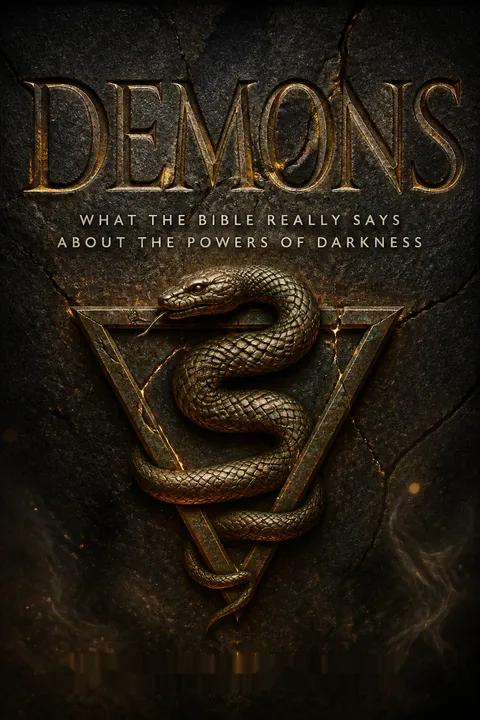
1. What’s Demons: What the Bible Really Says About the Powers of Darkness by Michael S. Heiser about?
- Comprehensive biblical study: The book investigates what the Bible and Second Temple Jewish literature actually say about demons, Satan, and the powers of darkness, focusing on original Hebrew and Greek texts.
- Ancient context focus: Heiser situates biblical demonology within its ancient Near Eastern and Second Temple Jewish contexts, challenging later church traditions and popular misconceptions.
- Four-part structure: The book covers biblical vocabulary, the three divine rebellions, New Testament perspectives, and modern misunderstandings about supernatural evil.
2. Why should I read Demons by Michael S. Heiser?
- Corrects common misconceptions: Heiser addresses and debunks widespread but unbiblical ideas about demons, Satan, and spiritual warfare, restoring the Bible’s original worldview.
- Bridges ancient and modern theology: The book connects Old Testament, Second Temple Jewish, and New Testament teachings, enriching readers’ understanding of spiritual conflict.
- Equips for discernment: Readers gain tools for spiritual discernment and a more grounded, less sensationalized approach to spiritual warfare and evil spirits.
3. What are the key takeaways from Demons by Michael S. Heiser?
- Three divine rebellions: The book highlights the Edenic serpent, the Watchers’ rebellion in Genesis 6, and the divine allotment at Babel as foundational to biblical demonology.
- Demons’ true origins: Demons are primarily the disembodied spirits of the Nephilim, not simply fallen angels, a view rooted in Second Temple Jewish literature.
- Cosmic geography: The Bible presents a worldview where nations are under the dominion of corrupt spiritual powers, with Israel as God’s special inheritance.
- Jesus’ victory: The New Testament portrays Jesus’ ministry, death, and resurrection as the decisive defeat of the powers of darkness and reclaiming of the nations.
4. What are the best quotes from Demons by Michael S. Heiser and what do they mean?
- “If it’s weird, it’s important.” Heiser’s motto encourages readers to pay attention to strange or overlooked biblical passages, as they often hold key theological insights.
- “The Bible was written for us, but not to us.” This quote emphasizes the need to read Scripture in its original context to understand its true meaning.
- “Demons are not simply fallen angels.” Heiser challenges a common assumption, urging readers to distinguish between different types of supernatural beings in biblical thought.
- “Spiritual warfare is discipleship.” The book reframes spiritual warfare as faithful living and obedience to Christ, rather than dramatic power encounters with demons.
5. How does Michael S. Heiser define and categorize demons and evil spiritual beings in Demons?
- No single Hebrew term: The Hebrew Bible lacks a direct equivalent for “demon,” instead using terms like ʾelōhîm (divine beings), rûḥôt (spirits), rĕpāʾîm (shades), šēdîm (territorial spirits), and śāʿı̂r (goat demons).
- Contextual categories: These terms are grouped by their association with death, territorial dominion, or idolatry, reflecting a complex spiritual worldview.
- Demons as Nephilim spirits: In Second Temple Judaism, demons are primarily the disembodied spirits of the Nephilim, distinct from fallen angels or Watchers.
6. What are the “three divine rebellions” in the Bible according to Demons by Michael S. Heiser?
- First rebellion – Edenic serpent: The original rebel, a divine council member, sought to be “like the Most High,” leading to humanity’s fall and estrangement from God.
- Second rebellion – Watchers in Genesis 6: Divine beings (sons of God) cohabited with human women, producing Nephilim and corrupting humanity, resulting in their judgment.
- Third rebellion – Babel and territorial spirits: At Babel, God allotted the nations to lesser divine beings who became corrupt rulers, sowing chaos and opposing Yahweh.
7. How does Demons by Michael S. Heiser explain the origin and nature of demons?
- Disembodied Nephilim spirits: Demons originate from the spirits of the Nephilim, the offspring of the Watchers and human women, as developed in Second Temple Jewish literature.
- Unclean and impure: Their mixed heavenly and earthly origin makes them “unclean spirits,” analogous to impurity laws in Leviticus.
- Role in affliction: Demons are linked to disease, violence, and spiritual oppression, operating under divine permission but destined for judgment.
8. What is the significance of the Deuteronomy 32 worldview in Demons by Michael S. Heiser?
- Divine allotment of nations: Deuteronomy 32:8–9 describes God assigning the nations to lesser divine beings (“sons of God”), who later become corrupt.
- Cosmic geography: This worldview frames spiritual conflict as a territorial struggle between God’s people and rebellious spiritual powers ruling the nations.
- New Testament continuity: Paul and other writers reflect this worldview, teaching that Christ’s resurrection nullifies the authority of these territorial spirits.
9. How does Michael S. Heiser describe Satan’s identity, development, and role in Demons?
- Adversary, not a name: In the Old Testament, śāṭān means “adversary” or “accuser,” not a personal name, and refers to a divine prosecutor rather than a cosmic rebel.
- Second Temple development: Later Jewish texts develop Satan as a leader of evil spirits, associating him with figures like Azazel and Mastema.
- New Testament identification: The New Testament equates the serpent of Eden with Satan, portraying him as the deceiver, ruler of demons, and ultimate enemy of God.
10. How does the Septuagint (LXX) translation influence the understanding of demons and spiritual powers in Demons by Michael S. Heiser?
- Greek vocabulary shifts: The LXX translates various Hebrew terms for divine beings and spirits into a smaller set of Greek words, such as theos (gods), angelos (angels), and daimonion (demons).
- Preservation and conflation: While sometimes preserving the plurality of divine beings, the LXX also conflates categories, influencing later Jewish and Christian demonology.
- Impact on New Testament: The LXX’s translation choices shape the New Testament’s vocabulary and concepts regarding demons and spiritual powers.
11. What does Demons by Michael S. Heiser say about Jesus, exorcism, and spiritual warfare?
- Jesus’ authority over demons: Jesus’ exorcisms demonstrate his unique authority over evil spirits, inaugurating the kingdom of God and signaling the defeat of Satan’s realm.
- Exorcism as kingdom sign: Casting out demons is closely linked to healing and the proclamation of God’s reign, distinguishing Jesus from contemporary exorcists.
- Spiritual warfare as discipleship: Heiser emphasizes that true spiritual warfare is about faithful discipleship, standing firm in truth and righteousness, rather than dramatic confrontations with demons.
12. What common myths and misconceptions about demons and Satan does Michael S. Heiser address in Demons?
- Demons as fallen angels: Heiser clarifies that demons are not simply fallen angels but are the spirits of the Nephilim, correcting a widespread misunderstanding.
- Satan and “one-third of angels”: The idea that Satan led a third of the angels in rebellion before humanity is a later tradition, not found in Scripture.
- Christian demon possession: Heiser cautions against the idea that Christians can be “possessed” by demons, explaining that while believers can be influenced or oppressed, true possession is not biblically supported.
About the Author

Download PDF
Download EPUB
.epub digital book format is ideal for reading ebooks on phones, tablets, and e-readers.








