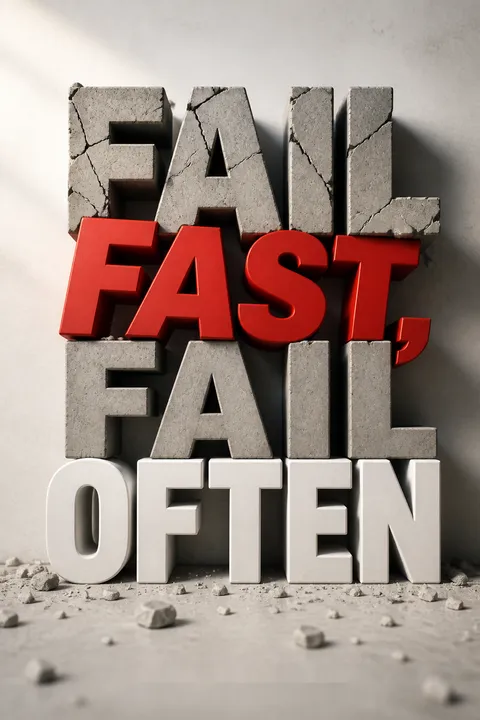


Key Takeaways
Build daily enjoyment before waiting for your circumstances to improve
Joy changes what you notice. The book challenges the belief that life must be fixed before it can be enjoyed. Pursuing small sources of pleasure, curiosity, and progress can make people more flexible and receptive to opportunity. Psychologist Barbara Fredrickson’s research, as presented here, links positive emotions with broader thinking, while Teresa Amabile’s workplace studies connect positive mood with more creative ideas. Fredrickson proposed a 3-to-1 balance of positive to negative experiences as a rule of thumb for flourishing, not a demand for constant happiness.
Madison finds her spark. A stressed legal analyst revived an old interest by starting an informal drama group at work. The fun helped her recognize that law school felt like obligation, while work with students better matched her energy. A simple joy map or daily journal can help identify which activities enliven or drain a person.
What's useful here is the reversal of the usual sequence: action and enjoyment need not wait for a solved life. This resembles behavioral activation, a therapeutic approach that uses planned activity to interrupt withdrawal and improve mood. The idea also has practical limits. Enjoyment is not a substitute for addressing unsafe work, illness, or financial pressure, and a numerical positivity ratio should not become another standard for self-criticism. The strongest application is modest: protect recurring moments of interest, then use the energy and information they provide to make clearer choices.
Make rough attempts early, because practice turns mistakes into useful information
Output teaches what planning cannot. In a ceramics class, one group was assessed on the amount of pottery made and another on its best single piece. The quantity-focused students produced stronger work because repetition let them experiment, notice errors, and improve. The book calls this failing forward: taking action early, using the result to learn, and choosing the next challenge. Pixar’s films likewise develop through rough story ideas and many revisions, rather than arriving polished.
Competence grows through attempts. Psychologist Carol Dweck’s study of schoolchildren found that children praised for effort were more willing to try difficult problems than children praised for intelligence. The lesson is not to celebrate every mistake, but to stop treating imperfect performance as evidence that a person should quit. A beginner’s stance makes feedback more valuable than the appearance of expertise.
The key distinction is between failure that produces information and failure that merely repeats. A pottery attempt teaches only when the maker can compare results, adapt technique, or ask for feedback. This makes the principle closely related to deliberate practice, where focused repetition and correction matter more than raw volume. The book’s encouragement to fail quickly is most persuasive in low-cost, reversible situations. In safety-critical work, medicine, or decisions with lasting consequences, the better aim is to test assumptions carefully, not to move fast for its own sake.
Follow curiosity with experiments, not premature promises
Interest can start small. Adults often turn a passing curiosity into a heavy question about talent, time, and commitment. The book argues that trying an activity does not require deciding whether it will become a career or lifelong pursuit. A few minutes with a guitar, a beginner class, or a conversation with someone in a field can reveal more than prolonged speculation.
One detour changed a life. As a teenager in a troubled Pittsburgh neighborhood, Bill Strickland was drawn into an art room by its light, music, and smell of coffee. Trying pottery gave him a sense of possibility. He later created an arts center for local young people, which developed into Manchester Bidwell, an organization combining arts and career training. His first step did not reveal that destination. It simply gave curiosity somewhere to go.
Curiosity is especially useful when treated as a source of questions rather than a prophecy about destiny. In research and design, exploratory trials often reveal preferences that introspection cannot reliably predict. Strickland’s story shows how a small encounter can open a path with social consequences far beyond the initial activity. Still, not every interest needs to be made productive or turned into a mission. Exploration also has value when it remains play, and people with limited time or resources may need to choose experiments that are genuinely affordable.
Test a career in the workplace before investing years in its story
A job title is not a job. Personality tests and career matching can imply that a stable personal type points toward one correct occupation. The book argues that interests change, workplaces differ, and jobs evolve. Firsthand experience is more revealing than an abstract description. Sara, who loved television crime stories, visited a working crime lab and disliked its environment. She explored other options and found a better fit in interior design.
Use lean career experiments. Borrowing from lean start-up practice, the book recommends small, low-cost tests before major investment. This might mean volunteering, shadowing an employee, taking an introductory class, or interviewing someone doing the work. Jill, who assumed her fear of blood ruled out veterinary medicine, volunteered at a clinic and discovered that animal care engaged her. Direct experience disproved a belief that years of worry had left untested.
This approach replaces the search for a perfect identity with evidence gathering. It fits contemporary career realities, where occupations and skills change faster than many educational plans. A short trial cannot reproduce every aspect of a profession, however: shadowing may show daily conditions but not long-term workload, autonomy, or advancement. Good experiments therefore sample more than the attractive surface of a role. Talking with people in different workplaces and asking about routine tasks, pressures, and trade-offs can make firsthand exploration more representative.
Turn intimidating goals into visible wins that reveal the next step
Small results create momentum. Psychologist Karl Weick’s idea of small wins is to divide complex problems into manageable actions with visible results. Completing one modest task reduces uncertainty and can make further action possible. The book contrasts this with Allan, who answered years of inactivity by committing to a marathon, buying a long gym membership, and beginning an exhausting routine. He soon stopped. A smaller, enjoyable first step might have been easier to repeat.
A truck became an enterprise. Accountant Tom Fatjo began collecting garbage for his neighborhood with one truck, intending to solve a local problem and earn extra money. Mistakes taught him what equipment and operations he needed. He expanded gradually, and the company he built grew to operate thousands of trucks. He did not need to predict that outcome in advance. Small wins are not miniature versions of a complete plan; they can expose options a plan could not anticipate.
Visible progress matters because it changes both motivation and the practical landscape: a prototype attracts feedback, a first client generates a referral, and a completed task clarifies what remains. This is more than breaking work into smaller pieces. The next step should preserve learning and options, rather than merely make a large target feel less intimidating. Small actions can also become busywork if they are disconnected from a meaningful question. A useful check is whether the action creates evidence, a result, or a relationship that informs what to do next.
Train your attention to spot needs hiding inside ordinary routines
Innovation begins with noticing. The book uses vuja de to describe seeing a familiar situation in a newly revealing way. Ratan Tata had seen families crowded onto scooters many times, but one rainy ride home prompted him to ask why an affordable car could not protect them from the weather. That observation helped inspire the inexpensive Nano car. The insight came from looking closely at an ordinary problem, not from waiting for a dramatic flash of genius.
Ask questions that loosen assumptions. Innovators observe people’s behavior, ask what is surprising, and explore ideas beyond their usual field. Edwin Land began developing the Polaroid camera after his young daughter asked why a photograph could not be seen immediately. Keeping notes on observations and questions, visiting unfamiliar places, and talking with people outside one’s circle can supply fresh material for new connections.
The account gives innovation a grounded mechanism: attention detects friction, questions expose assumptions, and diverse inputs help reframe a problem. This aligns with design research, where observing people in context often reveals needs that interviews alone miss. The caution is that noticing a need does not establish that a proposed solution is useful, safe, or economically viable. Observation is the start of inquiry, not its conclusion. The next step is to test the idea with the people affected and revise it in response to what they actually do.
Replace high-stakes decisions with small tests and a timely commitment
Too much analysis can block movement. In one jam-tasting study cited by the book, a display of six varieties produced more purchases than a display of twenty-four. More choice can make comparison harder. The authors also describe studies in which extra information led people to delay or overcomplicate decisions. Instead of asking whether to change careers, a person can ask whether they are willing to speak with someone who made that change.
Use a springboard. A springboard is a concrete first commitment that simplifies a tangled project, such as booking a trip before planning every detail or scheduling a meeting before perfecting a pitch. The book also proposes giving positive reasons extra weight when considering safe opportunities, because people naturally notice possible losses. This is not a rule for ignoring serious risks. It is a prompt to count the cost of doing nothing, too.
Shrinking a decision separates exploration from commitment. That distinction is powerful because people often reject a low-cost first step as though it already obliges them to accept the final outcome. A scheduled conversation or trial class produces information while keeping choices open. The proposed bias toward saying yes is less universally reliable: opportunity-seeking can help counter excessive caution, but it should not override evidence about safety, debt, or obligations to others. A balanced decision asks both what an experiment might reveal and what it would cost if the early assumption proves wrong.
Begin before confidence arrives, then judge the work from inside it
Moods can misread change. The book calls unexplained discouragement a mystery mood: negative feelings that may arise when familiar routines or expectations are disrupted. It argues that waiting to feel ready can make avoidance self-reinforcing. Starting a task can change the mood that seemed to forbid it. A professor who had spent years unable to write began with twenty minutes at his typewriter and completed his book six months later.
Expect a difficult middle. Creative projects often begin with excitement, then enter a slow stretch where progress is unclear. The authors call this the malodorous middle. Rather than treating a temporary slump as proof the project is wrong, keep working in manageable intervals and observe what happens. The book also recommends daily focused work, even brief sessions, as a practical antidote to procrastination.
The central insight resembles an important principle in behavior change: motivation is not always a prerequisite for action, because behavior can alter emotion and perceived capability. The distinction between temporary reluctance and a genuine signal to stop requires care. If engagement consistently brings exhaustion, distress, or no meaningful interest, persistence may not be wisdom. One useful test is to begin with a bounded session, then assess the experience afterward. That creates evidence about the task itself instead of letting an anticipatory mood make the decision alone.
Build relationships across differences to discover opportunities your circle cannot see
Other people widen the map. The book prefers community to transactional networking: relationships built through genuine exchange, shared interests, and mutual help. Solomon Asch’s conformity experiments, as described here, showed that people sometimes give an incorrect answer when a group does, while a single dissenter can make independent judgment easier. The people nearby shape not only behavior but also what seems possible.
Cross paths on purpose. Idea networking means meeting people whose knowledge or experience differs from one’s own. Sheila, an architect stuck searching for a niche, began talking with a wider range of people. An old friend connected her with a client who needed a medical clinic designed. The project led to related work and, eventually, her own practice. A small group of three to six people can also meet regularly to share ideas, feedback, and commitments.
Relationships function as more than emotional support. They are channels through which information, skills, and opportunities travel, especially when they connect people who would not otherwise meet. Sheila’s chance project shows how a conversation can reveal a market that solitary planning misses. Yet diversity alone does not guarantee useful exchange; trust, reciprocity, and enough shared context matter. Nor should community be reduced to strategic extraction. The book’s contrast between community and networking is valuable precisely because durable collaboration depends on treating other people as participants, not merely as access points.
Analysis
The book’s central argument is that a satisfying life is discovered through action, not solved in advance. Its recurring method is to replace abstract certainty with small experiments: pursue something enjoyable, try before committing, gather feedback, and revise direction. Failure, curiosity, career exploration, innovation, and relationships are presented as variations on this same cycle. Stories make the method vivid because they show how an unplanned encounter, a poor first attempt, or a modest commitment can produce information unavailable to a planner.
The most valuable contribution is its account of agency under uncertainty. The reader is not asked to identify a fixed calling or engineer a perfect plan, but to create conditions in which new evidence and options can emerge. This is a practical corrective to perfectionism and to the tendency to treat a career choice as a permanent identity. The advice is especially useful when actions are reversible, inexpensive, and capable of generating feedback.
The evidence deserves a measured reading. The authors draw on research in positive emotion, decision making, creativity, and social influence, but some individual findings are simplified in the retelling, and a cited positivity ratio should not be treated as a universal psychological law. The memorable entrepreneurial biographies also invite survivorship bias: successful outcomes are easier to narrate than equally energetic experiments that failed without a useful payoff. Moreover, the freedom to experiment depends on time, money, health, and social support, resources not distributed equally.
These qualifications do not undermine the method. They help specify it. Fail fast should mean learning quickly while limiting avoidable harm, not glorifying risk. Small steps should answer real questions, rather than become productivity theater. And enthusiasm can guide exploration without serving as the sole test of a good choice. Read this book as a practical case for informed experimentation: act early enough to learn, but reflect carefully enough to learn the right lesson.
Review Summary
Fail Fast, Fail Often receives mixed reviews, with an average rating of 3.99 out of 5. Many readers find it practical and motivating, praising its straightforward advice on overcoming procrastination and embracing failure as a learning opportunity. The book encourages taking action, pursuing interests, and not overthinking decisions. Some critics argue it lacks originality and depth, rehashing familiar self-help concepts. Overall, readers appreciate its message of personal growth through experimentation and resilience, though opinions vary on its effectiveness and uniqueness.
People Also Read






Glossary
Failing forward
Learning through early attemptsA way of treating an imperfect attempt as a source of information rather than a final verdict. The person acts, notices what the result reveals about skills, assumptions, or preferences, and chooses a next step. The aim is not failure for its own sake, but faster learning through real experience.
Lean approach
Low-cost, adaptive experimentationA method for exploring a business or career through small actions, firsthand observation, and feedback instead of extensive preparation and long-term commitment. In career exploration, this can mean trying a class, volunteering, or shadowing someone before investing heavily in training. New evidence can lead to adjustments or a change of direction.
Minimal viable product
Smallest useful test versionThe simplest version of a product that can be put before potential users to gather useful feedback. The purpose is to learn whether an idea meets a need before spending substantial time and money on a polished version. The book applies this business concept to career exploration through small, firsthand trials.
Small wins
Visible, manageable progressModest actions that produce a tangible result and make further action easier to understand or undertake. A small win reduces the scale and ambiguity of a complex challenge while generating feedback, resources, or connections. Because each result can change what is possible next, small wins need not follow a fixed route toward a predetermined goal.
Vuja de
Seeing the familiar anewA fresh perception of something already encountered many times. The term describes the innovator’s effort to notice familiar routines, products, or problems as if they were new, and to ask what is surprising or could work differently. Careful observation can reveal needs hidden by familiarity.
Validated learning
Testing assumptions with evidenceA practice from the lean start-up approach in which important assumptions are checked through experiments before major decisions are made. A person or business proposes a test, observes what happens, and uses the result to confirm or revise its understanding. The aim is to replace confident speculation with evidence from real conditions.
Mystery moods
Unexplained discouraging feelingsThe book’s term for negative feelings that may appear when familiar patterns or unconscious expectations are disrupted, even when the person cannot identify why their mood changed. Such feelings can be mistaken for reliable evidence that an opportunity is wrong. The authors recommend testing this interpretation through a small action and observing the response.
Malodorous middle
Discouraging project midpointThe difficult phase of a creative or uncertain project when early enthusiasm has faded, progress seems slow, and the final result remains unclear. The term encourages people to recognize this slump as a common project phase rather than automatic proof of failure. Continuing in manageable steps can reveal whether momentum and interest return.
Mastermind Group
Small peer-support circleA regular group, ideally composed of three to six people with varied backgrounds, who discuss current projects, exchange ideas, and support one another’s progress. Members can offer perspectives unavailable to an individual working alone and state concrete next actions for accountability. The group is intended to combine useful feedback with mutual support.
FAQ
What's "Fail Fast, Fail Often" about?
- Core Concept: The book, "Fail Fast, Fail Often" by Ryan Babineaux and John Krumboltz, emphasizes the importance of taking action and embracing failure as a pathway to success.
- Action-Oriented Approach: It encourages readers to spend less time planning and more time doing, learning from mistakes, and seizing unexpected opportunities.
- Practical Techniques: The authors provide techniques to help individuals take positive actions in their lives, such as acting boldly with minimal preparation and leveraging strengths for rapid change.
- Research and Stories: The book includes cutting-edge research and inspiring stories from both famous and ordinary people to illustrate its principles.
Why should I read "Fail Fast, Fail Often"?
- Overcome Fear of Failure: The book offers strategies to help you overcome the fear of failure, which is often a barrier to taking action and achieving success.
- Increase Happiness and Success: It shows how people who are happy and successful spend more time acting and less time planning, leading to unexpected experiences and opportunities.
- Practical Advice: The book provides practical advice on how to follow your interests, break free from habitual behaviors, and initiate new adventures.
- Inspiration and Motivation: Through real-life examples and research, the book inspires readers to take immediate action and embrace change.
What are the key takeaways of "Fail Fast, Fail Often"?
- Embrace Failure: Failing quickly and frequently is a way to learn fast and discover new opportunities.
- Take Immediate Action: Success often comes from a series of small, seemingly unrelated steps rather than carefully orchestrated strategies.
- Follow Your Curiosity: Acting on curiosity can lead to unexpected and life-changing experiences.
- Build a Supportive Community: Surrounding yourself with diverse and supportive people can significantly impact your success and happiness.
How does "Fail Fast, Fail Often" suggest overcoming analysis paralysis?
- Shrink Decisions: Break down big decisions into smaller, manageable steps to avoid getting overwhelmed.
- Jump on a Springboard: Identify a key action that can simplify the situation and move things forward.
- Say Yes to Opportunities: Apply the "One Yes Trumps Three No’s" rule to encourage action despite potential negatives.
- Consider the Cost of Inaction: Reflect on the risks of not taking action and the potential for missed opportunities.
What is the "Fail Fast" approach in "Fail Fast, Fail Often"?
- Fail Forward: The approach encourages failing quickly to learn fast and move forward with better ideas.
- Do It Badly: Give yourself permission to perform poorly initially to accelerate learning and improvement.
- Beginner's Mindset: Approach new activities with curiosity and openness, focusing on learning rather than competence.
- Redefine Failure: View failure as a learning opportunity and a step towards success rather than a setback.
How does "Fail Fast, Fail Often" define success?
- Personal Fulfillment: Success is defined by building a life that is right for you, not by meeting external expectations.
- Continuous Learning: Emphasizes the importance of being a relentless learner and seeking opportunities to grow.
- Passionate Engagement: Success involves passionately engaging in meaningful work and embracing new experiences.
- Community Support: Building a supportive community is crucial for personal and professional success.
What are the best quotes from "Fail Fast, Fail Often" and what do they mean?
- "A life spent making mistakes is not only more honorable, but more useful than a life spent doing nothing." - George Bernard Shaw. This quote highlights the value of taking action and learning from mistakes rather than being paralyzed by inaction.
- "The only road to good shows is bad ones. Just go start having a bad time and if you don’t give up you will get better." - Louis C.K. It emphasizes the importance of persistence and learning through failure.
- "If you want your life to change, you have to take different actions." - This underscores the book's core message that change requires action, not just planning or wishing.
- "The more you fail, the more you will live, and you deserve a wonderful life!" - Encourages embracing failure as a means to live a fuller, more rewarding life.
How does "Fail Fast, Fail Often" suggest building a supportive community?
- Role Models: Surround yourself with people who inspire and encourage you to pursue your ambitions.
- Diversify Relationships: Seek out diverse perspectives and backgrounds to enrich your understanding and creativity.
- Mastermind Groups: Form groups with diverse individuals to brainstorm, support, and hold each other accountable.
- Sustain Contact: Regularly reach out to friends and acquaintances to maintain and strengthen relationships.
What is the "Lean Approach" in "Fail Fast, Fail Often"?
- Minimal Viable Action: Focus on taking the smallest viable action to learn and adjust course quickly.
- Validated Learning: Test assumptions through experiments to gather feedback and make informed decisions.
- Embrace Change: Be prepared to change course based on new information and opportunities.
- Avoid Overcommitment: Resist the urge to make large investments in time and resources before testing ideas.
How does "Fail Fast, Fail Often" address the fear of failure?
- Redefine Failure: View failure as a necessary step in the learning process rather than a negative outcome.
- Fail First Attitude: Encourage making mistakes quickly to learn and improve faster.
- Beginner's Mindset: Approach new challenges with curiosity and openness, focusing on growth rather than perfection.
- Celebrate Small Wins: Recognize and celebrate small achievements to build confidence and momentum.
How can I apply the principles of "Fail Fast, Fail Often" in my daily life?
- Take Small Steps: Break down big goals into small, manageable actions that can be started immediately.
- Act on Curiosity: Follow your interests and try new things without overthinking or worrying about the outcome.
- Build Momentum: Focus on making progress each day, no matter how small, to build momentum and motivation.
- Embrace Uncertainty: Accept that uncertainty and failure are part of the process and use them as opportunities to learn and grow.
What are some practical exercises from "Fail Fast, Fail Often"?
- Mapping Joy: Create a map of your daily routine and evaluate the joy each activity brings, then adjust accordingly.
- 30-Second Snapshot: Practice observing your environment in detail to enhance your awareness and creativity.
- Move Your Mood: Take action to change your mood rather than waiting for the right feeling to come.
- Jump on a Springboard: Identify a key action that can simplify a situation and propel you forward.
Download PDF
Download EPUB
.epub digital book format is ideal for reading ebooks on phones, tablets, and e-readers.








