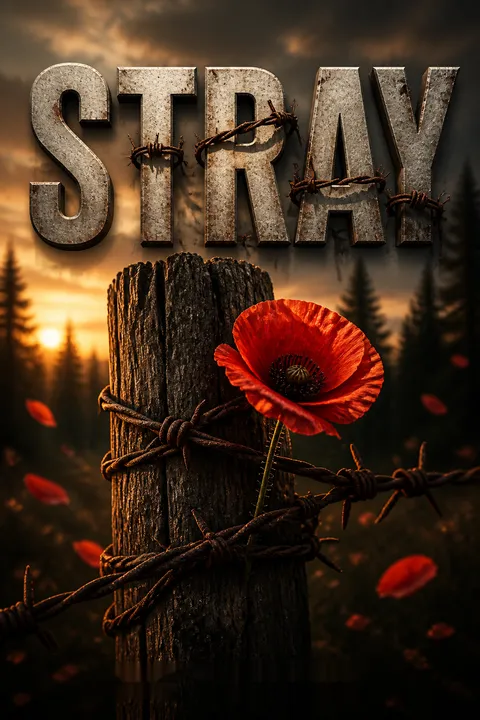


Plot Summary
Prologue
Ozzy is held naked and chained outside a remote cabin, where Hugh hoses her down before Patrick prepares to assault her. A spiked collar has torn the skin around her throat, but the men blame her attempts to escape and threaten her with the freedom visible beyond the cabin window.
Patrick calls her a wild horse, a name that will later become tangled with fear. The scene establishes the cruelty she survives before the story jumps five years ahead, to the day she arrives at a ranch to work as a nurse.
The opening makes captivity a physical system of control: a chain restricts Ozzy’s movement, the collar turns resistance into injury, and even the view of the outside becomes part of her torment. Her captors rename her as an animal to deny her personhood, while their language of discipline disguises deliberate violence. The jump forward creates suspense without making survival feel simple. Ozzy has escaped the cabin, but the scene establishes that the body can leave a prison before the mind has learned it is safe.
The Nurse Meets the Rowes
Five years after surviving captivity, Ozzy Davenport takes a live-in nursing job at the Rowe ranch, where she will care for Morris, the family patriarch dying of cancer. She meets his sons Carter, Jackson, and Jensen by kicking Carter into the mud when he tries to touch her. Jackson objects to her sharp tongue and conspicuous clothes, while Ozzy makes clear that her job is care, not pleasing the men.
The ranch’s open fields initially delight her, until the window in her bedroom faces the tree line and triggers a flash of terror. She steadies herself, meets Morris, and trades insults with him until his long-muted humor returns. Jackson notices the change, though he does not yet understand it.
Ozzy enters the ranch as a professional, but everyone initially reads her appearance as a challenge or invitation. Her forceful boundary with Carter is not flirtatious sparring; it is a practical attempt to control contact in a house full of unfamiliar men. Morris responds differently because he meets her through humor rather than inspection. His laughter gives Ozzy a first foothold in the household, while the bedroom window reveals how quickly a beautiful landscape can become a site of threat.
A Chain Recognized
When Leroy, the Rowes’ aggressive goat, corners Jackson’s mother, Ozzy approaches without the rope Jackson plans to use. She offers the frightened animal an apple and lets him choose to come close, then leads him outside. Jackson learns that Leroy was dragged by a chain as a kid, and Ozzy reacts with such force that the connection is unmistakable.
Later, while Morris struggles to eat and lashes out in frustration, Ozzy refuses to treat him like a burden. She tells him how a stranger’s drink at a bar led to her kidnapping, months of sexual assault, and a spiked collar that left scars. She covered those marks with tattoos. Morris receives the truth without pressing her for more.
The goat scene translates Ozzy’s private history into an action Jackson can witness: she recognizes fear beneath aggression because she knows what coercion does to a body. Her approach contrasts with the ranch’s instinct to restrain an unruly animal. Morris, meanwhile, offers a form of care that does not demand disclosure as payment. Ozzy chooses what to tell him and when. The scene begins her relationship with the Rowes through an ethic of consent, not a sudden cure for trauma.
The Tornado Run
As a severe storm hits, Ozzy helps Dorothy up the slick porch steps, then hears Leroy crying in the field and runs back outside. Jackson follows, injures his leg when a falling branch strikes him, and orders her toward the house. She ignores him long enough to get Leroy into a pole barn, then learns Jackson’s dogs, Rocky and Bear, are still exposed to the storm.
Ozzy finds Rocky tangled in chicken wire, cuts her hand freeing him, and carries the dog back as hail pelts them. After Jackson stitches his own leg, she refuses to let him retrieve the dogs himself. A tornado warning sends the family to the cellar, but Ozzy stays with Morris so he will not face the storm alone.
The storm turns Ozzy’s care into risky, visible labor. She makes choices for animals and people without asking permission, but the narrative distinguishes that urgency from the coercion she has suffered: her actions protect rather than possess. Jackson’s repeated attempts to command her cannot contain her, yet his injury also exposes how little control anyone has in the storm. Her decision to remain with Morris gives him companionship when the rest of the family must seek shelter.
The Truck Door Opens
After the storm, Jackson drives Ozzy toward town because her battered Volkswagen needs work. Being trapped in the cab with a man brings on a panic attack, and she gets out to vomit beside the road. Instead of forcing her back in, Jackson offers her the keys and lets her drive. She explains that confinement and powerlessness frighten her, and he promises not to touch her without permission.
On a later trip, town gossip Dean secretly photographs her in a shop. Jackson discovers the images, deletes them, and breaks Dean’s phone camera after realizing Ozzy had been trying to escape unwanted attention when he previously mocked her clothes. His apology does not erase the earlier insult, but his actions begin to change what she expects from him.
Jackson’s meaningful change is behavioral, not rhetorical. He first misreads public attention as something Ozzy invites, then recognizes that his assumption repeated the town’s judgment. On the roadside, he responds to panic by returning control to her rather than demanding trust. The truck becomes a small but consequential test: safety is not proved by his good intentions alone, but by his willingness to stop, offer a choice, and accept that her fear is real.
A Name in the Woods
One night, Ozzy hears a voice from the tree line call her by the name Patrick used during captivity. Convinced her captor has found her, she bolts from the house and runs into the woods, where roots catch her foot. Jackson finds her shaking and fighting him off because she believes he is Patrick. He keeps his distance, speaks calmly, and asks permission before freeing her.
When she recognizes him, she takes his hand and admits she cannot sleep in the bedroom with the exposed window. Jackson moves her to a downstairs room without demanding an explanation. The next day, she avoids him, but he does not pursue her with questions. His restraint allows the first fragile trust to remain intact.
The flashback is not a chosen memory but a collapse of time: a voice turns a present-day ranch into the site of captivity. Jackson’s response matters because he does not treat recognition as the price of rescue. Asking before touching her and accepting her request to change rooms returns small decisions to Ozzy at the moment her body has lost its sense of the present. His silence afterward is a form of respect, not indifference.
Betty and the Bedside
Theo, the Rowes’ adopted sister, invites Ozzy to meet Betty, the old mare Morris once rode. Jackson teaches Ozzy how to brush her and asks permission before guiding her hand, letting a shared task bring them close without pressure. Soon afterward, Morris falls while trying to reach his urinal, and Jackson sees how frail his father has become.
At a late-night movie, Ozzy tells Morris he has gone months without seeing his family; he admits he hid himself to spare them the sight of his decline. Jackson later loses his temper when Ozzy names his father’s impending death, then sits outside her locked door and accepts her hand through the gap. Grief, not anger, is what neither can yet say aloud.
Betty and Morris reveal two forms of loss before either is resolved. The mare connects the old man to the capable rancher he remembers being, while his fall makes the cost of hiding visible to Jackson. Ozzy understands that care includes helping a person remain part of family life, not merely keeping him comfortable. Jackson’s hand through the door is an early act of vulnerability, but his anger shows how hard it is for him to accept help when he cannot repair what is happening.
A Hug Without Hands
At the Spurs, Beau, the former friend who betrayed Jackson’s older brother, grabs Ozzy’s wrist despite her refusal. Jackson pulls her away and takes her outside, where her fear overwhelms her. To offer comfort without trapping her, he fastens his own belt to a truck hook and restrains himself, allowing Ozzy to approach and hug him on her terms.
She tells him she was kidnapped and abused, then later kisses him after waking from a nightmare. A voice from the past interrupts the kiss, and she flees the ranch. Her memories return to Adam, a young man among her captors who gave her a chance to escape; gunshots followed her flight. At dawn, Ozzy comes back, and Jackson admits how frightened he was that she would not.
The truck scene makes consent tangible: Jackson deliberately gives up the ability to reach for Ozzy, while she chooses whether to cross the space between them. Beau’s grip has made ordinary touch feel dangerous, so comfort must be designed around her agency. The interrupted kiss exposes a second conflict. Ozzy wants intimacy, but memory can seize the present without warning. Returning the next morning is not proof that she is healed; it is a choice to risk staying.
The Ranch Gets Crowded
When Jensen’s appendix ruptures, Ozzy recognizes the emergency and gets him to surgery, where he recovers. On the drive home, she tells Jackson that she has always run from attachment and is tired of being afraid; he admits he wants her, and she agrees to keep trying with him.
Their tentative closeness is soon tested when Carter’s former hookup leaves his three-year-old son, Wyatt, at the ranch with a note. Carter panics and initially rejects the possibility that the boy is his.
Ozzy helps calm Wyatt and later tends to him when fever and dehydration frighten Carter. When Wyatt calls Carter his father, Carter stays beside him and begins to accept the responsibility. The child’s arrival forces the Rowes to care for someone who cannot explain what he needs.
The two crises expose different forms of fear. Jensen’s emergency gives Ozzy a role she knows how to inhabit, while her conversation with Jackson asks her to risk a self she has learned to protect through distance. Wyatt then unsettles Carter’s practiced carelessness. His first response is denial, but the child’s dependence makes avoidance harder to sustain. Ozzy’s nursing skill helps the family, yet her tenderness also demonstrates that expertise and emotional investment can coexist.
An Apology in Public
As Morris weakens, Ozzy insists that he should leave his upstairs room and see the ranch and his family. Jackson resists, frightened by how much illness has changed his father, then lashes out at Ozzy when she confronts his avoidance. Derek sends Jackson away to cool down. At the Spurs, Jackson finds Ozzy and apologizes on his knees in front of the crowd, taking her earlier demand that he beg literally.
She tells him she had already forgiven him, but fears the closeness they are building. He admits that he is scared of losing his father and of what he feels for her. They kiss, agree Morris should be moved downstairs after the fair, and Jackson asks Ozzy on a date. She accepts.
Jackson’s public apology is theatrical, but its emotional work is specific: he does not defend his outburst or ask Ozzy to soothe him first. His honesty lets her distinguish fear from rejection, while her forgiveness does not erase the need for change. The conversation also links the romance to the family’s central crisis. Their next step together depends partly on whether Jackson can face his father’s decline rather than letting fear make decisions for everyone.
A Parking Lot Picnic
Jackson takes Ozzy to an abandoned drive-in, away from both crowds and the tree line. He has arranged blankets, lights, food, and a small fire for making s’mores, with help from her friend Indy. Ozzy relaxes enough to joke with him, share stories about her childhood, and explain that she used to work as a trauma nurse.
When she asks him to have sex, Jackson checks that she is sure and asks what kinds of touch are off limits. Ozzy remains frightened, but she tells him she wants to continue. They move slowly, keep looking at each other, and communicate throughout. The experience is not a cure for her trauma, but it gives them a memory of desire shaped by choice rather than force.
The date’s setting is a practical expression of attention: Jackson removes the two conditions Ozzy has identified as frightening, crowds and woods, instead of asking her to overcome them for romance. Their first sexual encounter matters because she initiates it and sets limits, while he treats communication as part of desire. The scene does not imply that consensual intimacy cancels past violence. It shows that pleasure can coexist with fear when Ozzy retains control.
The Brand Beneath
At the trade fair, a ranch hand calls Ozzy a name Patrick used for her. The word triggers a flashback, and she collapses before she can leave for supplies. When she wakes, Ozzy shows Jackson the crude brand her captors burned into her skin and explains what the name means. Jackson reassures her and kisses her scars, but later searches the internet for trial records without her permission.
He finds graphic evidence and an interview describing the assaults, including abuse by a police officer. Wanting to understand what she endured, he has instead taken control of information she had not chosen to share. When he confesses this to Morris, Ozzy overhears him and feels the trust she had offered turn into another violation.
The brand makes captivity legible in a way Ozzy’s chosen tattoos cannot fully conceal. Yet the deeper breach comes from Jackson’s search: his motive is protective, but curiosity and fear lead him to seize knowledge she had reserved for herself. The distinction matters. Love does not automatically make access ethical. For Ozzy, privacy is part of bodily autonomy, so Jackson’s attempt to understand her becomes a repetition of the powerlessness he wants to oppose.
The Poppy Apology
After Ozzy confronts Jackson, Theo punches him when he tries to force a conversation. Morris comforts Ozzy, recognizes her love for Jackson, and refuses to excuse the invasion of her privacy. Jackson backs away instead of demanding forgiveness. He and his brothers move Morris into the living room, where he can see the ranch, and begin repairing Derek’s old cottage as a home for Ozzy.
Jackson later brings her a silver poppy pendant and apologizes without claiming his intentions made the harm harmless. Ozzy accepts the gift and chooses to keep caring for Morris. As the couple cautiously reconnects, Jackson joins her and Morris for a movie night, then asks her on a proper date. The repaired trust remains a choice, not an entitlement.
The family responds to Jackson’s wrongdoing in two distinct ways: Theo enforces a boundary physically, while Morris helps Ozzy name both her anger and her attachment. Neither response absolves Jackson. His distance and apology matter because they leave the decision with her. Moving Morris downstairs and preparing a cottage also translate care into concrete labor. The pendant becomes meaningful not as a romantic solution, but because Jackson offers it after he has stopped insisting that love should excuse his actions.
One Last Ride
With Morris downstairs, the family gathers around him more often, and Ozzy’s movie nights become part of their routine. Jackson takes his father outside in a wheelchair so he can see the newborn chicks and visit Betty, the mare he once rode daily. Morris strokes Betty as the sun sets, while Jackson finally apologizes for keeping him hidden upstairs.
Morris tells his son he is proud of the ranch he has kept running. Later, Jackson sees that his father has died beside the horse. Ozzy reaches them, confirms the loss, and then holds Jackson as he collapses. She also comforts Dorothy and helps the family through the immediate aftermath. Her grief is personal too: Morris had become the closest thing to a father she had known.
Morris’s final outing resolves the conflict that began with Jackson’s avoidance. He sees the ranch, his horse, and his son not as a patient hidden from life but as a member of the family. The goodbye gives Jackson a memory shaped by presence rather than regret. Ozzy’s grief shows that caregiving has made her vulnerable to loss, but it has also given her belonging. When she holds Jackson, she offers the same chosen closeness that he once offered her.
Snow Outside Her Door
After Morris’s funeral, Ozzy accepts work at the local women’s clinic, while Jackson and the family finish preparing her cottage. During a snowstorm, a patient’s husband shoves his wife and grabs Ozzy by the scrubs. Jackson intervenes and knocks the man down, but the encounter sends Ozzy into a flashback.
She tells Jackson to leave her alone, unable to manage a man’s closeness while her fear is surging. Theo stays with her, and Jackson waits outside rather than forcing his way in. When Ozzy learns he is still there, she brings him tea and asks him to come back. They reconnect gently, and she asks him to live with her permanently. He agrees.
The clinic incident demonstrates that safety in one relationship cannot prevent a new assault from activating old danger. Jackson’s intervention protects Ozzy physically, but his presence is not automatically comforting while she is dissociating. His decision to wait outside, guided by Theo, is a crucial contrast with coercive control: he does not make his need to help more important than her request for space. Ozzy’s invitation to return restores agency and turns the cottage into a home she chooses to share.
Poppies and a Promise
As the ranch settles into winter, Ozzy becomes part of the family’s ordinary life, helping with animals, caring for Wyatt, and joining the Rowes’ holiday traditions. Jackson tells her he loves her while they play in the snow, then asks her to marry him. Ozzy answers with the certainty she once could not imagine giving anyone.
They work together on the family’s gingerbread ranch, turning Morris’s absence into a shared ritual rather than a competition. After Christmas, Jackson takes Ozzy to Derek’s tattoo shop, where Derek covers the brand with red poppies. Jackson also gets a small poppy tattoo with a word that has become their private promise. Ozzy leaves with her fiancé, chosen family, and a puppy on the way.
The proposal is not presented as a rescue that completes Ozzy, but as a future she has become able to choose. Her work, home, and relationships give her a life beyond the role of survivor, while the gingerbread ritual makes grief part of family continuity rather than an obstacle to joy. Covering the brand does not erase what happened; it changes what she sees when she looks at her body. Jackson’s matching tattoo makes the promise mutual rather than possessive.
Epilogue
After Christmas, Ozzy visits Derek’s tattoo shop with Jackson and Indy. Derek covers the brand her captors burned into her with red poppies, leaving the memory intact but changing the mark she must see. Jackson gets a small matching poppy on his wrist, paired with a word that echoes the promise he has kept throughout their relationship.
Ozzy leaves the shop engaged, surrounded by people she trusts, and excited about the German Shepherd puppy Jackson has arranged for her. The final image is not of a scar disappearing, but of Ozzy deciding what will stand beside it.
The cover-up offers a deliberately limited form of repair. The poppies do not reverse the assault or claim that art can make trauma vanish; they give Ozzy a chosen image where another person imposed a mark. Jackson’s tattoo makes their bond visible, but it does not replace her own act of reclamation. The puppy and the life waiting at the ranch extend the ending beyond romance into daily care. Ozzy’s future is not proof that every wound is healed. It is evidence that the wound no longer gets to define every choice.
Analysis
Stray treats recovery as a practice of restoring choice, not as a transformation from damaged to whole. Ozzy’s trauma appears through specific interruptions: the window facing trees, a man in a confined truck, an unwanted grip, and a name that drags the past into the present. These triggers make clear that safety cannot be established by scenery or good intentions alone. It has to be demonstrated through behavior, especially the willingness to stop, ask, and accept refusal.
Jackson’s arc tests the difference between protection and control. He is accustomed to solving problems for the ranch, so his first instincts are to command, fix, and gather information. His most consequential failure comes when he searches for Ozzy’s records without her consent. The violation matters precisely because he loves her and believes his motive is care. The story refuses to treat affection as automatic permission; Jackson must acknowledge harm and allow Ozzy to decide whether trust can be rebuilt.
The ranch provides a counterpoint to the violence of captivity. Its routines require labor and interdependence, and its animals reveal how fear can become aggression when a vulnerable creature has been hurt. Ozzy’s gentleness with Leroy is not sentimental decoration. It is an expression of recognition, and it changes how Jackson understands both the goat and the woman caring for him. Morris’s illness extends that ethic to the family: care means making room for a person’s wishes and presence, not hiding him to spare others discomfort.
The ending offers hope without claiming cure. Ozzy accepts a job, a home, a family, and marriage while continuing to live with memories that may still return. Covering the brand changes the image on her skin, not the facts of her past. The story’s most durable promise is therefore modest and demanding: people can help one another feel safer, but they cannot take ownership of another person’s healing.
Review Summary
Stray by D.J. Krimmer receives overwhelmingly positive reviews (4.63/5 stars) for its emotional depth and complex characters. Readers praise Ozzy, a trauma nurse with PTSD, and Jackson, a grumpy rancher, whose relationship develops through patience and understanding. The found family dynamics, particularly Ozzy's bond with Jackson's dying father Morris, resonated deeply with readers. Reviewers appreciated the authentic portrayal of trauma healing, mature communication without third-act breakup, and excellent audiobook narration by Maxine Mitchell and Sean Masters. Multiple readers cited it as a top book of the year despite heavy trigger warnings.
People Also Read





Characters
Ozzy Davenport
The guarded nurseOzzy is a highly capable nurse whose sharp humor and striking tattoos help her control how strangers approach her. She has survived severe violence and lives with PTSD, panic, and an instinct to flee when she feels trapped. Her competence is real, but it does not make her invulnerable; ordinary things such as a window facing trees, a voice, or being touched without warning can overwhelm her. She values directness and boundaries, and she is especially attentive to fear in animals and patients who cannot easily speak for themselves. Her central tension is between the safety of distance and the human need to be known. Trust, for Ozzy, must be built through repeated choices.
Jackson Rowe
The duty-bound rancherJackson is the hardworking son who keeps the Rowe ranch running and assumes responsibility for his mother, brothers, father, and animals. His discipline makes him reliable, but it also encourages him to treat uncertainty as a problem he should solve alone. He is protective and practical, sometimes to the point of confusing care with control. Ozzy challenges both his assumptions about women and his habit of retreating from painful realities. His affection becomes meaningful when he listens, asks before touching, and accepts that her boundaries are not obstacles to overcome. Beneath the gruffness is a man who wants to be dependable, even when he does not know what dependable should look like.
Morris Rowe
The teasing patriarchMorris is the ailing father whose blunt humor conceals a deep concern for his wife and sons. Cancer has narrowed his world, and he sometimes withdraws because he does not want his family to witness his decline. Ozzy refuses to reduce him to a patient, meeting his irritability with banter while still providing practical care. Their rapport gives him companionship and gives her a rare experience of being cared for without being interrogated. Morris understands that love can include difficult truth, and he is willing to challenge his sons when fear keeps them from showing up for one another.
Dorothy Rowe
The family’s steady centerDorothy is Morris’s wife and the mother who keeps the Rowe household connected while recovering from a broken hip. She is warm but not passive, capable of reprimanding her grown sons and continuing the work of the ranch. Her concern for Morris is shaped by both love and the practical demands of caring for him. She welcomes Ozzy without expecting her to fit a conventional image, and she notices the hurt beneath Ozzy’s defensive humor. Dorothy’s steadiness gives the family a model of affection that can be both tender and firm.
Carter Rowe
The restless charmerCarter is Jackson’s flirtatious brother, quick with jokes and accustomed to keeping relationships casual. Ozzy’s refusal to indulge his advances establishes clear boundaries between them. His confidence falters when fatherhood arrives without warning, exposing how little preparation his carefree habits have given him. Carter is not without tenderness, but he initially responds to responsibility with panic and denial. His family’s support and the child’s needs challenge him to become more dependable than the man he has been.
Jensen Rowe
The shy younger brotherJensen is a quiet, sensitive rancher whose anxiety makes crowds and social pressure difficult to manage. Jackson has long protected him and even learned sign language with him so they could communicate when speaking became hard. Jensen cares deeply about Niamh but struggles to approach her, often retreating into awkwardness that others mistake for disinterest. His gentleness contrasts with the more forceful Rowe brothers, and his need for patience is familiar to Ozzy, who recognizes that fear can look like distance.
Theo Hitchers
The adopted firecrackerTheo is a tough, athletic ranch worker whom the Rowes regard as a sister. She jokes boldly, works hard, and is unafraid to confront the men she loves. Her warmth helps Ozzy enter the ranch’s social life without having to become someone else. Theo also recognizes when support means enforcing a boundary rather than smoothing over conflict. Her combination of humor, loyalty, and directness makes her a valuable ally to Ozzy and a trusted part of the Rowe family.
Derek Rowe
The blunt older brotherDerek is Jackson’s older brother, a tattoo artist who lives away from the ranch. His marriage ended after a betrayal involving his closest friend, leaving him wary of intimacy and protective of his family. He is blunt enough to confront Jackson when grief turns into cruelty, and he offers practical help when the ranch is under strain. Derek’s perspective is shaped by having already lost a relationship he thought would last, so he recognizes the cost of avoiding hard conversations.
Indy
Ozzy’s distant best friendIndy is Ozzy’s closest friend, connected to her largely through calls and messages. She helped arrange the ranch job and remains a source of encouragement when Ozzy questions whether she can trust Jackson. Indy is affectionate, energetic, and willing to speak plainly, though distance limits how much she can intervene in Ozzy’s daily life. Her friendship shows that support does not always require physical proximity; consistent attention can still help someone imagine a future beyond isolation.
Niamh
The hopeful Irish waitressNiamh is an Irish waitress and hair stylist who has made a home in the Rowes’ town. She is lively and welcoming, quickly drawing Ozzy into local social life. Niamh has feelings for Jensen, but his anxiety and reserve make it difficult for her to know whether he is interested. She is not simply a romantic possibility for him; she has her own hopes and choices, and her friendship gives Ozzy a companion outside the Rowe household.
Wyatt
Carter’s young sonWyatt is a young child whose sudden presence changes the emotional weather of the Rowe household. He is vulnerable, expressive, and dependent on the adults around him, especially when he becomes ill. His needs challenge Carter to move beyond the identity of a carefree bachelor, while Ozzy’s nursing skills help him feel safe. Wyatt’s role is not to repair the family, but to make its responsibilities impossible to ignore.
Patrick
A captor from Ozzy’s pastPatrick is one of the men responsible for Ozzy’s captivity. His cruelty and the name he uses for her become powerful triggers in her present. He represents the deliberate use of fear and humiliation to control another person.
Hugh
A violent accompliceHugh helps confine and abuse Ozzy during her captivity. He enforces the captors’ control through physical force and treats her attempts to escape as justification for further violence. His presence contributes to the danger embedded in Ozzy’s memories.
Adam
A conflicted young manAdam is a young man connected to the period of Ozzy’s captivity. Unlike the men around him, he is visibly troubled by the violence and the role he has been asked to play. His moral uncertainty makes him a revealing contrast within an otherwise coercive environment.
Plot Devices
Ozzy’s tattoos and scars
A body reclaimedOzzy’s tattoos initially read as bold self-expression, but many also cover scars left by captivity. They let her decide what strangers see while reminding the reader that concealment is not the same as forgetting. The brand her captors burned into her skin makes this tension especially stark. When Derek later covers it with poppies, the new image does not erase her history; it gives her a chosen mark in place of one imposed on her. The tattoos track a gradual shift from hiding injury to deciding how her body will be seen.
The word Brumby
A conditioned triggerThe name Patrick gives Ozzy during captivity returns in the present through voices and accidental repetition. Each recurrence collapses the distance between the ranch and the cabin where she was held, causing flashbacks that disrupt her sense of safety. The trigger connects the prologue’s violence to later scenes without implying that Ozzy can simply choose not to react. Its force also explains why Jackson must learn to listen carefully to the language around her. The word becomes one of the clearest measures of how trauma persists after physical escape.
Leroy and Betty
Trust made visibleThe ranch animals give Ozzy and Jackson a way to see care enacted before they can easily discuss it. Leroy’s aggression follows earlier abuse, and Ozzy approaches him with patience rather than restraint. Betty connects Morris to the active ranch life he has lost. These animals are not merely picturesque details: Leroy helps Jackson recognize Ozzy’s sensitivity to coercion, while Betty gives father and son a reason to face the ranch together. Their needs make trust concrete through feeding, grooming, rescue, and companionship.
Permission before touch
Intimacy with agencyJackson’s repeated practice of asking before touching Ozzy becomes a structural counterpoint to the control she has experienced. The method ranges from offering her the truck keys to asking whether he may hold her hand or guide her while grooming Betty. In moments of crisis, he sometimes missteps, but his growth depends on respecting the answer rather than assuming good intentions are enough. The device allows intimacy to develop through small, observable choices instead of a sudden declaration that Ozzy is healed or that love removes her fear.
The poppy pendant
A chosen promiseJackson gives Ozzy a silver poppy pendant as an apology and a sign that he has been paying attention to what matters to her. Its meaning grows as she becomes able to wear it comfortably and as poppies later appear in the tattoo that covers her brand. The flower links remembrance to forward movement: Ozzy does not have to deny her past to claim a future. Jackson’s own small poppy tattoo makes the symbol mutual, while the meaning remains grounded in Ozzy’s choice to accept the gift and reclaim her body.
Download PDF
Download EPUB
.epub digital book format is ideal for reading ebooks on phones, tablets, and e-readers.








