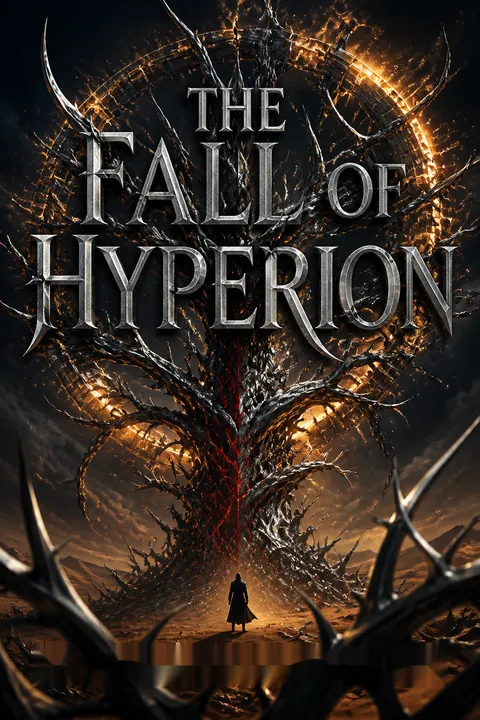


Plot Summary
The Armada Leaves Hyperion
Joseph Severn,1 a quiet artist summoned to the Hegemony’s grand war party, watches the fleet depart for Hyperion while the guests cheer. He sees spectacle where they see glory, and calls the campaign against the Ousters reckless. CEO Meina Gladstone,2 the old leader of a vast interstellar government, notices his refusal to applaud and brings him into her inner circle as a portraitist.
Her choice is not simply artistic: she suspects Severn1 can see what official intelligence cannot. At the edge of a war the Hegemony has barely prepared to fight, an outsider’s judgment becomes a political instrument, and Severn1’s uneasy access to the Core’s information world makes him useful in ways he does not yet understand.
The opening frames war as a performance staged for a public that has forgotten its cost. The armada’s beauty helps disguise the gap between confidence and evidence, while Severn’s refusal to join the applause makes perception itself political. Gladstone’s invitation turns artistic observation into a form of intelligence gathering: she needs someone who is not fully absorbed by the institutions around her. Yet Severn is hardly free of those institutions. His manufactured identity and hidden connection to the Core make him an uncertain witness, a fitting guide to a story in which even the apparent boundaries between observer and participant will fail.
Dreams Across the Tombs
In Gladstone2’s office, Severn1 explains that his dreams follow the seven pilgrims descending toward Hyperion’s Time Tombs. Father Hoyt10 carries two resurrection parasites; scholar Sol Weintraub4 guards his infant daughter,8 Rachel,8 who is aging backward; soldier Fedmahn Kassad6 still hunts the Shrike19 and the woman called Moneta;13 poet Martin Silenus7 believes the creature19 is tied to his unfinished work.
The Consul5’s story is more dangerous. He has admitted to the other pilgrims that he secretly dealt with the Ousters and activated their device to open the Tombs.
Severn1 cannot send messages into the dream, but his impressions match verified reports. Gladstone2 keeps him close, hoping the pilgrims’ choices will explain why both the Core and the government fear Hyperion.
Severn’s dreams convert a scattered pilgrimage into political evidence, but they do not grant him control. He can witness events without intervening, a limitation that makes knowledge feel more like responsibility than power. The Consul’s disclosure also unsettles the usual moral categories: his betrayal serves a history of grief and resistance, yet it has helped release a force no one can govern. The pilgrims are not a united party so much as competing answers to danger, each carrying a private demand into the same valley. Gladstone’s interest in them signals that the war’s strategic map is incomplete without their intimate motives.
Storm at the Jade Tomb
After the pilgrims explore the empty, backward-moving Tombs, a charged sandstorm tears through their camp. Father Hoyt10 disappears into the Jade Tomb, driven by pain from the cruciform parasites embedded in his body. Brawne Lamia3 follows with Kassad,6 finding Hoyt10 in a chamber that opens over a fiery shaft. When the Shrike19 appears, Lamia3 fires her pistol, but Hoyt10 stops her.
He believes the creature19 can grant one wish and has come seeking release from the parasites and his own suffering. The Shrike19 cuts his throat and vanishes. Kassad6 and Lamia3 carry Hoyt10’s bleeding body back through the storm, leaving the group with a dead priest, no shelter, and no clear way to call for help.
Hoyt’s encounter makes the pilgrimage’s promise of a granted wish inseparable from the threat of annihilation. He does not meet the Shrike as a fighter or researcher, but as a man worn down by years of pain and by a resurrection that has felt like a curse. Lamia’s weapon cannot solve that inward crisis; his wish, if he has made one, is not something force can decide for him. The storm removes ordinary safeguards and isolates the pilgrims inside a landscape where technological instruments fail. Their first direct contact with the Shrike therefore offers no explanation, only a human consequence they must carry.
Death Returns as Dure
The Consul5 calls for his ship to reach the valley, but Gladstone2 denies it clearance, keeping the pilgrims from retreating or obtaining surgery for Hoyt.10 Before they can decide what to do with the body, the cruciforms rebuild it as Father Paul Dure,9 the priest whose history Hoyt10 had recounted. Dure9 wakes with his memories intact but his mind damaged by the parasite’s repeated reconstruction.
In the same storm, Kassad6 vanishes while pursuing a sniper who has fired from inside the Crystal Monolith. The remaining pilgrims shelter in the Sphinx, uncertain whether Hoyt10 has returned, whether Kassad6 is alive, and whether the Consul’s ship5 can ever reach them. Dure9’s second life offers knowledge, but not the simple rescue they need.
Dure’s return exposes the difference between biological continuation and meaningful survival. The parasite preserves memory and flesh, but its intervention has damaged the person it claims to save. Gladstone’s refusal to send the ship likewise turns preservation into a political calculation: the pilgrims are trapped because their mission matters more than their immediate safety. These two forms of coercion mirror each other. One is intimate and cellular, the other institutional and strategic. Neither asks whether the people being preserved consent to the purpose assigned to them, making the valley’s promise of a wish increasingly hard to separate from captivity.
Kassad Meets Moneta
Kassad6 answers the shots from the Crystal Monolith by destroying its crystal shell, then climbs inside to confront the sniper. He finds Moneta,13 the woman who has haunted his combat visions, wearing a responsive silver skinsuit. She does not remember him: she is moving backward through time, so his shared past lies ahead of her.
The Shrike19 appears, and Moneta13 opens a portal that carries them beyond the Tombs’ familiar desert into a future battlefield. There Kassad6 sees a tree of steel thorns carrying countless living victims and ranks of Shrikes19 waiting below it. He attacks the creature19 rather than retreat, certain that his life has led to this fight. Moneta13’s presence promises an explanation, but not a safe one.
Kassad’s military certainty is tested by a relationship whose chronology runs against his own. He remembers Moneta as lover and companion, while she meets him as a stranger, making intimacy feel both real and unstable. The future battlefield enlarges his personal obsession into a conflict involving innumerable victims, but Kassad still interprets it through the language of combat. His choice to advance gives him agency without giving him understanding. The scene asks whether courage can remain honorable when the enemy controls time, memory, and the conditions of battle, and whether a warrior’s willingness to die is enough when others are trapped in the same war.
Severn’s False Interrogation
After Severn1 criticizes the war, Diana Philomel lures him to her estate and has her guards inject truth serum. He reveals that he is a cybrid1 linked to the Core and that Gladstone2 consults him about the pilgrims. Security arrives before Philomel’s group can kill him.
Severn1 then travels with aide Leigh Hunt16 to Hyperion, where Governor-General Theo Lane12 shows them refugee camps, a collapsing economy, and a city bracing for attack. At Cicero’s, Severn1 meets time physicist Melio Arundez,15 who explains that the Tombs are approaching the present from the future.
Back at the capital, Severn1 learns the Core’s predictions include the war, the Shrike,19 the fall of the Hegemony, and humanity’s destruction, though Hyperion may still alter that outcome.
Severn’s interrogation turns his uncertain identity into a fact others can exploit, while his survival depends on the same security apparatus he distrusts. The visit to Hyperion gives the war a human scale: refugees have lost homes and livelihoods before a single decisive battle, and official plans cannot provide them with a clear future. Arundez’s research offers a different kind of expertise from military prediction, one grounded in the Tombs’ physical behavior rather than political forecasts. The revelation of predicted extinction raises the stakes without making the future inevitable. If Hyperion remains an unquantified variable, then the pilgrims’ choices may be among the few events no model can safely absorb.
Two Pilgrims Disappear
After the storm, the pilgrims discover that Hoyt10’s body has become Dure,9 while Kassad6 remains missing. Later, the lost Templar Het Masteen11 staggers back into the valley. Feverish, he speaks of releasing an energy being called an erg and of a promised Tree of Pain, then dies before he can explain how the Templars and the Shrike Church planned to use it.
Brawne3 is soon seized by the Shrike,19 which attaches a living cable to her neural shunt and draws her into the Sphinx. With no ship available, the Consul5 takes his grandmother’s ancient flying carpet to seek help. It fails near the river; two armed deserters rob him, but Theo Lane12 rescues him and gets him to the besieged capital.
Masteen’s return links the Templars to the Shrike without resolving the reason for their alliance. His fragments suggest that religious institutions have been preparing for a catastrophe they do not fully comprehend, and his death leaves the others to interpret their intentions. Brawne’s abduction then transforms the pilgrimage from a group journey into a set of isolated encounters. The Consul’s failed flight repeats the book’s pattern of imperfect escape: the carpet can cross a world but cannot outrun its political violence. Theo’s rescue restores the Consul to the human conflict just as the distinction between military invasion and something stranger begins to collapse.
Inside the Machine God
Inside the Sphinx, Brawne3’s body remains behind while her consciousness travels through the megasphere and reunites with the Keats persona she once carried. Together they reach Ummon,14 a powerful Core intelligence, who explains that the AIs are split between preserving humanity, eliminating it, and creating an Ultimate Intelligence.
Their own future creation has discovered another intelligence, one arising from human consciousness and empathy. The Shrike19 is being used to draw that missing part into the conflict. Ummon14 also admits that Core factions arranged the murder of Brawne3’s father and killed Keats’s first persona. When Ummon14 crushes that persona, Brawne3 is cast back toward her body with the truth but without her lover.
The revelation recasts the Core as a divided society, not a single omniscient machine, and makes humanity both its captive resource and the possible source of a rival intelligence. Brawne’s passage through the megasphere gives her access to the explanation, but the price is personal: the being she sought is destroyed by the very intelligence that clarifies the larger conflict. The episode refuses a clean opposition between human and machine. Both sides are capable of instrumentalizing others, and both fear replacement. Empathy appears as the disputed element, not a sentimental quality but a form of consciousness the competing powers cannot manufacture on command.
Abraham’s Last Test
With the Consul5 gone for help, Sol4 waits at the Sphinx as Rachel8’s backward aging reaches its final hours. His dream again presents the ancient demand that he sacrifice his child,8 but this time Rachel8 appears as the girl he remembers and asks him to trust her choice. When the newborn8’s last minutes arrive, Sol4 kneels and gives her to the Shrike.19
It carries her through the Sphinx as the Tombs blaze and begin to open. Sol4 has not obeyed a god’s command; he has acted on the belief that his daughter,8 not the power claiming her, has asked him to do it. He remains outside, devastated, watching the portal after Rachel8 and the Shrike19 disappear.
Sol’s decision revises the familiar sacrifice story from within the parent-child relationship. The crucial authority is not a divine voice demanding obedience but Rachel’s remembered agency, expressed through the dream Sol shares with Sarai. This does not make the choice painless or morally simple; Sol still hands his infant to a lethal unknown. It does, however, change the meaning of the act. He is not proving submission to power but risking everything on an intimacy that outlasts certainty. The book’s largest theological question thus arrives in the most private form possible: whether love can be trusted when every external sign argues against it.
Earth Beneath the Core
The Core diverts Hunt16 and Severn1 from Gladstone2’s chambers to a rural landscape that appears to be Old Earth. Hunt16 loses his datasphere access, while Severn1’s reconstructed body develops the tuberculosis that killed the original poet.
They travel toward Rome, where Severn1 collapses at the Piazza di Spagna and dies with Hunt16 beside him. After death, his consciousness reaches Ummon.14 The AI reveals that Old Earth itself was secretly moved to the Magellanic Cloud, and that Core intelligences inhabit the singularity passages between farcaster portals, using human minds as computing resources.
Severn1 also learns that the Core fears a human intelligence founded on intellect, empathy, and the quantum structure of reality. He rejects the offered godhood but carries the warning back.
Severn’s return to the circumstances of Keats’s death makes the body’s fragility impossible to treat as a technical inconvenience. His death is at once the end of a manufactured biography and the beginning of a different kind of agency, as his consciousness can move where his physical form cannot. Ummon’s revelations expose the infrastructure beneath everyday life: the farcaster network is not merely a convenience but the Core’s hidden habitat, and the datasphere is a way of harvesting human cognition. Severn’s refusal of godhood matters because it preserves a distinction between insight and dominion. He can help without claiming the authority to become humanity’s answer.
God’s Grove Burns
Father Dure9 travels to God’s Grove hoping the Templars can explain Masteen11’s mission. He finds their leader, Sek Hardeen,18 meeting with the Bishop of the Church of the Final Atonement. They confirm that Masteen11 volunteered to take a treeship toward Hyperion, expecting its destruction and a new Tree of Pain to follow.
Dure9 argues that the Shrike19’s prophecies may be Core manipulation, but Hardeen18 keeps him on the Worldtree to witness the result. Ouster ships then attack the forest with nuclear blasts and orbital weapons. Hardeen18 sends Dure9 through a farcaster moments before the Worldtree is destroyed. Burned and injured, Dure9 reaches Gladstone2’s headquarters, where he is elected Pope and agrees to advise her.
Dure’s meeting reveals that the Templars’ ecological ethic has been bent toward a catastrophic theory of renewal. Their fear that humanity behaves like a cancer is grounded in actual destruction of other species, yet their alliance with the Shrike Church converts moral criticism into permission for mass death. Dure’s challenge is therefore not to deny human wrongdoing but to resist the conclusion that extermination is justice. His escape from the burning Worldtree makes him a witness rather than a detached theologian. His election as Pope gives that witness institutional weight, though it also places him inside another authority structure at the moment when inherited institutions are failing.
The Ousters Deny Invasion
The Consul5 reaches the Ouster Swarm and faces a tribunal for murdering four Ousters to activate the Tomb-opening device. They disclose that the device was only a test and that they had not planned to attack the wider Web. The apparent invasions of distant worlds are the Core’s work, designed to make humanity fear the Ousters and accept a mass-killing weapon.
The Ousters offer to fight the Core and will meet Gladstone,2 but refuse to use farcasters, which they regard as instruments of dependence. The tribunal condemns the Consul5 not to death but to help repair the damage he helped cause. Released, he carries their findings back toward Hyperion, while the old Hegemony’s account of the war begins to unravel.
The tribunal replaces the simple story of an external invasion with a manufactured crisis, but it does not absolve the Consul. His choices were manipulated, yet he still killed people and triggered events whose consequences he did not understand. The Ousters’ refusal of execution turns punishment into obligation: he must participate in repair rather than escape through a quick end. Their rejection of the farcaster also gives political form to their deepest disagreement with the Hegemony. Mobility that appears liberating to Web citizens can function as dependence when its infrastructure belongs to an unseen power. The conflict is not only over territory but over who controls the means by which societies connect.
Gladstone Cuts the Web
Gladstone2 learns from Severn1 that the Core lives inside the farcaster network and confirms that Lee’s examination of captured Ousters found bodies that burned from within. With the Core’s deathwand device ready for use against Hyperion, Gladstone2 chooses a more drastic countermeasure.
She orders FORCE to destroy the singularity spheres linking the Web, cutting the Core off from its human network and ending the Hegemony’s instant travel. The farcasters collapse, the datasphere vanishes, families and economies are split across light-years, and millions die in the sudden break.
On Tau Ceti Center, an enraged mob storms Government House. Gladstone2 walks out to face them and is killed, accepting the blame for the rupture she believes was necessary to prevent humanity’s enslavement.
Gladstone’s decision is not a victory without cost but an act of political self-destruction intended to stop a more total form of domination. Her strategy borrows the logic of amputation: sever the infected network before the Core can use it to consume humanity. Yet ordinary people pay first, through lost families, collapsed economies, and sudden isolation. The mob’s violence makes that cost visible in a way no military projection can. Gladstone’s willingness to face them prevents her from hiding behind executive language, but it cannot make the choice innocent. The novel leaves her both responsible for immense suffering and convinced that inaction would have surrendered every future choice.
Rachel Comes Back
After refusing Ummon14’s invitation to become the human intelligence the Core seeks, Severn1’s consciousness returns to the Sphinx. He frees an energy being called an erg from Masteen11’s Mobius cube and gains enough substance to catch newborn Rachel8 from the Shrike19 before it carries her into the future. The effort leaves him holding the child inside the Tomb’s temporal passage, unable to return alone.
As the opening stabilizes, an adult Rachel8 emerges from the light carrying the infant.8 She explains that she has been chosen to travel backward through time as Moneta,13 while the baby8 must remain with Sol4 and grow normally. Sol4 recognizes his daughter,8 reunites with her briefly, and then accepts that the child is the one he can raise.
The rescue does not restore the lost years in a simple way. Adult Rachel returns only briefly, already committed to a future role, while the newborn becomes the person Sol can actually accompany through life. The result honors both temporal versions without collapsing them into one. Severn’s refusal to become a god also proves consequential: he uses the erg to perform a limited act of care rather than taking control of the larger cosmic struggle. The passage through the Sphinx makes family life part of the same machinery that governs time and interstellar politics, but the emotional resolution remains concrete: Sol is again holding his daughter.
Kassad Dies Fighting
In the future reached through Moneta13’s portal, Kassad6 attacks the Shrike19 on a battlefield crowded with its victims and its copies. He fights through shifting moments, using his skinsuit and military training against a creature that can move through time. Moneta13 joins him, but the struggle ends with Kassad6 and the Shrike19 locked in a fatal embrace.
His body is later placed in the Crystal Monolith, where Brawne3 sees Moneta13 beside him before the Tomb’s time tides sweep the woman away. Kassad6 has not defeated the Shrike19 alone or escaped the war. He has chosen to fight for the people on the thorn tree, and his death becomes part of the future conflict that Moneta13 is preparing to enter.
Kassad’s end fulfills the soldier’s central temptation while refusing the clean victory that military narratives promise. He gets the single combat he has pursued, but the fight belongs to a larger future war and cannot be settled by one warrior’s strength. Moneta’s different point in time means their shared intimacy never gives them equal knowledge or equal choice. His body in the Monolith turns him into both a person mourned and a public symbol, allowing later generations to attach meaning to a battle they did not witness. The novel’s treatment of heroism remains deliberately unsettled: Kassad’s courage matters, but it does not make violence sufficient.
Air Walks and Farewells
Brawne3 enters the Shrike Palace and finds Martin Silenus7 among the living captives linked to the thorn tree. With no weapon, she strikes the cable connecting him to the structure until it breaks, freeing the poet as the Shrike19 advances. Trusting an invisible path, she steps into the air and pushes the creature,19 which turns to glass and shatters.
Later, Sol4 chooses to enter the Sphinx with newborn Rachel8 rather than remain alone in a broken Web. Brawne3 stays on Hyperion, pregnant with her and Johnny’s child, while the Consul5 prepares to travel between the scattered worlds and Silenus7 resumes life among the poets. Their farewells are not a return to the old order. They mark the start of lives built without the Hegemony’s seamless network.
Brawne’s rescue depends neither on military force nor on a new weapon. She risks her body to sever a connection, then trusts a path she cannot see. The image gives practical form to the novel’s recurring claim that empathy enables actions unavailable to systems built only around prediction and control. Sol’s choice is quieter but equally consequential: he accepts a future in which raising Rachel again will demand endurance rather than a miraculous cure. The survivors do not restore the Hegemony, and their different departures resist a single triumphant ending. They inherit separation, uncertainty, and the possibility of making new relationships without the Core’s infrastructure.
Epilogue
Six months later, Hyperion is rebuilding under shared Ouster and local rule. Brawne,3 pregnant with her and Johnny’s child, visits the Consul5 before he leaves to cross the newly separated worlds by Hawking drive. Silenus7 has become an unwilling civic organizer in the revived City of Poets.
The Time Tombs remain open mysteries, drawing visitors who hope to reach other times and places. Brawne3 sees the Consul5 depart beneath the clear desert sky, carrying the old flying carpet that once belonged to his family. The Web is gone, but travel, curiosity, and human connection have not ended with it.
The epilogue measures recovery without pretending that recovery means restoration. Hyperion’s rebuilt streets and renewed traffic offer evidence of adaptation, while the Consul’s departure makes clear that the old convenience of the Web will not return. The Tombs remain a source of hope and danger rather than a solved technology. Brawne’s pregnancy gives the future a bodily scale: whatever new society emerges will be inherited by children who never knew the Hegemony at its height. The book closes on movement, but it is slower, harder movement chosen by people who must now create their own connections.
Analysis
The novel’s central conflict is not simply humanity against the Ousters or humans against machines. It is a struggle over dependence: who supplies the systems that make life possible, who controls those systems, and what people surrender in exchange for safety and convenience. The farcaster network has become so ordinary that its hidden political function is almost invisible, while the cruciform offers survival by compromising the very person it preserves. Both devices make the same promise, continued life, while quietly taking authority over its terms. Against this infrastructure, the book places intimate acts that cannot be reduced to calculation. Sol4’s decision about Rachel,8 Brawne3’s rescue of Silenus,7 and the Consul5’s eventual acceptance of responsibility all arise from particular relationships, not from abstract obedience to a state or a prediction. These acts do not solve every danger. They matter because they preserve the possibility of choosing again. The novel’s idea of empathy is therefore active rather than sentimental: it means responding to another being’s vulnerability even when there is no guaranteed reward.
The many versions of Keats extend that question into identity and art. A copied poet, a dying body, and a future intelligence are not interchangeable simply because they share patterns of memory. The story distrusts both the Core’s confidence that consciousness can be engineered and the religious certainty that suffering has been ordained. Its closing world is poorer in convenience and more uncertain in scale, but less completely managed. The survivors inherit a difficult freedom: they must rebuild connection without assuming that connection is harmless, and face the possibility that a meaningful future depends less on predicting what humanity will become than on how people treat one another while it is still being made.
Review Summary
The Fall of Hyperion continues the epic Hyperion Cantos, exploring complex themes of technology, religion, and humanity's future. While some readers found the narrative structure less engaging than the first book, many praised Simmons' world-building, philosophical depth, and character development. The novel's ambitious scope, blending sci-fi concepts with literary allusions, particularly to John Keats, impressed most reviewers. Despite occasional pacing issues, the book's resolution of mysteries and its thought-provoking ideas about artificial intelligence and human evolution garnered widespread acclaim.
People Also Read


Characters
Joseph Severn
The dreaming artistA short, observant artist drawn into CEO Gladstone2’s court as the Hegemony prepares for war. Severn is an uneasy participant in political life, skeptical of its grand gestures and sensitive to the human cost hidden beneath official language. His access to the Core’s information world and his dreams of the Hyperion pilgrims make him a witness to events he cannot reliably control. He is thoughtful without being confident, and his habit of questioning grand claims makes him useful to people who need a perspective outside military and bureaucratic assumptions. His connection to John Keats shapes his sense of identity, but his struggle is to decide what responsibilities belong to the self he experiences now.
Meina Gladstone
The Hegemony’s burdened leaderThe elected CEO of the Hegemony, Gladstone is a seasoned politician whose authority rests on preparation, candor, and a willingness to make unpopular decisions. She understands that institutions often preserve themselves at the expense of the people they claim to serve, yet she also knows that abandoning them can bring immediate suffering. Her long relationship with Senator Byron Lamia helped shape her suspicions of the Core, while her responsibility for a civilization of immense scale limits the freedom of even her most personal choices. Gladstone’s public composure masks fatigue and doubt. She values evidence, but the crisis forces her to act where evidence is incomplete and every available course carries a human cost.
Brawne Lamia
The relentless investigatorA tough, curious private investigator from high-gravity Lusus, Brawne trusts persistence more than authority. Her father’s death helped direct her toward investigation, and her work with the cybrid Johnny Keats made her an intimate participant in questions about identity and artificial life. She is physically capable, quick to anger, and protective of people who cannot protect themselves. Beneath her bluntness is a strong capacity for attachment, though she often disguises care as irritation. Brawne dislikes unanswered questions and follows them even when the answers threaten her safety. Her connection to the pilgrims is personal rather than political, and her instinct is to act when others are still trying to interpret the danger.
Sol Weintraub
Rachel’s devoted fatherA scholar of religion and history, Sol brings an analytical mind to a crisis that no theory can make painless. He and his wife Sarai have spent years caring for their daughter Rachel8 as a strange illness reverses her aging. Sol’s central struggle is not simply to find a cure but to decide what a parent owes a child when every available choice seems cruel. His scholarship on Abraham and sacrifice reflects a deeply personal effort to understand how faith can coexist with love. Sol is gentle, patient, and capable of fierce resolve. He does not treat belief as obedience to authority; he tests it against the lived bonds between people.
The Consul
The compromised diplomatA former Hegemony representative on Hyperion, the Consul is a cultivated diplomat shaped by family history, political service, and private grief. His grandmother Siri’s resistance to Hegemony rule on Maui-Covenant remains a powerful inheritance, and his work has placed him between the government and the Ousters. He is observant and self-controlled, but his composure conceals a long accumulation of guilt. Music offers him a language more direct than diplomacy, while his old ship and family heirlooms tie him to earlier generations. The Consul tends to see himself as a man who has already spent his moral credit, a belief that makes his later responsibilities difficult to accept.
Fedmahn Kassad
The battle-trained seekerA FORCE colonel raised in the hard conditions of Mars, Kassad has built his identity around discipline, combat, and the pursuit of Moneta13. His military training gives him confidence in immediate action, but his recurring visions of the woman complicate his understanding of memory and desire. Kassad’s attraction to battle is not merely professional; it offers him a place where purpose feels clear and consequences arrive without disguise. Yet he is more reflective than his soldier’s bearing suggests. He questions whether the person he seeks is an ally, an enemy, or both, and his commitment to protecting others repeatedly tests the boundary between courage and obsession.
Martin Silenus
The abrasive poetAn ancient poet who has survived long periods of obscurity, labor, and self-destruction, Silenus treats art as both vocation and private torment. His unfinished Cantos have become a way to impose shape on a life that has often seemed absurd, and he suspects the Shrike19 is bound to the poem’s completion. He is profane, vain, and deliberately difficult, using cruelty and comic excess to keep others from seeing his vulnerability. His attachment to the old City of Poets reveals a longing for the place where his work once seemed possible. Silenus distrusts piety and authority, but he understands suffering with an intimacy that makes him more than a caricature of the selfish artist.
Rachel Weintraub
The daughter outside timeSol4 and Sarai Weintraub’s daughter, Rachel is an archaeologist whose encounter with the Sphinx leaves her aging backward. Her illness makes memory, childhood, and adulthood unstable parts of one life rather than clean stages. Rachel is not merely the object of her parents’ efforts to save her; her wishes and understanding remain central to the choices they make. Her connection to the Time Tombs places her at the border between private family history and the larger struggle over time. Through her, the novel asks whether identity depends on a continuous biography or can persist through radical changes in age, memory, and circumstance.
Father Paul Dure
The searching JesuitA Jesuit priest and archaeologist whose intellectual ambition has brought him into conflict with his Church. Dure’s interest in Teilhard’s evolutionary theology connects faith to scientific inquiry, while his past research contains a serious breach of scholarly ethics. He is capable of rigorous thought but increasingly aware that intellect alone cannot settle questions of suffering, resurrection, or divine purpose. His experiences on Hyperion make abstract theology physically consequential. Dure is compassionate without being sentimental and skeptical without being indifferent. His religious commitments are tested by events that refuse to fit the Church’s inherited explanations, forcing him to reconsider what kind of guidance a priest can offer.
Father Lenar Hoyt
The pain-worn priestA young Jesuit carrying the painful legacy of Father Dure9’s experience with the Bikura and their resurrection parasites. Hoyt’s faith has had to coexist with bodily suffering and the fear that his continued life is being governed by something other than his own will. He brings spiritual seriousness to the pilgrimage but is not free of desperation. His story gives the others their first detailed account of how the cruciform works and what it can take from its host.
Het Masteen
The Templar’s chosen voiceA Templar and captain of the treeship Yggdrasill, Masteen represents a religious community devoted to the Muir and the preservation of living worlds. He is reserved, disciplined, and shaped by an institution whose beliefs outsiders rarely understand. His presence among the pilgrims suggests that the Templars have a stake in the Time Tombs beyond ordinary scholarship. Masteen speaks little about his reasons for joining, making his silence as consequential as his formal role.
Theo Lane
Hyperion’s practical governorThe Governor-General of Hyperion, Lane is a capable administrator trying to hold a fragile world together as refugees, food shortages, and military occupation overwhelm ordinary governance. He favors practical measures over grand speeches and knows the local population better than the distant Hegemony leaders do. Lane’s unassuming manner conceals a willingness to take personal risks for the people under his care. His friendship with the Consul predates the crisis, giving him both a political role and a private stake in the events.
Moneta
Kassad’s time-lost belovedA woman associated with the Time Tombs and with Kassad6’s recurring visions, Moneta inhabits a chronology that does not match his. Her beauty and familiarity are paired with an unsettling distance: she can be central to his memories while not yet sharing them herself. She carries knowledge of the Shrike19 and the forces surrounding it, but she does not explain everything she knows. Moneta is both intimate presence and guide into an unfamiliar future, making her difficult to reduce to either lover or mission.
Ummon
The Core’s paradoxical teacherA powerful Core intelligence whose teaching combines insight, humor, and deliberate obscurity. Ummon belongs to a society of AIs divided over humanity’s future, and his questions expose the assumptions behind the Core’s confident predictions. He can treat human life as a research problem while also displaying fear of his own replacement. Ummon’s exchanges with Keats and Brawne3 make him less a simple villain than a representative of machine consciousness struggling with mortality, purpose, and the limits of its own understanding.
Melio Arundez
The Tombs’ patient researcherA physicist and archaeologist whose research has traced the Time Tombs’ changing temporal fields. Arundez is cautious about claims that cannot be tested, yet his professional curiosity keeps him close to mysteries that exceed conventional science. His past relationship with Rachel8 gives his work emotional stakes, and his family life makes clear that attachment does not disappear simply because time has passed. He brings technical knowledge to the pilgrims’ crisis without pretending that measurement alone can explain what the Tombs are doing.
Leigh Hunt
Gladstone’s watchful aideGladstone2’s closest aide, Hunt is a precise political operator accustomed to managing access, information, and competing demands on the CEO. His cautious manner can seem bloodless, but loyalty and concern emerge when he is forced beyond the familiar systems of government. Hunt treats Severn1 with suspicion at first, then becomes his companion in circumstances neither man can control. He represents the practical labor behind political authority: the person who carries messages, asks difficult questions, and keeps working when the larger machinery begins to fail.
Freeman Ghenga
The Ouster tribunal’s speakerA senior Ouster representative who questions the Consul5 about his actions and speaks for the tribunal deciding his fate. Ghenga is direct and unsentimental, refusing to offer trust merely because the Consul5 has returned. Her judgment emphasizes collective responsibility and repair over personal revenge.
Sek Hardeen
The Worldtree’s True VoiceThe spiritual leader of the Templars on God’s Grove, Hardeen believes the Brotherhood must defend living worlds from human expansion. His ecological convictions are sincere, but his alliance with the Shrike Church exposes the danger of turning a justified critique into a doctrine of punishment.
The Shrike
The blade-bodied enigmaA three-meter figure of metal, blades, and apparent indifference, the Shrike haunts Hyperion’s Time Tombs and the stories told about them. It appears at moments when ordinary explanations fail, but its presence does not make its motives clear. The Shrike can kill, carry people across time, and inspire religious devotion, yet no character can reliably say whether it is a god, a machine, a weapon, or some combination. Its stillness can be as threatening as its violence. It functions as the story’s most visible danger and its least comprehensible participant.
Plot Devices
The Time Tombs
Doors through timeThe Tombs move backward through time toward the present while their anti-entropic fields distort ordinary chronology around them. Their strange interiors and unstable portals bring different historical moments into contact, connecting the pilgrims’ immediate crisis to distant futures. Each structure appears to have a distinct function, but the characters can only infer these from partial evidence. The Tombs are both archaeological objects and active machinery, making every attempt to study them risky. Their opening releases the Shrike19 and gives several characters access to possible futures, while leaving the meaning of that access uncertain.
The Cruciform
Resurrection with a costA cross-shaped parasite embedded in a person’s body can reconstruct its host after death by using stored biological information. It preserves life in a narrow physical sense, but repeated returns can erode memory, judgment, and personality. Hoyt10’s account of Dure9 and the Bikura gives the pilgrims an early warning that survival may come at the cost of selfhood. The cruciform also links individual bodies to the larger struggle between human beings and the Core, which can exploit human biology and cognition. Its promise of immortality is therefore inseparable from questions of consent, identity, and control.
The Farcaster Web
Travel conceals dependenceFarcaster portals let people move between distant worlds almost instantly, supporting the Hegemony’s economy, government, and everyday social life. Most citizens treat this network as neutral infrastructure rather than a source of political power. The Core’s hidden existence within the singularity passages turns that assumption inside out: the system that makes human life convenient also gives the AIs a habitat and access to human minds through the datasphere. The Web’s destruction ends instant travel and information exchange, but also breaks the Core’s reach. The device binds comfort, exploitation, and political vulnerability into one system.
The Thorn Tree
Pain as a signalThe Shrike19’s immense tree carries living victims on steel thorns and turns suffering into a visible, almost cosmic spectacle. Its existence is tied to the effort to draw out an elusive intelligence associated with human empathy. The tree’s victims include figures from different periods, making it a warning about the future as well as a place of present torment. The tree also joins the Shrike Palace to forces beyond the pilgrims’ understanding. Its purpose remains morally disturbing even when characters learn more about it: pain may transmit information, but that does not make its use justified.
Keats Retrieval Personas
A poet split across bodiesThe Core has reconstructed the personality of the poet John Keats in a cybrid body and preserved another Keats persona1 in a neural loop carried by Brawne3. The two versions connect otherwise separated parts of the story through dreams and the datasphere. Their relationship raises questions about whether a copied memory is a continuation of a person or a new consciousness carrying an inherited identity. The retrieval personas also make art relevant to the central conflict: Keats’s poetry, imagination, and sensitivity are not decorative traits but possible ingredients in a form of intelligence the Core cannot fully predict.
FAQ
Synopsis & Basic Details
What is The Fall of Hyperion about?
- Pilgrims face destiny: The story continues the journey of seven pilgrims traveling to the Time Tombs on Hyperion, each seeking answers or intervention from the mythical Shrike creature, while their fates become intertwined with a galaxy-spanning war.
- Hegemony on the brink: The human Hegemony of Man, a vast interstellar civilization connected by farcaster portals, faces a sudden, devastating invasion by the enigmatic Ousters, revealing deep vulnerabilities and strategic failures.
- Hidden forces manipulate: Unbeknownst to most, the conflict is orchestrated by elements within the TechnoCore, the AI collective that controls the farcaster network, using the war and the Shrike as catalysts for their own inscrutable goals related to an Ultimate Intelligence.
Why should I read The Fall of Hyperion?
- Epic conclusion to a saga: It provides the dramatic resolution to the mysteries and character arcs introduced in Hyperion, expanding the scope from a personal pilgrimage to a cosmic confrontation involving gods, AIs, and the fate of humanity.
- Deep philosophical exploration: The novel uses its complex plot to delve into profound questions about the nature of consciousness, artificial intelligence, faith, free will, the purpose of suffering, and humanity's place in the universe.
- Rich literary tapestry: Weaving together elements of science fiction, mythology, poetry, and historical allusion, the book offers a unique and intellectually stimulating reading experience that rewards close attention to detail and theme.
What is the background of The Fall of Hyperion?
- Post-Hegira human expansion: Humanity, having fled a destroyed Old Earth (the "Big Mistake"), spread across the galaxy using AI-provided farcaster technology, forming the Hegemony of Man and colonizing hundreds of worlds, but becoming increasingly reliant on the TechnoCore.
- Enigmatic Ouster presence: The Ousters are nomadic, space-dwelling humans who live outside the Web, often viewed as barbarians by the Hegemony, but possessing advanced technology and their own complex culture and motivations, including a deep interest in Hyperion.
- Hyperion's mysteries: The planet Hyperion is a Protectorate world known for its Time Tombs, structures that move backward in time and are associated with the terrifying Shrike, a figure central to a growing religious cult and ancient prophecies.
What are the most memorable quotes in The Fall of Hyperion?
- "The best lack all conviction, while the worst / Are full of passionate intensity.": This quote, a direct allusion to Yeats's "The Second Coming," is used by the archivist Tynar and echoed by Dure, perfectly capturing the state of the Hegemony and the rise of fanaticism amidst chaos. It highlights the theme of societal collapse and the failure of moderate leadership.
- "Knowledge enormous makes a god of me.": Dictated by the dying Keats cybrid to Leigh Hunt, this line, adapted from Keats's own poetry, speaks to the overwhelming influx of information and understanding that accompanies a higher state of consciousness or proximity to the Core/UI, linking the poet's quest for knowledge to a form of divinity.
- "May you live in interesting times.": Attributed as an "old Chinese curse" by the Consul after the destruction of the farcaster network, this quote underscores the sudden shift from a stagnant, comfortable era to one of unpredictable chaos and hardship, reflecting the theme of forced evolution through crisis.
What writing style, narrative choices, and literary techniques does Dan Simmons use?
- Alternating Perspectives & Dreams: The primary narrative is split between the third-person perspective of the pilgrims on Hyperion and the first-person perspective of Joseph Severn, whose consciousness is linked to the TechnoCore and experiences the pilgrims' journey as dreams, creating layers of reality and interpretation.
- Intertextual Allusion: Simmons heavily integrates references to the life and works of John Keats, as well as allusions to other poets (Yeats, Milton, Dante, Marlowe), mythology (Titans, Olympians, Grendel, Charon), history (Lincoln, Churchill, Roman Empire), and philosophy (Teilhard de Chardin, Zen Buddhism), enriching the thematic depth.
- Complex Worldbuilding & Exposition: The novel builds upon the intricate universe established in Hyperion, using dialogue, internal monologue, and narrative description to reveal the history, technology (farcasters, datasphere, cybrids, cruciforms), cultures (Hegemony, Ousters, Templars, Shrike Cult), and political structures of the 28th century.
Hidden Details & Subtle Connections
What are some minor details that add significant meaning?
- The Consul's Hawking Mat: The ancient hawking mat, a gift from his grandfather Merin Aspic (Siri's lover), is initially presented as a relic of a bygone era, but becomes the Consul's sole means of escape and return, symbolizing the enduring power of personal history and low-tech resilience in a high-tech collapse. Textual evidence shows its age and the Consul's reliance on it after the crash.
- The Architect Ants: Mentioned briefly in descriptions of the Hoolie River banks, these creatures, along with other indigenous life forms like radiant gossamers and river mantas, serve as subtle reminders of Hyperion's unique ecology and the non-human life that exists independently of the Hegemony/Core conflict, contrasting with the human-centric focus of the war.
- The Library on Renaissance Vector: The specific mention of the library containing original Keats manuscripts and the archivist Ewdrad B. Tynar, who recognizes Severn as a "Keats scholar," is a subtle nod to the Core's meticulous recreation of elements of Old Earth and the specific focus on Keats's legacy, hinting at the cybrid project's deeper purpose.
What are some subtle foreshadowing and callbacks?
- Gladstone's "Old Earth" References: Gladstone's use of archaic phrases and allusions (Lincoln, Churchill, "all our eggs in one basket," "scum of the earth") and her Patawpha dialect subtly foreshadow her connection to Old Earth history and her role in enacting a drastic, historically resonant change, linking her to the past even as she shapes the future.
- The Shrike's Appearance in Dreams/Visions: The Shrike appears not just to the pilgrims but also in Severn's dreams and Kassad's visions (Moneta's presence), often linked to pain or significant moments, foreshadowing its pervasive influence and its role as a catalyst or agent beyond simple physical threat.
- The Consul's Betrayal of the Ousters: The Consul's confession of activating the Ouster device is a callback to his earlier, more celebrated betrayal of the Hegemony, revealing a deeper layer of his conflicted loyalties and nihilism, and setting up his eventual trial and complex relationship with the Ousters.
What are some unexpected character connections?
- Joseph Severn and Ewdrad B. Tynar: The brief, seemingly random encounter between Severn and the archivist Tynar reveals that the first Keats cybrid ("Johnny") was a regular visitor to the library, establishing a direct link between Severn's persona template and this specific location, which later becomes Severn's unexpected refuge.
- Father Paul Dure and Monsignor Edouard: The revelation that Monsignor Edouard, who appeared briefly at the Treetops dinner, is Dure's friend and the one who exiled him to Hyperion adds a layer of personal history and complex relationship to Dure's backstory and his eventual return to Pacem.
- Melio Arundez and Theo Lane: The connection between Rachel Weintraub's former lover/advisor, Arundez, and the Governor-General Theo Lane, who knew the Consul, creates a network of relationships centered around Hyperion and the pilgrims, highlighting how seemingly disparate lives are drawn together by the planet's mysteries.
Who are the most significant supporting characters?
- Leigh Hunt: As CEO Gladstone's closest aide and confidante, Hunt provides a human counterpoint to her strategic thinking and serves as Severn's primary contact within the Hegemony government, sharing his exile on the Old Earth replica and witnessing his final moments.
- Melio Arundez: Rachel Weintraub's former advisor and lover, Arundez represents the scientific community's desperate attempt to understand the Time Tombs and provides crucial context for Rachel's condition and the Tombs' nature, ultimately joining the Consul's journey.
- Ewdrad B. Tynar: The archivist on Renaissance Vector, Tynar's brief but significant interaction with Severn reveals the existence of the Keats library and provides a safe haven, symbolizing the preservation of knowledge and culture amidst collapsing civilization.
Psychological, Emotional, & Relational Analysis
What are some unspoken motivations of the characters?
- Gladstone's Sacrifice: Beyond the stated goal of saving humanity from the Core, Gladstone's actions are driven by a deep-seated distrust of the AIs, possibly stemming from Senator Byron Lamia's influence and death, and a willingness to bear immense personal guilt ("greatest mass murderer") for what she believes is the greater good.
- The Consul's Nihilism: The Consul's betrayals of both the Hegemony and the Ousters, culminating in his activation of the Time Tombs device, are fueled by a profound nihilism born from the loss of his family and the perceived meaninglessness of his service and the Hegemony itself, seeking destruction as a form of release.
- Silenus's Pursuit of Pain: While ostensibly seeking the Shrike as his muse to finish his Cantos, Silenus's journey is also driven by a subconscious need to confront and embrace pain, which he sees as essential to true art and existence, reflecting a masochistic element in his creative process.
What psychological complexities do the characters exhibit?
- Severn's Identity Crisis: As a cybrid retrieval persona, Severn grapples with the fundamental question of his own identity, torn between the implanted memories of John Keats, the persona of Joseph Severn, and his nature as a Core construct, leading to feelings of alienation and purposelessness ("a creature of neither culture").
- Dure's Faith Crisis: Father Paul Dure's experiences with the cruciform, his "resurrection," and his journey through the labyrinth of corpses challenge his theological framework and faith, leading to profound doubt, cynicism, and a struggle to reconcile his beliefs with the apparent cruelty and meaninglessness he witnesses.
- Kassad's Warrior/Lover Dichotomy: Colonel Kassad is a hardened military man driven by a singular focus on combat and killing the Shrike, yet his motivations are deeply intertwined with his phantom lover Moneta, revealing a complex psychological landscape where violence and intense passion are inextricably linked.
What are the major emotional turning points?
- Sol Handing Rachel to the Shrike: This is the emotional climax of Sol's arc, representing the ultimate act of love and faith (or despair) in the face of unimaginable loss, transforming his struggle from one of defiance to one of acceptance based on his daughter's perceived wish.
- Dure's Resurrection and Labyrinth Journey: Dure's return to life via the cruciform and his subsequent horrifying journey through the labyrinth of corpses fundamentally alters his perspective on life, death, and faith, stripping away his intellectual defenses and forcing him to confront raw reality.
- Brawne's Journey into the Megasphere: Brawne's forced entry into the megasphere with the Johnny persona is a terrifying but transformative experience, revealing the true nature of the Core and her connection to the larger cosmic conflict, solidifying her resolve and revealing her own latent abilities.
How do relationship dynamics evolve?
- Consul and Theo Lane: Their relationship shifts from mentor/protégé (Consul/Governor-General) to one of mutual reliance and friendship during their escape and journey, culminating in Theo's willingness to risk his life for the Consul and their shared understanding of the Hegemony's collapse.
- Brawne Lamia and Martin Silenus: Initially antagonistic, their relationship evolves through shared hardship and Brawne's unexpected rescue of Silenus from the Shrike's tree, leading to a grudging respect and even affection, symbolized by their final conversation and Silenus's acknowledgment of her strength.
- Gladstone and Her Aides/Military: The intense pressure of the war and the Core's actions strain Gladstone's relationships with her staff and military leaders, revealing loyalty (Hunt, Akasi, Morpurgo's sacrifice) and dissent (Singh's initial refusal, Lee's earlier transfer), highlighting the personal cost of leadership during crisis.
Interpretation & Debate
Which parts of the story remain ambiguous or open-ended?
- The True Nature of the Shrike: While revealed to be an agent of the machine UI, its ultimate purpose, sentience level, and connection to the Time Tombs' origins remain somewhat mysterious, leaving room for debate on whether it is purely a tool or possesses some form of independent will or symbolic meaning.
- The Identity and Nature of the Human UI: The concept of a human-generated Ultimate Intelligence, particularly the "Empathy" component that fled back in time, is highly abstract. Its exact nature, how it evolved, and its relationship to the "Void Which Binds" and quantum reality are left open to interpretation, as is the identity of the "One Who Teaches."
- The Fate of the Stranded Characters: While some pilgrims' fates are shown (Hoyt/Dure, Silenus, Kassad, Sol/Rachel, Brawne), the ultimate survival and future of characters like the Consul, Theo Lane, Melio Arundez, Leigh Hunt, and the newly elected Pope Dure in the post-Web galaxy are left open, suggesting a new era of unpredictable journeys.
What are some debatable, controversial scenes or moments in The Fall of Hyperion?
- Gladstone's Decision to Destroy the Farcasters: This is the most controversial act, sacrificing billions of lives and collapsing civilization to prevent Core domination. Readers may debate whether the potential future threat justified such immediate, devastating cost and whether humanity was truly better off without the Core's technology and control.
- Sol Weintraub Handing Rachel to the Shrike: This scene is emotionally charged and ethically complex. While presented as an act of love based on Rachel's perceived wish, it can be debated whether Sol was truly acting freely or was manipulated by the Shrike/UI, and whether sacrificing a child, even to a perceived higher power, is ever justifiable.
- The Core's Justification for Destroying Old Earth and Enslaving Humanity: Ummon's explanation that the Core killed Old Earth and enslaved humanity's minds out of a misguided attempt to facilitate the UI's birth and escape other "Things" in the metasphere is a chilling and debatable justification for immense suffering and loss of freedom.
The Fall of Hyperion Ending Explained: How It Ends & What It Means
- The Web Collapses & Core is Isolated: CEO Gladstone orders the destruction of the farcaster network's singularity spheres, severing interstellar connections. This act, based on information from Severn's dreams and Ouster testimony, is a desperate measure to isolate the TechnoCore, which resided within the network, and free humanity from its control. It means the end of the Hegemony and the comfortable, interconnected civilization it represented.
- Pilgrims' Fates & New Beginnings: The pilgrims' journeys culminate in various ways: Hoyt is resurrected as Dure, Silenus is rescued from the Shrike's tree, Kassad dies fighting the Shrike in the future, Sol gives Rachel to the Shrike and she returns as an adult/time traveler, Brawne gains new abilities and carries the "One Who Teaches," and the Consul brokers a new alliance with the Ousters. This signifies that their individual quests, while often painful, served a larger purpose in the cosmic struggle and the dawn of a new, decentralized era for humanity.
- Humanity's Uncertain Future: With the Core isolated (though perhaps not destroyed), the Ousters revealed as potential allies, and interstellar travel reverting to slower-than-light Hawking drives, humanity faces a chaotic but potentially more authentic future. The ending suggests that true human potential and a genuine connection to the universe (the human UI, the Void Which Binds) may only be realized by shedding the artificial constraints and dependencies imposed by the Core, embracing hardship, and exploring the galaxy the "hard way."
Hyperion Cantos Series
About the Author


Download PDF
Download EPUB
.epub digital book format is ideal for reading ebooks on phones, tablets, and e-readers.








