

Plot Summary
Prologue
A damaged recording from December 18 shows Dr. Shanti Cale addressing the military as the crisis spreads. Worms recovered from Bay Area reservoirs resemble the organism made from Sal’s genetic material, and Cale warns that even established chimera may be vulnerable.
She offers her research in exchange for the return of someone she considers her daughter, then threatens to oppose the military if the captive is not returned. The message gives the story’s private struggle a public scale: Sal’s stolen biological material has become part of a catastrophe neither humans nor chimera can control.
The recording frames the novel as a reckoning with consequences already in motion. Cale speaks with the authority of a scientist but addresses the military as a mother, making research and kinship inseparable. Her offer is not simply a bargain for information. She is trying to recover a person while warning that the organism spreading through the reservoirs may threaten everyone, including the beings she created. The future timestamp creates suspense, but its deeper effect is moral: before we see how the disaster unfolds, we know that no faction will remain untouched by its costs.
The Daughter in Custody
Sal waits handcuffed in a military office after surrendering to Colonel Alfred Mitchell so that her boyfriend Nathan, her allies, and their dog can escape. The Colonel treats her as Sally, his daughter returned from the dead, while Sal knows she is the engineered tapeworm that took over Sally’s body after the girl’s fatal accident.
She has spent years trying to inhabit the identity her adoptive family gave her, only to learn that Alfred knew the truth and still insisted on the fiction. Now she has chosen for herself, and the bargain has delivered her into his hands. The Colonel confirms that his mission also recovered research from Dr. Cale’s laboratory, then has Sal stunned and transported away.
Sal’s surrender is both a tactical sacrifice and a declaration of selfhood. She gives up control of her movement, but the decision belongs to her in a way her earlier life did not. The Colonel’s insistence that she is Sally offers affection only on the condition that Sal accept another person’s account of who she is. That makes the custody scene more intimate than a simple capture: he possesses institutional power and a family history that Sal cannot remember. Her willingness to pay for her friends’ escape marks the first clear break from obedience as a survival strategy.
The Family Behind Plastic
Sal wakes in a transport truck beside Paul and Carrie, two civilians seized during military sweeps. They describe Pleasanton, where refugees are packed into bloodstained houses and guarded by soldiers who use electric shocks to control them.
At the checkpoint, Sal identifies herself as Sally and is shocked again, then abused during a forced decontamination. The Colonel brings her to a makeshift laboratory and reveals Joyce, Sal’s younger sister, unconscious after an implant nearly cut off her brain’s blood supply.
He believes Sal’s unusual survival means she can wake Joyce, and promises to remove Sal’s implant afterward. Gail, the girls’ mother, recognizes that Sal is not Sally and attacks her. Alfred sends Sal to the general quarantine camp.
The Mitchell family’s grief turns the question of identity into a struggle over ownership. Alfred wants Sal’s body to restore the daughter he lost, while Gail sees the same body as evidence that her child has been displaced. Neither parent can separate love from the wish to recover Sally. Sal, meanwhile, is asked to save Joyce through the very biology that makes her unacceptable to the family. The violence in the transport and decontamination rooms establishes that institutional protection has become conditional: the same military that claims to preserve life uses methods that can devastate the people it holds.
Paul’s Last Walk
Weeks in Pleasanton teach Sal that the camp’s danger comes as much from frightened people as from sleepwalkers. When Paul fails to return from a supply run, Carrie asks Sal to search because soldiers protect the Colonel’s supposed daughter more readily than ordinary refugees. Sal accepts, then is cornered by looters who discover her ration slips and try to rob her.
Lieutenant Robinson’s patrol intervenes, and Sal persuades the soldiers to help locate Paul. Her developing sense of smell detects a sleepwalker changing nearby. They find Paul trembling against an alley wall, still able to recognize Sal but losing control of his body. When the transformation completes and he lunges, the patrol shoots him dead. Sal is taken back to the Colonel.
Paul’s death exposes the difference between detection and rescue. Sal can sense the infection before the soldiers can, but that knowledge gives her no safe way to explain what she knows or prevent the outcome. She shields Paul while knowing that the moment his human awareness disappears, the patrol will classify him as a target. The scene also complicates her loyalty: she lies to protect him, yet ultimately lets the soldiers approach because the threat is real. Her compassion cannot undo the disease, but it keeps her from treating the transformation as proof that Paul’s life no longer mattered.
The Shock Room
After Paul dies, Alfred confronts Sal with reports of infections among soldiers and refugees who had tested clean. He blames Dr. Cale, while Sal insists that SymboGen scientist Steven Banks altered the implants and concealed the danger. She also reveals the bruises left by soldiers who believe she killed people during her earlier escape.
Alfred responds by isolating her with Carrie, recently taken from Pleasanton after Sal falsely suggested she might be ill. A sergeant shocks Sal again, leaving her conscious but unable to control her body. Sal realizes that an electrical attack could trap her inside her human host. She reaches back toward her original tapeworm form, rebuilds her connection to Sally’s brain, and opens her eyes.
The shock room converts Sal’s fear into a precise understanding of vulnerability. Electricity does not merely hurt her; it threatens the connection that allows her to act as a person. Her recovery comes from accepting the organism she had been taught to regard as shameful, then using its instincts to restore her agency. This is not a clean triumph over her human body or her tapeworm origin. It is a practical reconciliation between them. Sal survives by refusing the choice other people keep imposing, between being Sally and being a monster.
The Bay Escape
Sal and Carrie exploit a staged seizure inside their quarantine bubble. When soldiers open it with a chemical spray, Sal strains the plastic until it bursts; she shocks the guards with their own cattle prod while Carrie takes a pistol and shoots two soldiers. They steal an SUV and smash through the facility fence, then drive toward Jack London Square with military vehicles behind them.
Sal directs Carrie into the bay. Both women escape the sinking car and hide beneath the waterfront, nearly freezing before Carrie finds an emergency maintenance hatch. In the tunnel, Carrie demands the truth about Paul. Sal explains that he transformed despite being certified clean, and Carrie lowers her weapon long enough for them to continue together.
Escape makes the women collaborators before it makes them friends. Each crosses a line she cannot uncross: Sal helps incapacitate soldiers, and Carrie kills two of them. Their survival depends on cooperation, yet grief keeps Carrie searching for a version of Paul’s death that does not make the world more frightening. The underwater passage strips away the illusion that either woman can be safe by herself. Carrie’s discovery of the hatch gives her knowledge Sal lacks, while Sal’s honesty gives Carrie a reason to keep moving with her. Their alliance is built from mutual need rather than trust, and the distinction remains consequential.
A Child Among Corpses
At an Old Navy store, Sal and Carrie find a heap of dead sleepwalkers. While Carrie waits outside, Sal searches the bodies and discovers a frightened child hidden among them. The girl clings to Sal without attacking, and Sal recognizes the faint chimera signals around her. Carrie wants to leave the child behind, but Sal refuses, choosing responsibility for the newly aware girl over the easier escape.
They shelter in a diner, where Sal finds food in a working freezer and teaches the child how to shield her eyes from bright lights. Carrie eventually agrees to travel with them. Sal has not yet given the child a name, wanting her to choose one when she can speak for herself.
The child forces Sal to turn the idea of chosen identity into daily care. Sal can defend the girl from danger, but she cannot yet ask what the girl wants or explain the world she has entered. Even ordinary acts, such as switching on a light or offering food, become tests of attention. Sal’s refusal to abandon her is not framed as pure instinct: she weighs the cost, then accepts it. Carrie’s reluctant participation creates a fragile household in miniature, one where protection is negotiated and where the child’s dependence makes every adult decision more serious.
The Waterborne Enemy
The next morning, Sal returns to the store and finds a sleepwalker with two distinct pheromone signatures. The adult collapses in convulsions and dies, leading Sal to infer that a second implant can invade an already infected body. She connects the new infections to contaminated water, which explains why Paul and military personnel became sick after testing clean.
Carrie reports that the diner tap water was cloudy, so they discard exposed supplies and rely on bottled water. Before they leave Oakland, Carrie persuades Sal that the child needs a provisional name; Sal calls her Juniper, after a character in a book by Dr. Cale’s late friend. They set out for Vallejo, searching for Cale’s hidden laboratory.
This discovery changes the crisis from a series of inexplicable medical failures into a new mechanism of spread. The danger is no longer confined to people who accepted SymboGen implants; the supposedly safe survivors can be infected again through ordinary infrastructure. Sal’s reasoning depends on the sensory abilities she once considered alien, but she can interpret the evidence only by combining them with learned observation. Naming Juniper offers a counterweight to the revelation. Where the water carries an imposed biological future, the name is a temporary gift that preserves the child’s right to revise it.
Home Under Fire
Sal guides Carrie to the abandoned bowling alley that once hid Dr. Cale’s laboratory. Cale recognizes Sal and welcomes her home, while Fishy and the others prepare to disarm their armed visitor. Carrie instead fires at the people outside, convinced Cale caused the outbreak. The security team shoots the SUV’s tires and takes Carrie into custody before she can hurt anyone.
Sal reunites with Nathan, who has been searching for her, and learns that Anna died after her host rejected the implant. Tansy, another chimera and Sal’s sister, remains alive but badly injured after Banks operated on her brain. The bowling alley is again the family’s refuge, though Sal’s return has brought a human prisoner with them.
The reunion refuses the easy comfort of homecoming. Sal finds the people who accept her, but Carrie’s fear turns that refuge into a battlefield within minutes. Carrie is not simply an antagonist: she has lost Paul and believes the scientist who designed the implants is responsible. Sal’s loyalty to Cale therefore has a cost that her human companion cannot accept. The news about Anna and Tansy further prevents relief from becoming simple happiness. The family has survived in fragments, and every reunion requires acknowledging who is absent, who is injured, and who may never consent to the explanation that makes the others feel whole.
Sherman’s Empty Victory
When Sal and Fishy investigate the Kmart after its sleepwalkers escape, they find Sherman’s vehicle near the bowling alley. By the time they return, Sherman’s forces have stormed the lab, killed Daisy and other staff, and carried off Dr. Cale, Nathan, Adam, Juniper, and most of the equipment. Fang survived by guarding Tansy. Sal is knocked unconscious while entering the wrecked building.
Searching the apartments afterward, she finds Heina, a systems engineer who reveals that the lab’s hidden network copied its research to local servers before Sherman’s people removed the computers. The attackers have the printed material, but not the complete data. Sal and her remaining allies take the backup and decide to seek military help.
Sherman’s raid breaks the community’s assumption that concealment is the same as security. The bowling alley’s hidden location, careful routines, and internal safeguards all fail against an attacker who understands its history. Heina’s backup preserves a path forward, but it cannot restore the people taken or the lives lost. Sal’s response shifts from protecting a small home to building a coalition beyond it. Her decision to approach the military is especially costly because those are the people who imprisoned and shocked her. She chooses them not because reconciliation has occurred, but because survival now requires resources no isolated family possesses.
Joyce’s Second Chance
At the Oakland Coliseum, Sal tells Alfred that she is not Sally and offers the salvaged research in exchange for help against Sherman. She asks him to let Tansy, whose damaged host is failing, integrate with Joyce’s brain-dead body.
Alfred permits the surgery after confirming the two hosts are compatible. As Fang transfers Tansy into Joyce, Gail discovers the procedure and points a gun at Sal; Private Larsen shocks her before she can fire. Alfred then admits that he cannot promise lasting peace between humans and chimera.
Sal accepts a temporary partnership to treat the contaminated water and stop Sherman. Cale’s narrow antiparasitic research gives military scientists a way to target the waterborne strain without using Banks’s broader, more destructive approach.
The surgery makes grief materially consequential. Alfred cannot recover either daughter as she was, but he can choose whether their bodies are treated as possessions or as the means by which another person survives. Sal’s request is not an uncomplicated act of hope: it asks a mother to accept a transformation she finds monstrous, and asks a father to release the fantasy that his daughters can be restored. The resulting truce is deliberately limited. Both sides cooperate because the contaminated water threatens them all, not because the history of coercion has disappeared.
The Pink Bicycle
Military maps and Sal’s memories lead the allies to the shuttered Monument Mall, where Sherman has built a settlement. Banks urges an assault using broad antiparasitic gas, but Sal objects because it could harm her kin and the captives. She agrees to enter alone first, with a tracker hidden in her shoe and a signal pattern planned to reveal where prisoners are held.
Fishy gives her a small pink bicycle to approach without appearing to lead a convoy. Sherman intercepts her outside and believes her claim that she has returned because she missed him and wants a place among chimera. He escorts her inside, where Sal finds Cale and Nathan confined behind a metal grille. The signal is set, but Sherman’s people still distrust her.
Sal’s infiltration is an exercise in controlled misrecognition. She uses Sherman’s desire to be chosen against him, while recognizing that the emotional performance is dangerous precisely because it draws on real memories of their former closeness. Her stated loyalties are false, but her longing for belonging is not. The pink bicycle makes her appear small and harmless, turning an object of childhood into a tactical disguise. At the same time, the plan exposes the moral limit of military strategy: a gas attack could save captives while poisoning the very people Sal hopes to rescue.
The Gun Between Them
Sherman puts a gun in Sal’s hands and demands that she kill Nathan to prove her allegiance. Sal stalls rather than shoot, pacing to activate the tracker’s signal. Sherman recognizes her deception and orders Batya to restrain her, intending to remove Sal from Sally’s body and place her in Carrie.
The military assault begins with antiparasitic gas through the mall skylights. Cale passes Sal soaked towels and eye protection, allowing her to breathe without absorbing the treatment.
Sal releases Nathan, then reaches Adam and Juniper and shares the remaining protection. Sherman shoots her abdomen before soldiers kill him in the ensuing gunfire. As Sal loses consciousness, she reconnects with her human awareness and survives the journey to medical care.
Sal’s refusal to kill Nathan is the ethical center of the climax, but her resistance is more than a declaration of principle. She keeps moving, signals the assault, and uses the tools Cale provides to make escape possible. The rescue succeeds through several forms of knowledge working together: Fishy’s tracking device, Cale’s protective solution, Sal’s understanding of Sherman, and the military’s firepower. The bullet leaves Sal between her two modes of existence, and she survives by rejoining them rather than retreating into the dark. Her body’s vulnerability and her capacity to act become inseparable.
An Island Called Home
After Sal recovers, Alfred secretly gives the survivors time and a way to escape the Coliseum. They leave with Tansy and their supplies, while USAMRIID begins treating western waterways with the strain-specific antiparasitic. Sherman is dead, but Banks remains under military supervision and the human-chimera conflict is unresolved.
By May, Sal, Nathan, Adam, Juniper, Tansy, Cale, Fishy, Fang, and Heina have settled on a small Puget Sound island. Tansy learns to live in Joyce’s body, Juniper grows and talks, and Sal and Nathan make a family together. They avoid untreated water and prepare boats in case they must leave. Their home is not a return to the old world, but a cautious beginning.
The ending grants Sal belonging without pretending that belonging has solved the political problem. Her family is assembled through birth, adoption, chosen partnership, and a body donated after its original owner’s death. None of those bonds erase the ethical strain involved in the others. The island offers distance, not absolution; the residents still plan for flight and treat uncertainty as part of daily life. The treatment of waterways likewise limits rather than reverses the damage. Sal’s achievement is therefore modest and substantial: she helps preserve a community capable of caring for one another while refusing to mistake temporary shelter for permanent peace.
Analysis
Chimera treats personhood as a relationship among body, memory, consent, and social recognition, rather than as a stable label attached to human birth. Sal’s body bears Sally’s history, but Sally’s family cannot agree on whether resemblance means continuity. The conflict is not solved by declaring biology irrelevant: the novel insists that bodily dependence is real, while arguing that dependence does not grant another person ownership of the mind inside it.
The novel’s most unsettling mirror is the shared survival instinct. Humans create implants to secure health and convenience; chimera seek hosts to continue living; Sherman turns that imperative into a program of domination. The same motive can sustain care or justify violence. Sal’s ethic emerges in the difference between survival at any cost and survival that still recognizes another being’s claim to exist. Her choices repeatedly include practical compromise, but she refuses to make the vulnerable disposable merely because doing so would be efficient.
Science is shown neither as salvation nor as inherent evil. Cale’s research can sustain life, Banks’s shortcuts amplify danger, and the military’s targeted treatment can contain a crisis while causing harm to infected beings and the wider ecology. Responsibility therefore belongs not to discovery alone, but to the institutions and individuals who decide what risks others must bear. The ending offers no restored world and no uncomplicated peace. It offers a small community that understands its shelter as provisional, keeps preparing to move, and tries to make care more durable than fear.
Review Summary
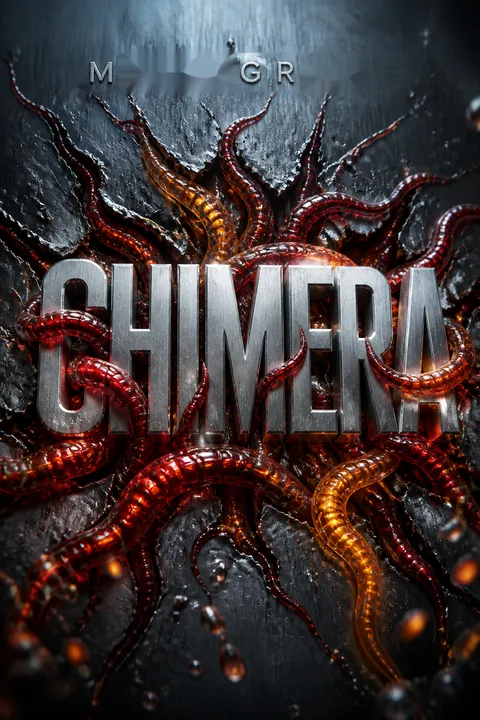
Chimera receives mixed reviews as the final installment of Mira Grant's Parasitology trilogy. Readers praise Grant's skill at blending science fiction, horror, and philosophical questions about humanity, consciousness, and survival. The scientifically grounded premise involving tapeworm parasites resonates with many. However, common criticisms include repetitive kidnapping plots, excessive length that could have been condensed into two books, insufficient development of beloved characters like Tansy, and heavy-handed philosophical discussions. While some find the ending satisfying, others feel disappointed compared to Grant's acclaimed Newsflesh trilogy. Most agree Grant's writing quality remains strong despite pacing and structural issues.
People Also Read

Characters
Sal Mitchell
Self-authored chimera heroineSal is an observant, literal-minded young woman whose sense of self has been shaped by other people’s attempts to define her. Raised to believe she was Sally Mitchell, she must distinguish affection from the demand that she imitate a dead girl. Her unusual biology gives her access to the human world while leaving her uncertain which habits are instinctive and which were learned. Sal’s practical concern for animals, children, and frightened strangers often exceeds her confidence in emotional conventions. She is neither detached from humanity nor willing to accept human ownership as the price of being treated as a person.
Nathan Kim
Patient scientist partnerNathan is a parasitologist, Dr. Cale’s biological son, and Sal’s closest partner. He combines scientific discipline with emotional openness, a contrast to his mother’s more guarded manner. Nathan understands that Sal’s origin does not cancel her personhood, and he tries to give her room to make choices rather than treating her as a research problem. His loyalty can become self-reproach when danger separates them; he tends to assume that he should have found a better plan. His steadiness offers Sal intimacy without demanding that she become human to deserve it.
Dr. Shanti Cale
Brilliant conflicted creatorDr. Cale is the scientist whose research produced the SymboGen implants and the mother of several very different children. Brilliant, ambitious, and short on conventional empathy, she often understands consequences intellectually before she can respond to them emotionally. She is willing to pursue difficult research, yet her loyalties are not reducible to either humanity or chimera. Cale can be protective and controlling in the same breath, particularly when she believes a person’s survival depends on her judgment. Her ability to create life gives her authority, but also leaves her responsible for asking what a creator owes to those who outgrow the intended design.
Sherman Lewis
Possessive revolutionary chimeraSherman is an intelligent, charismatic chimera who views survival as a mandate to rule. He can be affectionate and persuasive, especially with Sal, but his care is conditional on obedience and exclusive loyalty. He interprets disagreement as a temporary failure of understanding rather than as another person’s right to choose. That certainty lets him organize others, yet it also blinds him to the difference between protecting a community and possessing it. Sherman’s contempt for human power does not free him from human forms of vanity, hierarchy, or coercion.
Colonel Alfred Mitchell
Grieving military fatherAlfred is a senior military officer trying to protect his family and preserve human survival as government systems fail. His love for Sally makes him vulnerable to a comforting fiction about Sal, while his duty encourages him to measure people against military usefulness. He can be tender, strategic, and coercive, sometimes within the same encounter. Alfred is not a simple antagonist: he recognizes the need for order, but his decisions show how easily emergency authority can become permission to hurt those under its control. His grief narrows his vision even as it motivates his attempts to save others.
Carrie Black
Grief-hardened human survivorCarrie is a resourceful human survivor who enters the story with her partner Paul and a deep distrust of military control. Her humor and toughness help her endure scarcity, but grief can make her suspicious and quick to threaten those she fears. Carrie knows how to drive, scavenge, and judge a dangerous situation, abilities Sal needs even when the two women disagree about what counts as a person. She is not easily comforted by abstractions or assurances. Her central tension is between the need to rely on others and the conviction that dependence gives them power over her.
Juniper
Newborn chimera childJuniper is a small child with little language or understanding of her surroundings when Sal first finds her. She depends on physical closeness, repetition, and the adults’ patience as she learns how to use her body and communicate. Her curiosity appears in small acts, from examining a pen to following the people she trusts. Juniper gives Sal a responsibility that is both emotional and practical: she must protect the child while allowing her to develop an identity of her own. Her needs also draw out the gentler, more improvisational side of the adults around her.
Tansy
Unruly chimera sisterTansy is a chimera raised within Dr. Cale’s close circle and regarded by Sal as a sister. She is energetic, passionate, and inclined to challenge limits rather than accept them quietly. Her loyalty to family is strong, but it does not make her obedient or predictable. Tansy’s particular history has made communication and bodily autonomy especially important to her. She embodies the possibility that a person can remain recognizably themselves while adapting to circumstances that radically alter how they move and interact.
Adam Cale
Gentle chimera brotherAdam is Dr. Cale’s son and one of the earliest chimera. Gentle and intellectually curious, he tends plants, studies language, and approaches younger or less experienced companions with patience. He is less practiced at danger than some of the others, but his kindness is not weakness. Adam treats Juniper as a person who can learn rather than a specimen to be explained. His relationships with Cale, Tansy, and Sal give the lab the texture of a family, though his sheltered temperament can leave him exposed when force replaces conversation.
Matthew Fishy Dockrey
Delusional inventive engineerKnown as Fishy, Matthew is an engineer who copes with trauma by interpreting reality as a video game. The delusion gives him distance from grief and lets him act boldly in dangerous situations, though it can make others mistake him for unserious. His technical skill is real: he understands equipment, routes, and improvised plans. Beneath his jokes is a man struggling to keep the loss of his wife from becoming fully present. Fishy’s habit of treating life as play is protective, but the story gradually shows how much effort the protection costs.
Fang
Pragmatic surgeon allyFang is a skilled surgeon and longtime member of Dr. Cale’s circle. Calm under pressure, he focuses on the practical work of keeping people alive, particularly when a patient’s condition leaves little room for error. He understands that trust between humans and chimera is fragile, and he often uses his own status as a human to challenge assumptions about who deserves personhood. Fang can be blunt, but his bluntness usually protects time and attention for the work that matters.
Gail Mitchell
Bereaved protective motherGail is the mother of Sally and Joyce and Alfred’s wife. She is affectionate when she believes she is caring for her daughters, but grief and fear sharpen her into a fierce defender of the family she remembers. Her refusal to accept Sal is rooted in her conviction that the daughter she knew is gone, not in a failure to recognize Sal’s resemblance. Gail’s response exposes the emotional cost of asking parents to treat a new mind in a familiar body as a continuation of their child.
Joyce Mitchell
Generous Mitchell sisterJoyce is Sal’s younger sister by the family history Sal inherits, and the person in the Mitchell household who had been most willing to treat her kindly. She is remembered as warm, generous, and eager for closeness even when her older sister did not return it. Joyce’s ideas about family and the meaning of bodily donation matter deeply to Sal. Her presence in the story is felt through memory, medical crisis, and the choices her loved ones make about what can be preserved.
Dr. Steven Banks
Ambitious corporate scientistBanks is a senior SymboGen scientist who values results, influence, and control. He is technically capable and adept at presenting himself as useful to whoever holds power. His approach to research is shaped by impatience with safeguards and by confidence that difficult ethical questions can be managed later. Banks functions as a contrast to Cale: both are ambitious scientists, but their judgments about risk and responsibility differ sharply. He is skilled at making expediency sound like necessity.
Heina
Resourceful systems engineerHeina works with the technical systems supporting Dr. Cale’s hidden laboratory. Practical, sociable, and deeply competent, she knows how to preserve information and anticipate failures that other specialists overlook. Her humor helps her manage the pressure of the crisis without minimizing its losses. Heina’s work is a reminder that survival depends on maintenance and planning as much as dramatic acts of courage. She earns respect through what she can do, not through rank or grand claims.
Batya
Hardline chimera lieutenantBatya is one of Sherman’s senior followers and a capable organizer who worries about the stability of their community. She is skeptical of Sal and sees divided loyalty as a threat to collective survival. Her caution is reasonable in a world where betrayal has repeatedly proved lethal, but Sherman’s authority limits how freely she can act on her own judgment. Batya represents the chimera who want safety and belonging yet are asked to accept increasingly coercive means to secure them.
Ronnie
Weaponized chimera operativeRonnie is a chimera whose skill and volatility make him valuable to Sherman. His experience in a host body that conflicts with his sense of himself leaves him under psychological strain. He is capable of fierce loyalty, but his life has also been shaped by other people’s decisions about what he must endure. Ronnie illustrates how a body can become a political instrument even within a community that rejects human social categories.
Sonny Larsen
Young conflicted soldierSonny Larsen is a young soldier assigned to the military’s quarantine operations. He begins guarded and hostile toward Sal, influenced by the stories circulating among the troops. Yet he retains an ability to question what he has been told and to recognize when someone is being treated unjustly. His unease about the military’s methods makes him one of the few people inside the institution willing to revise his judgment.
Plot Devices
D. symbogenesis implants
Medicine becomes an invaderSymboGen’s engineered tapeworms were designed to improve human health, including by delivering medication inside the body. Their ability to survive and reproduce exceeds the safeguards their makers intended, and some take control of their hosts. Successful integration can produce a self-aware chimera, while failed integration creates the violent, damaged beings called sleepwalkers. The implants make the book’s central conflict physical: medical intervention becomes a question of agency, ownership, and what a person is allowed to do to remain alive. Their varied outcomes also prevent either side from treating every infected body as the same kind of threat.
The hot warm dark
A refuge inside the bodySal can retreat into a remembered, formless awareness associated with her original tapeworm existence. At first it offers comfort from human sensation and danger; electric shocks later turn that refuge into a place where she risks losing contact with her active body. The dark is therefore both a coping mechanism and a threat. Sal’s ability to enter it distinguishes her from other chimera, but the story does not treat escape from pain as cost-free. She must eventually use the connection between her original organism and her learned human awareness to return to action.
Pheromone communication
A hidden language of kinChimera and sleepwalkers emit chemical signatures that allow Sal to detect nearby beings and, at times, influence their behavior. The signals function as a sensory language beneath ordinary speech. Sal uses them to recognize infection, distinguish a newly changing host from a stable one, and move through groups of sleepwalkers without immediately being attacked. Their limits matter: hunger, confusion, and competing signals can overwhelm her influence. The device lets biology provide information, but it never guarantees control, leaving Sal to combine instinct with judgment and risk.
Contaminated water
Infrastructure carries the outbreakSherman uses a strain cultured from Sal’s genetic material to spread eggs through regional reservoirs. The water contaminates people who had previously tested clean and can expose humans, sleepwalkers, and chimera to repeated infection. This turns a trusted public resource into a quiet delivery system, making the catastrophe difficult to contain by ordinary quarantine. Sal and Cale’s discoveries allow researchers to develop an antiparasitic targeted at the strain, though it cannot erase all damage or guarantee safety for every infected person. The water plot joins an intimate question of stolen biology to an ecological and political emergency.
Don’t Go Out Alone
A story maps belongingThe children’s book by Dr. Cale’s late friend Simone recurs as a source of comfort, a trail of clues, and a vocabulary for the family’s uncertain future. Its story of children seeking a monster complicates the usual boundary between danger and refuge. Sal draws on the book when naming Juniper and when trying to reach the hidden laboratory, where knowledge of its verses helps identify herself to Cale’s people. The book does not solve the crisis, but it gives characters a shared imaginative structure for thinking about fear, kinship, and the choice to enter a dangerous world together.
Parasitology Series
About the Author
Other books by Mira Grant


Download PDF
Download EPUB
.epub digital book format is ideal for reading ebooks on phones, tablets, and e-readers.








