

Key Takeaways
Read the biblical God as an ancient body, not a modern abstraction
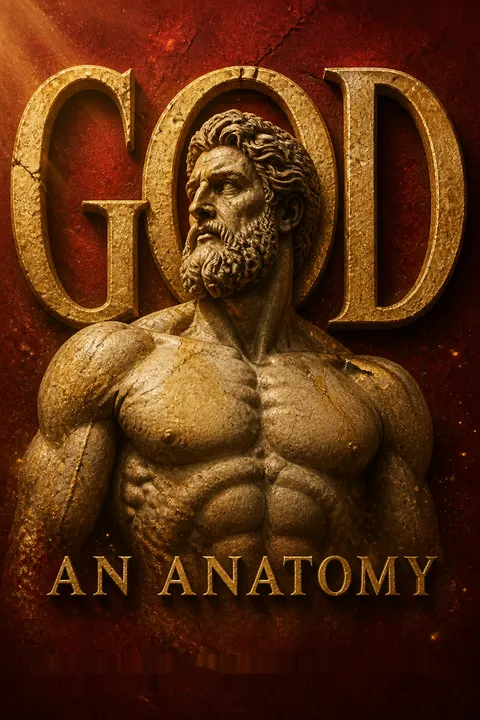
Start with the body. Francesca Stavrakopoulou argues that the God portrayed in the Bible is not consistently invisible or immaterial. He walks, eats, speaks, fights, feels, and has a distinctly male body. The book follows that body from feet to head, using biblical passages alongside archaeology, inscriptions, myths, and religious art to reconstruct how ancient worshippers imagined their deity.
Separate eras carefully. The familiar Western idea of a bodiless God developed through later Jewish and Christian interpretation, shaped in part by Greek philosophy. It should not be simply projected backward onto biblical texts. The author’s point is not that every passage offers one consistent portrait, but that the body is present throughout the scriptural record.
The book’s central move is methodological: treat bodily description as evidence about a historical religious world, rather than as decoration around an abstract doctrine. That shift makes familiar passages newly legible, because feet, breath, hunger, and sexual difference become part of theology itself. It also unsettles the assumption that religious ideas naturally progress from concrete images to sophisticated abstractions. The approach requires care, however. Ancient texts are layered and sometimes contradictory, so a bodily reading can illuminate a passage without proving that every writer or worshipper held the same view.
Treat scripture as a contested archive, not a transparent history
Texts preserve conflict. The Hebrew Bible is a collection shaped by generations of writing, editing, and reuse, not a single eyewitness account. Its authors often tell the past from a Jerusalem-centered perspective. Archaeological evidence and neighboring records complicate that story: the Moabite king Mesha, for example, describes the power of Israel’s King Omri, whose importance the biblical account minimizes.
Recover the lost landscape. Inscriptions from the eighth century BCE invoke blessings from “Yahweh and his Asherah,” while excavations identify Yahweh temples beyond Jerusalem. Together, such evidence suggests that early Yahweh worship was more diverse and polytheistic than later biblical editors preferred to portray. The archive matters partly because it preserves traces of the religious practices it condemns.
This is a useful model for reading any archive produced by institutions with something to defend. Official stories often retain evidence that undercuts their own claims, especially when editors inherit older poems, local traditions, or public records they cannot entirely remove. Archaeology and inscriptions can expose those seams, but they do not provide a neutral, complete replacement history. The evidence is fragmentary, and the interpretation of a figurine or inscription can remain disputed. The strongest conclusion is therefore not that one tidy account replaces another, but that biblical history reflects competing interests.
See sacred presence in bodies, objects, and places
Presence had a location. At the temple of ‘Ain Dara in Syria, enormous carved footprints lead inward to the inner sanctuary. They mark a god’s arrival and continued presence, not merely a decorative symbol. Across the Levant, standing stones likewise made divine presence tangible. In the Bible, Yahweh’s feet transform ground into sacred space, while walking across land can express ownership and political claim.
Objects could be more than symbols. In ancient South-West Asian worship, a cult image was understood as a material manifestation of the deity. A statue, stone, or shrine could make a god accessible while the god remained in the heavens. Worship involved managing this presence through temples, offerings, washing, incense, and ritual access.
The distinction between representation and presence is central here. Modern readers often assume an image stands for an absent deity, but the book shows how ancient worshippers could treat an image as a place where the deity was genuinely available. That perspective also clarifies why destroying or carrying off a statue had political and religious force: it was an attack on a god’s local presence. The idea is not unique to antiquity. Across traditions, objects and sites can mediate relationships without being mistaken for the whole of what they mediate. The challenge is to avoid flattening those practices into either superstition or mere symbolism.
Read divine masculinity as a blueprint for social power
The body carried politics. Ancient South-West Asian gods were often imagined as powerful, virile males. Their weapons, beards, strength, and sexual capacity expressed authority. Yahweh’s warrior body drew on this world: his bow is linked with masculine force, and his victories over monsters establish his rule over disorder. Kings mirrored that divine power, while conquered men could be depicted as stripped, penetrated, or physically diminished.
The costs fall unevenly. Biblical writers also describe God’s relationships with women through marriage and sexual possession. In Ezekiel, Jerusalem is personified as a vulnerable young bride whom God claims, then punishes with graphic violence for alleged infidelity. These passages reveal patriarchal assumptions, but they also expose how religious language can make domination appear divinely authorized.
Reading divine masculinity as social ideology helps connect myth, political art, and everyday gender hierarchy. The same image of the dominant body can legitimate a king’s rule, define acceptable manhood, and cast vulnerability as shame. The book’s account is especially valuable where it refuses to excuse violent imagery as harmless metaphor. At the same time, ancient societies were not uniform, and surviving texts disproportionately reflect elite male perspectives. Those texts reveal powerful norms, but they cannot tell us exactly how every woman, man, or community understood or resisted them.
Notice how defeat reshaped Yahweh’s identity
Political disaster changed theology. Assyria destroyed the northern kingdom of Israel in 722 BCE. Babylonia conquered Judah and destroyed Jerusalem and its temple in 587 BCE. These losses could make Yahweh appear to have failed as a national protector. Some priests and scribes answered by arguing that the defeats were not evidence of divine weakness, but punishment for worshipping other gods.
A local patron became universal. In this revised account, Yahweh remained sovereign even when his people were conquered and displaced. The story of his mobile throne in Ezekiel presents him as able to accompany exiles in Babylonia, while later texts credit him with directing the Persian king Cyrus to enable a return to Jerusalem. Religious change follows political upheaval, but does not simply mirror it.
The interpretation shows how communities preserve faith after catastrophe by changing the explanation of what happened. Defeat can be recast as discipline, hidden purpose, or proof that the deity’s authority exceeds borders. Such interpretations can sustain a displaced community, but they can also shift blame onto the victims by describing disaster as deserved punishment. The book makes this tension visible without reducing theology to politics alone. Political events create pressure; inherited myths and ritual practices provide the materials through which people make that pressure meaningful.
Track how scripture replaced the statue without erasing the body
The medium changed. After Jerusalem’s destruction, some worshippers increasingly emphasized Yahweh’s hiddenness and rejected images of the deity. The Torah and other sacred writings gained authority where a cult statue had once made divine presence visible. Yet the Bible continued to describe God with a body: he writes with a finger, rests his feet, hears prayers, and breathes life into human beings.
The body moved into ritual. In later Jewish and Christian practice, scripture itself could be handled, processed, read aloud, and treated as a sacred object. The change was not a simple passage from image to idea. Presence was re-mediated through texts, rituals, and claims about God’s name, glory, or breath, even as some theologians increasingly interpreted bodily language as figurative.
This account treats religious media as active participants in belief. A statue, scroll, or spoken prayer does not merely deliver the same message in a new format; each shapes where presence is felt, who controls access, and what kinds of experience count as authoritative. The move toward scripture can broaden access beyond a single temple, while also shifting power toward those who interpret texts. The historical pattern is not a clean replacement of matter by spirit. Material practices persist even when doctrine describes the divine as beyond material form.
Question the white, bodiless God inherited from later Christianity
Divinity acquired a new look. Ancient traditions often described divine bodies as radiant, and sometimes red or dark. Early Christian images could portray Jesus as a youthful Mediterranean figure. Over time, Western art increasingly presented Christ as light-skinned and contrasted divine light with dark, sinful forces. The book traces how some Christian writers also used blackness to stigmatize people, including through distorted readings of the story of Ham.
Images shaped power. The resulting white image of Christ was later enlisted to support European colonialism, slavery, and racial hierarchy. This was not an inevitable meaning of biblical light imagery, nor a single unbroken process. It was a history of interpretation and visual choices that helped make whiteness seem sacred and socially dominant.
The argument links theology to visual culture, showing that images can train perception as well as reflect it. When a community repeatedly sees holiness represented by one complexion and evil by another, the pairing can lend moral authority to existing hierarchies. The historical account is strongest when it identifies specific interpretive steps rather than treating racism as the inevitable outcome of Christian belief. Its wider lesson is that religious imagery should be studied as a social practice: who creates it, who is excluded from the sacred ideal, and whose power it serves.
Read translations as choices that can hide the Bible’s body
Words can sanitize. Biblical translators and interpreters have often softened physical descriptions of God. A prayer to see God’s face may become a request for his presence; references to sexual anatomy may be obscured by polite language; a verse saying God buried Moses may be changed to imply that someone else did it. Such choices reflect theological concerns, not just neutral wording.
The consequences are real. The book restores the bodily texture of passages about God’s anger, appetite, sexuality, touch, and mortality. That recovery does not make every text morally admirable. Ezekiel’s depiction of divine violence against Jerusalem remains disturbing when read plainly. A historically alert reading can expose both the world these texts came from and the harm later readers may perpetuate by treating them as timeless ideals.
Translation is interpretation under pressure. A translator chooses which meanings to foreground, and religious communities often prefer language that preserves doctrine or decorum. Making the body visible can correct a sanitized reading, but literalness is not automatically neutral either: ancient idiom, poetry, and metaphor still require judgment. The most responsible approach holds both questions together: what could these words have meant in their original setting, and what happens when they are used as authority now? Historical understanding can clarify a text without requiring readers to endorse its values.
Analysis
The book’s most important contribution is not simply the claim that biblical God has a body. It is the method of treating that body as evidence. Feet disclose territorial authority; hands make and alter the world; sexual organs encode gendered power; the heart and gut register thought and emotion; breath and smell make presence perceptible. Read together, these features turn theology into a history of social life, ritual, politics, and sensation.
That method also changes the meaning of biblical inconsistency. Contradictory portraits need not be forced into one coherent doctrine. The Bible is a long-edited archive, formed through conquest, displacement, institutional rivalry, and changing intellectual fashions. Its later editors sometimes suppress older divine companions or explain away bodily details, yet remnants survive in poetry, narrative, and material evidence. The tension between text and archaeology is not a nuisance to be solved. It is part of the historical record.
The account is particularly powerful when it shows how bodily ideals distribute status. Yahweh’s masculine force reflects and supports patriarchal systems, while women are often rendered as dependent, sexually suspect, or subject to divine violence. Later Christian imagery adds another consequential layer by aligning divine light with whiteness. These readings make interpretation ethically consequential: theological descriptions can reinforce social hierarchies, but tracing their historical construction also makes them contestable.
There are limits to the reconstruction. Archaeological objects rarely explain themselves, and a damaged inscription or image can sustain multiple readings. Biblical texts overwhelmingly preserve elite perspectives, so ordinary worshippers’ beliefs remain partly inaccessible. The book’s vivid account of Yahweh’s body is therefore best understood as a strong historical interpretation assembled from converging clues, not a complete transcript of what every ancient Israelite believed. Its achievement is to make abstraction itself historical: the bodiless God familiar to many modern readers is one later outcome among several, not the only possible reading of the Bible.
Review Summary
God: An Anatomy by Francesca Stavrakopoulou explores the historical and cultural context of the Judeo-Christian God, arguing that early biblical writers viewed God as a corporeal being with human-like attributes. The book challenges modern abstract conceptions of God, tracing His evolution from a minor storm deity to a supreme being. While praised for its detailed research and engaging writing, some readers found it overly dense and critical of later theological interpretations. The book's controversial thesis and vivid descriptions of God's anatomy sparked both fascination and discomfort among readers.
People Also Read

Glossary
cult image
material divine presenceA statue or other sacred object understood by ancient worshippers not merely as a picture of a deity, but as a material manifestation of that deity. A god could remain in the heavens while also becoming present in an image housed in a temple or home. The image made divine presence accessible to ritual care and worship.
aniconism
worship without divine imagesA religious practice or policy that avoids making or using images of deities. In the book, aniconism does not necessarily mean that worshippers believed their god had no body. The prohibition of images could instead express the deity’s hiddenness, or reject depictions considered unauthorized, inadequate, or politically dangerous.
monolatrous
worship of one known deityDescribes a religious system in which other deities may be acknowledged, but worship is directed to one deity alone. The book uses the term for a shift in Yahweh worship after Israel and Judah were conquered. Some biblical writers explained defeat as punishment for worshipping other gods and promoted exclusive devotion to Yahweh.
kabod
divine glory or radianceA Hebrew term often translated as “glory.” In the biblical traditions discussed here, it can describe the visible, dazzling radiance surrounding God’s body, rather than only an abstract quality of greatness. The term helps explain why encounters with God could be described as brilliant, overwhelming, and physically dangerous.
melammu
radiance of divinityAn Akkadian term for the luminous, sometimes fiery aura associated with Mesopotamian deities and kings. This radiance signals divine power and can overwhelm or terrify those who encounter it. The book compares it with the biblical language of God’s glory to show a shared regional understanding of visible divine brilliance.
ruah
breath, wind, or spiritA Hebrew term whose meanings overlap: breath, wind, and spirit. In the book’s ancient context, it often refers to a tangible life-giving force from God, not a purely abstract or immaterial substance. God’s ruah can animate bodies, move across the world as wind, or empower particular people for their work.
pneuma
breath, wind, or spiritA Greek term that, like Hebrew ruah, can mean breath, wind, or spirit. Early Christian texts use it for divine power that empowers, transforms, or gives life. The book stresses that this language could be understood materially in the ancient world, before later Christian theology increasingly treated spirit as immaterial.
nephesh
life and personhoodA Hebrew term associated with the throat and the passage of breath, food, and voice. It can refer to a living being or a person’s life and selfhood. The book cautions against translating it as an immortal, separable “soul,” since that later mind-body distinction does not fit many ancient Levantine uses.
Download PDF
Download EPUB
.epub digital book format is ideal for reading ebooks on phones, tablets, and e-readers.








