

Key Takeaways
Ancient audiences already knew humans could cross into divine status.
Divinity had gradations. Ehrman opens with Apollonius of Tyana, a first-century philosopher whose later followers described a miraculous birth, healings, an ascent to heaven, and an appearance after death. These stories resemble claims about Jesus, showing that ancient hearers had familiar ways to imagine a human as divine. Apollonius is not evidence that the stories about Jesus are true. He is evidence that the category of a divine human was culturally imaginable.
A crowded divine realm. Greek and Roman traditions also honored emperors and exceptional rulers as gods, often because they were believed to protect or benefit their people. Divinity was not a simple switch between human and God. It could be a hierarchy, with a human elevated to a lower divine rank. Ehrman uses this ancient landscape to explain why Jesus's followers could call him divine without initially meaning that he was identical to the Almighty Creator.
What's striking is how much historical interpretation depends on recovering a culture's categories before judging its claims. A modern reader may hear divine and assume absolute equality with God, while an ancient listener might hear honor, delegated authority, or posthumous elevation. That distinction makes early Christian language more intelligible without endorsing its theology. The comparison with Apollonius is useful as a cultural parallel, though it cannot establish direct influence: similar stories can arise from shared expectations rather than borrowing.
Ask what kind of divinity a source assigns to Jesus.
Two directions of travel. Ehrman distinguishes two broad ways ancient people could understand a divine human. In an exaltation account, a human is raised to divine status by God. In an incarnation account, a preexisting divine being comes to earth as a human. The difference is not whether Jesus is called divine, but where he begins and how he gets there.
Jewish examples matter. Jesus and his earliest followers were Jewish, and Jewish tradition also allowed overlap between human and divine. Angels could appear in human form; Wisdom and God's Word could be described as distinct from God yet expressive of God; kings and Moses could receive divine titles or authority. These examples did not make them the one Almighty God. They show why monotheism did not automatically rule out every other divine figure or a spectrum of heavenly status.
This distinction is a practical reading tool: instead of treating a title as a complete theological definition, readers can ask what role the title performs in its passage. The same label can describe delegated power in one setting and preexistence in another. The approach also guards against a common historical mistake, importing later definitions into earlier texts. Its limit is that ancient categories were not always tidy; writers could combine models, and a source may not explain exactly where its figure belongs.
Read the Gospels as layered testimony, not verbatim transcripts.
Sources shape certainty. Ehrman emphasizes that Paul wrote roughly twenty to thirty years after Jesus's death and says little about Jesus's life. The Gospels came later, were written anonymously in Greek, and were not eyewitness notebooks. Their authors drew on stories passed through communities, where retelling could alter details or adapt an account to a new audience. The four resurrection narratives, for example, differ about who visited the tomb, what they saw, and where Jesus met the disciples.
Three historical tests. Scholars look for traditions that appear in independent sources, that early Christians would have had little reason to invent, and that fit first-century Jewish life. A saying found across independent streams is more secure than one preserved only once. These tests help sort probabilities; they do not turn ancient texts into courtroom transcripts or produce certainty from silence.
The book's source criticism is strongest when it replaces all-or-nothing judgments with degrees of confidence. A text can preserve memory and theology at once, so asking how a story was transmitted is more productive than simply calling it true or false. The criteria are useful heuristics, not mechanical rules. Independent reports may share a common source, while an embarrassing story can still be shaped by later interpretation. Their value lies in disciplined comparison, not automatic verdicts.
Jesus preached God's approaching kingdom, not his own eternal divinity.
An apocalyptic preacher. Ehrman presents Jesus as a Jewish apocalypticist: someone who expected God soon to defeat evil, judge the world, raise the dead, and establish a just kingdom. The earliest Gospel traditions repeatedly place this imminent expectation on Jesus's lips. The claim that the kingdom would arrive within his generation later became harder for Christians to preserve, Ehrman argues, which helps explain why later sources emphasize other themes.
A king in the coming age. Jesus's disciples likely viewed him as the future messiah, or anointed ruler, even though his public message focused on the coming Son of Man. Ehrman argues that Jesus himself probably expected to rule God's future kingdom. The Romans executed him under the charge of claiming kingship. That is a claim about a coming political and religious order, not evidence that Jesus declared himself equal with God during his lifetime.
The historical portrait gains coherence by placing Jesus among Jewish end-times movements rather than reading later church doctrine backward into his ministry. It also clarifies why the title messiah could have political consequences under Roman rule. Still, the reconstruction relies on interpreting sources written decades later, and the claim that Jesus privately identified himself as future king is an inference, not a direct transcript. The distinction between a strong historical case and a demonstrable fact matters here.
Treat resurrection belief as historical evidence, not historical proof.
Belief is the firm ground. Ehrman argues that historians can establish that some followers of Jesus came to believe he had been raised from the dead. They cannot, using historical methods alone, establish that God performed a miracle. The Gospel accounts disagree about key events, and Paul's early account lists appearances but does not describe an empty tomb.
The burial is uncertain. The Gospels say Joseph of Arimathea placed Jesus in a tomb, but Ehrman questions whether this happened. Roman practice often left crucified bodies exposed or disposed of them in common graves, and the earliest Christian creed simply says Jesus was buried without naming Joseph. If no known tomb existed, there could be no historically established discovery of an empty one. Ehrman does not claim certainty about what happened to the body. He argues that the evidence does not settle it.
Separating a report of belief from the cause of that belief is a valuable historical discipline. It allows believers and skeptics to agree that an experience was reported while disagreeing about its ultimate explanation. The book is especially careful to say that uncertainty is not disproof. Its burial argument is also a point where historical reconstruction remains debatable: general Roman practice sets a context, but does not prove what happened in this particular execution. That uncertainty should remain visible.
A vision can explain belief without deciding what caused it.
Experiences changed the story. Ehrman argues that visions of Jesus, rather than an empty tomb, first led followers to believe he was alive. Paul's early list names appearances to Cephas, the Twelve, and others, including Paul himself. The Gospel accounts also show that an empty tomb did not immediately produce belief: the women and disciples respond with confusion or disbelief until Jesus appears to them.
Meaning follows expectation. Ehrman uses vision to mean an experience of seeing, without deciding whether Jesus was truly present or the experience arose internally. Bereavement, guilt, and grief can accompany vivid encounters with deceased loved ones. For Jesus's apocalyptic followers, an experience of him alive could mean that the resurrection of the dead had begun, and that God had raised Jesus bodily into heavenly life. The experience's interpretation depended on their existing beliefs.
This account distinguishes the occurrence of an experience from its interpretation, a distinction that is useful well beyond religious history. People do not encounter events without expectations; existing beliefs help organize what an experience means. That does not make the experience insincere or unreal to the person having it. Nor does a psychological explanation automatically disprove a religious one. The evidence for the disciples' inner states is indirect, however, so the proposed number and identity of visionaries remain informed speculation.
The first Christians raised Jesus from human messiah to heavenly Son.
Resurrection meant promotion. In the earliest Christology Ehrman reconstructs, Jesus began as a human messiah and was made God's Son through resurrection and exaltation. Exaltation Christology means that God elevates a human to heavenly status and authority. A creed quoted in Romans says Jesus was descended from David and appointed Son of God through resurrection. Speeches in Acts similarly describe God making him Lord and Christ by raising him.
Adoption conveyed rank. In Roman society, an adopted son could inherit the father's status, property, and authority. The title therefore need not mean a lesser or unreal son. It could signify a dramatic transfer of standing. The emperor was also known as God's son, so proclaiming Jesus as the true heavenly Son challenged imperial claims. For these first believers, Jesus was not simply restored to ordinary life; he was granted rule beside God.
The Roman adoption context makes the earliest claims more forceful than a modern reader might assume. Adoption could communicate inheritance and public authority, not second-best family membership. This social reading also shows that Christology was not only private speculation; it offered an alternative account of who truly ruled. Yet the surviving creeds are brief and transmitted within later texts. They illuminate early belief, but the precise wording and chronology of each tradition cannot be recovered with equal confidence.
Incarnation claims appeared early, but never in one uniform sequence.
A different starting point. Incarnation Christology reverses the direction of exaltation: Christ begins as a preexisting divine being and becomes human. Ehrman finds an early form in Paul and a poem quoted in Philippians, where Christ descends into human life and is exalted after obedient death. Ehrman reads the prehuman figure as an angelic or angel-like being, not yet equal to God. Scholars disagree about parts of this interpretation.
John makes the claim explicit. The opening of John's Gospel identifies the preexistent Word, or Logos, as divine and says that this Word became flesh in Jesus. The distinction matters: in Ehrman's reading, the Logos existed before creation, while Jesus came into existence when the Logos became human. Paul, John, and the earlier Gospel traditions do not offer one orderly ladder of development. Different Christian communities held different accounts at the same time.
This section resists the tempting story that Christian belief simply moved in a straight line from low to high. A better model is branching development: communities drew on different Jewish and philosophical ideas, then combined or sharpened them in distinct ways. That model fits the varied texts more naturally. It also leaves room for disagreement about specific passages, especially Philippians. The book's angelic interpretation is illuminating, but it is one scholarly reading among competing interpretations, not an uncontested key to Paul's theology.
Orthodoxy won by holding together claims rival camps split apart.
Competing answers multiplied. Early Christians disagreed about whether Jesus was divine, human, both, or two beings temporarily joined. Adoptionists emphasized his humanity but denied that he was divine by nature. Docetists said he only appeared human. Some Gnostic Christians separated the human Jesus from a divine Christ who left before the crucifixion. Modalists protected belief in one God by treating Father, Son, and Spirit as modes of one person.
History names the winners. Ehrman uses orthodox to mean the views that eventually prevailed, and heresy for views declared wrong by that winning tradition, not as a historian's verdict on divine truth. The dominant position insisted that Christ was fully divine and fully human, yet one person. Earlier views that had once been widespread could later be condemned. The argument was not merely academic: it shaped whom Christians worshiped and what they believed made salvation possible.
The historical meaning of orthodoxy is a crucial corrective to treating the eventual winner as inevitable from the start. It also highlights how institutions shape memory: once one coalition controls teaching and scripture, its opponents can be recast as marginal innovators. This does not mean every rejected position was equally persuasive, or that theology is reducible to politics. It does mean that the archive itself was formed by conflict, and historians must read hostile descriptions of rival groups with particular care.
At Nicea, Christ became coeternal and equal with the Father.
A dispute became imperial business. In the early fourth century, Arius taught that the Son had been brought into existence before creation and remained subordinate to the Father. His bishop, Alexander, insisted that the Son had always existed and shared God's nature. After Constantine became a Christian emperor, he sought unity in the church partly because he believed religious division threatened the stability of the empire.
A creed drew the boundary. At the Council of Nicea in 325, bishops rejected the claim that there was a time when the Son did not exist. They described Christ as of the same substance as the Father, using the Greek term homoousios. The council did not end controversy, and the Arian position continued to attract support. Nicea established a powerful doctrinal boundary, but debates about how divine and human could coexist in Christ continued.
Nicea reveals doctrine being made in a world where theology and governance were intertwined. Constantine was not a detached referee; unity had political value, even as participants argued over what they believed to be truth. The council's decision also shows how one technical word can carry enormous consequences once a community adopts it as a boundary marker. It is important not to reduce the outcome to imperial convenience alone: the bishops debated substantive beliefs, but imperial power changed the stakes and reach of their decision.
Track what a creed does in public, not only what it says.
Belief acquired power. Once emperors endorsed Christianity, Jesus no longer competed with the emperor as a divine ruler; the emperor presented himself as Christ's servant. At the same time, Christian leaders gained political influence. Some used the claim that Jews had killed God to attack Jewish communities. Christian laws restricted Jewish economic and civic life, while violence against synagogues could go unpunished. The theological claim had consequences well beyond worship and argument.
Tradition is reinterpreted. Ehrman ends by noting that each generation has understood Jesus through its own circumstances. His historical portrait is an apocalyptic preacher whose ethics were tied to an imminent kingdom. Modern readers may retain his calls to mercy and care for the vulnerable while no longer sharing his end-times expectations. That is a form of recontextualization: carrying teachings into a new world, while recognizing that the meaning and motivation have changed.
The epilogue makes historical interpretation ethically consequential. Beliefs do not remain inside creeds; when joined to state authority, they can shape law, citizenship, and the vulnerability of minorities. At the same time, recontextualizing an ancient teacher is not automatically dishonest. It becomes more responsible when readers acknowledge what has changed, rather than pretending that modern priorities were always the original message. The challenge is to preserve ethical insight without excusing the harms that later communities attached to their claims.
Analysis
Ehrman's central achievement is to turn the question of Jesus's divinity into a historical question about changing categories, experiences, and institutions. His most useful instruction is implicit throughout: a claim that Jesus is God is not self-explanatory. Its meaning depends on whether the source describes an adopted human, an exalted heavenly ruler, an angelic mediator, or the preexistent Word. That distinction prevents the fourth-century doctrine from being projected onto every earlier text.
The book's narrative is unusually effective because it moves from ancient divine-human traditions to Jesus's apocalyptic setting, then follows resurrection belief into competing Christologies and imperial doctrine. The Apollonius comparison supplies a vivid opening, while Romans, Philippians, John, and Nicea provide successive textual and institutional pivots. The result is not simply a chronology of ideas. It is an account of how a humiliating execution could be reinterpreted as heavenly enthronement.
The argument is strongest when it distinguishes what historians can establish from what theology may affirm. Followers believed Jesus was raised; the cause of their experiences is not historically demonstrable by Ehrman's standards. But some reconstructions, especially doubts about the burial and the claim that Jesus privately saw himself as future king, remain debated inferences. Historical criteria such as independent attestation and dissimilarity are tools for weighing evidence, not neutral machines that output certainty. The sources are sparse, and the communities that preserved them had theological aims. That tension is productive rather than fatal. Ehrman does not prove that later Christian belief is false. He shows that it developed, that early Christians meant different things by divinity, and that the eventual orthodox account emerged through prolonged conflict. The book is best read as a history of interpretation, not a referendum on faith. Its final lesson is also civic: once a religious claim acquires imperial authority, its public effects become part of its meaning.
Review Summary
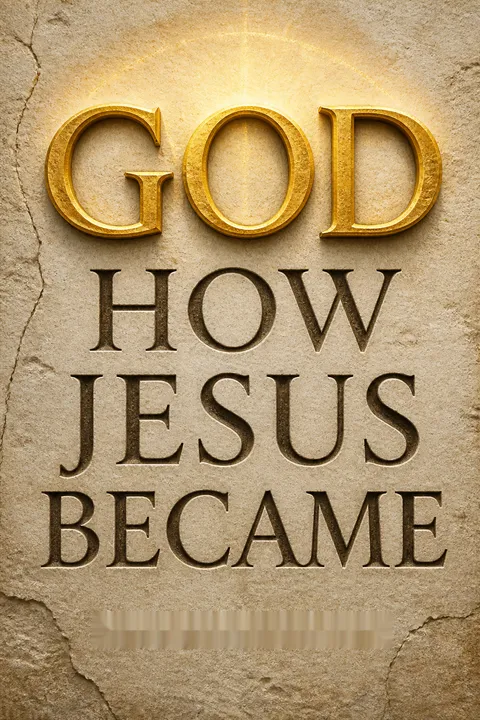
How Jesus Became God examines the historical development of early Christian beliefs about Jesus' divinity. Ehrman argues Jesus was initially seen as a human preacher and only later deified by followers. The book traces evolving interpretations from the gospels through early church debates. While some readers found it insightful and well-researched, others criticized Ehrman's selective use of sources and perceived bias. Many praised his accessible writing style, though some felt certain sections were overly detailed. The book provoked both appreciation and controversy among readers interested in early Christianity.
People Also Read


Glossary
Christology
understanding of ChristThe study or account of who Christ is and how he relates to God and humanity. In Ehrman's history, Christology includes several distinct claims: that Jesus was a human elevated by God, that a divine being became human, and that Jesus was fully divine and fully human.
Apocalypticism
expectation of divine interventionA worldview in which God will soon intervene in history, defeat evil, judge humanity, and establish a new age. Ehrman argues that Jesus's message belonged to this Jewish tradition: the present age was controlled by evil, but God's kingdom was near, and people needed to prepare for judgment.
Exaltation Christology
human raised to divine statusAn account of Jesus in which he begins as a human and God elevates him to heavenly status and authority. In the earliest form Ehrman reconstructs, Jesus becomes God's Son and Lord through resurrection. The term describes the direction of the claim, from human life toward divine rank.
Incarnation Christology
divine being becomes humanAn account of Christ in which a preexistent divine being comes into human existence. Ehrman traces different versions in Paul and John. In John's Prologue, the preexistent Logos becomes flesh in Jesus; in Ehrman's reading of Paul, Christ begins as an angelic or angel-like being.
Hypostasis
distinct expression of divine beingA specialized term for an aspect or attribute of God imagined as having distinct existence while remaining closely connected to God. Ehrman uses Wisdom and the Logos as examples: they can be described as separate from God in one sense, yet as expressions of God's own being and activity.
Criterion of independent attestation
compare independent source traditionsA historical method that gives greater weight to a saying or event when it appears in more than one source that developed independently. Multiple independent reports can make a tradition more likely to reach back to Jesus, though shared sources or later influence can complicate the judgment.
Criterion of dissimilarity
test against community interestsA historical method that treats a tradition as more likely to be authentic when it runs against the interests or beliefs of the early Christian community that transmitted it. Ehrman applies it to stories such as Jesus's baptism by John, while recognizing that a tradition's awkwardness cannot by itself prove its authenticity.
Criterion of contextual credibility
test against historical settingA method that asks whether a saying or event fits the social, religious, and political world of first-century Palestine. A tradition that fits Jesus's Jewish context is more plausible than one that reflects ideas foreign to that setting, though contextual fit alone does not establish that an event happened.
Two powers in heaven
second figure beside GodA label for ancient Jewish interpretations that placed a second divine figure alongside God in heaven. Candidates included an exalted angel or a figure such as the Son of Man. Later rabbis condemned such views, but Ehrman treats the condemnations as evidence that some Jews had held them.
Docetism
Christ only seemed humanA Christological position, named from a Greek word meaning to seem or appear, according to which Christ only appeared to have a real human body. Its opponents argued that if Jesus did not truly suffer and die, his death could not bring real salvation to embodied human beings.
Homoousios
same substance as FatherThe Greek term used at the Council of Nicea to describe the Son as sharing the same substance as the Father. It rejected the view that Christ was a created or subordinate divine being and affirmed that he was fully and eternally divine, equal with the Father.
Ortho-paradoxes
orthodox claims held togetherEhrman's term for the paradoxical claims that became central to orthodox Christianity: Christ is fully God and fully human, yet one person; Father, Son, and Spirit are distinct, yet there is one God. The term highlights how orthodoxy held together claims that rival positions separated or rejected.
About the Author
Other books by Bart D. Ehrman





Download PDF
Download EPUB
.epub digital book format is ideal for reading ebooks on phones, tablets, and e-readers.








