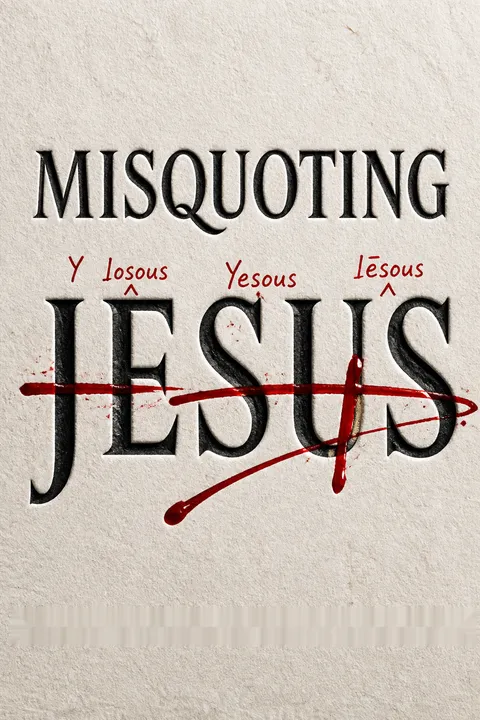


Key Takeaways
Treat the New Testament as a transmitted text, not a pristine artifact.
A scholar’s turning point. Bart Ehrman began as a committed evangelical, convinced that God had inspired every word of the Bible. At seminary, he encountered a small discrepancy: Mark places David’s encounter with the showbread during Abiathar’s priesthood, while the Old Testament names Abiathar’s father. A professor suggested Mark might simply be mistaken. That possibility made Ehrman reconsider what it meant to call scripture inerrant when the original manuscripts were gone and surviving copies differed.
The scale of the problem. Most differences are ordinary copying errors, but some affect interpretation. The manuscript variations outnumber the words in the New Testament, Ehrman says, and scholars cannot always establish the earliest wording with certainty. The book’s central question is therefore not only what scripture means, but which words its authors wrote.
The story usefully separates two questions often treated as one: whether a text has religious authority, and how confidently historians can recover its wording. Manuscript variation directly bears on the second; it does not, by itself, settle the first. That distinction allows believers and nonbelievers alike to engage the evidence without pretending that textual history answers every theological question. It also reveals a broader lesson about inherited knowledge: confidence in a message can obscure the fragile chain by which the message reached its audience.
Assume every hand-copied text carries both accidents and human choices.
No ancient printing press. Christian writings circulated through handwritten copies, produced one at a time. Early churches often relied on literate members rather than trained professionals, and copying Greek without spaces or punctuation made mistakes easier. A scribe might skip a line, misread similar letters, or resume at the wrong place. Other changes were deliberate: a copyist might correct what seemed like a factual error or make a confusing passage easier to follow.
Additions could become scripture. The story of the woman accused of adultery is absent from the earliest and strongest witnesses to John, and its style differs from the rest of that Gospel. The familiar extended ending of Mark is also missing from key early manuscripts and has a different style. Both passages appear to have entered the Gospels through later copying, not through a single obvious printing mistake.
This account makes textual change concrete without requiring a conspiracy. A copying system can preserve a work while also introducing variation, especially when reproduction depends on people who are invested in the text but lack professional training. That resembles the transmission of oral history, where retelling maintains a shared story while reshaping details. The analogy has limits: manuscripts preserve physical evidence that oral traditions often lack. Their abundance makes comparison possible, even as their imperfections prevent certainty in every passage.
Remember that Christian scripture emerged from a crowded, bookish movement.
Books mattered before a canon. Early Christians circulated letters, Gospels, accounts of apostles, apocalypses, church instructions, defenses of the faith, and writings against rival teachings. Most people could not read. Ehrman cites estimates that even in favorable ancient settings literacy rarely exceeded 10 to 15 percent, so Christian texts were commonly read aloud to gatherings. Books still shaped belief and practice, and connected communities across the empire.
The collection took time. Marcion, a second-century teacher, assembled an early Christian canon of eleven books: one Gospel, in a form of Luke, and ten letters of Paul. Other Christians opposed his choices. The first surviving list of exactly the twenty-seven books now in the New Testament appears in a letter by Athanasius in 367 CE. Agreement about the collection developed over centuries, not immediately after Jesus’s death.
The timeline complicates the popular picture of a finished Bible appearing fully assembled at Christianity’s beginning. A canon is not merely a shelf of old writings. It is also a community’s judgment about which voices should define its identity. The book’s account highlights how worship, circulation, and controversy helped form that judgment. This does not mean selection was arbitrary: communities could appeal to age, use, and perceived authority. It does mean that the history of a sacred collection includes human decisions about what counts as sacred.
Reconstruct wording by weighing evidence, not counting surviving copies.
Copies are not votes. Imagine one early manuscript producing fifty descendants, while another produces only one. The first reading appears in fifty copies, but those copies may represent only one branch of the text’s history. Scholars therefore consider a manuscript’s age, geographic distribution, and relationship to other witnesses, rather than simply tallying how many copies support a reading.
Two kinds of internal evidence. Textual criticism is the scholarly practice of comparing manuscripts and other evidence to establish the earliest recoverable wording. Intrinsic evidence asks what an author’s vocabulary, style, and ideas make plausible. Transcriptional evidence asks what a scribe might plausibly have changed. Since scribes often smooth awkward wording, harmonize accounts, or resolve theological discomfort, a difficult reading can sometimes explain how easier alternatives arose. No single test settles every case.
This is a practical lesson in dependence among sources. Fifty witnesses are not fifty independent confirmations if they descend from the same ancestor. Historians, geneticists, and data analysts face similar problems when apparent quantities conceal shared origins. The method also resists a tempting shortcut: the oldest manuscript is important, but age alone cannot guarantee that it preserves the oldest reading. A good reconstruction is an argument from converging clues, not a mechanical answer. Its strength depends on transparent reasoning and an honest account of uncertainty.
A chance printing history helped shape the Bible generations inherited.
Erasmus worked with limited evidence. In 1516, Desiderius Erasmus published the first Greek New Testament widely distributed in the West. He relied mainly on a handful of late medieval manuscripts. His copy of Revelation lacked its final page, so he translated the missing verses back into Greek from Latin. Later printed editions largely followed his text, and it became the basis for the Textus Receptus, the Greek form used by the King James translators.
A famous verse entered by controversy. Erasmus’s Greek manuscripts did not contain the Johannine Comma, a passage explicitly naming the Father, Word, and Spirit as one. After critics demanded a Greek witness, a manuscript containing the passage appeared, apparently made for the occasion by translating it from Latin. Erasmus included it in a later edition. Modern critical editions do not treat it as part of the earliest text.
The episode shows how technologies can freeze provisional decisions into durable tradition. Printing did not erase textual history; it made one editorial choice reproducible at scale. Once familiar wording appeared in worship, education, and translation, familiarity itself could be mistaken for ancient authority. The same dynamic occurs whenever a widely adopted standard outlives the evidence that first supported it. Historical influence and historical accuracy are different measures. The story also warns against assuming that an old, revered translation must rest on the oldest available sources.
Read theological edits as evidence of the disputes that shaped early Christianity.
Copyists had convictions. Early Christians disagreed about whether Jesus was human, divine, or both, and these arguments sometimes affected the texts they copied. In one reading of 1 Timothy, Jesus is described as the one who appeared in human form; later copies call him God appearing in human form. The change makes his divinity explicit. In Luke’s baptism scene, an early form says Jesus is God’s Son begotten that day, wording that could suggest adoption. Many copies replace it with wording matching Mark’s account.
Different disputes left different traces. Some Christians believed Jesus only seemed human; others believed the divine Christ left the human Jesus before the crucifixion. Changes to passages about Jesus’s suffering or death could answer such claims. These alterations were not necessarily cynical. A scribe might sincerely believe a correction protected the text’s true meaning.
A manuscript can document two histories at once: the history of a text and the history of the arguments readers brought to it. This is especially valuable because polemical writing usually preserves the positions of opponents through hostile summaries. A textual change offers a different kind of evidence, showing which wording caused discomfort or invited a particular interpretation. Still, motive is harder to prove than the existence of a variant. The strongest claims connect a plausible theological pressure to clear textual evidence, rather than treating every difference as ideological.
Small wording differences can redraw a passage’s portrait of Jesus.
A difficult emotion may be original. In Mark’s story of Jesus healing a man with a skin disease, most manuscripts say Jesus felt compassion. A much smaller, ancient line of evidence says he became angry. Ehrman argues that anger is more likely original because it is harder to explain why a scribe would replace compassion with anger than the reverse. Matthew and Luke also omit the emotion when adapting Mark’s story, and elsewhere they soften Mark’s references to Jesus’s anger.
Other readings remain debated. Luke’s account of Jesus’s agony before arrest includes verses about an angel and sweat like blood in many copies, but they are absent from important early witnesses and differ from Luke’s otherwise composed portrayal. In Hebrews, a less common reading says Jesus died apart from God rather than by God’s grace. Ehrman argues for the harder reading, while acknowledging that such judgments depend on weighing evidence.
These cases demonstrate why textual criticism matters beyond correcting spelling. A single word can shift a reader’s understanding of character, theology, and narrative emphasis. They also show that an uncomfortable reading is not automatically the authentic one. The principle that scribes tend to smooth difficulty is useful, but it must be tested against manuscript evidence and an author’s style. Ehrman’s readings are arguments, not magic keys. Readers gain most when they distinguish a well-supported conclusion from a plausible proposal still open to scholarly debate.
Notice whose status a scribal change protects or diminishes.
Church disputes entered the text. Some manuscripts add commands for women to remain silent in church, though the instructions conflict with Paul’s earlier discussion of women praying and prophesying. Their placement also varies, leading scholars to argue that they may have begun as a marginal note. Other variants shift the punctuation of Paul’s praise of Junia, making it less clear that a woman was counted among the apostles. The examples reflect disputes over women’s authority in early Christian communities.
Conflict with outsiders mattered too. Luke’s account of Jesus praying for forgiveness for his executioners is absent from some early witnesses. Ehrman argues that Christians who understood the prayer as referring to Jews may have removed it because they believed God had not forgiven them. Other changes sharpen Jewish responsibility for Jesus’s death or soften details that pagan critics used against Christianity.
These examples invite readers to ask not only what changed, but who benefits from the changed wording. That question connects textual history to the study of institutions, where records can reveal whose authority is being normalized. It should be handled carefully: a socially consequential effect does not prove a deliberate motive in every instance. Yet patterns across multiple passages can make a historical explanation persuasive. The book’s strongest contribution here is to make the transmission of scripture visible as part of the social world, not a process sealed off from power.
Let each biblical author speak distinctly instead of blending their accounts.
The authors reshape inherited material. Ehrman argues that the New Testament writers, like later copyists, transmitted traditions in their own words. Matthew and Luke used Mark but altered his accounts to serve their own purposes. Mark portrays Jesus as distressed and abandoned at the cross. Luke removes much of that anguish, presents Jesus as composed, and has him speak words of forgiveness and trust. Treating the accounts as interchangeable can hide what each writer emphasizes.
Reading always involves interpretation. Ehrman’s conclusion is that the Bible is human writing from beginning to end: authors had different circumstances and perspectives, and scribes sometimes copied, corrected, or changed their work. Readers also interpret texts through their own assumptions. The responsible response is not to declare every meaning uncertain, but to examine each author and each textual decision before building a single, harmonized account.
This approach resembles literary criticism: a variation between accounts can be meaningful rather than a defect to be reconciled. It helps readers see how narrative choices create distinct portraits of the same figure. The claim that reading always involves interpretation is persuasive, though it need not imply that every interpretation is equally good. Context, language, and manuscript evidence constrain what a passage can reasonably mean. Attention to authorial difference therefore offers both freedom and discipline: it opens the text’s plurality while demanding closer reading.
Analysis
Misquoting Jesus works on two levels. It is an introduction to the material history of the New Testament, and it is a memoir of a scholar revising his beliefs when the evidence no longer fits his inherited framework. The personal story gives the technical subject an emotional stake: textual criticism is not merely about variants in ancient manuscripts, but about what can responsibly be claimed when the original documents are lost. The book’s most durable insight is that transmission is not passive. Early Christian scribes copied texts in communities where literacy was limited, arguments were intense, and authoritative writings mattered. Mistakes, corrections, additions, and omissions therefore reveal both the mechanics of reproduction and the concerns of the people reproducing texts. The distinction between accidental and intentional change is useful, although actual cases can be difficult to classify. A correction may be both sincere and consequential, and evidence of a change does not always prove why it was made.
Ehrman also pushes readers to separate textual recovery from theological judgment. Establishing an earliest recoverable wording cannot, by itself, determine whether that wording is inspired, spiritually authoritative, or ethically persuasive. His own movement from inerrancy to a human-centered account of scripture is a reasoned personal conclusion, not a logical outcome required of every reader. That distinction makes the book more useful, not less: readers can accept its historical argument while reaching different conclusions about faith.
The central intellectual tension is between recoverability and uncertainty. Thousands of manuscripts create a bewildering number of differences, yet the same abundance allows comparison, family grouping, and reasoned reconstruction. Not every passage is equally uncertain, and not every variant changes meaning. The best response is neither panic nor complacency. Treat translations as scholarly products built from evidence, examine claims proportionally, and preserve the distinctions among what is known, what is probable, and what remains disputed. That is the book’s lasting invitation: read scripture with historical care, and let its different voices remain audible.
Review Summary
Misquoting Jesus explores how the New Testament has been altered over time through copying errors and intentional changes. Ehrman presents compelling evidence of textual variations and their impact on Christian doctrine. While some readers find the book eye-opening and praise its scholarly approach, others argue that these findings are already known within Christianity. The book challenges biblical inerrancy and encourages critical examination of scripture. Despite its repetitive nature, many readers consider it a must-read for those interested in biblical history and textual criticism.
People Also Read




Glossary
Textual criticism
Reconstructs earlier wordingThe scholarly comparison of surviving manuscripts, translations, and quotations to determine the earliest recoverable wording of a text. For the New Testament, textual critics assess how manuscripts differ, how those manuscripts relate to one another, and what kinds of copying errors or deliberate changes may explain the differences. The method cannot guarantee certainty in every passage.
Rational eclecticists
Select readings from evidenceTextual critics who assess competing manuscript readings by weighing multiple kinds of evidence rather than following one manuscript or counting copies. Their decisions use external evidence, such as a reading’s distribution among manuscripts, and internal evidence, such as an author’s style and the kinds of changes a scribe might make.
Textus Receptus
Traditional printed Greek textThe name for the form of the Greek New Testament passed down through early modern printed editions, beginning with Erasmus’s edition and those that followed it. It rested on a small number of relatively late manuscripts and became the basis for the King James New Testament. Modern critical editions instead assess a wider range of manuscript evidence.
External evidence
Manuscript-based supportEvidence about a reading drawn from the surviving witnesses that contain it. Textual critics consider a manuscript’s age, reliability, geographic distribution, and relationship to other manuscripts. The number of copies alone can mislead, because many witnesses may descend from a single ancestor and therefore do not represent independent support.
Intrinsic probabilities
What an author likely wroteA form of internal evidence that asks which variant best fits the author’s known vocabulary, style, and ideas. If one reading is unusual for an author while another fits the author’s other writings, that may count against the unusual reading. It is one consideration among several, not a rule that can settle a variant by itself.
Transcriptional probability
What a scribe likely changedA form of internal evidence that evaluates how a reading could have developed during copying. Critics consider whether scribes were likely to smooth awkward language, resolve apparent contradictions, harmonize parallel passages, or clarify theology. A difficult reading may be earlier if it plausibly explains why a copyist would replace it with an easier one.
Nomina sacra
Abbreviated sacred namesA group of frequently used religious terms in Greek Christian manuscripts, including words for God, Jesus, Christ, Lord, and Spirit, that scribes commonly wrote in abbreviated form. These contractions saved space and marked the words as sacred. Because similar abbreviations could be confused, they sometimes contributed to copying errors.
Adoptionistic
Jesus adopted as God’s SonA description of early Christian beliefs that understood Jesus as fully human and not divine by nature, but chosen or adopted by God as his Son, often at baptism. Ehrman discusses this view because scribes who opposed it may have altered passages to emphasize Jesus’s divine identity or remove wording that seemed to support adoption.
Docetists
Jesus only seemed humanEarly Christians who held that Jesus was divine but did not possess a fully human body or experience human suffering in an ordinary physical sense. The term comes from a Greek word meaning to seem or appear. Ehrman argues that some scribal additions emphasizing Jesus’s bodily pain, death, and resurrection may have answered docetic beliefs.
FAQ
1. What is Misquoting Jesus: The Story Behind Who Changed the Bible and Why by Bart D. Ehrman about?
- Exploration of Textual Changes: The book investigates how the New Testament was altered over centuries by scribes, both accidentally and intentionally, affecting the meaning and interpretation of scripture.
- Personal and Scholarly Journey: Ehrman shares his transition from a conservative evangelical upbringing to a critical scholar, using his own story to frame the book’s inquiry.
- Introduction to Textual Criticism: It introduces readers to the field of textual criticism, explaining how scholars attempt to reconstruct the original New Testament from error-prone copies.
- Impact on Faith and Theology: The book discusses how these manuscript variations challenge traditional views of biblical inerrancy and encourage a more nuanced understanding of scripture.
2. Why should I read Misquoting Jesus by Bart D. Ehrman?
- Accessible Introduction to Textual History: The book offers a clear, engaging look at how the New Testament was transmitted and changed, making complex scholarship understandable for general readers.
- Critical Perspective on Scripture: Ehrman encourages readers to think critically about the Bible’s origins, showing it as a dynamic, human-shaped document rather than a static, unaltered text.
- Relevance to Modern Faith and Culture: Understanding these textual changes is crucial for anyone interested in theology, biblical studies, or the cultural impact of the Bible.
- Engaging Narrative Style: Ehrman’s personal journey and detective-like approach to scholarship make the book both informative and compelling.
3. What are the key takeaways from Misquoting Jesus by Bart D. Ehrman?
- Manuscript Variations Matter: The New Testament has thousands of textual variants, some of which significantly affect interpretation and doctrine.
- Scribes as Influencers: Both accidental mistakes and intentional changes by scribes have shaped the Bible as we know it.
- Textual Criticism is Essential: The science of textual criticism is necessary to approximate the original wording of the New Testament.
- Faith and History Intersect: The book challenges readers to see the Bible as a product of history, shaped by human hands and historical circumstances.
4. What is textual criticism, as explained in Misquoting Jesus by Bart D. Ehrman?
- Definition and Purpose: Textual criticism is the scholarly discipline aimed at reconstructing the original wording of ancient texts by comparing surviving manuscripts with variations.
- Methods Used: Scholars use linguistic, historical, and comparative analysis to identify both accidental errors and intentional alterations in manuscripts.
- Importance for Interpretation: Knowing the exact words is crucial for understanding the Bible’s meaning and historical context.
- No Surviving Originals: Since no original New Testament manuscripts exist, textual critics rely on thousands of copies, each with its own set of errors and changes.
5. How did Bart D. Ehrman’s personal background influence his approach in Misquoting Jesus?
- Conservative Beginnings: Ehrman was raised in a moderate Episcopal family and later became a born-again Christian, embracing biblical inerrancy.
- Academic Exposure: His studies at Moody Bible Institute, Wheaton College, and Princeton Theological Seminary exposed him to the complexities and variations in biblical manuscripts.
- Shift in Belief: Encountering genuine mistakes and human authorship in the Bible led Ehrman to rethink the nature and authority of scripture.
- Personal Narrative: His journey from faith to critical scholarship provides a relatable framework for readers grappling with similar questions.
6. What kinds of changes did scribes make to New Testament manuscripts, according to Misquoting Jesus?
- Accidental Changes: Scribes made errors such as misspellings, skipped lines, and misread abbreviations, often due to the lack of spaces or punctuation in ancient scripts.
- Intentional Alterations: Some changes were made to harmonize conflicting accounts, clarify theology, or support doctrinal positions, such as emphasizing Jesus’s divinity or the virgin birth.
- Famous Additions: Notable later insertions include the story of the woman taken in adultery (John 7:53-8:12) and the last twelve verses of Mark.
- Impact on Doctrine: These changes have influenced how key passages and doctrines are understood, highlighting the human element in the Bible’s transmission.
7. What are the main methods of textual criticism described in Misquoting Jesus by Bart D. Ehrman?
- Rational Eclecticism: Modern critics weigh both external (manuscript evidence) and internal (authorial style, likelihood of scribal change) factors to determine the most original reading.
- External Evidence: Manuscript age, reliability, and geographical distribution are considered, with older manuscripts generally preferred but not uncritically.
- Internal Evidence: Scholars assess what the author likely wrote and what a scribe was likely to have changed, often favoring the more difficult reading as original.
- Manuscript Families: Classification into families (Byzantine, Western, Alexandrian, Neutral) helps determine which textual traditions are more reliable, with Alexandrian often favored.
8. How did early Christian theological disputes influence changes in the New Testament text, according to Misquoting Jesus?
- Countering Adoptionism: Scribes altered texts to emphasize Jesus’s divinity, such as changing “who was manifested in the flesh” to “God was manifested in the flesh.”
- Opposing Docetism: Additions like Luke 22:43-44 (Jesus’s agony) were made to stress his real humanity against claims he only appeared human.
- Combating Gnostic Separationism: Texts were changed to affirm the unity of Jesus’s divine and human natures, such as altering Hebrews 2:9.
- Doctrinal Motivations: These changes reflect the intense theological debates of the early centuries, with scribes shaping scripture to support their views.
9. How did social conflicts, such as debates over women’s roles, affect the transmission of the New Testament in Misquoting Jesus?
- Women’s Early Leadership: Early Christian communities included prominent female leaders, such as Junia, called “foremost among the apostles.”
- Textual Suppression: Scribes sometimes altered texts to diminish women’s roles, changing names or inserting verses to restrict women’s speech and leadership.
- Reflecting Community Disputes: These changes mirror the ambivalence and disputes over women’s roles in the early church.
- Long-term Impact: Such alterations have influenced how scripture has been used to justify limiting women’s roles in Christian worship and leadership.
10. How did anti-Jewish sentiment and pagan opposition shape New Testament manuscripts, according to Misquoting Jesus by Bart D. Ehrman?
- Rising Anti-Judaism: As Christianity distanced itself from Judaism, scribes altered or omitted passages that portrayed Jews positively or lessened their culpability in Jesus’s death.
- Textual Omissions: Jesus’s prayer for his executioners (Luke 23:34) was sometimes omitted to avoid forgiving Jews, reflecting prevailing attitudes.
- Apologetic Changes: Scribes modified texts to counter pagan criticisms, such as changing “Jesus the carpenter” to “son of the carpenter” to elevate his status.
- Defending the Faith: These changes show scribes acting as defenders, shaping the text to align with evolving Christian identity and external challenges.
11. How do specific textual variants discussed in Misquoting Jesus affect the interpretation of Jesus’s character and actions?
- Jesus’s Emotions: Variants like “angry” versus “compassionate” in Mark 1:41 change the portrayal of Jesus from wrathful to tender, affecting theological interpretation.
- Jesus’s Humanity: The inclusion or omission of verses describing Jesus’s agony (Luke 22:43-44) influences whether he is seen as deeply anguished or calm before his arrest.
- Jesus’s Death: Variants in Hebrews 2:9 (“apart from God” vs. “by the grace of God”) alter the understanding of Jesus’s death as either forsaken or an act of divine grace.
- Doctrinal Consequences: These textual decisions have profound implications for doctrines about Jesus’s nature, emotions, and salvific work.
12. What does Bart D. Ehrman conclude about the nature of scripture and the role of scribes in Misquoting Jesus?
- Scripture as a Human Product: Ehrman argues that the New Testament is a human book, shaped by authors and scribes with their own beliefs and intentions.
- Interpretation is Inevitable: Reading and copying scripture always involves interpretation, meaning the text’s meaning is continually reshaped.
- No Perfect Original: While original texts existed, surviving manuscripts are copies with variations, making perfect reconstruction impossible.
- Challenge to Inerrancy: These realities challenge traditional views of biblical inerrancy and inspiration, urging readers to approach the Bible as a complex historical document.
About the Author
Other books by Bart D. Ehrman
Download PDF
Download EPUB
.epub digital book format is ideal for reading ebooks on phones, tablets, and e-readers.








