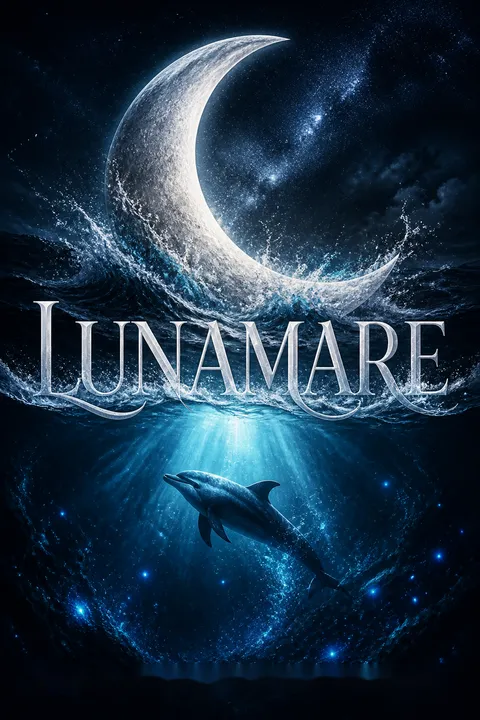


Plot Summary
Prologue
Decades later, Nerida Avci sits before two reporters in Lunamare, the underwater community she helped create. They came to ask about her work, but one wants the story of the girl who rescued a boy from the sea and loved him.
Nerida agrees to tell it, even though the memory hurts and time is running short. Her account begins with a storm, a shattered boat, and a twelve-year-old girl diving from her parents’ research vessel toward the only survivor.
The frame makes Nerida’s public achievement and private history inseparable: the woman who built a home beneath the sea began as a child who refused to leave a stranger to drown. Her reporters’ differing interests also establish the story’s tension between measurable accomplishment and intimate meaning. Nerida knows that the romance cannot be told as a clean legend. She chooses to recount it with its damage intact, turning an interview into a deliberate act of remembrance. The story begins at the edge of her legacy, with the narrator conscious of time, loss, and the value of saying what happened before silence wins.
Storm Takes the Avcis
Sixteen-year-old Aslan Avci is fleeing Turkey with his parents, younger sister Melike, and cousin Afet after months on the run. During the final leg of their journey, a smuggler’s overloaded boat is caught in a violent storm. Waves break the vessel apart and pull Aslan from his family.
He wakes among wreckage, injured and terrified, and mistakes a dolphin’s nudge for a shark attack. Twelve-year-old Nerida Taylor, aboard a research boat with her marine-biologist parents, swims out after dolphins lead them to him. She calms him and explains that the animals found him. When Aslan wakes again, he learns he is the only person they rescued, and his family is missing.
The opening disaster removes every structure Aslan depended on at once: family, home, identity, and the promise that his parents could protect him. His survival therefore feels less like rescue than an accusation. Nerida’s intervention is practical before it is romantic: she risks the water, names what he fears, and stays close while he grieves. The dolphins introduce the book’s recurring challenge to human assumptions about agency. They appear not as decoration but as active guides, while Aslan’s first response to their help is suspicion. The bond begins in a mismatch: she sees a life worth saving; he is not yet sure that life is a gift.
The Hospital Window
Aslan wakes aboard the Taylors’ boat with fractures, stitches, and a cast, but his first concern is finding his family. Nerida, her mother Anna, and her father Jack take him for medical treatment and return with food and clothes. At the hospital, a nurse explains that border officials will interview him and may send him back.
Aslan knows returning to Turkey would put him in mortal danger, so he waits until the ward is quiet, climbs through a restricted window, and limps toward Jack’s address. He arrives at the Taylors’ home exhausted and injured. Nerida finds him in the garden, charges him for a stolen carrot, and offers him a meal instead of sending him away.
The hospital turns rescue into a legal threat. Aslan’s fear is not irrational suspicion but a survival skill shaped by his family’s flight, so the ordinary promise of official help becomes terrifying. His escape also repeats the book’s central paradox: he must reject care to preserve his life, then seek care from people who choose generosity over procedure. Nerida’s carrot charge gives their first reunion a child’s comic scale, but it also lets Aslan receive help without being treated as helpless. Her family’s kindness is not yet a permanent solution. It creates a fragile interval in which he can decide whether to trust anyone again.
A Week Becomes Home
Jack recognizes that Aslan has nowhere safe to go and that returning to Turkey could be fatal. After asking what happened, he offers the injured teenager one week in the family’s home and a deckhand’s work with the marine-biology business. Aslan agrees, though the open ocean terrifies him, and begins by organizing research data while Jack and Anna dive.
Nerida continues to draw him into family routines, sharing meals and stories about her unusual instincts and her childhood friend Sophie, whose death she sensed before anyone found her. Jack and Anna eventually extend Aslan’s stay for six months, converting the garden sala into a small bedroom. The promised week quietly becomes years of work and belonging.
Jack’s offer is generous but not sentimental: shelter comes with work, which allows Aslan to preserve dignity while accepting dependence. That arrangement suits his deepest fear, because he can repay what he receives rather than simply trust that it will last. Yet the employment also binds him to the ocean he associates with death. Nerida’s accounts of sensing animals and Sophie’s fate reveal that her certainty about the sea is not only enthusiasm; it is a way of experiencing dangers others cannot see. The sala becomes a material compromise between refuge and exile, a home close enough to the family to belong, yet separate enough to remind Aslan that he is still a guest.
The Net Beneath the Reef
Over the next two years, Aslan becomes indispensable to the Taylors, improving their research systems and taking on the work they cannot afford to hire out. He still refuses to swim in the sea. When fourteen-year-old Nerida spots a turtle caught in a drifting net, she dives after it without waiting for her parents.
The net traps her too, and she stops moving beneath the surface. Aslan tears off his medical boot, takes a knife, and plunges into the water he has avoided since the shipwreck. He cuts Nerida free, brings her aboard, and performs CPR until she coughs and breathes again. She later gives him a spiny shell she held during the rescue, making the object a private link between them.
This rescue reverses their original roles without erasing their differences. Nerida’s impulsive compassion puts her in danger, while Aslan’s fear becomes useful only when he acts through it. His dive is not proof that trauma has vanished; it is a choice made because losing her is less bearable than entering the sea. The shell condenses the emotional logic of their relationship: it passes from the moment of her near-death into Aslan’s private keeping, a small object asked to hold feelings too large to speak. His protective devotion gains a new basis, but it also intensifies his habit of treating responsibility for Nerida as a substitute for confronting his own grief.
Daintree’s Moonlit Beach
At fifteen, Nerida persuades her parents to let her camp in the Daintree with her friend Zara, but they insist Aslan accompany her. The trip is not the supervised outing Nerida promised: Zara’s older brother Joel and other teenagers arrive without parents, bringing alcohol and plans to party. Aslan watches Nerida flirt with Joel and later catches Rita and Molly making advances toward him.
Nerida sees the encounter and runs to the beach. In the water, she admits her feelings and kisses Aslan. He acknowledges that the bond between them is real and gives her a necklace he bought for her, but refuses a relationship because of his promise to Jack and fear that he could be deported. He comforts her that night without changing his decision.
The beach scene gives Nerida the confirmation she wants and the refusal she cannot accept. Aslan’s restraint is not indifference. It is built from gratitude to the Taylors, legal precarity, and the belief that loving someone means protecting them from the grief he expects to cause. That logic is ethically serious but emotionally evasive: he decides what Nerida can bear without letting her share the decision. Nerida’s deception about the camping trip shows her impatience with parental protection, while Aslan’s response reveals how protection can become surveillance. The necklace preserves tenderness where the relationship cannot yet go, turning a gift into both promise and boundary.
A False Goodbye
At sixteen, Nerida gives Aslan a new phone and a set of Narnia books, then asks what he would do if she lived beneath the sea with him. He admits that he has already fallen in love, but still will not risk the future. While away on a research trip to the Whitsundays, Aslan meets Rhea, a waitress who invites him home.
He hopes that sleeping with someone else will loosen his attachment to Nerida, but his body and conscience refuse to cooperate. He returns to the boat and tells Nerida only that he tried. When she asks whether he wants her, he denies it and tells her to find someone else. Nerida hides her hurt, while the unused condom he discards will soon deepen her mistaken belief that he moved on.
Aslan treats sex as an experiment that might disprove love, but his failure reveals the opposite: desire is not separable from attachment for him. His evasive report to Nerida, followed by a denial of wanting her, turns fear into apparent rejection. The condom becomes a potent but misleading piece of evidence because Nerida cannot see the emotional context behind it. Their secrecy produces a familiar asymmetry: Aslan believes he is sparing her pain, while she interprets his silence as proof that she was never chosen. The episode also shows how their private language of gifts and messages cannot replace direct truth. Each tries to manage the other’s feelings by withholding information, and both become more isolated.
Joel as Consolation
Nerida finds the condom Aslan discarded and assumes he slept with Rhea. Hurt and unwilling to wait for someone who says he does not want her, she turns to Joel, Zara’s older brother, whom she had liked before. Joel openly returns her affection, and the couple date for fourteen months.
Nerida cares for him, becomes sexually involved with him, and tries to build a normal teenage relationship, but her deepest attachment remains with Aslan. As Joel begins imagining marriage and a shared future, Nerida realizes that staying would turn his sincere hopes into another lie.
She decides to end the relationship, though doing so risks losing Zara as well as Joel. The choice forces her to confront the damage caused by using another person to escape her own longing.
Joel is not merely a rival; he offers Nerida the ordinary, socially legible future Aslan cannot promise. Her decision to date him is an attempt to regain agency, but it also transfers the cost of Aslan’s silence onto someone who loves her honestly. The condom’s false implication makes this choice more tragic: she acts on evidence that seems clear while lacking the conversation that could correct it. Nerida’s care for Joel prevents the relationship from becoming a simple scheme, yet it cannot make her desire equal. When she ends it, she accepts that honesty may cost her friendship and belonging. Her growth is real, but it arrives through a choice she knows she should have made sooner.
The Craypot Kiss
On the night Nerida breaks up with Joel at the Craypot, Aslan is driving to collect her after Jack and Anna have been drinking. A police breath-testing stop leaves him shaken but free, and he reaches the restaurant just as a man refuses to accept Nerida’s rejection. Nerida claims Aslan is her boyfriend to get the man away. Aslan answers with a passionate kiss, no longer able to deny what he feels.
In the car, he tells her he wants a life with her, though deportation still frightens him. After the breakup, Nerida meets Honey, a stranger who offers friendship and connects her with her architect brother Teddy. Their discussion sparks Nerida’s dream of building a livable community beneath the sea, the idea that will become Lunamare.
The police stop briefly places Aslan face to face with the state he has spent years avoiding. When he is allowed to continue, he experiences the reprieve as permission to stop postponing his life. His kiss is both a declaration and a response to immediate danger, which makes the couple’s beginning passionate but unstable. Nerida’s breakup with Joel clears the space for honesty, but it also costs her the friendship she hoped to preserve. Honey’s chance encounter opens a different future: Nerida’s underwater ambition grows from a conversation rather than a prophecy alone. Romantic and professional possibilities converge here, each demanding that she trust her instincts and act beyond the limits of the life already arranged for her.
Ethan’s Drugged Drink
Nerida goes to Zara’s crowded party hoping to repair their friendship, but Zara rejects her and calls her a betrayer for ending things with Joel. A young man named Ethan offers Nerida a drink, then pressures her to finish it. The drink is drugged. As her balance and awareness fail, Ethan takes her upstairs, restrains her, and rapes her while she is unable to fight back effectively.
Nerida eventually reaches the front of the house in a daze and tries to leave. Aslan, uneasy when she does not return, drives to the party and finds her outside, confused and visibly distressed. He mistakes her condition for intoxication, but when she asks to go to the boat and reveals her injuries, he understands that something far worse has happened.
The assault grows from a chain of ordinary social vulnerabilities: Nerida seeks reconciliation, accepts hospitality, and struggles to assert herself while impaired. The scene makes clear that politeness and a desire to belong are not consent, and that responsibility lies with Ethan, who exploits her confusion. Aslan’s initial misreading adds a painful delay, though his instinct to find her gets him there before she is left alone. The event ruptures Nerida’s sense of bodily safety and turns her former confidence into a burden she tries to hide. It also tests Aslan’s protective identity: he can reach her, but he cannot undo what happened, and his need to act will soon become dangerous in its own right.
The Sea’s Judgment
On The Fluke, Nerida shows Aslan the bruises and marks left by Ethan. Aslan takes a diving knife and speargun, finds Ethan at the party, and abducts him before police can intervene. At sea, he shoots Ethan in the leg and beats him, then removes two fingers. Nerida initially asks Aslan to kill him, but stops him when he prepares to mutilate him further.
She frees Ethan’s restraints and pulls the harpoon from his wound. Aslan nevertheless shoves Ethan overboard while the boat is underway, leaving him to survive or drown. No body is found. Nerida then asks Aslan to take her to Low Isles, where she wants the water to wash away the assault and their relationship can begin on her terms.
Aslan’s revenge transforms protection into violence, exposing the darkness he has spent years trying to master. He believes punishment can restore Nerida’s agency, but the sequence shows that his fury risks making her pain serve his own need for action. Nerida’s decision to stop the torture and free Ethan’s restraints is not forgiveness; it is an attempt to prevent Aslan from carrying a killing into their future. Yet Aslan’s final choice to cast Ethan into the sea overrides her command. The ocean becomes judge by default, its indifference echoing the storm that took Aslan’s family. The unresolved fate of Ethan preserves an ethical wound rather than offering the clean closure revenge promises.
A Name Beneath the Moon
At Low Isles, Aslan finally explains why his family fled Turkey. He was adopted by Emre and Jale after his uncle stole him as a baby from Cem Kara, a powerful crime lord whose infant son had been taken from a world of trafficking and violence. When Aslan’s cousin Afet exposed the secret, Cem’s men killed relatives and hunted the family.
Emre, Jale, Melike, and Afet died in the storm while Aslan survived. Nerida learns that his true name is Aslan Kara, and that returning to Turkey could mean death. She still chooses him. In the shallows, they exchange private vows beneath the moon, promising fidelity and protection, then consummate their marriage on the island shore.
The revelation reframes Aslan’s silence as more than shame or immigration anxiety. His identity is a direct threat, and the family who raised him knowingly sacrificed their home to keep him beyond Cem Kara’s reach. Aslan’s guilt is therefore layered: he survives both the storm and the violent history that began with his abduction, even though he was a child in both. Nerida’s choice to marry him does not solve the legal danger. It gives them a language of commitment that official institutions cannot provide. Their vows transform the sea and moon from symbols of their first meeting into witnesses to a chosen future, though the danger surrounding that future remains unresolved.
The Reef Opens
After their night at Low Isles, Nerida and Aslan return to The Fluke and scrub away the blood and traces of Ethan’s attack. Nerida equips Aslan for his first real dive, leading him into the reef he has avoided for years. Its bright coral and moving schools of fish challenge his belief that the sea holds only death.
Nerida then approaches a shark and removes a fishing hook from its mouth, showing Aslan how she has helped wounded sharks before. He is frightened by her daring, but also sees her knowledge and confidence at work. The dive does not erase his grief or fear; it gives him a new way to see the sea as a living habitat, one that contains his lost family as well as danger.
The dive makes recovery physical without suggesting that immersion alone cures trauma. Aslan enters the water by choice, following Nerida’s lead, and encounters beauty alongside the possibility of harm. The reef complicates his association between sea and death: life is not an argument against his loss, but it is something he can finally perceive without looking away. Nerida’s shark rescue extends her ethic of care beyond the dolphins and turtles she knows. Her skill is not supernatural invulnerability; it is learned attention and practiced respect. Aslan’s awe also shifts their intimacy: he sees her not simply as the girl he must guard, but as a person with expertise and a world of her own.
The Secret Starts Bleeding
Back in Port Douglas, Aslan and Nerida keep their marriage and relationship secret from Jack and Anna. Nerida’s nightmares and startle reactions grow worse, but she tells Aslan she is recovering and seeks relief through their intimacy rather than discussing the assault.
Aslan recognizes the pattern because he has spent years burying his own grief, yet he also lets their physical closeness stand in for difficult conversations. Nerida begins hurting her wrists to make emotional pain visible and easier to control.
Aslan discovers the marks, realizes she has been concealing how badly she is struggling, and decides to tell her parents about their relationship at Christmas. He buys a ring and hopes that a formal proposal will prove his love, while Nerida still believes she can recover without facing what happened.
The couple’s secrecy has changed function: it once protected Aslan’s legal status, but now it also hides Nerida’s distress from the people best positioned to support her. Their intimacy offers real comfort and a sense of chosen control, yet it cannot substitute for processing trauma. Aslan understands this intellectually because he has built his own life around repression, but his proposed solution remains a dramatic confession rather than an honest reckoning with his grief. Nerida’s self-injury marks the failure of her strategy to keep pain private and manageable. Both characters confuse endurance with healing, and their love, however profound, cannot by itself supply the language or help they need.
The Christmas Room
On Christmas Day, Aslan intends to give Nerida a ring and tell Jack and Anna that they are already married in private vows. The day grows tense as Jack notices Nerida’s sadness and Aslan struggles with memories of his dead family. In Nerida’s room, Aslan sees fresh injuries on her wrists and presses her to fight him, hoping she will reclaim a sense of strength.
Their rough, emotionally charged encounter becomes difficult to distinguish from the assault she is trying to overcome. Jack enters, sees the damaged room, Nerida’s bruises, and Aslan over her, and assumes he has attacked her. He beats Aslan and calls police. Nerida tells her parents Ethan raped her, while Aslan claims responsibility to protect her from having to explain further.
The scene turns Aslan’s attempt to help into a catastrophic reenactment. His motive is care, but he uses force and assumes he knows what Nerida needs, repeating the very error that has marked their relationship from the beginning. Jack’s interpretation is understandable from what he sees, especially because Aslan has hidden the relationship and Nerida’s injuries. Yet his violence prevents him from hearing her account. Nerida’s disclosure breaks the silence that had shielded her from pity, but it arrives under pressure and in the middle of a crisis. Aslan’s false confession protects her privacy at the cost of his own safety, echoing his lifelong belief that love means absorbing the consequences alone.
Neri Chooses the Window
With officers at the house, Jack restrains Nerida and insists Aslan will be arrested. Aslan is injured and unable to defend himself, but he still tells Jack to release his daughter. Nerida realizes that Aslan may be deported if police identify him, and that returning to Turkey could kill him. She grabs the heavy mermaid lamp from her bedside table and strikes Jack from behind, knocking him unconscious.
Then she blocks her bedroom door with a chair and helps Aslan stand. He asks her to flee with him, but she refuses, promising to explain that he did not assault her. Nerida pushes him through the ground-floor window and tells him to run. As police enter her room, Aslan escapes alone, leaving Nerida behind with her parents and the officers.
The ending reverses the story’s first rescue without resolving its central danger. Nerida once pulled Aslan from wreckage; now she makes a deliberate, morally fraught choice to send him away from a different kind of capture. Striking Jack is not a triumphant rejection of family but a desperate attempt to keep Aslan alive, and her refusal to flee shows that she still hopes to repair the truth with her parents. Aslan’s escape repeats his old pattern of survival through disappearance, except this time he leaves because Nerida insists. The book closes on separation, not reconciliation: love has become explicit and mutual, but legal danger, family trust, and Nerida’s future remain open.
Analysis
Lunamare makes rescue the beginning of a relationship, not its moral conclusion. Nerida saves Aslan’s life, but that act cannot obligate him to love her, and his gratitude often becomes a debt he tries to repay through work and self-denial. Aslan’s protectiveness is emotionally legible because he has lost nearly everyone he loves, yet the novel repeatedly shows its cost: he makes decisions for Nerida, hides truths, and mistakes suffering in silence for care. Nerida’s confidence and intuition counter his fatalism, but her belief that love can heal every wound leaves her vulnerable to taking on more than she can carry.
The sea gathers these contradictions. For Nerida, it is home, livelihood, and a living community that can be studied and protected. For Aslan, it is where his family vanished. When he finally dives, the change is meaningful because it does not erase grief; it lets him encounter a world larger than the catastrophe he has made into his whole relationship with water. Their shared vows similarly offer emotional truth without legal security. Love gives them a language for choosing each other, but it cannot make Aslan’s status safe or resolve his criminal inheritance.
The assault and its aftermath sharpen the book’s account of agency. Nerida’s attempts to reclaim control through secrecy and physical intimacy bring temporary relief, not recovery. Aslan recognizes her avoidance, but his later reenactment of force confuses empathy with intervention and causes the very crisis he hopes to prevent. The final scene refuses an easy reward for their devotion. Jack sees apparent evidence of abuse, the police arrive, and Aslan must flee while Nerida remains behind. Their love has become mutual and explicit, but the ending exposes its unresolved foundations: grief, trauma, truth withheld, and a future neither can yet secure.
Review Summary
Lunamare by Pepper Winters is a highly anticipated coming-of-age romance that has garnered mostly positive reviews. Readers praise the author's masterful storytelling, character development, and emotional depth. The book follows the forbidden love story of Aslan and Nerida, with themes of soulmates and destiny. While some found the pacing slow and the content potentially triggering, many lauded the immersive writing and intense emotions. The cliffhanger ending has left readers eagerly anticipating the sequel, though a few felt the book was overly long or melodramatic.
People Also Read








Characters
Aslan Avci
The shipwrecked lionAslan is a gifted, disciplined teenager who has spent much of his life learning to hide fear behind competence. He is fiercely loyal, especially to the family that raised him, and tries to repay kindness through tireless work rather than accepting care freely. His intelligence with numbers and languages contrasts with his difficulty naming grief. The sea is both his livelihood and the place where he lost his family, so returning to it requires more than courage; it requires loosening his belief that survival makes him guilty. His attachment to Nerida grows from gratitude into love, but his instinct to protect her can become controlling when he decides what she should endure without asking her.
Nerida Taylor
The sea-born rescuerNerida, usually called Neri, is a bright, stubborn girl raised on her parents’ research boat and at home in the ocean. She feels unusually attuned to marine life and trusts the intuitive nudges that guide her toward people and animals in need. Her compassion can become recklessness, especially when she assumes she can save everyone. She wants to study marine biology and dreams of a human community beneath the waves, while also longing for a love as committed as her parents’ partnership. Her certainty about Aslan gives her courage, but it can also make her press past his boundaries. Her growth depends on learning that love cannot replace her own voice or the work of healing.
Jack Taylor
Neri’s protective fatherJack is a marine biologist, boatman, and deeply affectionate father who treats practical care as a form of love. He gives Aslan a job and refuge because he sees a young person in danger, but he is also clear about the boundaries required in his home. Jack’s humor and physical warmth make the Taylor family a place where affection is visible and routine. His protectiveness can turn decisive and forceful when he believes Neri is threatened. He trusts Aslan with work and family life, yet that trust rests on assumptions he does not know have changed. Jack’s commitment to safety is sincere, though he sometimes acts before he has heard the whole story.
Anna Taylor
Neri’s observant motherAnna is a marine biologist, a patient mother, and an attentive host. She helps tend Aslan after the shipwreck, feeds him without demanding immediate explanations, and supports Jack in finding a way for him to stay. Her affection is quieter than Jack’s but no less steady. Anna is sensitive to changes in her daughter and notices when Neri’s brightness dims, even when she does not yet know why. She values languages and learning, which creates an early point of connection with Aslan’s culture. Her instinct is to soothe conflict, but she is not passive; she helps hold the family together while trying to understand what its members cannot yet say.
Emre Avci
Aslan’s adoptive fatherEmre is a mathematics professor and devoted father who values education, family loyalty, and preparation. He teaches Aslan to think carefully and tries to protect his family during their flight from Turkey. His decision to keep the reason for their escape from Aslan reflects a desire to shield his son, even though the silence leaves Aslan burdened by guilt and unanswered questions.
Jale Avci
Aslan’s loving motherJale is a warm, resourceful mother whose food, affection, and Turkish endearments make home feel portable during the family’s flight. She tries to keep her children hopeful even when danger is close. Her tenderness becomes one of Aslan’s strongest memories, and her absence shapes his difficulty accepting comfort from the Taylors.
Melike
Aslan’s younger sisterMelike is Aslan’s young sister, playful and trusting, and the person he most wants to protect during the family’s escape. Her dependence deepens his sense of responsibility, while memories of her innocence return whenever he fears losing someone else. Aslan’s grief for her is bound closely to his belief that he should have saved his family.
Afet
Aslan’s cousinAfet travels with Aslan’s family during their flight and shares their vulnerable position. She is young and impulsive, drawn to attention in ways that can expose family secrets. Her presence links the family’s private history to the danger pursuing them, while Aslan remembers her as part of the home he lost.
Zara
Neri’s former best friendZara grows up close to Nerida and shares her school life, confidences, and hopes for a lasting friendship. She is lively and socially bold, and her loyalty to her brother strongly shapes her judgments. Zara’s relationship with Neri matters because it offers the kind of female friendship Neri fears losing, separate from her bond with Aslan.
Joel
Zara’s older brotherJoel is an aspiring surfer who is open about his affection for Nerida and imagines a conventional future with her. He gives her a chance to experience a teenage relationship outside the intense, uncertain bond she has with Aslan. Joel is sincere rather than merely a rival, which makes Nerida’s inability to love him equally painful for both of them.
Ethan
A dangerous party guestEthan moves through Zara’s social circle with confidence and a practiced ease around other guests. He treats access to a party and familiarity with its hosts as permission to cross personal boundaries. His presence exposes how quickly a crowded, lively setting can become unsafe when others do not challenge entitlement.
Honey Ross
Neri’s chance-made friendHoney meets Nerida at a difficult moment and offers friendship without demanding that she first become cheerful or explain herself. Her casual openness helps Neri imagine a life beyond her immediate heartbreak. Honey’s instinctive sense that someone needs support echoes Neri’s own intuition, while her introduction of her architect brother helps connect Neri’s sea-centered dream to practical possibility.
Teddy Ross
The idealistic architectTeddy is Honey’s brother, an architecture student interested in designing communities protected from disaster. Though he does not appear in person, his ambition gives Nerida an opening to imagine that people might live beneath the sea rather than merely visit it.
Rhea
The waitress Aslan meetsRhea is a waitress working in Australia on a temporary visa. She approaches Aslan directly and offers him the possibility of a casual relationship. Her kindness after his hesitation allows him to leave without humiliation, and their encounter shows that his inability to move on is emotional, not a lack of opportunity.
Sophie
Neri’s lost childhood friendSophie is Nerida’s childhood friend, whose sudden death leaves a lasting mark on Neri’s understanding of danger and loss. Nerida’s unexplained awareness that Sophie was in trouble contributes to her parents’ sense that their daughter experiences the world in unusual ways.
Sapphire
The guiding dolphinSapphire is a wild bottlenose dolphin who leads the Taylor family toward Aslan’s wreckage and remains part of Nerida’s ocean world. She represents the reciprocal relationship between Neri and marine life: Neri observes and protects the animals, while their movements repeatedly bring her toward what she needs to find.
Cem Kara
A powerful crime lordCem Kara is a feared Turkish underworld figure with influence extending beyond criminal circles. His power forms part of the danger surrounding Aslan’s past and makes the question of returning to Turkey more than a matter of immigration. Cem’s reach makes secrecy a survival strategy rather than a preference.
Dylan
The skeptical interviewerDylan is a journalist assigned to interview the older Nerida about Lunamare. He arrives expecting a story about science and accomplishment, then becomes increasingly attentive to the personal history behind it. His questions give Nerida a listener who presses for clarity without sharing her memories.
Margot
The romantic interviewerMargot is a journalist drawn to the love story between Nerida and Aslan. Her open fascination contrasts with Dylan’s skepticism, and her emotional responses help frame how the story might sound to someone encountering it for the first time.
Plot Devices
Moon and Sea
Their shared vowThe moon and sea first shape the lovers’ meeting: a storm scatters Aslan’s family, while the ocean carries him to Nerida and her dolphin pod. Their names and languages give these elements a private vocabulary, and the pair return to them when they speak of belonging. The sea is never simply a healing symbol. It holds the memory of Aslan’s loss, Nerida’s home, and the danger that threatens them. The moon offers a witness beyond law or family, especially when the lovers make vows at Low Isles. Their shared image becomes a way to imagine connection across separation, even though it cannot guarantee safety or reunion.
The Spiny Shell
A pocket-sized confidantNerida gives Aslan a spiny shell after he revives her from the fishing net. She imagines it might carry words to his lost family, but he privately uses it to confess feelings he cannot safely share with her. Its worn surface records the years he keeps it close. The shell also links their two rescue scenes: Nerida is the first to pull Aslan from the sea, and Aslan later brings her back to life. As an object, it allows him to speak without risking rejection or discovery. It holds an intimacy that is real but hidden, much like the relationship itself before the couple admit their feelings openly.
Aslan’s Hidden Status
A life under erasureAslan’s undocumented status governs where he can live, work, travel, or seek medical help. The Taylors offer him refuge and informal employment, but he understands that discovery could lead to deportation. He also hides the criminal danger that makes returning to Turkey life-threatening. These overlapping secrets explain why he suppresses desire and why even ordinary choices, such as going to a restaurant or driving at night, carry risk. The device is not merely an obstacle to romance: it shapes Aslan’s identity, dependence, and belief that he must never ask the Taylors for more than they have already given.
Neri’s Marine Intuition
A nudge toward dangerNerida repeatedly senses where animals or people need her, and the dolphins’ behavior helps direct her family toward Aslan. Her parents regard this as an unusual ability, while Neri trusts it as a guide. The intuition supports the story’s blurred boundary between scientific observation and spiritual interpretation: Neri knows marine life through study and experience, yet some of her strongest decisions arrive as unexplainable certainty. The device moves the plot toward rescues, gives Neri confidence in her own perceptions, and supports her later belief that she and Aslan are meant to find one another. It does not make her invulnerable; her faith in it can also encourage dangerous overconfidence.
The Fluke
A floating family homeThe Taylors’ research boat is the place where Aslan is found, employed, fed, and gradually taught to face the water again. It gives the family a shared workplace and offers Nerida a natural extension of her home. For Aslan, however, the boat also recalls the inadequate vessel that carried his family into the storm. It therefore holds both refuge and fear. The Fluke supports the marine research subplot, from data management to reef surveys, while its confined spaces heighten the couple’s secrecy. When danger arrives, it becomes the setting for Aslan’s retaliation and for the couple’s private turning points.
About the Author









Download PDF
Download EPUB
.epub digital book format is ideal for reading ebooks on phones, tablets, and e-readers.








