


Plot Summary
Photographs After Midnight
At a secret meeting with Larissa, a police investigator, Azrael studies photographs of Willow marked with the same cross carved into the foreheads of murdered women. The pictures show that someone has watched his wife for years. Before he can pursue the car connected to the evidence, a call from home reports that Willow, his sick sister Bec, and Willow’s sister Raven have vanished.
At the estate, Azrael finds Raven’s car, Willow’s cat Fiona, a discarded protein drink, the Book of Tithes, and a bloodied, broken rosary. His grandmother, Salomé, kneels at the ruined altar with a lock of Elizabeth Wildblood’s hair, an offering that signals her determination to satisfy the family’s supposed debt.
The photographs turn the family’s inherited violence into a present-tense threat: Willow is not merely promised to a ritual, she has already been watched and marked by a living predator. Azrael’s discovery of the missing women beside the book and bloodied rosary also collapses his private family crisis into a broader investigation. Salomé’s offering makes the conflict intimate and ideological at once. She treats ritual as protection, while Azrael is forced to consider that her faith may be helping the danger reach his home.
The Van and the Cross
Bound in a van with Raven and Bec, Willow recognizes Caleb Church, the Disciple who once attacked her, and understands that his followers are taking them to be punished as witches. When the driver argues that the men should share Willow, Caleb beats him to death. Willow works her bindings against a sharp panel, but Caleb catches her, carves a cross into her forehead, then knocks her unconscious when she reaches for escape.
She wakes in a bare cabin with Raven and Bec tied beside her. Caleb returns, threatens the others, and attacks Willow; she survives by driving her head into his face, but he beats her until she loses consciousness again. Her captors’ religious language offers no safety, only a script for their cruelty.
Willow’s tactical thinking matters as much as her physical resistance. She uses whatever the van and cabin provide, but her ability to act is constrained by the captors’ numbers and by Bec’s weakness. Caleb’s claim over her turns religious judgment into personal entitlement: he casts her as sinful because he cannot accept her independence. The cross he carves is both a cult signature and a forced public identity, imposed on a woman whose own beliefs and family history he has already decided are crimes.
Three Captives, One Compound
At the Wildblood home, Celeste shares years of files on the Disciples, and the car registration points Azrael and his brother Emmanuel toward Alfred Noyes’s compound. There they find Caleb preparing three women for a public execution and challenging the authority of Frederik, the group’s Prophet. Azrael and Emmanuel attack the guards while Caleb escapes in a van.
They recover Raven and Bec, then find Willow barely alive in a cabin, her face battered and the cross stitched into her forehead. Azrael carries her to a helicopter as paramedics take over. Frederik is found dead, Brother Amos is left in a coma, and the rescue ends without Caleb in custody, leaving Willow’s tormentor free to return.
The compound reveals that the Disciples are not a unified machine: Caleb can seize authority, and dissent within the group is punished. That instability helps the rescue but does not resolve the danger, because the person most focused on Willow escapes. Azrael’s response to her injuries exposes the difference between the role prescribed by the family’s contract and the attachment he has formed. Yet protection arrives only after violence has already done its damage, so his devotion cannot immediately restore Willow’s trust or sense of safety.
A Child Changes the Contract
Willow wakes in the hospital and refuses to speak with Azrael, unable to reconcile his care with the Book of Tithes, which names him as the man meant to sacrifice her. When doctors prepare her discharge, they reveal that she is pregnant, about ten weeks along. The news sharpens her fear: she believes Azrael will kill her as the ritual requires and leave their daughter in Salomé’s hands.
She asks her grandmother, Celeste, for a potion that would end her life, but Celeste refuses and promises to protect the baby if tragedy comes. Celeste also urges Willow to judge Azrael by what he does now. Exhausted but reassured about the child, Willow agrees to return to the Delacroix home.
Pregnancy converts an inherited contest between families into a question about the next generation. Willow’s despair is not simply fear of dying; she fears that her child will survive inside the same system that has made her own life feel predetermined. Celeste answers with a promise of practical protection rather than a supernatural guarantee. That distinction matters. She does not erase Willow’s evidence or demand instant forgiveness, but offers a reason to remain present long enough to see whether Azrael’s actions can diverge from the family’s written script.
Love Refuses the Spell
Back at the estate, Willow’s nightmares and distrust persist, even as Azrael stays beside her and tries to comfort her. Worried that her feelings will only make his eventual betrayal worse, she goes to her family’s apothecary room and prepares a spell intended to dissolve their bond. Elizabeth’s voice warns her against it, and Celeste finds her before she can finish.
Rather than force a reconciliation, Celeste asks Willow to consider whether Azrael’s behavior reflects the man he is becoming or only the role assigned to him. Willow puts away the spell but remains uncertain. She also challenges Azrael over Bec’s unexplained illness, noticing that Bec seemed stronger while held by the Disciples than she had at home.
The unfinished spell externalizes Willow’s attempt to regain control by shutting down attachment before it can be used against her. Her hesitation shows that self-protection and desire are not clean opposites; she wants distance because she cares, not because she feels nothing. Celeste does not resolve that contradiction for her. Instead, she asks Willow to tolerate uncertainty and observe behavior. Willow’s concern about Bec extends that same ethical scrutiny beyond romance: she is learning to question the household’s accepted explanations, even when challenging them risks conflict.
Caleb's First Betrayal
In the bath, Willow tells Azrael how she met Caleb at a Garden District bookshop when she was sixteen. He had already been assigned to watch the Wildblood family, but she mistook his attention for charm and secretly met him for coffee. When she tried to end their meetings, he took her to a church and attempted to baptize and assault her.
He held her underwater until she heard Elizabeth urge her to fight. Willow struck him with her self-defense ring, slashing his face and eye, then escaped and reached the police. Azrael listens without blaming her and promises Caleb will not touch her again. By telling the story herself, Willow replaces the sealed case file and Caleb’s version with her own account.
The story’s first courtship is exposed as surveillance disguised as intimacy. Caleb’s apparent attentiveness served the Disciples’ agenda, while Willow’s teenage wish to test inherited rules made her vulnerable to a man who had studied her family before she knew his name. Recounting the assault to Azrael is a difficult act of authorship: she decides what details enter their relationship and how they are understood. His choice to listen rather than investigate her past without permission gives care a concrete form, though it cannot undo the original betrayal.
The Precedent in the Book
Azrael reads the account of Louis Delacroix and Solange Wildblood, a pair who loved each other but were still forced by their families to complete the sacrifice. Their story confirms that affection alone has never broken the cycle. He tells Emmanuel that he will not kill Willow, even if the family believes Bec’s illness and earlier deaths prove the curse is real.
Meanwhile, investigator Ezra Moore reports that Caleb has persuaded Alfred Noyes to support him by blaming Azrael for Frederik’s death. Azrael also gives Bec’s protein drink to a discreet laboratory after Willow’s suspicions about her health. Celeste asks what Elizabeth says in his recurring dream, suggesting the curse may hinge on words he has never understood.
Louis and Solange offer a crucial warning against romantic exceptionalism. Their love did not automatically overcome a system that had both family authority and ritual practice behind it. Azrael’s refusal therefore has to become a decision, not a feeling. At the same time, the investigation links the supernatural plot to ordinary mechanisms of power: Caleb manipulates Noyes, and Salomé’s household explanations about Bec are no longer beyond question. Celeste’s attention to Elizabeth’s words implies that the family’s inherited story may be incomplete, and that interpretation itself could change what the ritual demands.
Salomé Leaves the Gate
When Salomé brings Willow breakfast, Willow confronts her about the open gate on the night of the abduction and about Bec’s worsening health. Salomé denies nothing clearly, but insists that the Tithe will be paid and that Azrael’s care cannot change his duty. Later, Azrael takes Willow away from the estate for a night.
He tells her he loves her and promises that neither she nor their child will be sacrificed. Willow admits she loves him too and chooses to use the Delacroix name for their daughter, Amélie Elizabeth. The reprieve ends when Salomé collapses and is taken to hospital. There, she reveals terminal cancer and argues that only the sacrifice can save the family.
Salomé’s power rests not only on her beliefs but on her confidence that she can define reality for everyone around her. Willow’s accusation about the gate punctures that authority, even without a full confession. Azrael’s declaration of love matters because he pairs it with a concrete refusal to carry out the contract. Willow’s choice of their daughter’s name and family name is not submission to Delacroix history; it is an attempt to author a shared future. Salomé’s diagnosis then exposes how fear of death has intensified her investment in the old ritual.
Flowers at the Hospital
As Salomé remains in hospital and refuses treatment, Azrael positions himself between her and Willow, making clear that his grandmother no longer commands his loyalty. A bouquet delivered for Willow contains a threatening message and a heavy rosary linked to the Disciples.
Azrael realizes that the cult has reached even a Society hospital, so he increases security and arranges for Salomé to be kept in a guarded cottage on the estate. At home, Willow and Bec grow closer through shared meals and jewelry-making, while Willow keeps the pregnancy from Bec until the family’s baby shower. The apparent calm is short-lived: Bec admits Salomé knows about the baby and has hurt her for refusing to betray Willow.
The bouquet makes the threat intimate and portable: formal security cannot keep Caleb’s message from entering a supposedly protected space. Azrael responds by tightening protection, but the episode also shows the limits of protection organized as surveillance. Willow’s quiet time with Bec builds another kind of safety through shared work and ordinary pleasure. Salomé’s violence against Bec reveals the cost of her authority within the family: she relies on dependence and fear to preserve secrecy, turning caregiving into a means of control.
Bec's Bitter Bottles
After Bec reveals Salomé’s assault, Azrael receives the laboratory report: the nutritional shakes given to Bec contain dangerously high sodium levels. Salomé has been opening the bottles and making Bec drink them for months, worsening the illness everyone had struggled to explain. Azrael confronts Salomé at the broken altar, where she admits that she once tried to force her brother Tobias, another Penitent, to sacrifice a Wildblood woman.
She says she has spent years trying to make the Delacroix men obey. When Azrael rejects her and orders her removed from his family, she slips away from her guards to collect pieces of Shemhazai’s statue. His attempt to contain the threat fails, leaving her close to the final confrontation.
The shake test converts Willow’s intuition into evidence and reveals how easily expertise can be neutralized when a family trusts its most powerful member more than its vulnerable child. Bec’s illness was not an abstract curse but a material harm administered through a routine of care. Azrael’s guilt comes from having accepted Salomé’s authority without checking what it concealed. Her history with Tobias shows that this pattern predates the present crisis; her devotion to ritual is also a strategy for mastering a family structure that once denied her power.
Raven as the Decoy
During a violent storm, Disciples abduct Raven from the Wildblood property and kill guards at both homes. Azrael rushes to help Emmanuel search, leaving Willow at the estate with Bec. But Raven’s kidnapping is a diversion: Caleb, Alfred Noyes, and Salomé enter the Delacroix house while the guards are drawn away.
Willow hides Bec, then runs through the dark wing toward its rear exit. Alfred catches her and presses a knife to her, but Caleb shoots him from behind. Caleb seizes Willow again, while Salomé, out of her wheelchair and armed, orders them to take her to Shemhazai’s altar. The attack exposes the full alliance: Salomé has joined the cult she once claimed merely to fear.
The decoy attack weaponizes the protectors’ own obligations. Azrael leaves because Raven is genuinely in danger, while the attackers exploit his absence to reach Willow. The storm intensifies the sense that the family’s private mythology is becoming physically active, but the immediate danger is human and coordinated. Willow’s choice to hide Bec before fleeing shows that fear has not erased her capacity to protect others. Salomé’s sudden physical strength and direct participation strip away the story she told about being only a guardian of tradition.
Elizabeth's Storm at Shemhazai
At the altar, Caleb places a noose around Willow’s neck while the remaining Disciples prepare to hang her. She grips the knife he brings to cut their unborn child from her body and calls on Elizabeth’s strength. Azrael arrives, but Willow warns him back as she holds Caleb at bay. When Caleb shoots Azrael, Willow loses her footing and hangs from the rope.
The statue of Shemhazai explodes apart under lightning, and the storm strikes the surrounding Disciples. Azrael survives with a gunshot wound; Benedict is injured, and Salomé is found dead at the stairs. Elizabeth’s presence tells Willow that the curse has broken because the Penitent has offered his own life in her place, even though Azrael lives.
The climax reverses the ritual’s assigned roles. Willow is no longer only the body placed beneath the noose; she invokes an ancestral power and determines how Azrael should approach her. His willingness to face Caleb does not make him the sole savior, and her intervention does not erase his sacrifice. The destruction of the statue gives physical form to the collapse of the system that organized both families’ fear. The apparent paradox of a sacrifice made without Azrael’s death suggests that what must end is not simply a life, but the inherited willingness to repeat the violence.
Caleb's Last Baptism
After recovering, Willow accompanies Azrael to the Society’s underground prison, where Caleb is being held outside public view. Azrael places the Disciples’ dagger beside a baptismal font and lets Willow decide whether to face her attacker. She carves a crescent moon into Caleb’s forehead, reversing the cross he carved into her and naming the harm he caused to other women.
Azrael then holds Caleb underwater until he dies. The authorities publicly identify Alfred Noyes as the cult’s leader, while the families keep their names and homes out of the news. Investigators later confirm that Salomé financed Noyes and helped secure Caleb’s early release. The Delacroix and Wildblood homes remove the objects and insignias tied to the Tithing.
Willow’s mark is not a simple mirror of Caleb’s violence. She chooses the symbol and the target, then names the wider pattern of harm his victims endured. Azrael’s execution of Caleb remains morally severe, but the scene gives Willow a role in determining the terms of the reckoning rather than treating her as evidence or property. The investigation also grounds the conspiracy in money and influence, not only supernatural belief. Removing the family insignias turns the aftermath into a material practice of change: both households must alter the objects that once made the old order feel inevitable.
Epilogue
Two months after Amélie Elizabeth is born at home, Azrael begins each morning by feeding and walking with his daughter. He carries her to the statues erected where Shemhazai once stood, monuments showing him beside Willow rather than a demon above a sacrifice.
Azrael leaves Willow a sketch for a new tattoo that will cover the image of Shemhazai on his body with a willow tree beneath a crescent moon. Their daughter bears marks associated with both families, but Azrael hopes she will inherit their gifts without their inherited darkness. The house that once held the Tithing’s relics now holds a family making ordinary plans for the future.
The epilogue makes recovery visible through routine. Azrael feeds Amélie, walks with her, and shares the work of caring for Willow, replacing the old household’s rituals of obedience with repeated acts of attention. The new statues do not erase the past; they change what occupies its central place. Azrael’s planned tattoo similarly treats the body as a record that can be revised without pretending it was never marked. Amélie’s inherited symbols preserve the family histories, but the parents’ hope is that inheritance need not dictate behavior. Their future depends on remembrance without reenactment.
Analysis
The novel makes inheritance feel like a system that lives in bodies, buildings, and habits, not merely in old stories. Willow carries a mark that assigns her a role before she can choose one; Azrael inherits a contract that presents murder as family duty; Bec’s illness is hidden inside a routine of care. These forms of inheritance differ, but each becomes dangerous when authority tells the vulnerable person that questioning it is selfish or irrational.
The romance develops through a tension between protection and agency. Azrael’s instinct is to place guards, control movement, and make decisions quickly. Those acts can reduce immediate danger, yet Willow’s distrust is justified because the family has repeatedly confused possession with care. Their relationship changes when he listens to her account of Caleb, tests the drinks she suspects, and rejects the sacrifice even when doing so threatens his own understanding of family. Love is not presented as a private feeling strong enough to cancel history. It becomes meaningful when it alters conduct.
The supernatural plot gives the characters a language for inherited fear, but the book repeatedly brings that language back to human choices. Salomé uses the curse to defend control; the Disciples use religion to excuse assault and murder; the Delacroix family uses the Tithing to make violence seem necessary. The ending’s storm and shattered statue supply a supernatural release, but the human resolution still requires Willow to confront Caleb and Azrael to refuse the role that made him dangerous.
The novel’s most persuasive insight is that breaking a cycle requires more than discovering that the old explanation is false. The characters must also change the intimate practices that kept it alive: who is believed, who gets to decide, whose suffering is dismissed, and what the household treats as sacred. The final home is not free of memory. It is a place where memory no longer dictates what the next generation must do.
Review Summary
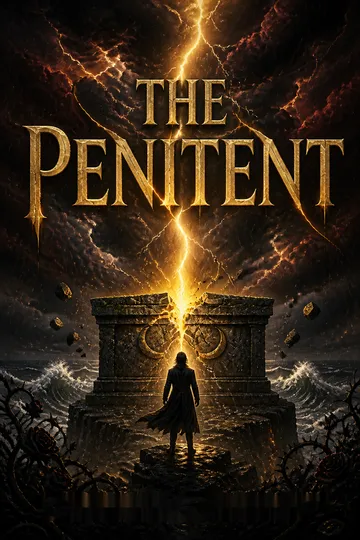
The Penitent concludes the Sacrifice Duet with Willow and Azrael navigating a family curse, betrayals, and their forbidden connection. Readers praised the fast-paced plot, gothic romance atmosphere, and paranormal elements involving witchcraft and secret societies. Azrael's character growth impressed many, while Willow remained a fierce, beloved heroine. The duet features enemies-to-lovers, arranged marriage, and dark themes including violence and attempted assault. Most reviews celebrated the satisfying HEA ending and dual POV storytelling. Many readers hope for a future book featuring Willow's sister Raven and Emmanuel.
People Also Read

Characters
Willow Wildblood
The marked Wildblood heirWillow is a young Wildblood woman bound by family history to Azrael Delacroix, yet she has a strong instinct for testing the explanations adults offer her. Her earlier encounter with Caleb taught her how charm can disguise surveillance and violence, leaving her wary of dependence even when she longs for comfort. She is perceptive about other people’s physical and emotional states, especially Bec’s, and is willing to challenge the household that has taken her in. Her identity as a witch is both a family inheritance and a source of strength she does not fully understand at first. Willow’s central struggle is not simply whether she can love Azrael, but whether she can remain an agent in a story that has long treated her as a destined victim.
Azrael Delacroix
The reluctant PenitentAzrael is the eldest Delacroix brother, a powerful Society member raised to believe he must perform the family’s Tithing. He is protective, disciplined, and physically formidable, but his confidence in inherited rules has left him slow to question Salomé’s authority or Bec’s treatment. His bond with Willow awakens tenderness he does not know how to express without turning it into possession or protection. He must learn that keeping someone safe is not the same as controlling her, and that loyalty to family cannot mean obedience to every family demand. Azrael’s seriousness and capacity for violence are real, but the book places equal weight on his willingness to doubt the role he was trained to occupy.
Emmanuel Delacroix
Azrael's steadfast brotherEmmanuel is Azrael’s brother and one of his closest allies. He shares the family’s losses, including the death of their brother Abacus, but approaches danger with a more openly practical manner. He helps track the Disciples, fights beside Azrael, and supports Bec while she recovers. His growing attachment to Raven complicates the family contract, which forbids another Delacroix from claiming a Wildblood woman. Emmanuel’s loyalty is not passive: he is willing to question what the family is permitted to want, even when he knows the old rules may punish that desire.
Bec Delacroix
The vulnerable younger sisterBec is Azrael and Emmanuel’s younger sister, a gentle teenager whose unexplained illness has kept her dependent on the adults around her. She is physically frail but emotionally generous, and she forms a warm bond with Willow and the Wildblood sisters. Her trust in Salomé reflects the limited world she has been allowed to inhabit, while her affection for Willow gives her room to imagine a wider one. Bec’s quiet presence exposes how easily concern can be used to control someone when others assume the patient is too weak to judge what is happening to her.
Raven Wildblood
Willow's fierce sisterRaven is Willow’s sister, outspoken and protective, with a closeness to Willow that often needs no explanation. She resists the Disciples even when bound and endangered, and she is quick to challenge Azrael’s brother Emmanuel when he gets too close to her. Her independence and humor lighten the Wildblood household, but her protective instincts can also place her in danger. Raven represents the family’s solidarity as a lived bond, not merely a shared name or magical inheritance.
Salomé Delacroix
The family's iron matriarchSalomé raised her grandchildren after the Delacroix family suffered repeated losses, and she believes strict obedience to the Book of Tithes is the only way to keep the family alive. Her care comes fused with control: she decides what others should know, what risks they should accept, and whose suffering counts as necessary. Fear of losing her family and fear of her own mortality feed her devotion to the ritual. Salomé’s polished composure makes her influence difficult to question, especially for children raised to regard her as their sole authority. She embodies the way love and protection can become coercive when a person treats another’s autonomy as a threat.
Caleb Church
The stalking DiscipleCaleb is a Disciple whose religious certainty masks an intense need to possess and punish Willow. He first approaches her as a charming older boy while secretly watching her family for the cult. When she resists him, he recasts her independence as sin and treats violence as a form of moral authority. His language of purification gives him a justification for violating the very people he claims to judge. Caleb is dangerous not because his beliefs are coherent, but because he uses them to make private desire sound like public duty.
Celeste Wildblood
The perceptive grandmotherCeleste, called Nan by Willow, is the Wildblood sisters’ grandmother and a keeper of family knowledge. She respects the danger of the old conflict but does not confuse tradition with inevitability. Her guidance is affectionate and psychologically precise: she asks Willow to preserve hope without demanding that she trust blindly. Celeste also sees that the stories passed down by both families may omit crucial details. Her influence offers a contrast to Salomé’s coercive certainty, since she supports Willow’s judgment rather than replacing it.
Alfred Noyes
The cult's elder patronAlfred Noyes is an elderly former military man who once led and financed the Disciples before his grandson Frederik took over. He represents the cult’s institutional reach: its violence depends not only on fervent followers but on money, hierarchy, and political influence. Noyes’s authority is presented as paternal and strategic, yet the organization he sustains repeatedly turns people into instruments. His connection to the historical witch trials gives the Disciples an inherited grievance they use to justify present-day persecution.
Barrett Wildblood
Willow's grieving fatherBarrett is Willow’s father and a protective man who knows the families’ history has placed his daughters at risk. He distrusts the Delacroixes, especially Azrael, whose role in the family contract makes him appear both protector and threat. Barrett’s anger is rooted in helplessness as much as hostility: he has been raising his daughters with the knowledge that tradition may take one of them from him. He must confront the limits of his own ability to keep them safe.
Clara Wildblood
Willow's steady motherClara is Willow’s mother and Barrett’s partner. She mediates between her husband’s anger and the immediate need to recover their daughters, insisting that old grievances cannot take priority during a crisis. Her loyalty to the Wildblood family is clear, but she also understands that cooperation may be necessary to protect it. Clara’s steadiness helps hold the household together when fear threatens to turn every conversation into another confrontation.
Elizabeth Wildblood
The ancestral witchElizabeth is the Wildblood ancestor executed for witchcraft whose curse became the foundation of the Delacroix Tithing. Her presence reaches Willow through dreams, warnings, and moments of extraordinary strength. The families have turned Elizabeth into competing versions of a symbol: a dangerous witch to the Delacroixes and a source of inherited power to the Wildbloods. The story gradually asks whether those inherited interpretations reveal Elizabeth’s will or merely preserve the choices made by later generations.
Abacus Delacroix
The absent elder brotherAbacus was Azrael and Emmanuel’s brother, whose death continues to shape both men’s understanding of duty and despair. He could not accept the future the Tithing demanded, and his loss left Azrael carrying the role intended for him. Abacus’s story is a warning about the psychological cost of treating inherited violence as unavoidable. His memory makes Azrael’s decisions feel less like abstract rebellion and more like a chance to refuse the same destructive pattern.
Frederik Noyes
The displaced cult prophetFrederik is Alfred Noyes’s grandson and the Disciple leader known as the Prophet. His authority is already under pressure when Caleb returns, exposing fractures within the cult. Frederik’s position shows how religious hierarchy can depend on personal power as much as doctrine.
Brother Amos
The dissenting initiateAmos is a young Disciple who objects when Caleb expands the planned executions to include someone he believes is innocent. His protest shows that individual moral hesitation survives inside the cult, though its leaders have ways to punish dissent. Amos makes the Disciples’ violence look less like unanimous belief and more like authority enforced through intimidation.
Ezra Moore
The discreet investigatorEzra is a private investigator with connections and resources beyond the Wildblood family’s own inquiries. He helps Azrael trace Noyes, understand Caleb’s return to the Disciples, and pursue the evidence surrounding Bec’s drink. Ezra’s role is practical: he turns suspicion into leads while reminding Azrael that Caleb remains dangerous even when absent.
Larissa
The police contactLarissa is a police investigator who risks professional trouble by sharing photographs and information with Azrael and Emmanuel. She provides a necessary bridge between the official investigation and the families’ urgent private search. Her caution reflects the limits of what law enforcement can disclose while a case remains open.
Winter, Aurora, and Cordelia
Willow's outspoken sistersWinter, Aurora, and Cordelia are Willow’s sisters, each contributing to the Wildblood home’s teasing, affectionate energy. They welcome Bec and needle Azrael, making it clear that he must enter the family on their terms rather than as its new authority. Their humor does not erase the danger surrounding them; it shows what the families are trying to protect: ordinary closeness, shared meals, and room for younger women to choose their own lives.
Louis Delacroix and Solange Wildblood
The tragic earlier pairingLouis and Solange are a past Delacroix and Wildblood pair recorded in the Book of Tithes. Their relationship gives Azrael evidence that love between the families has existed before, while their account also shows how tradition can override personal feeling. Their history provides a precedent, not a solution, and forces the present generation to ask what earlier lovers could not change.
Madame Dubois
The cryptic card readerMadame Dubois reads tarot at the apothecary where Willow sells her handmade goods. During Willow and Azrael’s visit, she gives Azrael a piece of obsidian and reacts to him as if she senses danger or change around the couple. Her brief appearance adds an uncanny note to a story where supernatural signs are difficult to separate from family superstition.
Plot Devices
The Book of Tithes
The inherited murder contractThe Book of Tithes records the agreement binding Delacroix men to sacrifice Wildblood women in exchange for protection from Elizabeth Wildblood’s curse. It supplies the families with a written account of their past and gives Salomé a source of authority, while its pages also reveal that past Penitents have interpreted or suffered the ritual differently. Willow’s discovery of Azrael’s name in the book makes his tenderness difficult to trust. The book’s existence turns family history into an apparent legal and religious obligation, which Azrael must choose whether to obey. Its importance is partly symbolic, but the characters treat it as a practical threat.
Elizabeth's Presence
Ancestral warning and powerElizabeth reaches Willow through a voice that urges her to resist Caleb and later guides her toward strength at the altar. She also appears in Azrael’s recurring dreams, though he cannot understand her final words at first. The presence links the historical execution to the current conflict without making the past entirely transparent. Willow’s connection to Elizabeth is not a simple inheritance of magical ability; it is also a way to reclaim a history the families have used to define her as a sacrifice. The dreams and warnings become crucial as Azrael questions the meaning of the curse.
Shemhazai's Statue
The curse's physical altarThe statue of Shemhazai stands at the Delacroix estate as the focal point of the Tithing and the family’s fear of divine punishment. Its altar breaks during violent storms, and Azrael eventually attacks the statue with a sledgehammer after rejecting the role of Penitent. The monument makes the family’s abstract beliefs concrete: blood has been spilled at its feet, offerings have been placed on it, and its presence shapes how the household uses its grounds. Its destruction during the final confrontation marks a decisive break with the ritual’s visible authority.
The Disciples' Cross
A signature of persecutionThe Disciples carve a cross into the foreheads of women they target, treating physical injury as a mark of supposed religious judgment. The same sign appears in photographs, on Willow after Caleb attacks her, and in threats that reach the family even under protection. It functions as evidence linking murders and as a tool of intimidation, but its meaning is imposed by the cult rather than chosen by its victims. Its repeated presence connects Caleb’s fixation on Willow to the larger campaign against women the Disciples label witches.
Bec's Protein Shakes
A hidden source of illnessThe nutritional drinks Salomé gives Bec appear to be part of her care, making them easy for the family to accept without question. Willow notices that Bec’s condition improves after the girls are abducted, when the drinks are absent, and asks Azrael to have them tested. The laboratory finds dangerous levels of sodium, revealing that a routine meant to sustain Bec has been worsening her health. The shakes turn the domestic setting into part of the threat and show why attention to small changes can matter more than inherited explanations.
The Sacrifice Series Series
About the Author
Other books by Natasha Knight


Download PDF
Download EPUB
.epub digital book format is ideal for reading ebooks on phones, tablets, and e-readers.








