

Plot Summary
Prologue
At twenty-one, Helena Willow stands with her three blonde sisters on the blocks where generations of Willow daughters have been inspected by the Scafonis. The family calls the ritual a harvest: one daughter is taken for three years, passed from brother to brother.
Helena is already marked as unfit because she is not a virgin, and expects Sebastian Scafoni to choose one of her sisters instead. But Sebastian studies her dark hair, silver streak, and open defiance, then selects her. Her parents bind and gag her before he arrives. Helena enters the ceremony believing her difference might protect her family, not knowing why he wants her.
The ceremony makes family history physical: the blocks, restraints, and decaying garments turn an inherited agreement into a present-tense violation. Helena's blood mark should exclude her, yet it becomes part of what distinguishes her to Sebastian. The reversal establishes the story's central contradiction: she imagines her difference as protection, while the Scafonis read it as a reason to claim her. Her parents' compliance also complicates the familiar language of family loyalty. They are not simply absent; they actively prepare their daughters for a ritual they know is cruel, leaving Helena to face both the captors and the people who delivered her to them.
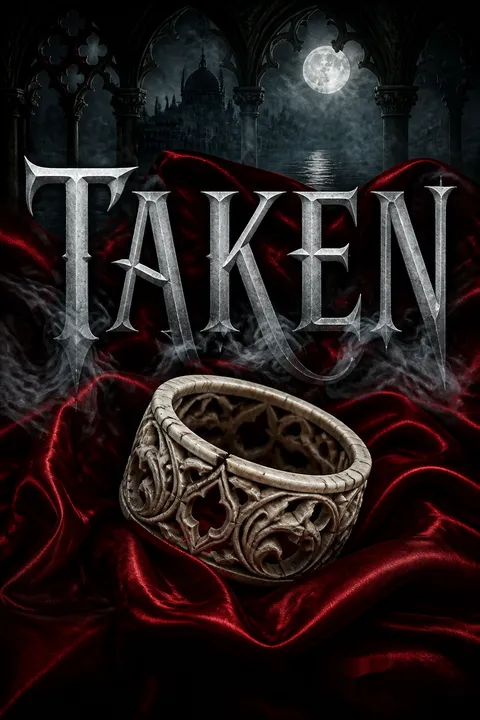
A Ring Against Inheritance
Given an hour to leave, Helena packs no belongings and dresses for the occasion as if for a funeral. Her great-aunt Helena, a previous Willow Girl, insists on a private farewell. She gives Helena a strange bone ring set with dark stones and tells her that surviving the Scafonis is possible, then places the burden of ending the tradition on her.
Helena doubts she has that strength, but carries the ring as her parents lead her away. At the private airfield, Sebastian and his brothers wait beside a jet. Ethan threatens her, Sebastian orders him away, and Helena boards with no passport of her own, bound for the Scafoni estate in Venice.
The ring gives Helena a form of inheritance that competes with the family's official one. The Willow men inherit land and authority; the women inherit a repeated ordeal, while the older Helena passes down knowledge and a possible means of resistance. Yet the younger Helena does not receive a clear plan, only an expectation that she become strong enough to act. That gap matters: courage here is not a stable quality but a demand imposed on someone frightened and isolated. The farewell also gives her a connection to a woman who understands the cost of the ritual, something the compliant adults around her have failed to provide.
Venice Behind Locked Doors
During the overnight flight, Helena demands to know where she is being taken. Sebastian explains that the Scafonis arranged her papers, then treats her fear as an opportunity to unsettle her. Once they reach the island estate, he takes her clothes and pocketknife, handles her despite her resistance, and threatens punishment when she fights back.
Helena bites his lip; Sebastian answers by cutting a shallow mark into the back of her neck with her own knife. He says a doctor will provide birth control, making clear he expects to keep her for the full term. Before he leaves her, he frames obedience as her best chance of surviving his household, while Helena sees that his promises offer no actual freedom.
Sebastian's power operates through a combination of physical force and calculated uncertainty. He alternates between threat, restraint, and moments that appear almost considerate, making it difficult for Helena to predict which behavior will follow. That unpredictability is not evidence of safety; it is part of how he maintains control. Helena's bite is a small act of resistance, but his scar turns the exchange into a record he controls. The scene also establishes the compromised meaning of choice in their relationship. Helena can resist, but the consequences are set by the person who holds her, her documents, and access to the outside world.
Lucinda's Nine Strokes
Sebastian leaves his stepmother, Lucinda, to arrange Helena's examination. Lucinda brings an elderly doctor and Ethan into the room, humiliates Helena during invasive checks, and then canes her after Helena resists. Although Sebastian had authorized only a limited punishment, Lucinda delivers nine strokes and leaves Helena bound and injured.
When Sebastian returns, he releases her, brings water, and confronts Lucinda, insisting that she exceeded his order. Helena refuses to mistake this for rescue: he had still arranged the examination and still treats her as his property. His anger at Lucinda is also a warning that he will decide the terms of Helena's suffering himself, not that she is free from it.
Lucinda's punishment exposes how authority circulates inside the Scafoni household. Helena is the person harmed, but the argument that follows centers on which family member had the right to decide how much harm was permissible. Sebastian's intervention changes the immediate conditions without challenging the underlying ownership. This distinction is essential to the book's power dynamics: protection can be real in its consequences and still remain an instrument of control. Helena recognizes this, resisting the invitation to read his anger as moral opposition. Lucinda, meanwhile, uses the examination and cane to turn a supposedly practical procedure into public degradation, making the body the household's most direct site of discipline.
The Post on the Island
The next day, Sebastian gives Helena a tour of the island and shows her the whipping post. He fastens her to it and sexually humiliates her, then leaves her there for hours as punishment for her defiance. Night falls before Gregory returns and finds her unable to stand. He carries her to her room, helps her drink and eat, and gives her a shirt.
Helena asks why he is treating her kindly; Gregory says that not everyone in the house wants the life they have been assigned. His remark unsettles her, though she suspects he may simply be competing with Sebastian over what belongs to him. For the first time, Helena sees that the brothers' obedience to tradition may conceal conflict within the family.
The post is both a tool of physical punishment and a stage on which Sebastian defines the relationship in front of Helena. His leaving her there extends the punishment beyond pain into abandonment, making time itself part of the coercion. Gregory's intervention offers care, but its ambiguity prevents it from becoming uncomplicated trust. Helena has learned that kindness can coexist with possession, so she interprets his help through the same suspicious framework that keeps her alert. His comment about unwillingness opens a crack in the Scafoni family's united front, but the book does not yet show whether that crack can become an alliance. Helena's isolation makes even a glass of water feel politically charged.
The Statement in Sebastian's Room
When the household leaves the island, Helena searches Sebastian's bedroom and finds a bank statement beside his private belongings. The account bears markings that suggest payments tied to the Willow family. Sebastian catches her with the paper and takes it back. Helena tries to flee, but he restrains her and forces sexual contact, deepening her confusion between physical response and consent.
She wakes to find herself drawn toward him at night despite knowing he is her captor. The statement gives her a new reason to distrust her parents: the ritual may not be only a family debt, but a transaction. She cannot yet see the full record, so suspicion follows her into the next day's trip to Venice.
The bank statement shifts Helena's understanding of betrayal from personal to institutional. Until now, her parents' compliance could be explained as fear of Scafoni power; the possibility of payment suggests that material benefit may also be involved. Her response to Sebastian remains psychologically fraught. Bodily arousal, proximity, and dependence are repeatedly placed beside force, but none of them make the coercion consensual. The narrative's tension comes partly from Helena trying to interpret reactions that her captor exploits, while she lacks the safety needed to make an unpressured choice. The document is therefore more than a clue: it challenges the story she has been told about why her family surrendered her.
The Willow Ledger
Sebastian takes Helena to the Scafoni lawyer, Joseph Gallo, where an official book records each Willow Girl with photographs from the beginning and end of her term. Helena sees her aunt Libby among the women documented there. Sebastian then explains the families' origin story: an arranged marriage, an inheritance taken by a Willow husband, and a Scafoni matriarch's curse against the Willow line.
He also reveals that the Scafonis own the Willow estate and have paid Helena's parents for each daughter's service. Back on the island, Helena confronts him with the records and tries to stab him, but he stops her. His explanation leaves her facing two betrayals at once: the Scafonis' coercion and her family's willingness to accept money.
The ledger gives bureaucratic form to a practice the families call tradition. Photographs reduce each woman's experience to an administrative before-and-after, while the payments connect private violence to property and wealth. Sebastian's origin story may explain how the families justify the arrangement, but it does not make their conduct legitimate. Helena's attempt to stab him is a direct response to learning that her parents' role may be more than passive submission. It also shows how little space she has to act: the records reveal the system, but cannot immediately free her from it. History here functions less as settled truth than as a weapon each family uses to make present exploitation seem inevitable.
The Missing Firstborn
The next morning, Sebastian tells Helena that her great-aunt Helena did not complete her full term. During her own time with the Scafonis, she killed the firstborn son in the family, so she was passed to the next brother. He says the event was recorded, but Helena doubts his account and struggles to reconcile it with the fierce old woman she knows.
The report that the dead son's finger was never found makes Helena look again at the bone ring her great-aunt gave her. Sebastian does not explain the ring's origin, leaving Helena to connect the clues herself. The revelation turns the family record from a list of victims into evidence that a Willow woman once struck back.
This revelation complicates the role Helena's great-aunt has assigned her. The older woman is not simply a survivor who endured the tradition; Sebastian's account presents her as someone who used lethal force against it. Helena cannot verify the story, and that uncertainty matters because the families' records are produced by the same people who benefit from the ritual. The ring becomes a material question as well as an emblem of resistance: its bone may carry a history the Scafonis would rather contain. Helena's response moves between disbelief and recognition, suggesting that inherited courage is not a comforting family trait but something costly, morally difficult, and potentially dangerous.
Gregory Watches the Table
At dinner, Helena asks Sebastian and Gregory what happened to her aunt Libby during her years on the island. Sebastian explains that his father cared for Libby, while Gregory identifies Lucinda as the person who marked her with repeated punishments. The boys witnessed some of it but were too young to stop it. Helena presses Gregory about whether he wants his turn with her.
Sebastian responds by drawing Gregory into a charged encounter, letting him touch Helena while watching closely, then reasserting control himself. Helena understands that Gregory is not simply a gentler alternative. Sebastian uses his brother's interest to provoke and possess her, while Gregory's calm makes his intentions difficult to read.
The dinner conversation links Helena's present to Libby's past without making the family history safely distant. The brothers' childhood witness does not absolve them, but it complicates the ease with which they can be assigned identical motives. Gregory's earlier act of care now sits beside his participation in Sebastian's display, showing how quickly kindness can be folded into the household's hierarchy. Sebastian's jealousy is expressed as control over access, not as an equal claim between partners. Helena's question about Gregory is an attempt to understand the rules governing her future; Sebastian turns it into a demonstration that the rules remain his to enforce.
The Verona Train Station
Sebastian takes Helena to Verona for a night away from the island. In the hotel, she admits that part of her still hopes he might protect her, and he responds with an unexpectedly tender intimacy. While he attends a meeting, Helena finds money in his clothes, leaves the hotel, and reaches the train station.
She buys a ticket but does not board before Sebastian finds her; he had arranged for someone to watch her. He takes her to a shop, buys a leather strap, and punishes her back at the hotel, insisting that her disobedience matters more than her explanation that she was not truly leaving. His tenderness and violence arrive within hours, making escape feel both necessary and costly.
The Verona episode gives Helena a brief encounter with ordinary movement: streets, shops, and a train she can almost board. The fact that she stops herself matters as much as Sebastian's interception; she has begun to imagine flight but cannot yet picture a safe destination or a life beyond the island. His surveillance confirms that apparent freedom was managed from the start. The sharp shift from tenderness to punishment reveals the instability of their private bond. Sebastian can respond to her vulnerability with intimacy, then use his authority to discipline her for acting independently. The episode asks the reader to distinguish emotional closeness from genuine safety, a distinction Helena herself is still struggling to hold.
A Secret Above Faust
That evening, Sebastian dresses Helena for dinner and the opera, taking her first to a society party hosted by Vitelli. She feels out of place among the guests and watches Sebastian speak privately with the younger Alexa Vitelli. After Alexa leaves a room adjusting her dress, Sebastian follows, and Helena reads the scene as betrayal.
At the opera, he leads Helena through backstage passages to a hidden balcony above the stage. There he explains that Alexa belongs to his past and that Helena is the woman he wants, then resumes their sexual relationship. The setting offers a moment of secrecy from the family, but Helena cannot tell whether his declaration marks a new commitment or another way to keep her close.
The party and opera place Helena inside Sebastian's public world, where wealth and social fluency contrast with her captivity. The sight of Alexa unsettles her not because she has been promised a conventional relationship, but because Sebastian has invited her to feel chosen while withholding the terms of that choice. His explanation on the balcony offers reassurance, yet the surrounding power imbalance remains untouched. The opera's story of a bargain for love echoes the families' own transactions, but Helena is not a spectator with the freedom to leave at the curtain. Her uncertainty is the point: intimacy can feel like recognition while still serving the captor's control.
The Mausoleum's Firstborn
On the return to the island, Sebastian tells Helena he has no intention of handing her to his brothers, though he asks her to trust him without explaining how he will stop it. Later, Helena follows an overgrown path to the Scafoni mausoleum, where she finds the graves of Anabelle and her son, then notices the dates and names of Sebastian's family.
Gregory appears and confirms that Sebastian had a twin, Timothy, who was born first and lived only days. He also reveals that Sebastian's mother died by suicide. Gregory uses the discovery to suggest Sebastian's authority is not secure and implies he could claim Helena himself. She refuses to keep his secret, leaves the mausoleum, and returns to the house shaken by what she has learned.
The mausoleum makes family history visible as a contested structure rather than a seamless lineage. Names, dates, and the damaged inscription of Anabelle's son challenge the tidy story Sebastian has offered, while Timothy's place complicates the assumption that Sebastian's authority follows naturally from birth. Gregory uses that uncertainty not to help Helena, but to unsettle her and advertise his own power. His disclosure of Sebastian's mother's suicide also reveals the private grief beneath the family's rituals, without excusing the harm the brothers perpetuate. Helena's refusal to share a secret with Gregory is a small but decisive judgment: information is not the same as trust.
A Letter From Amy
Back in her room, Helena finds Lucinda waiting with a letter from her sister Amy and a newspaper notice. The notice says that her great-aunt Helena died weeks earlier, meaning Sebastian knew she could no longer answer Helena's requests to call.
Lucinda gives Helena a passport and says a boat will take her to the airport, but makes clear that she wants her gone from Sebastian, not safely returned to her family. Helena reads Amy's note and understands that the chance to leave is real, even if Lucinda's motives are not. She takes only a few clothes and the passport, then runs downstairs and boards the waiting boat, carrying grief and suspicion with her.
The letter turns Helena's longed-for contact with home into a fresh injury. Her great-aunt is dead, and Sebastian's silence has deprived Helena of the chance to speak with her while she was alive. Lucinda's offer exploits that shock: she presents a route out, but her purpose is to weaken Sebastian rather than restore Helena's independence. The passport and boat create the appearance of agency, yet the escape is arranged by someone who has repeatedly shown hostility toward her. Helena leaves not because she trusts Lucinda, but because she has lost trust in Sebastian and cannot bear another night inside the house built on withheld truths.
The Boat Was a Trap
Once the boat pulls away, Helena enters its cabin and discovers Ethan waiting with another man. Remy is at the wheel, but the boat is not taking her to freedom. The hidden man presses a drugged cloth over her face while Ethan watches her struggle, and Helena loses consciousness as they carry her toward an unknown destination.
At the same time, Sebastian realizes she has left and confronts Lucinda. He has learned that Ethan is not his biological brother and tries to use the secret to keep Ethan away from Helena. Lucinda refuses his terms, shoots Sebastian, and strikes him down as he reaches for her. The novel ends with Helena captured and Sebastian unconscious, their fates unresolved.
The ending closes the apparent escape route without resolving the larger conflict. Helena's departure is engineered by Lucinda, and Ethan's presence converts a passage away from the island into another abduction. In parallel, Sebastian's attempt to protect Helena relies on exposing a family secret and bargaining with the same inheritance system that has sustained her captivity. His violence toward Lucinda and her gunfire leave that struggle suspended rather than settled. The cliffhanger denies the couple a clean rescue or a stable reconciliation. It also makes the limits of Sebastian's protection unmistakable: whatever his feelings, he has not dismantled the structure that allows his family to move Helena from one captor to another.
Analysis
Taken builds its romance inside an arrangement that removes Helena's freedom before any apparent intimacy can be evaluated. The Scafonis call the Willow tradition an obligation, but the book makes its mechanisms concrete: restraints, a secluded island, control of food and clothing, a lawyer's ledger, and money paid to Helena's parents. That detail matters because it prevents the ritual from being merely gothic atmosphere. It is a system with beneficiaries, administrators, and people who have learned to enforce it.
Sebastian's attachment to Helena complicates the system without dismantling it. He notices her fear, intervenes when Lucinda exceeds his orders, and promises not to hand her to his brothers. Yet he also claims authority over her body and punishes her resistance. The narrative deliberately places tenderness beside coercion, producing emotional confusion for Helena and for the reader. Her bodily response cannot erase the power imbalance or turn force into consent. Her growing attachment is therefore better understood as a psychological struggle under captivity than as proof that the captivity is benign.
The family histories offer competing explanations for present violence. The Scafonis invoke a curse and a grievance reaching back generations; the Willows conceal both the payments and the property arrangement. History becomes a tool of governance: whoever controls the story can frame exploitation as debt, tradition, or necessary survival. Helena's discoveries weaken those explanations, but knowledge alone cannot free her. The ring and mausoleum preserve evidence that family roles are not inevitable, while the final abduction shows how quickly resistance can be captured by another person's agenda.
The book ends without resolving the ethical or practical conflict. Sebastian's feelings have not made him safe, and Lucinda's apparent offer of escape is another form of manipulation. Helena's central task remains larger than choosing between brothers: she must find a way to act beyond the inherited bargain itself.
Review Summary
Taken by Natasha Knight is the first book in the Dark Legacy Duet, featuring a dark romance between Sebastian Scafoni and Helena Willow. Based on a generations-old tradition, Sebastian chooses Helena from among her quadruplet sisters to serve him and his brothers. Reviewers praised the book's dark, intense, and compelling storyline with strong character chemistry, though some found the violence and dubious consent difficult. Helena's strength and defiance resonated with readers, while Sebastian's complex, contradictory nature intrigued many. The book ends on a cliffhanger that left readers eager for the sequel.
People Also Read


Characters
Helena Willow
The Unwilling Willow HeirHelena is the dark-haired eldest of four Willow sisters, marked by a silver streak and a stubborn refusal to perform meekness. She has spent years resenting the family ritual that will take one daughter at twenty-one, and she tries to escape her fate by ensuring she is not a virgin. When Sebastian chooses her anyway, her defiance becomes both a source of danger and her chief means of preserving a sense of self. Helena is protective of her sisters and drawn to the history her elders have withheld. Her central struggle is not simply whether she can endure the Scafonis, but whether she can distinguish desire, dependence, and safety while trapped inside their power.
Sebastian Scafoni
The Controlling First SonSebastian is the eldest living Scafoni son and head of the family, accustomed to making decisions and enforcing the rules that keep his brothers in line. He treats the Willow tradition as both inheritance and obligation, yet Helena's resistance unsettles the distance he expects to maintain. He can be observant and unexpectedly attentive, noticing her diet, habits, and fear, but he also uses force and punishment to control her. His history with Lucinda and the loss of his mother shape a guarded, possessive temperament. Sebastian's defining contradiction is that he can feel protective of Helena while continuing to participate in the system that denies her freedom.
Lucinda Scafoni
The Household EnforcerLucinda is Sebastian's aunt and stepmother, a severe presence in the Scafoni household who treats discipline as a right she has earned. She despises the Willow women and uses their tradition to exercise power over them, while also competing with Sebastian for authority. Her history with her sister and with the previous Willow Girl feeds a resentment she rarely disguises. Lucinda is strategic as well as cruel: she understands the family's money, secrets, and rivalries, and knows how to turn them against one another. Her polished manners make her hostility feel deliberate rather than impulsive.
Gregory Scafoni
The Watchful Younger BrotherGregory is the youngest Scafoni brother, quiet and difficult to read. His silence initially makes him seem less threatening than Ethan, and he sometimes offers Helena practical care when she is injured or exhausted. But he is also alert to the family's power struggles and understands how to use uncertainty to unsettle her. Gregory's restraint is not the same as innocence; he can be attentive without being trustworthy. He watches Sebastian and Helena closely, calculating where he might fit into their conflict and what the family tradition may permit him to claim.
Ethan Scafoni
The Unstable Rival BrotherEthan is Sebastian's younger brother, openly jealous of his authority and eager for a share of the Willow Girl's term. He is impulsive, taunting, and prone to treating Helena as an object of family entitlement. A brain injury from a boating accident affects his behavior, while Lucinda's influence reinforces his hostility. Sebastian recognizes that Ethan's capacity for self-control is limited, but this does not make him safe for Helena. Ethan's volatility is one reason Sebastian insists on keeping her close, even as Sebastian's own methods remain coercive.
Aunt Helena
The Elder SurvivorHelena's great-aunt is an elderly former Willow Girl whose experience gives her knowledge the younger generation lacks. Fierce and unsentimental, she has never treated the family ritual as harmless tradition. She recognizes the younger Helena's strength even when Helena herself sees only fear, and urges her to understand that survival need not mean surrender. The bone ring she passes on carries the weight of her private history. Aunt Helena's relationship with Helena offers an alternative model of family loyalty, one grounded in warning and preparation rather than obedience.
Libby Willow
The Haunted PredecessorLibby is Helena's aunt and the Willow Girl from the generation before hers. Helena remembers her return as a child but does not understand what the Scafonis did to her until she is older. Sebastian and Gregory also remember Libby from their childhood on the island, and their recollections expose the cruelty embedded in the family's ritual. Her experience shapes Helena's fears and gives the past a face more intimate than an entry in the Scafoni records.
Amy Willow
The Devoted SisterAmy is Helena's younger sister and one of the Willow quadruplets. She shares the family's secluded upbringing and the knowledge that one sister will be taken, though Helena has often acted as her protector. A letter from Amy becomes an important connection to home while Helena is isolated in Venice. Amy's place in the family reminds Helena that her choices affect more than her own survival, especially when she thinks about the next generation of Willow daughters.
Helena's father
The Compliant PatriarchHelena's father oversees the harvesting ceremony and physically helps restrain her when she resists. He appears burdened by the choice but does not challenge the Scafoni arrangement. His passivity places him between affection for his daughters and his willingness to preserve the family estate and its inherited bargain. For Helena, his failure to protect her is as consequential as the Scafonis' open threats.
Helena's mother
The Tradition's CustodianHelena's mother is a Willow woman who understands what the harvesting tradition demands, yet helps prepare her daughters for it. She is more forceful than her husband in enforcing family expectations and has a complicated relationship with her older sister, Aunt Helena. Her choices reveal how a system can be maintained not only by its powerful beneficiaries but also by those who have learned to survive within it.
Remy
The Estate KeeperRemy is the longtime caretaker of the Scafoni island and one of Sebastian's trusted household employees. He knows the history of the Willow Girl arrangement and notices when Helena is left without food or care. His measured manner makes him a quiet observer of the family's behavior, though his role in the estate's routines does not give Helena the independence she needs.
Joseph Gallo
The Family RecordkeeperJoseph Gallo is the Scafoni lawyer responsible for documenting the Willow arrangement. He maintains the official book of photographs and signatures, presenting a coercive custom as a formal transaction. His polished professionalism shows how the family's power is supported by people who turn private abuse into orderly paperwork.
Alexa Vitelli
The Polished Society GuestAlexa is the daughter of Sebastian's acquaintance, Vitelli, and moves easily through the wealthy social world Helena finds alienating. Her presence at the party gives Helena a glimpse of Sebastian's life beyond the island and unsettles her sense of their private bond. Alexa's role is brief, but her appearance exposes how little Helena knows about the man who controls her.
Samantha Scafoni
The Remembered MotherSamantha is Sebastian's biological mother and Lucinda's sister. Sebastian remembers her as gentle and religious, a contrast to the harsher household Lucinda later governs. Her absence shapes his grief and his complicated relationship with faith, though he rarely speaks openly about her.
Timothy Scafoni
The Hidden TwinTimothy is Sebastian's twin brother, a figure preserved in the Scafoni family mausoleum. His place in the family record makes birth order and inheritance less simple than Sebastian's public authority suggests. Though absent from the present household, his name alters how Helena understands the family structure.
Plot Devices
The Willow Harvesting
An Inherited CaptivityThe harvesting is the agreement that takes one Willow daughter at twenty-one and places her under the control of the Scafoni brothers for three years. Its ritual elements, including the blocks, garments, and inspection, make a private family bargain look ceremonial and inevitable. Payments and threats help enforce it, while the promise of a later release disguises the absence of consent. The tradition drives Helena's abduction and gives Sebastian a framework for justifying his authority. Because both families participate in preserving it, the device links intimate violence to inheritance, property, and intergenerational complicity.
The Bone Ring
A Keepsake of ResistanceAunt Helena gives the younger Helena a ring made from bone and dark stones before she leaves for the Scafoni estate. At first it serves as a physical connection to an older woman who knows what the Willow Girls face. Its skull design and unusual material become more charged as Helena learns about the Scafoni family's history and the missing finger of a previous firstborn son. The ring does not provide a practical escape, but it holds an alternative family memory: survival can include taking something back, not merely enduring what is done to you.
The Scafoni Ledger
Abuse Made OfficialJoseph Gallo's book records each Willow Girl through signatures and photographs taken at the beginning and end of her term. The images allow Helena to compare the women as they entered and left the Scafoni household, while the financial records show payments to the Willow family. Together with the deed to Helena's home, the documents reveal that the tradition is supported by legal and economic control, not only by an old curse. The ledger's polished form is part of its function: it converts captivity into an administrated family procedure and attempts to make a human life look like a managed asset.
The Whipping Post
A Visible ThreatThe post stands on the Scafoni island as a constant reminder of the punishment available to those who disobey. Lucinda uses a cane on Helena in her room, while Sebastian later binds Helena at the post and leaves her there. The post transforms the family's abstract rules into a physical location Helena can see and fear whenever she walks the grounds. It also stages power as spectacle: punishment is not only inflicted but made into a warning about who controls her body and how long she may be left to suffer.
The Family Mausoleum
A Stone Record of PowerThe Scafoni mausoleum stores the family history in names, dates, and the arrangement of graves. Helena's visit reveals that Sebastian had a twin brother who was born first, complicating the simple basis of Sebastian's authority. Gregory uses that discovery to pressure Helena and suggest the family hierarchy can be contested. The mausoleum also holds the remains of the lineage's origin story, linking the living family's rules to its dead. Rather than settling the truth, its inscriptions make inheritance visible as something vulnerable to interpretation and political use.
Dark Legacy Series


About the Author
Other books by Natasha Knight




Download PDF
Download EPUB
.epub digital book format is ideal for reading ebooks on phones, tablets, and e-readers.








