


Plot Summary
Prologue
Azrael dreams himself into the mind of Isaiah Delacroix, the first Penitent, as Isaiah watches Elizabeth Wildblood die at the hanging tree. In the vision, Elizabeth’s curse and Azrael’s own revulsion become tangled: he feels the noose tighten around his throat and discovers a bloodied lock of her hair in his pocket.
Then Elizabeth’s face changes to Willow’s, still alive beneath the rope. The nightmare makes Azrael both heir to the family’s violence and its next instrument, warning that the old sacrifice is about to begin again.
The dream makes inherited guilt bodily before the plot explains its history. Azrael does not merely witness Isaiah’s cruelty; he inhabits it, sharing the pleasure and shame that implicate the descendant in the ancestor’s crime. The lock of hair turns violence into a keepsake, a private trophy that survives its victim. When Elizabeth’s face becomes Willow’s, the past stops being safely historical. The scene establishes the book’s central uncertainty: whether Azrael is repeating a curse, obeying a family myth, or choosing violence because the myth gives it a sacred name.
Willow’s Last Birthday
On the eve of her twenty-second birthday, Willow Wildblood sits among her parents, grandmother, and four sisters while they try to make the celebration feel ordinary. It cannot. The crescent mark on her breast identifies her as the chosen Wildblood, destined by an old family pact to be taken as a Delacroix bride.
Her mother has packed money and offered an escape route to relatives in Ireland, but Willow refuses to run. She believes the Delacroixes would seize one of her sisters instead, and she will not trade their safety for her own. A threatening letter from Caleb Church, a man from her past, arrives just before the Delacroixes come. Willow faces the ceremony with two dangers closing in.
Willow’s acceptance of the Tithing is not simple fatalism. She makes a decision within an intolerably narrow range, treating her sisters’ safety as the one choice still available to her. That protective logic has real moral force, but it also reveals how completely the families’ inherited rules have colonized her imagination: escape feels less like freedom than a way to transfer the cost to someone she loves. The letter from Caleb complicates the ritual’s threat. Willow is not entering danger from a secure world; violence already has a route back to her.
The Penitent’s Inheritance
Azrael Delacroix wakes from the hanging-tree nightmare with the family ring on his finger, then tells himself he must have put it on while asleep. His grandmother, Salomé, treats the ring and the Tithing as sacred duties. Azrael’s own reasons are more intimate: his parents vanished at sea, his twin brother Abacus is gone, and his younger sister Rébecca is becoming frailer despite medical care.
He believes refusing the sacrifice could bring another catastrophe on the family. When Salomé threatens to discipline Rébecca, Azrael makes clear she will answer to him if she harms his sister again. He still puts on the ring and heads for the Wildblood house, choosing the duty he distrusts over the risk of losing Rébecca.
Azrael’s obedience grows from fear sharpened by bereavement, not from uncomplicated faith. The family’s doctrine offers him a terrible bargain: perform violence now, or risk unexplained losses later. Salomé exploits that uncertainty by making Rébecca’s safety the emotional lever. His defense of his sister shows that he can resist his grandmother, yet he cannot extend the same protection to Willow, whom the ritual has already classified as expendable. His nightmares expose the cost of this split. He experiences the violence as his own even while insisting that duty leaves him no choice.
The Crescent Chooses
At Briar Rose, Azrael examines the five Wildblood sisters for the crescent birthmark that identifies the sacrifice. Cordelia, Aurora, Winter, and Raven are unmarked; Willow bears the sign on her breast. Her steady gaze unsettles him, while his brother Emmanuel reacts strongly to Raven. At Saint Trinity Cathedral, Willow rejects the Society’s prescribed white gown and arrives in black, wearing her hair loose and her lipstick vivid.
She and Azrael exchange marriage vows before masked witnesses. Their first kiss carries an unexpected charge, but neither mistakes the ceremony for a freely chosen union. Willow leaves her family behind and enters the Delacroix world as Azrael’s wife, with the old treaty now binding her to his household.
The inspection turns a family of visually similar sisters into a selection ritual that reduces a person to a mark. Willow’s black gown answers that reduction with a small but legible act of authorship: she cannot refuse the marriage without endangering her family, but she can refuse the costume that would make her appear to consent. The kiss complicates the hostility without canceling the coercion. Attraction arrives inside an arrangement neither protagonist chose, so bodily response cannot stand as proof of freedom. The ceremony makes that distinction essential to reading their relationship.
Ink Instead of Iron
At the Society compound, Willow learns that the iron waiting beside the fire is intended to brand her. Councilor Hildebrand presses her to sign a contract placing her under Society law, and she refuses until Azrael explains that the document formalizes her membership and secrecy. He threatens the branding iron during their argument, then, when Hildebrand openly hopes to see her burned, refuses to use it.
Under the canopy, Azrael tattoos the Delacroix insignia and Society initials onto the back of Willow’s neck. He frees her from the restraints afterward, but she will not kneel or voice the ritual’s declaration of his divine authority. Azrael takes her home without forcing those final words, though the permanent mark remains.
The scene distinguishes a limit from a liberation. Azrael refuses the hot iron and later does not force Willow to perform verbal submission, but he still restrains her and tattoos her without her consent. His restraint matters, yet it does not erase the ownership the ceremony enacts. Willow’s refusal to kneel preserves a boundary within a system designed to make obedience public and witnessed. The tattoo makes power durable on her skin; her silence keeps one part of her allegiance unclaimed. Their conflict therefore turns on acts, not declarations of character.
The Ring’s Hidden Keepsake
After their wedding night, Willow searches Azrael’s room and finds his gold family ring in a drawer. A hidden compartment holds a bloodied lock of red hair, and touching it brings her a vivid vision of Elizabeth’s hanging. Disgusted by the relic and ashamed that she has wanted Azrael, Willow withdraws to the adjoining room.
There, Rébecca introduces herself as Azrael’s youngest sister and welcomes Willow with striking gentleness. During breakfast and a tour, Willow sees how isolated the family is and how Rébecca’s frailty shadows the estate. Salomé interrupts their walk, orders Rébecca away, and tells Willow to keep clear of her granddaughter. Willow’s first connection in the house is thus both a comfort and a source of conflict.
The ring makes family memory material and morally charged. Its compartment preserves Elizabeth as a possession, so Willow’s vision is not just ancestral atmosphere; it is a response to an object that keeps the old violence close to Azrael’s body. Rébecca offers a different kind of inheritance, one based on tenderness rather than doctrine. Willow’s impulse to protect her arises before she understands the family’s power structure, making care a source of risk. Salomé recognizes that connection immediately and tries to regulate it, exposing affection itself as something the household treats as a threat.
Abacus Beneath the Tree
When Willow spends time with Rébecca, Azrael accuses her of manipulating his sister and lashes out when she challenges Salomé’s treatment of the girl. Later, on the grounds, Willow senses death at a tree and asks whether a Wildblood woman died there. Azrael reveals that his twin, Abacus, died there instead.
Willow realizes the loss beneath his anger and touches his temples, easing the migraine that has tormented him for weeks. The moment changes their antagonism: Azrael lets her comfort him, and they become physically close beneath the tree. Salomé interrupts their return to the house with a reminder of the coming offering to Shemhazai, restoring the family’s ritual to the space where their fragile intimacy formed.
The tree forces the family’s private grief into the open and interrupts the easy division of villain and victim. Willow’s first instinct is to interpret the place through the history of her own family, while Azrael must name a different loss. Her touch briefly relieves his pain, giving their connection a physical consequence that neither can explain. Yet the tenderness does not undo their unequal positions or the violence of the household. Salomé’s interruption makes that clear: private feeling can soften the inheritance, but the ritual remains organized to overrule it.
A Chase Through the Woods
At Sunday Mass, Willow’s black dress and red cloak provoke Salomé, but Azrael takes her to the estate’s cemetery afterward. Rébecca places flowers at the statue of Shemhazai, the figure Salomé worships as the Delacroix family’s fallen-angel ancestor. Later, Azrael offers Willow a head start through the woods, promising that capture will make her acknowledge his power.
Willow runs for the perimeter wall, climbs it, and is pulled down by Azrael before she can escape. He makes her kneel and perform a sexual act, and she eventually yields to the role he has imposed. Her response is charged with desire, but the game remains shaped by his control and her limited freedom.
The chase converts a sacred ritual into a contest between bodily agency and possession. Willow runs toward the estate wall, a literal boundary that promises escape, while Azrael’s superior strength decides the outcome. Her participation afterward cannot be flattened into either simple consent or simple resistance: the scene joins desire to coercive power, a tension the novel repeatedly asks readers to notice. Shemhazai’s statue gives that tension a religious frame, but the power at work is human and immediate. Azrael’s ability to call himself a god depends on his control of Willow’s movement.
The Disciples Return
When Willow’s sisters visit, they bring a growing stack of anonymous threats against the Wildblood family. Willow recognizes the danger as connected to Caleb Church, a former suitor who tried to assault her when she was sixteen and claimed he needed to drive the devil from her. She wounded him with her ring, and he was imprisoned; now he is waiting to return.
News of murdered local women known for practicing magic strengthens Willow’s fear that Caleb’s group, the Disciples, has resumed hunting witches. Azrael and Emmanuel investigate the killings and find the cross carved into the victims’ foreheads, a mark associated with the group. Emmanuel also develops a charged interest in Raven, even as the danger surrounding both families grows.
The supernatural family feud is no longer the only threat organizing Willow’s life. Caleb’s past reveals how religious language can disguise sexual violence, while the murdered women show that his ideology has a wider network and a history of bloodshed. The cross functions as a signature, making belief legible as evidence. Meanwhile, the sisters’ visit briefly restores Willow to a circle of mutual care that the marriage has severed. Emmanuel’s interest in Raven mirrors the central romance in a less developed form, but it also risks repeating the families’ pattern of treating Wildblood women as forbidden objects.
The Hair Offering
As a storm gathers over the estate, Willow presses Azrael to explain what presenting the sacrifice to Shemhazai means. He finally tells her that the required offering is a lock of her hair, and admits that he does not want to hurt her. He describes the losses that keep him bound to the curse: his parents vanished at sea, Abacus died, and Rébecca remains ill.
Willow asks whether killing her could truly heal anyone, then argues for taking Rébecca to another doctor. Lightning splits the altar at the statue’s feet as Azrael promises to protect Willow. Afterward, she finds him playing piano in the sealed east wing, and she chooses to believe his promise for now.
The offered lock of hair recalls the relic in Azrael’s ring, transforming a private token of past violence into the planned price of the present ritual. Azrael’s confession is an ethical threshold: he admits the sacrifice’s physical demand and his reluctance, but he still cannot explain why the family continues to obey. Willow’s question about Rébecca tests the curse against ordinary causality, asking whether one death can repair another. The lightning-struck altar does not settle the question; it intensifies it. Her choice to trust him is therefore provisional, an emotional wager made before the evidence is complete.
Rébecca Crashes
Rébecca’s protection necklace breaks, and Willow makes her a new one from black tourmaline while trying to understand the girl’s worsening illness. Soon afterward, Rébecca collapses and the family’s doctors treat her in a private medical room at the estate. Willow urges Azrael to take her to a hospital and says Salomé entered Rébecca’s bedroom overnight, but Azrael refuses to believe the warning.
He orders Willow under lockdown and locks her in his bedroom, cutting her off from Rébecca and her sisters. While the doctors struggle to explain the sudden decline, Azrael’s grief makes him cling to the medical arrangements he knows. Willow is left with her intuition, her fear for Rébecca, and no way to make him listen.
Rébecca’s collapse turns the household’s secrecy into an immediate ethical crisis. Azrael trusts the elaborate medical apparatus because it offers procedure in place of helplessness; Willow trusts an intuition that has often registered danger before she can prove it. Neither position is neutral, but his control over the room and the locks gives his belief institutional force. Willow’s warning about Salomé is dismissed alongside her healing practices, revealing how gendered authority and family loyalty shape what counts as knowledge. The broken necklace is a small, concrete sign that protection has already failed before the crisis is acknowledged.
The Book Exposes Murder
Salomé unlocks Willow’s room and trades the family’s chronicle for a lock of her hair. Its pages reveal that earlier Wildblood brides were not merely lost to fate: Delacroix husbands tortured and killed them, while the men’s signed contracts pledged each new sacrifice.
Willow sees Azrael’s signature and concludes his promise to protect her was false. She checks on the weakened Rébecca, notices the bitter nutritional shakes, and leaves with her through the secret passage in the east wing.
Raven meets them at the open gate, but Caleb and several Disciples ambush the women beside her car and seize Willow, Rébecca, and Raven. At the same time, Azrael and Emmanuel discover photographs proving the group has surveilled the Wildbloods and the Delacroix estate.
The chronicle replaces supernatural inevitability with documented human choice. The deaths called sacrifices were carried out by husbands, and Azrael’s signature makes his promise newly suspect even though his intentions have shifted. Willow’s escape is a response to evidence, not a sudden rejection of feeling: she acts because trust without knowledge has become dangerous. Her suspicion about Rébecca’s nutrition is significant but remains unproven, leaving the family’s medical crisis unresolved. The final ambush joins the domestic plot to the external threat. Both families are now exposed, and the book ends with Willow, Rébecca, and Raven in Caleb’s hands.
Analysis
The Tithing makes inheritance an active mechanism rather than a passive background. Each family teaches its children that history has already assigned them roles: the Delacroix men must wield power, while the marked Wildblood women must absorb its cost. The ritual survives because uncertainty is made persuasive. When calamity follows refusal or illness remains unexplained, Salomé can present sacrifice as the only available protection, and Azrael’s grief makes that argument difficult to dismiss. The story’s most consequential shift comes when Willow reads the family chronicle. What had seemed like a supernatural fate becomes a documented pattern of husbands killing wives, and tradition loses its innocence without losing its danger.
The romance develops inside a coercive arrangement, so attraction is never a substitute for consent or safety. Willow’s clothing, her refusal to kneel, her attachment to Rébecca, and her eventual decision to trust Azrael are distinct acts, not evidence that the marriage has become freely chosen. Azrael’s tenderness matters because he begins to question the role he accepted, but his possessiveness and his decision to lock Willow away show how easily care can become control. Their connection is emotionally real and ethically unstable at once.
The parallel threat from Caleb and the Disciples widens the book’s account of persecution. The Society’s polished masks and Tribunal procedures, Salomé’s household discipline, and Caleb’s religious extremism all turn authority into permission to dominate. Yet the ending refuses a comforting resolution. Willow chooses action after discovering the truth, only to be captured before Azrael can protect her. The book closes with inherited violence exposed but not defeated, leaving the next decision dependent on whether its heirs can break the pattern rather than merely suffer inside it.
Review Summary
The Tithing receives mixed reviews averaging 4.13 stars. Fans praise the fast-paced, gripping story set in the IVI Society world, featuring enemies-to-lovers romance between Willow and Azrael bound by an ancient curse. Readers appreciate the gothic atmosphere, chemistry, and cliffhanger ending. Positive reviews highlight the strong heroine and mysterious plot. However, critics find the book derivative, lacking originality, with immature characters and poor communication. Some cite uncomfortable themes and excessive explicit content without proper development. The duet format and short wait for book two appeals to invested readers.
People Also Read

Characters
Willow Wildblood
Marked Wildblood brideWillow is the eldest Wildblood sister and the woman chosen by the family’s old Tithing pact. Protective by instinct, she often treats her own needs as negotiable when her sisters’ safety is at stake. Her intuition and family magic make her alert to emotional and physical danger, but past violence has taught her to guard herself closely. She is also stubbornly expressive: her clothes, jewelry, and refusal to perform expected gestures become small acts of self-definition when larger choices are denied to her. Her attraction to Azrael unsettles the hatred she has inherited, without making her forget the power he holds over her.
Azrael Delacroix
Cursed Delacroix heirAzrael is the Delacroix heir charged with carrying out the Tithing, a role he accepts because he fears further loss in his family. Towering, controlled, and prone to anger, he tries to manage grief through duty and physical discipline. His recurring visions of the first Penitent make ancestral violence feel uncomfortably personal, while his migraines register the strain he refuses to discuss. He is fiercely protective of his siblings, especially Rébecca, yet struggles to recognize that Willow deserves protection too. His tenderness and possessiveness coexist uneasily, making his attempts at intimacy morally complicated rather than uncomplicatedly romantic.
Emmanuel Delacroix
Protective younger brotherEmmanuel is Azrael’s younger brother and a steady presence in the Delacroix household. He is charming, observant, and more socially flexible than Azrael, though he shares his family’s strength and capacity for anger. He helps buffer conflict between Azrael and Salomé and is especially attentive to Rébecca. His interest in Raven creates an unexpected point of connection between the rival families, while his contacts and willingness to investigate give him a practical role beyond family loyalty.
Rébecca Delacroix
Fragile youngest siblingRébecca is Azrael and Emmanuel’s much younger sister, a gentle, perceptive girl whose frail appearance and uncertain health shape the household’s anxieties. She admires her brothers and wants their affection, but she also notices more than the adults assume. Salomé’s strict control leaves her hesitant to make choices for herself. Willow’s kindness gives her room to express curiosity, humor, and small preferences that have been suppressed. Rébecca is a quiet emotional center of the Delacroix family, and her condition motivates much of Azrael’s fear.
Salomé Delacroix
Ritual’s iron matriarchSalomé is Azrael’s grandmother and the stern guardian of Delacroix tradition. She interprets family history through religious doctrine, treating obedience as protection and punishment as instruction. Her control over Rébecca and her hostility toward Willow reveal how readily she turns care into authority. Salomé is not merely attached to old customs; she believes the family’s survival depends on enforcing them. Her composure makes her pressure more unsettling, because she can present cruelty as ordinary household management.
Raven Wildblood
Willow’s steadfast sisterRaven is Willow’s close-in-age sister, socially confident and determined to remain beside her even when Willow withdraws. She has long served as Willow’s defender and emotional counterweight, bringing warmth and humor into frightening situations. Raven is willing to challenge danger on behalf of her family, though her loyalty can make her reckless. Her encounter with Emmanuel hints at a connection that neither family’s history makes easy.
Abacus Delacroix
Azrael’s absent twinAbacus is Azrael’s twin brother, remembered as the gentler and more ordinary-looking member of the family. Salomé’s judgments about strength left a mark on him, while his closeness to Azrael made their separation a lasting wound. His absence shapes Azrael’s grief, his fear of the family curse, and the way he responds to the tree by the lake. Abacus represents a version of Delacroix masculinity not defined by dominance.
Elizabeth Wildblood
The condemned ancestorElizabeth is the Wildblood ancestor executed for witchcraft in the colonial past and the figure at the center of the families’ shared history. Her red hair, crescent mark, and final resistance survive through family stories and symbols. Willow experiences her presence through dreams and intuition, while Azrael encounters her in nightmares. Elizabeth’s memory means different things to the two families: persecution and inheritance to the Wildbloods, guilt and ritual obligation to the Delacroixes.
Caleb Church
Zealot from Willow’s pastCaleb is a former suitor whose religious certainty conceals a violent fixation on Willow and on women he considers sinful. He belongs to the Disciples, a group that presents its persecution of witches as spiritual work. His charm once made him difficult for Willow to read, which deepened the damage of his betrayal. Caleb’s presence makes the book’s supernatural conflict answerable to an equally dangerous human ideology.
Clara Wildblood
Willow’s grieving motherClara is Willow’s mother and the emotional heart of the Wildblood family. She tries to protect Willow through practical means, even when she knows the family pact is difficult to escape. Her grief does not make her passive; she searches for ways to preserve her daughter’s life while respecting the danger her other children could face.
Barrett Wildblood
Steady Wildblood fatherBarrett is Willow’s father and a quiet source of stability within the close-knit Wildblood family. He stands beside Clara as the family prepares to lose Willow to the Tithing. His presence reinforces how the pact harms not only the chosen woman but also the parents and siblings left to watch her go.
Cordelia Wildblood
Youngest Wildblood sisterCordelia is Willow’s youngest sister, quick-witted and affectionate. Her attempts to lighten the family’s fear with humor and handmade gifts show a playful spirit that persists despite the approaching Tithing.
Winter Wildblood
Practical Wildblood sisterWinter is one of Willow’s younger sisters, part of the close circle that helps preserve family solidarity. She contributes practical support and shares her sisters’ readiness to protect Willow rather than accept the families’ rules as inevitable.
Aurora Wildblood
Watchful Wildblood sisterAurora is one of Willow’s younger sisters. She is attentive to danger around the family and helps keep Willow connected to the sisters who remain at Briar Rose.
Isaiah Delacroix
First Delacroix PenitentIsaiah is the historical Delacroix associated with Elizabeth Wildblood’s execution and the beginning of the families’ ritualized conflict. His image reaches Azrael through recurring visions, where inherited identity and personal responsibility become difficult to separate.
Councilor Hildebrand
Society’s legal enforcerCouncilor Hildebrand represents the Tribunal and the Society’s capacity to impose its own laws. He treats Willow’s marriage and marking as matters of procedure, and his interest in the branding ceremony exposes the cruelty that formal institutions can shelter.
Larissa Heart
Detective allyLarissa is the detective investigating the murders of women associated with witchcraft. Her relationship with Emmanuel gives the brothers a route to information outside the Delacroix household, while her police work connects the private family conflict to a larger pattern of violence.
Benedict
Azrael’s loyal German ShepherdBenedict is Azrael’s large German Shepherd and a source of uncomplicated affection in the Delacroix household. He is especially gentle around the vulnerable family members and reacts strongly to places that seem threatening.
Fiona
Willow’s watchful black catFiona is Willow’s black cat, fiercely attached to her and openly suspicious of Azrael. Her presence gives Willow a familiar comfort inside the unfamiliar Delacroix estate.
Plot Devices
The Tithing
A ritualized family bargainThe Tithing is the pact that requires a marked Wildblood woman to marry a Delacroix Penitent. The Delacroixes believe the sacrifice can prevent further family disasters, while the Wildbloods comply to protect their daughters from wider retaliation. The ritual gives ancient violence a repeating structure and makes each new generation inherit decisions made by its ancestors. Its force comes not from proven supernatural rules alone, but from the families’ fear that refusing it will bring even worse losses.
The Crescent Mark
A sign of selectionThe crescent birthmark identifies the Wildblood woman chosen for the Tithing and links her visibly to Elizabeth. It makes an abstract family legend legible on the body, allowing the Delacroixes to treat a person as already promised before they meet her. The same crescent appears in Delacroix symbols and tattoos, turning the mark into a sign that both families claim and interpret differently.
Isaiah’s Ring
A relic of inherited violenceThe gold Delacroix ring carries the Penitent’s insignia and a concealed compartment holding a lock of Elizabeth’s hair. Azrael’s recurring dreams place the ring on his finger, while Willow’s discovery connects the object to the execution she has seen in visions. It turns family history into something portable and intimate, a keepsake that can make old violence feel present even when the people responsible are long gone.
The Book of Tithes
A record that unmasks traditionThe family chronicle records past Tithings, sacrifices, and the contracts signed by Delacroix Penitents. Salomé offers it to Willow in exchange for a lock of hair, expecting the ritual to proceed. Instead, Willow reads the accounts as evidence that the Wildblood women were killed by their husbands, not simply claimed by fate. The book turns inherited doctrine into an archive that can be examined, challenged, and used to judge the people who still obey it.
The Disciples’ Cross
A signature of witch-huntersThe Disciples use a carved cross to mark women they have killed and repeat their threats in messages left for the Wildbloods. The symbol joins Caleb’s past violence to the murders of other women, signaling that Willow faces an organized human threat as well as the Delacroix curse. Photographs recovered by Azrael and Emmanuel show that the group has watched the families, turning the cross from a warning into evidence of a planned attack.
The Sacrifice Series Series
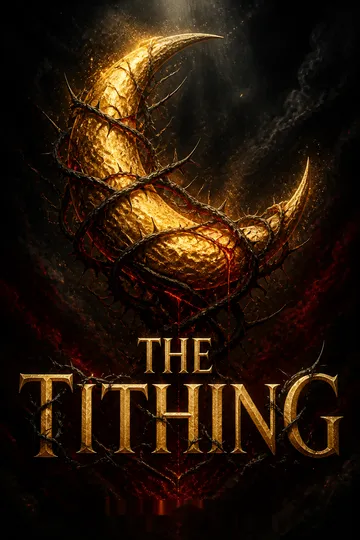
About the Author
Other books by Natasha Knight

Download PDF
Download EPUB
.epub digital book format is ideal for reading ebooks on phones, tablets, and e-readers.








