Plot Summary
Blood on Sacred Stone
Azrael Delacroix, haunted by a mutilated photo of his wife Willow, is consumed by rage and fear. The cross carved into her forehead in the image is the mark of the Disciples, a fanatical cult of witch hunters. The violence is not just symbolic; it's a promise. Willow is missing, along with Azrael's fragile sister Bec, and the evidence points to a calculated abduction. The Delacroix family's ancient pact with the Wildbloods—one that demands a sacrificial bride—has become a living nightmare. As Azrael and his brother Emmanuel race through the night, the boundaries between duty, love, and vengeance blur, setting the stage for a reckoning that will test the limits of loyalty and the cost of tradition.
Stalked by the Disciples
Willow, Raven, and Bec are prisoners in a van, driven by Caleb Church—a man whose obsession with Willow is as violent as it is religiously warped. The Disciples, self-styled prophets and executioners, see themselves as agents of God, purging the world of witches. Caleb's brutality is personal: he blames Willow for his own scars and crimes, twisting her resistance into justification for his violence. The women's fear is palpable, but so is their determination. As Caleb's control unravels, the threat of ritualistic violence looms, and Willow's memories of past trauma resurface, entwined with her complicated feelings for Azrael, the man who both saved and betrayed her.
The Wildblood Bargain
Azrael and Emmanuel seek help from the Wildblood family, Willow's kin, whose own history is steeped in persecution and loss. The two families, bound by a centuries-old contract, are forced to confront the legacy of the Tithing—a ritual that demands a Wildblood woman's life in exchange for the Delacroix family's protection. Tensions flare as blame and grief surface, but necessity forges a fragile alliance. The Wildblood matriarch, Celeste, reveals the depth of the Disciples' threat and the twisted obsession of Caleb Church. As the families pool their knowledge, the true horror of the Disciples' reach becomes clear, and the race to save Willow, Raven, and Bec intensifies.
Captive in the Compound
Willow, Raven, and Bec are held in a remote compound, their fate to be decided by the Disciples' warped council. Caleb's violence escalates, his fixation on Willow driving him to new extremes. The women's attempts to escape are met with brutality, and the threat of ritual murder hangs over them. Willow's inner strength is tested as she endures humiliation and pain, clinging to hope for rescue. The bonds between the captives deepen, their shared suffering forging a sisterhood of survival. The compound becomes a crucible, burning away illusions and leaving only raw determination.
Baptism of Violence
Azrael and Emmanuel storm the Disciples' compound at dawn, confronting a scene of ritual horror: nooses, chanting, and the imminent execution of Willow, Raven, and Bec. The brothers fight with ferocity, their hands stained with the blood of fanatics. Caleb escapes, but the sisters are saved—barely. Willow is found broken and battered, her body marked by the Disciples' cross, her spirit flickering between life and death. The violence of the rescue is both a salvation and a curse, leaving scars that will not easily heal. The cycle of sacrifice and vengeance seems unbreakable, even as love and loyalty drive Azrael to defy fate.
Rescue and Ruin
Willow's battered body is rushed to the hospital, her survival uncertain. Azrael is tormented by guilt, vowing to protect her at any cost. The families gather, united by trauma and the desperate need for answers. The Disciples' threat lingers, and Caleb remains at large. Willow's recovery is slow, her silence a wall between her and those who love her. The revelation of her pregnancy—an impossible, miraculous event—shifts the stakes. The child is both a symbol of hope and a new source of fear, as the curse that binds the families threatens to claim another generation.
Hospital Walls, Silent Hearts
Willow's hospital room becomes a battleground of emotions. She is torn between the comfort Azrael offers and the knowledge that he is bound by the Book of Tithes to one day kill her. The news of her pregnancy is met with shock and dread; the child is a miracle, but also a potential victim of the curse. Willow's family rallies around her, but the shadow of the Delacroix legacy looms. Azrael's promises of protection are sincere, but the weight of history and prophecy is crushing. The hospital is a place of both sanctuary and exile, where love and fear coexist in uneasy truce.
The Curse and the Child
The revelation of Willow's pregnancy forces everyone to confront the meaning of fate and free will. The child is the first true union of Wildblood and Delacroix—a potential end to the curse, or its cruelest twist. Willow's grandmother, Celeste, counsels hope, urging her to trust in love and the possibility of rewriting destiny. Azrael is determined to protect both Willow and their unborn daughter, even as Salomé, his grandmother, schemes to ensure the Tithe is paid. The curse is no longer abstract; it is embodied in the life growing within Willow, and the choices made now will echo for generations.
Shadows in the House
Back at the Delacroix estate, Willow suspects Salomé of poisoning Bec, using her illness as leverage to control the family. Azrael is torn between loyalty to the woman who raised him and the evidence mounting against her. The house, once a fortress, becomes a place of danger and secrets. Willow's determination to protect Bec and her unborn child puts her at odds with Salomé, whose fanaticism knows no bounds. The struggle for control is both physical and psychological, as old wounds are reopened and new alliances are forged in the crucible of fear.
The Book of Tithes
The Book of Tithes, a record of every sacrifice and atrocity committed in the name of the Delacroix legacy, becomes a symbol of both doom and possibility. Willow and Azrael confront the stories of their ancestors—lovers torn apart, women murdered, men driven to madness. The book is a testament to the power of tradition, but also to the possibility of change. Azrael vows to break the cycle, to choose love over duty, even if it means defying the very foundation of his family's power. The past is a weight, but also a warning: the curse can only be broken by a sacrifice of a different kind.
The Witch and the Penitent
In the aftermath of violence and revelation, Willow and Azrael struggle to rebuild trust. Their love is both a balm and a battleground, complicated by the knowledge of what has been and what may come. Intimacy becomes an act of defiance, a way to reclaim agency and hope. The house is filled with moments of tenderness and laughter, but also with the ever-present threat of Salomé's machinations and Caleb's obsession. The boundaries between witch and penitent, victim and protector, blur as Willow and Azrael forge a new path—one that may lead to freedom, or to tragedy.
The Grandmother's Poison
The truth about Bec's illness comes to light: Salomé has been poisoning her, using her as a pawn in her quest to see the Tithe fulfilled. Azrael is devastated by his failure to protect his sister, and the family is shaken to its core. Salomé's fanaticism is exposed, and she is exiled from the house, but not before she delivers a final, chilling warning. The cost of tradition is laid bare, and the need to break the cycle becomes urgent. The family's wounds are deep, but the possibility of healing emerges as love and truth begin to take root.
Lightning Over Eden's Crossing
A supernatural storm descends on Eden's Crossing as the Disciples, aided by Salomé, launch their final assault. Willow is abducted, stripped, and prepared for sacrifice at the broken altar of Shemhazai. Caleb, driven mad by obsession and prophecy, prepares to kill her and her unborn child. Azrael races against time, battling both human and supernatural enemies. The storm is both literal and symbolic—a manifestation of the curse, the rage of the past, and the power of love. The stage is set for the ultimate test: who will pay the final price?
The Final Sacrifice
At the altar, Willow channels the spirit of Elizabeth Wildblood, defying Caleb and the Disciples with supernatural strength. Azrael arrives, prepared to die for her. In a moment of cosmic reckoning, lightning strikes, killing the Disciples and shattering the statue of Shemhazai. Azrael is wounded, but survives; the curse is broken not by the death of the Wildblood, but by the willingness of the Penitent to sacrifice himself for love. The cycle of violence is ended, not by blood, but by the power of choice and the refusal to perpetuate hate.
Breaking the Curse
In the aftermath, Caleb is captured and brought to justice in the secretive Tribunal of the Society. Willow confronts him one last time, marking him with the crescent moon—a symbol of the power he tried to destroy. Azrael drowns Caleb in the baptismal font, ending his reign of terror. The families begin to heal, the house is cleansed of its darkness, and the legacy of the curse is transformed. The Book of Tithes is set aside, its power broken. The future is uncertain, but for the first time, it is theirs to shape.
A New Dawn
Willow and Azrael welcome their daughter, Amélie Elizabeth, into a world free from the curse that haunted their families for centuries. The house is filled with light, laughter, and the promise of new beginnings. Statues of Willow and Azrael replace the demon angel, a testament to the power of love over hate. The scars of the past remain, but they are reminders of what has been overcome. The story ends not with a sacrifice, but with a celebration—a legacy of hope, strength, and enduring love.
Characters
Azrael Delacroix
Azrael is the scion of the Delacroix family, burdened by the legacy of the Tithing—a ritual that demands he sacrifice his Wildblood bride to protect his kin. Torn between duty and love, Azrael is both fierce and vulnerable, his strength matched only by his capacity for guilt. His relationship with Willow transforms him, awakening a tenderness and defiance that challenge centuries of tradition. Azrael's journey is one of self-discovery, as he learns to reject the violence of his ancestors and choose love, even at the risk of his own life. His devotion to Willow and his siblings is unwavering, and his willingness to sacrifice himself becomes the key to breaking the curse.
Willow Wildblood
Willow is the chosen Sacrifice, marked from birth to be offered to the Delacroix family's demon-angel. Her life is shaped by trauma—stalked by Caleb, betrayed by those meant to protect her, and haunted by the knowledge of her fate. Yet Willow's resilience is extraordinary. She is both vulnerable and fierce, her compassion matched by her determination to survive and protect those she loves. Willow's connection to her ancestors, especially Elizabeth Wildblood, gives her a supernatural strength that manifests in moments of crisis. Her love for Azrael is transformative, offering the possibility of redemption and freedom for both families.
Salomé Delacroix
Salomé is the embodiment of the old order—a woman whose devotion to the Tithing and the Delacroix legacy is absolute. Her love is conditional, her methods ruthless. She manipulates, poisons, and ultimately betrays her own family in her quest to see the Tithe fulfilled. Salomé's fanaticism is both pitiable and terrifying; she is driven by fear of death and the need for control. Her downfall is a testament to the destructive power of tradition untempered by compassion. In the end, her actions force Azrael and Willow to choose a different path, making her both villain and catalyst.
Caleb Church
Caleb is the primary antagonist, a former Disciple whose fixation on Willow is both personal and ideological. He is a master manipulator, using religion as a weapon to justify his violence. Caleb's sadism is matched only by his self-pity; he blames Willow for his own crimes and seeks to destroy her as both punishment and perverse redemption. His downfall is inevitable, but not before he inflicts lasting scars on his victims. Caleb is the living embodiment of the dangers of fanaticism and unchecked malevolence.
Emmanuel Delacroix
Emmanuel is Azrael's brother, a steady presence amid chaos. He is pragmatic, protective, and often the mediator between conflicting forces. Emmanuel's own pain—especially the loss of their brother Abacus—shapes his worldview, making him cautious but not cynical. His growing affection for Raven hints at the possibility of healing and new beginnings. Emmanuel's loyalty to Azrael is unwavering, and his willingness to challenge tradition marks him as a quiet revolutionary.
Bec Delacroix
Bec is Azrael's younger sister, long believed to be sickly and weak. In truth, she is a victim of Salomé's poisoning, used as leverage in the matriarch's schemes. Bec's journey is one of awakening and recovery; as the truth comes to light, she begins to reclaim her agency and find joy. Her bond with Willow and the Wildblood sisters is transformative, offering her a new family and a chance at happiness. Bec's innocence is both her vulnerability and her strength.
Celeste Wildblood
Celeste is the heart of the Wildblood family, a woman whose wisdom and compassion guide her kin through crisis. She is a bridge between past and present, honoring tradition while urging her family to embrace change. Celeste's belief in love and the possibility of breaking the curse is a source of strength for Willow. Her role as counselor and protector is vital, and her willingness to trust Azrael marks a turning point in the families' history.
Raven Wildblood
Raven is Willow's sister, a force of nature whose loyalty and courage are unwavering. She endures captivity and violence with defiance, refusing to be broken by the Disciples. Raven's relationship with Emmanuel hints at the possibility of healing old wounds and forging new alliances. Her humor and resilience provide comfort and strength to those around her, and her journey is one of survival and self-discovery.
Barrett Wildblood
Barrett is the patriarch of the Wildblood family, a man torn between love for his daughters and the demands of tradition. His pain at the loss and endangerment of his children is palpable, and his initial hostility toward Azrael is rooted in fear and grief. Barrett's willingness to work with the Delacroix family, despite centuries of enmity, is a testament to his love and pragmatism. His journey is one of acceptance and the hope for a better future.
Elizabeth Wildblood (Spirit)
Elizabeth is the original Wildblood, executed for witchcraft and the source of the curse that binds the families. Her presence is felt throughout the story, guiding and empowering Willow in moments of crisis. Elizabeth's legacy is one of both suffering and strength; her curse is a warning, but her spirit is a source of power and hope. Through Willow, Elizabeth's story is rewritten—not as a tale of vengeance, but as a testament to the enduring power of love and resistance.
Plot Devices
The Tithing and the Curse
The Tithing is the central plot device—a ritual that demands the sacrifice of a Wildblood woman to protect the Delacroix family from a supernatural curse. The Book of Tithes records every atrocity, binding each generation to the sins of the past. The curse is both literal and metaphorical, manifesting as supernatural storms, illness, and madness. The narrative structure is cyclical, with history threatening to repeat itself unless someone is willing to break the pattern. Foreshadowing is used throughout—visions, dreams, and ancestral warnings hint at the possibility of change. The ultimate plot twist is that the curse can only be broken by a sacrifice of love, not blood: the willingness of the Penitent to die for the Sacrifice, rather than to kill her, is the key to freedom.
Analysis
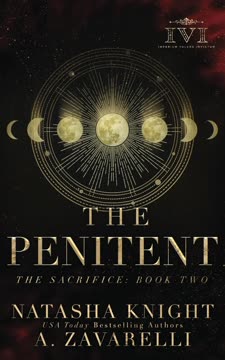
The Penitent is a dark, emotionally charged exploration of the ways in which history, trauma, and tradition shape individual lives and relationships. At its core, the novel interrogates the cost of blind obedience to the past—the violence that is perpetuated in the name of family, faith, and survival. The characters are trapped by roles assigned to them before birth, but the story's power lies in their struggle to break free. Love, in this context, is not a simple antidote to suffering, but a hard-won, transformative force that demands sacrifice, vulnerability, and the courage to defy fate. The novel's use of supernatural elements—curses, ancestral spirits, storms—serves as both metaphor and reality, externalizing the internal battles of its characters. Ultimately, The Penitent is a story about rewriting destiny: about the possibility of healing generational wounds, choosing compassion over violence, and forging a new legacy from the ashes of the old. The lesson is clear: cycles of harm can only be broken by acts of radical love and the refusal to accept that the past must dictate the future.
Last updated:
Review Summary
The Penitent concludes the Sacrifice Duet with Willow and Azrael navigating a family curse, betrayals, and their forbidden connection. Readers praised the fast-paced plot, gothic romance atmosphere, and paranormal elements involving witchcraft and secret societies. Azrael's character growth impressed many, while Willow remained a fierce, beloved heroine. The duet features enemies-to-lovers, arranged marriage, and dark themes including violence and attempted assault. Most reviews celebrated the satisfying HEA ending and dual POV storytelling. Many readers hope for a future book featuring Willow's sister Raven and Emmanuel.