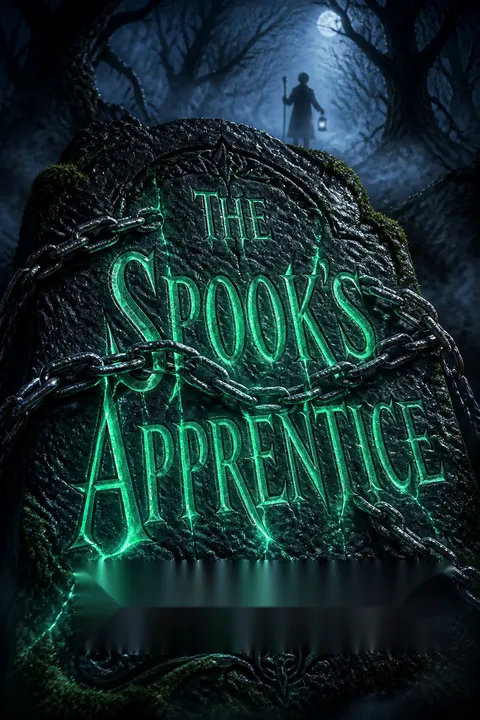


Plot Summary
Prologue
The County's highest summit bears the name of a stone raised after a man died in a storm binding a threat to the world. Later, advancing ice changed the hills and erased the old towns, leaving no visible trace of what happened there. Only the name endured: the Wardstone. This brief legend places the story in a landscape where the past is buried but not necessarily powerless.
The Wardstone legend gives the landscape a memory older than its maps. Ice erases towns and reshapes hills, but the name survives, suggesting that human attempts to contain evil may outlast their evidence without making the danger disappear. This is a compact promise of the novel's method: history lives on in places, bodies, and records, and the present must learn to read those traces. The prologue also makes the County more than a backdrop. Its terrain is a storehouse of unfinished events, and Tom's apprenticeship will teach him how to recognize what ordinary sight misses.
The Seventh Son
Nearly thirteen, Tom Ward is the seventh son of a farmer who can no longer find him a trade. The Spook, a solitary hunter of supernatural dangers, offers Tom a month's trial as his apprentice. Tom wants a life beyond the farm, but leaving means missing the birth of his brother Jack and sister-in-law Ellie's child, and facing work feared by the whole County.
That night, Mam tells him his birth was deliberate: she married a seventh son and had six boys before him because Tom has a gift for seeing what others cannot. She expects him to protect ordinary people from the dark. At dawn, carrying his father's treasured tinderbox, Tom leaves home with the Spook.
Tom's departure is both a practical solution to the family's crowded farm and a vocation imposed by his mother's conviction. His own motives are less grand: curiosity, restlessness, and the wish to matter beyond a place he already knows by heart. Mam turns those ordinary desires into a duty by framing Tom's birth as purposeful. The tension between choice and expectation begins here, before Tom has any evidence that he can perform the work. His father's tinderbox offers a quieter inheritance: not a prophecy, but a useful tool passed down by someone who loves him.
Hangman's Hill Opens
Instead of taking the road, the Spook leads Tom across the north pasture and up Hangman's Hill, where soldiers hanged after a civil war appear as ghostly remnants. Tom's first instinct is fear. The Spook makes him imagine the young men's last thoughts, and Tom feels grief for their lost families; as his attention shifts, the figures fade.
The lesson is that fear can feed the dark, while attention and compassion restore proportion. On the journey south, the Spook gives Tom his heavy bag, tests his endurance, and announces that he must spend the night alone in a haunted house in Horshaw. At Number 13 Watery Lane, Tom hears a miner digging and an unseen presence climbing from the cellar, then resists a voice pretending to be Mam.
The hill makes Tom's gift inseparable from emotional discipline. He does not defeat the ghasts through force or denial; he becomes less vulnerable by imagining their human terror rather than centering his own. That shift anticipates the Spook's preferred method, which depends on observation and judgment as much as weapons. The house in Horshaw reverses the lesson's comfort: Tom can understand a haunting and still be endangered by it. The false voice of his mother tests whether affection can override caution, establishing that intimate feeling is one of the dark's most effective disguises.
Chipenden's Three Gardens
At midnight, Tom finally descends into the cellar and finds the apparent monster is the Spook, who had staged the encounter as a trial. The Spook explains that the house's miner and his murdered wife survive there as fragments of memory, then reveals a letter Mam sent before Tom was born, identifying him as her intended apprentice.
He warns that no future is guaranteed. At Chipenden, Tom discovers three gardens around the Spook's secluded house: one contains iron-barred witch graves, another a powerful boggart trapped beneath stone, and the western garden is comparatively safe.
The Spook also keeps a boggart to cook and clean. Tom learns that the work depends on records, knowledge of the land, and care around supernatural boundaries, not on magic alone.
The Spook's staged trial is harsh, but it also exposes how training works: Tom must act before he understands every fact, then use the aftermath to make better sense of what happened. The letter from Mam sharpens the problem of destiny. The Spook rejects prophecy even as the adults around Tom have arranged his life in advance. Meanwhile, the gardens turn supernatural knowledge into a practical map of risk. Their boundaries matter because safety is conditional, not absolute. The domestic boggart complicates Tom's assumption that every nonhuman presence must be attacked, introducing accommodation as another tool of the trade.
Alice in Pointed Shoes
When the Spook sends Tom to collect provisions, a gang of village boys tries to steal from his sack. Alice, a dark-haired girl in pointed shoes, scares them off by invoking her aunt, Bony Lizzie. She asks Tom to repay her help someday, and he promises before learning what her family wants.
The Spook later says Tom could have shared food with the hungry boys, but should have used his own judgment; Tom also conceals his meeting with Alice. Lessons in boggarts, mapping, and pit-building fill the first month, yet Tom grows lonely and decides to quit. Back at the farm, Mam insists he cannot abandon his duty. Ellie explains that Jack fears the Spook's work may endanger their household, so Tom returns to Chipenden.
Alice's first appearance sets a pattern in which help and leverage arrive together. She protects Tom, but turns his gratitude into an obligation before he understands the stakes. His silence about her is less a calculated betrayal than a young apprentice's attempt to avoid a difficult conversation. The Spook's lesson about initiative sits uneasily beside his strict rules, leaving Tom to decide when obedience and judgment diverge. At home, Mam's resolve overwhelms Tom's first attempt to choose a different life. His return is therefore neither simple consent nor pure coercion; it is a compromise between belonging, duty, and fear of disappointing her.
Cakes for Mother Malkin
After Tom returns, the Spook rides east to Pendle to deal with witch trouble, leaving his apprentice to manage the house. Alice asks Tom to take three cakes to Mother Malkin, a living witch imprisoned in a pit in the eastern garden. Tom believes that helping a captive is decent, and the promise to Alice weighs on him more than the Spook's warning.
He drops the first cake into the pit at midnight, then returns the next night with another. The iron bars have bent. Hearing that children have gone missing, Tom seeks the Spook's library and finds the truth: Mother Malkin uses blood magic, and Alice's family has planned to free her while the Spook is away. Tom refuses to give the final cake and asks the house boggart for help.
Tom's compassion is real, but compassion without inquiry becomes a route by which others can use him. The cakes make this moral error physically visible: each act of kindness strengthens the prisoner and weakens the barrier meant to protect the County. His discovery in the library marks a change from instinctive trust to evidence-based judgment. Records reveal what the Spook's warnings alone could not, and they show Tom that the threat is organized rather than accidental. Asking the boggart for help also signals a new kind of agency. Tom does not command the unseen household force; he offers it a bargain.
The River Takes Its Due
Mother Malkin escapes before Tom can stop her, and he follows her trail to a river, where running water blocks her route toward Bony Lizzie's farm. She attacks, but Tom's rowan staff knocks her into the current; he keeps striking until she releases her grip and is swept away. Knowing a child may be held at Lizzie's house, Tom goes there despite his exhaustion.
He finds a toddler, Tommy, alone in a foul room and carries him out. Alice cannot stop him, but Bony Lizzie and Tusk pursue them through a storm. At the Spook's garden, the boggart's terrible warning cry drives the pursuers back. Tom returns Tommy to the villagers, then learns the Spook has come back from Pendle, bruised but alive.
Tom's first lethal confrontation does not feel like a triumphant initiation. He survives because the river gives him an advantage and his body moves before his fear can stop it, but the violence leaves him shaken. He then chooses to continue toward Lizzie's farm because the missing child matters more than his own safety. This is the first time his sense of duty becomes action rather than something inherited from Mam. The garden's boggart, once a mysterious cook, becomes a protector through a relationship Tom has begun to negotiate. Safety emerges from trust built across differences, not from mastery over every force.
Billy in the Pit
The Spook warns Tom that killing Mother Malkin may allow her to return, then explains the fatal mistake that killed his previous apprentice, Billy Bradley: Billy rushed a boggart-binding job and a trapped Ripper tore into his hand. Three days later, Alice lures Tom into a roadside ambush. Tusk carries him to Lizzie's farm, where the witches drug him, tie him, and drop him into a pit beside Billy's stolen bones.
Lizzie intends to use Tom's bones in her magic. Under the drug's influence, Tom sees Billy's skeleton crawling toward him, but Billy's ghost helps him distinguish the nightmare from reality. Alice returns with a knife, cuts Tom free, and helps him climb out just as Lizzie and Tusk approach.
Billy's story makes apprenticeship less like a heroic lineage than a dangerous workplace where haste can kill. Tom's fear in the pit is intensified by a drug that corrupts perception, so the Spook's lesson about distinguishing waking from dreaming becomes a means of survival. Billy appears not as a warning alone but as a former apprentice with unfinished human feeling, able to help the boy who has inherited his place. Alice's return complicates her earlier complicity. She has not become trustworthy all at once, but her action gives Tom grounds to see her as more than the family she comes from.
Sunrise at Chipenden
Tom and Alice flee toward Chipenden as dawn approaches, with Tusk and Bony Lizzie close behind. On the slope, the Spook intercepts them. He kills Tusk with a staff whose tip flares, then uses a silver chain to bind Lizzie before she can escape. The Spook examines Alice for signs of blood or bone magic and remains uncertain whether she is safe.
Tom argues that she helped him, so the Spook gives her a chance to leave Pendle behind. He orders Tom to escort her to her aunt in Staumin, but first to take her to Mam. Before departing, Tom reports that Billy's bones were disturbed. The Spook promises to restore them, then carries the bound Lizzie back toward Chipenden.
The sunrise confrontation restores the Spook's authority without making Tom's courage irrelevant. Tom has kept himself and Alice alive long enough for the experienced practitioner to arrive, but the decisive force belongs to the Spook. His victory is also morally unfinished: Lizzie is restrained, not resolved, and Alice remains an uncertain person rather than a problem that can be sorted by ancestry. Tom's defense of her is significant because he speaks from observed behavior, not romantic idealization. The assignment to escort Alice makes responsibility concrete: he must act on his judgment while accepting that the consequences may reach beyond the immediate crisis.
A Silver Trail Home
At the farm, Mam welcomes Alice after hearing Tom's account, while Jack objects that a witch's relative could endanger Ellie's newborn daughter. Tom's suspicion shifts to the baby when it stares toward Alice, but Mam disproves the fear by explaining that the old water test for witchcraft is meaningless and the child is innocent. Alice helps Tom interpret the Spook's Latin book on possession.
Later, moonlight reveals a silver trail leading from Hangman's Hill to the farm cellar, the sign that Mother Malkin's pliable dead body has entered the house. Tom finds Alice facing the witch's image in a mirror and smashes the glass. The household wakes in confusion, and Ellie twice becomes light-headed, leaving Tom unsure who may be possessed.
The return home brings supernatural uncertainty into the spaces where Tom expects ordinary trust. The baby becomes a screen for his fear, and Mam intervenes not by affirming his intuition but by challenging its evidence. Her refusal to use a dangerous folk test distinguishes discernment from mere suspicion. The silver trail then confirms that the threat is real, but not in the form Tom can easily identify. The mirror makes Alice both a possible accomplice and a possible victim, while Ellie's dizziness introduces the possibility of possession elsewhere. Tom's knowledge has increased, yet the number of plausible interpretations has increased with it.
Salt, Iron, and Blood
Tom runs from the farm to seek the Spook, but Alice catches up and warns that Mother Malkin is already inside and may kill the baby for blood. Tom returns, prepares iron filings and salt, and watches Jack, Ellie, and Alice for signs of possession. At night, Mother Malkin takes control of Snout, the pig butcher, who knocks Jack unconscious and seizes Ellie's child.
Alice kicks Snout hard enough to break the witch's hold on Tom, who had been compelled to walk toward the knife. Tom throws the salt and iron into Snout's face, forcing Mother Malkin out through his nose. She shrinks as she crawls toward the pigpen, where the hungry pigs devour her. Her remains are consumed, ending her return.
The climax turns practical knowledge into improvised defense. Tom does not have the silver chain the Spook would prefer, so he adapts the salt and iron used to bind boggarts. That substitution is not a flashy act of mastery; it is a reasoned response under pressure. Alice's intervention is equally essential, because Tom cannot think or move freely while under the witch's compulsion. The scene also refuses a clean division between violence and mercy. Tom had earlier stopped Alice from burning Mother Malkin, but the accidental brutality of the pigs achieves what restraint could not. Survival depends on action, while its moral cost remains visible.
The Road to Staumin
Mam returns before dawn after a failed effort to save a woman and her baby in childbirth. The Spook confirms that the pigs have ended Mother Malkin's threat, then leaves Tom to decide Alice's fate. Mam sees that Alice is not a witch yet, though she may grow into someone helpful, harmful, or difficult to classify.
Tom learns that Alice's family repeatedly used her blood in the cakes, and this knowledge keeps him from sending her to the Spook's pit. Ellie tells Tom he may visit only during daylight because the family fears what his work could bring home. Tom takes Alice to her aunt in Staumin. They part after a journey in which they share skills and companionship, and Tom realizes he will miss her.
The final choice converts the novel's central question from whether Tom can obey the Spook into whether he can judge a person whose future is uncertain. Mam refuses both prophecy and easy reassurance: Alice may be dangerous, but she has also been harmed. Tom's decision to take her to Staumin recognizes that victimhood does not erase risk, yet risk does not justify treating a person as already guilty. Meanwhile, Ellie's daylight boundary makes the social cost of Tom's calling unmistakable. He is still loved, but his family can no longer treat his presence as harmless. His goodbye to Alice therefore carries both relief and a new loneliness.
Epilogue
Back at Chipenden, Tom reports that the Spook has put Bony Lizzie in the pit and buried Tusk in the grave he dug for Tom. Billy has been returned to his resting place with his bones restored.
Tom is still an apprentice, but he accepts that the winters are lengthening and the dark is growing stronger. He intends to study, keep records, and become the Spook, not because the future has been promised, but because he has chosen to try.
The closing note restores order through specific acts of repair: Lizzie is confined, Tusk is buried, and Billy's remains are made whole. Yet the County is not declared safe. The Spook's warning about harsher winters widens the scale of danger beyond the immediate witch plot. Tom's final resolve answers the book's argument about destiny: Mam may have prepared him for this work, but his future depends on practice and choice. He accepts the role not because prophecy guarantees success, but because experience has shown him what happens when no one acts.
Analysis
The novel makes apprenticeship a problem of judgment rather than simply a transfer of powers. Tom receives a vocation from his mother, rules from the Spook, and occult knowledge from Alice, but none of those authorities can decide every situation for him. His mistakes arise when he treats a single virtue as sufficient: compassion makes him deliver the cakes, loyalty makes him hide his meeting with Alice, and fear makes him misread the baby and household members. Growth comes when he learns to test instinct against evidence and still accept the responsibility of acting before certainty is possible.
The story's supernatural system is grounded in work. Pits must be measured and sealed; boots, maps, notebooks, herbs, salt, iron, and chains matter. This material precision prevents courage from becoming a vague heroic quality. Tom survives because he remembers a lesson, notices a trail, accepts help, or adapts a familiar tool. The records of earlier spooks function as institutional memory, but Billy's death shows that knowledge does not eliminate risk. It can only make carelessness harder to excuse.
The novel also complicates the boundary between protection and cruelty. Imprisoning Mother Malkin may protect villagers, yet Tom's discomfort with her pit is morally intelligible. Alice, meanwhile, is neither innocent by definition nor irredeemable by association. She has participated in harm and has also been harmed. Mam's refusal to predict what Alice will become preserves the possibility of choice, while Tom's decision to take her to Staumin recognizes both vulnerability and danger.
Finally, the family plot makes the cost of Tom's calling intimate. The farm is not simply a home he outgrows; it is a place where his presence now frightens people he loves. The ending offers no cure for that estrangement. Tom chooses the work anyway, not because he is certain he will become the Spook, but because he has seen who suffers when nobody stands between ordinary life and the dark.
Review Summary
The Spook's Apprentice is a dark fantasy novel for young adults that has received mostly positive reviews. Readers praise its atmospheric setting, engaging characters, and creepy elements. Many compare it favorably to Harry Potter but note its darker tone. Some reviewers caution that it may be too scary for younger readers. The book is generally seen as a strong start to a promising series, with an intriguing magic system and well-developed world. A few criticisms mention predictable plot points and questionable portrayals of women.
People Also Read
Characters
Thomas J. Ward
The reluctant apprenticeTom is the seventh son of a seventh son, a farm boy who can perceive supernatural traces that others miss. At the story's beginning, he wants travel and independence but fears the loneliness and violence of the Spook's trade. His strongest instincts are empathy and loyalty, qualities that help him understand the dead and protect the vulnerable, but that can also make him easy to manipulate. Tom is left-handed, observant, and still learning to separate a genuine warning from fear or wishful thinking. His development centers on judgment: he must learn to accept responsibility without simply copying the Spook, his mother, or the people who try to direct him.
The Spook, Mr. Gregory
The County's dark-wardenMr. Gregory is a seasoned spook who travels the County confronting boggarts, witches, ghosts, and other dangers. His habits are practical: he studies old cases, keeps detailed records, tests apprentices, and expects them to use common sense rather than rely on magic or prophecy. His severity can look like coldness, especially to a frightened boy, but his strictness comes from years of seeing careless decisions turn fatal. He lives apart from ordinary people because his work makes them uneasy, and he has a complicated past that includes family estrangement and a former life in the priesthood. Tom's training forces him to balance Gregory's hard-earned caution with his own moral instincts.
Mam
Tom's uncanny motherTom's mother is a capable healer and midwife whose knowledge has saved mothers and babies across the County. She sees what others miss, keeps her own counsel, and prefers practical action to self-praise. Her love for Tom is bound to a demanding conviction that he must use his gift in service of ordinary people. She can be tender, but she is not indulgent when he wants to retreat from a difficult duty. Mam's thinking combines experience, intuition, and skepticism toward crude tests or easy predictions. Her relationship with Tom asks whether care can prepare a child for danger without claiming ownership over the life he must choose.
Alice
The witch's uncertain nieceAlice is a sharp, self-possessed girl who moves between the village's daylight world and the darker knowledge of her witch family. Her pointed shoes mark her as someone the Spook distrusts, but she is also resourceful, knowledgeable about plants and Latin, and capable of acting under pressure. Alice can manipulate Tom and conceal what she knows, partly from fear and partly because she has been shaped by relatives who expect obedience. Beneath her toughness is a young person trying to imagine a life beyond inherited practices. She attracts Tom's sympathy and caution in equal measure, making their relationship a test of whether compassion can coexist with clear boundaries.
Jack Ward
Tom's protective eldest brotherJack is Tom's oldest brother, a strong farmer who is preparing to take over the family farm. He jokes roughly and can turn quickly to anger, but his hostility toward the Spook's work grows from fear for his wife and infant rather than indifference to Tom. Jack thinks in immediate, material responsibilities: livestock, land, and the safety of his household. He resents the risks Tom brings near the farm and does not easily trust Alice. His temper makes him vulnerable to conflict, while his protectiveness reveals how differently the same family understands duty.
Ellie
Jack's steady-hearted wifeEllie is Jack's warm, attentive wife and Tom's sister-in-law. She welcomes Tom's ambitions even while grieving that his apprenticeship will take him away from the family. As a new mother, she is exhausted but devoted, and she tries to keep peace between Jack and Tom. Ellie often reads the feelings others conceal, which makes her a source of comfort in the household. Her protectiveness toward her child also gives her a reason to draw a firm boundary around Tom's dangerous work.
Tom's father
The farm's patient patriarchTom's father is a farmer who values keeping the family land intact and finding useful work for each son. He arranges Tom's apprenticeship when ordinary trades are no longer available, then gives him an heirloom tinderbox for the road. His manner is practical and affectionate, with advice rooted in daily work rather than grand speeches. He represents the farm life Tom leaves behind and the family continuity that remains important to him.
Mother Malkin
The blood-magic witchMother Malkin is an exceptionally dangerous witch whose power comes from blood magic. She is the grandmother of Bony Lizzie and has spent years confined in the Spook's garden, where even her apparent weakness cannot be trusted. Her methods target the vulnerable, especially children, and she treats bodies as instruments for extending her power. The Spook's records describe a history of cruelty, while her confinement raises a difficult question about how to contain someone who may become more dangerous if killed. She embodies a threat that is both supernatural and calculated.
Bony Lizzie
Alice's dangerous auntBony Lizzie is Alice's aunt and Mother Malkin's granddaughter, a witch associated with bone magic. Unlike her grandmother, she can appear outwardly ordinary, which makes her difficult to recognize as a threat. Lizzie is clever, patient, and willing to use family loyalty as leverage. She has taught Alice occult knowledge, but her influence is not the same as genuine care: she expects the girl to take part in plans that serve the family. Lizzie's presence forces Tom to judge danger by actions and evidence rather than appearance.
Tusk
The witches' brutal enforcerTusk is a huge, powerfully built man with prominent teeth and a blank, obedient expression. He serves Bony Lizzie and Mother Malkin as muscle, carrying out violence without questioning the witches' orders. His physical presence frightens the villagers, but his obedience is what makes him most dangerous. He is an instrument of other people's will rather than an independent planner.
Billy Bradley
The dead former apprenticeBilly Bradley was the Spook's previous apprentice, a young man whose training ended before he could complete it. His name remains among the records in the Spook's library, alongside a cautionary account of what can happen when dangerous work is rushed. Billy's presence links Tom's apprenticeship to the lives of those who came before him, reminding him that the trade has a human cost.
Snout
The village pig butcherKnown by the nickname Snout, the pig butcher is a large, physically strong worker hired to slaughter livestock at the Ward farm. He is an ordinary tradesman whose body and tools become part of a much larger danger. His presence also grounds the supernatural conflict in the rhythms of farm labor, where blood, knives, and animal fear are familiar parts of the day.
Tommy
The missing village childTommy is a very young child whose disappearance alarms the villagers and draws Tom toward the witches' farm. His helplessness makes the consequences of blood magic immediate and personal, rather than distant or theoretical.
Ellie and Jack's baby
The vulnerable newbornThe newborn daughter of Jack and Ellie represents the fragile family life Tom hopes to protect. Her presence sharpens the conflict between his work and his family's wish to keep danger away from their home.
The Horshaw butcher
The villagers' practical allyThe Horshaw butcher supplies the Spook's provisions and joins local efforts to search for missing children. He gives Tom a point of contact with the village, where the Spook's work is feared even by people who depend on it.
The Spook's priest brother
A hostile family rivalThe Spook's brother is a priest who reacts to the Spook's presence with visible hostility. His strained relationship with his brother hints at the old conflicts and unresolved family history the Spook does not readily discuss.
Plot Devices
The seventh-son gift
A calling with a costTom's status as the seventh son of a seventh son gives him the capacity to perceive supernatural beings and makes him eligible for the Spook's apprenticeship. Mam treats the gift as a responsibility to the County, while Tom initially experiences it as one more reason adults have decided his future for him. The story does not make the gift a guarantee of success. Tom still needs training, courage, and judgment, and other apprentices have failed or died. It therefore works as both a plot mechanism that begins his apprenticeship and a pressure on his agency: inherited ability gives Tom a path, but not a predetermined outcome.
The Spook's records
Knowledge carried forwardThe Spook's notebooks, maps, and reference books preserve the details of earlier encounters with witches, ghosts, and boggarts. Tom's training requires him to record what he learns, study the County's geography, and consult past cases instead of guessing. The library becomes crucial when the Spook is away: Tom finds the history of Mother Malkin, learns the nature of her blood magic, and discovers why his previous decisions have put others at risk. Records are not infallible or a substitute for judgment, but they give Tom evidence with which to make a decision under pressure. They turn memory into a practical form of protection.
Salt and iron
A barrier against darknessThe Spook teaches Tom that salt can burn supernatural creatures while iron can drain their strength. In his work, the two substances are mixed to line pits and prevent boggarts from escaping. Tom later adapts that lesson when he lacks the silver chain needed for a witch. He gathers salt and iron filings and throws them at the body Mother Malkin has possessed, forcing her out. The device connects apprenticeship drills to emergency improvisation: a technique learned through repetition becomes useful in a situation the Spook did not teach him to expect.
The silver chain
A witch held fastThe Spook uses a silver chain to bind powerful witches and keep them from acting freely. Its importance is established when the Spook explains how he captured Mother Malkin, then made painfully clear when Tom realizes the chain is unavailable during his first confrontation with her. At the sunrise showdown, the Spook uses it to restrain Bony Lizzie. The chain represents the difference between defeating an immediate attack and containing a danger without simply killing it. Its practical power also highlights the limits of Tom's early training: knowledge matters, but so do preparation and the right tool at hand.
Witch possession
A threat inside the bodyThe Spook warns that a powerful witch may return by taking over another person's body. Alice's explanation of the signs, including poor balance and sudden changes in temperament, gives Tom a way to recognize the danger, though the signs can be confused with ordinary exhaustion or anger. Mother Malkin's silver trail reveals her approach, while the mirror scene raises the question of whether Alice is communicating with her or being controlled. The device turns familiar faces into uncertain evidence and brings the supernatural threat into a family home. It also forces the characters to weigh a possessor's presence against the safety and personhood of the body being used.
Download PDF
Download EPUB
.epub digital book format is ideal for reading ebooks on phones, tablets, and e-readers.








