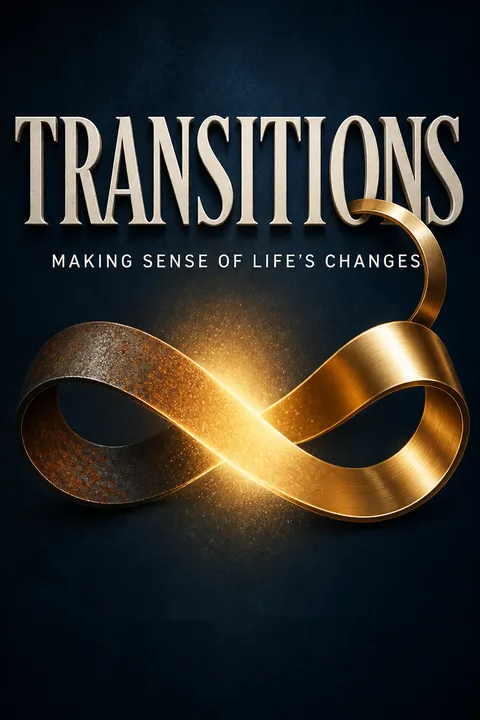


Key Takeaways
Treat a life change as the event, and transition as the inner work.
Events are not the whole story. A change is something that happens in a person’s circumstances: a move, promotion, divorce, birth, or death. A transition is the psychological adjustment that lets the person absorb that event and become someone who can live within the new reality. The two do not move at the same speed. A person can start a new job on Monday and still feel internally attached to the old role months later.
The distinction explains the distress. In Bridges’s seminar, people facing very different events discovered a common pattern: something ended, they felt confused and unsettled, and a new way of living eventually emerged. Even a promotion could trigger upheaval when it altered work, family routines, friendships, and a person’s sense of security.
This distinction is useful because it separates logistics from identity. A move can be solved with boxes and a lease, while the loss of belonging requires a different kind of attention. Organizational psychology makes a similar distinction between implementing a new procedure and helping people relinquish habits and roles built around the old one. The model is strongest as a way to ask better questions, not as a claim that every change follows a tidy sequence. Some transitions overlap, and some circumstances demand immediate practical action even while inner adjustment remains unfinished.
Let the old life be mourned, even when the change is good.
Good news can carry loss. A new baby may bring joy while ending a couple’s freedom to live spontaneously. A promotion can bring more money and status while costing time with family, trust in an old manager, or confidence in a familiar role. Bridges’s new mother had wanted a child, yet felt grief for the easier life she and her husband had shared. Advice about infant care missed the deeper change she was trying to absorb.
Loss deserves its own attention. People often feel ashamed when a welcome event also makes them sad, or assume grief means they chose badly. Bridges argues that acknowledging what has ended is not a rejection of what has arrived. It makes room to understand the full cost of the change rather than pretending that only the benefits count.
This framing fits the psychology of mixed emotions: positive and negative feelings can coexist without cancelling each other out. Naming a loss can reduce the pressure to disguise sadness as ingratitude or to rush toward a solution. It can also improve decision-making, because unacknowledged costs often surface indirectly as resentment. The caution is that not every loss should be given a grand developmental meaning. A painful event may simply be painful, and consolation should not be imposed before the person is ready to make sense of it.
Map the losses before blaming yourself for feeling lost.
Endings have several layers. Bridges describes five facets of letting go, grouped as the “five dis’s.” Disengagement separates a person from familiar settings or relationships. Dismantling involves taking apart routines and assumptions built around them. Disidentification is the loss of an identity, such as being a spouse or a teacher. Disenchantment is discovering that an old belief or picture of reality no longer holds. Disorientation is the resulting confusion about who one is and what comes next.
The facets need not arrive neatly. A job loss may immediately remove a role, while doubts about the person’s old ambitions surface only later. A breakup may first expose a loss of identity, then unsettle beliefs about love and the future. The labels help describe what is happening; they are not a test with a required order or a diagnosis.
The value of this vocabulary is diagnostic in the ordinary sense: it helps separate different sources of distress that otherwise blur together. Identity research similarly suggests that roles are not just labels; they organize expectations and daily behavior. Still, the five facets are a interpretive map, not validated clinical stages. People may experience only some of them, or face material problems such as housing and income that require direct solutions. The framework works best when it clarifies experience without explaining away practical hardship.
Give the in-between time room to do its quiet work.
The neutral zone is the interval between an old way of life and a workable new one. It can feel empty because familiar roles and routines have loosened before new ones have taken shape. Bridges describes a former engineer, Pat, who lost his job and then his marriage. He could not yet name what he wanted, but solitude and vivid dreams helped him reconsider what his life had been about.
Make space without demanding instant answers. Bridges suggests setting aside regular time alone, recording unusual thoughts or dreams, reviewing one’s life story, and noticing what one genuinely wants. These practices are not productivity tricks. They give unsettled thoughts room to become legible. Rushing into a replacement job or relationship may relieve anxiety, but it can also interrupt the work of finding out what the next chapter should be.
The neutral zone resembles incubation in creative work: stepping away from a problem can loosen habitual answers and allow new combinations to form. Solitude and reflective writing can also make emotion easier to observe rather than merely react to. But retreat is not equally available to everyone. Caregivers, people facing financial pressure, and those in unsafe situations may have little freedom to pause. Temporary routines and support from others can create breathing room without requiring an unrealistic withdrawal from ordinary responsibilities.
Read your transition against your life story, not a birthday chart.
Development continues across adulthood. Bridges resists the idea that people are finished products once they reach adulthood. He describes a broad movement from dependence toward independence, followed by a later need to grow beyond the identity and methods that once made independence possible. Work, family, and personal priorities can therefore change in chapters, not just in a straight line of increasing achievement.
Life-stage models are lenses, not calendars. Bridges draws on a traditional four-part Indian model: apprenticeship, household responsibilities, inward reflection, and a final phase of sharing what has been learned. He also uses Odysseus’s journey home to portray an accomplished hero learning that the strategies that won earlier battles no longer serve him. These stories suggest a useful question: what once helped, but now limits growth? They do not prescribe when each person must change.
A lifespan perspective counters the assumption that adulthood is a stable plateau, and it makes late reinvention easier to imagine. The Odysseus story adds a sharp idea: competence can become a trap when a person keeps applying yesterday’s solution to a different problem. Yet age-based theories have often reflected narrow social expectations, and the book’s inherited stage models should not be mistaken for universal developmental laws. Individual histories, cultures, health, and opportunity shape the timing and meaning of change.
Renegotiate relationships when one person’s growth changes the shared script.
Relationships adapt to their members. Bridges calls interpersonal resonance the way one person’s transition can stir up related questions in someone close to them. In the example of Don and Betty, his dissatisfaction with teaching and her return to career ambitions put pressure on a marriage shaped by older roles. Their children’s growing independence also stirred each parent’s unfinished feelings about freedom and unrealized choices.
Change the arrangement, not just the argument. A couple may fight about sex, chores, or money when the deeper issue is that their old division of responsibility no longer fits. Bridges recommends discussing what each person is experiencing, making temporary agreements while uncertainty remains, and avoiding pressure to force an immediate permanent answer. One partner cannot be made to undertake a transition on command, but the other can examine their own role in the relationship.
This is a systems view of intimacy: when one person changes, the established balance shifts, even if nobody consciously chose the old arrangement. Family-systems thinking similarly treats symptoms as connected to patterns among people, not only as defects inside one person. That perspective can reduce blame and open room for renegotiation. It should not, however, flatten unequal power or excuse harmful behavior as merely a shared script. Mutual adjustment is valuable, but safety, agency, and accountability remain essential.
Let your career’s motive evolve from proving skill to finding meaning.
Work changes as people change. Early career life often rewards competence: mastering a craft, gaining responsibility, and demonstrating that one can perform. Bridges observes that, for many people, this motive gradually loses force. The question shifts from “Can I do this well?” toward “Why does this work matter to me?” The shift can happen at different ages and may appear as boredom, falling motivation, or a sense of emptiness.
A job change may not be enough. Don, the teacher in Bridges’s example, considered leaving his profession, but first explored what he actually wanted from work. He eventually bought a small newspaper, a move that offered more practical activity and contact with adults. At organizations, the same inner process can appear as lower engagement during a merger or reorganization. A new title or incentive may not restore energy if the old source of meaning has ended.
The shift from competence to purpose captures a real tension in career design: external markers such as promotion can cease to satisfy when they no longer connect to personal values. Career development research often treats work identity as something revised through experience rather than selected once and for all. Meaning, though, is not a substitute for fair pay, decent conditions, or economic security. A person may need both a more fitting direction and the practical resources to reach it, so reflection should be paired with realistic planning.
Track past endings to identify the coping style you keep replaying.
Old endings can shape new reactions. Bridges asks readers to recall important departures from childhood onward, including deaths, moves, changing schools, lost friendships, and shifts in belief. The point is not to build a perfect autobiography. It is to notice recurring habits: leaving abruptly, delaying goodbyes, acting as though events were beyond one’s control, or taking responsibility for everyone else’s feelings.
The pattern may be older than the present problem. A person leaving a promising job may feel unexpectedly overwhelmed because the departure echoes an earlier loss. Looking back can reveal that the current emotion contains both present circumstances and older experience. Bridges suggests asking what is ending now, what identity or assumption no longer fits, and what has been left unfinished. Sometimes a conversation, letter, or private acknowledgment can help complete an old ending.
This exercise connects personal narrative with pattern recognition. Memory is reconstructive, so a life review can change how earlier events are understood and how current choices are framed. That can be liberating, but it also calls for humility: resemblance between two events does not prove that the past caused the present reaction. A useful review should generate hypotheses, not fixed stories about oneself. When grief or trauma remains overwhelming, careful support from a qualified professional may be more appropriate than solitary analysis.
Recognize beginnings by inner readiness, then learn through small action.
A new beginning is more than a fresh start. Starting a job or moving house changes circumstances; a beginning also involves a new sense of self and renewed commitment. Bridges describes a weaver who repeatedly imagined an unfamiliar room in a dream. She eventually connected that image to her childhood imagination and found a direction for a more serious artistic practice. The clue was not a ready-made career plan, but a recurring attraction that became meaningful over time.
Act without demanding certainty. A genuine direction may first appear as a passing idea, an opportunity, or a remark that will not leave the mind. Bridges advises taking concrete steps once that direction feels real, while focusing on learning and doing the work rather than judging every step by immediate results. He also warns that apparent activity can be a way to avoid an ending, so a new plan deserves scrutiny as well as courage.
The account makes a persuasive case for treating weak signals as material for exploration rather than dismissing them because they are not yet a complete plan. Small experiments can test a possibility while limiting the cost of being wrong. This resembles iterative learning in design: try, observe, and revise. Inner attraction alone is not proof that a path is viable, however. Financial constraints, responsibilities, and feedback from others matter. Readiness is best treated as a reason to investigate, not a guarantee of success.
Analysis
Bridges’s central contribution is a change in the unit of analysis. The apparent subject is an event, such as retirement or divorce, but the real subject is the reorganization of identity that the event demands. This explains why identical circumstances can affect people differently, and why a desirable event may unsettle someone more than a plainly adverse one. It also shifts support away from premature advice and toward questions about loss, role, meaning, and the time needed for reorientation.
The three-part pattern of ending, in-between time, and beginning is memorable because it gives language to an experience often mistaken for personal failure. Its seasonal and mythic imagery makes a difficult process easier to hold in mind. The relationship and work examples extend the framework beyond individual psychology: one person’s transition alters routines, expectations, and informal power arrangements around them. That makes the book relevant to couples and organizations, not only to people making private life choices.
The model is most credible as a heuristic, not a universal law. Transitions can overlap, repeat, or be interrupted by urgent demands. The book’s developmental stages are suggestive but culturally specific, and its cited stress-event scoring should not be treated as an individual medical forecast. The language of renewal can also be misused to romanticize loss or imply that every painful event is secretly beneficial. Bridges’s stronger insight is more modest: change creates a psychological task, and naming that task can make a person less confused and more deliberate. The framework does not remove grief, structural barriers, or the need for practical help. It helps distinguish what must be acted on immediately from what needs time to be understood.
Review Summary
Transitions by William Bridges receives mostly positive reviews, with readers finding it insightful and helpful for navigating life changes. Many appreciate the book's three-phase model of endings, neutral zone, and new beginnings. Some readers consider it a classic in its genre, praising its practical advice and relatable examples. However, a few critics find it repetitive or dated. The book is particularly valued by those experiencing major life transitions, though some struggle to connect with its content or find it anxiety-inducing.
People Also Read








Glossary
Transition
Inner adjustment to changeThe psychological process of releasing an old way of living, moving through a period of uncertainty, and becoming oriented toward a new way. Bridges distinguishes transition from change: change alters external circumstances, while transition is the inner redefinition needed to incorporate those circumstances into a life.
Neutral Zone
The in-between phaseThe unsettled interval after an old arrangement has begun to end and before a new one feels established. Familiar identities and routines may no longer fit, while a clear replacement has not yet appeared. Bridges treats this period as a necessary space for reflection and reorientation, not simply wasted time.
Interpersonal resonance
One person stirs another’s transitionThe way one person’s changes or developmental questions can activate related feelings and unfinished concerns in another person. A child leaving home, for example, may intensify a parent’s awareness of freedoms or ambitions the parent did not pursue. Resonance can create empathy, but it can also lead people to project their own needs onto someone else.
Five dis’s
Facets of endingBridges’s name for five connected experiences that can accompany an ending: disengagement from familiar contexts, dismantling old routines and assumptions, disidentification from a former role, disenchantment with an old view of reality, and disorientation about what comes next. The facets describe possible dimensions of loss, not a fixed sequence.
Rites of passage
Rituals marking life transitionsCeremonies that help people move from one recognized social or life status to another. Drawing on anthropologist Arnold van Gennep, Bridges describes their broad pattern as separation from the old position, an in-between period, and reintegration in a changed role. He uses them as evidence that societies can make transitions visible and socially supported.
Householder
The role and responsibility phaseOne stage in the traditional four-part Indian model Bridges uses to think about adult life. The Householder phase centers on work, family, social roles, and responsibilities. Bridges presents it as a useful contrast with a later period of inward reflection, not as a timetable that every person must follow.
Forest Dweller
A period of inward searchingIn the life-stage model Bridges draws on, the Forest Dweller turns attention away from the demands of household and career toward reflection on the self and the meaning of life. Bridges contrasts this with conventional retirement, since the emphasis is not merely leaving work but entering a new form of development.
Sannyasin
A phase of sharing wisdomThe final stage in the traditional four-part life model discussed by Bridges. The Sannyasin represents a person who brings understanding gained through earlier experience and reflection back into service to others. Bridges uses the idea to challenge the assumption that contribution ends with paid employment.
FAQ
What's "Transitions: Making Sense of Life's Changes" about?
- Overview: "Transitions: Making Sense of Life's Changes" by William Bridges is a guide to understanding and navigating the psychological process of transition that accompanies significant life changes.
- Three-Phase Model: The book introduces a three-phase model of transition: Endings, the Neutral Zone, and New Beginnings, which helps individuals manage personal and professional changes.
- Focus on Inner Process: Unlike change, which is situational, transition is psychological and involves an inner reorientation and self-redefinition.
- Practical Guidance: The book provides practical advice and strategies for dealing with the emotional and psychological challenges of transitions.
Why should I read "Transitions: Making Sense of Life's Changes"?
- Understanding Change: It offers a deeper understanding of the psychological processes behind life changes, helping you manage them more effectively.
- Personal Growth: The book provides insights into personal development and self-renewal, making it valuable for anyone seeking growth.
- Practical Tools: It includes practical tools and strategies to navigate transitions, making it useful for both personal and professional contexts.
- Timeless Wisdom: The concepts are applicable across various life stages and situations, offering timeless wisdom for dealing with change.
What are the key takeaways of "Transitions: Making Sense of Life's Changes"?
- Endings Are Beginnings: Every transition starts with an ending, which is necessary for new beginnings to occur.
- The Neutral Zone: This in-between phase is crucial for self-renewal and should not be rushed or avoided.
- Inner Transformation: Transition is an internal process that involves letting go of old identities and embracing new ones.
- Embrace Change: Understanding and accepting the transition process can lead to personal growth and a more fulfilling life.
What is the three-phase model of transition in "Transitions"?
- Endings: This phase involves letting go of the old situation, identity, or way of life, which can be challenging and emotional.
- The Neutral Zone: A period of confusion and uncertainty where the old is gone but the new hasn't fully formed, allowing for reflection and renewal.
- New Beginnings: The final phase where new identities and ways of being emerge, leading to a fresh start and new opportunities.
- Continuous Cycle: These phases are not linear but cyclical, occurring repeatedly throughout life as we encounter various changes.
How does William Bridges define transition versus change?
- Change is Situational: Change refers to external events or situations, such as a new job, a move, or a relationship ending.
- Transition is Psychological: Transition is the internal process of adapting to change, involving emotional and psychological adjustments.
- Focus on Inner Work: Transition requires letting go of old ways and embracing new ones, which is more about inner work than external circumstances.
- Essential for Growth: Understanding the difference helps individuals focus on the necessary inner work for personal growth and adaptation.
What advice does "Transitions" offer for dealing with endings?
- Acknowledge the Loss: Recognize and accept the loss that comes with endings, as it is a natural part of the transition process.
- Disengagement and Disidentification: Allow yourself to disengage from old roles and identities, which can be challenging but necessary.
- Embrace Disenchantment: Understand that disenchantment is part of the process, helping you see old realities in a new light.
- Prepare for New Beginnings: Use the ending as an opportunity to prepare for new beginnings and personal growth.
What is the significance of the Neutral Zone in "Transitions"?
- Time for Reflection: The Neutral Zone is a time for reflection and introspection, allowing for personal growth and renewal.
- Embrace Uncertainty: Accept the uncertainty and confusion of this phase as a natural part of the transition process.
- Avoid Rushing: Resist the urge to rush through this phase, as it is essential for a successful transition and new beginning.
- Creative Potential: The Neutral Zone is a fertile time for creativity and new ideas, providing the space for transformation.
How can "Transitions" help with career changes?
- Understanding Career Transitions: The book provides insights into the psychological aspects of career changes, helping you navigate them more effectively.
- Letting Go of Old Roles: It emphasizes the importance of letting go of old roles and identities to embrace new career opportunities.
- Neutral Zone Strategies: Offers strategies for managing the uncertainty and confusion that often accompany career transitions.
- Aligning with Purpose: Encourages aligning career choices with personal values and purpose for greater fulfillment.
What are some practical strategies from "Transitions" for managing transitions?
- Create Temporary Structures: Establish temporary routines and structures to provide stability during the transition.
- Find Time for Solitude: Spend time alone to reflect and process the changes, which can aid in personal growth.
- Keep a Transition Journal: Document your thoughts and experiences to gain clarity and insight into the transition process.
- Seek Support: Reach out to friends, family, or professionals for support and guidance during challenging transitions.
What are the best quotes from "Transitions" and what do they mean?
- "Endings are the first, not the last, act of the play." This quote emphasizes that endings are the beginning of the transition process, not the conclusion.
- "The neutral zone is the only source of the self-renewal that we all seek." Highlights the importance of the Neutral Zone for personal growth and renewal.
- "Genuine beginnings begin within us, even when they are brought to our attention by external opportunities." Suggests that true change starts internally, even if triggered by external events.
- "In the dark times, one may have little but that dimly remembered advice to go on." Reflects the importance of guidance and wisdom during challenging transitions.
How does "Transitions" address the emotional aspects of change?
- Acknowledging Emotions: The book emphasizes the importance of acknowledging and processing emotions during transitions.
- Grieving Losses: Encourages grieving the losses that come with endings, as it is a natural part of the transition process.
- Embracing Uncertainty: Helps readers embrace the uncertainty and confusion of the Neutral Zone as a necessary part of growth.
- Finding Meaning: Guides readers in finding meaning and purpose in their experiences, leading to personal transformation.
How can "Transitions" be applied to personal relationships?
- Understanding Relationship Transitions: The book provides insights into how transitions affect personal relationships and how to navigate them.
- Renegotiating Roles: Encourages renegotiating roles and expectations within relationships during transitions.
- Communication and Support: Emphasizes the importance of communication and support in maintaining healthy relationships during change.
- Personal Growth: Highlights how transitions can lead to personal growth and stronger, more fulfilling relationships.
Download PDF
Download EPUB
.epub digital book format is ideal for reading ebooks on phones, tablets, and e-readers.








