


Plot Summary
Prologue
On a warm San Francisco night, homicide inspector Lindsay Boxer stands on her terrace with her service revolver at her temple. Her dog, Sweet Martha, watches through the glass while Lindsay considers calling her closest friends, Claire, Cindy, and Jill.
Instead, memories crowd in: her mother, her failed marriage, the two newlyweds murdered at the Grand Hyatt, and the people she met while trying to catch their killer. The prologue opens at a moment of despair, then points backward to the case that brought Lindsay there.
The opening places Lindsay’s private crisis ahead of its causes, making the investigation feel less like a professional puzzle than a chain of costs she has not yet learned how to bear. Her gun is an immediate threat, but the memories that stop her from acting are relational: Martha’s vigil and the imagined presence of her friends. The case is already bound to grief, illness, and intimacy. By withholding the events that brought her to the terrace, the prologue turns the story into an inquiry not only into who killed the couples, but into what has happened to Lindsay’s capacity to imagine a future.
Murder in the Mandarin Suite
David and Melanie Brandt have barely escaped their lavish reception when a man arrives at their Grand Hyatt suite with a bottle of champagne. David opens the door, expecting a final wedding courtesy. The visitor stabs him in the chest, then attacks Melanie when she comes from the bedroom. She struggles, but he wounds her repeatedly, carries her to the bed, and violates her after death.
He leaves her diamond and earrings, but takes the newlyweds’ wedding bands. Outside, he returns to the hotel crowd, savoring the attention the murders attract. The killer’s violence turns a carefully staged celebration into a crime scene, while the missing rings become the first clue that this was no ordinary robbery.
A Diagnosis Before Duty
Before reaching the hotel, Lindsay Boxer hears from her longtime doctor that she has Negli’s aplastic anemia, a rare disease that is stopping her body from producing red blood cells. Her count is dangerously low, but when her partner, Warren Jacobi, reports a double murder at the Hyatt, she pushes the diagnosis aside and goes to work.
Lindsay finds David near the suite door and Melanie on the bed, still in her wedding dress. The lowered underwear and signs of sexual assault sharpen her anger. She orders the hotel contained and staff and guests identified, then begins interviewing witnesses. The investigation gives her something immediate to do, but it cannot erase the danger now inside her own body.
The Killer’s Tuxedo
At the morgue, medical examiner Claire Washburn confirms that David died from a single stab wound, while Melanie fought back before the killer stabbed her several times. Claire also finds evidence of postmortem sexual abuse. The blood on the tuxedo jacket left beside David includes Melanie’s, yet its cut does not line up with David’s wound, and the jacket does not match his trousers.
Lindsay realizes the garment belonged to the killer, who must have changed clothes to leave unnoticed. That mistake suggests someone inexperienced, perhaps a wedding guest, rather than a professional assassin. Lindsay has a possible signature and a possible opening into the guest list, but no name, no fingerprints, and no clear motive.
A Reporter Gets Inside
Chronicle reporter Cindy Thomas slips past the Hyatt’s security and reaches the thirtieth floor, where she sees David’s body before police remove her. In the lobby, she notices Lindsay crying after leaving the suite and offers her a card instead of pressing for a quote.
Cindy’s article outruns the official account, drawing anger from Lindsay’s superiors. The department assigns Chris Raleigh, a former police captain now working with the mayor’s office, as Lindsay’s new partner, while Jacobi is shifted away from the lead.
Lindsay distrusts Raleigh’s political instincts and resents losing Jacobi, but Raleigh agrees she should lead fieldwork. Cindy’s nerve and Lindsay’s unexpected sympathy for her begin an uneasy connection between the police investigation and the press.
The Rings Are Missing
With no useful prints or fibers, Lindsay returns alone to the sealed Mandarin Suite and reconstructs the attack from the positions of the bodies, champagne glasses, and earrings. The killer spared the valuable jewelry, so she searches her memory of the victims’ hands and recognizes what is absent: their wedding bands.
Claire confirms that neither ring was recorded at the morgue. Meanwhile, Lindsay begins transfusions and learns the treatment may take time to work. Raleigh resists broad inquiries into the families until the evidence is firmer, but Lindsay insists the jacket points to someone who attended the wedding.
She and Raleigh begin reviewing the guest list. The missing rings give the investigation its clearest pattern, though they do not yet explain why the killer targets newlyweds.
The Honeymooners Vanish
In Napa, Becky and Michael De George leave their hotel for dinner in a limousine they believe the resort has arranged as a gift. The driver is Phillip Campbell, the man who killed the Brandts. He steers them away from the restaurant, waits until they are making love in the back, then shoots them. The next day, Lindsay and Raleigh investigate their disappearance after the couple misses dinner and their flight to Mexico.
Cindy, who has followed Lindsay to Napa, agrees to hold her reporting until the police confirm a crime. Lindsay returns to San Francisco with Cindy and brings her to dinner with Claire. There she asks both women to help her work outside the official chain, creating the informal group that becomes the Women’s Murder Club.
Sparrow Ridge’s Dead
A caretaker finds Becky and Michael at Sparrow Ridge, an unused winery far up a mountain road. The killer has placed them in a sexually explicit position after shooting them, then dragged their bodies into the press area. Their rings are gone. Tire tracks suggest a large luxury car, and the staging recalls the Brandt murders even though the weapon has changed from knife to gun.
Claire examines the scene and finds a red beard hair inside Becky, left after her death. It gives investigators a physical trace to compare, while Raleigh’s reading of the tire tracks points toward a large sedan or limousine. The violence is becoming more public and more grotesque, but the killer’s careful access to the couples remains unexplained.
The Bridal Boutique Link
Lindsay and the women compare what they know about the two couples and realize that both brides may have been selected before their weddings. Their travel agents and planners have no common connection. Claire suggests checking where brides buy their dresses, and both families confirm that Melanie and Becky bought theirs at Saks.
At the store, manager Maryanne Perkins remembers a bearded man watching Becky during a fitting. She also reveals that the boutique keeps wedding dates and personal details, and that a folder containing bride records has disappeared.
Lindsay arranges a discreet police presence and asks the store to identify other upcoming brides. The killer’s apparent access to confidential bridal information creates a race against the possibility that another couple has already been chosen.
Cleveland’s Wedding Shooting
At Cleveland’s Rock and Roll Hall of Fame, James and Kathy Voskuhl are killed during their wedding reception. The groom is shot in a restroom, and the killer arranges Kathy’s body beside him in another degrading pose. Their wedding bands are missing.
A Cleveland detective contacts Lindsay because the gun and the sexual staging resemble the California murders. Lindsay and Raleigh travel east, inspect the scene, and speak with Kathy’s family. They learn she once lived in San Francisco and had been involved with older men before moving to Seattle.
Her friend Merrill Shortley says Kathy remained entangled with a powerful, married man who treated her cruelly. The new crime confirms a pattern, but Kathy’s earlier life suggests the killer may have chosen her for a more personal reason.
The Name Is Jenks
Kathy’s mother finally identifies her former lover as novelist Nicholas Jenks, a celebrity whose attention had once fascinated Kathy and whose abuse helped drive her from San Francisco. Jenks has a connection to Sparrow Ridge, where the De Georges were found, and an expensive shipment of champagne like the bottle left at the Hyatt.
A Cleveland security recording shows a bearded man resembling him at the Voskuhl wedding. Lindsay and Raleigh visit Jenks, who denies knowing Kathy until confronted with a photograph and phone records.
He admits an affair but denies being in Cleveland. When Jacobi traces the champagne purchase to Jenks, Lindsay becomes convinced she has found the killer. The evidence is compelling but circumstantial, and Jenks’s status makes a premature arrest risky.
The Novel Becomes Evidence
Cindy searches the Chronicle’s archives and finds a photograph of Kathy beside Jenks, confirming their earlier connection. Lindsay also learns from Jenks’s former wife, Joanna Wade, that he wrote an unpublished novel called Always a Bridesmaid, about a man who murders newlyweds.
Cindy locates the manuscript through the Writers Guild, and a court order allows the women to examine it. Its scenes echo both the Hyatt killing and the Napa abduction. Police arrest Jenks, then find at his home the matching tuxedo trousers and champagne from the Hyatt’s lot.
Claire matches the beard hair from Becky to hair from Jenks’s razor. The case appears sealed. At arraignment, bail is denied, and Lindsay’s friends celebrate the arrest, unaware that the neatness of the evidence may itself be a warning.
A Perfect Case Wavers
Lindsay’s confidence begins to crack when Jenks insists he was framed and Jacobi notes that the manuscript’s killer escapes blame by setting up another person. Lindsay remembers that Jenks is left-handed, while Claire’s wound analysis points to a right-handed attacker.
She also revisits Joanna, whose past domestic complaint and access to Jenks’s clothes, gun, and writing could make her a suspect. As the case stalls, Lindsay’s anemia worsens to stage three. She begins a relationship with Raleigh, then tells him at his Tahoe cabin that she may need a bone marrow transplant.
He stays with her through the fear. Soon afterward, doctors find her blood count rising. The possibility of recovery arrives just as Lindsay sees that her certainty about the murders may have been misplaced.
The Quake Breaks the Case
A California earthquake overturns the van transporting Jenks, killing his guard and tearing open his restraints. Jenks escapes into the chaos, convinced someone has framed him. While police search the city, Claire reexamines urine preserved from the Hyatt scene.
Its yeast and unusually high red blood cell count indicate a menstruating woman, not David Brandt. Lindsay recognizes that the first crime scene was staged to implicate a man. Jenks phones her, claiming he knows who committed the murders.
Lindsay sends officers to watch Joanna Wade, but before they can act, a figure disguised as Jenks leaves Joanna’s building. Lindsay enters and finds Joanna stabbed to death. Raleigh follows the disguised suspect while Lindsay realizes that the investigation has entered a new and dangerous phase.
The Palace of False Vows
Raleigh follows the disguised suspect to the Palace of Fine Arts, where Jenks is waiting. Lindsay finds Raleigh wounded by gunfire, then enters the rotunda and sees Chessy Jenks, Nicholas’s wife, dressed to resemble him.
Chessy has the six stolen wedding rings and forces Jenks to swallow them, accusing him of destroying the brides and of abusing her and Joanna. Lindsay orders her to stop. Chessy fires at Jenks, and Lindsay shoots Chessy before she can kill him.
Lindsay returns to Raleigh, who is still alive when she reaches him, and tells him she believes her illness is improving. He dies in her arms. The apparent killer is dead, Jenks is in custody again, and Lindsay’s victory is inseparable from the loss of the man she had just begun to trust.
A Partner on Marble
After Raleigh’s funeral, Lindsay withdraws from work and struggles with grief so severe that she handles her service weapon while alone on her terrace. Martha’s presence and the support of Claire, Cindy, and Jill keep her from acting on despair.
At the funeral, Raleigh’s ex-wife tells Lindsay that he had spoken warmly of her, and invites her to stand with the family. Lindsay later returns to the Hall of Justice and watches his name added to the memorial plaque for officers killed in service.
She knows the case has been closed in the department’s eyes, but the deaths have left her with questions and an empty place beside her. She touches Raleigh’s name and acknowledges the bond they shared, then walks out with her friends still at her side.
Epilogue
A month after Raleigh’s burial, Nicholas Jenks appears at Lindsay’s apartment and claims Chessy carried out the murders at his direction, as part of a plot to turn his own crimes into a book and then escape blame. He boasts that the plan made him rich and free, then attacks Lindsay with a knife.
He wounds Sweet Martha and drives Lindsay into the bedroom, where she reaches for the revolver hidden beneath the bed. Lindsay shoots Jenks three times, killing him. She calls Claire, Cindy, and Jill, the people whose presence had once seemed like the only barrier between her and the gun on her terrace.
The epilogue overturns the apparent resolution without erasing what Lindsay learned from it. Chessy’s actions were real, but Jenks claims he designed the killings and used her as an instrument in a story of his own making. His attack on Lindsay makes his final boast part of the danger rather than a reliable explanation, yet his control of other people has been the pattern all along. Lindsay’s response is immediate and physical: she protects herself, kills him, and calls the women who have become her chosen family. The opening image of suicidal isolation is answered by a survival that depends on both her own agency and the bonds she once imagined but did not yet trust.
Analysis
The novel builds its mystery around the gap between public ritual and private coercion. Weddings promise a future witnessed by families and communities, yet the killer repeatedly turns that celebration into a scene of humiliation. The missing rings make the violation legible as a pattern, while the brides’ private histories complicate any easy division between innocence and culpability. Kathy’s continuing attachment to a controlling lover, for instance, does not make her responsible for the violence done to her. It shows how coercive relationships can survive distance and change of circumstance.
The investigation’s central danger is not simply insufficient evidence, but evidence that is too persuasive. Jenks’s fame, abusive history, fictional manuscript, champagne, clothing, and beard hair converge into a coherent story. That coherence tempts Lindsay and her colleagues to stop asking who benefits from the appearance of proof. Claire’s urine test matters because it is both scientific and epistemic: a preserved detail, dismissed as incidental, breaks the gender assumption underlying the entire case. Lindsay’s willingness to doubt her own arrest is a harder form of professional courage than making the arrest itself.
The Women’s Murder Club answers institutional fragmentation with a network of women whose skills are different but mutually necessary. Claire reads bodies, Cindy traces public records, Jill tests legal sufficiency, and Lindsay connects evidence to human motive. Their cooperation is not a fantasy of frictionless solidarity; ambition, fear, and career risk remain present. What changes is their willingness to make those tensions discussable.
Lindsay’s illness gives the case a bodily counterpoint. She cannot solve her anemia through discipline, just as she cannot force a sound conclusion by working harder. Her growing trust in friends and Raleigh challenges the belief that self-sufficiency is the same as strength. The ending sharply qualifies that hope: intimacy does not protect Raleigh from violence, and Jenks’s final attack shows how easily a person can turn another’s trust into leverage. Yet Lindsay survives by acting, then calling her friends. The book’s deepest measure of resilience is not invulnerability, but the choice to remain connected after loss.
Review Summary
1st to Die receives mixed reviews, with some praising its fast-paced plot and engaging characters, while others criticize Patterson's writing style and character development. Many readers enjoy the Women's Murder Club concept and find the book entertaining, despite its predictability. Critics argue that the female characters lack depth and realism. Some appreciate the twists and suspense, while others find them contrived. Overall, the book is described as a quick, easy read that appeals to fans of crime thrillers, though it may not satisfy those seeking more literary depth.
People Also Read




Characters
Lindsay Boxer
Homicide’s stubborn investigatorLindsay is the San Francisco Police Department’s lead homicide inspector, a disciplined investigator whose empathy makes her unusually attentive to what victims endured. She is ambitious and self-reliant, but her confidence is partly a defense against abandonment: her father left, her mother died, and her husband walked away. When she learns she has aplastic anemia, she hides the diagnosis and pours herself into the murders, as if work can impose order on a body she cannot control. Her relationships with Claire, Cindy, Jill, and Raleigh gradually make help feel less like weakness. Lindsay’s instinct is not infallible, but she is willing to question her own conclusions when the evidence demands it.
Claire Washburn
The forensic truth-tellerClaire is San Francisco’s chief medical examiner and Lindsay’s closest friend. Brilliant, warm, and perceptive, she combines a pathologist’s command of evidence with a deep tenderness toward the dead and the living. She balances a demanding career, a dismissive superior, her husband Edmund, and two children without presenting herself as invulnerable. Claire’s professional skill does not make her emotionally detached; when Lindsay shares her illness, Claire feels both a friend’s fear and a doctor’s frustration at being unable to cure her. Her forensic observations repeatedly redirect the investigation, while her loyalty helps Lindsay accept support rather than treating independence as the only form of strength.
Cindy Thomas
The relentless Chronicle reporterCindy is a Metro reporter at the Chronicle, hungry to prove she can do more than routine local-interest stories. Her ambition makes her bold enough to bluff her way into the Hyatt crime scene and follow Lindsay to Napa, but she is also capable of restraint when a source asks her to hold a story. Cindy’s investigative persistence becomes essential: she digs through newspaper archives and locates a photograph connecting Kathy Kogut to Nicholas Jenks. Her friendship with Lindsay grows from professional friction into genuine trust. Cindy is sharp, funny, and practical, yet she understands that a scoop can matter less than protecting an investigation and the people caught inside it.
Chris Raleigh
The partner from City HallChris is a former district captain working in the mayor’s office when he is assigned to partner with Lindsay. His polished manner initially makes her suspect he has been sent to manage public relations rather than solve murders. He proves more earnest than she expects, bringing experience in police work, a patient temperament, and the perspective of a divorced father devoted to his two sons. Chris supports Lindsay in the field and respects her judgment even when department politics complicate the case. Their attraction grows alongside their partnership, but Lindsay’s illness makes intimacy frightening. Chris’s steadiness offers her a model of closeness that does not demand she surrender her independence.
Jill Bernhardt
The hard-edged prosecutorJill is a highly accomplished assistant district attorney whose record has made her a rising figure in a competitive office. Her precision and skepticism protect cases from wishful thinking, but they also reflect a lifelong need to prove she is strong enough to succeed. As a child, she endured serious illness and later struggled with self-harm, experiences she rarely shares. She joins Lindsay, Claire, and Cindy because she respects their work and recognizes the value of their informal collaboration. Jill is willing to take professional risks when she believes the evidence warrants them, though her investment in a conviction can make doubt feel like betrayal.
Nicholas Jenks
The celebrated crime novelistNicholas Jenks is a bestselling novelist whose public success and private charm obscure a volatile, controlling temperament. He is accustomed to shaping how other people see events, whether through a carefully managed reputation or the stories he writes. His relationships with women are marked by power imbalances, and his fame gives him both access and protection. Jenks is intelligent enough to understand how investigators build a case and confident enough to believe he can outmaneuver them. His manner invites both fascination and suspicion, making it difficult to separate genuine insight from performance.
Chessy Jenks
The novelist’s polished wifeChessy is Nicholas Jenks’s attractive, socially assured wife, accustomed to moving through the world beside a celebrated man. Her public ease contrasts with the private pressures of a marriage shaped by Jenks’s temper and need for control. She has connections to his household and to the women in his life, including his former wife Joanna. Chessy’s choices raise questions about how affection, dependence, fear, and loyalty can coexist within an unequal relationship. She is more than a social accessory in Jenks’s world, even when others assume they understand the role she plays.
Warren Jacobi
Lindsay’s veteran partnerWarren Jacobi is Lindsay’s longtime homicide partner, an experienced detective whose rough jokes often conceal a sharp investigative instinct. He resents being moved off the lead case but continues to contribute, pursuing the champagne and clothing clues that others struggle to trace. Jacobi knows Lindsay well enough to challenge her without treating her as fragile, and his offhand observations sometimes expose weaknesses in a case that seems settled. His loyalty is practical rather than sentimental: he follows leads, shares credit, and remains present when Lindsay needs a colleague who remembers who she was before the investigation.
Joanna Wade
Jenks’s first wifeJoanna is Nicholas Jenks’s former wife, now a disciplined fitness instructor who has rebuilt her life after a painful marriage. She supported Jenks before his success, then experienced his volatility and the bitterness of a divorce that left her with far less than his later wealth would suggest. Joanna presents herself as strong and self-sufficient, but her account reveals the lasting damage of loving someone who could humiliate and frighten her. Her knowledge of Jenks’s habits and history makes her important to Lindsay’s inquiry, though the investigator must distinguish genuine evidence from the understandable suspicion surrounding an embittered past.
David and Melanie Brandt
The first honeymoon coupleDavid and Melanie are young, affluent newlyweds whose joy at the close of their wedding reception makes their violent deaths especially shattering. David is affectionate and eager to surprise Melanie with a personal gift; Melanie meets the future with warmth and confidence. Their brief portrait gives the first crime its human cost, while the details of their suite, clothing, and missing wedding rings become central to Lindsay’s investigation.
Michael and Becky De George
The vanished Napa newlywedsMichael and Becky are newly married city workers spending their honeymoon in Napa. Becky is spontaneous and eager to make their celebration feel special, while Michael is more cautious but willing to follow her enthusiasm. Their trust in a limousine offered by the hotel exposes them to the killer’s careful planning. The couple’s disappearance expands the case beyond San Francisco, and the setting of their deaths gives investigators a new crime scene with a disturbing variation in method.
Kathy Kogut
The Cleveland brideKathy is a lively, independent woman who has moved through the music and publicity worlds in search of excitement and belonging. Her family remembers her as a free spirit, while a close friend recalls a more vulnerable history of risky relationships and coercion. Kathy’s decision to marry James does not erase the past she tried to leave behind. Her life connects the Cleveland crime to San Francisco and exposes how a person’s apparent freedom can coexist with an attachment that is difficult to escape.
Dr. Victor Medved
Lindsay’s hematologistDr. Medved treats Lindsay for aplastic anemia and gives her a clear account of the illness without pretending to know how she will respond. He recommends transfusions, monitors her declining blood counts, and prepares her for the possibility of more intensive treatment. His medical honesty forces Lindsay to confront limits she would rather outrun through work. When her counts begin to rise, he offers cautious hope rather than declaring her cured.
Sweet Martha
Lindsay’s faithful companionMartha is Lindsay’s Border collie, a steady presence in her solitary home. She follows Lindsay through evening walks and stays close when illness, grief, and fear make human company difficult to ask for. Her quiet dependence reminds Lindsay that she is not entirely alone.
Sam Roth
The homicide lieutenantSam Roth, whom his detectives call Cheery, supervises Lindsay and is responsible for managing the department’s response to a highly publicized case. He values her ability but also yields to pressure from senior officials and political leaders. His decisions about Chris’s assignment, the FBI, and public control of the investigation reflect the compromises of command. Roth can be condescending and cautious, yet he recognizes Lindsay’s skill and allows her room to pursue the case.
Plot Devices
The Missing Wedding Bands
The killer’s calling cardThe killer leaves valuable jewelry behind but removes the wedding rings from each murdered couple. That selective theft turns an apparently sexual, theatrical crime into a pattern investigators can track across San Francisco, Napa, and Cleveland. The rings also carry emotional weight: they stand for a public promise the killer repeatedly violates. Their absence helps Lindsay connect the cases before she knows the motive or identity behind them, then becomes a physical object in the final confrontation.
The Champagne and Tuxedo
A trail planted at the HyattA rare champagne bottle and a discarded tuxedo jacket first appear to be careless traces left by the Brandts’ killer. Jacobi’s purchase records and Claire’s examination eventually connect the bottle and matching trousers to Nicholas Jenks. Because the clues point so neatly toward one suspect, they also help expose the danger of trusting a convincing pattern without checking who had access to the evidence. The garments and champagne move the case forward while becoming part of a larger deception.
The Bridal Boutique Files
A map of future victimsSaks’s Bridal Boutique records wedding dates and personal details about the women buying dresses. When Lindsay learns that both California brides shopped there and that a folder of bride information has disappeared, the store becomes a possible source for how the killer selected victims. The records turn the investigation from looking backward at the dead to trying to protect brides whose weddings are still ahead. They also tie the murders to the private knowledge and social rituals surrounding a wedding.
Always a Bridesmaid
A fictional murder blueprintNicholas Jenks’s unpublished novel describes a protagonist who kills newlyweds, making its resemblance to the real crimes seem like decisive proof. Cindy finds the manuscript through the Writers Guild, and a judge’s order allows the women to read it. The book strengthens the case against Jenks but also introduces the possibility that someone is using his own fiction to frame him. Its ending becomes especially important when Lindsay recognizes that the plot may describe an elaborate setup rather than a confession.
The Preserved Urine
Forensic proof of a womanClaire preserved urine found near David Brandt’s body, assuming it belonged to a terrified victim. After Lindsay questions the case against Jenks, Claire tests the sample and finds biological signs consistent with a menstruating woman. That overlooked residue overturns the assumption that the killer was male and makes Lindsay reopen the investigation. The clue has power because it was present from the first crime but remained unexamined until the team’s certainty faltered.
FAQ
Synopsis & Basic Details
What is 1st to Die about?
- A City's Terror: 1st to Die plunges readers into San Francisco, where newlywed couples are being brutally murdered on their honeymoons, leaving Inspector Lindsay Boxer and the SFPD baffled by the seemingly motiveless crimes.
- Detective's Personal Battle: Amidst the escalating investigation, lead homicide inspector Lindsay Boxer receives a devastating diagnosis of a rare, life-threatening blood disorder, forcing her to confront her own mortality while pursuing a sadistic killer.
- Unlikely Alliance Forms: As the pressure mounts, Lindsay forms an unconventional "Women's Murder Club" with her best friend, medical examiner Claire Washburn, ambitious reporter Cindy Thomas, and later, Assistant District Attorney Jill Bernhardt, pooling their unique skills to crack the seemingly impossible case.
Why should I read 1st to Die?
- Patterson's Signature Pace: Experience James Patterson's hallmark short chapters and relentless pacing, creating a high-octane thriller that keeps readers on the edge of their seats with constant twists and cliffhangers.
- Compelling Female Protagonist: Delve into the complex inner world of Lindsay Boxer, a strong yet vulnerable detective battling both a serial killer and a personal health crisis, offering a deeply human and relatable perspective often missing in crime fiction.
- Unique Collaborative Dynamic: Witness the groundbreaking formation of the Women's Murder Club, showcasing the power of female friendship and diverse professional expertise converging to outwit a cunning adversary, providing a fresh take on the traditional police procedural.
What is the background of 1st to Die?
- San Francisco as a Character: The novel is deeply rooted in its San Francisco setting, utilizing iconic landmarks like the Grand Hyatt, Palace of Fine Arts, and Golden Gate Bridge (Ch. 1, 19, 122) to create a vivid backdrop that contrasts the city's beauty with the horrific crimes.
- Police Procedural with a Twist: It grounds itself in the gritty reality of police work, detailing forensic analysis, interrogation techniques, and inter-departmental politics (Ch. 10, 14, 70), while subverting genre conventions with its focus on a female-led investigative team and a deeply personal stakes for the protagonist.
- Medical Thriller Elements: Lindsay's diagnosis of Negli's aplastic anemia (Ch. 3, 4) introduces a significant medical thriller subplot, exploring themes of mortality, denial, and the physical and emotional toll of a life-threatening illness on a dedicated professional.
What are the most memorable quotes in 1st to Die?
- "Fatal, Lindsay.": Dr. Orenthaler's blunt diagnosis (Ch. 4) delivers a chilling blow, instantly changing Lindsay's perception of her life and setting the tone for her personal struggle against Negli's aplastic anemia.
- "The Women's Murder Club was born.": Lindsay's declaration (Ch. 34) marks the pivotal moment of female solidarity and collaboration, signifying a new, unconventional approach to justice and a powerful bond of friendship.
- "I think I just made the list.": Lindsay's triumphant, humorous whisper to Chris (Ch. 96) after their intimate moment in the baseball stadium skybox, playfully acknowledges her own daring and the growing list of "crazy" things she's done, highlighting her renewed zest for life.
What writing style, narrative choices, and literary techniques does James Patterson use?
- Rapid-Fire Short Chapters: Patterson employs extremely short chapters, often ending with a cliffhanger or a shocking revelation (e.g., Ch. 2, 69, 81), creating a propulsive, high-tension reading experience that drives the plot forward at an unrelenting pace.
- Alternating Perspectives: The narrative frequently shifts between Lindsay's first-person perspective, offering intimate insights into her thoughts and struggles, and a third-person limited perspective for other characters like Phillip Campbell/Chessy Jenks (e.g., Ch. 2, 7, 17, 27, 38, 51, 77, 95, 114), building suspense and revealing the killer's twisted psychology.
- Direct Address and Sensory Detail: Lindsay often directly addresses the reader ("You never see so many murder victims that it stops making you hurt," Ch. 6), fostering a personal connection, while vivid sensory details (e.g., "smell of Melanie Brandt's blood was deep in his nostrils," Ch. 2; "sharp smell of formaldehyde," Ch. 13) immerse the reader in the grim realities of the investigation.
Hidden Details & Subtle Connections
What are some minor details that add significant meaning?
- Champagne's Specificity: The repeated mention of Krug Clos du Mesnil, 1989 champagne (Ch. 2, 6, 24, 68, 90) is not just a prop but a high-end, specific choice that points to a killer with particular tastes and means, hinting at a non-random selection of victims or a personal connection, rather than a simple professional hit.
- "Chosen" Victims Foreshadowing: Laurie Birnbaum's recollection of the killer saying David and Melanie were "chosen" (Ch. 52) subtly foreshadows Chessy's twisted, almost ritualistic selection process, implying a deeper, personal significance to the victims beyond random opportunity.
- Joanna's Saks Connection: Joanna Wade's past employment at Saks (Ch. 107) is a crucial, late-revealed detail that provides her with the means to access the victims' information from the Bridal Boutique, establishing a direct link to the killer's method of victim selection.
What are some subtle foreshadowing and callbacks?
- Lindsay's "Soft Hands" Motif: Lindsay's recurring thought about "soft hands" (Prologue, Ch. 22, 50, 88, 96) initially links to Chris, but subtly foreshadows the killer's true identity as a woman, Chessy, whose hands are described as "delicate" (Ch. 2) and later, Lindsay's own hands are described as "soft" (Ch. 88) when she is with Chris.
- Jacobi's Unheeded Insights: Jacobi's seemingly offhand comments about the killer's "spiffy dresser" (Ch. 24) and his later, unheeded observation that Jenks's book "was a setup" (Ch. 102) serve as subtle foreshadowing, highlighting his intuitive policing skills despite his gruff exterior,
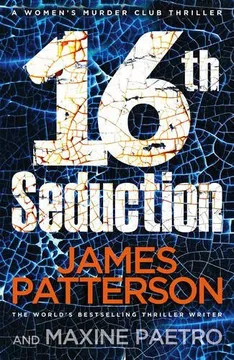
Women's Murder Club Series Series

About the Author





Download PDF
Download EPUB
.epub digital book format is ideal for reading ebooks on phones, tablets, and e-readers.








