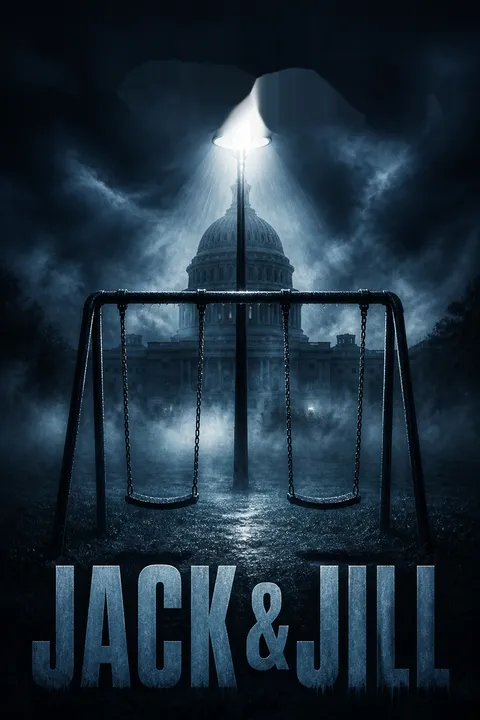


Plot Summary
Two Bodies Before Dawn
At three-thirty in the morning, Alex Cross's partner, John Sampson, wakes him with news of a murder near his home. Six-year-old Shanelle Green has been found in the Sojourner Truth School yard, her clothes missing and her face brutally beaten. The school is where Cross's son, Damon, studies, and the killing pulls the detective's memories of his murdered wife and fears for his children into the investigation.
While Cross examines Shanelle's body, another case emerges: Senator Daniel Fitzpatrick has been shot in his Georgetown apartment, handcuffed to his bed and mutilated. A poem signed by Jack and Jill promises more victims. Cross remains focused on Shanelle, whose death has devastated her parents and neighborhood.
The opening places two kinds of violence side by side: a child killed in an overlooked neighborhood and a powerful senator murdered in a polished home. Cross experiences the first through intimate identification, imagining Damon and Jannie in Shanelle's place. The contrast also establishes the book's institutional divide: public attention will gather around the senator, while Cross believes the child deserves equal urgency. His professional composure is already strained by the fact that this case has entered his own domestic world.
A Bogeyman Falls
Cross and Sampson canvass the neighborhood and hear renewed talk of Chop-It-Off-Chucky, a rumored child molester blamed for disappearances around the projects. Alvin Jackson, a young neighborhood informant, identifies Emmanuel Perez, a fast-running pizza porter with a distinctive red beard.
When Perez spots the detectives, he bolts through alleys, rooftops, and office buildings, then attempts a rooftop leap and falls to his death. Police find child pornography in his apartment, making the arrest appear justified.
Cross feels no triumph, however. The chase has produced no proof that Perez killed Shanelle, and her body was moved from the place where she was attacked. The case seems closed before its most troubling questions have been answered.
Perez's death gives the neighborhood a culprit and the police a convenient ending, but Cross's unease marks the difference between evidence and relief. The chase also exposes how little protection the projects receive: a suspect known for troubling behavior had remained at large, while investigators arrive only after a child is dead. Cross's instinct that the body was deliberately transported becomes a test of whether he can resist the institutional appetite for a quick solution.
The Second Small Victim
Two days later, seven-year-old Vernon Wheatley is found dead in Garfield Park, his face crushed on the same side as Shanelle's. Cross recognizes that Perez could not have committed this killing, and the apparent solution collapses. At the scene he meets Christine Johnson, the Sojourner Truth principal, who knew both children and asks how he can continue doing such work.
Cross admits that he does not know. The department gives the case too few investigators, so he quietly recruits Sampson and four trusted detectives to pursue it off the books. Their comparison of the wounds suggests a single, inexperienced but dangerous offender. The deaths now threaten Cross's school community, not only his professional conscience.
The repeated injury turns resemblance into evidence and forces Cross to confront the cost of certainty. Perez may have been guilty of other crimes, but that does not make him Shanelle's killer; the distinction matters because a dead suspect can no longer be questioned. Cross's admission to Christine reveals the emotional labor beneath his expertise. His improvised task force is both practical resistance to unequal policing and an attempt to restore agency after a preventable mistake.
The Case He Cannot Refuse
After Perez dies, Police Commissioner Clouser and Chief Pittman order Cross onto the Jack and Jill investigation at the FBI's request, taking him off his Southeast cases. Cross objects that Shanelle's murder might have been prevented with more attention, but the order stands.
The killers strike again at a charity gala, where Jack approaches television journalist Natalie Sheehan under an assumed identity and persuades her to take him to her hotel suite. Jill joins him there, and Natalie is shot.
At the crime scene, Cross studies the staged body and a second rhyming note. When Pittman pushes him during their argument over access, Cross slams the chief against a wall, risking his career while making clear how much the department's contempt has accumulated.
Cross is forced to exchange a neglected local case for a nationally visible one, a choice that makes the department's priorities personal. The murder of Natalie also establishes Jack and Jill's central method: they gain access through charm, then turn intimacy into a trap. Cross's assault on Pittman is not a solution to institutional injustice, but it shows the pressure escaping the professional discipline he depends on. His judgment remains sharp even as his self-control frays.
A Murder Made for Television
Jack and Jill send CNN a carefully edited video before it airs on national television. It shows police at Fitzpatrick's building, then the senator's final moments and murder, followed by images of ordinary people and a political message accusing the powerful of abandoning them.
Cross studies the editing and concludes that the killers want an audience as much as they want victims. Soon afterward, actor Michael Robinson is found murdered in a hotel suite, his body arranged and another poem left behind.
The killers have now targeted a senator, a journalist, and a movie star, all presented as liberal public figures. Cross sees a deliberate pattern of theatrical exposure, but he cannot yet tell whether the apparent politics explain the murders or disguise another purpose.
The video converts murder into an argument, but its images make the killers' claimed solidarity with ordinary people inseparable from their appetite for spectacle. Cross recognizes that media attention is not incidental evidence; it is part of the crime's design. The carefully arranged bodies similarly invite interpretation while withholding a stable motive. The public is offered a story by the killers, and Cross's task is to resist mistaking their performance for the truth.
The White House Watch
The Secret Service summons Cross to the White House after its agents reveal that Jack and Jill are also the service's code names for President Thomas Byrnes and First Lady Sally Byrnes. The killers have contacted the service after each murder, claiming they are rehearsing for a larger attack.
Cross joins a crisis team of federal officials and meets the President, who agrees to cooperate but intends to keep governing. Cross profiles the pair as organized, persuasive, and skilled at manipulating both investigators and the press.
He also insists that White House employees be checked again, including members of the investigative team. The case now carries a direct threat to the President, while Cross remains troubled by the children still dying in Southeast.
A coincidence of names becomes a security crisis because the killers have made symbolism operational. Their taunts exploit the gap between what the government can control and what it can know. Byrnes's willingness to meet Cross gives the detective unusual access, yet the President's public confidence will later complicate protection. Cross's demand to investigate insiders expresses a basic principle of his work: status cannot substitute for scrutiny.
Christine's Late-Night Kitchen
Cross keeps working the child case alongside his new White House duties. A homeless teenager, Loy McCoy, tells him that witnesses saw an older white man near the park where Shanelle was taken. Cross passes the description to Christine Johnson, who has questioned the school's teachers and keeps a revolver in her office.
Their conversations grow more personal, and one night Cross visits her home because he cannot sleep. They discuss the murders, his grief for Maria, and the work that Christine does at the school. He learns that she is married to George, a lawyer and lobbyist. Christine's welcome gives Cross a rare moment of ease, but the lead remains thin and the killer remains free.
Christine offers Cross something his cases rarely do: a relationship in which vulnerability is not treated as weakness. His visit begins with a legitimate investigative purpose but also answers an emotional need he can scarcely name. The marriage boundary matters because Cross is lonely, not because he is unaware of it. Meanwhile, the homeless witness shows how valuable information can emerge from people the police have learned to ignore, if someone takes the time to listen.
The Photojournalist's Rehearsal
Across the country, photojournalist Kevin Hawkins studies a Japanese businessman's security team at San Francisco airport. He places two bombs in separate suitcases and detonates them in sequence, killing the executive and his guards while escaping in the crowd.
Hawkins treats the attack as a rehearsal for a larger operation in Washington. Cross later learns that the CIA suspects one of its former contract killers could be involved in Jack and Jill, and Hawkins becomes a shared suspect with a history of violence and access to intelligence work.
When investigators approach him in Silver Spring, Hawkins flees by motorcycle. He crashes rather than run down children crossing from a school bus, then shoots a driver and steals his car to escape.
Hawkins's violence is chilling partly because it coexists with selective restraint. He protects children from his speeding motorcycle, then kills an adult without hesitation to preserve his escape. That contradiction frustrates any simple profile and demonstrates how moral behavior in one moment can coexist with atrocity in another. His airport attack also turns security itself into a subject of study, making the photojournalist's habit of observing people a weapon rather than a profession.
The Mistress at Intermission
At the Kennedy Center, Charlotte Kinsey is shot during the intermission of Miss Saigon while attending with Supreme Court Justice Thomas Henry Franklin. A Jack and Jill poem is found with her, but the public killing and her ordinary student status seem to break the earlier pattern. Secret Service agent Jay Grayer discovers the hidden connection: Charlotte was also President Byrnes's mistress.
Her death therefore reads as a warning aimed directly at the President. Cross cannot decide whether the killers have changed tactics or are using the apparent break to misdirect the investigation. The public venue, the single shot, and the note all show that the pair can reach a target in a crowd, where the President may soon be exposed.
Charlotte's death changes the meaning of celebrity: the victim matters not for public fame but for private access to the President. The killers exploit the difference between a person's public profile and political significance. Cross's uncertainty is analytically appropriate; a broken pattern may reveal an evolution or conceal the actual pattern. The crowded setting also turns fear into a collective experience, preparing the reader for the danger of a public presidential appearance.
Cornwall's House Is Breached
Jack enters General Aiden Cornwall's McLean home, where Cornwall recognizes him before Jack shoots him. Jack then kills Cornwall's nine-year-old son, who has also seen him. A poem is left at the scene. The murder strikes the White House crisis team directly and proves that the killers can penetrate the private lives of their pursuers.
That same morning, Jill bypasses the White House's call-monitoring system and reaches President Byrnes on a private line, declaring that his death is planned. Cross visits the murder scene and concludes that the notes may be a structured message, while the killings themselves resist a reliable pattern. The threat is no longer theoretical, and someone with exceptional access may be helping the killers.
The murder of Cornwall's child shatters any claim that Jack and Jill are merely punishing public figures for political sins. Their violence reaches the intimate spaces of family and retaliation. The untraceable call then demonstrates that the state is vulnerable not only to weapons but to compromised systems and trusted access. Cross's suspicion shifts from reading the killers' psychology to questioning the institutions that have supplied their opportunities.
The Cadet's Empty Room
The child investigation produces a new trail when Prodigy alerts Sampson to messages from a Washington subscriber claiming knowledge of the murders. The account belongs to Army Colonel Frank Moore, whose thirteen-year-old son Sumner is a cadet at the Theodore Roosevelt School.
Cross and Sampson search the Moore home and find Sumner missing, a note in his room, and Shanelle's bloodied blouse. The evidence appears to implicate the boy, but Cross distrusts how neatly it points to him.
Meanwhile, Cross's family receives repeated silent calls, and detectives begin protecting his home. A later body found in Garfield Park is identified as Sumner. The apparent suspect is dead, leaving behind a frame-up and no clear explanation of who used his family's account.
The evidence against Sumner is persuasive precisely because it is staged to satisfy the investigators' expectations. Cross's hesitation shows the value of treating clues as arguments made by someone, not as neutral facts. The silent calls widen the case's reach into his home, while Sumner's death reveals the human cost of a false trail. Digital communication functions as both a source of evidence and a means of impersonation.
No Regrets in Manhattan
President Byrnes rejects continued confinement and decides to travel to New York, insisting that threats must not govern the country. On the morning of his appearance, Brett Sterling kills White House aide Sara Rosen in a hotel room and leaves a final Jack and Jill poem.
Sara has been trusted by the staff, and the crime initially seems to confirm that Jill has been eliminated. Meanwhile, CIA assassin Kevin Hawkins prepares to enter the President's event under a stolen identity.
Cross travels with the protective detail, aware that the route and schedule are vulnerable despite the enormous security presence. The decision to return to public life gives Byrnes a visible stage, but also places him within reach of the attack the killers have spent weeks arranging.
Byrnes's decision is both an act of democratic defiance and a gamble made with other people's safety. The murder of Sara exploits the trust that makes a staff member useful, while its staged presentation encourages investigators to accept a neat ending. The title's promise of ordinary public life is therefore unstable: the President's refusal to hide becomes part of the attackers' plan, and Cross must protect a person whose courage he admires.
The Tunnel Ambush
At Madison Square Garden, Hawkins enters disguised as a female FBI agent. A bomb explodes near the stage, creating panic and drawing the President's security team into a preselected escape tunnel. Cross recognizes the danger and tries to change the route, but the evacuation is already moving.
Gunshots erupt in the crowded passage. Byrnes is hit, and a disguised Hawkins is shot in the chaos. The President survives the immediate attack but dies later from his wounds.
The operation succeeds despite the thousands of officers surrounding him because the bomb has made the protective plan predictable. Cross is left with the knowledge that the killers did not simply breach security; they used the security response to deliver the assassin to his target.
The attack turns protection into choreography: the bomb does not merely injure or distract, it directs the crowd and the agents along a route the assassin has anticipated. Cross sees the mechanism but cannot make his warning overcome the momentum of an emergency. The President's death makes the failure more than procedural. It leaves Cross confronting the limits of expertise when an adversary has designed the conditions under which expertise must act.
The Cadet Behind the Murders
While Cross returns from New York, thirteen-year-old Danny Boudreaux turns the child case into a personal campaign. He has used the Moore family's Prodigy account to frame Sumner, killed Shanelle, Vernon, Sumner, and his foster parents, and now shoots Christine Johnson's husband, George, before holding Christine inside their home.
Cross enters despite Sampson's warning and faces Danny at gunpoint. He separates himself from Christine so Danny cannot shoot them both, then rushes him when the boy turns his weapon toward her.
Danny suffers a seizure during the struggle, and Cross takes the gun. Christine survives, but George is dead. Danny's claim to fame ends in custody, with Cross recognizing the frightened child inside the killer without excusing what he has done.
Danny's violence grows from a need to become visible, but his need for recognition does not make the murders symbolic or harmless. He manufactures a rival, Sumner, because even blame can give him an audience. Cross's empathy is tested at its most difficult point: he sees Danny's fear while physically stopping him from killing again. The scene refuses both easy demonization and sentimental absolution.
The Tape Names Jack
Back in Washington, Cross searches Sara Rosen's apartment and finds an unmarked cassette hidden in a movie case. The longer footage of Fitzpatrick's murder clearly shows Jack's face, and Cross identifies him as Brett Sterling.
Investigators also uncover Sara's role as a White House source for the CIA and her relationship with Brett. Cross and Jay Grayer confront Jeanne Sterling, the CIA inspector general and Brett's wife, at her home. Jeanne shoots Grayer and tries to escape with her young daughter in the car.
Cross fires to stop her, then captures her alive. The evidence links Brett and Jeanne to the conspiracy, though the full chain of money and political influence remains unclear. The couple's public respectability has protected them until Sara's private recording breaks through it.
The cassette is a material counter-memory: an image preserved outside the official narrative returns to challenge the story that Jack and Jill are dead. Sara's recording may be both evidence and an act of betrayal, though her precise intention remains uncertain. Jeanne's use of her child as cover makes the moral corruption of the conspiracy visible in one desperate choice. Cross can identify the perpetrators, but not yet explain who empowered them.
Silence Behind Prison Walls
Before Brett and Jeanne can stand trial, both are found dead in separate cells at Lorton Prison. Their bodies show signs of professional execution, and Jeanne has evidence of having fought back.
The prison warden believes someone may have supplied poison or otherwise entered the cells, but the security searches and guard checks offer no clear answer. Cross joins the investigation at the Sterling home, searching for a final clue that might identify who ordered the President's murder. He finds nothing.
He and FBI agent Kyle Craig consider the CIA, the military, business interests, and political figures, but too many suspects have motive and access. The arrests have exposed the operators, yet the sudden deaths prevent them from naming the larger network.
The prison killings transform capture into another form of disappearance. The state can name the conspirators but cannot protect them long enough to hear their account, leaving power insulated by uncertainty. Cross's frustration arises not from a lack of suspects but from their abundance: every plausible theory competes with another. The unresolved ending makes procedural success feel partial, because identifying the hands that acted does not reveal who directed them.
Home Is Not Safe
Cross returns to his children and Nana Mama carrying the deaths of Byrnes, Shanelle, Vernon, and George Johnson. After striking Chief Pittman earlier, he is suspended from the police force. Christine, grieving her husband, visits Cross at home, and their growing closeness offers a small opening toward companionship.
Christmas Eve interrupts that fragile calm when Gary Soneji, a killer who escaped from prison, calls Cross. Soneji reveals that he left Rosie the cat at the Cross home and knows about Christine, then promises to return.
Cross goes back to the tree and his children, but the threat has entered the house through the very creature they welcomed into their family. The Jack and Jill case is over in court only in appearance; danger remains intimate.
The ending refuses the comfort of a sealed case. Cross has rescued Christine, protected his family, and found a possible new attachment, yet Soneji turns those sources of comfort into vulnerabilities. Rosie embodies the ambiguity of care: the cat is genuinely loved, but its arrival also carries an enemy's access. Cross's professional suspension matters less than the fact that private life cannot be cleanly separated from the work that threatens it.
Analysis
Jack & Jill builds its thriller around the struggle to distinguish a staged explanation from the motives beneath it. The celebrity murders arrive with poems, exposed bodies, and a political manifesto, inviting police and public alike to accept a coherent story. Cross's strength is not that he immediately sees through the performance, but that he keeps testing it against the physical details and the lives affected. Sara's preserved film eventually corrects the killers' version of events, yet the subsequent deaths of the Sterlings leave the conspiracy's wider authors unknown. That incomplete revelation is central to the novel's political unease: identifying the people who carried out violence does not necessarily expose the institutions or interests that enabled it.
The parallel child-murder plot prevents the national crisis from swallowing Cross's local responsibilities. Shanelle, Vernon, and Sumner are not prominent enough to command the same attention as a senator or president, yet their deaths expose the cost of unequal policing more directly. Cross's off-book task force is an ethical response to that neglect, though his mistaken pursuit of Perez shows how urgency can turn suspicion into lethal certainty. Danny Boudreaux's violence then complicates the detective's psychology. Cross can recognize a frightened, damaged child in him without denying the victims or surrendering the need to stop him.
At home, Cross's children, Nana Mama, and Christine make his work emotionally consequential rather than abstract. The killers repeatedly exploit the belief that danger can be contained by expertise, status, or security protocols. Cross survives by combining analysis with human attention, but the ending denies him mastery: he loses the President, cannot uncover the full conspiracy, and learns that Soneji has reached into his family life. The book's deepest tension is therefore not simply between law and crime, but between the desire to protect particular people and the knowledge that no system can guarantee their safety.
Review Summary
Jack & Jill receives mixed reviews, with many readers praising its fast-paced, suspenseful plot and engaging characters. Some appreciate the dual storylines and unexpected twists, while others find the political elements and unresolved plot points frustrating. Fans of the Alex Cross series generally enjoy the book, citing Patterson's terse writing style and ability to create tension. However, some critics argue the book feels rushed or underdeveloped compared to earlier entries. Overall, readers find it an entertaining, if somewhat flawed, thriller that keeps them engaged until the end.
People Also Read

Characters
Alex Cross
The haunted street detectiveA Washington homicide detective and trained psychologist, Cross combines close physical observation with an unusual willingness to enter other people's emotional lives. He is raising Damon and Jannie with help from Nana Mama while still grieving his murdered wife, Maria. His work makes him alert to danger, but it also follows him home and tempts him to believe he can protect everyone through effort alone. Cross values fairness, especially when poor neighborhoods receive less institutional attention, and he struggles when professional duty collides with personal attachment.
John Sampson
Cross's towering partnerSampson is Cross's longtime friend, police partner, and steady counterweight. His humor can be blunt, but beneath it lies deep loyalty to Cross and the children. He knows the streets of Southeast Washington intimately and understands how quickly an apparently ordinary encounter can turn dangerous. Sampson's size and confidence make him formidable in a chase, while his emotional honesty helps him challenge Cross when the detective's compassion begins to resemble recklessness.
Nana Mama
The family matriarchCross's eighty-one-year-old grandmother, Nana Mama raised him after his parents died and now helps care for Damon and Jannie. She is sharp, politically outspoken, deeply protective, and capable of making tenderness feel like a demand. Her criticism of Cross often springs from a fierce conviction that he must not neglect his family or the children of his neighborhood. She offers the household continuity, humor, and moral pressure when his work threatens to consume him.
Christine Johnson
The fearless school principalChristine leads the Sojourner Truth School with warmth, discipline, and an awareness of the dangers surrounding its pupils. She grew up near the neighborhood and takes the children's safety personally, staying late to support the school and carrying a firearm for protection. Her intelligence and humor draw Cross toward her, while her marriage and professional boundaries complicate his feelings. Christine's steadiness under pressure reflects the burden borne by educators who must protect children without the resources their work demands.
Jack
The elusive public assassinJack is the name attached to one half of a pair of killers who target prominent figures, leave rhyming notes, and turn their crimes into public theater. He is methodical, persuasive, and skilled at gaining access to protected spaces. The persona invites investigators to treat the murders as a performance with a political message, even as its real purpose remains uncertain. His confidence and planning make him difficult to distinguish from the respectable people he approaches.
Jill
The killers' unseen strategistJill operates beside Jack, helping shape the pair's public warnings and carefully arranged murders. She speaks through filtered calls and poems, giving investigators a voice to analyze but no reliable identity. Her role suggests patience, intelligence, and a taste for controlling what the public sees. The name functions as both a partner's identity and a mask, keeping the investigation focused on the killers' carefully staged story.
Thomas Byrnes
The exposed presidentPresident Byrnes is a popular independent leader whose plans to change government institutions have made him enemies in Washington. He is personable and politically confident, but not naïve about the dangers surrounding his office. Byrnes respects Cross's directness and agrees to cooperate with the investigation. His insistence on continuing public duties expresses faith in democratic visibility, though it places extraordinary pressure on the people charged with protecting him.
Sara Rosen
The trusted White House aideRosen works in White House communications and is valued for her competence and discretion. She is a private, bookish person whose orderly home and literary interests suggest a life that reaches beyond her office. Her presence illustrates how much the security of the government depends on trust in people whose private motives may be difficult to read.
Jeanne Sterling
The CIA investigatorSterling serves as the CIA's inspector general and joins the crisis team as an articulate advocate for reform inside her agency. She is decisive, intellectually forceful, and accustomed to confronting institutional secrets. Her family life and composed manner make her seem grounded, while her access to intelligence gives her a perspective that Cross cannot obtain through ordinary police work.
Brett Sterling
The polished lobbyistBrett is Jeanne Sterling's husband and a Washington lobbyist with a military background. He belongs to the city's world of influence, professional polish, and carefully maintained respectability. His connections and familiarity with government circles make him relevant to the investigation, though he initially appears to be part of the background rather than its center.
Kevin Hawkins
The watchful photojournalistHawkins is a prizewinning photojournalist, a practiced observer who stores details in his memory as if composing photographs. Restless and drawn to high-risk situations, he has lived a hard, itinerant life and possesses unusual skill under pressure. His work makes him comfortable moving through crowds and studying security, qualities that bring him into the orbit of the federal investigation.
Danny Boudreaux
The isolated cadetBoudreaux is a small, socially isolated student at a military academy, where ridicule and loneliness shape his sense of himself. He has a history of serious emotional instability and has received psychiatric treatment. His intelligence and training coexist with profound insecurity, a dangerous combination in a boy who is desperate to matter and quick to experience disrespect as an attack.
George Johnson
Christine's lawyer husbandGeorge is Christine's husband, a corporate lawyer and lobbyist who shares her home and history. He is affectionate but often absorbed in his work, and his emotional reserve can leave Christine wanting more engagement. Their long relationship has genuine warmth beneath its frustrations, especially when external danger forces him to reveal feelings he normally keeps contained.
George Pittman
Cross's hostile chiefPittman is the chief of detectives, an abrasive administrator who resents Cross's independence and professional reputation. He uses authority to control assignments and access, often placing institutional convenience above the needs of individual cases. His conflict with Cross reflects both personal antagonism and the department's deeper failures.
Kyle Craig
Cross's FBI allyCraig is an FBI agent specializing in high-profile, violent crimes. He is sharp, practical, and willing to work across agency lines, making him one of Cross's most useful partners in the investigation. Their friendship allows frank exchange even when the case becomes politically sensitive.
Shanelle Green
The murdered first-graderShanelle is a six-year-old Sojourner Truth pupil remembered by neighbors for her sweetness and bright presence. Her death begins the child-murder investigation and devastates her young parents and community.
Vernon Wheatley
The second school victimVernon is a seven-year-old pupil at the Sojourner Truth School. His death bears the same distinctive injury as Shanelle's, turning Cross's doubts about the first investigation into an urgent search for the true offender.
Sumner Moore
The missing honor cadetSumner is a thirteen-year-old honor student at the Theodore Roosevelt School and the son of Colonel Frank Moore. His reputation as a capable, dutiful cadet makes the evidence found in his room especially difficult for his family to understand.
Aiden Cornwall
The targeted generalCornwall is a senior military officer serving on the White House crisis team. His experience and position place him close to the effort to protect President Byrnes, making his private home part of the larger security struggle.
Natalie Sheehan
The celebrated newswomanSheehan is a prominent television journalist known for her polished public presence. Away from the camera she is intelligent, socially confident, and more spontaneous than her professional image suggests.
Michael Robinson
The Hollywood leading manRobinson is a famous film actor whose charm and public reputation make him an instantly recognizable target. Beneath the polished image, he seeks uncomplicated company and tries to keep his private life separate from celebrity.
Charlotte Kinsey
The Georgetown law studentKinsey is a bright young law student whose social life connects her to powerful figures in Washington. Her death forces investigators to reconsider who qualifies as a target and what private relationships may matter to the killers.
Daniel Fitzpatrick
The murdered senatorFitzpatrick is a wealthy senator whose execution opens the Jack and Jill case. His political standing draws federal attention, while the humiliating staging of his body suggests that the killers want to make a public accusation as well as take a life.
Alvin Jackson
The neighborhood informantJackson is a former track athlete who now sells drugs and sometimes provides information to Cross and Sampson. His familiarity with the neighborhood helps the detectives find Perez, while his own childhood history gives him a personal reason to recognize danger to children.
Rakeem Powell
The committed homicide detectivePowell is a young D.C. homicide detective who works with Cross and Sampson on the Southeast cases. He is capable and serious about the work, despite the department's limited resources and competing priorities.
Plot Devices
Jack and Jill's poems
A taunting public signatureRhyming notes appear beside the celebrity victims and develop into warnings directed at the President. Their neat form makes the crimes seem like a game, while their changing content tempts investigators to read political meaning into each murder. The poems give Jack and Jill control over the public narrative, but they also provide Cross with recurring evidence to compare.
The murder film
Evidence hidden in spectacleJack and Jill send an edited film to a television network, combining crime-scene footage, a murder, and images of ordinary people. A longer copy later preserved among Sara Rosen's belongings contains footage that helps identify the killer. The film first functions as propaganda, then becomes evidence capable of contradicting the story the killers have staged.
The Prodigy account
A digital trail plants suspicionMessages sent through the Moore family's online account claim knowledge of the child murders and direct police attention toward the Moore home. The apparent electronic trail seems to identify a suspect, but it has been used to mislead investigators. It demonstrates how early digital communication can serve as both a source of forensic clues and a tool for impersonation.
Security code names
A coincidence becomes threatThe killers' names match the Secret Service names for President and First Lady Byrnes. Their calls to the service make that overlap impossible to dismiss, turning a taunt into a credible warning. The code names also underline the story's concern with masks, assumed identities, and the danger of trusting official labels.
The escape route
Protection becomes a trapThe President's security team plans routes and emergency procedures to move him out of danger. At Madison Square Garden, the bombing creates the very confusion that sends the team into a tunnel the assassin has anticipated. The device converts preparation into vulnerability: once the emergency begins, trained agents follow a predictable response that the attacker can exploit.
FAQ
Basic Details
What is Jack & Jill about?
- Dual Murder Investigations: The novel follows Detective Alex Cross as he simultaneously investigates two seemingly unrelated murder sprees in Washington D.C.: the brutal killings of young children in his own neighborhood and a series of high-profile "celebrity" murders attributed to a pair calling themselves "Jack and Jill."
- Personal and Professional Stakes: Cross is deeply affected by both cases, particularly the child murders near his home and his son's school, while also being drawn into the national spotlight due to the Jack and Jill killings targeting prominent figures and threatening the President.
- Unmasking Hidden Identities: The narrative involves Cross and his team attempting to profile and track down the elusive Jack and Jill, who communicate through cryptic rhymes and media stunts, while also searching for the child killer, leading to unexpected reveals about the perpetrators' true identities and motives.
Why should I read Jack & Jill?
- Intense, Fast-Paced Thriller: The book delivers James Patterson's signature rapid-fire chapters and escalating tension, keeping readers on edge as Alex Cross races against time to stop multiple killers.
- Deep Dive into Alex Cross's World: It offers significant insight into Cross's personal life, his relationship with his family (Nana Mama, Damon, Jannie), his struggles with grief and trauma, and his unique blend of psychological insight and street-level detective work.
- Complex, Intertwined Mysteries: The novel presents two distinct yet subtly connected murder plots, challenging the reader to piece together clues alongside Cross and exploring themes of societal decay, celebrity culture, and hidden power structures.
What is the background of Jack & Jill?
- Washington D.C. Setting: The story is deeply rooted in the specific geography and social dynamics of Washington D.C., contrasting the affluent areas like Georgetown and the White House with the neglected neighborhoods of Southeast D.C. where the child murders occur.
- Contemporary Social Commentary: The plot touches upon issues prevalent in the 1990s (when the book was published), including rising urban violence, media sensationalism, political corruption, and the perceived disconnect between the powerful elite and ordinary citizens, which the killers explicitly reference.
- Post-Cold War Espionage Echoes: The involvement of the CIA and former contract killers hints at the lingering shadows of Cold War-era covert operations and the potential for trained operatives to become rogue threats within society.
What are the most memorable quotes in Jack & Jill?
- "Jack and Jill came to The Hill / To hose down all the slime": This quote, from the first note left by Jack and Jill, immediately establishes their self-righteous, anti-establishment motive and sets the stage for their targeting of prominent D.C. figures.
- "I'm a loser, baby. So why don't you kill me?": This lyric, repeatedly running through the child killer Danny Boudreaux's head, encapsulates his deep-seated feelings of worthlessness, rage, and suicidal ideation, revealing the psychological torment driving his violence.
- "There are no rules anymore.": Uttered by Alex Cross and echoed by others, this phrase reflects the pervasive sense of chaos, moral decay, and unpredictability that defines the murder sprees and the breakdown of societal order depicted in the novel.
What writing style, narrative choices, and literary techniques does James Patterson use?
- Short, Punchy Chapters: Patterson employs extremely brief chapters, often ending on cliffhangers, to maintain a relentless pace and build suspense, characteristic of his popular thriller style.
- Multiple Points of View: The narrative frequently shifts perspective, primarily following Alex Cross but also offering glimpses into the minds of the killers (Jack, Jill, and Boudreaux) and other key characters, providing a broader, often chilling, understanding of events.
- Integration of Real-World Elements: The book blends fictional events with references to real places (White House, Kennedy Center, specific D.C. streets), cultural touchstones (Beatrix Potter, Gershwin, MTV, specific movies), and even historical figures (Sojourner Truth, Emily Dickinson, past presidents), grounding the fantastical plot in a recognizable reality.
Hidden Details & Subtle Connections
What are some minor details that add significant meaning?
- The Red Balloon at the Crime Scene: The bright red balloon floating above the thicket where Shanelie Green was murdered initially seems like a random, eerie detail, but Alex later deduces it was likely the "lure," a seemingly innocent object used by the killer to attract the child into the woods.
- Christine Johnson's Unlocked Office Door: Alex notes that the principal's office door is often unlocked when she works late, highlighting her bravery or perhaps naivete in a dangerous neighborhood, a subtle detail that gains significance when the child killer later targets her home.
- Sara Rosen's Book Collection: Jill's extensive library, filled with American history, politics, and classic literature (especially Emily Dickinson), subtly reveals her intellectual depth and potential motivations beyond simple celebrity stalking, hinting at the ideological underpinnings of the Jack and Jill "cause."
What are some subtle foreshadowing and callbacks?
- Jannie's Early Morning Question: Jannie's sleepy question to Alex, "It's something bad, isn't it, Daddy?", early in the book foreshadows the pervasive evil that will touch their lives and the emotional burden Alex carries home from his work.
- The "Jackal" Code Name: The Secret Service's long-standing code name for a presidential assassin, "Jackal," is revealed early on, creating a chilling callback and potential link to the killers calling themselves Jack and Jill, suggesting the President might be their ultimate target.
- Gary Soneji's Past Threat: Alex's recurring thoughts about Gary Soneji, the child killer from a previous book who vowed revenge, serve as a subtle callback that keeps the possibility of his involvement alive, culminating in the chilling phone call at the end.
What are some unexpected character connections?
- Christine Johnson's Husband's Profession: The reveal that Christine Johnson's husband, George, is a lobbyist on Capitol Hill creates an unexpected, albeit indirect, connection between Alex's personal interest in Christine and the political world targeted by Jack and Jill.
- Sumner Moore's Military School: The discovery that the second child murder victim, Vernon Wheatley, was killed by Sumner Moore, a student at the Theodore Roosevelt School, links the child murders to a seemingly disciplined environment, contrasting the killer's rage with the school's image.
- Sara Rosen's CIA Role: The most significant unexpected connection is the reveal that Sara Rosen ("Jill") was not just a White House communications staffer but a long-term CIA mole, fundamentally changing the understanding of the Jack and Jill operation and its potential backing.
Who are the most significant supporting characters?
- John Sampson: More than just a partner, Sampson is Alex's closest friend and confidante, providing emotional support, street smarts, and a moral compass, often voicing the raw frustration Alex internalizes ("Two little black kids don't matter much").
- Nana Mama: Alex's grandmother is the anchor of his family and moral center, offering unwavering support, sharp commentary on societal issues (especially race and justice), and a safe haven that becomes increasingly threatened by Alex's work.
- Christine Johnson: The principal of the Truth School becomes a key figure due to her connection to the child victims and her unexpected resilience and intelligence, developing a complex relationship with Alex that offers him a glimpse of personal connection amidst the darkness.
Psychological, Emotional, & Relational Analysis
What are some unspoken motivations of the characters?
- Alex Cross's Need for Control: Beyond solving cases, Alex's relentless pursuit stems partly from a deep-seated need to impose order on chaos and protect his family, driven by the trauma of his wife's murder and the vulnerability of his children.
- Jill's Desire for Significance: Sara Rosen's participation as "Jill" seems fueled by a craving for excitement and importance, escaping her perceived "drudge" existence ("Sara the gimp, Sara the drudge, Sara the drone") through the dangerous game and her relationship with "Jack."
- Danny Boudreaux's Search for Identity: Danny's violence is rooted in profound feelings of abandonment and worthlessness ("Nobody is gone"), seeking validation and attention by becoming a notorious killer, directly challenging Alex Cross, who reminds him of his absent father.
What psychological complexities do the characters exhibit?
- Alex Cross's Trauma and Empathy: Cross grapples with the psychological toll of witnessing horrific violence, particularly against children, balancing his professional detachment with intense personal empathy that makes him vulnerable but also a more effective profiler.
- Jack's Cold Professionalism vs. Personal Connection: "Jack" (Brett Sterling) displays a chilling lack of emotion during the murders, treating them as professional tasks, yet shows moments of tenderness towards Sara ("Monkey Face") and deep affection for his own family, highlighting a disturbing compartmentalization.
- Danny Boudreaux's Mood Swings and Delusions: Danny exhibits extreme psychological instability, marked by violent rages, moments of childlike vulnerability, delusions of grandeur (comparing himself to Jack and Jill), and a desperate need for recognition, likely exacerbated by discontinuing his medication.
What are the major emotional turning points?
- Discovery of the Second Child Victim: The murder of Vernon Wheatley, similar to Shanelie Green, shatters the hope that Emmanuel Perez was the sole killer and confirms a serial threat, deeply impacting Alex and the community and fueling his determination to work the case off-book.
- Jill's Phone Call to the President: Jill's chilling, taunting call to President Byrnes, warning him of his impending assassination, marks a significant escalation in the Jack and Jill plot, injecting a new level of fear and urgency into the White House team.
- The Attack at the Kennedy Center: The public murder of Charlotte Kinsey, seemingly breaking the Jack and Jill pattern, creates confusion and fear, forcing Alex and the team to question their assumptions and highlighting the killers' unpredictability and willingness to take greater risks.
How do relationship dynamics evolve?
- Alex and Sampson's Deepening Partnership: The shared trauma of the child murders and the intensity of the Jack and Jill case further solidifies Alex and Sampson's long-standing friendship and professional bond, relying on each other for support and trust in a chaotic environment.
- The Complex Bond of Jack and Jill: The relationship between Brett Sterling ("Jack") and Sara Rosen ("Jill") is revealed to be a twisted mix of ideological partnership, manipulation (Brett using Sara for her White House access), and genuine, albeit dark, affection, culminating in Brett's cold-blooded murder of Sara.
- Alex's Budding Connection with Christine Johnson: Despite the tragic circumstances and Christine's marriage, a mutual respect and attraction develop between her and Alex, offering a hint of potential future connection and highlighting Alex's struggle with loneliness and the possibility of new relationships after Maria's death.
Interpretation & Debate
Which parts of the story remain ambiguous or open-ended?
- The Full Scope of the Conspiracy: While the Sterlings are identified as Jack and Jill and the President's assassins, the novel leaves open the question of who ordered the assassination and the extent of the network involved, hinting at powerful figures in the CIA, military, or big business.
- Gary Soneji's Role and Intentions: Soneji's reappearance via a phone call at the very end is highly ambiguous; it's unclear if he was involved in any of the recent murders (though Alex doubts it), his current location, or his specific plans for revenge against Alex and his family.
- The Fate of the Sterling Children: The novel doesn't explicitly state what happens to Jeanne and Brett Sterling's children after their parents' capture and subsequent murder in prison, leaving their future uncertain and highlighting the innocent victims of the conspiracy.
What are some debatable, controversial scenes or moments in Jack & Jill?
- The Murder of Aiden Cornwall's Son: The killing of General Cornwall's nine-year-old son alongside his father is a particularly brutal and seemingly gratuitous act that sparks debate about the killers' true nature – was it a necessary part of their "war," a sign of escalating sadism, or a deviation from their stated "cause"?
- The CIA's Use of Contract Killers: The revelation that the U.S. government employs "ghosts" or contract killers is a controversial element that blurs the lines between state-sanctioned violence and the actions of the "psychopathic" killers Alex pursues, raising questions about morality and accountability at the highest levels.
- Alex Cross's Confrontation with Danny Boudreaux: Alex's decision to enter the house alone to face the armed, unstable teenager, and his subsequent physical confrontation with the boy, can be debated as either heroic or reckless, highlighting the extreme measures Alex takes and the psychological risks involved.
Jack & Jill Ending Explained: How It Ends & What It Means
- The Unmasking of Jack and Jill: The ending reveals that "Jack" is Brett Sterling, a former Army Colonel and husband of CIA Inspector General Jeanne Sterling, who is "Jill." They are not celebrity stalkers but highly organized, ideologically driven assassins who murdered President Thomas Byrnes because they believed his policies threatened national security and the intelligence/military establishment.
- The Larger Conspiracy and the Sterlings' Fate: The Sterlings are captured but are themselves murdered in federal prison shortly after, strongly implying they were silenced by the powerful, hidden group who likely ordered the President's assassination, leaving the true scope of the conspiracy unresolved.
- The Return of Gary Soneji: The final moments feature a chilling phone call from Gary Soneji, Alex's nemesis from a previous book, who reveals he has been watching Alex's family (leaving the cat Rosie) and promises to see him soon, signaling that despite solving the Jack and Jill case, Alex's personal nightmare and battle against evil are far from over.
Alex Cross Series Series








About the Author



Download PDF
Download EPUB
.epub digital book format is ideal for reading ebooks on phones, tablets, and e-readers.








