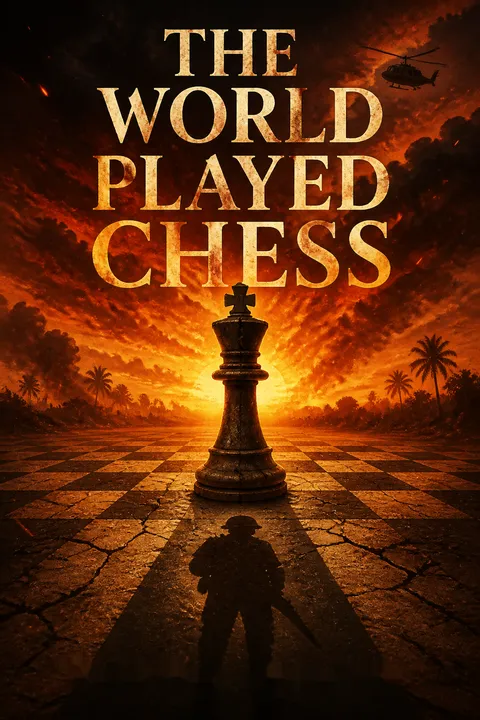


Plot Summary
Prologue
In 2015, Vincent Bianco receives a package from William Goodman, a Vietnam veteran he has not seen since they worked together in 1979. Inside a tobacco tin is William’s wartime journal, with a letter explaining that Vincent once listened when others would not.
Vincent begins reading the entries in order while his eighteen-year-old son, Beau, approaches his own difficult passage into adulthood. The journal pulls Vincent back to the summer before college, when he learned from William and another veteran, Todd Pearson, that youth does not make anyone immune to death, regret, or the consequences of a reckless choice.
The journal turns memory into an obligation passed between generations. William cannot erase what happened in Vietnam, but he can choose a reader who once allowed him to tell it without judgment. Vincent’s decision to read slowly, in the order William requested, establishes a form of listening as action rather than sentiment. The frame also links two rites of passage: Vincent’s uncertain adulthood in 1979 and Beau’s approaching independence decades later. The package arrives when Vincent is confronting his abandoned writing ambitions, so it offers not only access to William’s past but a test of whether the past can still alter the choices of the living.
The Concrete Test
In June 1979, eighteen-year-old Vincent Bianco has graduated valedictorian but has no summer job, and his family cannot afford Stanford. His sister’s boyfriend, Mike, takes him to a Burlingame remodel, where Vietnam veterans William Goodman and contractor Todd Pearson are working.
Todd hands Vincent a sledgehammer and orders him to break the old driveway into chunks small enough for the foundation. Hungover and sick in the heat, Vincent learns to use a large piece of concrete as an anvil, tapes his blistered hands, and keeps at it after the others leave.
Todd returns the next morning to find the work done and offers him steady labor. Vincent has not won anyone’s affection, but persistence has earned him a place beside men who expect him to work like an adult.
The first test is physical because Vincent’s self-image is still largely ceremonial. His academic success has earned praise, but not practical competence, and Todd refuses to treat accomplishment as a substitute for labor. Vincent’s persistence begins his education in adult responsibility: work has consequences for other people, schedules, and money. The crew’s test is not a hazing ritual for its own sake. Todd needs reliable help on an underbid job, while William recognizes the young man’s effort. The job gives Vincent a way to move beyond the protected identity of valedictorian, though he does not yet understand how much more severe the veterans’ experiences have been.
The Photographer Becomes Infantry
William’s journal begins with his 1967 Marine induction and his mother’s plea that he stay inconspicuous and come home. He chooses the Marines because he expects to be drafted, then scores highly enough to request a journalism specialty. After boot camp and combat training, the Marines deny his first choice and assign him as a combat photographer.
In March 1968, William lands at Da Nang, then reaches Firebase Phoenix near the Laotian border. The depleted company needs riflemen, so his camera is only a secondary specialty: he must carry an M-16 and serve in the infantry. Corporal Victor Cruz, a veteran of one tour already, shows him the tunnels, bunkers, and perimeter defenses, then an incoming attack drives William into cover.
William’s transfer from camera to rifle exposes the gap between a person’s intended identity and the institution’s use for him. He hopes to witness the war and build a journalistic future, but manpower shortages make his body more valuable as a combatant. The camera does not protect him from violence; it becomes a second obligation layered over the first. Cruz’s practical instruction is a counterweight to military abstraction. He teaches William how to survive a place where official pauses and slogans do not stop incoming fire. The scene establishes a recurring tension: William wants to record what happens, while the war repeatedly forces him to participate in it.
Kenny Leaves the Foxhole
On William’s first night on guard, he shares a foxhole with Kenny, a new marine who is eager for combat. When Viet Cong fighters probe the firebase, flares and machine-gun fire turn the darkness into a confusion of light and noise. Kenny climbs above the sandbags to shoot. After the attack, Cruz finds him dead from a bullet through his eye.
William helps carry Kenny’s body to the helicopter, then takes photographs because documenting the dead is still his assigned work. When another marine tries to claim the enemy fighter found on the wire, William insists the kill belonged to Kenny, though he did not actually see him make it. The claim gives Kenny a final measure of dignity and gives William a way to resist reducing him to a body bag.
Kenny’s death dismantles William’s distance from war before he has learned anyone’s name well. The foxhole makes the loss physically close: he hears Kenny sleep, then watches him leave the place that might have protected him. William’s false certainty about the enemy kill is not a tactical claim so much as an act of mourning. He wants Kenny’s last action to mean more than a fatal mistake. The camera offers William a thin defense against shock, allowing him to frame death as an image, but the image cannot make the death unreal. The episode establishes the moral cost of the military demand to continue working immediately after loss.
A Summer Without Guardrails
At home, Vincent’s final summer with his high-school friends runs on beer, dares, and stories inflated after the fact. He sneaks into bed after a late party and believes his acting has fooled his mother.
At a drive-in, his friends provoke a brawl, then escape before police arrive, boasting afterward about a fight most of them barely joined. Meanwhile, Vincent learns construction by stripping a roof from inside a suffocating attic and salvaging its lumber.
William explains that he had once hoped to become a newspaper photographer, but military officials kept his combat photographs and denied him ownership. Vincent recognizes the loss but cannot yet understand its scale. His friends are already dispersing toward college and work, while he still treats recklessness as harmless entertainment.
Vincent and William are not yet equals in experience, but their stories begin to mirror one another. Vincent’s friends turn danger into legend because the performance makes them feel invulnerable; William’s lost photographs show how institutions can take ownership of a person’s work and future. The young man understands the injustice intellectually, but not the accumulated grief behind William’s account. His own misbehavior is also a performance: he wants to appear daring and adult without accepting adult consequences. The contrast is deliberately uncomfortable. Vincent’s summer is not a miniature Vietnam, but William’s presence makes it impossible for him to keep treating risk as merely a source of amusing stories.
Amy’s One Summer Night
Two women, Jennifer and her cousin Amy DeLuca, notice Vincent working on the remodel. Amy is a Fordham law student visiting from New York, and Vincent claims to attend Stanford rather than admit he is headed to community college.
At a softball gathering, Amy’s cousin’s boyfriend leaves her behind, and Vincent draws her into conversation with the Northpark Yankees. He exaggerates his future as a journalist, then drives her to her cousin’s empty house. Springsteen records, drinks, and a swim carry them into Vincent’s first sexual experience.
Amy is still grieving a recent breakup, and when she realizes Vincent is younger and inexperienced, she responds with tenderness rather than promises. She returns to New York that Sunday. Vincent is left with a vivid memory and a sharper sense of the cost of pretending to be someone else.
The encounter gives Vincent a version of adulthood he has rehearsed but not earned. The Stanford lie is not simply a bid for status; it lets him enter a room where he fears he does not belong. Amy’s own loneliness makes the night reciprocal, though their needs are unequal and temporary. When she recognizes his inexperience, Vincent feels exposed because his invented identity has collapsed at the moment he most wanted to seem confident. The episode is emotionally formative without becoming a lasting romance. Its importance lies in Vincent’s first intimate recognition that people can be hurt while neither person has acted maliciously, and that desire does not guarantee a future.
The Bush Takes Its Due
After months of boredom at Firebase Phoenix, William joins a long-range patrol carrying ammunition, explosives, and even marbles to rattle inside perimeter cans. The company moves through oppressive heat, mud, villages, and suspected minefields, losing men to booby traps and exhaustion.
William sees Eric Johnson, called EZ, hit by an explosion and die while a corpsman tries to save him. The unit quickly carries the wounded and dead away, then resumes its mission. William wonders whether EZ’s mother could sense his death from home.
As losses mount, William’s prayers change from requests for safety to anger and bargaining, then stop altogether. The men keep moving because the patrol requires it, but the repeated deaths make survival feel less like providence than chance.
The patrol makes trauma cumulative rather than exceptional. William does not encounter one defining horror and then recover; he is required to absorb loss while remaining physically useful. The military’s insistence on movement prevents grief from becoming a shared ritual, so the dead are acknowledged through procedures and then displaced by the next task. William’s religious crisis follows the same pattern. Prayer initially gives him a language for fear, but the deaths of men who pray as sincerely as he does make that language seem powerless. His loss of faith is less an intellectual conclusion than an injured expectation: he had trusted that devotion might matter, and the war keeps supplying evidence to the contrary.
The Elephant Grass Ambush
In June 1968, William’s unit spots North Vietnamese soldiers moving through elephant grass, then discovers that the apparent column is bait for a larger force dug into the hillside. Lieutenant Brad Dickson orders the Marines to fire before Cruz can stop him. Mines explode, machine guns rake the open ground, and rockets and mortars leave the company pinned in a kill zone.
William crawls to a new position, fires at the enemy machine gun, and throws grenades until it falls silent. His action gives the remaining Marines time to return fire and call in aircraft. The attack ends, but forty-two Marines are dead and fifty-eight wounded. William photographs the casualties, then joins the survivors as they are ordered to move out again.
The ambush shows how authority and experience can diverge dangerously. Dickson possesses formal command, but Cruz understands the terrain and the enemy’s method; the younger officer’s confidence overrides the knowledge beside him. William’s response is neither heroic mastery nor helplessness. He survives by adapting, crawling, firing, and creating a brief opening for others. The casualty count then dwarfs any simple victory narrative. Photography records what the military can count, while the dead themselves resist being reduced to numbers. The order to continue is the section’s harsh consequence: the institution treats survival as proof that the work can resume, even when the people doing it have been permanently altered.
A Village Becomes the Enemy
During a later sweep, William’s company enters a Vietnamese village looking for weapons and Viet Cong fighters. The soldiers find rice and an AK-47, evidence that someone in the village supports the enemy, and the Marines burn the settlement while forcing its inhabitants to move ahead of them.
William watches children and older villagers look at the Americans with fear rather than gratitude. He recognizes that the soldiers are destroying people’s homes in the name of protecting them. As casualties continue, he stops believing that prayers or military body counts can explain the war.
He tells himself the Vietnamese are all enemies, then catches himself seeing the people he passes as individuals. His faith and moral boundaries erode together, leaving him increasingly capable of violence and increasingly ashamed of it.
The village is a moral turning point because it makes the war’s abstractions visible as ordinary people losing shelter. The soldiers’ discovery of a weapon supplies a reason to treat everyone as suspect, but it does not make the burning of the village morally clean. William understands that the mission’s language of protection has inverted itself: the people supposedly being protected are made homeless by the protectors. Dehumanizing labels help him continue, yet they also make his later guilt possible, because he can remember the moment he recognized the people beneath them. The scene shows moral injury forming not only through what a soldier does, but through the stories he must tell himself to keep doing it.
A Puddle, A Warning
By July, Vincent is working long hours and drinking late with friends. One rainy morning, hungover and unfocused, he cuts rebar with an electric saw while standing in a puddle and holding the metal in his bare hand. William sees the danger and stops him before the current can turn the setup fatal.
His fear becomes anger because Vincent has treated a preventable risk as though it were harmless. The incident changes how Vincent regards his own routines.
He has also watched friends drink recklessly, abandon an unconscious teammate outside his home, and provoke fights for pride. At a later confrontation, he apologizes rather than fight a young man baited by his girlfriend. Vincent begins to understand that restraint can be more courageous than winning a story to tell.
William’s intervention makes adult responsibility concrete: one careless moment could leave other people to live with Vincent’s death. The lesson does not arrive as a lecture but as visible fear in a man whose own past has trained him to recognize danger before Vincent can. Vincent’s gradual shift is important because it is not a sudden conversion. He continues to make mistakes, but begins asking what they cost others. His refusal to fight is a deliberate departure from his friends’ code of masculine display. The section’s psychological movement is from invulnerability toward accountability, as Vincent learns that courage can mean declining a contest whose only prize is injury.
Beau Loses His Helmet
In 2015, Vincent and his wife Elizabeth watch their son Beau captain Serra’s football team against rival Bellarmine. Beau scores and tackles well until a player dives into a pile and strikes the back of his head. Disoriented and unable to focus, Beau insists he can return to the game.
Vincent tells the trainer to take his helmet away, choosing his son’s safety over the game Beau has built his senior year around. Without Beau at linebacker, Bellarmine’s running back breaks through and Serra loses.
Later, Beau resents the decision, and the family’s next conflict concerns his sister Mary Beth’s sixteenth birthday, scheduled on the night of the Jungle Game. Beau argues that his father cannot understand what sports mean to him, while Vincent struggles not to make the disagreement personal.
Vincent’s decision is shaped by what he has learned from William: a young man’s apparent toughness cannot make mortality negotiable. Yet choosing safety does not spare him from relational cost. Beau experiences the removed helmet as the loss of a defining moment, while Vincent sees a medical risk with consequences that could outlast the season. Their disagreement exposes how parents and children inhabit different time scales. Vincent remembers being eighteen and believes he understands, but his son’s experience is still singular to Beau. The section therefore frames care as an act that may be correct and still feel like betrayal to the person being protected.
The Birthday After Chris
Beau eventually agrees to join Mary Beth’s birthday dinner at Tadich Grill, although he still wants to attend the Jungle Game. After dinner, the family returns home to find Mary Beth’s used car waiting with a pink bow.
Then Serra’s principal calls: Beau’s best friend, Chris Carpenter, was killed when a drunk driver forced their car into a guardrail. Beau was not in the car because he chose his sister’s birthday instead. He collapses into grief, and Vincent holds him while Elizabeth helps him breathe.
The Biancos go to the Carpenters’ home, where Beau and Chris’s father mourn together. Beau later organizes students to serve at the funeral and speaks about Chris’s loyalty. The family arranges counseling, recognizing that gratitude for Beau’s safety cannot erase the loss of his friend.
The car crash turns an ordinary family choice into an irreversible dividing line. Beau’s absence from the car does not feel like good fortune to him; it risks becoming guilt, the belief that he survived by occupying a place Chris could have filled. Vincent recognizes the danger of that interpretation because William’s journal has shown him how survivors can carry the dead as accusation. The family’s response avoids demanding that grief resolve quickly. Counseling, the funeral, and Beau’s public tribute give sorrow social forms without pretending those forms can restore Chris. The chapter’s emotional force comes from holding two truths together: Beau is alive, and the family’s relief cannot cancel the Carpenters’ devastation.
Beau Chooses His Own Road
After Chris’s death, Beau considers playing college football partly because he and Chris had imagined continuing together. Vincent takes him to recruiting camps in Los Angeles, where coaches weigh, measure, number, and drill the young athletes.
Beau recognizes that he is being treated as a prospect rather than a person. At Dodger Stadium, while father and son watch batting practice, Beau tells Vincent he no longer wants to play. He also admits that he needs to go away to discover who he is without his parents or Chris beside him.
Vincent accepts the decision, though he knows Elizabeth will struggle with it. A year later, after Beau’s freshman year at UCLA, Vincent drives south to bring him home and gives him William’s journal, hoping the older veteran’s experience can help him think through his own mistakes.
Beau’s decision emerges from experience rather than parental persuasion. The recruiting camp lets him see the machinery of athletic opportunity from the inside, and the numbered shirt echoes a world William knows too well. Beau does not reject football because the sport has no meaning; he refuses to let grief dictate a life he once imagined with Chris. His wish to leave is not a repudiation of his family but a claim to authorship. Vincent’s acceptance marks a change in his parenting: instead of shaping Beau’s path through protection, he trusts his son to choose it. The journal then becomes an inheritance of reflection, not an instruction manual.
Forecheck in the Tree
As the summer wears on, William tells Vincent about Forecheck, a fellow Marine who asked to trade patrol positions because it was his birthday. A booby trap killed Forecheck and scattered his body through a tree.
William climbed up to bring down what remained, then removed the crucifix his mother had given him and placed it with his friend, unable to believe faith had protected either of them. William also explains that Todd’s conspicuous limp came from a deliberate act: fearing a reckless new lieutenant would get his platoon killed, Todd let another soldier break his leg to avoid the patrol.
These stories alter Vincent’s view of both men. Their quiet construction work sits on top of choices made in a war where luck could decide who lived and who carried the memory.
The stories of Forecheck and Todd reveal two different strategies for surviving a system that offers little control. William remains in the patrol and must handle the consequences of a friend’s death; Todd injures himself to escape what he believes is a pointless mission. Neither response fits a simple category of courage or cowardice. The crucifix becomes a record of William’s rupture with the beliefs that once organized his life, while Todd’s limp is a hidden archive of fear and judgment. Vincent learns that visible behavior cannot explain a veteran’s history. Listening lets him recognize that the men beside him are not merely eccentric workers, but people still making sense of decisions made under coercion.
The Tin Deflects Death
On patrol, William is shot in the shoulder while dragging Whippet out of enemy fire. As the corpsman treats him, Cruz discovers the bullet struck a dented Tiger chewing-tobacco tin tucked into William’s flak jacket before passing through below his collarbone.
The tin had been given to William by Longhorn, a marine returning home, and held William’s journal and pencils. The wound is serious but survivable. At the hospital, Captain Dennis Martinez offers William a safer clerical position in the rear.
William turns it down and returns to Firebase Phoenix, telling himself he owes it to Cruz to leave the bush with him. Cruz is angry that William has come back when he had a chance to be done with combat. William’s survival now feels less like luck than a choice he may regret.
The tin changes from an ordinary container into a possible talisman, but the novel never requires certainty about whether it truly saved William. Its power lies in the meaning the survivors give it: Longhorn’s private object becomes a material link among men who may not see one another again. William’s return to the firebase reverses the apparent gift of survival. He could accept safety, yet loyalty to Cruz draws him back into danger. That decision is emotionally understandable and strategically costly. William’s wish to leave together confuses companionship with responsibility, foreshadowing the guilt that will shape his later account of Cruz.
The Sledgehammer Comes Down
During a bathroom remodel, a homeowner disputes the cost of repairing dry rot, although his wife confirms Todd had warned them the damage might be hidden. William becomes increasingly agitated as the husband refuses to pay for work already completed.
When the man threatens him, William grabs a sledgehammer and charges down the hall toward the new shower. Vincent follows and catches the handle before William can swing. He tells William to stop and reminds him that the homeowner is not worth ruining his life over.
The man writes the check, and Vincent walks William out. In the truck, William returns to his usual manner as if nothing happened. Vincent understands that the threat was not a pose: William’s combat training and unresolved trauma have made violence dangerously close to the surface.
The sledgehammer brings William’s past into a domestic setting where neither the homeowner nor Vincent can control its force. The client’s argument is petty, but William’s response is not proportionate to the dispute; his body has shifted into a survival state in which threat demands immediate action. Vincent’s intervention matters because he does not shame William or challenge him physically. He interrupts the action and supplies a way back to the present. The episode also reverses their earlier relationship: the veteran who stopped Vincent from electrocution now depends on the young man’s steadiness. Listening has made Vincent capable of recognizing danger without confusing William with the danger itself.
The Pinto Spins Out
On a final summer outing, Vincent rides with Donny Keaster, who is drunk and refuses to surrender his car keys. Vincent knows he should stay out of the car, but fears that Donny and their sleeping friend Cap will drive without anyone trying to keep the driver awake.
As the Pinto crosses the Bay Bridge and heads south, Vincent repeatedly flicks Donny’s ear when his head drops. Near the Trousdale exit, Donny swerves too fast, and the car spins into a fence. Vincent and Billy escape with the keys, leaving Donny and Cap alive but unconscious.
Alone on the hill above his home, Vincent imagines his parents receiving news of his death and understands that their survival so far has not been proof of safety. He enters the house without sneaking and apologizes to his mother.
Vincent’s decision to enter the car is both an attempt to protect his friends and a continuation of the reckless code he has begun to question. The crash forces him to see that good intentions do not neutralize foreseeable danger. His fear is no longer abstract; he imagines the precise aftermath his death would impose on his parents. That recognition breaks the Peter Pan performance more decisively than any lecture could. His unguarded apology to his mother marks a change in relationship as well as self-understanding. He stops treating adulthood as something that will arrive automatically and begins to see it as accepting responsibility before a preventable mistake makes the choice for him.
Cruz Reaches the Summit
William’s last journal entries recount the assault on Hill 1338. He had returned to the bush rather than take a clerk’s job, and Cruz, though close to leaving Vietnam, went out with him. When an ambush traps Marines below the summit, Cruz invents a homecoming for William, then admits his own family is gone and the Marines are the only home he has.
He strikes William unconscious so he cannot follow, climbs the hill, and dies after reaching the top. Later, William joins three Marines shooting across a rice paddy. He fires too, killing a child mistaken for an old woman. The boy’s face haunts him. In 2016, Vincent learns that this act, not merely surviving Cruz, is the secret William could never put in his journal.
The revelation forces the reader to revise William’s account without reducing him to his worst act. Cruz’s invented homecoming is an act of care: he gives William a future to imagine, then physically prevents him from sharing the hill’s final danger. William’s survival is therefore neither simple luck nor simple abandonment. The later killing of the child exposes how thoroughly the war has altered his perception, yet William’s lifelong haunting shows that moral recognition survived the dehumanization. The boy becomes a conscience William cannot dismiss. By entrusting this truth to Vincent, William risks being judged, but also makes honest recovery possible. Confession does not undo the killing; it restores responsibility where denial once ruled.
Vietnam Follows Him Home
After Captain Martinez’s order sends him out of Vietnam ahead of his scheduled return, William boards a plane for the United States without his camera, photographs, or usual military gear. In Seattle, a stranger thanks him for serving, but the brief kindness cannot prepare him for civilian life.
In New Jersey, William walks through familiar streets and finds them unreal after the bush. A bartender refuses him a drink because he is underage, and a passing man spits at him and raises both middle fingers.
William has survived the war but returns without a place for his experience in public life. Years later, he tells Vincent that PTSD, drinking, and drug use overwhelmed him. Counseling at the VA and work with other veterans eventually help him live with what he did.
Homecoming is not a return to a stable identity. William’s body is back in New Jersey, but his senses and expectations remain organized by the war. The ordinary speed of traffic, the demands of civilian rules, and the hostile gesture from a passerby all confirm his estrangement. The brief expression of gratitude at the airport cannot repair the larger failure of recognition. William has been trained to survive combat, then released without a meaningful transition into ordinary life. His later counseling offers a different kind of service: instead of denying the war, he helps other veterans name its effects. Recovery begins when his experience can be witnessed without turning him into either a hero or a villain.
A Journal Changes Hands
After reading William’s final account, Vincent gives the journal to Beau following his first year at UCLA. The gift joins the son’s grief over Chris to the veteran’s older burden, without pretending the two losses are identical.
Vincent tells Beau that choices can create safety, as in the drunk-driving crash he once survived, and Beau admits he wishes he had made better decisions during his freshman year. Vincent’s own life has become stable and successful, but he still regrets abandoning his dream of writing.
William’s journal makes him consider telling the story he once thought he had no right to share. He also learns that Todd died young from cancer associated with Agent Orange. The journal preserves the voices of men whose lives shaped Vincent but whose paths later diverged.
The journal’s final movement is transmission rather than closure. Vincent cannot give Beau an experience of Vietnam or make Chris’s death meaningful by explanation. He can offer a record of how another young man faced danger, guilt, and the long work of living afterward. This makes the journal an imperfect inheritance: it does not prescribe a correct life, but it gives Beau material with which to think. Vincent’s own abandoned writing dream returns through the act of reading and retelling. Todd’s death also clarifies that the war’s consequences extended beyond the battlefield and outlasted the men who came home. Memory becomes an ethical practice when it is shared without claiming to repair what cannot be repaired.
Epilogue
In 2017, Vincent travels to Issaquah hoping to see William, but learns the house has been sold and William has left in an RV. The real-estate agent gives him a letter William arranged to send after the sale, along with photographs from the summer of 1979 and a later image of William with his wife.
William explains that counseling helped him live with the boy he killed, that he has been sober for decades, and that he has forgiven God and himself. He is traveling to see the country rather than waiting out his days at home. Vincent reads the letter on the porch, relieved that William chose to keep living.
The epilogue refuses the neatness of a reunion while still giving Vincent evidence that William has built a life beyond trauma. The empty house first threatens to turn the journey into another loss, but the letter supplies a different kind of presence: William has chosen movement, sobriety, photography, and connection to the people he once helped. His recovery does not erase the murdered child or close every moral account. Instead, William has allowed the child to become a conscience rather than a persecutor. The final exchange also changes Vincent’s understanding of their 1979 relationship. He was not merely a young listener; his willingness to hear William helped preserve the possibility that William could return to the world.
Analysis
The World Played Chess places three young men at different distances from adulthood. Vincent begins at eighteen with strong grades, a large family, and a belief that the future will wait for him. William is also eighteen when military service sends him into a war he does not understand. Beau, decades later, faces a different pressure: he must decide whether football and the imagined future he shared with Chris still belong to him after Chris dies. The book insists on the differences between their experiences, while showing how each man encounters a moment when youthful confidence fails.
Its central psychological contrast is between performance and responsibility. Vincent and his friends perform toughness through drinking, fighting, and exaggerated stories. William’s Marine training likewise strips away individuality, but under conditions where the consequences are not theatrical. He is expected to keep moving after friends die, and he learns to make the enemy less human in order to continue. His later guilt exposes the failure of that defense. He cannot undo killing a child, but recovery begins when he acknowledges that the child was a person and accepts responsibility rather than hiding behind the war.
The novel also treats listening as an active form of care. Vincent cannot rescue William from the past, but his willingness to hear the stories without demanding a tidy moral gives William a place to speak. Later, Vincent uses what he has learned to protect Beau without pretending that a parent can prevent every loss. When Chris dies, the story refuses to make survival feel like compensation. Beau needs grief counseling, his family needs time, and his future must remain his own.
The journal ties these concerns together as an imperfect inheritance. William’s account does not offer young men an owner’s manual; it shows the cost of mistakes, silence, and false certainty. Vincent receives not only the record of a war but a renewed claim on his abandoned writing dream. The book’s hardest lesson is also its plainest: growing older is never guaranteed, so responsibility and love must be practiced while there is still time.
Review Summary
The World Played Chess is a powerful coming-of-age story exploring three generations of young men facing life's challenges. Set against the backdrop of the Vietnam War, it interweaves the experiences of William, a Vietnam veteran, Vincent, a teenager in 1979, and Vincent's son in 2015. Readers praised Dugoni's masterful storytelling, authentic characters, and emotional depth. The novel tackles themes of friendship, sacrifice, and the transition from boyhood to manhood. While some found certain aspects clichéd, most reviewers considered it a moving and thought-provoking read.
Characters
Vincent Bianco
The listening apprenticeVincent narrates across two stages of life: the eighteen-year-old high-school valedictorian who enters construction work in 1979, and the older lawyer reading William’s Vietnam journal while raising Beau and Mary Beth. He is intelligent but initially protected by achievement, family support, and the assumption that consequences belong to other people. His wish to write competes with his fear of failure, while his instinct to listen gives others room to reveal themselves. William’s stories reshape Vincent’s understanding of risk, grief, and masculinity. As a father, he must translate what he has learned into care without controlling Beau’s choices. His central tension is between knowing what matters and having the courage to act on it.
William Goodman
The wounded witnessWilliam is a former Marine and combat photographer who works construction with Todd after returning from Vietnam. He is funny, irreverent, and generous with practical knowledge, but his humor sits beside grief, substance use, and a temper that can turn dangerous. He once hoped to become a journalist, and his camera gives him a way to observe a war that also forces him to fight. William distrusts easy explanations, especially religious ones, because his experience has made ordinary assurances feel false. He opens up to Vincent because the younger man listens without demanding a performance. His struggle concerns how to remain responsible for the past without allowing it to consume every possibility of a future.
Todd Pearson
The hard-eyed builderTodd is a contractor who runs a small crew and measures people by whether they can be trusted to finish the work. His dry humor, toothpick, and deliberate manner make him seem intimidating to Vincent, but his standards are rooted in the precarious economics of construction rather than a desire to humiliate. Like William, he served in Vietnam and carries physical and psychological consequences from the war. He rarely explains himself, yet he gives Vincent real responsibility once the young man proves dependable. Todd’s guardedness reflects a life in which self-sufficiency has been necessary, while his willingness to keep finding work for Vincent reveals a quiet loyalty he does not advertise.
Beau Bianco
The son at the thresholdBeau is Vincent and Elizabeth’s eighteen-year-old son, a dedicated football player and close friend of Chris Carpenter. He is strong, competitive, and deeply invested in the rituals that make a team feel like a family. He also wants his own decisions taken seriously, even when disappointment makes him defensive or cruel. Chris’s death and his later experience of college recruiting force him to reconsider what he wants apart from football and his parents’ expectations. Beau’s bond with Vincent becomes more candid as they face grief together, but he does not simply adopt his father’s beliefs. His need to leave home is a healthy claim to independence, not a rejection of the family that raised him.
Elizabeth Bianco
The family’s steady centerElizabeth is Vincent’s wife, a real-estate professional, and the mother of Beau and Mary Beth. She is practical, affectionate, and willing to challenge Vincent when work or worry makes him self-absorbed. Her instinct is to protect her children while also creating rituals they will remember, from family dinners to birthday surprises. She understands that Beau’s independence will hurt even when it is necessary, and she does not disguise the emotional cost of letting him go. During Chris’s death, Elizabeth becomes the family’s immediate caretaker, helping Beau through panic and making space for grief. Her strength is not emotional invulnerability; it is the ability to keep caring while openly feeling the loss.
Victor Cruz
The seasoned squad leaderVictor Cruz, called Clemente by the Marines, is a Puerto Rican corporal with combat experience and a sharp sense of what keeps a squad alive. He teaches William the practical rules of the bush, from handling a jammed rifle to avoiding the false confidence of a quiet night. His humor and forceful manner help him manage younger Marines, but his advice against discussing home or forming attachments reveals how much he expects to lose. Cruz understands the war’s danger more clearly than new officers do, yet he remains loyal to the men beside him. His imagined future with William offers an emotional counterweight to his strict survival rules.
Chris Carpenter
Beau’s steadfast teammateChris is Beau’s best friend and a gifted football player whose size and strength make him a natural anchor on the field. Away from football, he is gentle, humorous, and attentive to people smaller or less confident than himself. He and Beau share an imagined future built around the game, which makes their friendship central to Beau’s identity. Chris’s parents, Art and Josephine, hope his athletic ability will open an affordable route to college, while the Biancos treat him like another son. His importance lies not only in what he can do as an athlete, but in the affection and loyalty he gives to the people around him.
Amy DeLuca
The summer visitorAmy is a Fordham law student visiting California from New York, where she is preparing to begin a legal internship. Smart, attractive, and direct, she is also nursing the end of a serious relationship. Her brief connection with Vincent offers both of them an escape from their immediate disappointments, but she does not promise more than the circumstances can support. Amy’s honesty about her plans unsettles Vincent, who has presented himself as older and more accomplished than he is. Their encounter gives him an early lesson in intimacy, vulnerability, and the difference between a meaningful night and a lasting commitment.
Mary Beth Bianco
The sister who sees clearlyMary Beth is Vincent and Elizabeth’s daughter, a basketball player who is often more perceptive than her older brother expects. She wants Beau to show up for her as she has shown up for him, and she articulates the family bond he takes for granted. Her sixteenth birthday becomes a test of whether Beau can see beyond the demands of his own senior year. Mary Beth is also preparing to become the only child still at home when Beau leaves for college. She has her own friendships and ambitions, but family change unsettles her in ways she cannot always voice.
Mike
The older-brother figureMike is Maureen’s boyfriend and a Long Island transplant who has become part of the Bianco household. He is generous with Vincent, teaching him sports and introducing him to construction work through William and Todd. His affection comes through teasing and practical help rather than solemn advice. Mike’s own job prospects eventually take him away from the remodel, forcing Vincent to stand on his own with the crew. He serves as a bridge between Vincent’s family life and the adult world that will shape the summer.
Kenny
The eager new MarineKenny is a new Marine assigned to share a foxhole with William. He is energetic and eager to fight, with a confidence that contrasts sharply with William’s uncertainty. Their brief pairing makes William’s first combat death intimate rather than statistical. Kenny’s presence also gives William a reason to resist the casual claiming of enemy kills, even when he cannot prove what happened in the darkness.
Jelly Bean
The blunt veteranKnown as Bean or Jelly Bean, he is a large Marine who has spent enough time in the bush to distrust easy confidence. He warns William about the realities of combat and recognizes the difference between observing war through a camera and living through it. His teasing is often a test of whether William can hear hard truths without retreating into his former assumptions.
Lenny Mifton
Vincent’s candid friendLenny, usually called Mif, is one of Vincent’s closest high-school friends. He is athletic and strong, but also thoughtful enough to recognize that their group is nearing the end of its shared life. Mif often says what the others avoid, especially when the future feels uncertain. His friendship helps Vincent see that growing up means more than leaving town; it also means accepting that closeness can change without becoming meaningless.
Art Carpenter
Chris’s anxious fatherArt is Chris’s father and a local appliance-store owner who worries that his son’s football prospects are the family’s best route to an affordable college education. His pride in Chris is mixed with fear that one injury could end those opportunities. He and Vincent share the experience of raising boys whose ambitions can carry real risks, though neither can control the turns those risks take.
Josephine Carpenter
Chris’s devoted motherJosephine is Chris’s mother, an elementary-school teacher who helps hold together a busy family on limited resources. She supports her son’s ambitions while understanding the practical pressure behind them. Her place in the Carpenter family gives Chris’s friendship with Beau a larger home life, and her presence underscores how deeply a young person’s future is tied to the people who love him.
Captain Dennis Martinez
The humane commanderMartinez commands William’s Marine company and earns the respect of his men by treating them as capable people rather than disposable equipment. He offers William a clerical position after the young Marine is wounded, giving him a possible route away from combat.
Brad Dickson
The inexperienced lieutenantDickson is a newly arrived officer whose formal authority exceeds his experience in the bush. His confidence creates friction with Cruz, whose practical knowledge comes from repeated exposure to the enemy and the terrain.
Plot Devices
William’s Vietnam journal
A record passed forwardThe black notebook is written by William during his 1968 Marine deployment and mailed to Vincent decades later. Its entries move the story into the combat experience that shaped William, while the framing narrative follows Vincent reading them during Beau’s senior year. Because the journal was written close to events, it preserves William’s changing perceptions, including his early confidence, fear, anger, and later moral injury. Its final entries were added years afterward, when William could disclose an act he had not been able to record at the time. The journal is not a neutral document: its omissions and revisions make the act of reading part of the plot.
The Tiger tobacco tin
A keepsake against lossA dented Tiger chewing-tobacco tin first belongs to Longhorn, who gives it to William as he leaves Vietnam. William uses it to carry his journal and pencils, then keeps it in a pocket of his flak jacket. During a firefight, the tin is struck by a bullet and may alter its path enough to spare William’s heart. Its significance rests in both its physical presence and the meaning the Marines attach to luck, protection, and the objects they carry close to the body. The tin links Longhorn’s departure to William’s survival and gives the journal a container that can travel from the battlefield to Vincent’s home.
William’s camera
A lens on complicityWilliam requests a combat-photography specialty because he hopes to become a journalist, but his infantry assignment repeatedly forces him to carry both camera and rifle. He photographs the Marines, the dead, and the places they move through, sometimes using the viewfinder to create distance from what is happening. The photographs also represent a future: William believes they might lead to a newspaper career, only to discover that the military claims ownership of them. His camera therefore serves as witness, coping mechanism, and lost opportunity. Its limits become clear when images cannot keep William outside the violence or make him innocent of what he sees and does.
The braided timelines
Two generations face lossThe narrative alternates between William’s 1968 journal, Vincent’s summer of 1979, and the later period when Vincent is raising Beau. The pattern lets each timeline change the meaning of another: William’s combat losses inform Vincent’s response to his son’s concussion, while Beau’s grief gives Vincent a new understanding of William’s long silence. The timelines do not suggest that a high-school disappointment equals war. Instead, they show how lessons about mortality and responsibility can cross generations while the scale of suffering remains distinct. The structure also turns the act of reading into an event, because Vincent’s understanding grows as he encounters William’s entries in sequence.
On-the-job training
Adulthood learned through consequenceThe phrase describes both William’s way of learning in Vietnam and Vincent’s education on the construction crew. Vincent learns to break concrete, remove a roof, frame walls, and recognize dangerous work conditions by doing them. William’s military experience gives the phrase a more severe meaning: mistakes can cost lives, and there is often no preparation for what follows. The device links practical skill to moral responsibility. Vincent’s growth comes not from abstract advice alone, but from consequences he witnesses, including his near electrocution, the drunk-driving crash, and William’s loss of control. Learning becomes the process of understanding what an action can demand from other people.
FAQ
```markdown
0. Synopsis & Basic Details
What is The World Played Chess about?
- Generational Coming-of-Age: The World Played Chess is a poignant novel that interweaves three distinct timelines to explore the universal journey from boyhood to manhood, focusing on the lessons learned about mortality, responsibility, and the complexities of life. It centers on Vincent Bianco, both as a naive 18-year-old in 1979 and as a reflective father in 2015, whose life is profoundly impacted by the Vietnam War journal of William Goodman, a veteran he worked with during that pivotal summer.
- Trauma's Enduring Echoes: The narrative delves into the lasting psychological and emotional scars of the Vietnam War, as seen through William's raw journal entries and his struggles with PTSD, alcoholism, and survivor's guilt. His experiences serve as a stark counterpoint to Vincent's youthful recklessness and later, as a guide for Vincent to navigate his own son Beau's coming-of-age and the sudden tragedy of losing a friend.
- The Game of Life: At its core, the book uses the metaphor of chess versus checkers to illustrate how individuals often navigate life with a limited understanding of its deeper strategies and consequences. It's a story about confronting harsh realities, finding forgiveness, and the enduring power of human connection and storytelling to heal and pass on hard-won wisdom across generations.
Why should I read The World Played Chess?
- Deep Emotional Resonance: Readers should pick up The World Played Chess for its profound emotional depth and unflinching look at the human cost of war and the universal challenges of growing up. Robert Dugoni masterfully crafts a narrative that evokes strong empathy for its characters, particularly William Goodman, whose raw journal entries offer a visceral experience of combat trauma.
- Masterful Narrative Structure: The novel's interwoven timelines create a rich tapestry, allowing readers to see how past events subtly shape present lives and future decisions. This structure provides a unique perspective on themes of fate, choice, and the cyclical nature of learning life's hardest lessons, making it a compelling read for those who appreciate complex storytelling.
- Timeless Lessons on Life & Loss: Beyond the historical context, the book offers timeless insights into the fragility of life, the burden of guilt, the search for meaning, and the power of forgiveness. It's a story that encourages introspection, prompting readers to consider their own "chess vs. checkers" moments and the importance of empathy and connection in a world that often feels overwhelming.
What is the background of The World Played Chess?
- Vietnam War's Lingering Impact: The novel is deeply rooted in the historical and psychological aftermath of the Vietnam War. It explores the societal context of returning veterans in the late 1970s, who often faced indifference or hostility, and the personal battles with undiagnosed PTSD, substance abuse, and survivor's guilt that many endured. The war's political and moral ambiguities are central to William's disillusionment and loss of faith.
- Author's Personal Inspiration: Robert Dugoni draws heavily from his own experiences, as detailed in the acknowledgments. He graduated high school in 1979 and worked on a construction crew with two Vietnam veterans, hearing their stories firsthand. This personal connection lends authenticity to Vincent's narrative and William's experiences, grounding the fiction in real-world observations and emotions.
- Coming-of-Age in the Late 70s: The 1979 timeline captures the cultural milieu of American youth on the cusp of adulthood, marked by a sense of invincibility, burgeoning independence, and a nascent awareness of global events (like the gas crisis and the end of the Vietnam War). This period serves as a contrast to the harsh realities faced by the veterans, highlighting the "bubble" of innocence that many young Americans inhabited.
What are the most memorable quotes in The World Played Chess?
- "The world played chess, while I played checkers.": This quote, which also serves as the book's title, encapsulates the central theme of chess versus checkers. It highlights Vincent's initial unawareness of the deeper, strategic forces at play in the world, a realization that comes with maturity and exposure to William's experiences.
- "Growing old is a privilege, not a right.": Repeated by William Goodman and later by Vincent to his son Beau, this powerful statement is a direct consequence of William's combat experience. It underscores the profound value of life and the stark reality of mortality, a lesson learned brutally by those who witnessed so many young lives cut short in Vietnam.
- "Regret is so much harder to live with than failure.": William shares this insight with Vincent, reflecting on his own choices that led him to Vietnam instead of college. This quote speaks to the enduring burden of missed opportunities and the psychological toll of actions (or inactions) that haunt one's conscience, a key theme in William's journey toward self-forgiveness.
What writing style, narrative choices, and literary techniques does Robert Dugoni use?
- Alternating First-Person Perspectives: Dugoni employs a dual first-person narrative, primarily through Vincent Bianco's present-day reflections and William Goodman's past journal entries. This choice creates an intimate, confessional tone, allowing readers direct access to the characters' inner thoughts and emotional states, enhancing empathy and understanding of their psychological journeys.
- Epistolary and Journalistic Elements: William's journal entries function as an epistolary narrative within the larger story, providing raw, unfiltered accounts of the Vietnam War. This technique lends authenticity and immediacy to the combat scenes, contrasting with Vincent's more reflective, retrospective voice and highlighting the journalistic aspirations of both characters.
- Symbolism and Metaphor: Beyond the central "chess and checkers" metaphor, Dugoni uses recurring symbols like the Tiger Chewing Tobacco tin (a talisman of luck and survival), the jungle boots (representing shared experience and the weight of the past), and the changing weather (reflecting emotional states and the unpredictability of life/war) to deepen thematic meaning and connect disparate elements of the story.
1. Hidden Details & Subtle Connections
What are some minor details that add significant meaning?
- William's "Vietnam Hearing": A seemingly minor detail about William's hearing loss, "Blew out an eardrum during a shelling my first night in the bush," (Chapter 8) subtly underscores the pervasive, invisible wounds of war. It's not just a physical impairment but a constant reminder of his baptism by fire, affecting his daily life and communication, and symbolizing the permanent alteration of his senses and perception.
- The Tiger Chewing Tobacco Tin: Longhorn gives William this tin, saying, "That tin brought me good luck. I hope it does the same for you." (Chapter 11) This seemingly small gift becomes a literal life-saver, deflecting a bullet that would have killed William (Chapter 19). It transforms from a simple container into a powerful symbol of luck, fate, and the interconnectedness of soldiers' lives, highlighting the arbitrary nature of survival in combat.
- Todd's Toothpick Habit: Vincent initially perceives Todd's toothpick as a "tough guy image" accessory (Chapter 16). The later revelation that it's "just a tool to remove food stuck between his teeth" humanizes Todd, stripping away the facade of invincibility. This detail subtly reveals Vincent's own youthful misinterpretations and the deeper, often mundane, realities behind outward appearances, connecting to the theme of not judging a book by its cover.
What are some subtle foreshadowing and callbacks?
- The Exploding Pinto's Threat: Early in the novel, Vincent's red Pinto is described as having "the threat of an exploding gas tank" (Chapter 2). This seemingly throwaway detail subtly foreshadows the later car accidents and near-death experiences that plague Vincent and his friends, emphasizing the fragility of life and the constant, often ignored, dangers of youthful recklessness. It's a callback to real-world safety concerns of the era.
- William's Mother's Warning: William's mother tells him, "Don't be a hero. Just blend in and come home." (Prologue) This advice echoes throughout William's journal, particularly when Cruz tells him, "Don't be heroes." (Chapter 4). This repeated phrase foreshadows William's later act of heroism in saving Whippet and his subsequent guilt over Cruz's death, highlighting the conflict between survival instinct and the moral imperative to act.
- The "Owner's Manual" Motif: William's final letter mentions that "Nobody hands you an owner's manual that explains how to be a man, how to be a husband, and how to be a father." (Epilogue) This concept is subtly introduced earlier when Vincent, as a father, reflects on his own lack of guidance. This callback reinforces the novel's core theme of learning life's lessons through experience, often painfully, and the generational struggle to pass on wisdom.
What are some unexpected character connections?
- William and Todd's Shared Trauma: While both are Vietnam veterans, the depth of their connection is revealed through their shared coping mechanisms (alcohol, drugs, stoicism) and Todd's eventual fate. Todd's death from Agent Orange-related cancer (Epilogue) is a tragic, unexpected connection to William's own struggles, highlighting the long-term, invisible costs of the war that bind them even beyond their working relationship. This deepens the 'Todd Pearson analysis' and 'William Goodman motivations'.
- Amy DeLuca's Family Background: Amy's casual mention of her father's family being "one hundred percent Italian" and from the "Southern part of the boot" (Chapter 9) creates an unexpected, humorous parallel with Vincent's own Italian heritage. This detail, though brief, subtly connects their backgrounds and hints at a deeper, cultural understanding between them, making their fleeting romance more significant than just a youthful fling.
- William's Daughter's Paternal Link: William reveals his wife's first husband was a Vietnam soldier who didn't make it home, and he raised her daughter as his own (Epilogue). This creates a profound, unexpected connection: William, a survivor, effectively stepped into the shoes of a fallen comrade, becoming a father figure to a child of the war. This detail adds immense depth to 'William Goodman's character' and his journey of healing and making amends.
Who are the most significant supporting characters?
- Victor Cruz: William's Moral Compass and Catalyst for Guilt: Corporal Victor Cruz, William's squad leader, is arguably the most significant supporting character. He embodies the harsh realities of Vietnam, teaching William crucial survival lessons ("Don't make friends," "Don't talk about home") while also providing a sense of brotherhood. His tragic, heroic death, and William's perceived role in it, become the central source of William's survivor's guilt and PTSD, driving much of his later struggle and the 'themes in The World Played Chess' related to sacrifice and trauma.
- Todd Pearson: The Silent Mentor and Embodiment of War's Hidden Costs: Todd, the construction foreman, serves as a stoic, pragmatic mentor to young Vincent. His physical limp, a result of a self-inflicted injury to avoid a suicidal mission (Chapter 17), and his eventual death from Agent Orange (Epilogue), reveal the insidious, long-term impact of war. Todd's character provides a crucial 'Todd Pearson analysis' of how trauma manifests differently and the unacknowledged sacrifices made by veterans, influencing Vincent's understanding of manhood and responsibility.
- Chris Carpenter: Beau's Friend and Symbol of Random Loss: Chris, Beau's best friend, is a pivotal character whose sudden death in a car accident serves as a devastating catalyst for Beau's maturation and Vincent's deeper understanding of mortality. His loss forces Beau to confront grief and re-evaluate his life choices, mirroring William's early experiences with death in Vietnam. Chris's character highlights the novel's exploration of fate, luck, and the universal pain of losing someone young, impacting 'Beau Bianco motivations' and Vincent's parenting.
2. Psychological, Emotional, & Relational Analysis
What are some unspoken motivations of the characters?
- William's Need for Confession: Beyond simply sharing his story, William's act of sending the journal to Vincent, and his final letter, is driven by an unspoken, profound need for confession and absolution. He carries the immense burden of guilt, particularly over the death of the Vietnamese boy and Cruz, and seeks to unburden himself to someone outside his immediate life, hoping for understanding and forgiveness, which is central to 'William Goodman motivations' and 'themes in The World Played Chess'.
- Vincent's Quest for Validation: As a young man, Vincent's recklessness and desire to "stand out for something other than academics" (Chapter 2) are driven by an unspoken need for validation from his peers and a desire to shed his "valedictorian" image. This motivation subtly influences his choices, from jumping in the pool to engaging in bar fights, reflecting a common 'Vincent Bianco motivation' for young men to prove their masculinity.
- Beau's Post-Traumatic Search for Identity: After Chris's death, Beau's decision to leave home for college and quit football is motivated by an unspoken need to escape the shadow of tragedy and forge his own identity, separate from Chris's memory and his parents' expectations. He seeks to "find out if I can stand on my own two feet" (Chapter 20), a deep-seated 'Beau Bianco motivation' to define himself independently after a profound loss.
What psychological complexities do the characters exhibit?
- William's Dissociation and Moral Injury: William exhibits profound psychological complexities, including dissociation ("I lost all understanding of myself," Epilogue) and moral injury from his combat experiences. His ability to "paint it black" (Chapter 15) and detach from the horrors, culminating in the killing of the Vietnamese boy, is a coping mechanism that ultimately leads to deep-seated guilt and PTSD. This 'William Goodman analysis' reveals the devastating impact of dehumanization on a soldier's psyche.
- Vincent's Survivor's Guilt and Empathy: Vincent, as an adult, grapples with a form of survivor's guilt after Chris's death, questioning if his choices saved Beau and cost Chris his life (Chapter 15). This experience deepens his empathy, allowing him to truly understand William's trauma. His journey reflects the psychological process of confronting the randomness of fate and the burden of being spared, a key aspect of 'Vincent Bianco's psychological complexities'.
- Cruz's Fabricated Reality: Victor Cruz's creation of a fictional home life and family ("I made it up," Chapter 25) reveals a complex psychological defense mechanism. He builds an idealized reality to maintain hope and purpose in the face of the war's brutality, and to inspire his men. This 'Victor Cruz analysis' highlights the psychological toll of war, where self-deception can be a necessary tool for survival, even as it isolates him from true connection.
What are the major emotional turning points?
- William's First Kill and Loss of Innocence: The death of Kenny (Haybale) and William's first experience with combat and death (Chapter 6) is a major emotional turning point. It shatters his youthful illusion of immortality and forces him to confront the brutal reality of war, marking the beginning of his emotional hardening and the loss of his "gringo" identity. This is a critical moment in 'William Goodman's character development'.
- Vincent's Near-Electrocution and Realization of Mortality: The incident where Vincent nearly electrocutes himself while hungover (Chapter 12) is a profound emotional turning point. William's intense reaction and subsequent withdrawal force Vincent to confront his own stupidity and the fragility of life. This moment marks a shift from youthful invincibility to a nascent understanding of consequences, influencing 'Vincent Bianco's emotional growth'.
- Beau's Grief and Decision to Quit Football: Chris Carpenter's death and Beau's subsequent decision to quit football (Chapter 20) is a major emotional turning point for him. It forces him to grapple with profound grief, the senselessness of loss, and the realization that he needs to forge his own path, separate from Chris's memory. This event is central to 'Beau Bianco's emotional journey' and his quest for self-discovery.
How do relationship dynamics evolve?
- William and Vincent: From Mentor-Mentee to Shared Understanding: The relationship between William and Vincent evolves from a transactional employer-employee dynamic, where William is a gruff mentor, to a deep, unspoken bond of shared understanding. William initially tests Vincent, but later confides in him, seeing Vincent as a safe space for his trauma. Vincent, in turn, becomes William's "journal" and ultimately his rescuer, culminating in William's final letter of gratitude and friendship, a key aspect of 'William Goodman's relationships' and 'Vincent Bianco's relationships'.
- Vincent and Beau: Bridging the Generational Divide: Vincent's relationship with Beau is initially marked by typical father-son tensions and misunderstandings, particularly regarding Beau's football and social life. However, Chris's death and Beau's subsequent emotional struggles force Vincent to drop his own expectations and truly listen to his son. This crisis allows their relationship to evolve into one of deeper empathy and mutual respect, as Vincent passes on hard-won wisdom, highlighting 'Beau Bianco's relationships' and 'Vincent Bianco's parenting'.
- William and Cruz: Brotherhood Forged in Hell: The bond between William and Victor Cruz is a powerful example of brotherhood forged in the extreme conditions of war. Cruz acts as William's protector and guide, creating a fictional home life to keep hope alive. Their relationship transcends typical friendship, becoming a deep, almost familial connection. Cruz's ultimate sacrifice and William's guilt over it profoundly shape William's character, demonstrating the intense 'relationships in The World Played Chess' formed under duress.
4. Interpretation & Debate
Which parts of the story remain ambiguous or open-ended?
- The Exact Nature of William's Healing Journey: While William's final letter details his sobriety, forgiveness, and work as a counselor, the specifics of his decades-long healing process remain largely ambiguous. The journal offers glimpses of his initial struggles, but the reader is left to imagine the day-to-day battles and breakthroughs that led to his eventual peace. This open-endedness emphasizes the deeply personal and often private nature of recovering from severe trauma, leaving room for 'William Goodman analysis' and reader interpretation.
- The Future of Beau's Identity and Choices: Beau's decision to leave for UCLA and quit football marks a significant turning point, but his future path and how he will fully integrate Chris's death into his identity remain open-ended. The narrative suggests he is on a journey of self-discovery, but the specific man he will become, and how he will navigate future challenges, is left for the reader to ponder. This ambiguity highlights the ongoing process of 'Beau Bianco's motivations' and growth, rather than a definitive conclusion.
- The Unseen Lives of Vincent's High School Friends: The novel explicitly states that Vincent's high school friends "drifted apart" and that he "wouldn't see these guys, not after I went off to college. Some never again." (Chapter 13). While some fates are mentioned (Scotty's early death, Mickey and Ed running family businesses), the full scope of their lives and how their youthful recklessness truly impacted them remains largely unseen. This leaves the reader to reflect on the universal experience of friendships fading and the divergent paths taken after youth, adding to the 'themes in The World Played Chess' about impermanence.
What are some debatable, controversial scenes or moments in The World Played Chess?
- William's Road Rage Incident: William's aggressive pursuit of the BMW driver (Chapter 16), culminating in terrifying her, is a controversial moment. While William rationalizes it as a life-saving lesson ("We just saved that woman's life"), it can also be interpreted as a manifestation of his untreated PTSD and suppressed rage. This scene sparks debate about the ethics of his actions and whether his methods, however well-intentioned, are justifiable, prompting 'William Goodman motivations' and 'psychological analysis'.
- The Killing of the Vietnamese Boy: William's confession to killing a young Vietnamese boy, whom he initially perceived as an "old mama-san" (Chapter 25), is the most controversial and morally complex scene. This act, born from the dehumanization of war and a moment of detached indifference, challenges the reader's sympathy for William and forces a confrontation with the brutal realities of combat. It raises profound questions about culpability, the nature of evil, and the lasting burden of moral injury, central to 'themes in The World Played Chess' and 'William Goodman's guilt'.
- Todd's Self-Inflicted Injury: Todd's decision to have his leg broken to avoid a suicidal mission (Chapter 17) is a debatable moment. While it saves his life and the lives of others in his platoon, it's an act of self
About the Author

Download PDF
Download EPUB
.epub digital book format is ideal for reading ebooks on phones, tablets, and e-readers.








